
Security teams log 54% of successful attacks and alert on just 14%. The rest move through your environment unseen.
The Picus whitepaper shows how breach and attack simulation tests your SIEM and EDR rules so threats stop slipping by detection.



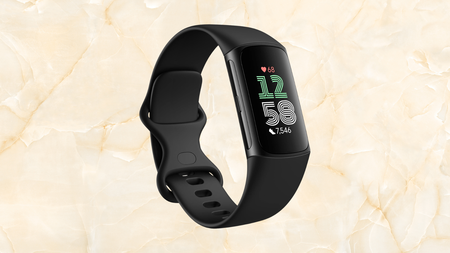
Fitbit has spent years proving that you don’t need a screen the size of a phone strapped to your wrist to actually understand what your body is doing.
The Fitbit Charge 6 has dropped from £139.99 to just £79, a saving of 44% that puts genuine heart rate accuracy and built-in GPS at a frankly tempting price.
Act now to save 44% off the Fitbit Charge 6
At this price, the Charge 6 covers the fundamentals of fitness tracking so thoroughly that this discount is genuinely hard to ignore.

That price cut matters because the Charge 6 was never a stripped-down budget option to begin with, it is a device packed with the kind of granular detail that usually justifies a far higher price tag elsewhere.
Built-in GPS means the Charge 6 can map your route and pace without needing your phone tucked into a pocket or strapped to your arm, so a simple run finally feels like just a run again.
That tracking extends across more than 40 distinct exercise modes, covering everything from a casual bike ride to a full HIIT session, with key stats logged automatically against whatever personal goals you have already set yourself.

Heart rate on equipment takes things a step further, syncing wirelessly with compatible treadmills, ellipticals and rowers so the number flashing on the gym display actually matches what is happening on your wrist.
All of that accumulated data feeds into a Daily Readiness Score, which weighs your recent stress, sleep and activity levels to suggest whether today calls for a hard session or something gentler.
It is the sort of feature that turns a tracker from a passive logger of numbers into something that actively helps you make smarter decisions about your own training week. Sleep gets the same depth of attention, with automatic tracking building a personalised profile over time alongside a smart wake alarm that nudges you awake with a gentle vibration rather than a jarring tone.
Battery life also holds up at around 7 days per charge, which is comfortably enough to wear it through a full week, including overnight sleep tracking, without ever needing to think about a charger.
At this price, the Charge 6 covers the fundamentals of fitness tracking so thoroughly that anyone starting out, or upgrading from a much older band, will find this particular discount genuinely hard to ignore.
SQUIRREL_PLAYLIST_10148964

Social media platforms have spent years telling parents their children are safe online. New research suggests those assurances don’t hold up. A report from the Cybersafety Research Center tested 86 child safety features across TikTok, Instagram, Snapchat, and YouTube. Only 35 worked as promised, and the rest were broken, buried in settings, or missing entirely.
To run the tests, researchers created fake teen accounts and adult accounts to see whether safety features worked in practice. Snapchat had the worst failure rate at 73%, followed by Instagram at 66%, YouTube at 55%, and TikTok at 50%. Every conduct safeguard designed to prevent cyberbullying failed across all four platforms.
On TikTok, a minor’s test account searching for content related to disordered eating was met with the app’s own suggestions for terms linked to pro-anorexia communities, including phrases about hiding food and self-harm.

On Snapchat, an adult test account was able to find and message a child account without any restrictions at all. Meanwhile, Instagram prevented adults from starting conversations with teens who didn’t follow them, but once a child messaged an adult first, that adult could reply freely with no warnings.
Across all four platforms, nine features were classified as completely missing, meaning researchers could not trigger them even after following the steps each company described.

All four companies disputed the findings, arguing their features work as intended or that the tests didn’t reflect how real kids use the apps. These findings come as the UK moves toward a social media ban for under-16s, while similar restrictions gain traction in other countries.
Separate research has also found that Australia’s outright ban on under-16s has not stopped 85% of teens from accessing social media anyway, as kids have proven surprisingly creative at bypassing age checks altogether.
The bigger problem is getting harder to ignore. If platform safeguards are weak and bans are easy to dodge, your child may be relying on systems that are far less safe than they seem.
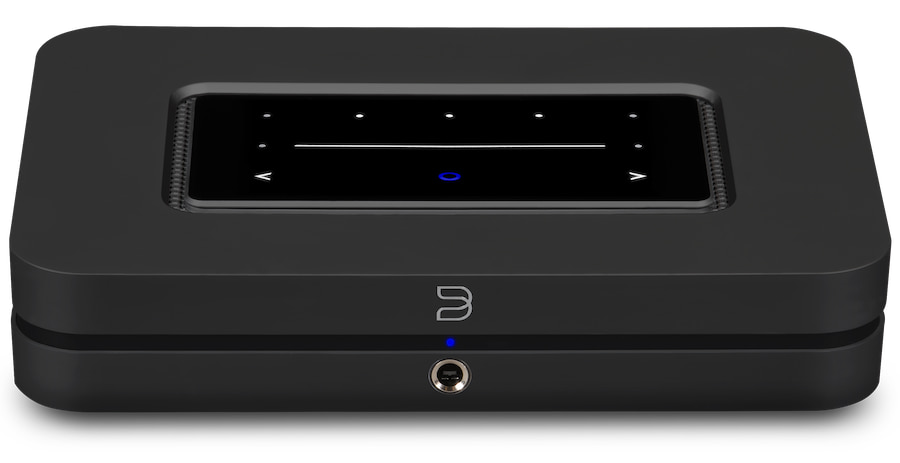
The network streamer market has become brutally competitive. WiiM upset the apple cart with the $329 Ultra, a compact digital hub with a touchscreen, HDMI ARC, phono input, headphone output, preamp functionality, and room correction. Eversolo then raised expectations at the next level with the $859 DMP-A6 Gen 2, which brings a large touchscreen, balanced outputs, internal storage capability, HDMI ARC, and software that is far more ambitious than its price suggests.
That leaves the $749 Bluesound NODE in a far less comfortable position than its predecessors enjoyed. Cambridge Audio’s $499 MXN10 and AXN10 offer serious competition for listeners who want a conventional, well-sorted network player without spending close to four figures. The days when BluOS alone was enough to make the NODE the automatic recommendation are gone.
Fortunately for Bluesound, BluOS has not been left to rot in the sun. The platform has gone through multiple updates and remains one of the more mature multiroom ecosystems available, with broad streaming-service support, reliable device control, and none of the “we will fix it in the next update” energy that still haunts too many audio apps. Ask Sonos how that worked out for them.
The current NODE also brings a stronger ESS DAC, THX AAA headphone amplification, HDMI eARC, DSD playback, and Dirac Live Room Correction support to the fight. Dirac is not included in the box; buyers need a license and calibration kit, and correction is not available through the NODE’s USB output. But for systems compromised by real rooms, rather than fantasy listening spaces with acoustics designed by the Ministry of Sound, it could be the feature that matters most.
Related Reviews:
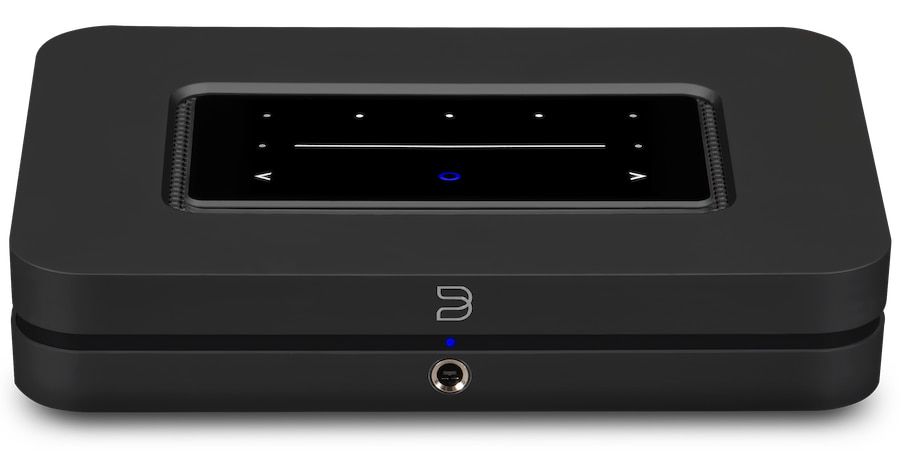
The current Bluesound NODE is not a cosmetic refresh of the older N130. The N132 uses an ESS ES9039Q2M SABRE DAC, an ARM Cortex A53 quad core processor running at 1.8GHz per core, and revised circuitry intended to keep jitter and electrical noise under control before the signal reaches your amplifier, powered speakers, headphones, or external DAC.
The NODE offers support for native PCM sampling rates up to 192kHz, 16-bit and 24-bit files, DSD256 playback, a specified signal to noise ratio of 118dB, and THD+N rated at 0.0007 percent. The NODE does not offer balanced XLR outputs, dual DACs, or the elaborate display found on the more expensive NODE ICON.
It is a stereo streamer and digital preamplifier designed to slot into almost any existing system. Connect it directly to a pair of active loudspeakers, use it as the front end for an integrated amplifier or separate preamp and power amp combination, or feed its digital outputs into an external DAC.
It can also serve as the central music source for an AVR through its analog, optical, or coaxial outputs, while BluOS lets it join a wider whole-home system with Bluesound’s PULSE FLEX wireless speakers, including stereo-paired FLEX units in another room. It is not a replacement for a full home theater processor, but it can be the component that makes a conventional two-channel or AV system feel considerably less stuck in 2016.

The NODE supports the formats most people actually use, including MP3, AAC, WMA, WMA Lossless, OGG, ALAC, and OPUS. Its high quality file support includes FLAC, MQA, WAV, AIFF, and MPEG 4 SLS.
MQA remains part of the specification sheet for those with an existing MQA library. More relevant in 2026 is the NODE’s support for lossless FLAC through current streaming services and its ability to function as either a complete streamer DAC or a digital transport feeding an external DAC.
BluOS remains the reason many people buy a Bluesound product in the first place. The NODE supports more than 23 music services and internet radio, along with Apple AirPlay 2, Spotify Connect including Spotify Lossless support, TIDAL Connect, Qobuz Connect, and Roon Ready operation.
The NODE can also access a music library over an SMB network share, with Bluesound rating support for libraries of up to 200,000 files. That will cover most collections unless you have inherited the entire Tower Records inventory and refuse to seek professional help. Call me if you need a number.

BluOS works across iOS, Android, macOS, and Windows. The NODE can be grouped with other Bluesound players for synchronized multi-room playback, or used independently in a traditional two channel system. It also supports Amazon Alexa skills and integrates with Crestron, Control4, RTI, ELAN, URC, Lutron, and Josh.ai control systems.
The NODE includes dual band Wi-Fi 5 and a Gigabit Ethernet port. Wired Ethernet remains the sensible choice for large local libraries, Roon use, or homes where the wireless network has been designed by people who believe mesh nodes belong behind furniture.
Bluetooth is specified as Bluetooth 5.2 with aptX Adaptive support and two way operation. That means the NODE can receive audio from a phone or tablet, but it can also transmit audio to compatible Bluetooth headphones or speakers.
The USB Type-A port is not a computer input. It supports FAT32 formatted external storage and Local Server mode, allowing the NODE to index music from an attached drive. The same port can also function as a USB Audio 2.0 digital output for an external DAC.
The NODE is far more than a streaming endpoint. Its HDMI eARC input lets it pull audio from a television, making it a practical front end for a two channel living room system with powered speakers or an integrated amplifier. It also supports Dolby Digital decoding, although this remains a two channel product rather than a replacement for an AV receiver.
There is also a combination 3.5mm analog and Mini TOSLINK optical input. That allows the NODE to accept a line level analog source or an optical source through the same connection. It is useful for a CD player, TV, game console, or external phono preamp.
The important distinction is that the NODE does not include a phono stage. A turntable requires a separate MM or MC phono preamplifier before connecting to the NODE’s analog input.

The NODE offers a proper range of outputs for a component that remains physically small. Its main analog output is stereo RCA, with the option to run at a fixed level into an integrated amplifier or preamplifier, or variable level into a power amplifier or pair of active speakers.
Digital outputs include coaxial RCA, optical TOSLINK, and USB Audio 2.0 through the USB A connection. The USB output is useful for owners who want the BluOS platform and system flexibility of the NODE but prefer to use an external DAC.
There is one important operational limitation: when USB Audio output is enabled, the analog RCA, coaxial, and optical outputs are disabled. Connecting headphones also takes priority over USB Audio output. It is not a deal breaker, but it is the sort of detail that tends to appear five minutes after an installation has gone from elegant to mildly profane.
The NODE includes a dedicated RCA subwoofer output and can also connect wirelessly to Bluesound’s PULSE SUB+. The BluOS app offers adjustable crossover control from 40Hz to 200Hz, with 80Hz as the default setting.
When the subwoofer setting is enabled, the NODE applies a high pass filter to the RCA output and sends lower frequencies to the subwoofer output. The digital outputs remain full range, so users relying on an external DAC or digital preamp need to plan their bass management accordingly.
The NODE also offers basic bass and treble controls, ReplayGain options, mono and channel specific output modes, volume limits, and fixed output level. These are useful practical tools, but they are not a substitute for a full parametric EQ or sophisticated loudspeaker management system.

Dirac Live is the feature that changes the conversation around the current NODE. Support for the N132 arrived through BluOS 4.8.15 in January 2025, so this is not a future promise hiding behind a marketing asterisk. At least not anymore.
Dirac is not included with the NODE. Owners need to purchase a Dirac Live license and use a compatible calibrated measurement microphone, such as Bluesound’s Room Calibration Kit. Once installed, Dirac Live measures the room and creates correction filters intended to reduce the influence of bass peaks, cancellations, reflections, and other real world acoustic problems.
The NODE supports Dirac Live correction through its RCA, optical, and coaxial outputs. The USB Audio output does not support Dirac Live processing. That distinction matters. Owners planning to use an external USB DAC will get the NODE’s streaming platform and digital transport capability, but not its room correction.
For many systems, particularly those in smaller rooms or living spaces where speaker placement is limited by walls, furniture, spouses, or basic architectural hostility, Dirac Live may prove more meaningful than another incremental DAC chip upgrade.
The front panel includes a full size 6.3mm headphone output driven by THX AAA amplifier technology. THX AAA uses feed forward error correction to reduce conventional distortion mechanisms, which is a less theatrical way of saying that the circuit is designed to remain clean and controlled rather than add its own flavor to the music.
Bluesound rates the headphone stage at 160mW into 16 ohms, 230mW into 32 ohms, 53mW into 250 ohms, and 22mW into 600 ohms, all at less than 0.1 percent THD. If you were thinking of driving a pair of your demanding planar headphones with the NODE, you might want to rethink that strategy. Grado? Sure. Meze Audio 99 Classics Generation 2? Absolutely.
The fact that Bluesound includes a legitimate dedicated headphone section rather than a token 3.5mm afterthought gives the NODE more value as a desktop or secondary system hub, but it’s not a replacement for a proper headphone amplifier.
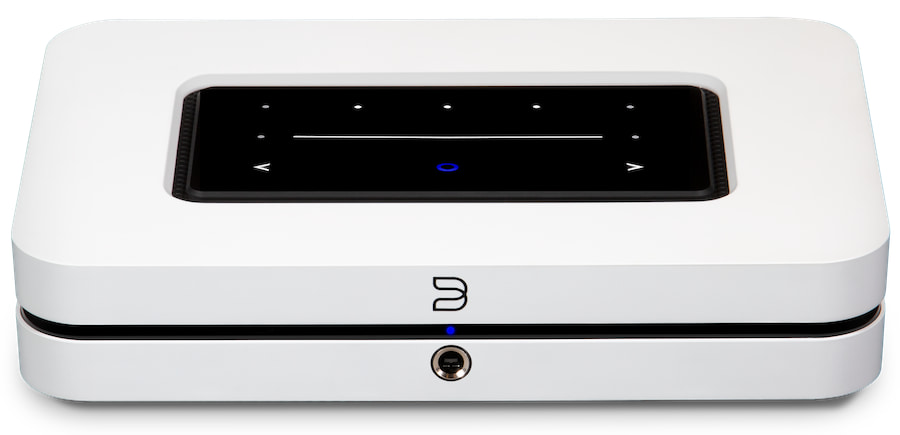
The NODE keeps physical controls simple. The top panel includes a touch sensitive volume slider, play and pause control, five programmable presets, status LEDs, and a proximity sensor that wakes the controls when a hand approaches.
Those presets can be assigned to favorite stations, playlists, albums, or inputs, which sounds modest until you have used a streamer daily and realize how often you want music without opening another app.
The NODE also includes a built-in IR receiver with remote learning, plus a 3.5mm IR input for integration with more elaborate systems. A 12 volt trigger output can power on compatible amplifiers, active speakers, or other components when the NODE wakes up.
The NODE measures 8.7 inches wide, 1.8 inches high, and 5.7 inches deep, and weighs 2.4 pounds. It is available in matte black or white and is compact enough to disappear into most systems without looking like a discarded cable modem.
Bluesound includes stereo RCA cables, an Ethernet cable, a Mini TOSLINK adapter, power cords, setup documentation, and a Dirac Live information card. The NODE uses a universal 100V to 240V AC power input, which is useful for international use and far more practical than another proprietary external power brick cluttering the floor.
The network streamer market has become increasingly bifurcated. Below $1,500, WiiM, Eversolo, Bluesound, Cambridge Audio, Shanling, iFi Audio, and FiiO are making it difficult to spend more without asking some uncomfortable questions. At the other end sit brands such as Innuos, Nagra, NAD, Aurender, Esoteric, and TEAC, where performance, build quality, power supplies, digital architecture, and brand ambition all move into a very different conversation.
There are exceptions, naturally, but the middle has become less crowded than it should be. I have heard the Bluesound NODE ICON at several dealers and came away impressed, although never in my own system, so I am not going to pretend otherwise. Innuos would probably be my personal choice in a blank cheque scenario, but its newer range has moved decidedly upmarket. That leaves a product like the NODE in a rather sensible position.
Some buyers will complain that the NODE lacks a large touchscreen for album artwork and metadata. I am not one of them. I own an iPhone and an iPad Pro. So do tens of millions of other people. More importantly, displays are often among the first things to fail on modern components, and I cannot read most of them from across the room anyway.
In this case, I do not view the absence of a screen as a meaningful compromise. I would rather have a mature control platform, proper connectivity, and the option to improve the system around it than pay extra for a tiny digital picture frame I will barely use.
The NODE’s flexibility also made it easy to drop into a wide range of systems during the review. I used its analog and digital outputs with the Cambridge Audio Edge A, NAD C 316BEE V2, Audiolab 6000A, WiiM Vibelink, Quad 3, and Advance Paris A10 Classic, along with Q Acoustics’ M40 active speakers and Bluesound PULSE FLEX. External DAC duties were handled by the FiiO K11 R2R.
Cabling came from QED, Chord, Analysis Plus, and Cable Matters, including a CAT 6A Ethernet cable that had been blessed by my Rabbi. Network duties were handled by Verizon 2Gbps fiber service, its supplied modem, and an ASUS Wi-Fi 7 router. Music came primarily from TIDAL, Qobuz, and Spotify Lossless.
One advantage of owning other Bluesound and NAD components is that I have lived with BluOS through several generations. It has improved with each iteration. The interface may not feel quite as slick or immediate as WiiM Home, but it is the devil I know, and more importantly, every one of my streaming accounts has remained stable through it.
TIDAL Connect, Qobuz Connect, and Spotify Connect all worked reliably when used directly from their respective apps. That matters more to me than a few extra animations or a prettier home screen. A streaming platform that gets out of the way and plays music without drama is still worth something.
Bluesound streamers have carried a “warm” reputation for years, and that has generally been fair. Earlier NODE generations were not detail monsters. They tended to favor a full, generous bottom end over the last word in definition or impact, with a smooth, clear midrange, an above-average soundstage, and a slightly rounded treble. In a more neutral or lean sounding system, that balance could be rather appealing.
Push the rest of the chain too far in the darker direction, however, and things could become a little too warm cocoa and slippers for my taste. Pleasant enough, perhaps, but not especially exciting.
WiiM and Eversolo have largely taken the opposite approach. Both sound more linear, more explicit, and quicker on their feet, with sharper image outlines and more apparent detail. They can also sound a touch thin or overly matter-of-fact when paired with the wrong amplifier or loudspeakers. I own a WiiM and two Cambridge Audio network players, so I have a fairly solid baseline for that comparison.
The new NODE sounds different. Not “throw the Tim Hortons out and replace it with a cauldron of double-doubles” different, but clearly different. The presentation is more spacious, the low end is tighter, and there is a little less of the old Bluesound warmth in the midbass and lower midrange. Fine detail is easier to hear, transients have more snap, and the treble sounds more open and less toffee-coated.
It still does not turn into a WiiM or Eversolo overnight, nor should it. The NODE retains enough body and ease to avoid sounding clinical, but it is more neutral, more transparent, and more controlled than the Bluesound players that established the brand’s earlier sonic identity.
Nick Cave’s “Avalanche” showed off the NODE’s improved tonal balance particularly well. Cave’s piano had the right weight and dark resonance, while his weathered baritone retained its grizzly edge and low-register authority without sounding overly smoothed or thinned out.
The decay around the piano notes hung in the air long enough to preserve the recording’s atmosphere, and the NODE cast a wider, more open soundstage than earlier Bluesound streamers I have heard. The track still had real power, but the presentation remained controlled and appropriately bleak.
Sia’s bass-heavy pop, including “Unstoppable,” “Cheap Thrills,” and “Breathe Me,” revealed a similar shift. The NODE gave up a little of the old Bluesound thunder at the very bottom, but the bass was better defined and less prone to spreading across the lower midrange. Her voice also came through with more clarity, while the mixes sounded more open and spacious.
That worked particularly well with the Q Acoustics 5040, which can throw a wall-to-wall soundstage that seems slightly ridiculous for a compact floorstander. The NODE took full advantage of that quality. It also helped the Q Acoustics M40 active speakers sound less confined between the cabinets on tracks where they can occasionally pull the image inward. Not here. The stage opened up, and the music had more room to breathe without losing its weight.
Switching to electronic music, the NODE proved far more capable than older Bluesound streamers in keeping pace with less expensive WiiM and Eversolo rivals. Kraftwerk’s “The Robots” and “Tour de France Étape 2,” deadmau5’s “Strobe” and “Ghosts ’n’ Stuff,” The Orb’s “Little Fluffy Clouds,” Aphex Twin’s “Xtal,” and Boards of Canada’s “Roygbiv” all benefited from tighter, more convincing midbass and upper bass.
The NODE did not always deliver quite the same top-end bite or etched detail as some of those competitors, but it kept the pulse intact. Synth lines had better separation, bass patterns were easier to follow, and the music filled the space with more purpose. That matters with this material. I can live without the last degree of sparkle, but the low-end drive has to land somewhere below the rib cage and make you want to channel that increasingly tired Jon Hamm dancing-in-a-club meme. I am already on bipolar medication. Stronger chemical assistance seems unnecessary.
Bluesound has improved this aspect of the NODE considerably. It sounds quicker, more spacious, and more confident with electronic music without losing the fuller tonal balance that has long been part of the brand’s appeal.
The Bluesound NODE is not the least expensive way into high-resolution streaming, nor is it the most feature-packed box on paper. The WiiM Ultra remains a ridiculous value at $329, especially for listeners who want a more neutral presentation and the freedom to pair it with a better external DAC later. Cambridge Audio’s MXN10 and CXN100 SE also remain serious alternatives, offering a more familiar British balance that will appeal to listeners who value tonal weight and a more traditional hi-fi presentation.
At $750, the NODE has to justify the premium. It does. The N132 is a meaningful improvement over the previous generation, with a more open and spacious presentation, tighter bass, better clarity, and less of the soft warmth that defined earlier Bluesound players. It still sounds closer in character to the Cambridge streamers than to WiiM or Eversolo, but it delivers a little more transparency and control than I expected.
Neither BluOS nor the StreamMagic app is perfect. BluOS is not as slick as WiiM Home, but it has been more stable in my experience, and its ability to integrate the NODE into a larger Bluesound or NAD ecosystem remains a genuine advantage. The NODE’s real strength is that it can serve as a complete streamer, DAC, preamplifier, headphone amplifier, and television audio hub today, while also working as a very capable digital transport if the rest of the system improves around it.
The Dirac Live story is not finished. Bluesound did not provide access in time for this review, and I was not prepared to offer a verdict after trying it with only one amplifier and one pair of loudspeakers. A follow-up focused on Dirac Live is forthcoming, using multiple speaker and amplifier combinations. That is the only sensible way to judge whether it genuinely shifts the NODE’s value proposition.
The changes here also make me want to spend more time with the NODE ICON. A balanced DAC, preamplifier, and a very particular pair of speakers are already waiting in the listening room. That could get expensive quickly.
For now, the answer is straightforward: the new NODE is definitely a better streamer than the model it replaces. It costs more than the WiiM Ultra and asks buyers to live without a touchscreen, but its improved sound quality, mature platform, broad connectivity, upgrade flexibility, and eventual Dirac Live capability make it one of the more compelling network players in its class.


While driving in the rain or snow, you’ve probably mumbled to yourself, “It sure would be nice to clear the rear windshield.” But if you’re in a car, you are often out of luck due to a lack of rear windshield wipers. Meanwhile, SUVs appear to have that luxury, and that all comes down to the vehicles’ shapes.
Aerodynamics play a big role in this contrast. Sedans have a sloped rear windshield with a smooth surface, which allows air to flow over it. For this reason, water is naturally carried away from the windshield’s surface. The wipers may even disrupt that airflow since the surface would no longer be smooth. Meanwhile, SUVs and hatchbacks have a more upright shape — especially as boxier styles return. This can lower the air pressure behind it, pulling in surrounding air and water into a vacuum. Since the air is not flowing against a smooth surface, it can end up swirling around the windshield, meaning water and dirt won’t disperse on its own.

While water flows off of sedans’ windshields, that doesn’t mean dirt and snow are going anywhere. It can get difficult to see out of the back of a sedan in some cases — so why aren’t there windshield wipers? Aside from aerodynamics, there are a few other reasons why sedans and windshields don’t mix.
Fuel efficiency is a big one. Remember how we mentioned windshield wipers take away from the sedan’s aerodynamic design? This means adding wipers would also add to more fuel consumption (like when you drive faster), since it would break up the streamlined profile and create drag. Sedans also lack the space to add the electric motor required to power the wiper. It may also get in the way of opening the trunk. If you’re getting fed up with dirty rear windshields, try applying a protective coating (RainX is popular, but we also recommend a few alternative brands) and keeping some windshield cleaning products in your car in case you need to take them out mid-journey.


You often hear of drivers getting pulled over for speeding — especially as some states start to crack down on extremely fast driving. But a Facebook post from an Indiana State Police trooper has gone viral after he pulled a driver over for going too slow. It may surprise some drivers, but this can be just as dangerous.
On June 10th, Sgt. Stephen Wheeles pulled a driver over along the I-65 in Bartholomew County, Indiana for “traveling below the speed limit.” The driver had been cruising in the left lane for miles, not allowing vehicles to get past. As a result, multiple vehicles were lined up behind the slow car. As a result, the driver was issued a citation for left lane camping.
Wheeles wrote on the Facebook post: “Reminder: You must at least travel the speed limit in the left lane of a multi-lane highway AND you must move back to the right lane if there are vehicles behind you that are waiting to pass.”

Drivers are well aware of the dangers of speeding at this point, but driving slow on the highway can be just as dangerous. Many highways have minimum speed limit signs to ensure drivers are not going slow enough to stop traffic flow and lead to congestion, which can create a “dangerous condition,” according to the New York DMV, like drivers braking hard, making drastic lane changes, and attempting to overtake the slower vehicle. “Oftentimes left lane drivers is the main or if not one of the main causes of road rage incidents on the interstates,” Alabama State Trooper Curtis Summerville said (via Go Upstate).
For this reason, slow driving in the let lane is illegal in essentially every state, though the specifics and consequences vary. In many states, slow drivers in the left lane can be pulled over and ticketed. Some states only allow drivers to use the left lane while actively passing. For example, Colorado considers it breaking the law to drive in the left lane. In 2025, Colorado State Troopers pulled over 2,540 drivers for blocking traffic by driving in the fast lane. Wheeles himself concluded: “This is meant to keep traffic flowing and to reduce crashes.”
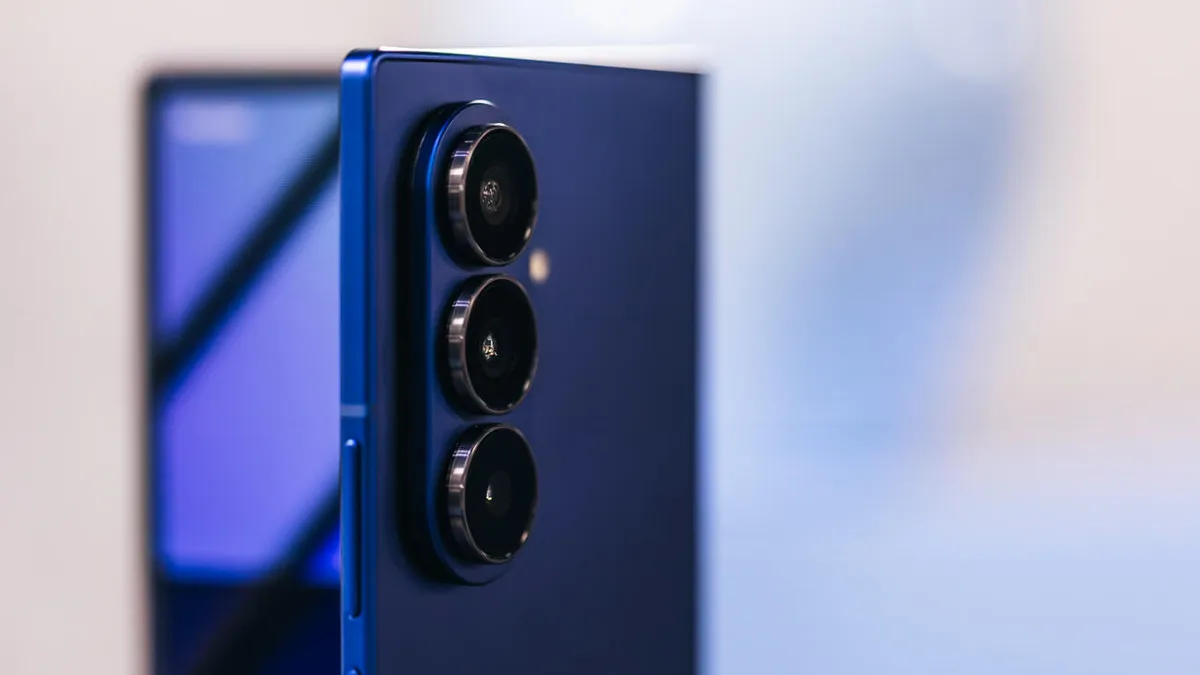
As the weather heats up, so do the rumors surrounding Samsung’s latest foldable phones — presumably the next versions of the Galaxy Z Fold and Z Flip. Now, the company is adding fuel to the speculation with its own teasers that hint at what’s to come.
Samsung wiped its Instagram feed on Monday, and it’s now dropping some cryptic, artistically driven videos that encourage viewers to decode what may be in store. They could point to how Samsung is shaping — quite literally — its upcoming foldable devices.
In one video, someone cuts the top portion off of a rectangular photo, reducing its height. In another, someone takes a pizza cutter to the center of a pie, serving up a rectangular piece with on-screen text reading: “A whole new slice.” In yet another teaser, someone removes the top row from a small puzzle, before on-screen text appears saying, “Feels just right.”
One video appears to confirm that the eighth generation of foldables could be imminent. It shows someone using a squeegee on dollops of paint to reveal a pink and purple ombre “8.”
For months, rumors have circulated about a potential Galaxy Z Fold 8 “Wide,” which, as the name suggests, would have a wider but shorter screen. Samsung’s latest teasers could therefore be pointing to a redesign for its upcoming foldables.
The next Z Fold and Z Flip phones will have some fresh competition. In the spring, Motorola’s released its newest foldables, including its first book-style Razr Fold. A new Pixel Fold and the highly anticipated (and long rumored) foldable iPhone could also be around the corner, the latter of which is also rumored to have a wider-format design.
Samsung has yet to announce its summer Unpacked event, during which it’s expected to showcase new foldable phones alongside the next iteration of the Galaxy Watch. It may only be a matter of time before the company drops that hint — or shares the news outright.

Flipper Devices has built a reputation among hackers and hardware enthusiasts with the Flipper Zero, a pocket-sized gadget capable of interacting with RFID, NFC, Bluetooth, and other wireless protocols. Now, the London-based company is taking a very different approach.
Its latest product, the Busy Bar, is a desktop productivity display designed to help users stay focused, signal their availability, and automate parts of their workflow. After being teased last year, the device is finally going on sale on July 14. While the concept is genuinely clever, its starting price of up to $249 may make many buyers think twice.
At first glance, the Busy Bar resembles a retro digital desk clock. On the front is a 72×16 LED matrix display capable of showing 16 million colours with up to 400 nits of brightness, along with an ambient light sensor that automatically adjusts visibility.
The display can show custom messages such as “Busy,” “On a Call,” or “Do Not Disturb,” alongside timers, widgets, and animations. It also supports Pomodoro-style focus sessions, making it useful for remote workers and students trying to minimise distractions.

The hardware itself is surprisingly feature-rich. It includes Wi-Fi, Bluetooth, USB connectivity, a 3,250mAh battery that lasts up to 8 hours of active use or 2 weeks on standby, and fast charging that takes about an hour with a 15W adapter. There’s even a secondary monochrome display on the back to show battery, connectivity, and timer information, plus a built-in speaker for alerts and notifications.
The Busy Bar also integrates with iOS, Android, and macOS, with Windows support planned. Users can block distracting apps while focus timers are running, automatically display “On Call” status during meetings on macOS, and silence notifications when recording or streaming.
Thanks to Matter certification, the device can also trigger smart home automations across Apple Home, Google Home, and Amazon Alexa ecosystems. Developers can go even further using Flipper’s open firmware, HTTP API, MQTT support, and official Python and TypeScript libraries. All of that makes the Busy Bar far more than a glorified LED sign.
Early adopters joining the waitlist can buy it for $179. After that, the first 3,000 buyers will pay $199 before the retail price climbs to $249.
That places the Busy Bar in the same price bracket as tablets, smart displays, and even entry-level smartphones that can perform many of the same productivity tasks.
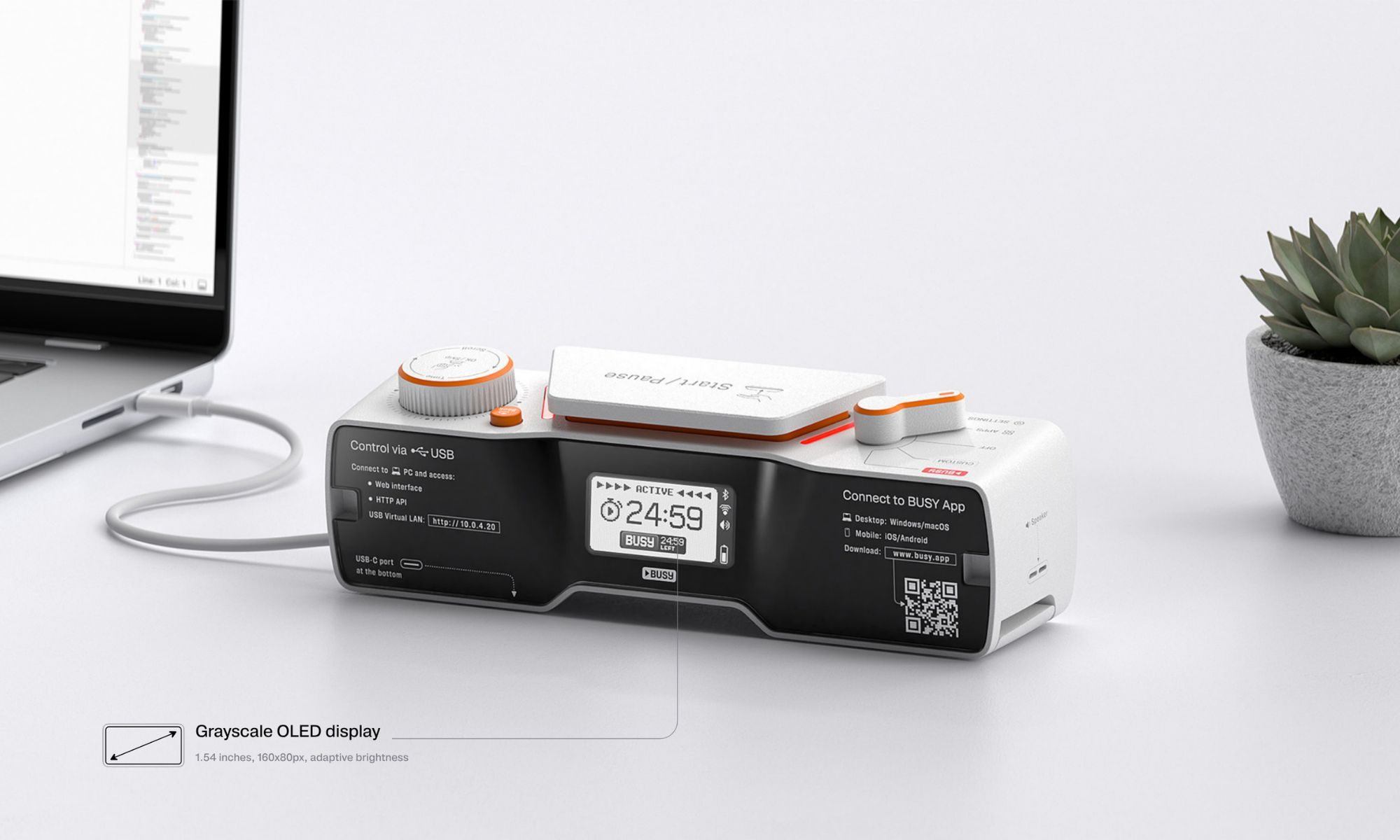
The Busy Bar is undeniably one of the more interesting productivity gadgets announced this year. Its blend of hardware controls, smart home integration, and developer-friendly software makes it genuinely appealing for remote workers and tech enthusiasts.
Whether that experience is worth $249 is another question entirely. The idea is easy to like. Convincing mainstream buyers to spend that much on a dedicated productivity display may prove considerably harder.

Most people don’t throw away old electronics –they relocate them. The laptop goes from the desk to the closet, the closet to a storage bin, the bin to the garage, where it joins a growing collection of devices that stopped being useful years ago. It’s a very human response to a decision that feels more complicated than it should be. Where does it go? Does it cost money? What about the data on it? In reality, the answers are simpler than most people expect, and properly getting rid of old tech can usually be done for free in a single afternoon.
Major retailers such as Best Buy and Staples have become drop-off hubs for digital junk. You can walk into a store with a dead PC or a clunky old scanner and hand it over for free, regardless of where you bought it. Some of these places will even give you a discount on new gear or a trade-in credit just for helping them reclaim the heavy metals and plastics that don’t belong in a landfill. It’s the easiest way to recover your storage space without feeling like a jerk for tossing electronics in the trash.
The only real “work” on your end is making sure you aren’t handing over your entire life history along with the hardware. Before you dump a device, you need to do a legitimate data wipe — not just drag files to the trash can. A 10-minute factory reset or a dedicated drive-scrubbing tool ensures your old tax returns and saved passwords don’t become someone else’s property. Stop acting like you’re going to “fix” that laptop from 2015 and let a professional recycler break it down for parts instead.
Wherever you take or mail in your items to be recycled, you’ll want to protect your data by removing it as best you can. One way to do this is to perform a factory reset on your computer. Our guide walks you through the process.
Some retail stores will accept computers and printers for recycling, but it’s not always a free service. Policies vary by company.
You can recycle your old Apple computers, monitors and peripherals, such as printers, for free at an Apple store, but there’s a costly catch. According to the Apple Free Recycling program, you must purchase a qualifying Apple computer or monitor to receive this service. Need another option? A third-party company called Gazelle buys old MacBooks to recycle them. After accepting Gazelle’s offer, you print a prepaid label or request a prepaid box and ship the machine to them.
Read more: Phone and Laptop Repair Goes Mainstream With Push From iFixit
Best Buy generally accepts up to three household items per household per day to be recycled for free, including desktop computers and printers, as well as other items ranging from e-readers to vacuum cleaners. While three is the limit for most items, there’s a higher limit for laptops — Best Buy will take five of those per household per day. Note that rules for dropping off monitors vary by state, and it’s not always free to do so. Best Buy also offers a mail-in recycling service for select items, but that’s also not free. A small box that holds up to 6 pounds costs $23, while a large box (up to 15 pounds) costs $30. One CNET editor recently lugged in an old, nonworking tube TV-VCR combo for e-cycling, and was happy to pay $30 to be rid of it.
Office Depot and OfficeMax merged in 2013. The retailers offer a tech trade-in program both in-store and online, where you may be able to get a store gift card in exchange for your old computers and printers. If the device has no trade-in value, the company will recycle it for free. Office Depot also sells e-waste recycling boxes that you can fill with electronics to be recycled and then drop off at the stores, but they aren’t free. The small boxes cost $8.39 and hold up to 20 pounds, the medium ones cost $18.29 and hold up to 40 pounds, and the large boxes cost $28 and hold up to 60 pounds.
You can bring your old desktop computers, laptops, printers and more to the Staples checkout counter to be recycled for free, even if they weren’t purchased there. According to a Staples rep, the retailer also has a free at-home battery recycling box, which has led customers to recycle thousands of batteries per week, up from an earlier average of 50 per week. Here’s a list of everything that can be recycled at Staples.
Watch this: Give Your Old Phone a Second Life: The Right Way to Recycle and Reuse It
If you don’t live near a major retailer or would rather take your computers and printers to a recycling center, you can locate places near you by using search tools provided by Earth911 and the Consumer Technology Association.
Use the recycling center search function on Earth911 to find recycling centers near your ZIP code that accept laptops, desktops and printers. Note that the results may also turn up places that accept mobile phones and not computers or printers, so you may have to do a little filtering.
Consult the Consumer Technology Association’s Greener Gadgets Recycle Locator to find local recycling centers in your area that will take old items. The search function also allows you to filter the results to separately hunt for places that take computers versus printers.


Anthropic has confirmed that the Department of Commerce has lifted export controls on Claude’s two most powerful models, Fable 5 and Mythos 5.
In a post on X, Anthropic confirmed that it will begin restoring access to Fable 5 on Wednesday. On the other hand, Mythos will remain exclusive to select companies.
“We’ve received notice that the Department of Commerce has lifted export controls on Claude Fable 5 and Mythos 5,” Anthropic said in a statement. “We’ll begin restoring access tomorrow, and will share an update soon.”

“We’re grateful to our users for their patience, and to everyone who worked with us on redeploying the models.”
At the moment, it’s unclear if Fable 5 will roll out to everyone, including those outside the United States. More recently, references to KYC were spotted on Anthropic’s website, raising concerns that models like Fable could be restricted to those in the United States, at least initially.
This is a developing story…

Security teams log 54% of successful attacks and alert on just 14%. The rest move through your environment unseen.
The Picus whitepaper shows how breach and attack simulation tests your SIEM and EDR rules so threats stop slipping by detection.
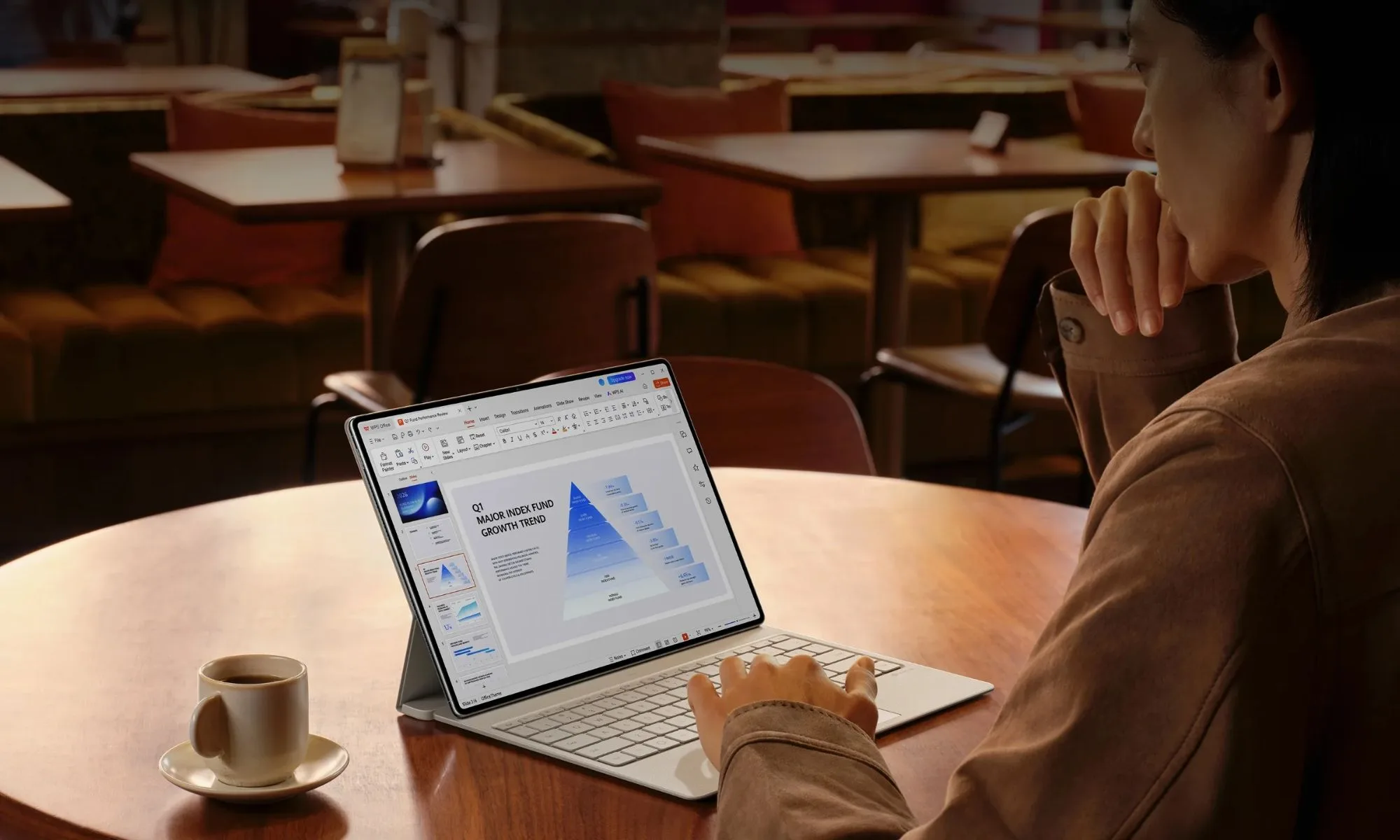
Huawei has officially started selling the MatePad Pro Max in Germany, marking the European retail debut of its flagship tablet nearly two months after its global unveiling. Positioned as a premium productivity device, the MatePad Pro Max combines an ultra-thin design, a high-end OLED display, desktop-style software features, and bundled accessories aimed at professionals and creators.
The tablet starts at €1,099 for the Space Gray model, while the PaperMatte Edition with the Glide Keyboard costs €1,299. Huawei is also sweetening the deal with free accessories and an extended warranty for early buyers.
Huawei says the MatePad Pro Max is the world’s thinnest and lightest tablet in its class. Measuring just 4.7mm at its thinnest point and weighing 499 grams for the standard model, the tablet is designed to be highly portable without compromising durability.
Despite its slim profile, Huawei claims the device is 60 percent more resistant to bending than its predecessor and is the first tablet to receive TÜV Rheinland Ultra-thin Bending Resistance Certification.
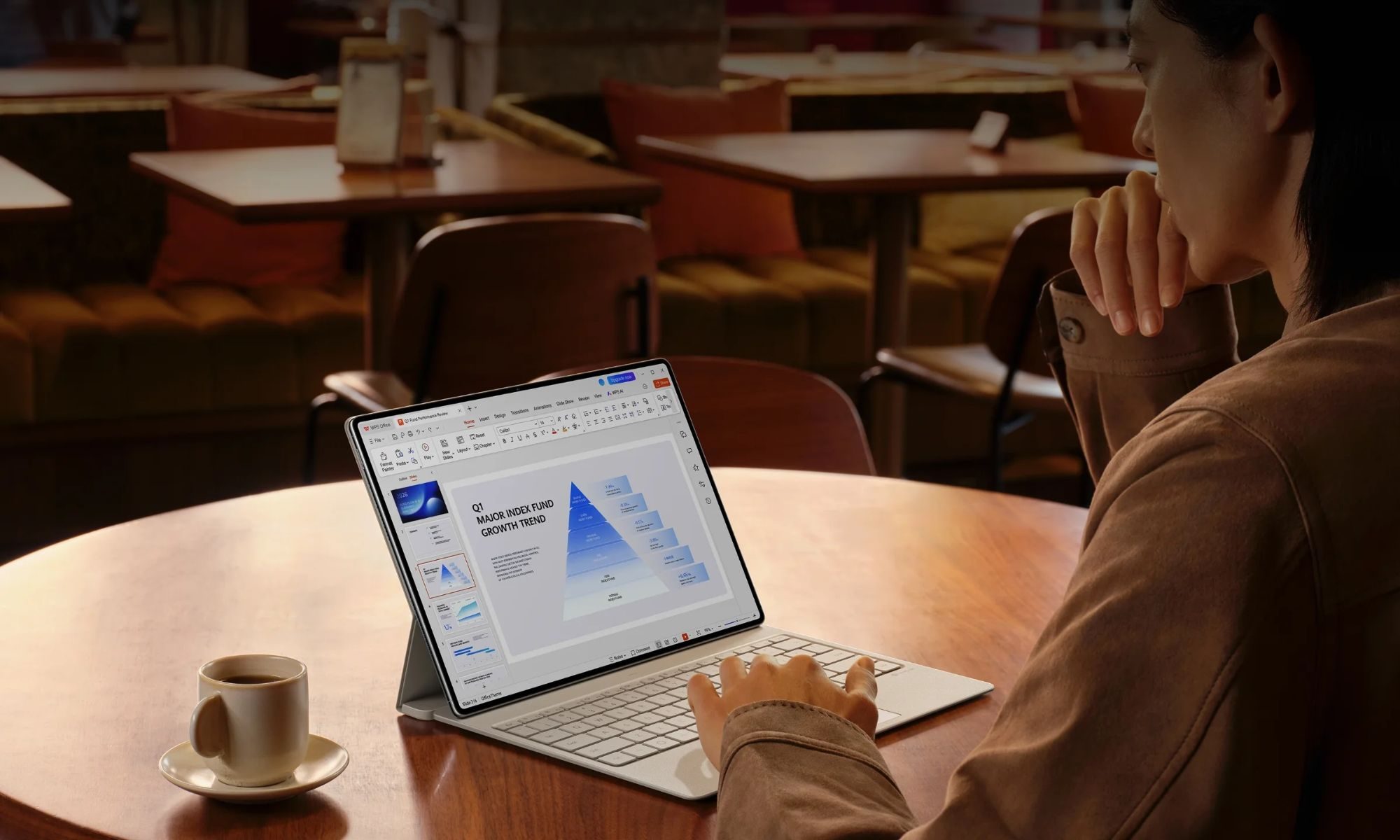
The front is dominated by a 13.2-inch Flexible OLED PaperMatte display with a resolution of 3000×2000, a 144Hz refresh rate, and peak brightness of 1,600 nits. Huawei’s nano-level etching technology helps reduce reflections and glare, making the display more comfortable to use outdoors or under bright lighting. The slim 3.55mm bezels also contribute to an impressive 94 percent screen-to-body ratio.
Under the hood, the MatePad Pro Max runs HarmonyOS 4.3, offering features such as Live Multitask, which lets users work with up to 3 apps simultaneously. Huawei has also bundled a PC-like version of WPS Office complete with AI-powered tools for editing documents, spreadsheets, and presentations, positioning the tablet as a genuine laptop alternative.
Connectivity options include Wi-Fi 7, Bluetooth 6.0, NearLink, and USB-C 3.1, while a 10,400mAh battery supports 66W fast charging and 40W wired reverse charging for powering compatible accessories.
The optional Glide Keyboard adds six rows of keys, 1.8mm key travel, and a built-in charging slot for the M-Pencil Pro, further strengthening the tablet’s productivity credentials.
For buyers, Huawei is adding significant launch incentives. Customers purchasing the MatePad Pro Max through the Huawei Online Store or the company’s Berlin flagship store before July 31 will receive a 12-month extended warranty, a free pair of FreeBuds Pro 4, the M-Pencil Pro, and a €100 discount voucher.

With Apple and Samsung continuing to dominate the premium tablet market, Huawei is clearly betting that a combination of premium hardware, productivity-focused software, and generous launch offers will help the MatePad Pro Max stand out. While its lack of Google services may remain a consideration for some users, the tablet offers an attractive package for those already invested in Huawei’s ecosystem or looking for a capable alternative to traditional laptops.


Rocket Lab will acquire all outstanding shares of Iridium common stock in a cash and stock transaction that will represent an enterprise value for Iridium of approximately $8bn.
Aerospace manufacturer Rocket Lab has announced plans to acquire satellite services platform Iridium Communications.
Under the ‘definitive agreement’, Rocket Lab will acquire all outstanding shares of Iridium common stock for $54 per share in a cash and stock transaction, representing an enterprise value for Iridium of approximately $8bn.
Initially established by Motorola in the 1980s, Iridium developed one of the world’s first global low-Earth orbit satellite communications networks and in the 1990s, after a financial decline, reestablished itself as a provider of communications services to government, aviation, maritime and industrial consumers.
The acquisition will merge Rocket Lab’s launch capabilities and satellite manufacturing with Iridium’s global satellite communications network, spectrum, and more than 500-strong partner ecosystem, combining their reach in the US space ecosystem and creating a potential rival to Elon Musk’s SpaceX.
SpaceX recently raised a record-breaking $75bn in its IPO debut, effectively ‘setting the scene’ for AI rivals Anthropic and OpenAI as they also prepare to make their organisations public.
Commenting on the acquisition, Peter Beck, the founder and CEO of Rocket Lab, said, “This is a defining moment for the space industry and the start of a new era of strategic, accelerated growth for Rocket Lab and Iridium.
“By marrying Iridium’s deep heritage, trusted infrastructure and highly sought-after spectrum with Rocket Lab’s extensive and proven launch and manufacturing capabilities, we have the capability to unlock entirely new markets.
“We will go far beyond maintaining a legacy – we are going to build upon it to pioneer next-generation space applications and deliver sought-after capabilities to existing and new customers.”
Iridium’s CEO Matt Desch added, “As the worlds of space and terrestrial communications continue to converge, more critical services will depend on space-based capabilities. Success will come from those who can bring new innovations to space quickly and sustain them over time as efficiently as possible.
“We’re excited about being able to accelerate the next generation of IoT, aviation, maritime, PNT (position, navigation, timing) and national security capabilities, and pursue new innovative applications as part of Rocket Lab.”
Don’t miss out on the knowledge you need to succeed. Sign up for the Daily Brief, Silicon Republic’s digest of need-to-know sci-tech news.




Weekend Open Thread: Staud – Corporette.com


The House | Manchesterism won’t survive the painful trade-offs unless it gets citizens on board


Strategy authorizes up to $1.25B in Bitcoin sales under new capital plan


Potential 2028er World Cup attendee leaderboard


Asia stock markets slide as tech shares slump


MAJOR BITCOIN & MARKET UPDATE!!!! (MUST WATCH ASAP!!!)


A Look At A Gaggle Of Transputer Boards


Securitize Wraps Roubini's SEC-Registered ETF as Dubai VARA Digital Security
Bitcoin (BTC) Dips Below $62K, Ethereum (ETH) Plunges 6% Daily: Market Watch

Dell (DELL) Shares Tumble Over 5% Following Analyst Downgrade to Hold


Coinbase, Circle Deepen Crypto Stock Losses Despite Resilient S&P 500


Kraken's xStocks Opens Bending Spoons IPO Registration to EEA Retail


Australia treasurer says alleged access of prime minister’s bank data ’incredibly concerning’


FIH Pro League: India defeat Pakistan 7-1, register biggest win of campaign | Other Sports News


Bitcoin Sparks $600M Hourly Liquidations With $65,000 Set To Become Resistance


Bluekit phishing kit adopts browser-in-the-middle for login theft


Russian hackers now target Signal backup recovery keys

Hyperliquid Named on Singapore MAS Investor Alert Register


Ripple and SBI launch RLUSD in Japan after JFSA approval


RTX holders must register wallets before token distribution begins





You must be logged in to post a comment Login