








Connect with us

Tech

Betterleaks, a new open-source secrets scanner to replace Gitleaks

Published

on

Betterleaks, a new open-source secrets scanner to replace Gitleaks

A new open-source tool called Betterleaks can scan directories, files, and git repositories and identify valid secrets using default or customized rules.

Secret scanners are specialized utilities that scour repositories for sensitive information, such as credentials, API keys, private keys, and tokens, that developers accidentally committed in source code.

Since threat actors often scan configuration files in public repositories for sensitive details, this type of utility can help identify secrets and protect them before attackers can find them.

The new Betterleaks project is intended as a more advanced successor to Gitleaks and is maintained by the same team, with support from Aikido, a Belgian company that provides a platform for securing the development cycle.

Advertisement
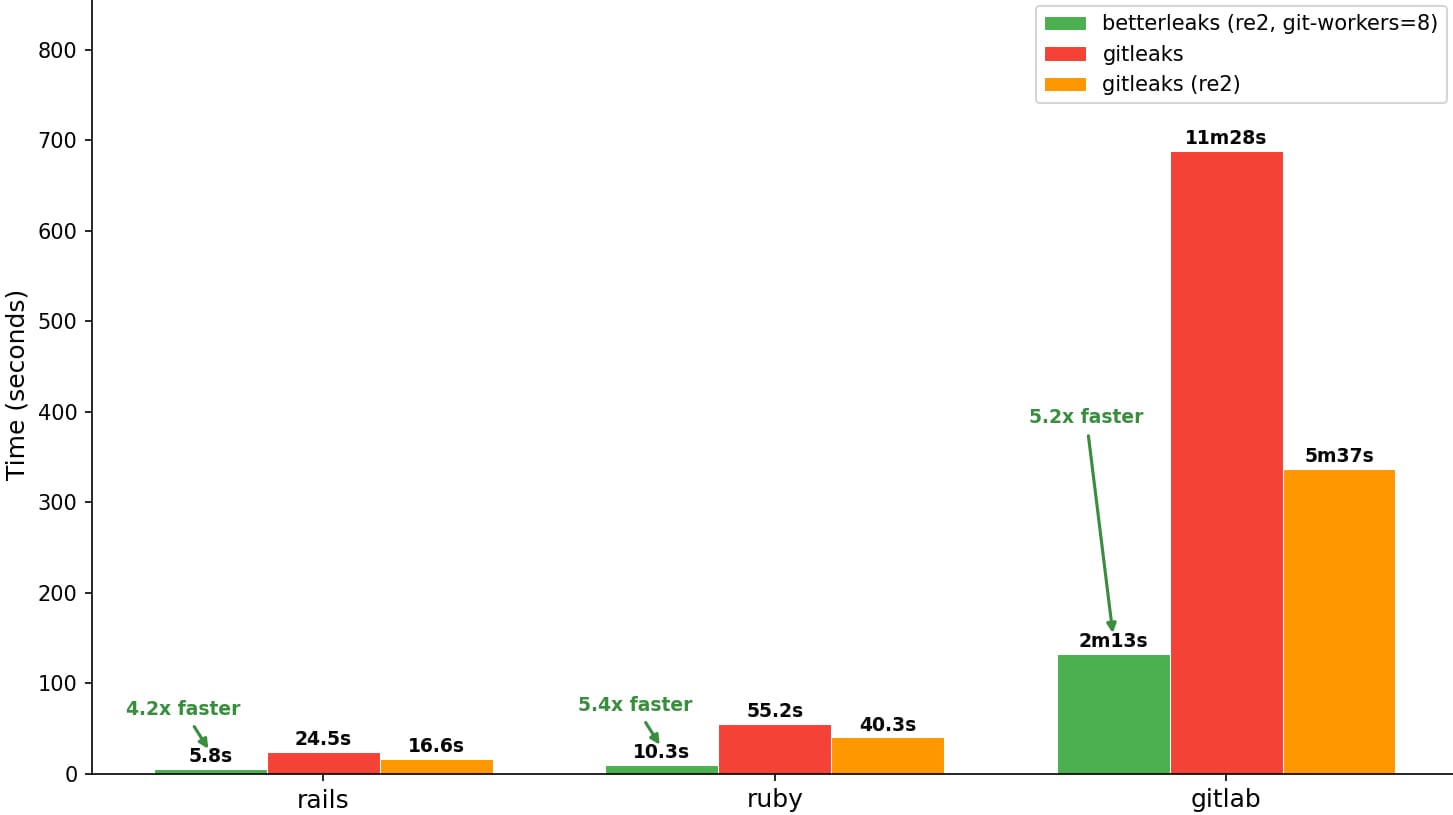
Scanning speed comparison
Source: GitHub

Betterleaks is developed by Zach Rice, Head of Secrets Scanning at Aikido Security, who also authored the popular Gitleaks with 26 million downloads on GitHub and more than 35 million pulls on Docker and GitHub Container Registry (GHCR).

“Betterleaks is the successor to Gitleaks. We’re dropping the “git” and slapping  “better” on it because that’s what it is, better,Rice says.

Betterleaks was created after Rice lost full control over Gitleaks, which he started developing eight years ago. The list of features in the new tool includes:

  • Rule-defined validation using CEL (Common Expression Language)
  • Token Efficiency Scanning based on BPE tokenization rather than entropy, achieving 98.6% recall vs 70.4% with entropy on the CredData dataset
  • Pure Go implementation (no CGO or Hyperscan dependency)
  • Automatic handling of doubly/triply encoded secrets
  • Expanded rule set for more providers
  • Parallelized Git scanning for faster repository analysis

The developer has also revealed additional features planned for the next version of Betterleaks, like support for additional data sources beyond Git repositories and files, LLM-assisted analysis for better secret classification, more detection filters, automatic secret revocation via provider APIs, permissions mapping, and performance optimizations.

Regarding the project’s governance, Rice explains that it uses the open-source MIT license and is maintained by three additional people beyond himself, including contributors from the Royal Bank of Canada, Red Hat, and Amazon.

Rice underlined that Betterleak’s design philosophy combines human-centric use with accommodation for AI agent workflows, including CLI features optimized for automated tools that scan AI-generated code.

Advertisement

Malware is getting smarter. The Red Report 2026 reveals how new threats use math to detect sandboxes and hide in plain sight.

Download our analysis of 1.1 million malicious samples to uncover the top 10 techniques and see if your security stack is blinded.

Source link

Continue Reading
Click to comment

Leave a Reply

Your email address will not be published. Required fields are marked *

Tech

This might be the first foldable where the crease doesn’t matter

Published

on

From the first foldables to the latest and greatest options in the market, from stalwarts like Samsung and Honor, there’s one consistent issue that manufacturers can’t seem to overcome: the crease.

It makes sense when you think about it; when you fold something, it deforms, and a crease appears. It’s just physics. But for some reason, we’re expecting manufacturers to somehow overcome the most fundamental of things – though, to be fair, they’ve been doing a pretty good job at it.

Compared to the grand canyon of a crease that was present on Samsung’s first Fold back in 2019, the crease on modern phones like the Galaxy Z Fold 7 and Honor’s new Magic V6 is negligible. You can barely see them head-on, and compared to flip-style foldables with a horizontal crease, the vertical crease in the middle of the screen means you rarely actually touch it.

But it’s when you inevitably have to tap or swipe around the area of the crease that it becomes more apparent – as well as trying to look at the screen side-on, thanks to the overly reflective plastic screens foldables employ. 

Advertisement

For phones whose entire schtick is focused around the big internal screen, it’s a compromise that many smartphone fans simply can’t get over – and I get it. It is a compromise on a phone that can cost easily double that of a pretty solid bar-style flagship like the Pixel 10

However, with the upcoming Oppo Find N6, the company has managed the impossible; all but erased the crease. 

Advertisement

Oppo has done the impossible with industry-first techniques

So, how has Oppo seemingly done the impossible? It all starts with the hinge – and an all-new manufacturing process Oppo has cooked up. 

Advertisement
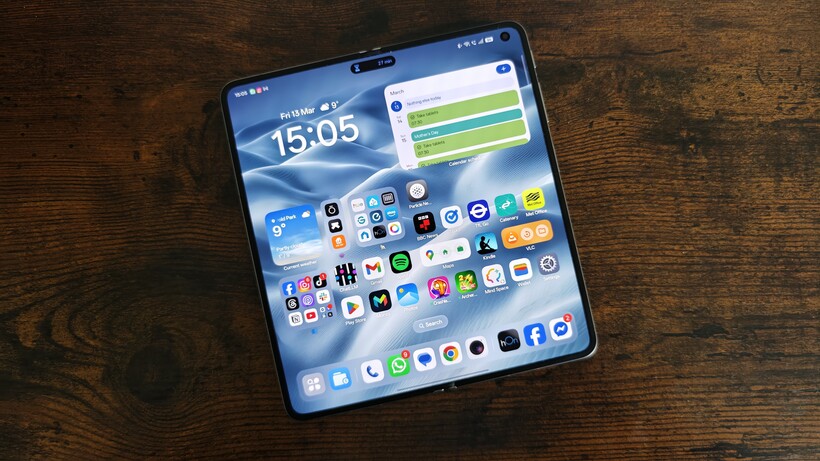
Oppo Find N6 screenOppo Find N6 screen
Image Credit (Trusted Reviews)

Rather than just stamping out parts and calling it a day, Oppo laser-scans every hinge component to build an ultra-precise digital model, then uses a new 3D liquid printing process to smooth out microscopic imperfections. Tiny droplets of photopolymer resin are placed exactly where they’re needed, filling in gaps and irregularities before being instantly hardened with UV light.

The end result is a hinge structure that’s far smoother and more consistent than traditional stamped or machined hardware, which in turn helps the inner display sit flatter when you open it up. In fact, Oppo claims that the dip is just 0.05mm deep – thinner than a human hair – compared to the 0.2mm variation found in foldables from Samsung and Honor. 

Oppo Find N6 screenOppo Find N6 screen
Image Credit (Trusted Reviews)

Advertisement

The hardware itself has had an upgrade too. The hinge and its wing plates are now made from Grade-5 titanium alloy, making them lighter and stronger than the stainless steel used by many rivals, and allowing Oppo to use a wider waterdrop-style fold. 

That wider folding area reduces the pressure on the panel every time you close the phone, which is one of the main reasons creases form in the first place. There’s also an updated carbon fibre support plate beneath the screen to keep everything rigid without adding weight.

The display itself has also had an upgrade, with a new Auto-Smoothing Flex Glass layer that replaces the ultra-thin glass (UTG) used in most other foldables right now. It’s 50% thicker than typical UTG, which gives it greater elasticity and makes it much more eager to spring back to its original shape after being bent. 

Advertisement
Oppo Find N6 screenOppo Find N6 screen
Image Credit (Trusted Reviews)

That’s key for combating what Oppo engineers call “creep” – a slow shifting of internal layers that can deepen a crease over thousands of folds.

According to Oppo, this combination of titanium hinge, carbon fibre support and Auto-Smoothing Flex Glass delivers an 82% reduction in long-term crease depth compared to last year’s Find N5, and says the N6’s display remained essentially flat, with no visible crease, even after more than 600,000 folds, with the ability to survive up to 1 million folds.

Advertisement

More impressively, Oppo claims that after 200k folds, the crease measured just 11μm, compared to 72μm on the Samsung Galaxy Z Fold 7 and 127μm on the Honor Magic V5, proving just how effective it is compared to some of the best foldables around in 2026

Oppo Find N6 screenOppo Find N6 screen
Image Credit (Trusted Reviews)

It’s still there, but you really need to look for it

That’s a very fancy way of saying the Find N6’s internal foldable screen has practically no crease – and having used the phone for the past few weeks, I can confirm that’s largely the case.

If you really go hunting for it, the signs are still there. Angle the screen just right towards a light source and you’ll spot a subtle distortion along the middle – though only when the screen’s off – and a finger run across the hinge reveals a slight indentation.

Advertisement
Oppo Find N6 screenOppo Find N6 screen
Image Credit (Trusted Reviews)

Advertisement

But when I say slight, I really do mean slight. It’s almost imperceptible, and in day-to-day use I simply don’t notice it – aside from the odd moment when I’m actively marvelling at its absence. It has massively boosted my enjoyment of the internal panel as a result.

It really is as close to a crease-free experience as we’ve seen from any manufacturer so far, and it makes the usual foldable trade-off feel far less like a compromise. I’d be surprised if Apple’s first foldable, due later in 2026, can meaningfully beat what Oppo has managed here.

Oppo Find N6 screenOppo Find N6 screen
Image Credit (Trusted Reviews)

Much more to come next week

Of course, there’s much more to Oppo’s latest flagship foldable than just its disappearing crease, and you might’ve noticed a distinct lack of specs throughout this article – that’s very much on purpose.

Despite having had it in my pocket for the past couple of weeks, I can’t say much more about the Oppo Find N6 until the phone is officially unveiled at its launch event in China on 17 March, but it’s safe to say it’s shaping up to be one of the most exciting foldable launches of 2026.

Oppo Find N6 screenOppo Find N6 screen
Image Credit (Trusted Reviews)

Advertisement

The big question now is whether the Oppo Find N6 will actually get a global release; the Find N5 was limited to select Asian markets like Singapore, Malaysia and China, after all. If Oppo does go wider this time, it could genuinely threaten the dominance of Samsung and Honor in the foldable space – but for now, we’ll just have to wait and see.

Advertisement

Source link

Continue Reading

Tech

Today’s NYT Connections Hints, Answers for March 16 #1009

Published

on

Looking for the most recent Connections answers? Click here for today’s Connections hints, as well as our daily answers and hints for The New York Times Mini Crossword, Wordle, Connections: Sports Edition and Strands puzzles.


Today’s NYT Connections puzzle isn’t easy, but I got a kick out of the wordplay in the purple group. Read on for clues and today’s Connections answers.

The Times has a Connections Bot, like the one for Wordle. Go there after you play to receive a numeric score and to have the program analyze your answers. Players who are registered with the Times Games section can now nerd out by following their progress, including the number of puzzles completed, win rate, number of times they nabbed a perfect score and their win streak.

Advertisement

Read more: Hints, Tips and Strategies to Help You Win at NYT Connections Every Time

Hints for today’s Connections groups

Here are four hints for the groupings in today’s Connections puzzle, ranked from the easiest yellow group to the tough (and sometimes bizarre) purple group.

Yellow group hint: Critters in a crowd.

Advertisement

Green group hint: Not fast.

Blue group hint: Silent letter.

Purple group hint: States, but shorter.

Answers for today’s Connections groups

Yellow group: Animal group names.

Advertisement

Green group: Things associated with being slow.

Blue group: Silent “w.”

Purple group: Words that sound like state abbreviations.

Read more: Wordle Cheat Sheet: Here Are the Most Popular Letters Used in English Words

Advertisement

What are today’s Connections answers?

completed NYT Connections puzzle for March 16, 2026

The completed NYT Connections puzzle for March 16, 2026.

NYT/Screenshot by CNET

The yellow words in today’s Connections

The theme is animal group names. The four answers are gaggle, pack, pod and pride.

The green words in today’s Connections

The theme is things associated with being slow. The four answers are glacier, molasses, sloth and traffic.

Advertisement

The blue words in today’s Connections

The theme is silent “w.” The four answers are Cartwright, two, wrath and wrestle.

The purple words in today’s Connections

The theme is words that sound like state abbreviations. The four answers are any (NE), Emmy (ME), envy (NV) and okay (OK).

Source link

Advertisement
Continue Reading

Tech

Sunday Reboot: Alicia Keys, social oddness, and AVP in the air

Published

on

In this week’s “Sunday Reboot,” Alicia Keys takes over an Apple Store, Apple goes off-piste with its TikTok videos, and someone finds out that flight attendants hold the power while on a plane.

Man wearing Apple Vision Pro headset stands before stage with woman at pink piano, large glowing Apple logo behind her, and oversized TikTok logo dominating the right side.
Sunday Reboot: AVP, Alicia Keys, and Ads on TikTok

Sunday Reboot is a weekly column covering some of the lighter stories within the Apple reality distortion field from the past seven days. All to get the next week underway with a good first step.
This week, Apple had a new App Tracking Transparency on its hands thanks to publishers in Germany, a new hack can trick victims into running Terminal commands to bypass macOS security, and an Apple server outage prevented developers from verifying apps. Some fun stories happened too, alongside the inevitable onslaught of initial hardware reviews and opinions.
Continue Reading on AppleInsider | Discuss on our Forums

Source link

Continue Reading

Tech

Adobe to offer users free services $75 million over hard-to-cancel subscription mess

Published

on

Adobe has agreed to a $150 million settlement to resolve a U.S. government lawsuit that accused the company of making its subscriptions unnecessarily difficult to cancel. As per their statement, the agreement includes $75 million in civil penalties paid to the U.S. government and another $75 million worth of free services for affected customers.

The case stemmed from a 2024 lawsuit brought by the Department of Justice and the Federal Trade Commission over Adobe’s subscription practices. Regulators alleged that Adobe hid early termination fees and created complicated cancellation processes, violating the Restore Online Shoppers’ Confidence Act (ROSCA), which requires companies to clearly disclose subscription terms and provide straightforward cancellation options.

Why did regulators sue Adobe over its subscriptions?

The lawsuit focused primarily on Adobe’s “annual paid monthly” plans, which offer a discounted rate but require a year-long commitment. Authorities said the company failed to clearly disclose the early termination fee, which could amount to hundreds of dollars if users canceled early.

Regulators also claimed Adobe made it excessively difficult to cancel subscriptions by forcing customers through a complex series of steps, warnings, and offers. Thankfully, the settlement also requires Adobe to clearly disclose cancellation fees upfront, remind customers before free trials convert to paid plans, and provide simpler ways to cancel subscriptions going forward.

What does Adobe say about the settlement?

Adobe says the settlement closes the case but insists it didn’t do anything wrong. In a statement, the company said it remains committed to clearer subscription options and better transparency, and plans to contact eligible users about the $75 million worth of free services once the deal receives court approval.

Advertisement

Nonetheless, this episode also highlights how subscription models are facing increasing scrutiny. As more software companies rely on recurring plans, regulators are pushing for clearer pricing and easier cancellations. Hopefully, that means the days of “easy to subscribe, hard to cancel” may finally be numbered.

Source link

Advertisement
Continue Reading

Tech

There’s a sneaky way to watch Oscars 2026 for FREE

Published

on

The Oscars remain the ultimate prize in Hollywood. It’s the award Leonardo DiCaprio chased for decades before finally winning, the stage where Matthew McConaughey’s heartfelt “three things every day” speech moved audiences around the world, and the moment where stars, both new and established, find true validation. And in 2026, the competition for the golden statuette looks fiercer than ever.

Leading the battle are the Best Actor nominees, including Timothée Chalamet for Marty Supreme, who has perhaps been the most vocal about his chase for greatness. But he faces some formidable competition, including Leonardo DiCaprio for One Battle After Another and Michael B. Jordan for Sinners.

Source link

Continue Reading

Tech

Your Legally Registered ‘Motorcycle’ Might Not Count Under Proposed US Law

Published

on


Here come the literal fun police. A newly proposed House Resolution, H.R. 3385, would no longer classify three-wheeled autocycles (not to be confused with trikes, like the Harley-Davidson Freewheeler) as motorcycles in the United States — or a car. This would leave autocycle owners in a challenging position when it comes to vehicle registration. It could even make them entirely illegal. 

H.R. 3385 was introduced by Representative Derrick Van Orden earlier in 2026 in an attempt at narrowing down the definition of the term “motorcycle.” If the bill passes, it would exclude three-wheel vehicles from this category since it states that motorcycles must be steered with handlebars, not a steering wheel. The bill defines a motorcycle as a vehicle with a seat or saddle, with no more than three wheels, and steered by a handlebar. This definition would go into effect within 120 days of the bill’s approval. 

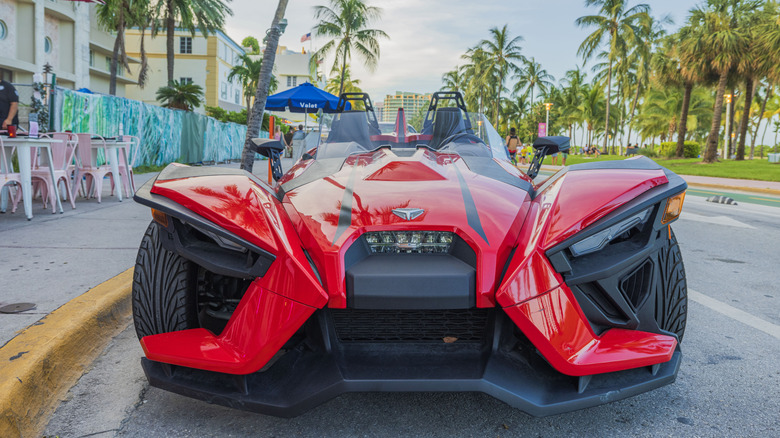
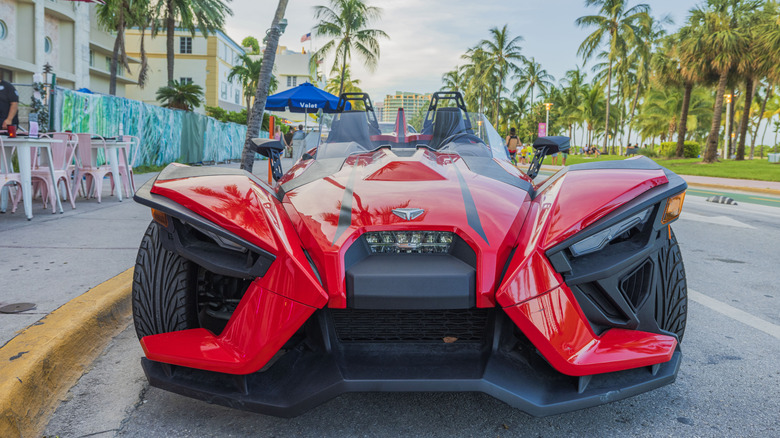
However, these autocycles are already not allowed to be registered as cars since they are short one wheel, according to the federal definition of a “car.” This would leave owners of popular autocycles like the Polaris Slingshot and Vanderhall Venice in a pretty tough predicament, so advocates are fighting back. 

Advertisement

Motorcycle community fights back against H.R. 3385

The Motorcycle Industry Council has formally opposed H.R. 3385, writing a letter addressed to the House Energy and Commerce Subcommittee. Without a separate category for autocycles, this new bill would remove this special vehicle type from registering as a motorcycle and as a car. At that point, it would be illegal to register them — and maybe sell them. 

In the January 2026 letter, the Council explained why placing autocycles in a “classification limbo” would be harmful. First, H.R. 3385 would cause conflict between the federal law regarding motorcycles and some state laws. The Motorcycle Industry Council claimed this would “throw state laws into chaos” since many states rely on the federal definition of a motorcycle to set their own laws. 

Advertisement

Second, the bill would eliminate the entire autocycle market, causing many manufacturers in the United States to go out of business. Plant closures would also lead to layoffs, cut skilled jobs from the market, and damage dealership revenue. Wrote the Council: “We respectfully urge you to protect American innovation and jobs that support the manufacturing sector and oppose H.R. 3385. We believe that regulatory clarity should support market growth, not act as a ‘death knell’ to a thriving sector of the powersports industry.” 


Advertisement

Source link

Continue Reading

Tech

Wyze Cam Pan v4 Brings 4K Resolution to Everyday Home Security Without the Usual High Price Tag

Published

on

Wyze Cam Pan v4 4K Camera
Security cameras flood store shelves, but good 4K options are few and far between, especially if you’re on a tight budget. Wyze changed that with the Cam Pan v4, priced at $46 (was $60), the first of their cameras to record in Ultra HD (3840 x 2160 quality). This update makes a significant impact; the footage is significantly crisper than what you get with most inexpensive pans. Zooming in on details such as a face or a license plate creates a completely different image. That is especially true in retrospect.


Full 360-degree pan and 180-degree vertical tilt allow you to capture the entire room or a huge outdoor area in one image, whether inside or out. You can operate it all from the Wyze app, configure it to sweep around automatically, or track any movement that occurs. An enhanced CPU with its own AI technology makes following people, pets, cars, and other objects appear silky smooth and decreases the quantity of information that slips through the net.

Sale


WYZE Cam Pan v4, 4K Smart Security Camera, AI Indoor/Outdoor Cameras for Home Security, Baby & Pet, Color…
  • 4K Ultra HD Clarity with 360° Pan and 180° Tilt Coverage – Experience crystal-clear monitoring day and night with a wide field of view and remote…
  • AI-Powered Motion Tracking for Pets & People – Next-gen CPU with integrated NPU enables faster processing and enhanced AI capabilities. Automatically…
  • Robust Indoor/Outdoor Durability – Place your camera in or out, right-side up, up-side down, with an IP65 weather rating, this outdoor security camera…


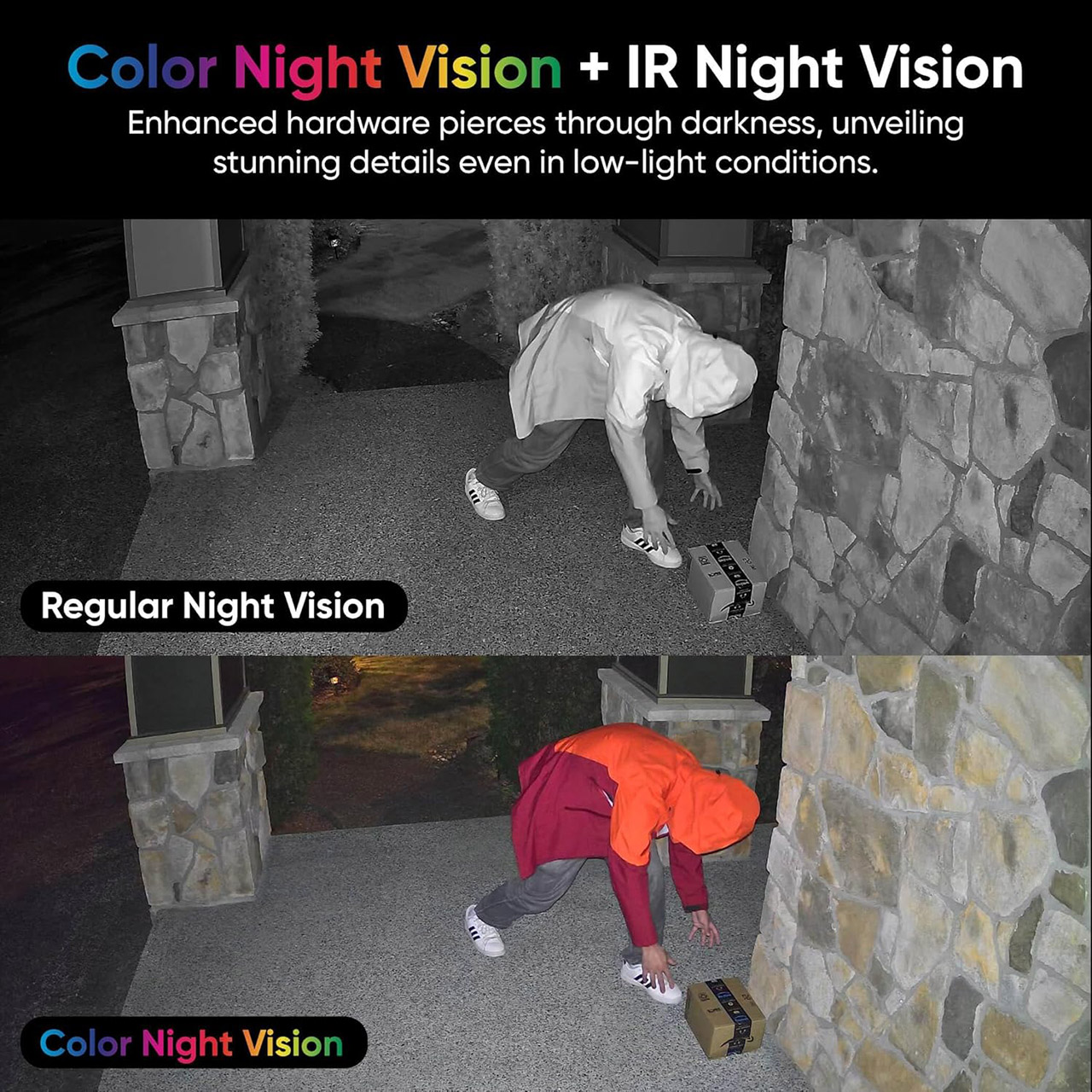
Color night vision is a big plus in low-light situations, as it converts to IR and goes black and white when necessary, but a built-in spotlight kicks in to provide some color detail if something gets close, with a brightness of up to 60 lumens. The footage stays clear at night, allowing you to see what’s going on without being washed out.

Advertisement

Wyze Cam Pan v4 4K Camera
Both 2.4GHz and 5GHz Wi-Fi networks are supported (including Wi-Fi 6, which provides a more robust connection over longer distances). The app makes setup simple, and it works as well indoors and outdoors, thanks to its robust IP65 weather rating. It has a plug-in power supply and no battery, which is good and straightforward.

Wyze Cam Pan v4 4K Camera
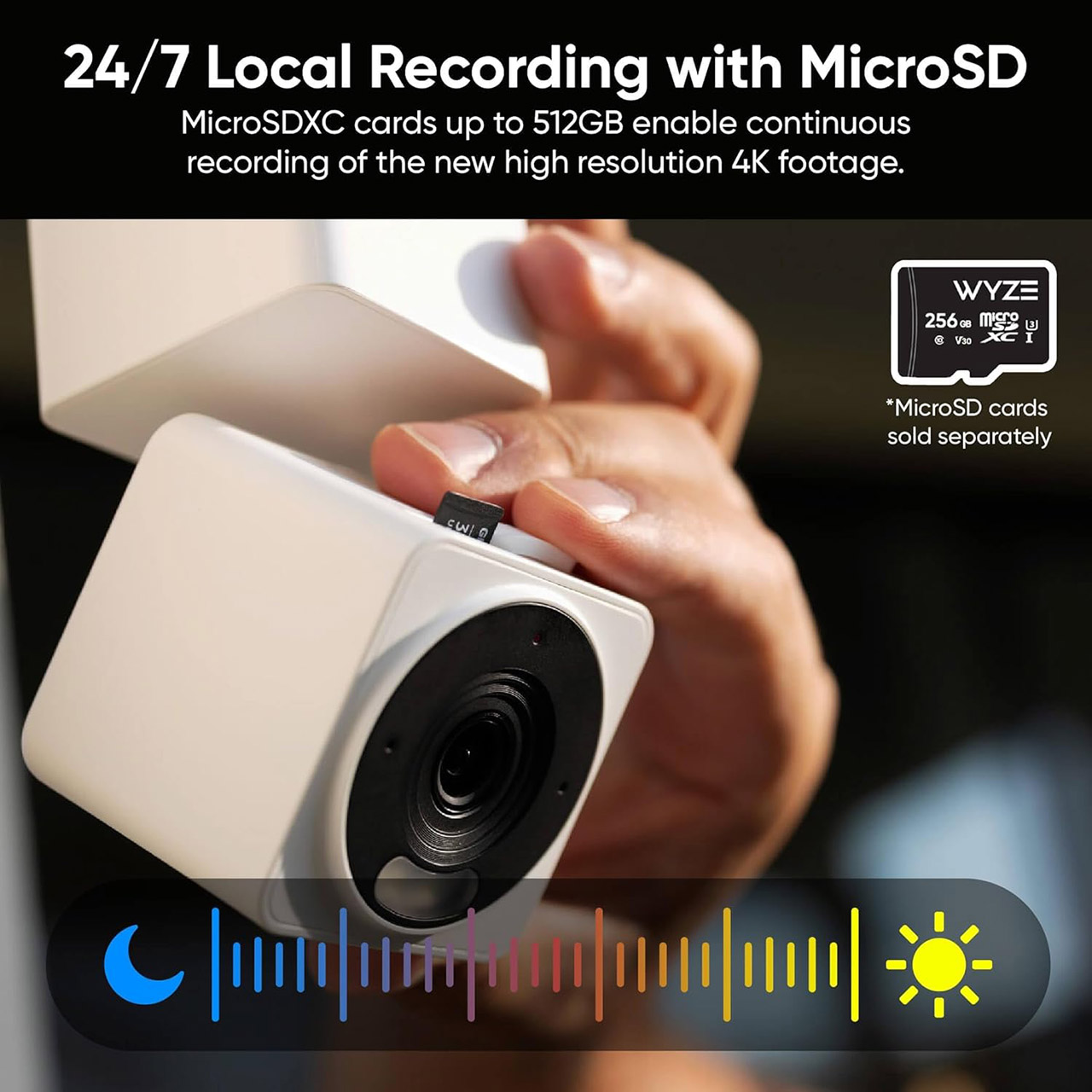
Storage is also reasonably priced, since you can simply insert a microSD card for continuous recording or event footage without incurring any monthly fees. If you wish to store it in the cloud, that is also an option. You also receive two-way audio (with a built-in speaker and microphone) and a 100dB siren in case you need to alert unwelcome visitors.

Wyze Cam Pan v4 4K Camera
The video quality runs at 20 frames per second during the day and 15 at night, which reduces file size while maintaining smooth action. Digital zoom can reach up to 8x, allowing you to zoom in on distant features without sacrificing too much quality in 4K. At a time when most inexpensive security cameras still use 1080p, the Wyze Cam Pan v4 is quietly raising the bar for everyday security.

Source link

Continue Reading

Tech

Starbucks discloses data breach affecting hundreds of employees

Published

on

Starbucks

Starbucks has disclosed a data breach affecting hundreds of employees after threat actors gained access to their Starbucks Partner Central accounts.

As the world’s largest coffeehouse chain, Starbucks has over 380,000 employees (also known as partners) and operates nearly 41,000 locations across 88 countries.

In data breach notification letters filed with Maine’s Attorney General and sent to affected employees on Tuesday, the company says that it discovered the incident on February 6.

A joint investigation with external cybersecurity experts found that the attackers compromised 889 Starbucks Partner Central accounts used to manage employment details, personal information, benefits, and HR information.

Advertisement

Starbucks said the threat actors had access to affected individuals’ accounts between January 19 and February 11, but didn’t explain why it took five days to remove them from its systems.

“On or about February 6, 2026, Starbucks Corporation (‘Starbucks’ or ‘we’) became aware of potential unauthorized access to certain Starbucks Partner Central accounts,” the company said. “The investigation has determined that an unauthorized third party accessed certain Starbucks Partner Central accounts after obtaining the login credentials through websites impersonating Partner Central.”

The personal information exposed in the incident includes employees’ names, Social Security numbers, dates of birth, and financial account and routing numbers.

Starbucks notified law enforcement agencies after discovering the breach and advised employees to monitor their bank accounts for suspicious activity that could indicate fraud or identity theft. The company is also providing impacted partners with two years of free identity theft protection and credit monitoring service through Experian IdentityWorks.

Advertisement

“Upon learning of the incident, we took prompt steps to investigate the nature and scope of the incident and respond to it,” Starbucks added. “We also notified law enforcement and took measures to further strengthen security controls related to access to Starbucks Partner Central accounts.”

A Starbucks spokesperson also told BleepingComputer, after the article was published, that the data breach doesn’t affect customers.

“We recently identified that a limited number of retail partners had inadvertently interacted with deceptive websites impersonating an employee-facing site. This allowed an unauthorized third-party to access certain partner accounts,” the spokesperson said. “We quickly resolved the issue, notified affected partners, and operations have since returned to normal. There’s no impact on customers’ data.”

Starbucks’ Singapore division also confirmed a data breach affecting over 219,000 customers in September 2022, after a threat actor compromised the systems of a third-party vendor that stored the affected customers’ data.

Advertisement

The coffee chain was also hit by the aftermath of a Termite ransomware attack that affected Blue Yonder (Starbucks’ supply chain software provider) in November 2024.

Update March 13, 13:34 EDT: Added Starbucks statement.

Malware is getting smarter. The Red Report 2026 reveals how new threats use math to detect sandboxes and hide in plain sight.

Download our analysis of 1.1 million malicious samples to uncover the top 10 techniques and see if your security stack is blinded.

Source link

Advertisement
Continue Reading

Tech

A whole new ballgame for trading cards: Startup uses robots and AI to sort and analyze collections

Published

on

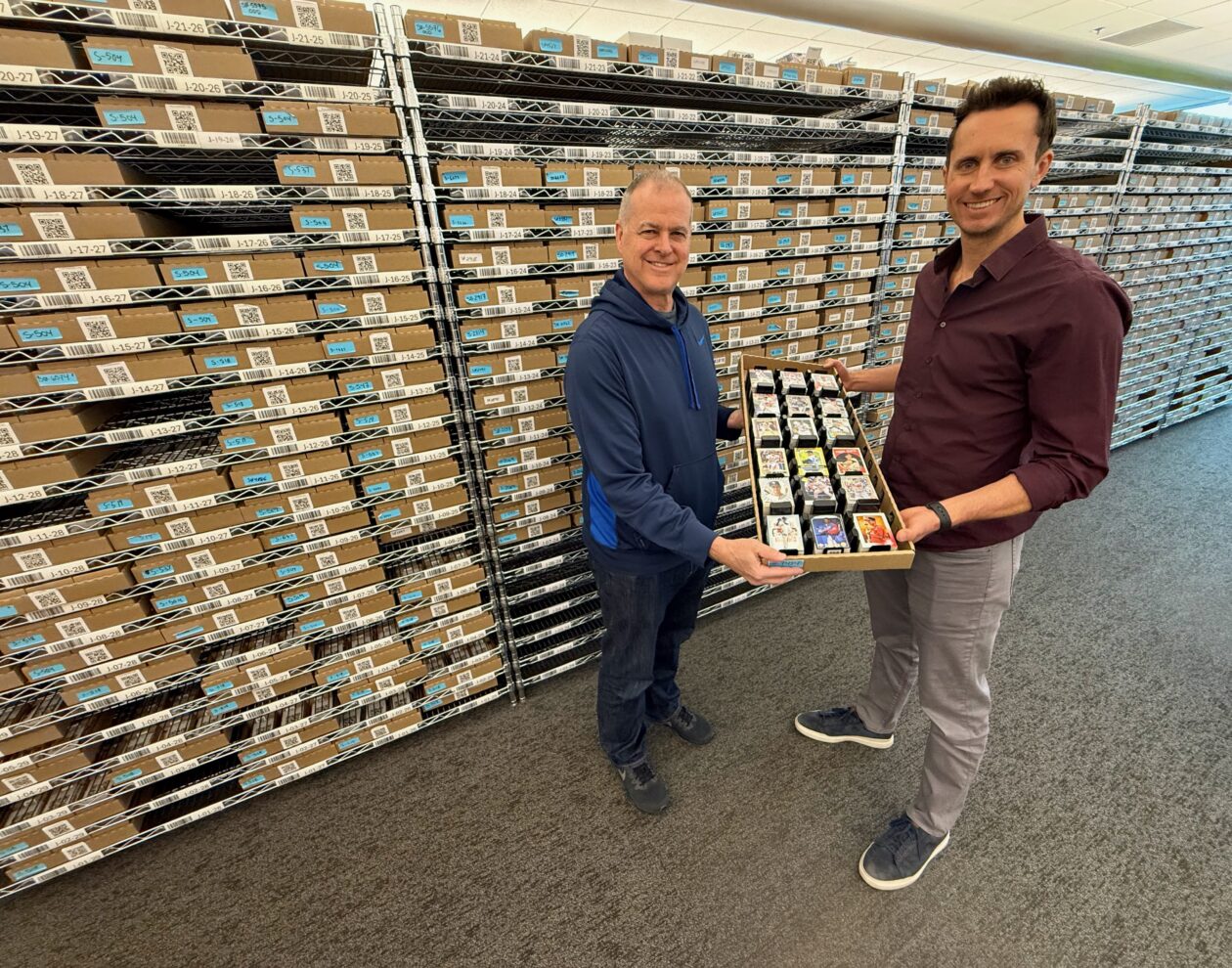
Gradient CEO Tim Clothier, left, and CTO Matt Lubbers hold one of the thousands of trays of trading cards that have been processed by the company’s robotics and AI systems at the startup’s Renton, Wash., headquarters. (GeekWire Photo / Kurt Schlosser)

Matt Lubbers says the genesis for his new startup was a visit to his friend Tim Clothier‘s house, where a living room view of Mount Rainier was partially obstructed. The problem? A mountain of trading cards from Clothier’s personal collection was in the way.

They weren’t just in the living room. The garage was full of boxes of cards stacked on top of more boxes. A longtime collector, Clothier numbers his lot at about 7 million cards. Separating and organizing them all by hand, he figured he could handle about 25,000 cards a week. He told his wife it would take about 15 years to sort them at that pace.

“I don’t think it was crazy for me to say, ‘What are you doing here?’” Lubbers told GeekWire.

“My friends, when they’re over, I’ll be sorting and they kind of run the other way,” Clothier said.

But Lubbers was different, as Clothier explained: “Matt’s very inquisitive and he started asking questions, and he said, ‘What do you think technology could do for you?’”

Advertisement

More than four years after that initial conversation, the startup co-founders are answering that question. Renton, Wash.-based Gradient is up and running, using custom robotics and artificial intelligence to help sort, analyze, list and sell sports trading cards, gaming cards, and more.

The goal is to grab a slice of the $15 billion U.S. trading card market, to help customers manage collections small and large, and to simply and quickly get a return on eBay for sometimes forgotten treasures.

Card geeks and engineers

Boxes of trading cards mailed to Gradient from customers around the U.S. In the back corner, a makeshift studio where Gradient livestreams card auctions on eBay. (GeekWire Photo / Kurt Schlosser)

The stealthy operation is located across the hall from the headquarters offices for Seattle Sounders FC at the soccer club’s Renton facilities — the Providence Swedish Performance Center & Clubhouse. Sounders majority owner Adrian Hanauer is an investor in Gradient, which has raised $6 million from mostly friends and family.

Clothier, the CEO, has known Hanauer since he was 15 years old. He spent 30 years at Pacific Coast Feather Co., the Hanauer family’s onetime pillow and blanket manufacturing business.

The sprawling Gradient space looks like any upstart tech company office with a few notable exceptions. There are boxes upon boxes full of trading cards everywhere, stacked near rows of rolling racks also containing boxes of cards — 10 million in all and room for three times that.

Advertisement

A close look at any open box or neat stack of cards reveals the faces of sports heroes past and present across baseball, football, basketball, hockey and more.

Around a few tables there are employees shuffling through some cards by hand. Others at computer stations digitally flip through card files or write the code that helps manage such work. The environment is a mix of card geeks and engineers.

And in one corner, the hum of eight robotic sorters can be heard, pulsing with little bursts of air and whirring as components move cards back and forth on a custom rigging apparatus that looks like something from a rock concert stage.

The system is the brainchild of Lubbers, the chief technology officer, who is a computer vision and AI expert who spent the past 15 years building complex systems and robots for autonomous vehicles and self-flying drones at ZF Group, Faraday Future, Voyage, Amazon Robotics and Zipline.

Advertisement

“We saw that there wasn’t much tech, at the time, in this industry. That’s what got us excited,” he said. “What if we could process cards extremely fast? What if we could reduce the amount of time someone, a customer or even expert, took to identify or price or list the card? That’s what we built.”

Up to 100,000 cards a day can be processed by the robots — and there is room to add more machines.

Stacks and rows of trading cards in a custom storage and rack system at Gradient. (GeekWire Photo / Kurt Schlosser)

Lubbers is especially protective of what he’s built, and wasn’t ready yet for GeekWire to shoot photographs or video of the robots at work.

Under bright lights, the machines rapidly move cards to flatbed scanners to capture images of the card backs as cameras positioned overhead take photographs of the card fronts. Every single card is physically and digitally cataloged.

While it may sound like fast-moving robots could be a recipe for disaster when mixed with delicate and sometimes quite valuable paper cards, the system is impressive. From the shape of the 3D-printed trays in which the cards are picked and then dropped, to the buttery soft suction fingers that gently lift each card, there is great care taken to never mark or damage any card.

Advertisement

The collected images are instantly sent to a nearby server room where three custom supercomputers — utilizing a high-density configuration similar to NVIDIA’s H100 or H200 chips — house six GPUs each. These machines handle all AI model training and inference testing, crunching through 500,000 images a day to analyze and score cards against a database of 30 million variants.

Storing and managing a collection

A baseball trading card for Seattle Mariners great Edgar Martinez sits at the center of a pile of cards in the Gradient office. (GeekWire Photo / Kurt Schlosser)

Gradient joins an increasingly tech-heavy ecosystem where AI-powered platforms like Ludex, CollX, Card Boss and eBay’s own scan-to-list feature are already used by collectors to instantly grade and price cards with quick scans via mobile phone apps. Gradient’s closest industrial competitor is probably TCG machines, which makes a robotic sorter used by card shops to process thousands of cards an hour.

Gradient’s goal beyond demonstrating how quickly it can process and accurately assess many thousands of cards is also to prove that it can efficiently store them, find them easily via QR-coded boxes and trays, and move them on the collectors’ market.

The company is just getting started in attracting customers, but its largest so far has given Gradient more than 500,000 cards to process.

Different subscription price tiers attract different customers and collection sizes. Pay-as-you-go card scanning runs 40 cents per card. A premium level subscription is $9.99 per month for up to 10,000 cards; Pro is $29.99 per month for up to 30,000 cards; and Commercial is $99.99 per month for up to 100,000 cards. The levels include secure storage and other perks.

Advertisement

Customers gain access to a personal web portal where they can manage their collections and see images of their cards, read the card details, list them on eBay through the Gradient Collects store, and monitor active and sold listings. A customer can choose one card or “send all my cards to eBay” and Gradient’s system will generate such a request.

Gradient takes between 16% and 20% per sale, depending on the subscription level, with 13% or 14% of that covering the costs with eBay.

The startup, which employs 25 people, streams live auctions on eBay where hosts excitedly open packs of Pokémon cards from a makeshift in-house studio located behind piles of boxes. And the company is also building its own marketplace so it can give customers the option of listing with Gradient, eBay or both.

Like a kid opening a fresh pack of cards at the corner mini mart, the possibilities with Gradient seem pretty endless. Especially for the kid, or, let’s face it, the adult collector, who finally uncovers those attic shoeboxes stuffed with thousands of cards and doesn’t know where to start.

Advertisement

“Our job is to help you digitize and inform you what you have, and then you get to choose what you wanna do with it,” Lubbers said.

Source link

Continue Reading

Tech

This At-Home Hair Growth System Just Dropped in Price

Published

on

The iRestore Elite Helmet + Battery is on sale, from March 15 through March 31, dropping to $1,879 ($419 off). Considering the helmet alone retails for $1,899, this deal scores you a rechargeable battery at no extra cost.

The additional battery makes the treatments far more convenient. Instead of being tethered to a wall outlet, you can move around during sessions. A single charge lasts roughly two weeks of daily 12-minute treatments, so you won’t even need to recharge often.

IRestore Elite Helmet + Battery for $1,879 ($419 off)

iRestore

Elite Helmet + Battery

Advertisement

IRestore Elite combines LEDs with its proprietary laser diodes that operate in the 655 to 680 nanometer range; the combination is designed to penetrate deeper than standard red light therapy, while the LEDs help distribute the light evenly across the scalp for maximum efficacy. Treatments take just 12 minutes a day, but like most routines, consistency is crucial. Fortunately, the included storage case makes it easy to keep up the habit even when you’re traveling.

WIRED reviewer Julia Forbes spent 16 weeks testing the iRestore Elite on both herself and her husband, who are dealing with different degrees of hair thinning and loss. Within two weeks of consistent use—alongside iRestore’s shampoo, conditioner, supplements, and serum—her husband started noticing baby hairs sprout along his receding hairline and more fullness at the crown. Forbes discovered that the treatments help prevent eczema flare-ups on her scalp.


Power up with unlimited access to WIRED. Get best-in-class reporting and exclusive subscriber content that’s too important to ignore. Subscribe Today.

Source link

Advertisement
Continue Reading

Trending

Copyright © 2025