Connect with us
DAPA Banner

Tech

Bluesky raises $100M Series B as new CEO takes charge

Published

on

Ten days after founder Jay Graber stepped aside as CEO, the decentralised social platform has disclosed a $100 million Series B led by Bain Capital Crypto, a round that closed last April but was never announced. The timing tells its own story.


There is a quiet irony in the fact that the person who built Bluesky shares her given name with it. Lantian Graber -“blue sky” in Mandarin, a name her mother gave her as a wish for boundless freedom, spent four years turning a Twitter research project into a platform of over 43 million users, a functioning decentralised protocol, and a genuine alternative to the platforms her users had fled. Then, on March 9, 2026, she stepped back.

The company announced on Thursday that it had raised $100 million in a Series B round led by Bain Capital Crypto, with participation from Alumni Ventures, True Ventures, Anthos Capital, Bloomberg Beta, and the Knight Foundation. The round closed in April 2025. Bluesky is only disclosing it now.

The gap between closing and announcing is itself worth pausing on. For most startups, fresh funding is a press release and a celebratory tweet. Bluesky’s choice to sit on $100 million for nearly a year, and to surface it only after a leadership transition, suggests a company more focused on building than on performing momentum. 

Advertisement

The 💜 of EU tech

The latest rumblings from the EU tech scene, a story from our wise ol’ founder Boris, and some questionable AI art. It’s free, every week, in your inbox. Sign up now!

That leadership now belongs, on an interim basis, to Toni Schneider. The former CEO of Automattic, the company behind WordPress.com, and a partner at True Ventures, Schneider had been advising Graber and the company for over a year before agreeing to step in as the board runs a permanent search.

Graber, for her part, is not going anywhere: she moves into a newly created role as chief innovation officer, focused on building out the AT Protocol, the open social infrastructure that underpins Bluesky’s ambitions.

Advertisement

The split is, by tech company standards, unusually clean. Graber’s own framing was precise: “As Bluesky matures, the company needs a seasoned operator focused on scaling and execution, while I return to what I do best: building new things.” That is not the language of a forced exit. It is the language of a founder who knows what she is good at and, more unusually, what she is not.

Graber was hired by Jack Dorsey in August 2021 to lead what was then a Twitter-funded research initiative into decentralised social media. When she incorporated the project as an independent company later that year, she inherited both an audacious technical premise and a nearly impossible PR challenge: how do you build a decentralised network for people who are, by definition, not yet there?

She managed it. By the time of its $15 million Series A, led by Blockchain Capital in October 2024, the platform had 13 million users. It now has 43 million.

The jump from $15 million to $100 million in a single round reflects more than user growth. It reflects a shift in how investors are reading the decentralised social space, and specifically, Bluesky’s position within it. Where early rounds were bets on a protocol and an idea, this one is a bet on a platform with real scale and a community with demonstrated loyalty.

Advertisement

Bain Capital Crypto’s lead role is worth noting. The firm invests across crypto and web infrastructure, and the AT Protocol, which separates a user’s identity, data, and social graph from any single application, has structural similarities to blockchain-era promises of user ownership, but with far more practical traction.

Knight Foundation’s involvement signals that the press freedom and open-internet communities continue to see Bluesky as infrastructure worth backing, not merely a product.

The money arrives at a moment when Bluesky needs to resolve a tension it has so far managed to defer: how does a platform that has built its identity around rejecting surveillance advertising and algorithmic manipulation actually make money?

The company’s stated model involves subscription services and domain registration fees, functional, but modest. It has not yet demonstrated that this can support a company of its ambitions at the scale it is reaching.

Advertisement

Schneider’s appointment is, in part, an answer to that question. Automattic navigated a similar challenge: it built a massive open-source ecosystem around WordPress and then constructed a sustainable commercial layer on top of it, largely through premium hosting and business services.

If Bluesky follows a comparable path, open protocol beneath, paid services above,it has a template. Whether social networking, with its shorter attention spans and higher churn, tolerates the same approach is not obvious.

The competitive context has shifted considerably since Bluesky’s early days as a curiosity for journalists and tech workers fleeing Elon Musk’s rebranded X. Meta’s Threads, which uses the rival ActivityPub protocol and has been gradually federating with the broader Fediverse, has grown into a formidable alternative with a user base an order of magnitude larger. X itself remains the dominant venue for real-time public discourse, despite persistent predictions of its collapse.

Bluesky’s differentiator has always been structural rather than purely social. The AT Protocol’s architecture, in which a user’s identity and social graph are portable, not locked to any single server, is meaningfully different from both X’s centralised model and Mastodon’s federated but technically demanding alternative. 

Advertisement

What is clear is that the company Graber built has survived its first real test: not the technical challenge of building a decentralised protocol, which it managed, but the organisational challenge of outgrowing its founder without losing what made it worth building in the first place. Schneider’s job is to turn that survival into something more permanent. The AT Protocol, and the 43 million people who have joined so far, will be watching.

Source link

Advertisement
Continue Reading
Click to comment

You must be logged in to post a comment Login

Leave a Reply

Tech

Epic Games has released a huge Fortnite Unreal Editor update that lets you design your own Star Wars islands, and now I’m yearning for Battlefront 3 even more than before

Published

on


  • A new Fortnite Unreal Editor update has been released
  • The update adds all-new Star Wars-inspired assets and tools
  • Creators can design their own Star Wars islands and publish them from May 1

Epic Games has released a huge Fortnite Unreal Editor update that lets players create their own Star Wars islands.

As of today, Fortnite developers can access a curated collection of assets and tools from Epic Games’ “largest IP toolset to date” and build Star Wars-inspired maps in Unreal Editor for Fortnite (UEFN) and Fortnite Creative.

Source link

Advertisement
Continue Reading

Tech

Android Canary update brings big changes, but nothing is guaranteed

Published

on

Google has rolled out a fresh Android Canary build, and it looks more complete than you might expect from an experimental release. The catch is simple. This version exists to test ideas, not to promise them.

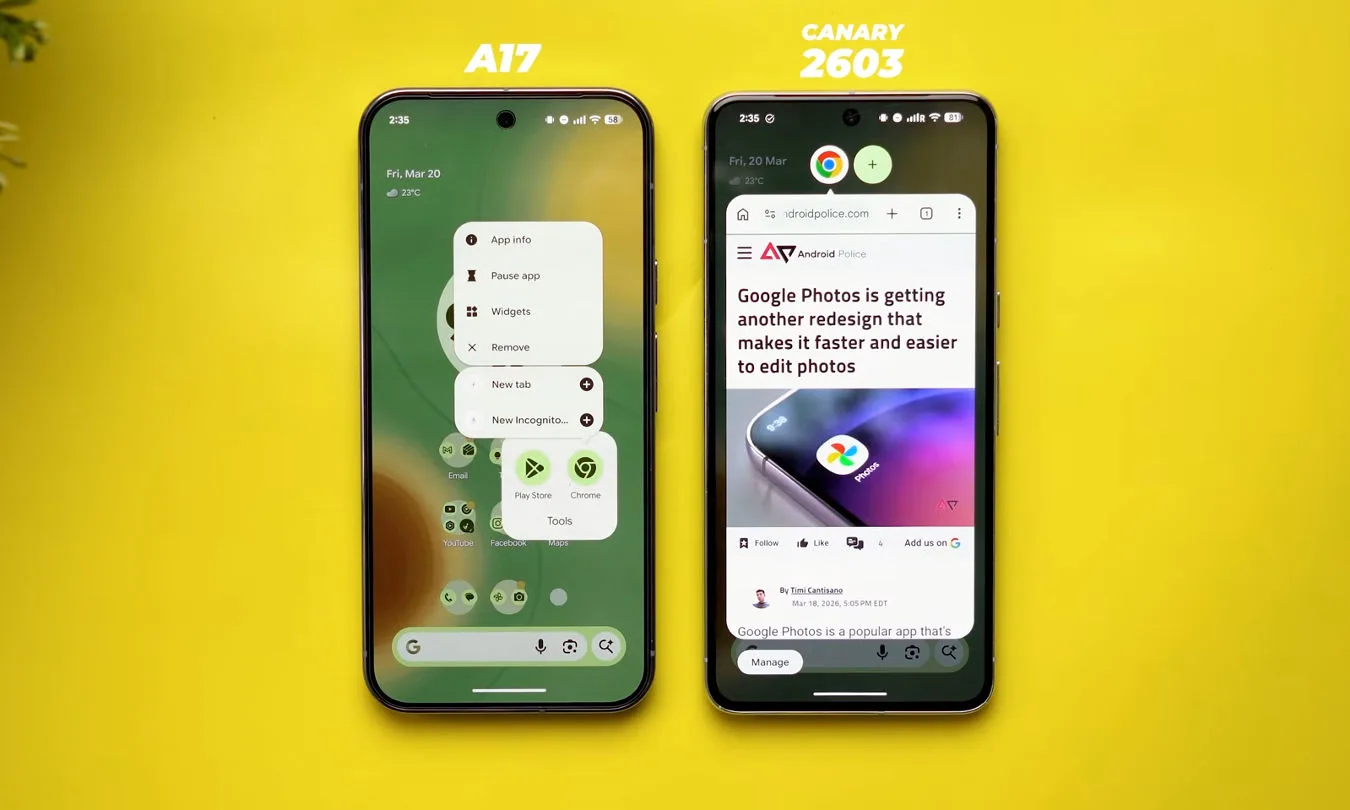
Android Canary 2603 bundles practical additions like app lock, chat bubbles, and a redesigned screen recorder. It’s available across a wide range of Pixel devices, but this update is meant for developers rather than everyday use

That context matters when reading into any of these changes. Features shown here can still be removed before a stable release, even if some eventually appear in beta builds.

Even so, this build offers a useful snapshot of where Android may be heading next.

Advertisement

New features worth watching

App lock is one of the most practical additions. You can now long press an app and secure it directly, which adds a layer of privacy without digging through settings menus

That same menu also activates bubbles more fully. Conversations can float on screen as overlays, making multitasking feel more natural than before

The screen recorder has also been reworked into a floating pill interface. It lets you quickly choose between recording the full screen or a single app, then moves you into a preview flow where you can edit, delete, or share the clip

Google has even refined smaller details. The long press menu now groups shortcuts into a cleaner layout that expands only when needed.

Why this update isn’t final

There’s a reason none of this should be taken as final. This channel exists for developers to explore early features and APIs, not as a preview of what will ship next

Advertisement

That gap between polish and certainty is important. Some features already feel complete, but they can still be adjusted or dropped before Android 17 reaches stability. Even changes that move into beta are not guaranteed to stick.

There’s also a tradeoff to consider. Canary builds aren’t designed for daily use, so most people won’t try them unless they’re comfortable dealing with bugs or manual installs.

What you’re seeing here is Android in an active state of change, with ideas being tested in public before decisions are locked.

What to expect next

Some of the smaller changes hint at a broader direction. The return of separate Wi-Fi and mobile data toggles suggests a rethink of earlier design decisions, while heavier use of blur points to ongoing visual refinement

There’s still no clear timeline for what carries forward. Google hasn’t confirmed which of these features will land in Android 17 or when they might reach stable devices, even on supported Pixel models.

Advertisement

If you’re tracking Android’s evolution, the next step is to watch what shows up in beta builds. That’s usually where experimental ideas start turning into features you’ll actually use.

Source link

Advertisement
Continue Reading

Tech

Greater Than Zero: The Anti-AI Pushback On Gaming Preservation Efforts Makes No Sense

Published

on

from the the-enemy-of-the-good dept

There is an old axiom you will have heard of before: don’t let the perfect be the enemy of the good. If we wanted to boil this down to a math equation, it might be described as something like: 0 < any positive integer. It’s not a difficult concept to grasp, typically, until you add in a dash of near-religious ideology into the equation. And that’s where the anti-AI crowd comes in.

Dustin Hubbard heads up Gaming Alexandria, a site dedicated to the preservation of obscure corners of video game history. Focused less on the actual games themselves, Gaming Alexandria instead focuses its efforts on media surrounding those games, such as manuals, box art, and old gaming journalism outputs. To that end, Hubbard’s group has amassed an impressive number of Japanese magazine scans throughout the years. To make this content useful to researchers elsewhere, he built a low-footprint app to make those scans searchable and, more importantly, to translate them. A Patreon page and subscriptions partially funded all of this.

And that’s what had Hubbard issuing apologies over this past weekend.

A day after that project went public, though, Hubbard was issuing an apology to many members of the Gaming Alexandria community who loudly objected to the use of Patreon funds for an error-prone AI-powered translation effort. The hubbub highlights just how controversial AI tools remain for many online communities, even as many see them as ways to maximize limited funds and man-hours.

“I sincerely apologize,” Hubbard wrote in his apology post. “My entire preservation philosophy has been to get people access to things we’ve never had access to before. I felt this project was a good step towards that, but I should have taken more into consideration the issues with AI.”

Advertisement

And this is where we enter the realm of the silly. I’m not some AI evangelist. I fully recognize that there are error and other problems with AI… and I imagine there always will be, to some extent. AI is not always, or perhaps even mostly, the right tool to use. Nor will it always have benefits that outweigh problems it creates for we human beings.

But a positive number is greater than zero. This was a tool that suddenly made all of this culture content accessible to a wider range of people. Before it was not available to anyone that didn’t have a high-level of knowledge on the Japanese language. Translation errors also happen with human translators, too. We need only look at the ancient religious texts, and the very real wars started over their translations, to understand that.

Hubbard himself attempted to make this point over the weekend.

Writing on Patreon this weekend, Hubbard said he has long been tinkering with an improved automated OCR and translation process that could help turn more of those magazine scans into useful tools for Western researchers. And when he put Google Gemini AI model to the task recently, he said he was “blown away” by the results. While he still recommended using a professional human translator before citing these magazines in any scholarly research, he said the output from the Gemini AI tool “gets you a large percentage of the way there quickly.”

Inspired by those results, Hubbard set to work on a self-described “vibe coded” interface to view the original PDF scans alongside their AI-generated text translations for easy comparison and editing. The result was the Gaming Alexandria Researcher tool, posted to GitHub on Friday and shared with the site’s Patreon backers as a “beta” on Saturday. The tool, which runs locally on Windows, Mac, or Linux, can search, download, and edit Gaming Alexandria’s files from the cloud or sort through local files stored on your own machine.

Advertisement

“This app has been something I never would have dreamed could exist,” Hubbard enthused. “Now I can finally read and enjoy these Japanese magazines I’ve been scanning for years. A large part of that is due to your believing in my work and funding me so thank you so much for that.”

The negative responses he got for all of this are wild. There were calls to boycott the project. Calls to rescind Patreon subscriptions. Max Nichols, a game designer, cancelled his own Patreon membership and decried the project as “worthless and destructive”, likening any output generated using AI-based translations as “looking at history through a clownhouse mirror.”

I would argue that I’d rather get that look than get no look at all. I’d also argue that we need to see very specific examples of AI-created translation errors to understand just how grounded these criticisms are in reality, versus all of this being a case of overstating the case.

Some fans of the site, at least, managed to understand the context here.

Advertisement

For some supporters, though, using machine translations—including ones aided by AI models—is a practical necessity given the size of the task at hand. “There’s no world in which they could ever get hundreds of thousands of pages translated by hand,” game preservationist Chris Chapman wrote on social media. “Error-prone searchability is more useful to more people than none at all.”

“Famitsu alone is over 1,900 issues, each with [a hundred-plus] pages,” journalist and author Felipe Pepe noted. “That’s one magazine from one country. [Human translation] would be ideal, but it’s impossible.”

On the Gaming Alexandria Discord, user asie wrote that people who use tools like Google Lens or DeepL are already using AI-powered OCR and translation tools. At this point, these kinds of tools are “just a fact of reality,” they added.

Again, any positive number is greater than zero. Don’t let the perfect be the enemy of the good. Something is better than nothing.

I don’t know how to explain the negative responses here as anything other than a ideological commitment to disliking anything that even remotely touches upon artificial intelligence. Absolute moral stances certainly have their place, but they sure ought to be used sparingly.

Advertisement

And this particular stance is silly.

Filed Under: ai, ai translations, preservation, translations, video games

Source link

Advertisement
Continue Reading

Tech

BANDIT Handheld Computer Packs a ColorForth Machine and Chording Keyboard Into Your Pocket

Published

on

BANDIT Handheld Computer
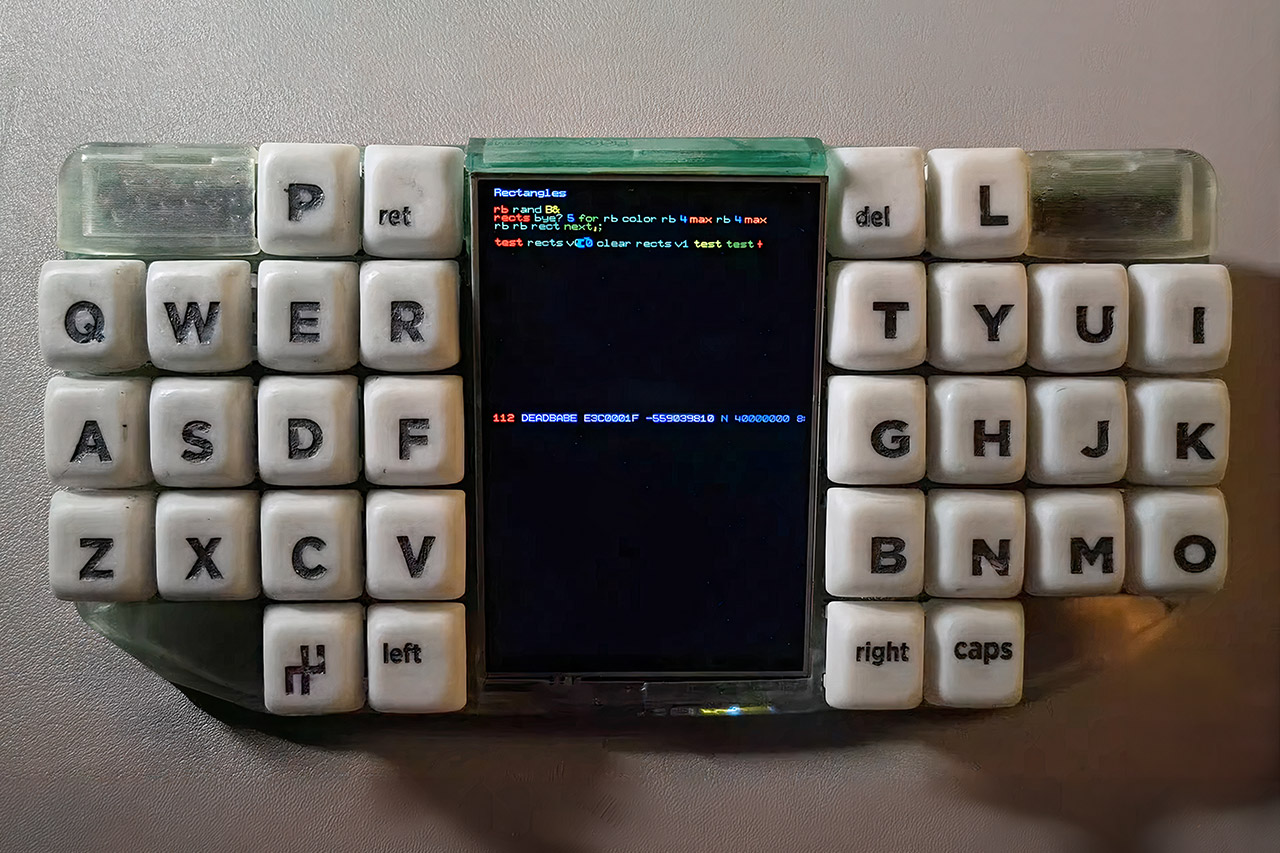
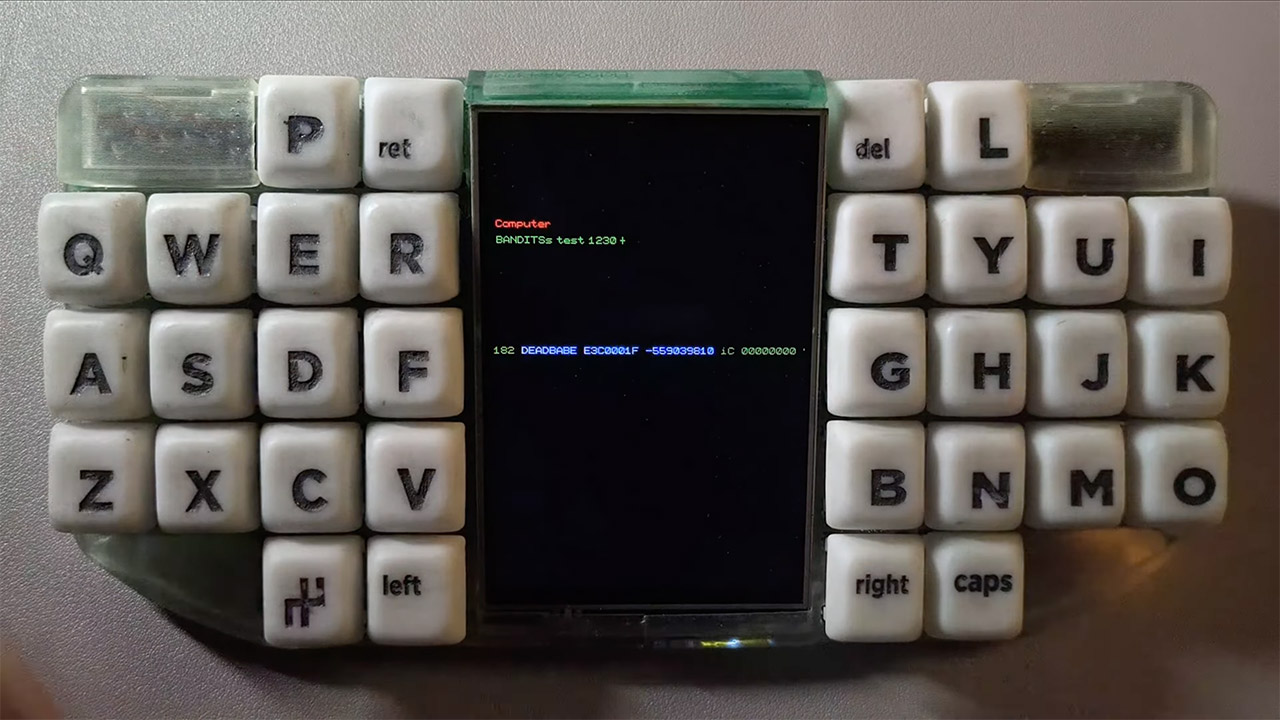
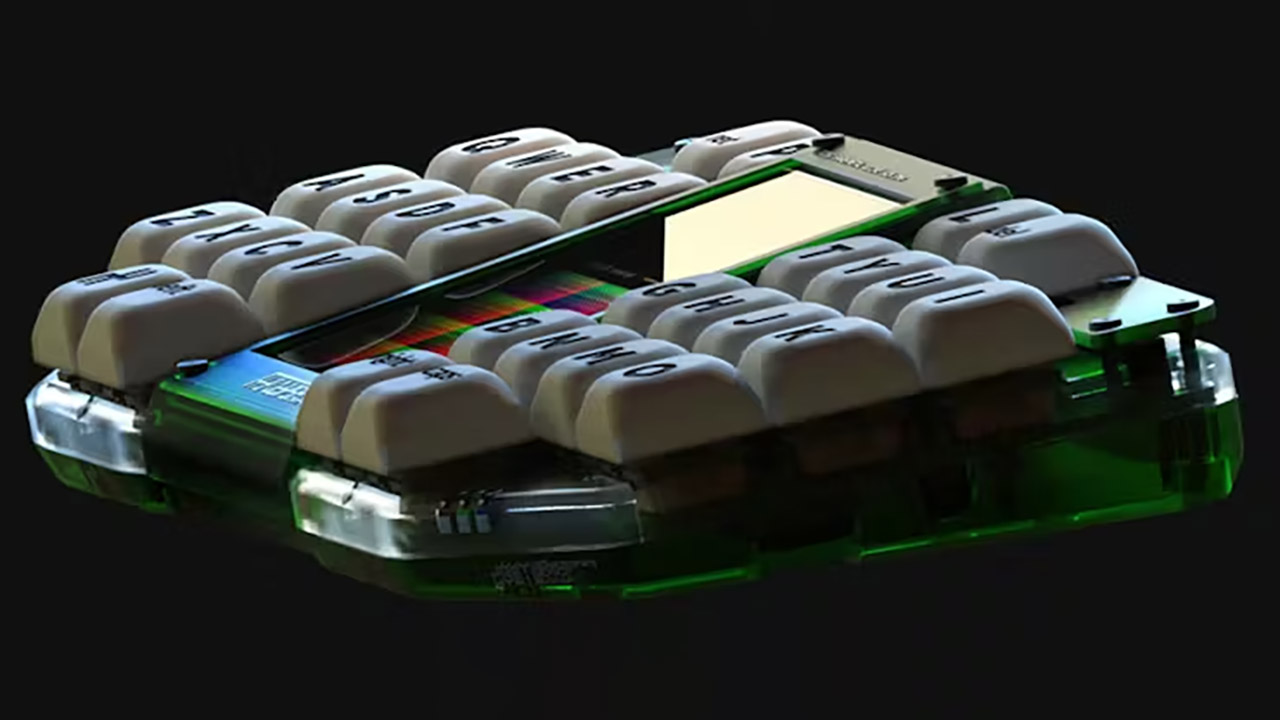
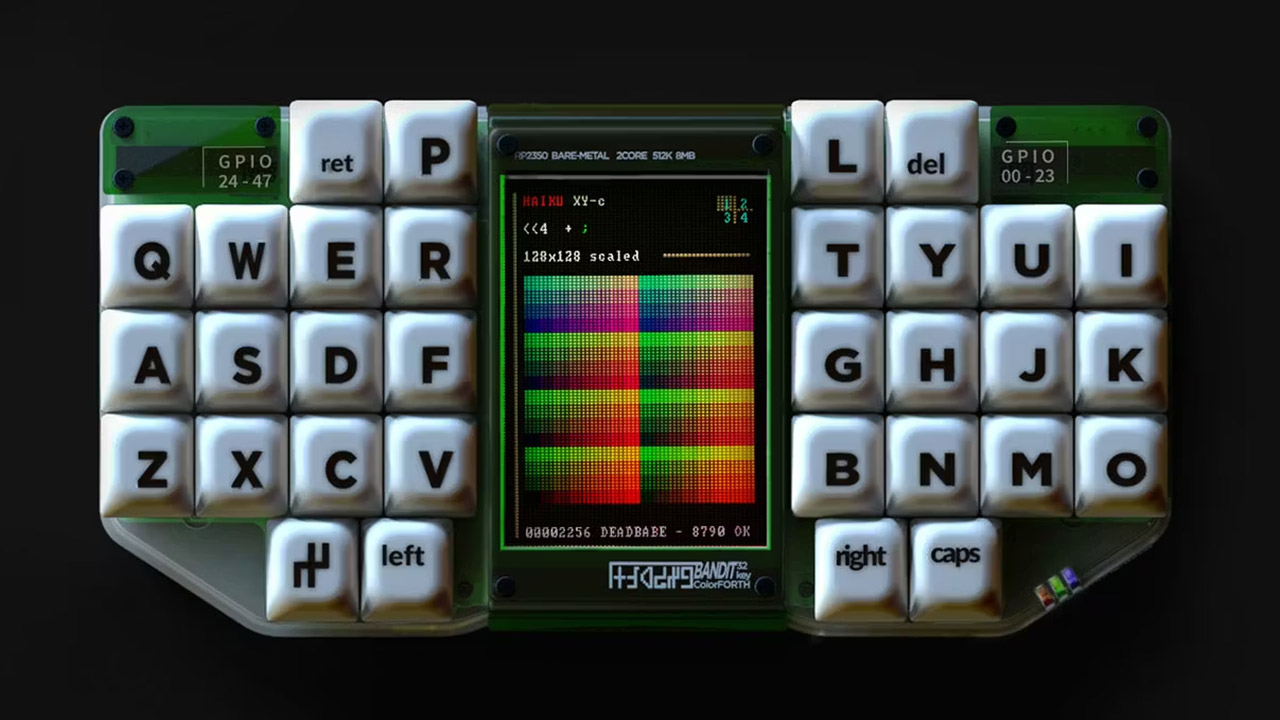
BANDIT is a fully functional computer that sits comfortably in both hands and is ready to go the moment you power it on. The keys are split across each side with a color display sitting in the middle, and rather than typing one character at a time, the whole thing runs on a chording system where pressing multiple keys simultaneously produces complete letters or commands. Every possible combination the keyboard can produce is mapped to a single clean number within the system, keeping things elegantly simple under the hood.


Pick it up, flip it open, and you are straight into it with no waiting for anything to load or update. The four inch color display is touch sensitive and can be divided into multiple regions handling different functions simultaneously. If you need more screen real estate, plugging in an HDMI cable will push the same output to a larger monitor or television without any extra setup required.

Sale


ASUS ROG Xbox Ally – 7” 1080p 120Hz Touchscreen Gaming Handheld, 3-month Xbox Game Pass Premium…
  • XBOX EXPERIENCE BROUGHT TO LIFE BY ROG The Xbox gaming legacy meets ROG’s decades of premium hardware design in the ROG Xbox Ally. Boot straight into…
  • XBOX GAME BAR INTEGRATION Launch Game Bar with a tap of the Xbox button or play your favorite titles natively from platforms like Xbox Game Pass…
  • ALL YOUR GAMES, ALL YOUR PROGRESS Powered by Windows 11, the ROG Xbox Ally gives you access to your full library of PC games from Xbox and other game…

BANDIT Handheld Computer
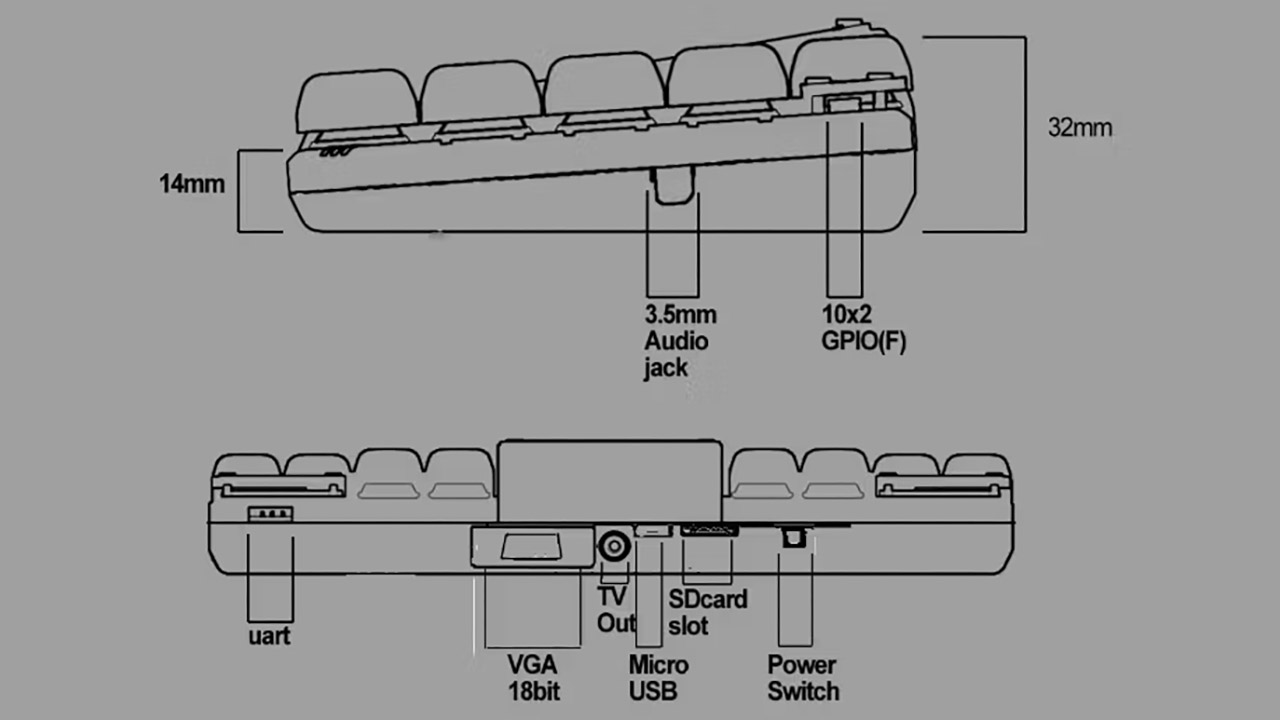
Power comes from a 700 megahertz Allwinner processor, which is backed up by 32 megabytes of RAM. Storage options include a microSD card or shared folders via the built-in wireless connectivity. Two regular battery cells are sufficient to keep everything running for several hours away from the power source. If you have a project in mind that requires additional input, 35 convenient pins provide direct access to external circuits or sensors through easy connectors.

BANDIT Handheld Computer
The beauty of BANDIT is that it does not require a regular operating system to function. ColourForth runs the entire show, creating, compiling, and executing code in a single fluid motion. Built-in editors cover source text, pixel graphics, tile layouts, music patterns, assembly, and live debugging, and the greatest part is that your work is never lost because the system remains awake and resumes precisely where it left off.

BANDIT Handheld Computer
On the performance side, the display handles over three thousand sprites at sixty frames per second without breaking a sweat, and the audio engine generates six channels of FM sound on the fly with full support for high resolution digital samples. It sounds complicated, but the learning curve is more forgiving than you might expect. Chording takes a little getting used to, though once it clicks you can move surprisingly fast, and the system is deep enough to build fully fledged games or tools if you want to go that far.

BANDIT Handheld Computer
Wireless connectivity lets you link up with phones, laptops, or other BANDIT units and move files between them without any fuss. Preorders are open right now at $170 with a handful of casing colors to choose from, and units will ship as soon as the team finishes their final inspection. Every BANDIT arrives fully assembled and tested, keyboard switches, screen, and wireless module included, so you can get straight to it out of the box.
[Source]

Advertisement

Source link

Continue Reading

Tech

Google Unveils New Process For Installing Unverified Android Apps

Published

on

It’s no secret that Google really doesn’t like it that people are installing Android applications from any other source than the Play Store. Last year they proposed locking everyone into their official software repository by requiring all apps to be signed by verified developers, an identity which would be checked against a Google-maintained list. After a lot of pushback a so-called ‘advanced flow’ for installing even unsigned APKs would be implemented, and we now know how this process is supposed to work.

Instead of the old ‘allow installing from unknown sources’ toggle, you are now going to have to dig deep into the Developer Options, to tap the Allow Unverified Packages setting and confirm that nobody is forcing you to do this. This starts a ‘security delay’ of twenty-four hours after you restart the device, following which you can finally enable the setting either temporarily or permanently. It would seem these measures are in place to make it more difficult for a scammer to coerce a user into installing a malicious app — whether or not that’s a realistic concern or not, we’re not sure.

When we last covered this issue this ‘advanced flow’ had just been introduced as an appeasement option. In addition to this a limited free developer account was also pitched, which now turns out to allow for up to only 20 device installations. If you want more than this, you have to pay the $25 fee and provide your government ID.

Advertisement

Although Google’s public pitch is still that this is ‘for user security’, it will also mean that third-party app stores are swept up in these changes, with developers who publish on these stores subject to the same verification rules. This means that Android users will have to learn quickly how to enable this new option as it will be rolled out to more countries over the coming months.

The reality is that scammers will simply work around this issue by buying up already verified developer accounts. At the same time, it’ll cripple third-party app stores and indie developers who had intended to distribute their Android app by simply providing an APK download.

Advertisement

Source link

Continue Reading

Tech

Amazon acquires autonomous robotics startup Rivr

Published

on

Amazon has acquired Rivr, a startup focused on autonomous robotics. Rivr is based in Zurich and was valued at $110 million in a funding round from August 2024, which both Amazon and its CEO’s Bezos Expeditions participated in. Financial details of the acquisition were not disclosed.

Rivr’s robots have four legs and wheels that allow it to maneuver on stairs and other potentially uneven surfaces. The company just released its second generation of the robot. The purchase will likely further Amazon’s capabilities for ever-faster and more efficient package deliveries.

“This acquisition reflects our commitment to a continued investment in research, which we believe has the potential to further improve safety outcomes and the overall delivery experience for delivery service partners and their delivery associates,” a representative from Amazon told The Information.

Amazon has been working toward introducing automations and robotics at various stages of its shopping business. It deployed its 1 millionth robot last summer and has future goals for automating 75 percent of all its operations.

Advertisement

Source link

Continue Reading

Tech

Refurbished might go mainstream thanks to AI-led price hikes

Published

on

Ireland is making ‘smarter consumption choices’ when buying electronics, says Refurbed co-founder Kilian Kaminski.

The AI boom has had several consequences; a hike in smartphone prices is one.

Predictions expect smartphone prices to jump by as much as 13pc this year, and manufacturers including Oppo, OnePlus and Vivo are already reporting the first wave of these hikes in China. The rest of the world, unfortunately, might not be too far behind.

Rising prices caused by AI’s seemingly insatiable need for memory chips is also expected to create a sharp fall in global smartphone shipments this year, and according to Counterpoint research, as might the US-Israel ongoing strikes on Iran. Similar changes are expected to affect other chip-needing consumer electronics as well.

Advertisement

Amidst all this, however, Vienna-based refurbished electronics seller Refurbed is seeing its business grow. The 2017-founded company recently reported a gross merchandise volume (GMV) growth of more than 40pc year-on-year, with more than €3bn in cumulative sales since launch.

The company operates in 11 EU countries and has plans to expand into 12 more. Last year, it hit profitability and raised €50m to support that expansion.

Aside from phones, the company sells other refurbished gadgets, including computers and kitchen electronics.

Refurbed believes there is an overall shift in consumer behaviour toward refurbished goods, and according to co-founder Kilian Kaminski, that change is mostly a result of tightening economic conditions. Environmental concerns play a consistent, but minor role, in comparison.

Advertisement

“What we see specifically [is] if the price difference between new and refurbished [goods is] bigger, automatically much more consumers are buying [refurbished].”

Ireland, in particular, is making a shift to “smarter consumption choices” in recent times, he says, compared to 2021, when Refurbed launched its services in the country.

In its five years in Ireland, Refurbed has created around €146m in GMV, with more than 200,000 customers and more than 400,000 products sold. A neat 17m kg of CO2 equivalent has also been saved as a result of these second-hand purchases. Plus, more than 50pc of customers have returned, Kaminski says.

Cheaper alternative

There are a few factors working for Refurbed. One, a general price rise in consumer gadgets means second-hand is effectively the cheaper choice, regardless of whether a user is environmentally conscious. Two, a general and continued growth in the first-hand gadgets market means there’s always parts available to use.

Advertisement

“The majority of sustainable products are always more expensive”, Kaminski says, pointing to fair fashion items, for example. But refurbished electronics are cheaper. Plus “you do something positive for the environment, and you get a similar good product like a new product”, he argues.

The company gets a steady supply of old devices from corporations, parts from which get passed around from product to product until they’re back in the circular economy. There’s generally only a few parts that need to be replaced to refurbish a phone anyway, Kaminski notes.

Plus, a relatively recent trade-in program also allows the general consumer to send in some of their old devices. Currently though, this only makes up a small portion of devices they use for refurbishing, something Kaminski wants to expand.

He says that there’s around 7.6m unused electronic items kept idle in Irish homes. These are “valuable resources which are just lying around”, he says, which contain gold, silver, copper, lithium, and other precious materials. “We just started now to motivate customers of really thinking about the value of this device…and bring them back.”

Advertisement

Do you even need a new smartphone?

It is a truth, not yet universally acknowledged, that the most sustainable item you can get is the one you already have (here’s a nifty site to estimate your digital carbon footprint). But why would you even want something new if the upgrade is not what you hoped for?

For years now, research has speculated that consumers are deferring smartphone upgrades on account of slowed innovation. Despite this, smartphone shipments have continued to grow over the years, and manufacturers don’t seem to want to slow down on releasing newer products.

Kaminski says that consumers are “really questioning” whether it makes sense for them to upgrade to a newer model, which is creating a “[huge] growth into the refurbished market”.

This is still only a part of the wider issue that needs to be supplemented with better device design and better support for repair.

Advertisement

During our conversation, Kaminski recalled how even he is unable to repair his own devices, a hobby he once had as a child. “I couldn’t repair my own device because it’s so complex[ly] designed and glued and everything”.

Kaminski is a board member with the European Refurbishment Association, a lobby group advocating for EU’s refurbished market. Refurbed is also a member of the association.

Together, they are working to demand regulatory changes to ensure software updates don’t unnecessarily reduce a smartphone’s lifespan, he says.

Plus, the EU’s so called “right to repair” aims to ensure that manufacturers provide timely and cost-effective repair services.

Advertisement

Don’t miss out on the knowledge you need to succeed. Sign up for the Daily Brief, Silicon Republic’s digest of need-to-know sci-tech news.

Source link

Advertisement
Continue Reading

Tech

OpenAI to reportedly take on Anthropic with new desktop ‘superapp’

Published

on

The new app comes at a time when OpenAI’s popularity is being challenged by Anthropic.

OpenAI is planning to combine its AI chatbot, coding tool and web browser into a desktop “superapp”, multiple news publications have reported.

According to sources, the move is meant to counter fierce competition from the AI giant’s rivals, including Anthropic, which is fast encroaching into OpenAI’s customer base.

As of November 2025, Anthropic had more than 300,000 enterprise customers, while OpenAI had more than 1m. However, recent data shows that Anthropic is now capturing more than 73pc of all spending among companies buying AI tools for the first time, while OpenAI is down to around 27pc.

Advertisement

Meanwhile, Anthropic’s chatbot Claude also overtook OpenAI’s ChatGPT as the most downloaded app in the US this month after the company began engaging in a public feud with the country’s Department of Defense over AI safety concerns.

OpenAI’s new desktop app will combine ChatGPT, Codex and Atlas, an AI-powered web browser launched last October, sources say. It is unclear when the app is expected to launch.

According to sources, OpenAI’s head of applications Fidji Simo will be leading this effort. While company president Greg Brockman will work with Simo on the new product. ChatGPT will continue to be provided as a standalone app.

OpenAI is also attempting to strengthen Codex with its latest acquisition. Astral is a start-up that makes python tools for developers. It is behind popular tools such as ‘uv’, ‘Ruff’, and ‘ty’.

Advertisement

With the acquisition, OpenAI plans to bring Astral’s tools and expertise to accelerate work on Codex and expand its capabilities across the software development lifecycle.

Codex has already seen considerable user growth since the start of the year, with more than 2m weekly active users, OpenAI said. It competes with Anthropic’s widely popular Claude Code and its new tool Cowork, designed to be a simpler version of Claude Code.

Astral is the latest in a string of acquisitions OpenAI has made in recent months. Earlier in March, the company agreed to buy AI security start-up Promptfoo. In January, it purchased AI health-tech Torch. Last month, the company poached the founder of the viral OpenClaw project, Peter Steinberger, to help innovate AI agents.

Don’t miss out on the knowledge you need to succeed. Sign up for the Daily Brief, Silicon Republic’s digest of need-to-know sci-tech news.

Advertisement

Source link

Continue Reading

Tech

Today’s NYT Strands Hints, Answer and Help for March 20 #747

Published

on

Looking for the most recent Strands answer? Click here for our daily Strands hints, as well as our daily answers and hints for The New York Times Mini Crossword, Wordle, Connections and Connections: Sports Edition puzzles.


Today’s NYT Strands puzzle could be tricky for some. First off, it’s an unusual topic. And some of the answers are difficult to unscramble, so if you need hints and answers, read on.

I go into depth about the rules for Strands in this story

Advertisement

If you’re looking for today’s Wordle, Connections and Mini Crossword answers, you can visit CNET’s NYT puzzle hints page.

Read more: NYT Connections Turns 1: These Are the 5 Toughest Puzzles So Far

Hint for today’s Strands puzzle

Today’s Strands theme is: Spring fever.

Advertisement

If that doesn’t help you, here’s a clue: A resilient, metal device.

Clue words to unlock in-game hints

Your goal is to find hidden words that fit the puzzle’s theme. If you’re stuck, find any words you can. Every time you find three words of four letters or more, Strands will reveal one of the theme words. These are the words I used to get those hints but any words of four or more letters that you find will work:

  • CORN, DELT, WEND, REND, GORE, GORY, LARD, CAPS, PAIL, PAILS, DRIP, DRIPS

Answers for today’s Strands puzzle

These are the answers that tie into the theme. The goal of the puzzle is to find them all, including the spangram, a theme word that reaches from one side of the puzzle to the other. When you have all of them (I originally thought there were always eight but learned that the number can vary), every letter on the board will be used. Here are the nonspangram answers:

  • COIL, GYRE, HELIX, SPIRAL, CURLICUE, CORKSCREW

Today’s Strands spangram

completed NYT Strands puzzle for March 20, 2026

The completed NYT Strands puzzle for March 20, 2026.

NYT/Screenshot by CNET

Today’s Strands spangram is TWISTANDTURN. To find it, start with the T that is the bottom letter on the far-right vertical row, and wind up.

Advertisement

Toughest Strands puzzles

Here are some of the Strands topics I’ve found to be the toughest.

#1: Dated slang. Maybe you didn’t even use this lingo when it was cool. Toughest word: PHAT.

#2: Thar she blows! I guess marine biologists might ace this one. Toughest word: BALEEN or RIGHT. 

#3: Off the hook. Again, it helps to know a lot about sea creatures. Sorry, Charlie. Toughest word: BIGEYE or SKIPJACK.

Advertisement

Source link

Continue Reading

Tech

A Candle-Powered Game Boy For Post-Apocalyptic Tetris

Published

on

We’re not exactly worried about Armageddon here at Hackaday, but should we end up facing the end of the world as we know it, having something to pass the time would be nice. That’s why we were intrigued by [Janus Cycle]’s latest video where he both plays and powers a Game Boy by candlelight.

You’ve probably figured out the trick already: he’s using a Peltier module as a thermoelectric generator. Candles, after all, release a lot more energy as heat than light, and all that high-quality heat is just begging to be put to use somehow. It’s hardly a new idea; [Janus] references space-age radioisotope thermoelectric generators (RTGs) in the video, but back in the day the Soviets had a thermoelectric collar that fit around a kerosene lantern to power their tube radios.

In [Janus]’s case, he’s using a commercial module sandwiched between two heatsinks with the rather-questionable choice of a cardboard box reinforced with wooden skewers to hold it over the candle. Sure, as long as the flame doesn’t touch the cardboard, it should be fine, but you will not be at all surprised to see the contraption catch fire in the video’s intro. For all that, he doesn’t get enough power for the Game Boy — one module gets him only 2 V with tea light, but he has a second module and a second candle.

Doubling the energy more than doubles the fun, since a working Game Boy is way more than twice as fun as an un-powered one. But one candle should be more than enough power, so [Janus] goes back and optimizes his single-Peltier setup with a tall candle and actual thermal grease, and gets the Game Boy going again. Any fire marshals in the audience should look away, though, as he never gives up on keeping a candle in a cardboard box.

The “power something with a Peltier module” project is probably a right of passage for electronics enthusiasts, but most are more likely to play with the irony of candle-powered LEDs, or fans to cool the cold-side heatsink. We did see a phone charger one time, and that didn’t even involve open flames, which seems much safer than this. Remember — no matter how much you want to game after the end of the world, it’s not worth burning down your fallout shelter.

Advertisement

Source link

Advertisement
Continue Reading

Trending

Copyright © 2025