Tech
Bose Lifestyle Ultra Soundbar and Wireless Subwoofer Bring Dolby Atmos, Apple AirPlay, and Google Cast to Home Theater

Bose knows a few things about soundbars. It has sold enough of them over the years to know what people actually want under their TVs, and the new Lifestyle Ultra Soundbar and Lifestyle Ultra Subwoofer arrive with Dolby Atmos support, Apple AirPlay, Google Cast, and the kind of simplified setup that made Bose a household name long before every TV brand decided it also needed to sell you “cinema sound” in a plastic bar.
The Lifestyle Ultra Soundbar will sell for $1,099, the wireless Lifestyle Ultra Subwoofer for $899, and both arrive May 15th alongside the Lifestyle Ultra Speaker, Bose’s new $299 wireless smart speaker, which we cover separately in our related story that you can read here.
But this story is really about home theater, and Bose knows the room has changed. LG, Samsung, Sony, Klipsch, and Sonos are all fighting for the same wall space under your TV. And while a traditional 5.1 AVR-based system can still deliver better performance for the money, it also brings more boxes, more setup, and enough cable management to make grown adults consider moving.
Most people buy soundbars because they want one speaker to do almost everything. Maybe two if they add a subwoofer. Maybe four if rear channels enter the witness protection program. Bose is betting the Lifestyle Ultra Soundbar and Subwoofer can make sound quality matter again without turning the living room into the Big Dig with speaker wire.

Built for Atmos and Bigger Bass
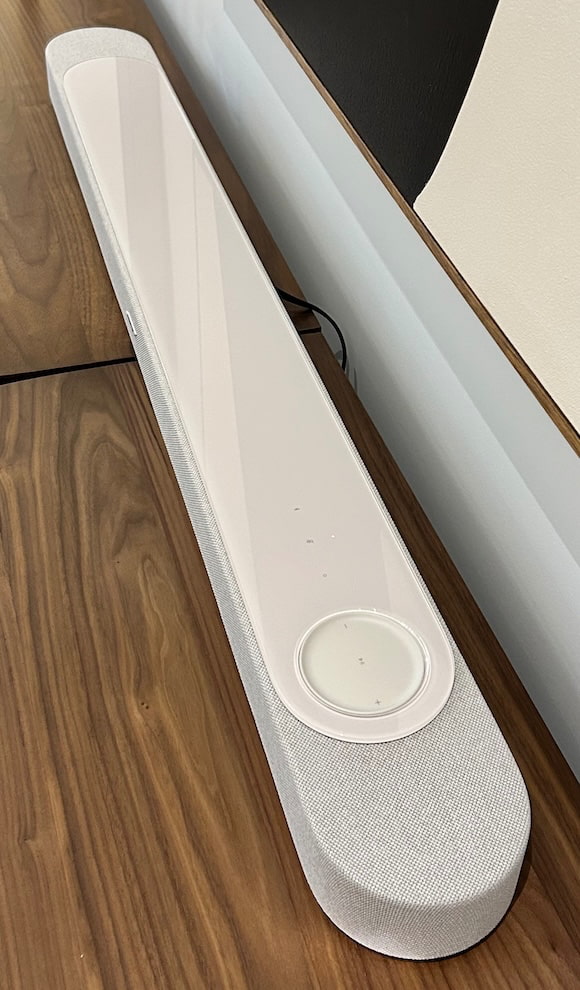
The Lifestyle Ultra Soundbar is the anchor for Bose’s new home theater system, and it is more than a cosmetic update. Bose says this is its first major soundbar redesign in more than a decade, built around a nine driver array that includes six full range drivers, two of them up firing, four front facing, a dedicated center tweeter, and two proprietary PhaseGuide drivers. At 43.54 inches wide, 2.64 inches tall, and 4.96 inches deep, and weighing 14.8 pounds, it is sized for larger TVs without turning into furniture. The goal is clear: deliver Dolby Atmos playback, wider spatial effects, stronger dialogue intelligibility, and more convincing height from a single enclosure before you start adding more boxes to the room.
The technology matters because each piece is aimed at a specific soundbar problem: limited width, limited height, buried dialogue, lightweight bass, and unpredictable room acoustics. PhaseGuide is used to steer sound horizontally so effects appear to come from areas where there are no physical speakers. TrueSpatial processing is designed to make non-Atmos content sound more immersive.
SpeechClarity uses adjustable AI-driven speech enhancement to lift dialogue without changing the entire mix. CustomTune room calibration uses an iOS or Android microphone as the reference point to analyze the room, seating, surfaces, and layout. CleanBass works with Bose’s QuietPort acoustic opening and DSP to reduce the kind of low frequency distortion that usually shows up when compact speakers are asked to do too much.

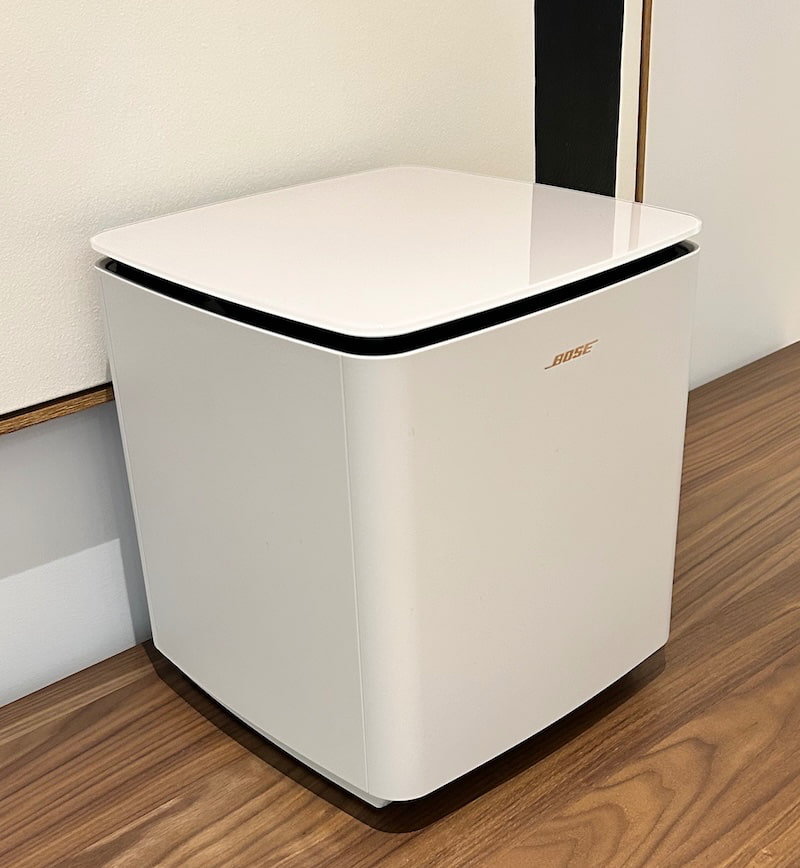
The Lifestyle Ultra Subwoofer is the obvious next step if this is going under the main TV. It measures 11.63 inches wide, 12.88 inches tall, and 11.63 inches deep, weighs 33.7 pounds, and connects wirelessly through the Bose app with a stated range of 30 feet. Bose also lists a 3.5 mm wired connection as an option. Its job is not complicated: take over the demanding low frequency effects, add weight, and let the soundbar focus more on dialogue, spatial cues, mids, and highs. In 5.1.2 or 7.1.4 configurations, the subwoofer also works with CustomTune room calibration, which matters because bass and rooms have a long history of not playing nicely together.
The configuration path is where Bose is trying to keep things flexible. The Lifestyle Ultra Soundbar can be used on its own as a 5.0.2 system. Add the Lifestyle Ultra Subwoofer and it becomes 5.1.2. Add two Lifestyle Ultra Speakers as wireless surrounds and the system expands to 7.0.4 without the subwoofer, or 7.1.4 with the subwoofer included. That gives buyers a way to start with the bar and build out the system without committing to an AVR, speaker wire, stands, banana plugs, and the usual Saturday afternoon descent into cable management hell. Bose does offer custom-designed stands for the Lifestyle Ultra Wireless Speakers with cable management.
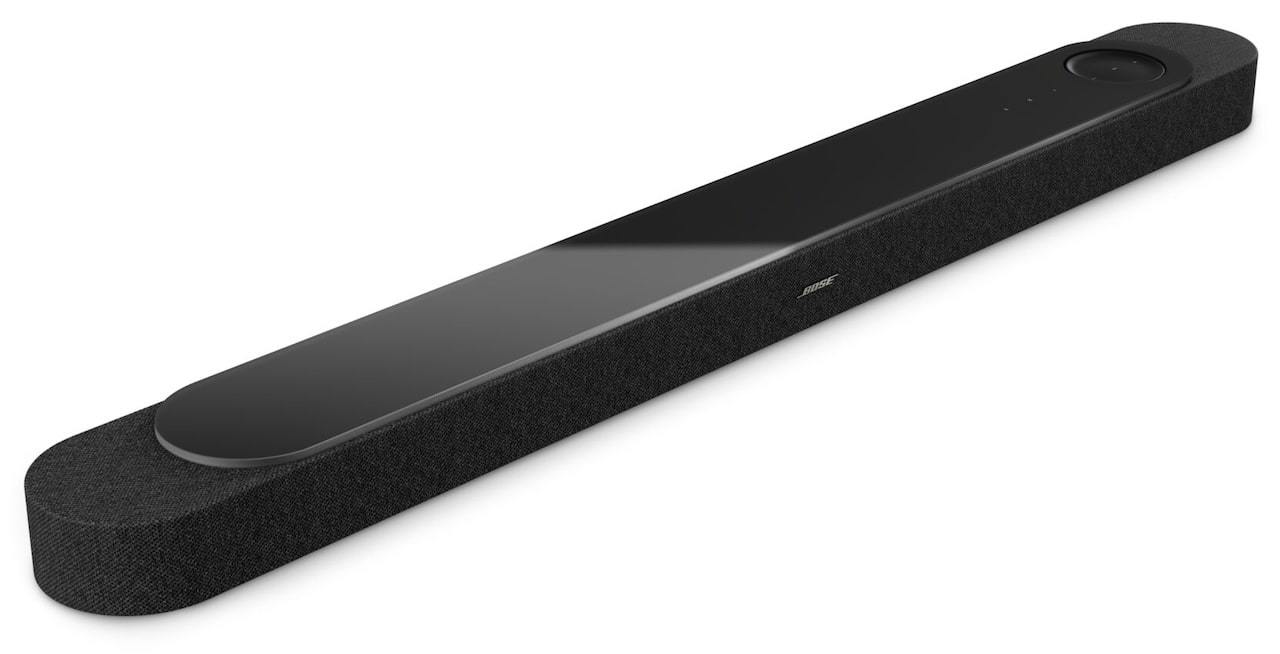

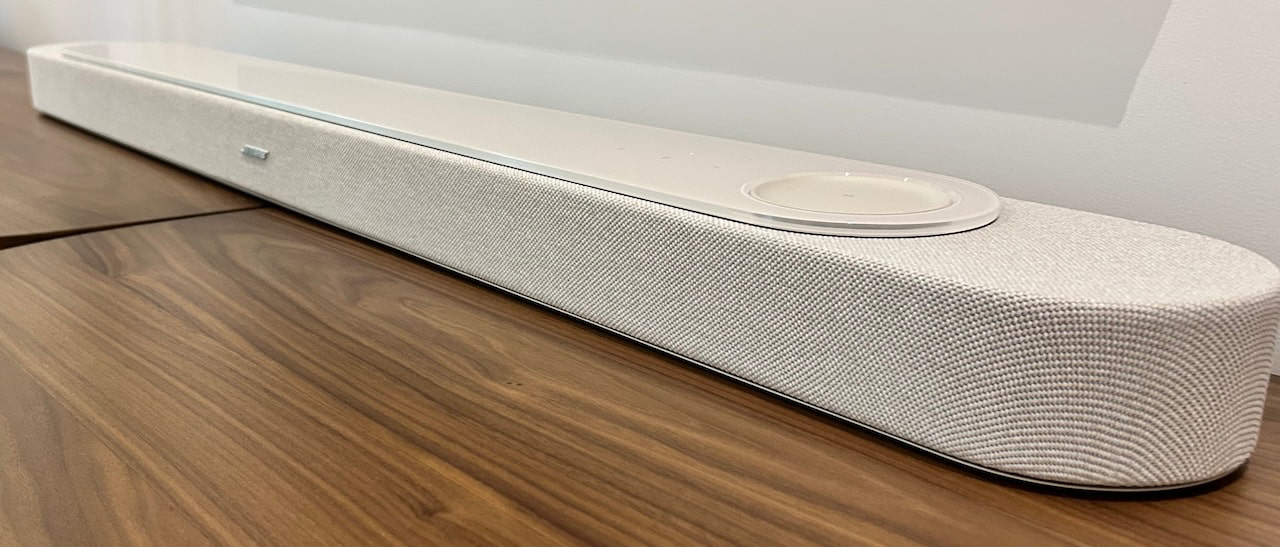
A few practical details matter. The soundbar supports HDMI ARC and eARC, Wi-Fi, Bluetooth 5.3, Google Cast, Apple AirPlay, Spotify Connect, Alexa, and Alexa Plus in the U.S. It also includes tactile controls, a hidden LED for status feedback, an eARC compatible HDMI cable in the box, and optional accessories including a wall bracket and remote control. The soundbar and subwoofer both come in Black and White Smoke, with a textured knit fabric grille on the bar and premium glass top design language shared across both products.
One thing Bose is not claiming at launch: dual subwoofer support. Previous Bose systems have supported dual bass modules, but that is not part of the Lifestyle Ultra system right now. At the Bose House event in NYC last week, Bose also did not tell me that dual subwoofer support is never coming. So the accurate answer is this: one subwoofer today, no promise of two tomorrow, and no reason to pretend the door has been nailed shut.


What We Heard at Bose House
My embargoed review can’t be published until May 15th, so we’re limited to early impressions based on Bose’s controlled demonstrations at its townhouse on the Upper West Side of Manhattan. Bose set up the Lifestyle Ultra Soundbar system in its full 7.1.4 configuration, then removed the rear channels and switched the subwoofer in and out so we could hear how much each piece contributed. That matters, because soundbar demos often hide the sausage. This one gave us a better sense of what the bar can do on its own, what the subwoofer adds, and how the system changes when the Lifestyle Ultra Speakers are used as surrounds.
The room was also relevant. Bose had the system set up in the den on one of the upper floors, not in a massive showroom or some acoustically doomed hotel space. I don’t know the exact dimensions, but it felt close to my 16 x 13 foot den at home, probably a little deeper, with ceilings that appeared to be at least 10 feet high. It was still a typical NYC brownstone, with brick walls covered in plaster, but the room was well behaved acoustically. We were close to Broadway in the mid 70s, and you could not hear the street outside. For Manhattan, that’s basically science fiction with better parking rules.
The first demo track was from Dune, specifically the Arrakis rescue sequence involving a spice harvester. The scene gave the Lifestyle Ultra system a lot to manage at once: swirling sand, engine noise, the score, dialogue, and the movement of the rescue craft overhead as the crew is pulled out before the worm arrives.
No ballerinas or opera singers were harmed during the rescue. Timothée Chalamet may have had a point about opera and ballet struggling for mainstream relevance in 2026, but context matters. Arrakis is dangerous enough without dragging the arts community into the sandstorm.

What stood out almost immediately was the scale of the sound. Wide. Some real depth. A lot of height, which is where the upward firing drivers did their job. The Bose also handled dialogue very well. I did not feel like I was fighting to hear voices through the effects, sand, machinery, and Hans Zimmer doing Hans Zimmer things with the subtlety of a sandworm at brunch.
Bass impact with the subwoofer engaged was good, although not exactly SVS level, which is fine because Bose is not trying to sell you a refrigerator with a woofer in it. The rear channels were more effective than I expected. When the aircraft lifted off and moved overhead, the sound tracked with it, passed above me, and continued behind the listening position in a way that made the 7.1.4 setup feel genuinely useful rather than decorative.
Before I get too deep into the listening impressions, Bose’s SpeechClarity tech deserves its own mention. It uses adjustable AI driven speech enhancement to isolate and elevate dialogue without blowing up the rest of the mix, and that matters if you watch a lot of sports, movies, or prestige TV where everyone whispers like they are hiding from a tax audit. If your spouse does not want to hear you yelling “What did he say?” through the entire Stanley Cup Playoffs, turn this on. Yup. Go Sabres. Sorry, Bruins. Better luck next season.
Check back on the 15th for our in-depth review.
For more information: bose.com
You must be logged in to post a comment Login