Tech
Bose QuietComfort Ultra Headphones 2nd Gen Review: Still the Best for Noise Cancelling?

Bose’s QuietComfort Ultra Headphones are already among the most convincing noise cancelling headphones available. Their strengths are familiar Bose territory: exceptionally effective ANC, comfortable long term wear, and a lively presentation that makes everyday listening more fun. We recently reviewed the Bose QuietComfort Headphones (2nd Gen), which inherit more of the Ultra’s technology for $359, but the Ultra remains the company’s flagship over-ear wireless model.
The QuietComfort Ultra also encapsulate almost everything that defines Bose headphones for both fans and critics. Fans will point to the excellent ANC, comfort, features, and easygoing presentation, while critics will focus on the decidedly non reference tuning and continue to dismiss Bose as more of a lifestyle brand than an audiophile one.
Turns out, both groups are more or less right. We awarded the original QuietComfort Ultra a shared Editor’s Choice Award alongside the Sony WH-1000XM5 because both deliver exceptional ANC performance while taking very different approaches to sound signature and comfort.

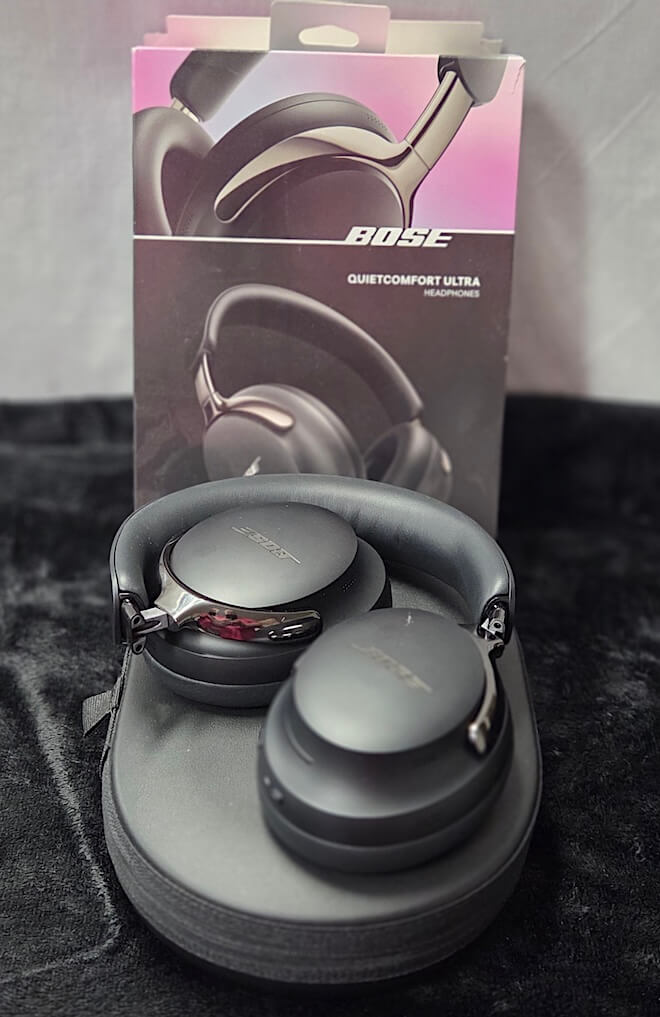
It should come as no surprise, then, that the Bose QuietComfort Ultra Headphones (2nd Gen), or Ultra Gen 2 from here on out, do not attempt to reinvent the formula. Bose has instead addressed several shortcomings of the original model while leaving the foundation largely untouched.
At $449, the Ultra Gen 2 is hardly inexpensive, and competition from Sony, Apple, Bowers & Wilkins, and pretty much every other major headphone manufacturer has only intensified. The real question is whether Bose’s incremental improvements are substantial enough to justify the price. More importantly, if you already own the original QuietComfort Ultra, has Bose done enough to make upgrading worthwhile?
Related Reading:
Design, Build and Comfort
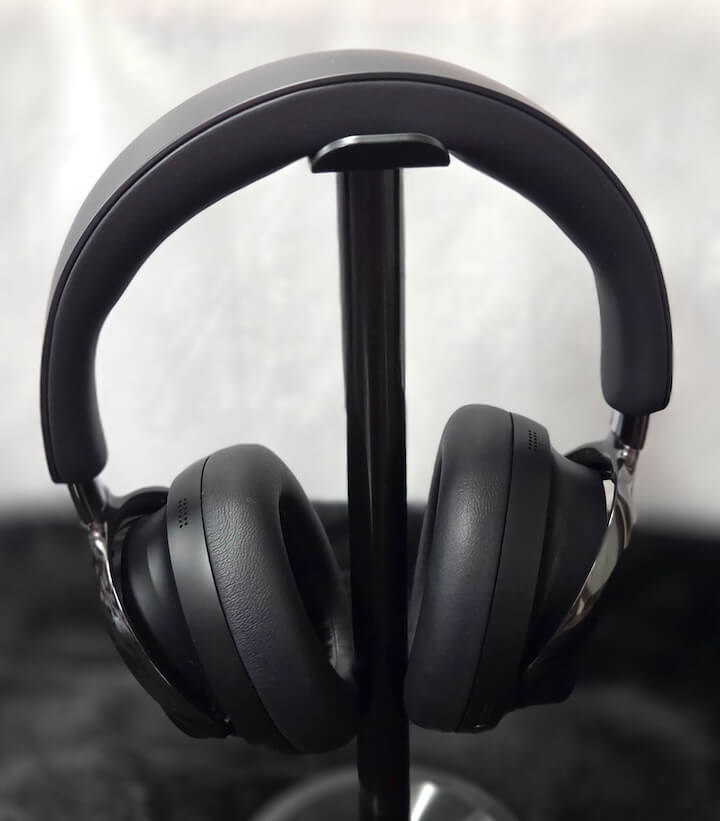
The design remains unmistakably Bose and remarkably similar to the first generation model. The QuietComfort Ultra Headphones (2nd Gen) offer subtle hints that they are a step above the standard QuietComfort model, with more distinctly scalloped steps on the earcups and metal yokes instead of polymer. From a distance, you might not immediately recognize the Ultra as a more premium model, but up close, it has a cleaner silhouette and a more upscale set of finishes with polished metal and synthetic leather pads. Overall build quality is good, with a mix of plastics and metal, although the finish is not immune to scuffs and scratches.

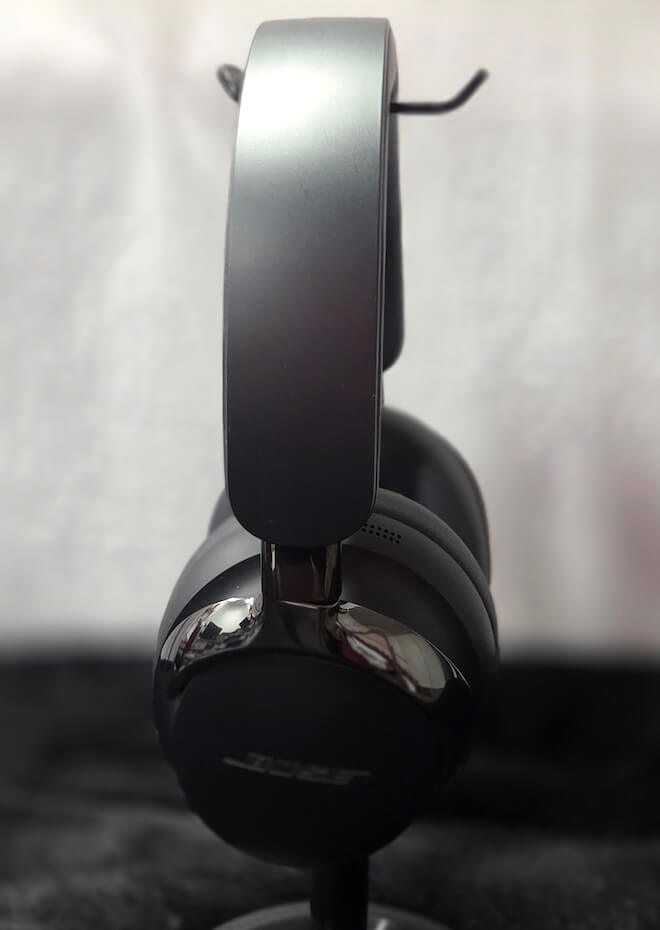
The Ultra G2 does a good job of balancing those more premium finishes with reasonable weight to produce a headphone that both looks good and wears well. At roughly 260 grams, the Ultra G2 is not ultralight, but it falls on the lighter side of average. Combined with the wide, foam padded headband, the weight is distributed well during use. As with most headphones focused on ANC, the Ultra G2 has moderate clamping force to help maintain isolation, but Bose once again finds a good middle ground between isolation and comfort.
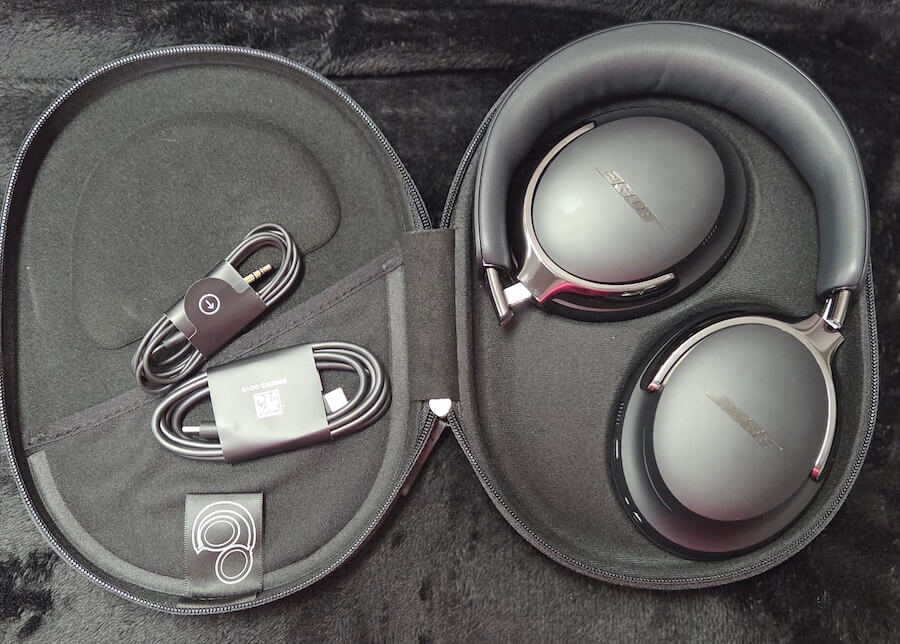
When not in use, the Ultra G2 folds into a relatively compact case. As my wife points out, the case is too large for most purses, but it is small enough that slipping the headphones into a backpack alongside a laptop is a viable option.
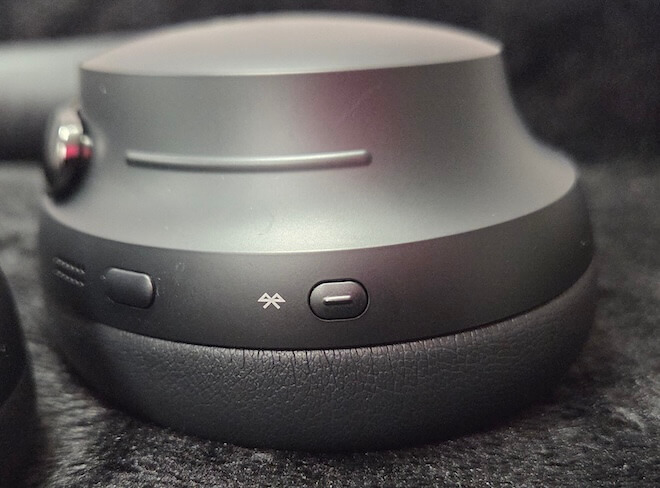
The controls are essentially unchanged in size and location from the previous generation, so anyone already familiar with the Ultra will feel right at home. Those new to Bose products will find the controls thoughtfully laid out and relatively intuitive. Bose uses physical buttons rather than relying entirely on touch controls, which is a plus. There is also a capacitive strip along the earcup for volume adjustment. It is convenient once you become familiar with it, although some will likely lament the lack of physical volume buttons.

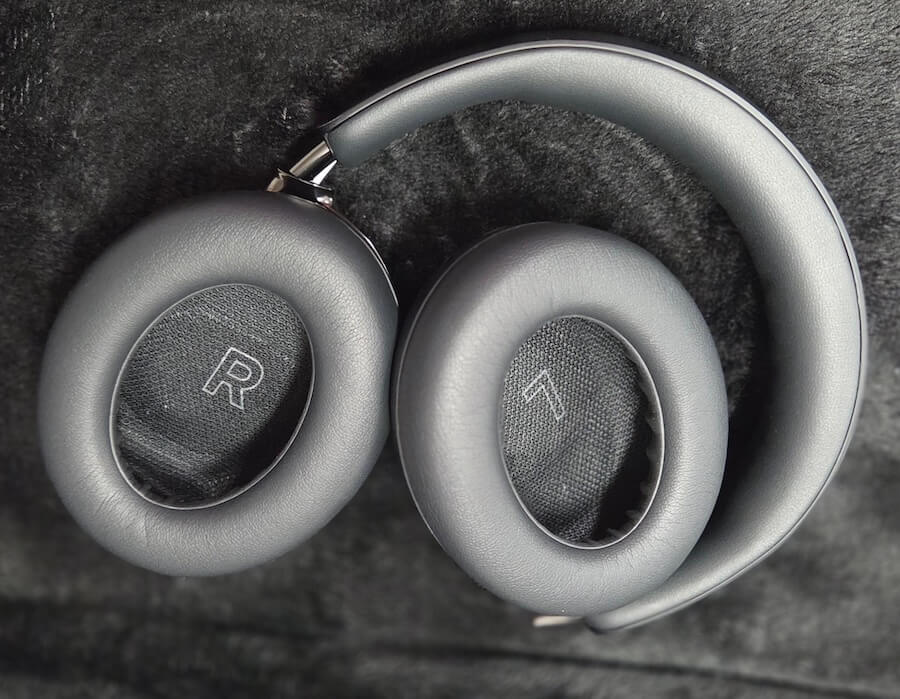
Comfort is literally half of the QuietComfort name, and the Ultra G2 continues to live up to it. Long listening sessions are possible without the familiar hot spots at the crown or excessive pressure around the jaw and ear junction. It may seem odd that Bose chose quiet and comfort as the two words to define an audio product, but the truth is that comfort matters far more than many people realize when shopping for headphones. A headphone can offer excellent sound and noise cancellation, but if you become uncomfortable and cannot wear it for more than 30 minutes at a time, those advantages quickly become irrelevant.
The Ultra G2 is particularly effective for long flights, office work, commuting, and extended listening, which is exactly what Bose intended.
There is a tradeoff. The relatively soft clamping force and lightweight construction mean the Ultra G2 is not the most secure option for vigorous movement. It is perfectly suitable for walking, but it is not designed as a gym headphone and certainly will not survive your pool workout. The earcups can also become warm during extended use, as they do with virtually all closed back, over ear headphones.

Drivers, Connectivity and Battery Life
Bose has always been rather tight lipped about its driver technology, and the Ultra G2 continues that trend. Bose has chosen to reveal only that the driver is 35 mm in diameter and rated at 32 ohms when connected in wired mode. Sensitivity is not specified, while frequency response is listed simply as 20 Hz to 20 kHz without any tolerance or explanation of the testing methodology.
Bluetooth is version 5.4 with support for SBC, AAC, and aptX Adaptive, along with its various modes on compatible devices. Dual device multipoint is also supported, allowing the Ultra G2 to maintain simultaneous connections to devices such as a phone and laptop.
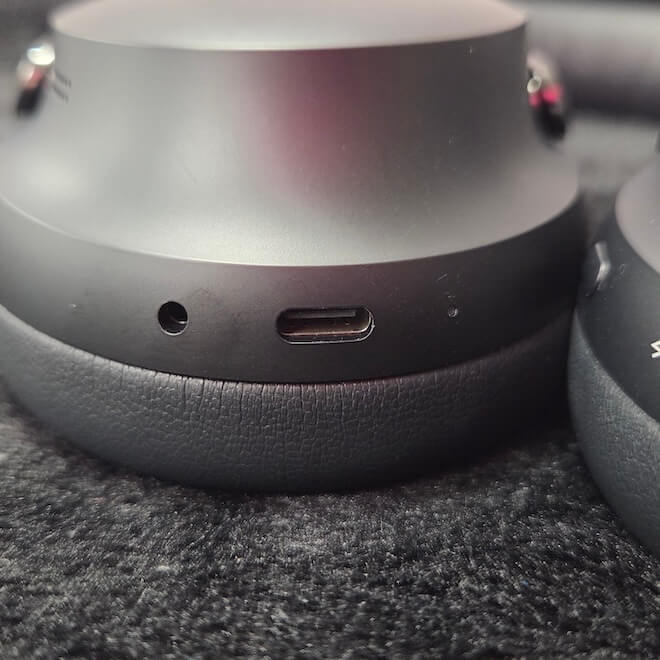
A USB Type-C port handles charging and digital audio, while Bose also includes a 3.5 mm to USB adapter for wired playback. USB audio supports 16 bit/44.1 kHz or 48 kHz lossless playback, and the headphones can continue charging while music is playing if necessary.
The ability to play lossless audio over a wired connection is one of the new features of the Ultra G2. A number of competitors have offered similar functionality for some time, so it is good to see Bose add it and keep pace.
With up to 30 hours of battery life depending on operating mode, charging should not be required during most flights or workdays. The Ultra G2 also supports quick charging, with 15 minutes providing roughly 2.5 hours of listening time. Starting from a fully drained battery, a complete recharge takes approximately 3 to 3.5 hours depending on the charger being used.

What’s New?
Much like the addition of lossless playback over USB Type-C, most of the other updates are incremental or address requests made by users of the original model. Battery life has improved to nearly 30 hours without Immersive Audio and 23 hours with it enabled. Both figures are based on modest volume settings, and my testing suggests battery life can stretch a little further at lower listening levels. I suspect Bose conducted its testing at around 85 dB, so those who listen below that level may get a bit of a bonus.
Bose has also updated the Snapdragon Sound platform, which helps make aptX Adaptive available with a wider range of compatible source devices. The codec was supported by the previous generation, but connectivity and compatibility have proven more reliable with the Ultra G2.
Specifications Compared
| Specification | Bose QuietComfort Ultra (2023 Model) |
Bose QuietComfort Ultra (2nd Gen, 2025 Model) |
|---|---|---|
| MSRP | $429 | $449 |
| Headphone Fit | Around-ear circumaural | Around-ear circumaural |
| Cushions | Removable protein leather cushions | Removable protein leather cushions |
| Microphones | Built-in microphones | Improved |
| Noise Cancelling | Yes | Improved |
| Aware Mode with ActiveSense | Yes | Improved |
| Disable ANC | – | Yes |
| Bose Immersive Audio | Still, Motion | Still, Motion, Cinema Mode |
| Carry Case | Yes | Yes |
| Headphone buttons | Same | Same |
| Rechargeable | Yes | Yes |
| Battery Life with ANC | Up to 24 hours | Up to 30 hours |
| Battery Life with Immersive Audio | Up to 18 hours | Up to 23 hours |
| Battery Life with ANC Off | N/A | Up to 45 hours |
| Battery Charge Time | 3 hours | 3 hours |
| Charging Accessory Included | Yes | Yes |
| Charging Interface | USB-C | USB-C |
| USB Audio | Charging only | Lossless USB-C Audio |
| Charge While in Use | – | Yes |
| Wireless Connectivity | Bluetooth 5.3, aptX Adaptive, SBC, AAC | Bluetooth 5.4, aptX Adaptive, SBC, AAC |
| On-Head Detection | Yes | Improved |
| Low-Power Standby | Standard standby | Automatic Bluetooth standby and deep-sleep low-energy mode |
| Weight | 0.56 lbs (254 g) | 0.583 lbs (264.4 g) |

Listening
The QuietComfort Ultra G2 has a broadly appealing sound rather than a strictly neutral one. Bass is full and authoritative, the midrange is smooth, and the treble has enough energy to keep the presentation from sounding dull.
There is still a recognizable sense of Bose voicing here. Music tends to sound polished, spacious, and immediately enjoyable rather than clinically analytical. That makes the Ultra G2 easy to live with across a wide range of music and particularly well suited to longer listening sessions.
Bass
Bass has weight without sounding permanently inflated. Electronic music, hip hop, pop, and film soundtracks benefit from a solid sub bass foundation, while kick drums have good impact without the lower frequencies routinely bleeding into the midrange.
The Ultra G2 is not bass neutral, and listeners who prefer a strictly flat presentation may find it slightly warm. Fortunately, the Bose Music app includes a basic equalizer that allows users to adjust bass, midrange, and treble to taste.
Midrange
The midrange is smooth, full, and easy to listen to. Vocals remain clearly positioned within the mix, while acoustic instruments retain enough body and texture to sound natural rather than thin.
This is not a forward studio monitor presentation. The Ultra G2 does not push every vocal or guitar toward the listener or attempt to extract every last ounce of detail from a recording. Instead, Bose favors a more relaxed balance that works especially well over longer sessions.
Treble
Treble is clear enough to provide detail and definition without becoming excessively bright. Cymbals, strings, and room ambience are easy to follow, although the Ultra G2 is not the most revealing headphone in its class.
Some competitors offer a more incisive and technically explicit presentation. Bose takes the opposite approach, trading some of that analytical edge for a smoother and less fatiguing listen. For a headphone designed around travel, commuting, office use, and extended listening, that decision makes sense.

Noise Cancellation
I have a suspicion that every product improvement meeting at Bose ends with the phrase, “And of course, don’t screw up the noise cancelling.” It has been Bose’s calling card in the headphone market for decades, and any departure from that standard would certainly be noticed. The first generation QuietComfort Ultra earned its Editor’s Choice Award largely on the strength of its noise cancellation, so expectations for the Ultra G2 are high.
Low frequency sounds such as aircraft engines, trains, air conditioning systems, and road noise are reduced with impressive consistency. Bose has also continued to improve how its processing handles the things listeners actually want to hear while reducing the distractions around them.
The best ANC is not necessarily the system that removes the most noise. It is the one that removes the most distractions without altering the music enough to become a distraction itself. If the ANC changes the sound of the music in an obvious or intrusive way, that is a failure. The Ultra G2 does an excellent job of avoiding that problem.
Human voices and irregular sounds remain more difficult for any ANC system. The Bose does not erase conversation completely, but it reduces nearby chatter enough to make music, podcasts, and audiobooks much easier to follow.
Aware mode provides natural sounding transparency, allowing outside sound in without making the surroundings feel overly processed. It is useful when situational awareness matters, whether at the gym, out walking, or when you need to hear announcements at work, school, or the airport.
The Bose app also allows you to control how much outside noise is blocked or allowed in, making it relatively simple to adjust the Ultra G2 for different environments. Just know that Bose leans heavily on the app for setup and feature configuration, as well as more routine tasks such as battery monitoring and firmware updates. If you want access to most of what the Ultra G2 can do, you will want the app installed on your iPhone or Android device.
Immersive Audio
Bose’s Immersive Audio feature is designed to create a wider, more speaker like presentation in Still mode and add head tracking in Motion mode. The feature carries over from the first generation Ultra, but Bose has improved processing efficiency with the Ultra G2. There is still a cost, however, as Immersive Audio uses additional power and reduces battery life from roughly 30 hours to 23 hours.
For me, the main advantage is Still mode, which creates a greater sense of space around the music and can give the right recordings a more lively and dynamic presentation. The problem is that not every track responds positively to the treatment. I eventually wound up sorting playlists into those that benefited from Immersive Audio and those that simply sounded better with it switched off.
Wired Listening
The addition of USB Type-C audio is the biggest change with the Ultra G2, so I spent some time listening with both the supplied USB Type-C to Type-C cable and the USB Type-C to 3.5 mm adapter to get a better sense of how significant the update really is.
The obvious attraction is the ability to bypass the compression associated with Bluetooth codecs and send lossless audio directly from the source to the headphones. The other benefit is the ability to charge the Ultra G2 while listening, something the previous generation could not do.
For me, that latter use case is every bit as important as the first. Improved sound quality is certainly welcome when Bluetooth is suffering from dropouts or interference, but most of the time I do not feel like I am missing very much when using aptX Adaptive, LDAC, or LC3 these days.
What I have done more than once is head out the door with a pair of headphones I thought were charged, only to hear “battery 15%” when I put them on. Not having a way to simultaneously charge and use a premium headphone, or at least use it without power, is a serious limitation.
There are still some restrictions. USB Type-C audio is limited to 16 bit playback at 44.1 or 48 kHz, so this is not a high resolution USB implementation. Still, this is exactly the kind of feature that should have been included from the beginning. Its arrival makes the Ultra G2 more competitive with Sony and other premium rivals while fixing one of the more frustrating limitations of the original model.


The Bottom Line
The Bose QuietComfort Ultra Headphones (2nd Gen) do not radically change what made the original model successful, but they improve the formula in several places that matter. Comfort remains excellent, noise cancellation is still among the strongest reasons to buy them, and Immersive Audio can add a convincing sense of space with the right material. The addition of lossless USB Type-C playback and the ability to charge while listening also fix two practical shortcomings of the first generation.
What makes the Ultra G2 stand out is how well all of those pieces work together. There are headphones with longer battery life, more detailed sound, deeper app controls, or a more neutral tonal balance, but few combine Bose’s level of ANC, long term comfort, useful spatial processing, and everyday versatility this effectively. That matters on a six hour flight or a full day at the office far more than another menu full of features.
There is still room for improvement. Bose remains too dependent on its app, battery life is good rather than exceptional, and call quality remains an area where the entire premium wireless category could do better. The Ultra G2 is competitive with its rivals for calls, but that is hardly the same thing as saying the category has solved the problem.
Listeners who put comfort and noise cancellation at the top of the list will find a lot to like here. Those who care more about maximum battery life, a more neutral or analytical presentation, or a broader range of sound customization may prefer what Sony or Sennheiser offer. The Ultra G2 can still compete on sound, but its clearest advantage remains what happens when the outside world needs to disappear for a few hours.
Owners of the original QuietComfort Ultra face a tougher decision. The new USB Type-C audio support and ability to charge while listening are useful additions, but they are evolutionary rather than transformative. If those features solve problems you regularly encounter, the upgrade makes sense. If not, the first generation remains a very capable headphone.
Pros:
- Excellent noise cancellation
- Outstanding long term comfort
- Smooth, engaging sound with useful Immersive Audio
- USB Type-C lossless playback and charging while listening
- Strong overall versatility for travel, commuting, and office use
Cons:
- Battery life is good but no longer class leading
- Heavy reliance on the Bose app
- Limited EQ and sound customization
- Call quality is competitive rather than exceptional
- Not a major upgrade for most first generation Ultra owners
Our Ratings:
★★★★★★★★★★ Sound Quality
★★★★★★★★★★ Build Quality
★★★★★★★★★★ ANC
★★★★★★★★★★ Comfort
★★★★★★★★★★ Value
You must be logged in to post a comment Login