Tech
Boston Dynamics’ Atlas Masters Every Shift in a Demanding Balance Routine

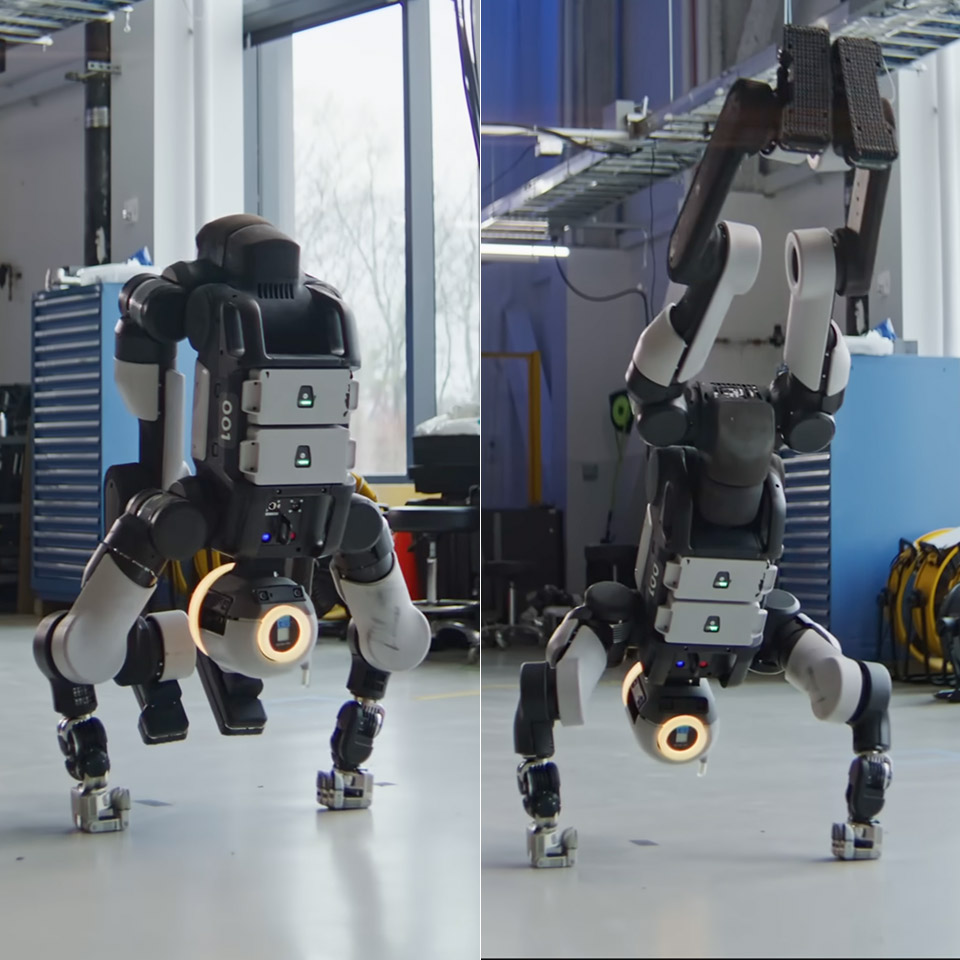
Boston Dynamics engineers just released new footage of their Atlas robot being tested. The machine is shown lurching from two feet to all sorts of weird positions, challenging its balance with each stride. It is not uncommon to watch it shift its weight from both legs onto one while the other extends outward like a spear, arms waving in sync to keep its center of mass stable as it totters about. Atlas quickly puts both hands on the floor and throws its entire body into a handstand, smooth as silk.


Then, just as you get comfy, the legs fly straight out in a horizontal line. Atlas manages to ease right back down again, with no wobble or drama, just flawless. Following that, the robot performs some gymnastics, moving into a clean stand-up stance and landing flat on both feet with barely a judder. Every recovery is a precision motion, as the software makes the smallest modifications on the fly, via the hips and ankles, to absorb the shock. The same process occurs in a cartwheel, where the arms and legs work in perfect harmony to keep the torso on track.


Unitree G1 Humanoid Robot(No Secondary Development)
- Sleek & Durable Design: Standing at 132cm tall and weighing only approx. 35kg, the G1 is constructed with aerospace-grade aluminum alloy and carbon…
- High Flexibility & Safe Movement: Boasting 23 joint degrees of freedom (6 per leg, 5 per arm), it offers an extensive range of motion. For safety, it…
- Smart Interaction & Connectivity: Powered by an 8-core high-performance CPU and equipped with a depth camera and 3D LiDAR. It supports Wi-Fi 6 and…
We already know that Atlas is more than willing to do some heavy lifting for factories, transferring loads with steady hands from container to dolly without flinching, even in uneven flooring environments, and the balance system that allows the robot to flip also means it has the ability to step across uneven ground or recover when loads shift unexpectedly on the job, as the robot delivers results on both fronts with aplomb.

Boston Dynamics claims that its test teams fine-tune Atlas by subjecting it to simulation after simulation after real-world test, with the machine learning its way through to the point where it can detect its own position without relying on external cues to stay on track. All combined, its hydraulic/electric actuators respond faster than the blink of an eye to data from all of the numerous sensors, transforming moments of uncertainty into smooth sailing.
You must be logged in to post a comment Login