Tech
Bottles of Blue Water Spell Out Every Passing Minute on This Unique Digital Clock
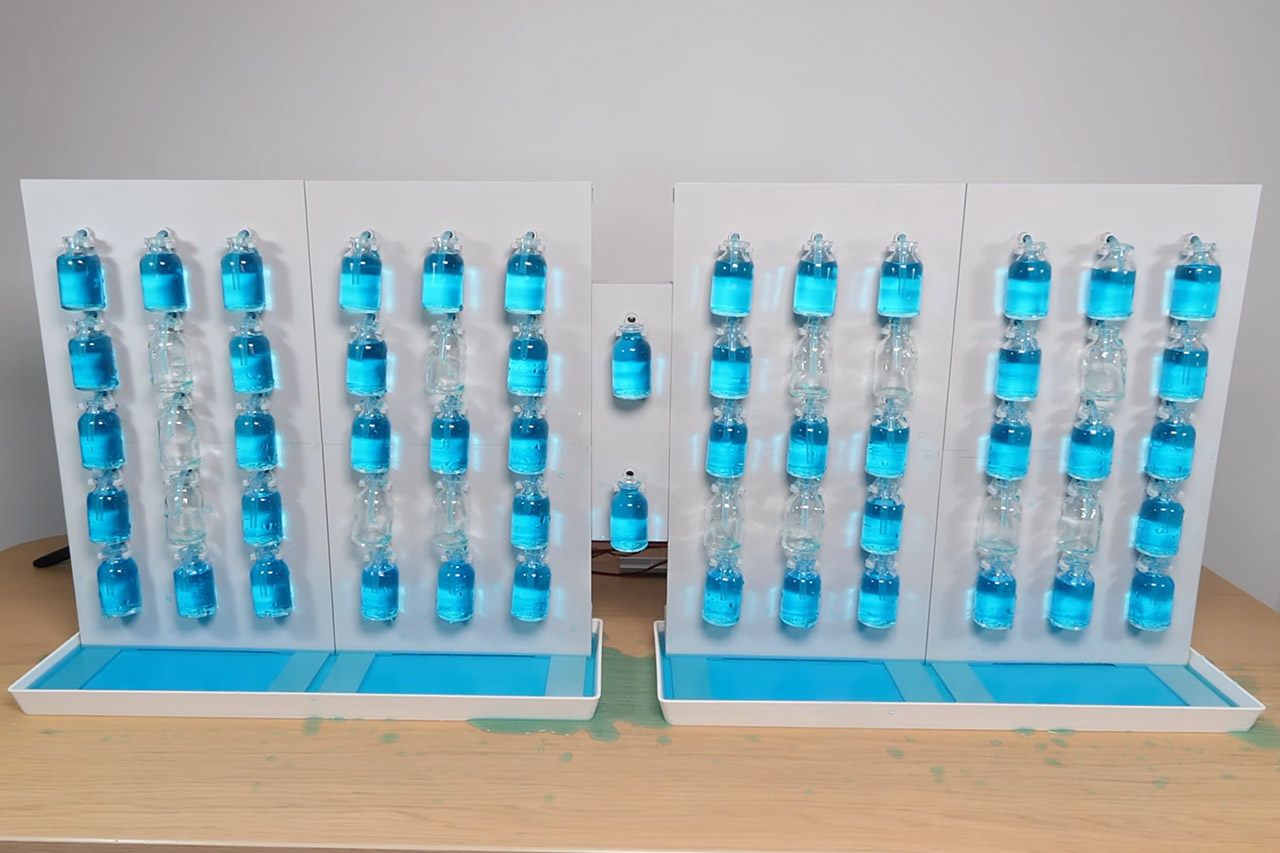
Strange Inventions set out to create a clock that would stand out from the crowd. Water becomes the focal point of the show, with the numerals formed by little bottles filled to various levels. The display consists of four grids arranged side by side. Each grid contains 15 tiny bottles placed neatly in a 3×5 design. Some bottles contain blue-dyed water, while others are empty. The arrangement of full and empty bottles produces a clear image of the current hour and minute.


Each of the 60 bottles in the display is attached to one small membrane pump. When a “pixel” has to light up, its pump must draw water from the basin at the bottom and transfer it directly into the bottle. Water only flows in one direction. Servos are responsible for the opposite end of things. Each number grid contains a frame that the servos can swing forwards on. When it’s time to update the display, the servos tip all of the bottles at once, causing all of the water to gush out and fall back into the basin, where it may be reused. At this stage, the pumps only work for the bottles that need to be changed.
Sale


Amazon Echo Show 5 (newest model), Smart display, Designed for Alexa+, 2x the bass and clearer sound…
- Alexa can show you more – Echo Show 5 includes a 5.5” display so you can see news and weather at a glance, make video calls, view compatible…
- Small size, bigger sound – Stream your favorite music, shows, podcasts, and more from providers like Amazon Music, Spotify, and Prime Video—now…
- Keep your home comfortable – Control compatible smart devices like lights and thermostats, even while you’re away.
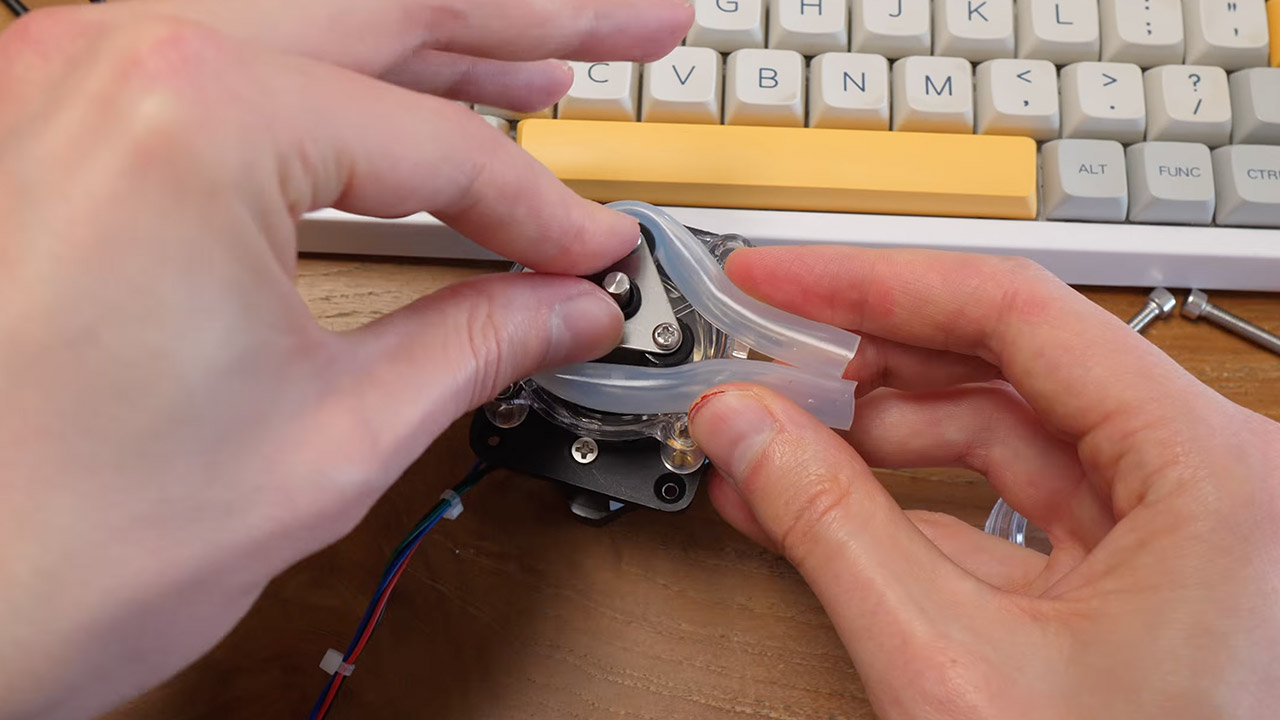
The majority of the pixels are always filled, so when the minute passes, the system just skips them and does not perform a full update. However, if a large number of pixels need to be switched, updating the display can take several minutes. The inventor began with a different plan. A single peristaltic pump would force water through tubes and solenoid valves into any bottles that need it. The same pump would then reverse direction, pulling the water back out. A shared loop of tubes would tie everything together.

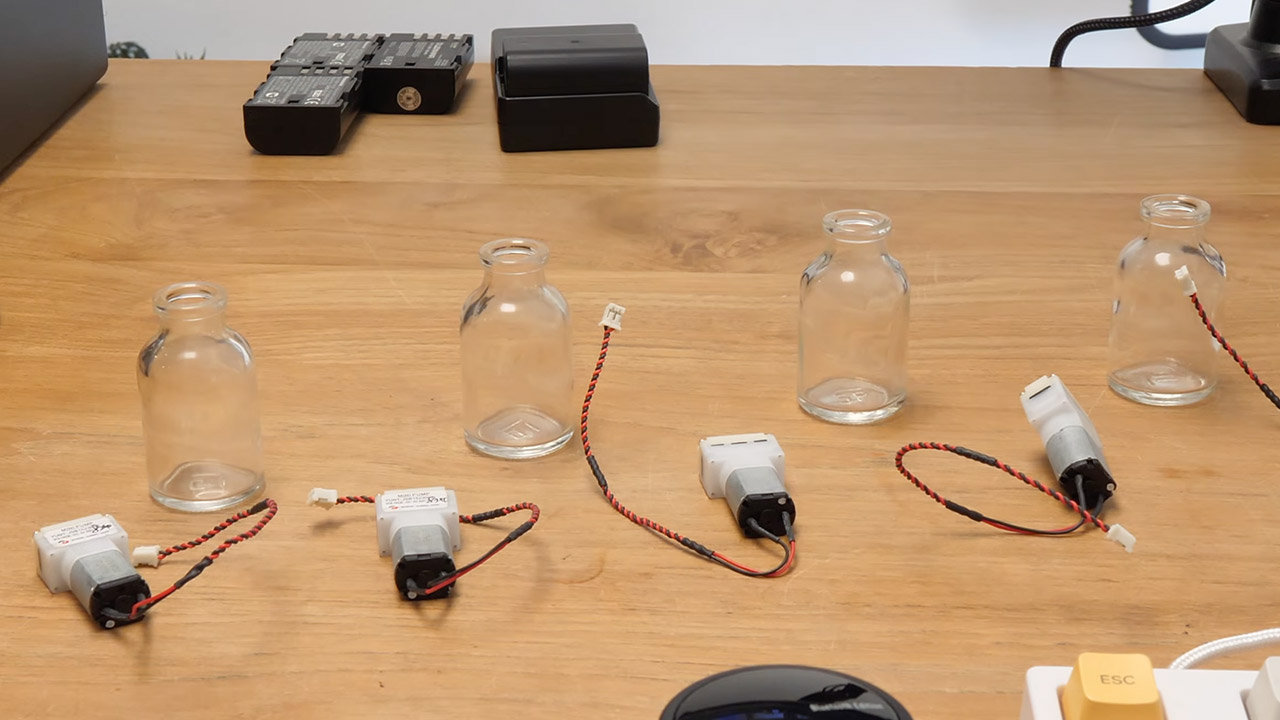
However, things started going wrong almost immediately. As soon as the water started flowing, air bubbles formed inside the tubes, and pressure varied dramatically from bottle to bottle. Some filled up quickly, while others took a long time. This all came crashing down when it ruined the display’s clean appearance. You can imagine how aggravating it was to keep running into the same problems over and over. It needed to be totally redesigned, so individual pumps for each bottle were utilized rather than a single common pump. The servos were also brought in to manage the bottle-emptying. Water now only goes one way via the pumps and then down into the basin via gravity.
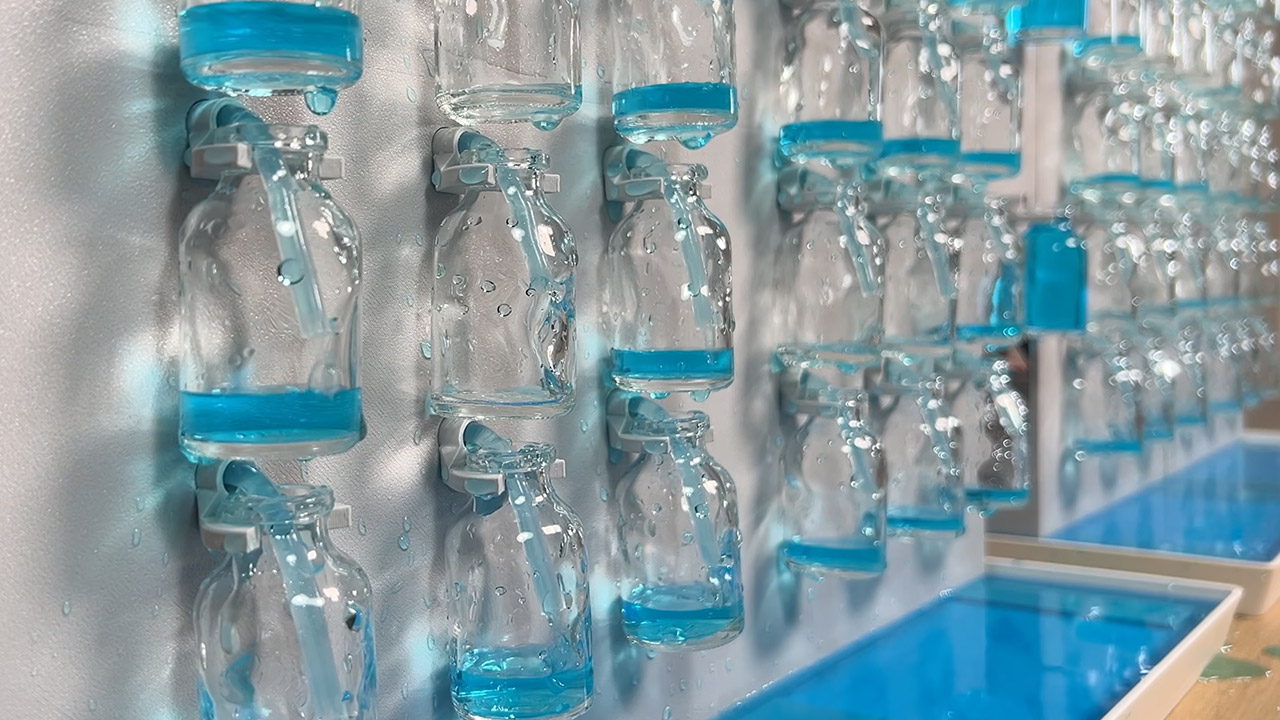
The tubes running through the center of each bottle help prevent snagging when the servos tip the bottles. The servos themselves have a little more oomph thanks to some springs that assist them push through any impediment. A little sanding and oil assist keep things working smoothly, allowing the grids to swing cleanly each time. It took three months between the first prototype and the finished clock. Early iterations taught the team an important lesson about how messy water can be when working with electronics. Finally, the clock simply recycles the same blue water repeatedly, while a tiny brain (microcontroller) ensures that the pumps and servos function smoothly and on time.
[Source]
You must be logged in to post a comment Login