Tech
Brit maritime agency heralds fresh global rules for crewless cargo ships


offbeat
If you thought driverless cars were bad, imagine a 200,000 ton container ship
Britain’s Maritime and Coastguard Agency (MCA) says it helped to develop a code of safety for future remotely operated and autonomous cargo ships.
The executive body, responsible for maritime law and safety policy, represented the UK’s interests in working groups during development of the first non-mandatory International Code of Safety for Maritime Autonomous Surface Ships (MASS Code).
This code, set to be published by the International Maritime Organization (IMO) on July 1, is the first stab at a global regulatory framework covering uncrewed cargo ships.
It will be followed by a mandatory MASS Code based on reviews of this set of regulations, slated for adoption in 2030, for entry into force on January 1, 2032.
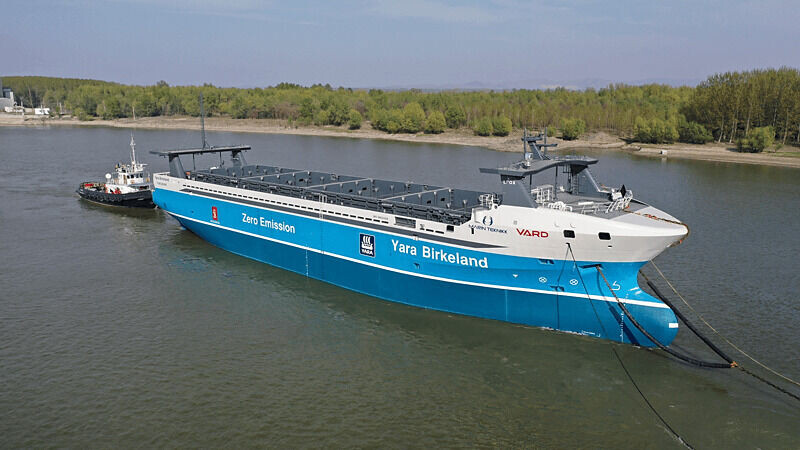
Autonomous vessels are already being tested out. In Norway, for example, a ship called the Yara Birkeland is used to carry chemicals and fertiliser from an industrial plant where they are produced to the deep-sea container harbor at Brevik, from where they are shipped to customers around the world.
Yara Birkeland is the world’s first fully autonomous and electric zero-emission container ship, but is relatively small at about 80 meters (260 ft) long and a weight of 3,200 tonnes.
A scoping exercise by the IMO to help inform the regulations identified four degrees of autonomy – inspired by those applicable to self-driving cars.
Degree one has seafarers on board to operate and control shipboard systems and functions, although some operations may be automated. Degree two is a remotely controlled ship with crew aboard, able to take control if necessary. Degree three covers a remotely controlled ship without any crew, and Degree four is a fully autonomous ship.
The IMO said it identified a number of high-priority issues, cutting across several instruments, that must be addressed at a policy level in future. These involve the development of MASS terminology and definitions, particularly in clarification of who is responsible for the ship in Degrees Three and Four.
Others include actions normally be carried out by the crew, including firefighting, cargo stowage and securing, maintenance, watchkeeping and implications for search and rescue. The latter is a legally binding duty that applies to all vessels, without exception.
“The maritime industry is inherently global, so progress towards a harmonised regulatory framework is vital to support consistency, fairness and – most importantly – safe operations internationally,” said MCA assistant director for Future Technical Standards Leanne Page.
“We’re very proud to have played a leading role in reaching this major milestone.”
The next step is building a framework for an experience-building phase, the MCA says, to inform development of the mandatory MASS Code.
Both the MCA and the UK’s Department for Transport will continue industry consultations to provide further information and guidance on this new non-mandatory MASS Code. ®
You must be logged in to post a comment Login