Connect with us

Tech

Building A Robot Partner To Play Air Hockey With

Published

on

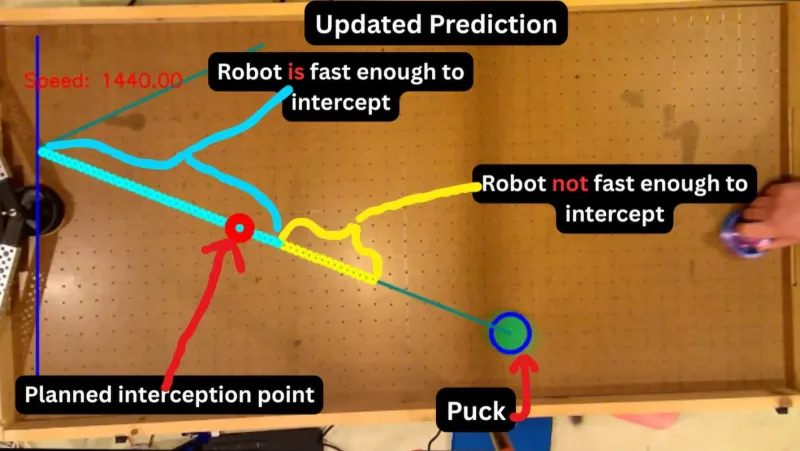
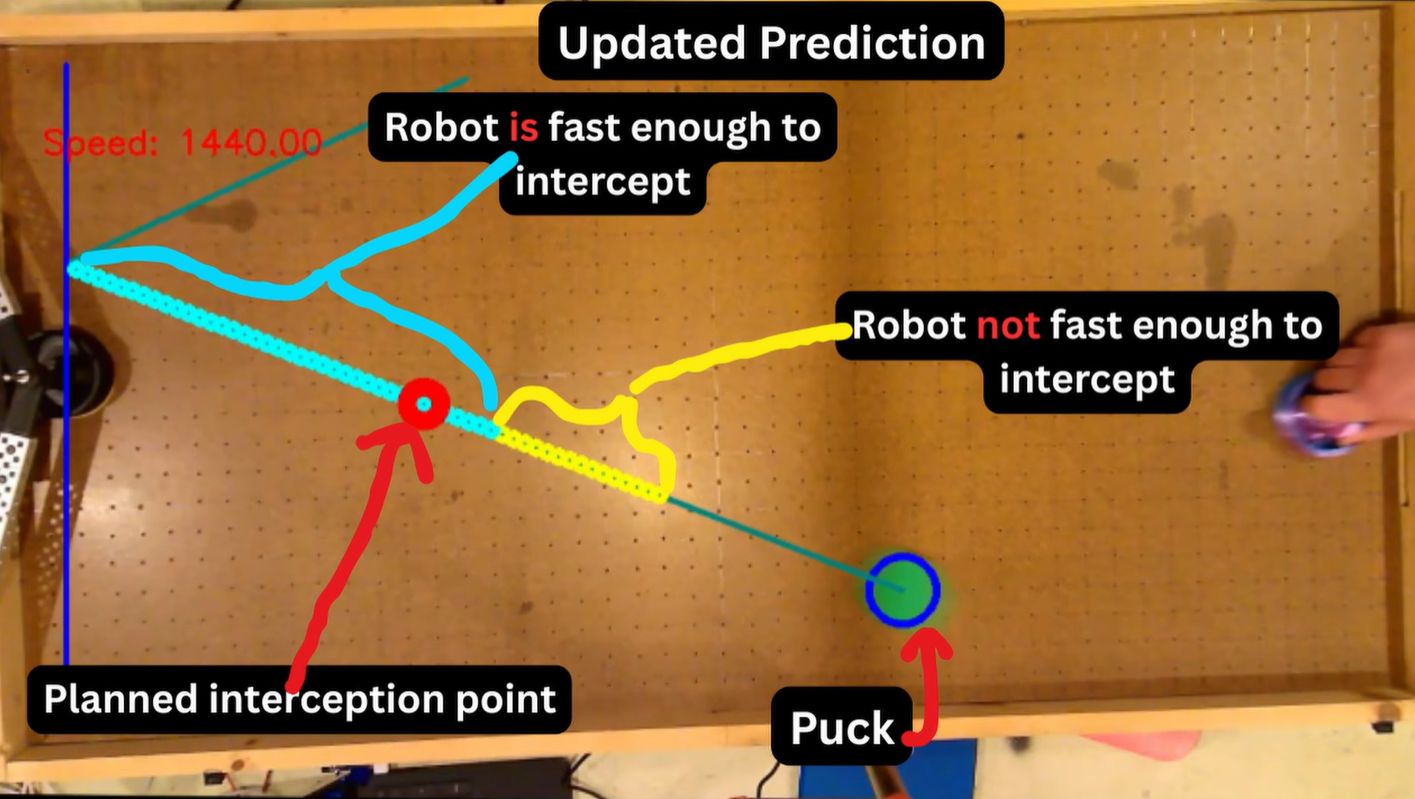
Air hockey is one of those sports that’s both incredibly fun, but also incredibly frustrating as playing it by yourself is a rather lonely and unfulfilling experience. This is where an air hockey playing robot like the one by [Basement Builds] could come in handy. After all, after you finished building an air hockey table from scratch, how hard could it be to make a robot that merely moves the paddle around to hit the puck with?

An air hockey table is indeed not extremely complicated, being mostly just a chamber that has lots of small holes on the top through which the air is pushed. This creates the air layer on which the puck appears to float, and allows for super-fast movement. For this part countless chamfered holes were drilled to get smooth airflow, with an inline 12VDC duct fan providing up to 270 CFM (~7.6 m3/minute).

Initially the robot used a CoreXY gantry configuration, which proved to be unreliable and rather cumbersome, so instead two motors were used, each connected to its own gearbox. These manipulate the paddle position by changing the geometry of the arms. Interestingly, the gearbox uses TPU for its gears to absorb any impacts and increase endurance as pure PLA ended up falling apart.

Advertisement

The position of the puck is recorded by an overhead camera, from where a Python script – using the OpenCV library running on a PC – determines how to adjust the arms, which is executed by Arduino C++ code running on a board attached to the robot. All of this is available on GitHub, which as the video makes clear is basically cheating as you don’t get to enjoy doing all the trigonometry and physics-related calculating and debugging fun.

Advertisement

Source link

Continue Reading
Click to comment

Leave a Reply

Your email address will not be published. Required fields are marked *

Tech

Sales automation startup Rox AI hits $1.2B valuation, sources say

Published

on

Rox, a startup developing autonomous AI agents to boost sales productivity, has raised a new funding round valuing the company at $1.2 billion, according to multiple sources.

The funding included a lead investment from returning backer General Catalyst, two of the people said. Rox and General Catalyst did not respond to TechCrunch’s request for comment.

At the time of the fundraise, which closed last year, Rox was projected to close 2025 with $8 million in annual recurring revenue (ARR), according to two people familiar with the deal.

In November 2024, Rox announced it had raised a total of $50 million, including a seed round led by Sequoia and a Series A round led by General Catalyst, with participation from GV.

Advertisement

Rox was founded in 2024 by the former chief growth officer of New Relic, Ishan Mukherjee. Mukherjee joined New Relic following its 2020 acquisition of Pixie, a software monitoring startup he co-founded.

The startup positions itself as an intelligent revenue operating system that plugs into a company’s current software setup — from Salesforce to Zendesk — and deploys hundreds of AI agents. These agents monitor existing accounts, research prospects, and update CRM software. By consolidating these functions, Rox aims to replace and streamline numerous fragmented software solutions currently used by sales teams.

“Rox’s unique system of AI agents levels up the CRM experience,” GV investor Dave Munichiello wrote in a 2024 blog post when announcing the Series A round. “These agents work constantly behind the scenes to monitor customer activity, identify potential risks and opportunities, and even suggest the best course of action.”

Techcrunch event

Advertisement

San Francisco, CA
|
October 13-15, 2026

Rox’s competition spans several categories, including established revenue intelligence providers like Gong and Clari, as well as AI sales development platforms such as 11x and Artisan. There is also a steady stream of new AI-native, all-in-one CRM competitors joining the field, such as Monaco — a startup founded by Sam Blond, the former president of corporate spending platform Brex — which launched out of stealth last month.

Advertisement

According to Rox’s website, the company’s customers include Ramp, MongoDB, and New Relic.  

Source link

Continue Reading

Tech

Why Your Phone Battery Dies Faster During a Public Emergency

Published

on

Phone batteries die faster in times of crisis, and it is not just because people spend more time online.

When cell towers are damaged or overloaded, phones work harder to stay connected, using up more power. Weak signals, frequent reconnecting, and increased activity from the phone’s modem are among the main reasons the battery does not last as long in these situations.

The biggest factor is weak or unstable signal strength. When phones struggle to connect to a cell tower, they increase transmission power. The power amplifier inside a phone is one of its most power-hungry parts, and it works overtime when signals are weak.

Researchers have found that signal strength worsens during emergencies when networks are overloaded or damaged, meaning that phones use more energy just to stay online.

Advertisement

These networks can become overloaded as people simultaneously make calls, send messages, and use data to check in with others. Heavy traffic can lead to slower connections and repeated data transmissions, leading the phone’s radio and processor to stay active for longer.

Even when it is not actively being used, a phone’s modem is constantly talking to nearby towers, checking in and syncing. When downloading data, the modem is responsible for 40 percent of total mobile energy consumption.

When the network is unstable, phones switch between towers or network types to find a better connection. They have to reconnect and re-sync more often, which pushes energy use higher.

When the network is weak or unstable, phones have to do more behind the scenes—like resending data or running extra checks—to maintain a connection. This extra work means the radio and processor are busier than usual, which leads to even faster battery drain.

Advertisement

Reports of GPS interference could also have an impact. People in the United Arab Emirates have reported GPS systems showing incorrect locations or simply failing to load. When a device struggles to find an accurate satellite signal, the GPS chip continues scanning and recalculating location fixes, which keeps the sensor and processor active and consumes more battery.

How to Save Battery

Simple fixes like lowering screen brightness and shortening screen time-out settings can reduce power consumption. The Power Saving mode limits background activity and closes unnecessary apps. And reducing how often email and social media sync for updates conserves energy, as frequent syncing keeps the device active even when it is not being used.

Researchers found that delaying background traffic cut down energy consumption by up to 23.7 and 21.5 percent under Wi-Fi and 3G, respectively.

When in an area with weak reception, turn of mobile data if it is not needed, and disable Wi-Fi, Bluetooth, and GPS to conserve energy. All of these functions regularly scan for signals in the background.

Advertisement

Keeping device software updated can improve energy efficiency, and using the correct charger and avoiding extreme heat and cold helps maintain long-term battery health. Modern smartphone batteries also perform better when they are not fully discharged, so keeping the battery above roughly 20 percent can help preserve its lifespan, according to Samsung.

Source link

Continue Reading

Tech

The Wyden Siren Goes Off Again: We’ll Be “Stunned” By What the NSA Is Doing Under Section 702

Published

on

from the it’s-blaring dept

Senator Ron Wyden says that when a secret interpretation of Section 702 is eventually declassified, the American public “will be stunned” to learn what the NSA has been doing. If you’ve followed Wyden’s career, you know this is not a man prone to hyperbole — and you know his track record on these warnings is perfect.

Just last month, we wrote about the Wyden Siren — the pattern where Senator Ron Wyden sends a cryptic public signal that something terrible is happening behind the classification curtain, can’t say what it is, and then is eventually proven right. Every single time. The catalyst then was a two-sentence letter to CIA Director Ratcliffe expressing “deep concerns about CIA activities.”

Well, the siren is going off once again. This time, Wyden took to the Senate floor to deliver a lengthy speech, ostensibly about the since approved (with support of many Democrats) nomination of Joshua Rudd to lead the NSA. Wyden was protesting that nomination, but in the context of Rudd being unwilling to agree to basic constitutional limitations on NSA surveillance. But that’s just a jumping off point ahead of Section 702’s upcoming reauthorization deadline. Buried in the speech is a passage that should set off every alarm bell:

There’s another example of secret law related to Section 702, one that directly affects the privacy rights of Americans. For years, I have asked various administrations to declassify this matter. Thus far they have all refused, although I am still waiting for a response from DNI Gabbard. I strongly believe that this matter can and should be declassified and that Congress needs to debate it openly before Section 702 is reauthorized. In fact, when it is eventually declassified, the American people will be stunned that it took so long and that Congress has been debating this authority with insufficient information.

You can see the full video here if you want.

Advertisement

Here’s a sitting member of the Senate Intelligence Committee — someone with access to the classified details — is telling his colleagues and the public that there is a secret interpretation of Section 702 that “directly affects the privacy rights of Americans,” that he’s been asking multiple administrations to declassify it, that they’ve all refused, and that when it finally comes out, people will be stunned.

If you’ve followed Wyden for any amount of time, this all sounds very familiar. In 2011, Wyden warned that the government had secretly reinterpreted the PATRIOT Act to mean something entirely different from what Congress and the public understood. He couldn’t say what. Nobody believed it could be that bad. Then the Snowden revelations showed the NSA was engaged in bulk collection of essentially every American’s phone metadata. In 2017, he caught the Director of National Intelligence answering a different question than the one Wyden asked about Section 702 surveillance. The pattern repeats. The siren sounds. Years pass. And then, eventually, we find out it was worse than we imagined.

Now here he is, doing the exact same thing with Section 702 yet again, now that it’s up for renewal. Congress is weeks away from a reauthorization vote, and Wyden is explicitly telling his colleagues (not for the first time) they are preparing to vote on a law whose actual meaning is being kept secret from them as well as from the American public:

Advertisement

The past fifteen years have shown that, unless the Congress can have an open debate about surveillance authorities, the laws that are passed cannot be assumed to have the support of the American people. And that is fundamentally undemocratic. And, right now, the government is relying on secret law with regard to Section 702 of FISA. I’ve already mentioned the provision that was stuck into the last reauthorization bill, that could allow the government to force all sorts of people to spy on their fellow citizens. I have explained the details of how the Biden Administration chose to interpret it, and how the Trump Administration will interpret it, are a big secret. Americans have the right to be confused and angry that this is how the government and Congress choose to do business.

That’s a United States senator who has a long history of calling out secret interpretations that lead to surveillance of Americans — standing on the Senate floor and warning, once again, that there’s a secret interpretation of Section 702 authorities. One that almost certainly means mass surveillance.

And Wyden knows exactly how this plays out. He’s been through the reauthorization cycle enough times to know the playbook the intelligence community runs every time 702 is up for renewal:

I’ve been doing this a long time, so I know how this always goes. Opponents of reforming Section 702 don’t want a real debate where Members can decide for themselves which reform amendments to support. So what always happens is that a lousy reauthorization bill magically shows up a few days before the authorization expires and Members are told that there’s no time to do anything other than pass that bill and that if they vote for any amendments, the program will die and terrible things will happen and it will be all their fault.

Don’t buy into that.

He’s right. Every time reauthorization is on the table, no real debate happens, and then just before the authorization is about to run out, some loyal soldier of the surveillance brigade in Congress will scream “national security” at the top of their lungs, insist there’s no time to debate this or people will die, and then promises that we need to just re-authorize for a few more years, at which point we’ll be able to hold a debate on the surveillance.

Advertisement

A debate that never arrives.

But even setting aside the secret interpretation Wyden can’t discuss, his speech highlights something almost as damning: just how spectacularly the supposed “reforms” from the last reauthorization have failed. Remember, one of the big “concessions” to get the last reauthorization across the finish line was a requirement that “sensitive searches” — targeting elected officials, political candidates, journalists, and the like — would need the approval of the FBI’s Deputy Director.

This was in response to some GOP elected officials being on the receiving end of investigations during the Biden era, freaking out that the NSA appeared to be doing the very things plenty of civil society and privacy advocates had been telling them about for over a decade while they just yelled “national security” back at us.

So how are those small “reforms” working out? Here’s Wyden:

Advertisement

The so-called big reform was to require the approval of the Deputy FBI Director for these sensitive searches.

Until two months ago, the Deputy FBI Director was Dan Bongino. As most of my colleagues know, Mr. Bongino is a longtime conspiracy theorist who has frequently called for specious investigations of his political opponents. This is the man whom the President and the U.S. Senate put in charge of these incredibly sensitive searches. And Bongino’s replacement as Deputy Director, Andrew Bailey, is a highly partisan election denier who recently directed a raid on a Georgia election office in an effort to justify Donald Trump’s conspiracy theories. I don’t know about my colleagues, but this so-called reform makes me feel worse, not better.

So the grand reform that was supposed to provide meaningful oversight of the FBI’s most sensitive surveillance activities ended up placing that authority in the hands of a conspiracy theorist, followed by a partisan election denier. And just to make the whole thing even more farcical, Wyden notes that the FBI has refused to even keep a basic record of these searches:

But it’s even worse than it looks. The FBI has refused to even keep track of all of the sensitive searches the Deputy Director has considered. The Inspector General urged the FBI to just put this information into a simple spreadsheet and they refused to do it. That is how much the FBI does not want oversight.

They won’t maintain a spreadsheet. The Inspector General asked them to track their use of a sensitive surveillance power using what amounts to a basic Excel file, and the FBI said no. That’s the state of “reform” for Section 702 after the last re-auth.

Wyden has also been sounding the alarm about the expansion of who can be forced to spy on behalf of the government, thanks to a provision jammed into the last reauthorization that expanded the definition of “electronic communications service provider” to cover essentially anyone with access to communications equipment. As Wyden explained:

Advertisement

Two years ago, during the last reauthorization debacle, something really bad happened. Over in the House, existing surveillance law was changed so that the government could force anyone with “access” to communications to secretly collect those communications for the government. As I pointed out at the time, that could mean anyone installing or repairing a cable box, or anyone responsible for a wifi router. It was a jaw-dropping expansion of authorities that could end up forcing countless ordinary Americans to secretly help the government spy on their fellow citizens.

The Biden administration apparently promised to use this authority narrowly. But, of course, the Trump administration has made no such promise. As we say with every expansion of executive authority, just imagine how the worst possible president from the opposing party would use it. And now we don’t have to wonder any more.

Wyden correctly points out that secret promises from a prior administration are worth exactly nothing:

But here’s the other thing – whatever secret promise the Biden Administration made about using these vast, unchecked authorities with restraint, the current administration clearly isn’t going to feel bound by that promise. So whatever the previous administration intended to accomplish with that provision, there is absolutely nothing preventing the current administration from conscripting those cable repair and tech support men and women to secretly spy on Americans.

So to tally this up: Congress is about to vote on reauthorizing Section 702 with a secret legal interpretation that Wyden says will stun the public when it’s eventually revealed, with “reforms” that placed surveillance approval authority in the hands of conspiracy theorists who won’t even keep a spreadsheet, with a massively expanded definition of who can be forced to help the government spy, with secret promises about restraint that the current administration has no intention of honoring, and with a nominee to lead the NSA who won’t commit to following the Constitution.

The Wyden Siren is blaring. And if history is any guide — and it has been, without exception — whatever is behind the classification curtain is worse than what we can see from the outside.

Advertisement

Filed Under: joshua rudd, mass surveillance, nsa, ron wyden, section 702, surveillance, wyden siren

Source link

Advertisement
Continue Reading

Tech

There’s a sneaky way to watch Paramout Plus for $1

Published

on

Paramount Plus is already one of the most affordable streaming services around, with plans starting at just $8.99 per month (or $89.99 for the annual plan). Despite the relatively low price, the platform offers a massive library that includes more than 40,000 TV episodes and movies and live sports and events, including UFC fights, NFL games, and UEFA Champions League coverage.

Source link

Advertisement
Continue Reading

Tech

‘Vibe-coding’ start-up Replit raises $400m in Series D funding

Published

on

The new funding will be used to further Replit’s global expansion in Europe, Asia and the Middle East, as well as for future product development and infrastructure capacity.

Replit, a ‘vibe-coding’ start-up, has announced a funding milestone after raising $400m in a Series D round to stand at a $9bn valuation. The investment was led by Georgian, with participation from Prysm Capital, 1789 Capital, YC, Coatue, a16z, Craft Ventures and Qatar Investment Authority.

The round also included strategic investments from Accenture Ventures, Databricks Ventures, Okta Ventures and Tether, as well as some well-known public figures such as former basketball player Shaquille O’Neal, and actor and musician Jared Leto.

Established in 2016 by Amjad Masad and headquartered in California, Replit is a platform that enables the user to create an app without the need for coding skills.

Advertisement

The funds raised will be put towards Replit’s plans for global expansion in Europe, Asia and the Middle East, as well as towards future product development and improving infrastructure capacity.

Commenting on the announcement, Masad, who is also the organisation’s CEO, said in a blogpost on the company’s website: “Fundamentally, we believe the future of technology is deeply human. As software adapts to people, billions will be able to turn their ideas into reality without needing to understand or be restricted by the machinery underneath. 

“AI will unlock human creativity, kicking open a world where far more people can build, experiment and create than ever before. This vision is fast becoming reality – and we are about to accelerate faster than ever. Replit has raised $400m, valuing the company at $9bn, a three-times increase in just six months, reflecting the strength of our business and growth still to come.”

The post also announced the launch of Agent 4, described as the platform’s “most powerful agent yet, designed to put human creativity back at the centre of the building process”. It will supposedly enable users to design freely, ship anything, build together and move faster. 

Advertisement

Masad said: “With the new funding and the launch of Agent 4, I’ve never been more energised about the momentum and rate of change happening at Replit. 

“Humans and agents working together will create a future where anyone anywhere can turn an idea into something real – when you expand who gets to build, you expand what gets built. We’re still early in this new human-AI era with so much further to go.”

In October of last year, SiliconRepublic.com spoke with Sara Fikrat, the CPO of health-tech company Semble, about how vibe-coding can be an innovative tool in a range of sectors, with the potential to be a democratising force for industry professionals.

Don’t miss out on the knowledge you need to succeed. Sign up for the Daily Brief, Silicon Republic’s digest of need-to-know sci-tech news.

Advertisement

Source link

Continue Reading

Tech

Don’t Ban Kids From Using Chatbots

Published

on

from the the-first-amendment-still-matters dept

Laws prohibiting minors from accessing AI-powered chatbots like ChatGPT would violate the First Amendment. But that’s not stopping lawmakers from trying.

Senator Josh Hawley has introduced the Guidelines for User Age-verification and Responsible Dialogue Act of 2025 (GUARD Act), which would require AI companies to “prohibit” minors under “18 years of age” from “accessing or using” AI chatbots that “produce[] new expressive content” in response to “open-ended natural-language or multimodal user input.” Earlier this year, Virginia and Oklahoma introduced similar bills, as did California last September. The crux is the same: to prohibit minors from accessing chatbots capable of producing human-like speech.

If passed, these bills will get struck down in court for violating the First Amendment, which prohibits laws “abridging the freedom of speech.” Specifically, minors have a First Amendment right to receive information. The Supreme Court has explained, “minors are entitled to a significant measure of First Amendment protection, and only in relatively narrow and well-defined circumstances may government bar public dissemination of protected materials to them.” This right applies to the Internet with full force.

When analyzing these laws under the First Amendment, a court would start by asking whether the government is regulating speech. Speech is a broad concept, including written and spoken words, photos, music, and other forms of expression like computer code and video games. Chatbot outputs are speech; they comprise all these forms of expression. Laws prohibiting minors from accessing chatbots regulate speech by cutting off young users from the ideas and information communicated in outputs.

Advertisement

Next, a court would assess whether minor chatbot bans regulate protected or unprotected speech. The vast majority of outputs are protected speech: Teens use chatbots to search for information, get help with schoolwork, for fun or entertainment, and to get news. Here, the only relevant category of unprotected speech is content that is obscene to minors. The GUARD Act, for example, states that “chatbots can generate and disseminate harmful or sexually explicit content to children,” and the Virginia bill would block chatbots “capable of … [e]ngaging in erotic or sexually explicit interactions with the minor user.” Sexually explicit outputs to minors are likely unprotected speech, but the bills go much further by blocking all youth access to chatbots.

Because these bills regulate a mix of protected and unprotected speech, the court would then assess whether the prohibition on teen usage is content-based or content-neutral. Content-based restrictions target speech based on its viewpoint, subject matter, topic, or substantive message. On the other hand, content-neutral laws regulate nonsubstantive aspects of speech, like its time, place, or manner.

These bills are content-based because they prohibit access based on the subject matter of chatbot outputs. The GUARD Act would prohibit minors from accessing chatbots capable of “interpersonal or emotional interaction, friendship, companionship, or therapeutic communication.” The Oklahoma bill would block chatbots that “express[] or invit[e] emotional attachment” or “form ongoing social or emotional bonds with users, whether or not such systems also provide information.” Similarly, the Virginia bill would ban minors from accessing chatbots “capable of … offering mental health therapy.” Regardless of the pros and cons of minors accessing such information, the prohibitions are based on the content of the outputs — not on merely nonsubstantive aspects of the speech.

Because these bills are content-based, the court would apply strict scrutiny. The government would have to prove the bills are narrowly tailored to advance a compelling governmental interest and that they are the least restrictive means of serving that interest. Banning minors from accessing chatbots arguably advances “a compelling interest in protecting the physical and psychological well-being of minors” by “shielding minors from the influence of” obscene outputs.

Advertisement

Strict scrutiny, however, requires lawmakers to use a less restrictive means than bans to protect minors. Lawmakers could, for example, require AI companies to provide parental controls or strict safeguards preventing their models from engaging in sexually explicit conversations with young users. In fact, AI companies already have policies and features to protect minor users. Because these bills aren’t narrowly tailored, a court would strike them down for violating the First Amendment.

Banning minors from using chatbots is also bad policy. Last October, California Governor Gavin Newsom vetoed the state’s proposed ban, stating, “AI is already shaping the world, and it is imperative that adolescents learn how to safely interact with AI systems … We cannot prepare our youth for a future where AI is ubiquitous by preventing their use of these tools altogether.”

Most U.S. teens use AI chatbots. These young users have a First Amendment right to receive the information the AIs output, which is generally protected speech. Prohibiting access to chatbots would violate minors’ constitutional rights and deprive them of the vast benefits of AI.

Andy Jung is associate counsel at TechFreedom, a nonprofit, nonpartisan think tank focused on technology law and policy.

Advertisement

Filed Under: 1st amendment, ai, chatbots, josh hawley, kids, strict scrutiny

Source link

Advertisement
Continue Reading

Tech

DJI Avata 360 Merges 360 Video with FPV Flight, Officially Launches March 26

Published

on

DJI Avata 360 Drone Leak Launch
Drone pilots looking to capture every aspect of a dynamic flight will have a lot more options according to DJI’s latest release. After months of speculation and rumors, the Avata 360 has finally been shown. What’s truly fascinating is that this new model can effortlessly integrate immersive recording into a traditional FPV experience.

The image quality produced by these huge sensors is rather impressive. Two 1/1.1-inch units work together to produce stunning 8K resolution spherical footage with HDR capability. Pilots can now capture the entire scene in high detail before returning later to edit and selecting the optimal viewing angle to utilize. The camera system is highly adaptable, capable of mechanically tilting across a sixty-degree range in either direction to give you the freedom to capture the shot you need, or you may switch to a dedicated forward FPV mode when you want to keep things simple. Complementing it is a two-hundred-degree field of view, allowing you to capture a wide photo without gaps.


DJI Neo, Mini Drone with 4K UHD Camera for Adults, 135g Self Flying Drone that Follows You, Palm Takeoff…
Advertisement
  • Due to platform compatibility issue, the DJI Fly app has been removed from Google Play. DJI Neo must be activated in the DJI Fly App, to ensure a…
  • Lightweight and Regulation Friendly – At just 135g, this drone with camera for adults 4K may be even lighter than your phone and does not require FAA…
  • Palm Takeoff & Landing, Go Controller-Free [1] – Neo takes off from your hand with just a push of a button. The safe and easy operation of this drone…


DJI has also done an excellent job of shielding the blades on all sides, allowing you to go up close for some intimate footage without issue. Plus, additional sensors are present to help monitor the environment and make flight safer by recognizing impediments. Finally, even when pushing the drone to its maximum across extended distances, the transmission remains rock solid.

The standard units have a battery life of about 23 minutes, but if you upgrade to larger batteries, you’ll have even more endurance for longer sessions. Plus, lens kits make it simple to replace the lenses if you get a scrape. Overall, it’s a great confidence booster while you’re flying in a variety of conditions.


The basic drone starts at roughly $500, which is affordable given the specifications. The bundle, which include goggles, backup batteries, charging hubs, new propellers, and a travel case, make it easier for serious users to participate.

One thing that’s particularly nice is that it integrates seamlessly with your existing goggles and motion controls; simply plug it in and go. The stabilisation systems also do their job, keeping the footage steady even when you’re moving the drone about. Anyone who has watched some of the preview videos will understand what I mean: the results are very amazing, highlighting even more the possibilities for truly innovative undertakings.

Advertisement

Keep a watch out for the official launch on March 26 for all the details and demos; from what we know so far, this drone appears to be a really flexible tool for anyone who enjoys both the thrill of flying and getting the most out of their video clips.
[Source]

Source link

Advertisement
Continue Reading

Tech

Solving Harmonic and Transient Challenges in Transformers Using Integrated’s FARADAY

Published

on

More Information

Power transformers routinely operate under non-ideal conditions including harmonics, inrush currents, and transient disturbances. Accurate electromagnetic simulation is essential for assessing performance, identifying saturation risks, and validating electrical behaviour before prototyping. This Whitepaper presents a step-by-step finite-element methodology covering geometry preparation, material assignment, coil and winding definition, solver configuration, and result interpretation in both frequency and time domains. Simulation results demonstrate accurate magnetic field distributions, validated turns and current ratios, and stable transient waveforms — illustrating FEM as a practical approach for transformer engineering analysis and design verification.


Source link

Advertisement
Continue Reading

Tech

DR-DOS is coming back from the dead, rebuilt from scratch in pure assembly

Published

on


A one-man company named Whitehorn Ltd. Co. recently announced that DR-DOS is coming back. The “new” text-based operating system has a proper website now, and claims to be carrying forward the legacy of Gary Kildall, whose work helped shape early personal computing. Kildall founded Digital Research in 1974, creating the…
Read Entire Article
Source link

Continue Reading

Tech

Google Is Not Ruling Out Ads in Gemini

Published

on

Second is advertiser tools. If you’re a small business, you’re not thinking about all the queries people are going to type in. AI is great at figuring out which keywords to use, what’s the optimal creative, and generating all of that.

The third piece is the most nascent: ads in new experiences. The general philosophy we have is to build a great consumer product, then figure out monetization. Because the business is so strong and healthy, that’s a luxury we have.

What have you learned from experiments around ads in AI Mode?

Ads are always separate from organic results and clearly labeled. If we don’t think any ad is relevant, we don’t show any ads. Probably the biggest principle of all is that ads should be useful.

Advertisement

What [ads in AI Mode] have shown is mostly intuitive things. If it’s relevant, a user will click on it. If not, they won’t.

At Davos, Demis Hassabis said that Google has no plans to bring ads to Gemini. How are you thinking about it now?

The reason we focused on ads in AI Mode and AI Overviews is because we see them as extensions of the Search experience. It’s the most natural place for us to do initial experiments.

I would expect that the learnings that we get from ads in AI Mode would likely carry over to what we might want to do in the Gemini app down the road. We’re able to get all those learnings within a context and a construct that users are already aware of ads. It’s an odd thing to say, but our research shows that users actually like ads within the context of Search. Over time, we’ll figure out what makes sense in the Gemini app.

Advertisement

So you guys aren’t ruling out ads in Gemini completely?

No, we’re not ruling them out. It’s just not where we’ve been focusing.

Gemini is a massive product now—it’s grown quite fast. OpenAI is already trying out ads in ChatGPT. What makes you think Gemini isn’t ready for ads?

We’re super happy with how well it’s growing. I would say it’s more of a prioritization question—what’s the right area to focus right now?

Advertisement

Do you think OpenAI introduced ads too early?

It’s hard for me to say. I think it will really depend on how they do it. What we’ve seen is when we do ads right, it’s accretive to the product experience. But the really critical thing is to do it right, and that means relevance, quality, and not putting ads where users don’t want to see ads.

That’s hard to do. We have over 20 years of experience learning how to do that. It’s less a question of timing and more a question of doing it right, and in a way that’s respectful of users.

Google recently launched Personal Intelligence in Gemini and AI Mode. I imagine advertisers would love to get their hands on that data. How are you thinking about that?

Advertisement

Personal Intelligence is incredibly useful. For example, I was skiing and couldn’t see well through my goggles—it was cloudy out. I asked AI Mode a fairly vague question about what lens I needed for the conditions. From my email, it was able to say which resort I was staying at, which mountain I’d be skiing, and what the weather would be. It also pulled in a receipt my wife had forwarded me for my goggles—turns out she’d bought me an extra lens. It’s like subtle magic.

Source link

Continue Reading

Trending

Copyright © 2025