Security teams log 54% of successful attacks and alert on just 14%. The rest move through your environment unseen.
The Picus whitepaper shows how breach and attack simulation tests your SIEM and EDR rules so threats stop slipping by detection.





A new variant of the Gafgyt botnet called C0XMO is targeting DD-WRT router firmware and can move to other device types with various CPU architectures.
The researchers found samples for ARM, MIPS, PowerPC, SuperH, x86, x86_64, and other architectures, featuring exploits for DVRs, routers, video management platforms, and Android-based devices.
The botnet was seen targeting a Japanese technology company, but researchers discovered that the source IP address was for a device located in Germany.

Fortinet researchers discovered C0XMO and highlighted its modular design, which allows operators to update its exploitation techniques, add/remove targeted architectures, and expand its lateral movement capabilities independently of the main payload.
Fundamentally, C0XMO remains a malware for launching distributed denial-of-service (DDoS) attacks and supports 19 methods, including UDP/TCP/SYN/ICMP floods, “ping of death,” NTP/Memcached amplification, Discord voice UDP floods, and Valve-specific floods.
According to the researchers, the C0XMO botnet malware is delivered by exploiting CVE-2021-27137, a buffer overflow vulnerability caused by insufficient user input. It can be leveraged without authentication and leads to executing arbitrary code.
For wider distribution, C0XMO downloads a Python script that installs additional packages such as ‘requests,’ ‘paramiko,’ and ‘beautifulsoup4,’ which are required for network scanning and communication, and for running activities over SSH and telnet protocols.
The scanner then uses worker threads to randomly scan internet-facing systems on common ports like 22 (SSH), 23 (Telnet), 80/443 (HTTP/HTTPS), 7547, 8080, 8443, 8888, and others.
After finding a target, the malware attempts to brute-force weak Telnet and SSH credentials, detects the CPU architecture, and deploys a compatible C0XMO binary.
The script contains almost two dozen functions for various tasks for scanning, exploiting HTTP and ADB-based vulnerabilities, detecting the CPU architecture, SSH/telenet login, and checking IP addresses. Its main purpose is to move laterally on the network.
Once it gains access to a device, the malware copies itself to hidden locations such as ‘/tmp/.sys,’ ‘/var/tmp/.sys,’ and ‘/dev/shm/.sys,’ and then creates cron jobs that relaunch it every 15 minutes. Also, shell startup files are modified to enable automatic execution.
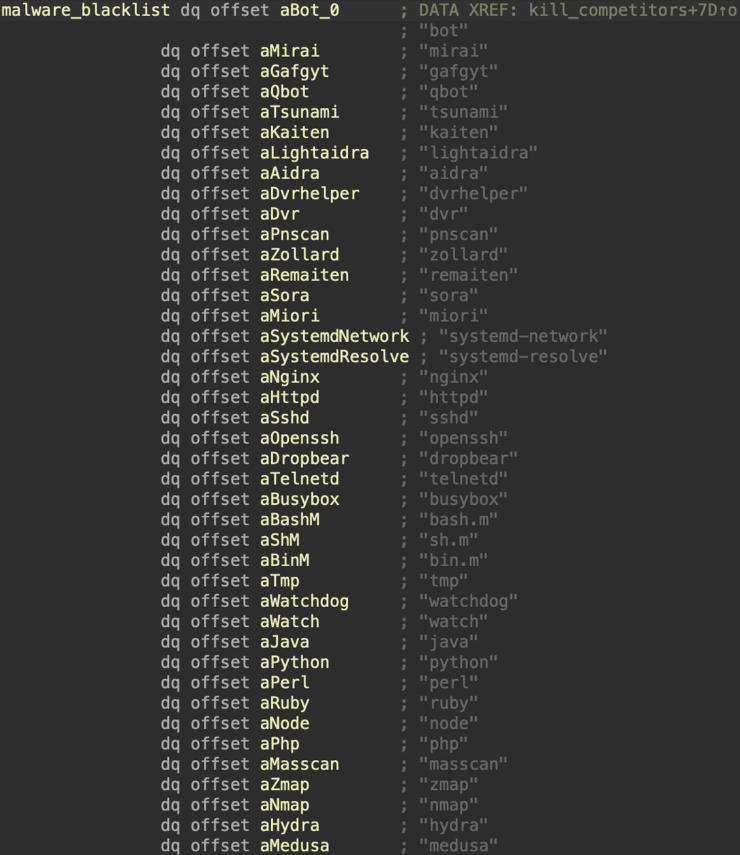
Furthermore, C0XMO actively scans running processes to identify competitor botnet clients on the host, as well as red-team tools, programming tools, and network services that may interfere with its operation, and terminates them.
It does so by deleting binaries and removing their persistence mechanisms, including cron jobs, init scripts, system services, and shell profile entries.
After that, it connects to a hardcoded command-and-control (C2) address using a custom multi-stage handshake that includes magic strings and shared secrets, and then awaits commands.
The supported commands include heartbeat checks, starting and stopping scans, and launching DDoS attacks using one of the 19 supported methods.
The general recommendation for defending against C0XMO and other botnet malware is to keep devices up to date, use unique admin credentials, and disable remote access capabilities when not needed.
Fortinet describes C0XMO as having “a considerably more advanced architecture and feature set compared to earlier IoT botnets.”
The researchers note that the overall design of the malware indicates “a greater degree of operational sophistication and complexity than typical Gafgyt malware.”

Security teams log 54% of successful attacks and alert on just 14%. The rest move through your environment unseen.
The Picus whitepaper shows how breach and attack simulation tests your SIEM and EDR rules so threats stop slipping by detection.


Like any piece of technology, wind turbines (not to be confused with windmills) aren’t functional forever. With time and use, they break down, often requiring deconstruction after just seven to 10 years of service. Wind turbines can be up to 750 feet tall, and given their immense size, figuring out what to do with the massive turbine blades becomes an important issue, lest they end up taking over landfills. Many have taken on the challenge, ensuring that these blades receive a new lease on life and don’t end up tossed in an ever-expanding landfill somewhere.
With that said, it’s worth mentioning that full-on recycling of wind turbine blades isn’t impossible. For instance, companies like Carbon Rivers have figured out ways to break down the fiberglass and steel of these blades, keeping the glass fibers intact so they can be used in new creations (via Department of Energy). However, this is a highly specialized and therefore expensive process, which is why it’s not adopted on a wider scale. For this reason, many companies have opted for simpler, more creative, and, in several cases, less pricey ways of using retired turbine blades, such as in constructing playgrounds, bridges, and art installations. As these companies and artists have shown, wind turbine blades don’t need to be tossed aside when their perceived usefulness is over. The following are just some of the great and unexpected ways these large constructs have been reused over the years.
Though it may seem like wind turbine blades only serve a single purpose, evidently, there are lots of uses for them once their job of converting the kinetic energy of wind into electric power is over. One of the most functional of all is in construction, which can look different from case to case. In some instances, these blades are recycled and turned into concrete to create blocks and barriers. The company Renewablade is one of the foremost names exploring this technology and putting it into scalable, real-world use. Their blocks are lighter and easier to transport than regular concrete blocks. Des Moines, Iowa’s Mercy College of Health Sciences used 28 of Renewablade’s wind turbine blade-concrete composite barriers while construction crews worked on the campus.
Aside from using wind turbine blades to create new forms of concrete, they’ve also seen use as structural elements in buildings. A highly-publicized example comes out of Lund, Sweden, where a 365-car parking garage used dozens of decommissioned blades as curtain walls: Those that aren’t vital to holding the full weight of the building, but cover the outer sides. The decision to use recycled turbine blades came as part of the building’s overall intent to create what they call “visible sustainability” (via Vattenfall). This involved installing solar panels on the roof for clean EV charging — another consideration for cities looking to remedy their EV charging woes — and pollinator-friendly plants to encourage the natural habits of local wildlife.
There’s nothing saying that reusing or recycling materials has to be a drab, corporate affair. If possible, it should be fun, and that’s exactly what wind turbine blade playgrounds seek to achieve. As evidenced by the efforts of Superuse Studios – an architectural collective dedicated to construction using reused and waste materials — these massive pieces are excellent for creating fun and enriching playgrounds for kids. Simultaneously, they instill in the younger generation a sense of duty to make the most of what already exists and creativity regarding what the world around them can look like.
Surprisingly, it seems that wind turbine blades are quite versatile when it comes to playground construction. They can act as tunnels, especially if enhanced with several entry and exit points throughout. Cut and installed upright, they make fine forts for imaginative play and seem more than sturdy enough to support the weight of kids and playground essentials such as slides and climbing ropes. As of 2022, Superuse has managed to recycle 27 turbine blades, creating playgrounds and other installations across the Netherlands. The company claims that these playground projects reduced carbon emissions by roughly 90% compared to the average new construction playground.
Given their length, size, and sturdiness, there’s something to be said for the structural uses of wind turbines. Aware of the possibilities, some have even used wind turbines as supporting pieces for footbridges. One example is the Midleton to Youghal Greenway Bridge in Cork, Ireland, which features two LM13 blades that act as supports in lieu of traditional steel girders. The just-over-18-foot steel deck bridge was completed in January 2022 at a cost of around $31,069.83. Far from one of the largest bridges ever built, but still impressive for an experimental piece, it remains in use by the public, albeit with consistent monitoring of its condition.
BladeBridge — the same company responsible for this construction — later got the opportunity to create a second wind turbine blade bridge. This one had the backing of the Science Foundation Ireland, the Northern Ireland Department of the Economy, and the US National Science Foundation, and was assembled in Draperstown, Northern Ireland, in April of the same year. It’s a bigger creation at around 19 feet in length, featuring a timber deck and two turbine blades as girder replacements with steel angles bolted on. This bridge came to £10,808 (roughly $13,450 in 2023) – and while it wasn’t a permanent installation, its low cost and durability indicate there could be a future for more bridges like it.
As noted in the wind turbine blade playground example, many wind turbine parts are hollow. Thus, with some tweaking, they can theoretically live new lives as forms of item storage or display. This has already shown promise, as chopped-up turbine blades have been turned into large planters in public spaces. DTE’s Warren Service Center in Detroit, Michigan, gave this innovative idea a try with great success. All it takes is cutting up a small piece of the blade, installing a false bottom, cutting out drainage holes, and adding foam to the edges to aid in durability.
The aforementioned BladeBridge project has created some intriguing turbine blade planters of its own in Ireland. At the 2025 Wind Energy Ireland Expo, BladeBridge showed off combination bench-planters created out of recycled turbine blades. Pictured above, one of them features small seating sections broken up by various plants, while another utilizes leftover cuts from an LM13 turbine blade in a three-spoke configuration — a design that, as the company explained, intentionally invites people to sit close to one another to spur conversations and create connections.
If you want a turbine blade bench of your own, the company Noblewins sells them in different shapes and seating arrangements. While they’re environmentally-conscious and visually interesting, know that they are surprisingly expensive, with even smaller examples totaling multiple thousands of dollars.
In addition to planters, turbine blades have also been used as unique snow walls, as demonstrated by a Wyoming-based artist, Chris Navarro. He took several cut-up blade portions and turned them into a combination art piece snow wall, which he told Cowboy State Daily is intended to provide onlookers with feelings of hope and renewal. After all, in the most literal sense, this is a way for these huge, difficult-to-recycle wind turbine parts to take on a new identity. Murals on both sides of the wall were planned to coincide with the art piece’s optimistic message.
Meanwhile, others have used complete turbine blades to make dramatic artistic expressions. For example, as part of the Hull UK City of Culture 2017 celebration, multimedia artist Nayan Kulkarni installed a 246-foot-long blade turbine in the middle of Hull in East Yorkshire, England. The appeal of the aptly-titled art project “Blade” was that it appeared overnight, dazzling onlookers with its sheer size and presence within an urban center. In reality, moving the blade and putting it into place was no easy task. Per Informed Infrastructure, the blade required special tripods to hold it up, loads of heavy machinery to get it correctly positioned, and it called for the temporary removal of street lamps, traffic lights, and more to accommodate its size.

European misinformation researchers say TikTok, X, and Meta are obstructing access to platform data required under the EU’s Digital Services Act through rejections, restrictive quotas, costly APIs, and burdensome security demands. Although regulators have fined X and pushed platforms to improve access, researchers remain skeptical that the changes will provide reliable, reproducible data at scale. Ars Technica reports: In recent years, social media companies shut down public access tools like Meta’s CrowdTangle and replaced them with content libraries, or, like X, paywalled their API data, forcing academics to pay “hundreds of dollars a month,” said Duncan Allen, a research officer at Democracy Reporting International (DRI) in Germany. Researchers say that without API access, what Iamnitchi describes as the “black holes” in what society knows about how these platforms recommend content or handle reports regarding sensitive content will only grow. Others, like TikTok, cap how many posts any researcher account can pull each day, which Allen said can make it “impossible to study anything at scale.”
The DSA was meant to solve this by allowing vetted researchers at credible institutions to have access to API data if they could show it would help in studying systemic risks, from illegal content to threats to fundamental rights. But two years after the law took effect, researchers say they struggle to meet its security requirements and face narrow interpretations from platforms of what qualifies as a systemic risk. Application forms differ by platform, but most require data to be stored on infrastructure that cannot be compromised — such as a machine physically disconnected from the Internet — a resource most universities lack, [said Adriana Iamnitchi, chair of computational social sciences at Maastricht University in the Netherlands, who leads research into online disinformation campaigns.]
Even for researchers who secure approval, “there’s no guarantee that the data is good,” said L. K. Seiling, coordinator of the DSA40 Collaboratory, a German initiative that tracks 46 DSA applications. API data is often difficult for a colleague to reproduce, so a researcher’s work cannot be checked for errors, which Iamnitchi said is a “basic requirement of science.” DSA40 data shows that of 46 tracked applications, 20 were approved and 14 rejected. But approval rates vary widely: TikTok approved 11 of 13 applications, while X rejected 11 of 23. The true rejection rate is likely higher because the tracker relies on voluntary reporting, Seiling said. “There’s no structured advantage for researchers to use this pathway,” Seiling said. “Data access as it’s set up right now tries to disincentivize researchers.”

Samsung could be preparing its busiest flagship launch schedule yet.
According to a new report from South Korea, the company is planning a “4+4” strategy for 2027. This would see eight premium Galaxy smartphones launch across the year, including a second-generation tri-fold device.
If accurate, the roadmap would significantly expand Samsung’s flagship lineup as competition in the premium smartphone market continues to intensify.
The report claims Samsung will split its launches into two waves. The first half of 2027 is expected to be led by the Galaxy S27, Galaxy S27+, Galaxy S27 Ultra and, for the first time, a Galaxy S27 Pro. Thus, the Galaxy S family will have four flagship models instead of the usual three.
The second half of the year is reportedly reserved for foldables. Alongside the Galaxy Z Fold 9, Galaxy Z Fold 9 Ultra and Galaxy Z Flip 9, Samsung is said to be preparing the Galaxy Z TriFold 2. This would mark the return of its most ambitious foldable design.
According to the report, Samsung has already shared details of the expanded lineup with supply chain partners. Furthermore, all four foldables are expected to launch together around July 2027.

Very little is known about the TriFold 2 itself. Although the report suggests Samsung isn’t planning any major changes to its display. The foldable is expected to retain a 9.96-inch main screen with a 4:3 aspect ratio. Meanwhile, earlier rumours have pointed to a noticeably slimmer chassis with all three sections sharing a more consistent thickness.
Production, however, could see a bigger change. Samsung’s first tri-fold device is expected to be produced in relatively limited quantities. Nevertheless, industry sources believe the company will significantly increase manufacturing for its successor if demand proves strong enough.
The move would also continue Samsung’s steady expansion of its foldable portfolio. What was once a two-device lineup has already grown. This year’s range adds a third foldable alongside the Galaxy Z Fold and Galaxy Z Flip series.
The report suggests the expanded flagship strategy could help the company strengthen its position ahead of Apple’s widely anticipated 20th anniversary iPhone lineup. Apple’s lineup is also expected to arrive in 2027.
For now, the roadmap should be taken with a fairly large pinch of salt, as product plans can change a lot before launch. Still, if the report proves accurate, next year could mark the company’s biggest flagship refresh in years.
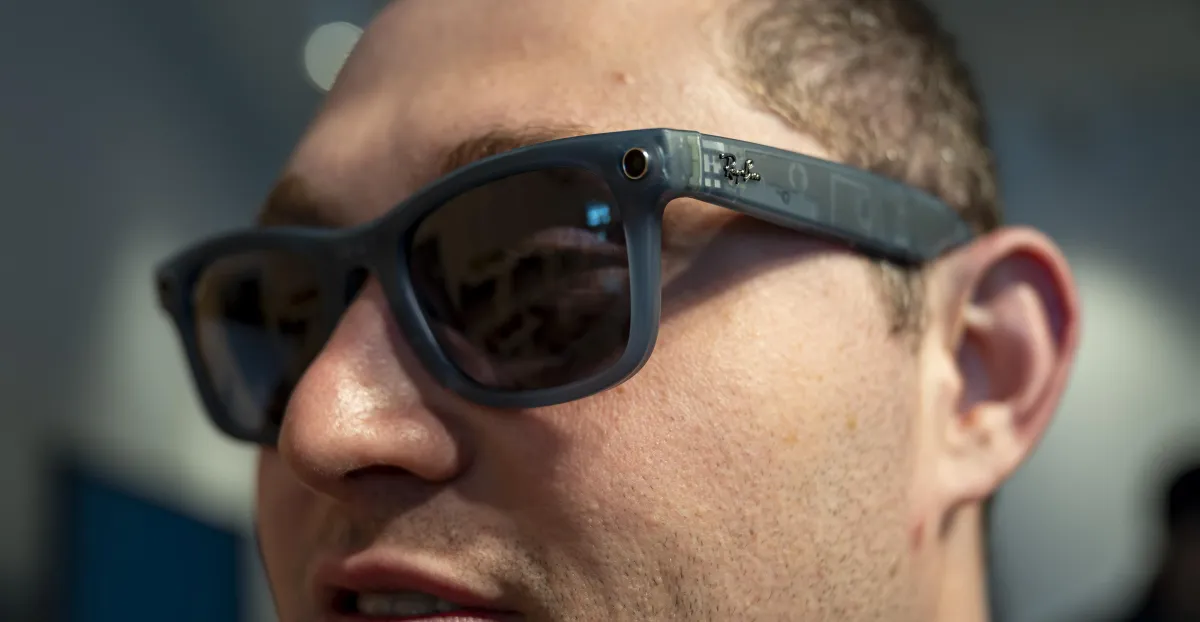
The comical charm of Meta’s new AI-enhanced, smart glasses is that they’re seemingly made for someone unimpressed, perhaps thoroughly, with the way they’re experiencing life.
Being unhappy with life in its current state is, of course, intrinsically human and a problem that is as old as time. In fairy tales and folklore, the motif ends with a lesson — sometimes with the aid of magic, divine punishment, and maybe a witch or two — to be thankful for the things you have. More contemporary interpretations involve time travel and alternate realities, and perhaps some kind of Christmas theme.
Now, in 2026, we have glasses imbued with technological magic. The $300 Meta glasses are equipped with dual cameras as well as multiple microphones and tiny speakers that connect to an AI-powered app on your phone. This allows you to understand languages you can’t speak, command music to be played, perhaps even identify people you don’t know, and record anything you want and keep it, should you desire, forever. Having the ability to do these things, according to Meta, could make life a little better.
The problem with Meta’s pitch is that the improvements the glasses promise come at a price. These super-powered spectacles run the risk of annoying or offending or creeping out the people around you.
And worst of all, even if you’re just plainly wearing the glasses, they’re killing the vibe for everyone else.
The major takeaway from Meta’s advertisements and overall promotional strategy for its glasses is that you’re supposed to wear them everywhere: Japanese restaurants, nights out at bars and clubs, on escalators (possibly to somewhere cool), backstage at concerts, at Kardashian houses, in Miami Beach, skydiving, and everywhere in between.
What these stylish commercials and dynamic morsels of marketing do not tell you is that at all these places there will likely be people who do not want to see you wearing these glasses at all.
“For a few weeks there was a trainer at the gym I noticed wearing glasses — black Ray-Bans — and he had never worn glasses before. It took me a few days but I realized they were Meta,” Sean, a non-Meta glasses wearer in DC, told me. Vox agreed to let Sean and other people interviewed for this article to go by their first name or pseudonym to let them speak freely about these spectacles.
“I almost said something to a manager, but then he stopped wearing them before I could say anything,” he added.
While Meta glasses enthusiasts and critics are on opposite ends of the spectrum when it comes purchasing Meta glasses, both camps are actually pretty close when it comes to advice on how not to look like a creep when wearing them.
One of the main things I was told was just not to film around people. If you’re going to buy these glasses and film, you should film solo activities and not in the direction of other people. Think: ziplining, hiking, gardening, boating, and bicycle rides. The ocean, mountains, flowers, and trails do not care about being filmed the way people do.
The other thing that kept coming up was to be understanding and try not to film anyone without their consent. Because the tech’s relatively new, people are still getting used to these devices. They might not know about the recording light or might have in their heads that people wearing these things are recording everything. That might lead to situations where someone comes up to you and asks about them or perhaps even tense situations where someone thinks they’re being recorded. Being transparent about the glasses (e.g., explaining the recording light) and respecting people’s privacy by telling them what you’re recording (e.g., your form at the gym) and if they might be in the shot goes a long way.
Sean explained his unease. All around this country, people film in the gym all the time — to the point where it’s obnoxious and gets in everyone’s way. This trainer could just be following the trend, using the glasses (which are less cumbersome than an entire tripod setup) to film his clients’ form or creating content for a YouTube channel. But not knowing what the glasses are for, what the trainer is recording, or where he’s recording is what bothered Sean.
“I don’t want to be in the background of videos all over the internet or on TikTok,” he said.
There’s a little bit of social absurdity here in that we’ve been encouraged to post and have so many platforms — TikTok, Instagram, YouTube, etc. — to do so. Meta has continually emphasized that not only do these glasses allow people to share their points of view but also that everyone’s point of view is so important that it needs to be shared. At the same time, more people posting more than ever has made people aware of being a background character in someone else’s content. And it turns out that real-life, regular people are not particularly invested in how the stranger next to them in Meta glasses sees the world.
Patrick, a writer living in New York, told me about a wedding he’d recently attended, where he saw an old friend wearing a pair. His group of friends told their pal that they wouldn’t talk to him until he took them off.
As someone who aspires to be the kind of person you want to sit next to at a wedding, this is understandable. A wedding is theoretically two people sharing the most romantic day of their lives, but it is also a well of gossip, judgment, inside jokes, and lore that’s shared by the people who are watching said couple share the most romantic day of their lives. There’s also the possibility that, depending on the wedding, the spirit might move oneself to partake in the erotic violence known as the “chicken dance” and would not want any of that recorded.
“One person screamed, ‘Ew the Kylie glasses, gross.’ It felt so cathartic,” Patrick said, referencing Meta glasses spokesmodel Kylie Jenner who, in her personal life, may or may not wear the glasses she advertises.
In addition to weddings and the gym, people also told me that they don’t want to see the glasses at restaurants, not on dance floors or at parties, and definitely not in an immersive theater setting. I even spoke to someone who started a petition to ban them from bars.
“I’m staunchly anti-photographs at good parties — the best parties in the world ban photography from the dancefloor,” said Vee, a nightlife aficionado who has owned but does not use his pair of Meta glasses anymore. “When people know there’s a camera on them, they behave differently. They start to monitor their own behavior. They become self-conscious and they start to think, Well, what will the people watching this video think I’m doing? Am I being cringe?”
Going out partying is a completely different experience from lifting weights at the gym, and both are obviously very different from attending a wedding with friends. Yet, the critique of wearing Meta glasses at all these places is the same. No matter the vibe, Meta glasses will kill it and flatten the mood. People can’t enjoy the moment because the moment is being intrinsically changed by a person who might be recording.
One of the rather unfortunate terms that Meta glasses have acquired is “pervert glasses.” This is largely due to the trend of pickup artists, pranksters, and yes, perverts, who are using the glasses to film others without their consent. Vee, the dance enthusiast, told me that it’s one more reason why he doesn’t believe that these specs have any place in nightlife.
“There’s a very significant community of people who trade videos that they’ve taken: candid videos of women who are in various states of undress. It’s just this kind of seedy underground,” Vee said, pointing out that Reddit had to ban entire forums dedicated to sharing nonconsensual videos and pictures of women at festivals and clubs.
As Vee explained, people at festivals and nightlife events are often partaking in drugs and alcohol. He has no problem with that. What he does take issue with is that no one doing these things should have to think about being someone else’s content. Intoxicated people aren’t in the state of mind where they can consent to being in someone’s video or are even aware that someone’s Meta glasses have their recording light on.
“There’s this whole kind of creeper contingent of folks who are trying to learn how to disable the recording light,” Vee said. “It’s not everybody who owns these glasses obviously, but there is a significant number of creepers who are giving the hardware a very bad name.”
The indicator light has since become a major flashpoint. The light is part of the glasses’ vibe-kill persona as it makes clear to everyone that can see that recording is taking place, and it’s especially vibrant in dimly lit places. The effect, I imagine, is like when the toys in Toy Story collapse when they see a human. That’s led to a contingent of glasses-wearers who want to disable the feature.
While it’s understandable that someone might not want to draw even more attention to these glasses, hacking the light source is something a creeper would also do. Hence the “pervert glasses” moniker. These privacy concerns are why Meta is now rolling out an update that will disable the spectacles’ recording feature if said light is tampered with.
“I think if you tamper with that, they should just break,” Jason, a 28-year-old Meta glasses owner, told me. “It’s the thin veil that makes it like, ‘Okay, at least you’re telling me you’re filming me.’ So the idea that if you tamper with it? No, your product should be bricked.”
Jason bought a pair of Meta glasses in November with the idea that he would use them to film food content and post reviews. He had even picked out a name, “Sandwich Digest,” and dreamt of its success. But on his first wear, he took them to a Japanese sandwich shop and quickly realized that his future as a Meta glasses-wearing food critic was not a fun one.
“I felt so uncomfortable,” Jason said, noting that the obviousness of his Meta glasses and their recording light spiked his self-consciousness. “But I also felt like the people I was interacting with were also uncomfortable. And I felt like they were feeling like, Okay, we both know this is weird, but I can’t say that because you’re actively filming me.”
The strange interaction Jason described is a version of the panopticon effect, the idea that being recorded makes people alter their baseline behavior, perhaps to the point where people self-regulate even when they’re not being recorded. For Jason, there was no “real” restaurant experience to be filmed because everyone was so uncomfortable with being recorded.
Therein is the conundrum: Even if you’re not using these glasses to be a creep, people still think you’re a creep, and you know that they think you’re a creep.
Therein is the conundrum: Even if you’re not using these glasses to be a creep, people still think you’re a creep, and you know that they think you’re a creep.
Since that initial encounter, Jason tells me that he’s only ever used the filming feature to capture a zipline experience he had in Mexico at the beginning of the year. He thinks he might also use them to capture hikes or excursions on an upcoming vacation, but he won’t use them in the vicinity of or to film other people — especially since they’ve been dubbed pervert glasses.
“People’s perception of these glasses now is not what it was when I bought them in November,” he told me. “And had it been then, and if I knew what I know now, I probably wouldn’t have bought them.”
Max, a Meta glasses wearer based in Australia, is a bit more keen on them but still shares some of Jason’s sentiment about their not-so-great reputation. Max explained to me that he has two pairs and wears them around 40 hours per week, mainly when he’s working, or walking and driving from place to place. Though he says he’s never had a negative interaction when wearing his glasses, he understands the backlash.
“While we’re constantly being recorded when in public anyway, there’s a big difference between mass surveillance and one random weirdo recording you for their own purposes,” Max said, making the point that the indicator light, as awkward and obnoxious as it is, could be the accessory’s most important feature.
“It’s really the only defense wearers have against the ‘pervert glasses’ remarks,” he added. “If the firmware update is successful, and the marketing around the update is widespread, I think we can slowly turn the public in their favor again.”
To be clear, many Meta glasses owners like Max pointed out that the glasses do have extremely useful features, like hands-free calling or the ability to translate foreign languages in real time. Meta also touts the glasses’ accessibility features, including those for people with reduced vision or hearing. They also offer sun protection.
These are all ostensibly helpful gizmos, and their existence seems to indicate that Meta and its tech cohort are trying to figure out how to make these glasses as essential to our everyday lives as smartphones. Perhaps, when these features become more innovative or exciting or if the glasses become so popular, the narrative around why people buy them may change.
But for now, the singularly intriguing thing about these specs is simultaneously their most publicly maligned feature: the filming.
“There are probably a million things to film with them that are probably not weird,” Jason, the one-time Meta glasses food critic, told me. “But like if you’re wearing them at the beach, I would probably be side-eyeing you because you’re wearing ‘pervert glasses’ at the beach — fork found in kitchen.”
Apple will report its third-quarter financial results on July 30. Here’s what happened in the quarter, and what analysts believe will be the highlights of Tim Cook’s last earnings report as CEO.
Apple’s Q3 2026 financial results will be issued by Apple in a press release on July 30. As is tradition, it will be followed by the analyst and investor conference call at 5 p.m. EDT.
The call will see current CEO Tim Cook and CFO Kevan Parekh talking about the quarter and providing guidance for future quarters. Analysts will also ask questions about Q3 and what to expect from upcoming trade periods.
The discussions will almost certainly also cover Cook’s last financials call as CEO.
As usual, AppleInsider will be reviewing the data and reporting on the subjects raised in the conference call.
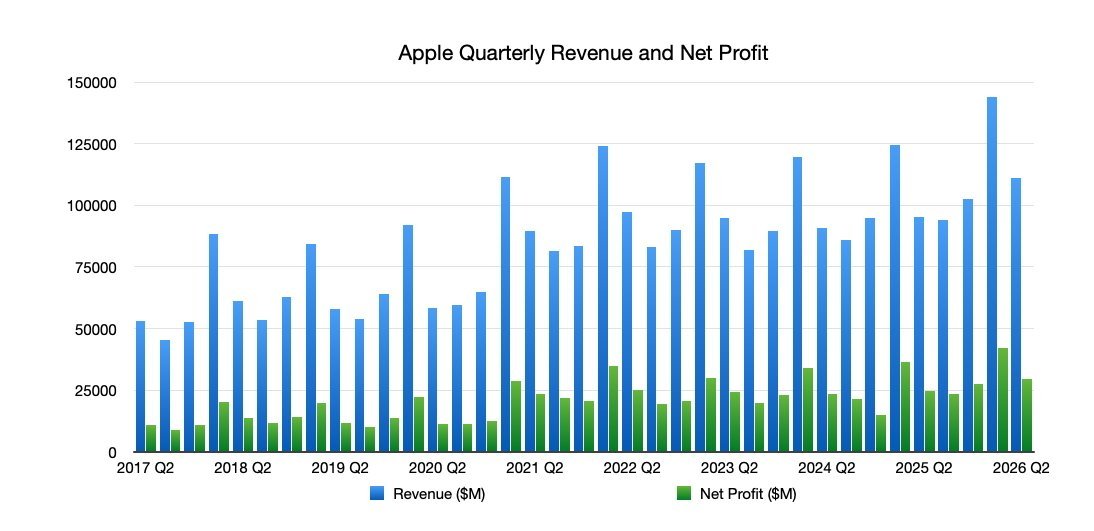
Released on April 30, the Q2 earnings were a second-quarter record, with $111.2 billion in revenue reported. There were also gains across almost all areas, exceeding the expectations of Wall Street analysts.
The revenue included $56.99 billion from iPhone, with Mac revenue also up at $8.4 billion, iPad rose to $6.9 billion, and Wearables, Home, and Accessories shifted to $7.9 billion.

Apple quarterly revenue and net profit as of Q2 2026
The ever-reliable Services category reached $30.9 billion, up from $26.6 billion in Q2 2025.
During the period, Apple enjoyed post-holiday launches including the M4 iPad Air, the iPhone 17e, M5 upgrade to MacBook Air, and the M5 Pro and M5 Max MacBook Pro. There was also the updated Apple Studio Display, the Studio Display XDR, and the MacBook Neo.
The Q3 2025 figures were an improvement to $94.04 billion in revenue, again soundly beating Wall Street expectations.
The iPhone revenue was up to $44.58 billion, with Mac also growing to $8.05 billion, and Services marching upward to $27.4 billion.

Apple quarterly revenue by unit as of Q2 2026
However, iPad revenue dipped from $7.16 billion in Q3 2024 to $6.58 billion in Q3 2025. Similarly, Wearables, Home, and Accessories went from $8.09 billion to $7.4 billion.
The quarter had a backdrop of a global trade war, with Apple getting a minimal hit from grossly increased tariffs. Apple also managed to get a new all-time high for its install base across all product categories and geographic segments.
The quarter is the first to fully benefit from the Q2 releases, since they were available for the entire period instead of part of it. Aside from the launch of the AirPod Max 2, there aren’t really any major in-quarter launches to be concerned about.
However, the ongoing memory crisis has made an impact. Warned in June by Cook, he admitted that price rises were “unavoidable,” and the situation unsustainable.
A few days later, Apple raised the prices of its products across the range significantly.
This included the MacBook Air starting from $1,299 instead of $1,099 and the MacBook Neo jumping from $599 to $699. The Mac Studio was badly hit, with the M4 Max starting from $2,499 instead of $1,999, and the M3 Ultra going up from $3,999 to $5,299.
While products like the HomePod and Apple Vision Pro also saw hikes, Apple didn’t adjust the prices of the iPhone 17 generation. It may simply be waiting for the iPhone 18 to do that.
During the Q2 results, Parekh provided some forward-looking statements. This included expectations of revenue growth at between 14% and 17% year-over-year, and a gross margin between 47.5% and 48.5%.
Operational Expenditure should reach between $18.8 billion and $19.1 billion.
The Wall Street consensus refers to a survey of analysts. The results are averaged out to give a general opinion of where investors and analysts are leaning in their quarterly forecasts.
Yahoo Finance
Yahoo Finance’s revenue estimate for Apple in Q3 stems from 27 analysts. As of July 22, the average estimate is $108.9 billion, with a low of $107.5 billion and a high of $112.17 billion.
For the earnings per share estimate, 31 analysts put it at an average of $1.89. The low is $1.83 and the high is $1.99.
TipRanks
TipRanks also does its own analyst polling on Apple’s quarter. In its forecast as of July 22, its consensus is for revenue at $108.85 billion, with a high of $112.20 billion and a low of $105.20 billion.
On the earnings per share, the consensus is $1.89, with a low of $1.80 and a high of $1.99.
Ahead of the results and call, analysts offer their own forecasts of what they think Apple will be declaring in its financials. Depending on the firm and the analyst, these hot takes include both positive and negative opinions about Apple.
AppleInsider will add to the analyst speculation here as the predictions roll in.
Bank of America
In a forecast that rolled in on July 20, Bank of America is a little positive about Apple’s potential results. In its July 20 forecast, it believes Apple will get $109 billion in revenue with an earnings per share of $1.89.
iPhone build plans for a Pro-centric production are robust, but the analysts are being more conservative due to the new hardware cycle staggering. For Services, BoA thinks there will be 14% year-over-year growth.
As expected, BoA believes that investor focus will be on things like component cost rises, as well as the Cook-Ternus changeover.
BoA has a Buy rating for Apple, with a price target of $380.
Morgan Stanley
On July 24, Morgan Stanley provided its own guidance on the quarterly results, with expectations it will slightly beat market expectations.
Working on guidance of potential increases in revenue and EPS, Morgan Stanley thinks that Apple’s gross margin may go slightly below the market’s forecast. It blames potential changes to iPhone shipment volumes, price hikes, and cost inflation.
Under this forecast, Morgan Stanley reiterated its “Overweight” rating for Apple, but raised the price target from $360 to $364.
UBS
On July 16, UBS issued a report giving Apple a “Neutral” rating and maintained a price target of $296.
For the quarter, UBS expects revenue to reach $107.8 billion, just below a $108.1 billion consensus. The diluted earnings per share is anticipated to be $1.84, slightly down from the $1.87 of the consensus.
On a per-unit basis, iPhone market share increased in the quarter, with Mac revenue up thanks to new models, albeit with a small shift to a lower average selling price. Services is projected to get a 13% year-over-year growth, though with headwinds in App Store growth and Google search-related revenue.
Over the weekend, Reddit user -void1 posted an alarming discovery on the r/ClaudeAI subreddit: some conversations that users of Anthropic’s Claude AI chatbot had made “shareable” via a link were being indexed by Google Search, and could be clicked on and accessed by seemingly anyone.
The conversation took off on the social networks X and Reddit, the latter with thousands of upvotes and comments, many expressing concern about user privacy and information security, and the additional finding by users that shared Claude Artifacts — including interactive applications, dashboards, documents and other AI-generated work products — were also appearing in Google Search results.
VentureBeat independently verified that some Claude Artifacts not shared directly with us were indeed searchable and accessible via Google. We could not access any shared conversations.
By Sunday morning, many of the original Google search results for shared Claude conversations appeared to have disappeared or become significantly harder to find, suggesting either Google, Anthropic or both had begun taking action.
The exposure could carry broader implications for enterprise users. Anthropic has increasingly positioned the feature as a collaborative workspace for building and sharing software, dashboards, documents and other business assets rather than simply chatbot responses.
I have reached out to Anthropic for comment and will update this article when the company responds.
Reddit user -void1 posted to r/ClaudeAI on July 25, 2026, demonstrating that the Google query site:claude.ai/share surfaced numerous publicly accessible Claude conversations.
Screenshots shared across Reddit and X showed Google returning pages from Claude’s /share URLs, while other users reported finding conversations containing cryptocurrency wallet creation, legal questions, résumés and internal business discussions.
While many users expressed concern that conversations they believed were effectively “unlisted” could become discoverable through public search engines, others argued the behavior reflected the expected consequences of creating publicly accessible share links rather than a software vulnerability.
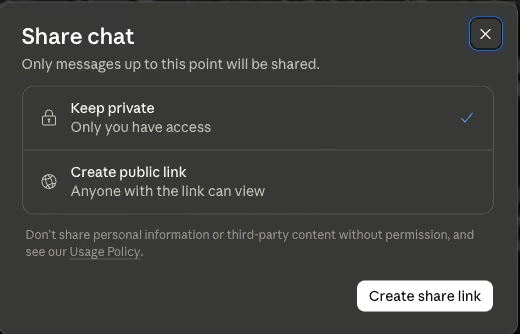
Indeed, Anthropic requires the user themselves to go into Claude’s options and select to make a conversation or Artifact shareable to others with the link, warning them it will be accessible to anyone with it, over multiple dialog boxes. It is similar to sharing a Google Doc link, where the user must also select the option — it is not enabled by default.


On July 26, X user Om Patel, founder of research firm BigIdeasDB, posted allegingthat searches such as site:claude.ai/public/artifacts surfaced publicly shared applications, dashboards, reports and documents.
Screenshots circulating online appeared to show search results referencing internal-looking proposal documents and other business materials. Another widely circulated post warned that users often interpret “Anyone with the link” as equivalent to an unlisted YouTube video—accessible only if someone possesses the URL—not necessarily as content eligible for indexing by public search engines.
VentureBeat independently verified that multiple third-party Claude Artifacts appeared in Google Search results for the query site:claude.ai/public/artifactslaunch and were accessible without authentication, despite the URLs not being previously known to the reporter.
However, VentureBeat has not independently verified the full volume or representativeness of the examples circulating on social media.
The reports are particularly significant because Artifacts has become one of Anthropic’s flagship product initiatives.
First introduced alongside Claude 3.5 Sonnet in June 2024, Artifacts transformed Claude from a conventional chatbot into a collaborative workspace capable of generating interactive web applications, dashboards, visualizations, documents, games and other live software alongside a conversation.
VentureBeat previously described the launch as potentially marking the beginning of an “interface war” among AI companies, shifting competition from raw model performance toward collaborative AI workspaces.
Anthropic subsequently rolled Artifacts out to all Claude users, saying tens of millions had already been created, before expanding the concept again this year into Claude Code.
That update allows engineering teams to publish live HTML dashboards and interactive project workspaces directly from coding sessions, making Artifacts an increasingly important part of Anthropic’s enterprise strategy.
That broader functionality raises the potential stakes if publicly shared Artifacts were also being indexed. Unlike ordinary chat transcripts, Artifacts can contain interactive software prototypes, engineering dashboards, planning documents, product mockups, data visualizations and other work products organizations increasingly rely on to collaborate across technical and business teams. If those pages become searchable through public search engines, the exposure could extend well beyond conversational text.
Importantly, nothing so far suggests attackers gained access to private Claude accounts or conversations.
Rather, the controversy centers on conversations and Artifacts that users explicitly chose to share publicly via Claude’s sharing tools.
The dispute instead is whether users reasonably understood those shared pages could become discoverable through public search engines rather than only by recipients possessing the link.
Technically, pages that are publicly accessible without authentication can generally be indexed by search engines unless publishers explicitly prevent crawling through mechanisms such as noindex directives or other indexing controls.
Several Reddit commenters noted that Claude’s long, randomly generated share URLs are effectively impossible to guess. Instead, search engines typically discover them only after links appear somewhere they are permitted to crawl, such as public websites, forums or social media posts. Others questioned exactly how Google initially discovered so many Claude share URLs.
The issue also illustrates a growing challenge for AI companies as chatbots evolve into collaborative workspaces for creating software, documents, dashboards and business applications.
Features originally designed to make sharing AI-generated work easier now increasingly expose assets that may carry significantly more business value than a simple conversation.
As enterprises adopt AI as a platform for building internal tools and workflows, the distinction between “shared by link” and “publicly discoverable through search” becomes far more consequential.
Anthropic is far from the first AI company to confront the distinction between “shared” and “searchable.”
Reddit users quickly pointed out that OpenAI previously faced criticism after publicly shared ChatGPT conversations became discoverable through Google, prompting similar debates over whether “share by link” should imply a publicly indexed webpage or something closer to an unlisted document.
Anthropic’s situation also echoes an incident involving Google’s pre-Gemini AI assistant, Bard, in September 2023. SEO consultant Gagan Ghotra discovered that Google Search had begun indexing shared Bard conversation links, warning that users could mistakenly assume they were sharing conversations only with intended recipients rather than making them discoverable through search.
Google later responded publicly that it did not intend for shared Bard chats to be indexed and said it was working to block them from Google Search while emphasizing that only conversations users explicitly chose to share were affected.
Together, the Bard, ChatGPT and now Claude episodes suggest AI companies continue to wrestle with the boundary between content that is technically public on the web and users’ expectations that “share with a link” behaves more like an unlisted Google Doc or YouTube video than a webpage eligible for indexing by search engines.
For organizations deploying generative AI broadly across employees, the distinction between “shared with a link” and “publicly discoverable through search” is not merely semantic. It can determine whether an internal engineering dashboard, financial model, product roadmap, customer-facing prototype or AI-generated application remains effectively private—or becomes visible to anyone using a search engine.
Whether this ultimately proves to be a technical indexing oversight, a mismatch between product design and user expectations, or some combination of both, the episode serves as another reminder that AI products are increasingly functioning less like chatbots and more like collaborative operating systems for knowledge work.
As those platforms begin hosting internal dashboards, software prototypes, financial analyses, business planning documents and increasingly sophisticated enterprise applications, seemingly small decisions about how shared links behave can have outsized consequences for enterprise security, product design and user trust.
Enterprise leaders should consider taking several practical steps:
Audit existing shared AI content: Review shared conversations, Artifacts and other publicly accessible AI-generated assets to determine whether they should remain available or be unpublished.
Clarify what “Share” actually means to your ENTIRE organization: Don’t assume employees understand the difference between “accessible by link” and “discoverable through search.” Update internal guidance to explain how each AI platform handles shared content.
Treat AI platforms like collaboration software: Apply the same governance you use for Google Docs, Microsoft 365, Slack, GitHub, Notion or SharePoint—including policies around sharing sensitive intellectual property, customer information and regulated data.
Prefer authenticated enterprise workspaces for sensitive information: When possible, keep confidential projects, code, financial models and customer data inside enterprise accounts with identity-based access controls instead of publicly accessible links.
Review vendor defaults and sharing controls: As AI platforms evolve rapidly, administrators should periodically revisit default sharing settings, retention policies and indexing behavior rather than assuming they remain unchanged after new feature releases.
For now, it appears Anthropic has begun limiting the visibility of at least some shared pages in Google Search, though reports suggest cached copies, archived pages and indexing by other search engines may persist for some content. Enterprises that have relied on Claude’s sharing features may wish to review existing shared conversations and Artifacts while Anthropic’s investigation continues.

 Jeffrey Hazelwood/CNET
Your phone is essentially a miniature computer. They help us stay connected with friends online, organize our schedules and even stream our favorite shows. And you probably have a strong opinion on how your phone performs, its battery life and which features are actually useful — and which aren’t.
This month, we’re asking which phone you rely on. You can take our two-minute survey to share your experience with your device’s camera quality, battery life, durability and value. The top picks will make it to our roundup, so be sure to check back in a few weeks to see if yours made the list.
Spec tables on retailer sites don’t capture the full story about a phone. How your phone performs every day, your experience with the camera in dim lighting and whether the hardware holds up over time are invaluable insights for others.
“I’ve been reviewing phones at CNET for a decade and my absolute favorite part of my job is meeting readers and hearing about what they love about their handsets and what annoys them. I’m incredibly excited to hear from you and encourage you to share your experiences with us,” says Patrick Holland, director of content at CNET.
Whether you go for budget phones or prefer devices with all the bells and whistles, you can help other CNET readers find a phone that’s actually worth their money by sharing your thoughts.
This survey is open through mid-August and takes only a few minutes to complete. After we gather enough information, we’ll tally up the numbers and publish the winners.
Need a refresher? Check out our list of the best phones to see which ones CNET editors recommend.


This messaging is cause for concern, according to ADHD specialists who spoke with WIRED.
“Stimulant medications have been in existence for nearly 100 years, and approved for use in children since the 1960s,” says Kristen Leinung, a mental health nurse practitioner and director of psychiatric services at the Northwest ADHD Treatment Center in Portland, Oregon. The drugs are well-studied for efficacy and have predictable side effects, she adds, but because they can be misused, they’re often stigmatized online. “This style of advertising does further that stigma.”
Leinung believes that with their pessimistic framing of Adderall and similar pharmaceuticals, these supplement ads could lead people to go off their medication, which can be dangerous. “We know untreated or under-treated ADHD carries a high mortality and morbidity risk,” Leinung says, decreasing life expectancy and doubling the risk of premature death; it’s associated with factors that range from less exercise and worse sleep to riskier driving and a higher likelihood of smoking.
US pharmacies have seen shortages of the stimulants Adderall, Vyvanse, Ritalin, and Concerta since 2022. Though the Drug Enforcement Administration increased production quotas last fall, various production bottlenecks have continued to create supply problems, according to the nonprofit Understood, which supports Americans with learning and thinking differences including dyslexia and ADHD.
The difficulty of accessing these medications may factor into someone’s decision to try unproven alternative treatments instead, says Cindy Goldrich, a mental health counselor, educator, and ADHD coach in Boulder, Colorado. That’s what makes the supplement ads feel “exploitative” to her.
“When someone can’t get their prescription filled and doesn’t know when they will, a product promising to fill that gap—or claiming you didn’t need the ‘harsh’ medication anyway—becomes very appealing, very fast,” she says. “It’s not just selling to people who are curious about alternatives. It’s selling to people in crisis, who are scared and out of options through a system failure that has nothing to do with whether their medication works.”
Andrew Kahn, a psychologist and associate director of expertise and behavioral health at Understood, says these supplements also lack robust regulation while suggesting, without evidence, “benefits equal to or similar to medication.” But unlike prescription and over-the-counter drugs, he explains, “supplements don’t have to prove they’re safe or effective to the FDA before they’re sold.”
That very fact can become a selling point. “People are wary of big pharma, wary of side effects, and a ‘natural’ option feels safer even when it isn’t better tested,” Goldrich says. Some of the more common ingredients in the supplements, like omega-3s, L-theanine with caffeine, and certain adaptogens “have modest supporting research as general cognitive or mood support, and there’s nothing wrong with someone using them alongside medication if their doctor is aware.” But an underlying problem, she adds, is that whether a person takes medication or supplements or both, they still need to learn skills like planning and emotional regulation.
In the MAHA era, of course, medically suspect claims often circulate unchallenged. Kennedy, who swears by dubious supplements like the synthetic dye methylene blue, has in many ways normalized these fringe products as the top authority of the vast US health care apparatus. In a statement to WIRED, HHS press secretary Emily G. Hilliard reiterated the department’s position that the nation is facing a challenge of “overmedicalization in behavioral health care,” with patients and parents not always informed about the potential hazards of psychiatric drugs. “Under Secretary Kennedy’s leadership, HHS is embedding informed consent, transparency, and evidence-based alternatives into federal policy and practice,” Hilliard said.
Leinung, however, feels people should think twice before making that decision based on a video they saw on social media. “I do worry that encouraging people to stop or avoid starting prescribed medication to treat their ADHD can negatively impact their quality of life,” she says. “I would caution any person considering stopping their prescribed stimulants to have a thorough discussion with their health care provider.”


The ShinyHunters extortion gang has claimed responsibility for a recently disclosed Ernst & Young data breach, saying it obtained credentials for some of the company’s systems via a supply-chain attack.
Ernst & Young disclosed the breach earlier this month, saying a third-party support ticket system used by its IT personnel was compromised and support tickets that may contain client tax information were stolen.
EY says it detected unusual activity on April 23 and determined that the attacker accessed the platform between March 28 and April 12, downloading multiple documents.

“EY uses a third-party information technology service management platform to help EY information technology personnel provide support to EY teams performing tax-related work for clients,” reads the EY data breach notification.
“Support tickets submitted through the platform may include documents containing client tax information”
Th notification goes on to say that the stolen documents contained personal and financial information included in or used to prepare tax filings.
However, the company has not disclosed the name of the compromised support system, the specific types of information exposed, or how many people were affected.
At the time the breach was disclosed, no ransomware or data extortion group had claimed responsibility for the attack.
Today, the ShinyHunters extortion gang added Ernst & Young to its data leak site, claiming it conducted the attack and threatened to release the allegedly stolen data if the company does not contact the group by July 31, 2026.
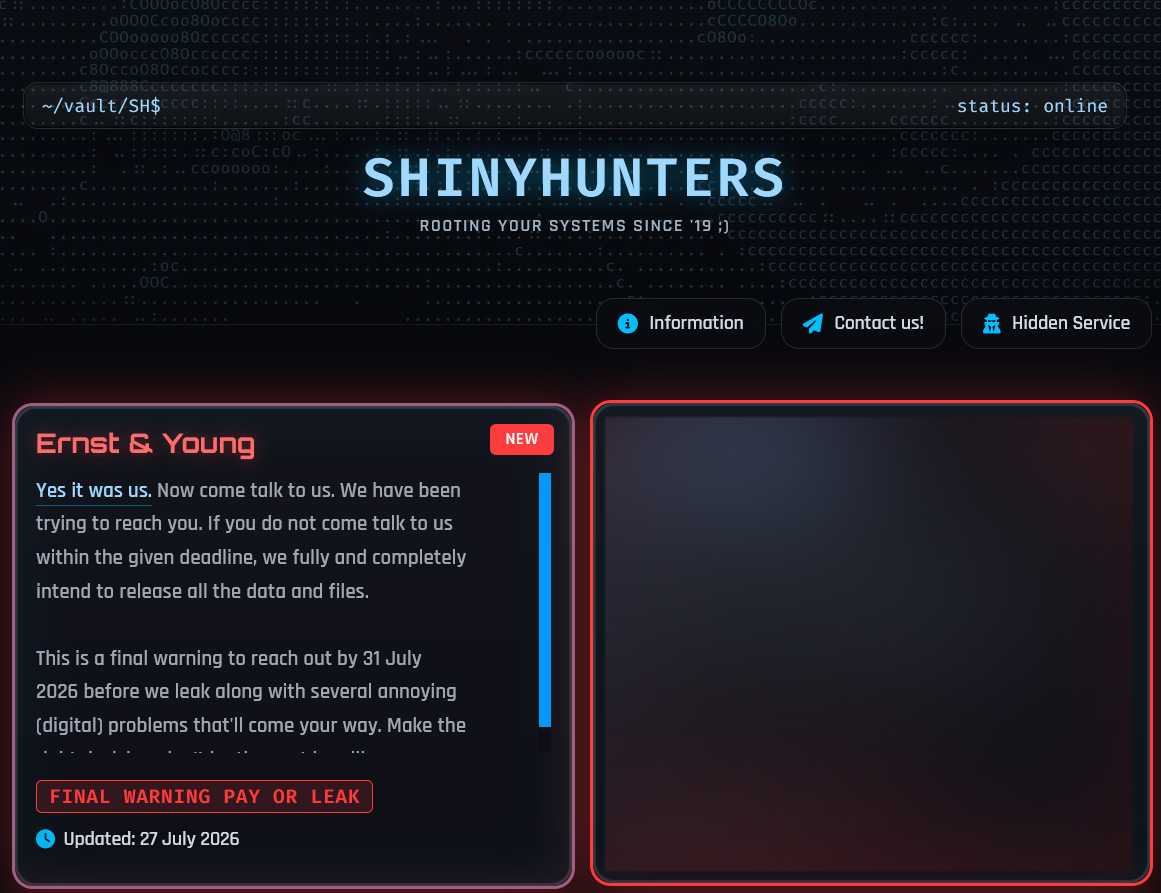
The threat actors claimed to BleepingComputer that EY credentials were obtained through a supply-chain attack and used to breach the company. These stolen credentials allegedly allowed them to breach Ernst & Young’s Jira, GitHub, and Azure environments.
The threat actor would not identify the allegedly compromised third party or disclose what data was stolen. However, it claimed that the information EY acknowledged as compromised was exposed, along with more data.
BleepingComputer has no way to verify the threat actor’s claims independently, and Ernst & Young has not confirmed that ShinyHunters was behind the attack.
BleepingComputer contacted Ernst & Young again Monday morning to ask whether ShinyHunters was behind the attack and whether the company had received an extortion demand from the group.
We also asked EY to identify the compromised support system and disclose how many people were affected by the breach.
Ernst & Young previously said it secured its systems, removed the unauthorized access, and notified federal law enforcement.
Affected clients are being offered 24 months of identity monitoring and restoration services through Experian.
Security teams log 54% of successful attacks and alert on just 14%. The rest move through your environment unseen.
The Picus whitepaper shows how breach and attack simulation tests your SIEM and EDR rules so threats stop slipping by detection.
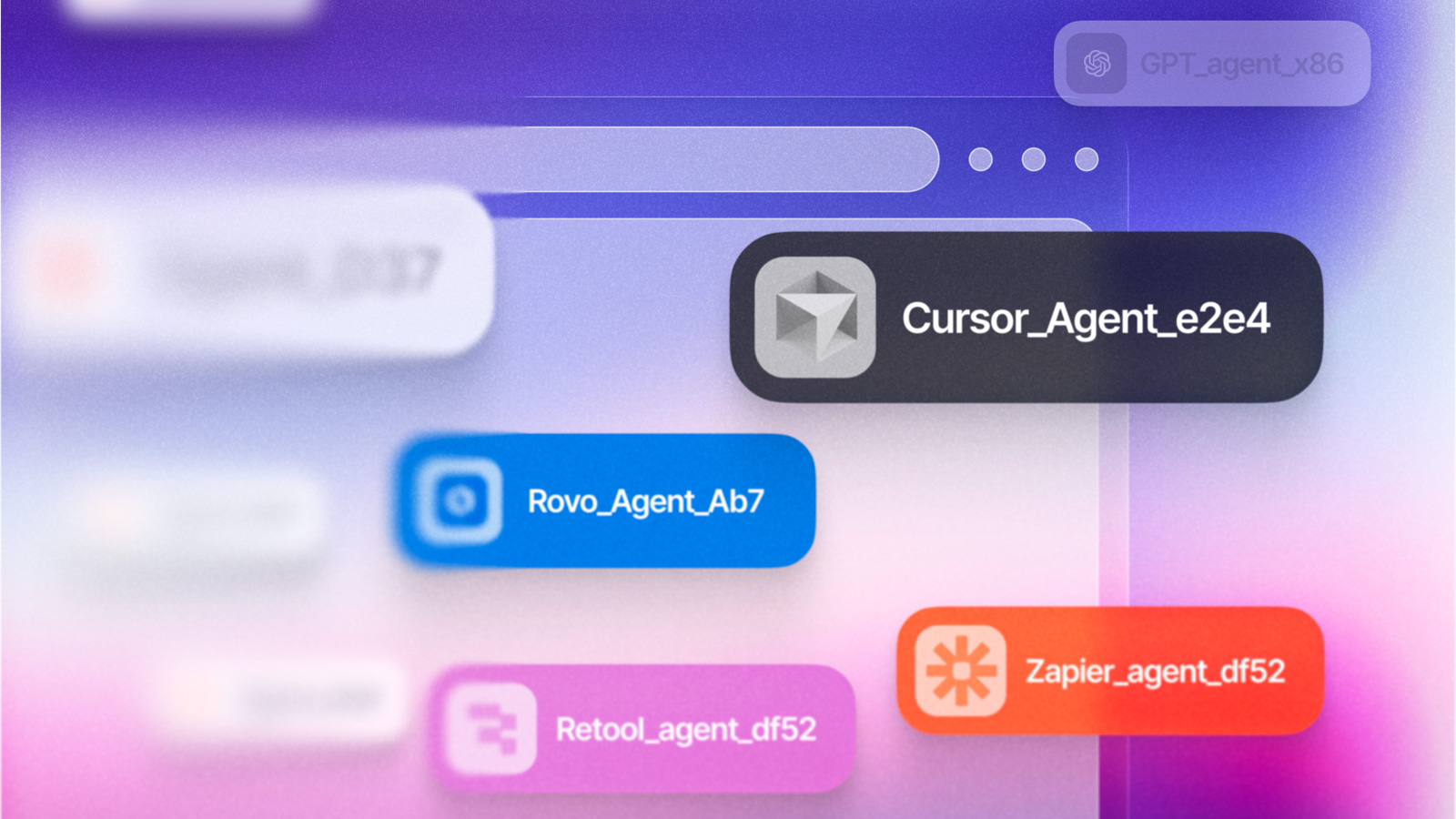
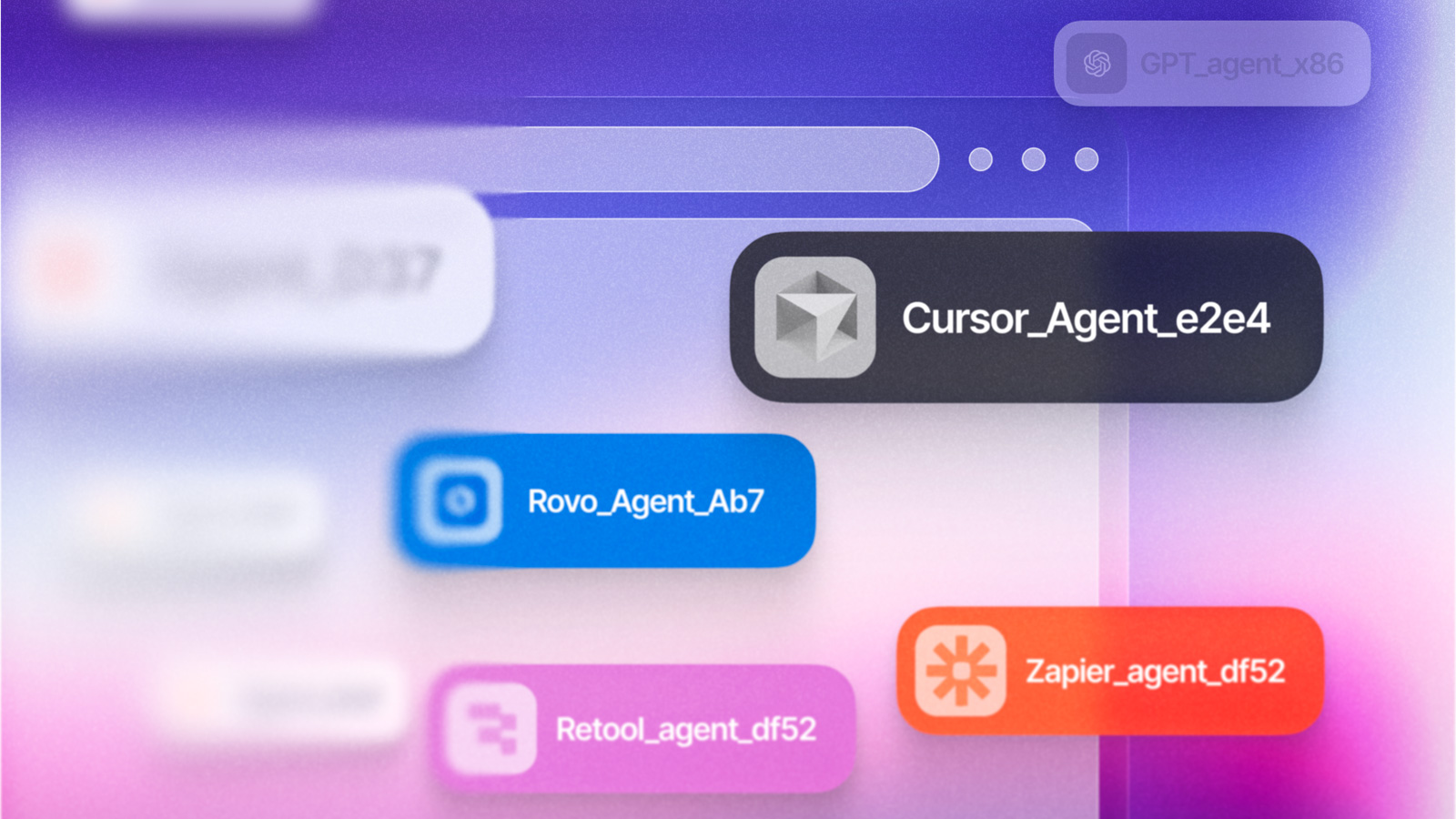
Your workforce is building agents in Salesforce Agentforce, Microsoft Copilot Studio, Cursor, Zapier, Retool, and a dozen other tools, often without visibility or approval from IT or security.
For IT and security teams, the decision of whether or not agents should be used has already been made by the business, one shadow agent at a time. The challenge now is keeping up. New agents can be created in minutes, connected to sensitive systems in a click, and changed daily.
The job is to maintain visibility and control (who built it, what it can access, what it can do) while enabling the workforce to keep experimenting, automating, and moving fast.
That’s exactly what Nudge Security does.
AI chatbots are a known problem by now. Shadow AI agents are a different, and arguably bigger, one. An agent holds persistent permissions. It connects to your corporate apps and data. It takes action on its own, without waiting for someone to hit send.
When an unmanaged agent goes wrong, the result isn’t a bad response in a chat window. It’s a system that got touched.
The numbers back this up:
That gap between exposure and readiness is exactly where shadow AI agents live.
Learn how each approach works, what it actually detects, and where the blind spots are, so you can build a discovery strategy that matches your real agent risk surface.
As AI agents multiply across your stack, the gaps between methods are where risk hides.
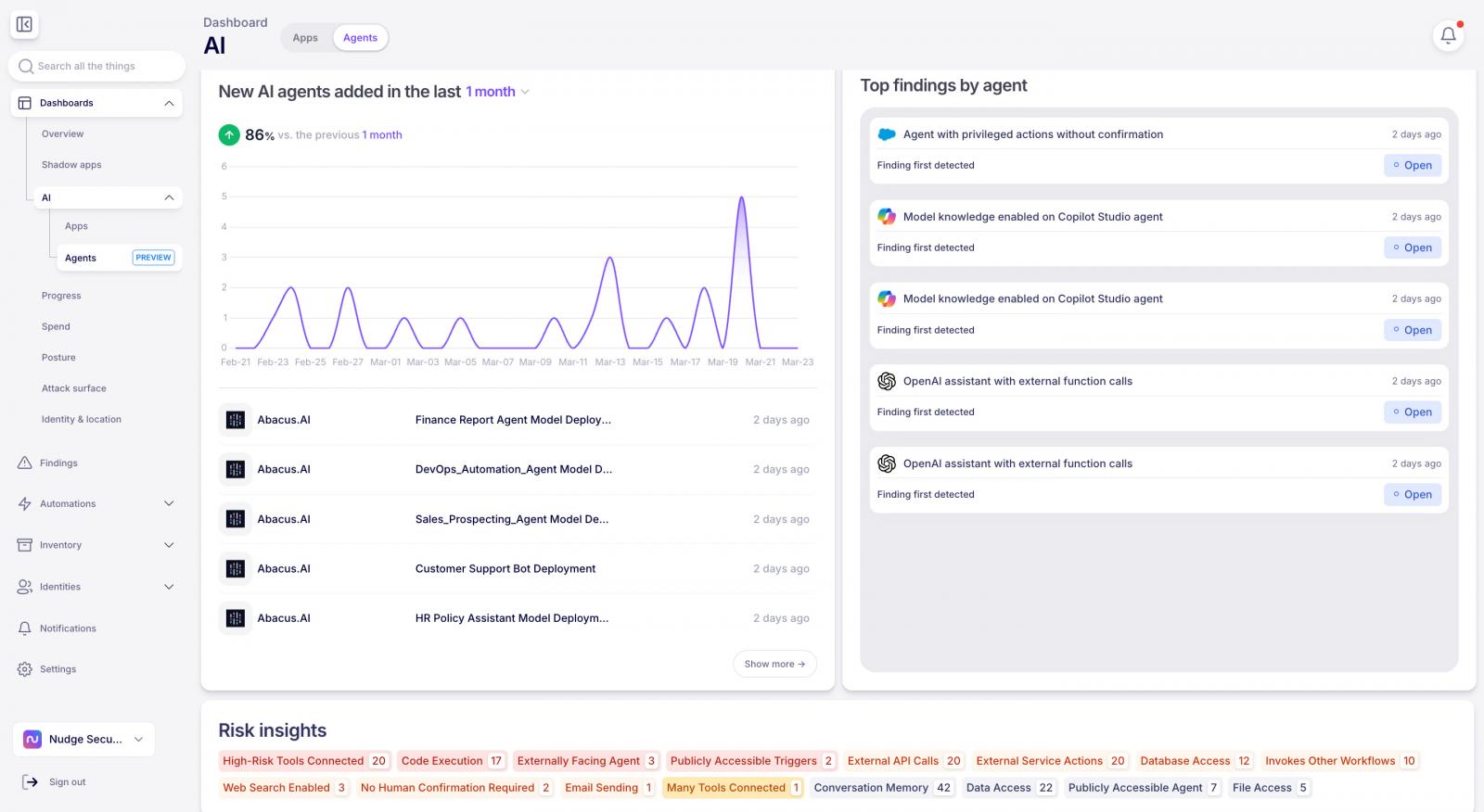
You can’t govern an agent you don’t know exists. Nudge Security gives you an immediate inventory of AI agents, across the most popular agentic platforms including Microsoft Copilot, Google Gemini, ChatGPT, Claude Managed Agents, Tines, ServiceNow, Salesforce Agentforce, Cursor Automations, and many more.
No spreadsheets. No self-reporting. No waiting for an incident to find out what’s already running in your environment.
Most AI agent discovery methods have the same blind spot: they only see what agentic platform vendors choose to expose through a public API. That leaves out an enormous amount of shadow AI activity, because a lot of the platforms where employees build agents don’t offer an API, or don’t expose agent details through it.
Nudge Security closes that gap with two complementary discovery methods:
API-based discovery connects to the platforms that do expose agent data: Salesforce Agentforce, Microsoft Copilot Studio, Google Gemini, ServiceNow, n8n, Tines, ChatGPT, Abacus.AI, and Workato. It continuously pulls agent name, creator, creation date, status, configuration, and risk insights.
Browser-based discovery, through the Nudge Security browser extension, covers the platforms that don’t expose an API at all: Cursor automations, OpenAI Agent Workflows, ChatGPT workspace agents, Zoom AI Workflows, Atlassian Rovo, Retool, Zapier Agents, and HyperAgent. The extension passively observes the moment an employee views, lists, or creates an agent, then adds it to your inventory automatically, with the creator, connected apps, permissions, and risk signals already attached.
Between the two channels, Nudge Security covers 17+ agentic platforms today, and the list keeps growing based on where customers are actually seeing agent activity.
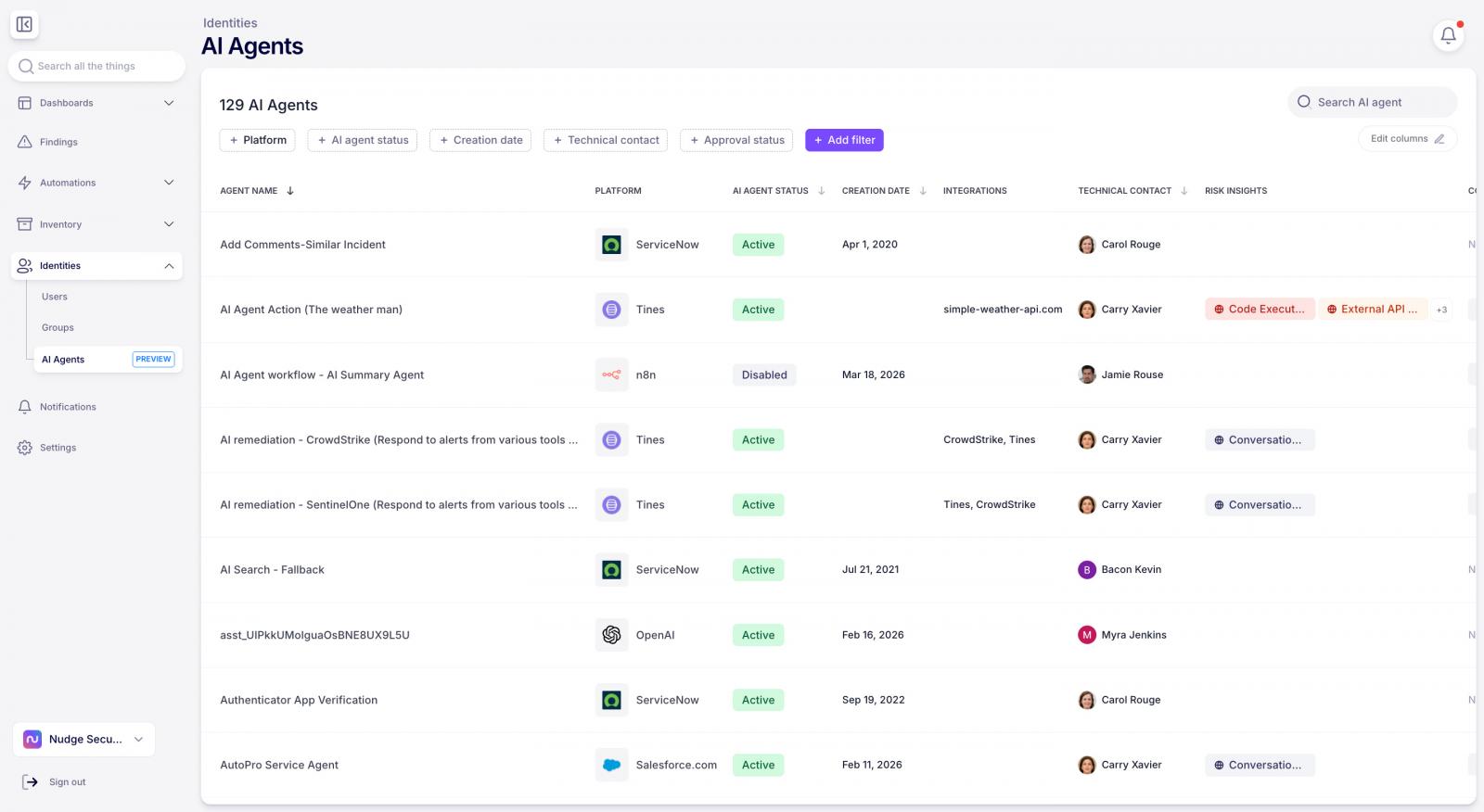
The agents built on platforms without APIs aren’t a minor edge case. They’re often where the real shadow AI lives. These are the fast, low-friction tools your engineers, ops teams, and product managers already love, precisely because nobody has to ask IT for permission to use them.
That’s also why they tend to carry the broadest access and the least oversight. An agent built in an afternoon to save someone twenty minutes can end up with standing access to a CRM, a code repository, or a shared drive, and no one outside the person who built it knows it’s there.
Finding an agent is only useful if you know what it’s capable of. For every agent it discovers, Nudge Security automatically surfaces these agentic AI risks:
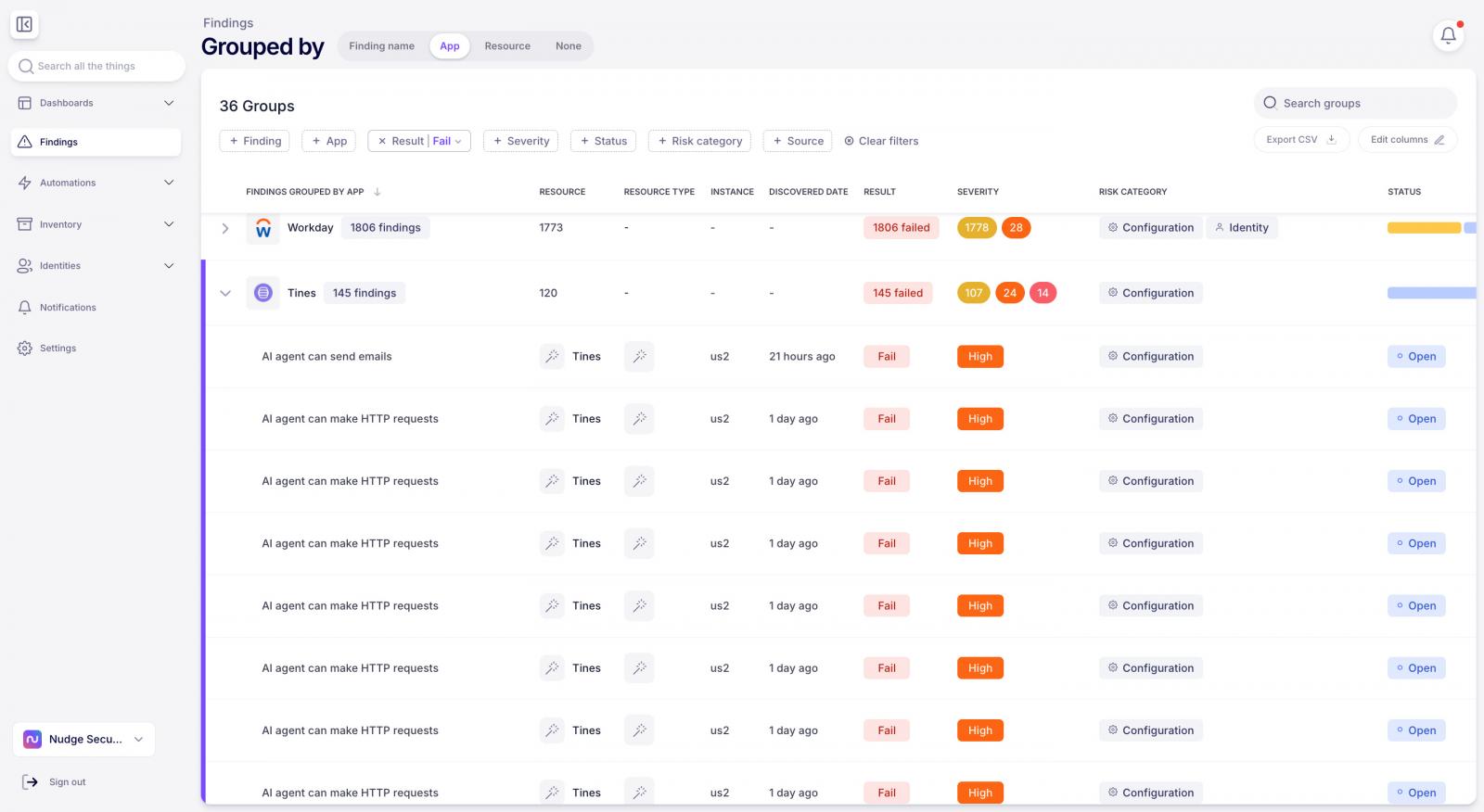
Discovery tells you what’s out there. Governance is what you do about it, and Nudge Security is built so that step doesn’t require your team to chase down every agent creator one by one.
Once an agent is in your inventory, you can:
It’s proactive AI governance that doesn’t ask you to play whack-a-mole with every new agent that pops up, and it doesn’t ask your workforce to slow down to get security’s blessing before they build something useful.
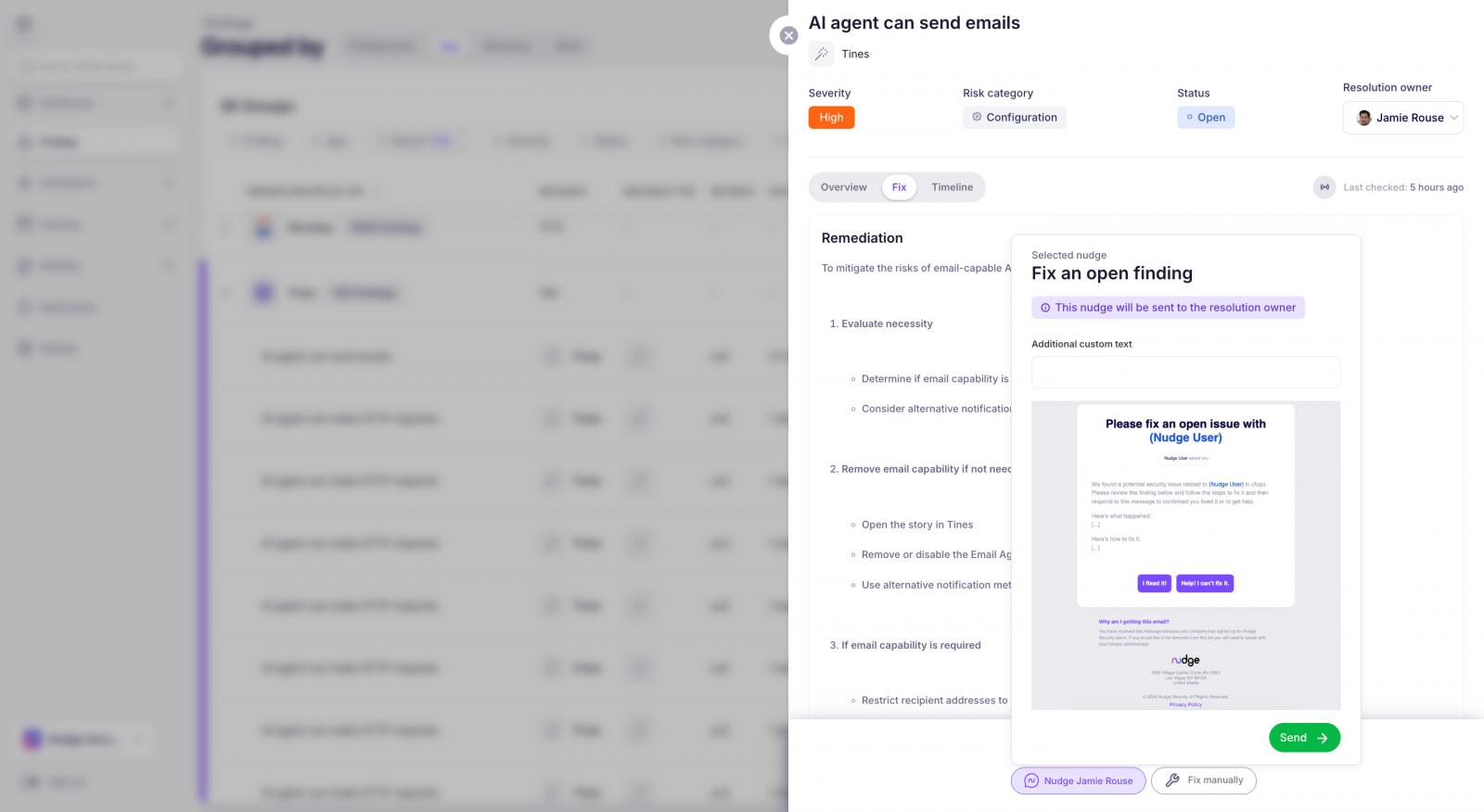
Your job isn’t to stop people from building agents. It’s to make sure that when they do, someone knows it happened, knows what the agent can touch, and can act fast if something looks wrong.
Nudge Security gives you Day One AI agent discovery with risk context and governance workflows across the agentic platforms your employees are actually using.
Sponsored and written by Nudge Security.




Weekend Open Thread: Brooks Brothers


Grayscale Files For Worldcoin ETF, WLD Registers Sharp Rise


How a former Blue Peter presenter stunned America’s Got Talent judges


Intel is reversing course and bringing hyper-threading back to its server chips


Sail Virtually Aboard The “Itanic” With IA-64 Emulator

Turtle Beach Command Series KB7 review: a nifty screen-equipped gaming keyboard

New Jersey voter registration controversy explained: How 6,600 noncitizens got on the rolls, and what happens next

Johnny Depp’s R-Rated Gothic Cult Classic Gets New Release Ahead of Sydney Sweeney Remake


Ethics, other provisions in crypto Clarity Act to be further discussed


Luke Littler dismantles Gerwyn Price to retain title in Blackpool

Shanghai science forum photos show China’s AI and robotics advances in rivalry with US

Commonwealth Games boxing: Jadumani Singh seals dominant 5-0 win over Pakistan’s Sumama Rehman to enter quarter-finals | Commonwealth Games News


2026 3M Open leaderboard: Scottie Scheffler finds putter in Round 1, sits three back


The Peugeot Family: How 200 Years of an “Old Money” Dynasty Died in A Boardroom


16 Dresses for the High Summer Event


Spain sweeps the board at 2026 World Cup with individual awards


Andrew Cuomo joins OKX board as crypto exchange expands in U.S.

A New Post-Apocalyptic Gundam Anime Series Blasts Into SDCC


BITCOIN JUST ENTERED THIS CRITICAL ZONE…


XRP Ledger adds $2.6B as RWA inflows rank second

You must be logged in to post a comment Login