Connect with us
DAPA Banner

Tech

C64 Gets A Modern Interactive Disassembler

Published

on

If you want to pull apart a program to see how it ticks, you’re going to need a disassembler. [Ricardo Quesada] has built Regenerator 2000 for just that purpose. It’s a new interactive disassembler for the Commodore 64 platform.

Naturally, Regenerator 2000 is built with full support for the 6502 instruction set, including undocumented op-codes as well. It’s able to automatically create labels and comments and can be paired with the VICE C64 emulator for live debugging. You can do all the usual debug stuff like inspecting registers, stepping through code, and setting breakpoints and watchpoints when you’re trying to figure out how something works. It can even show you sprites, bitmaps, and character sets right in the main window.

Files are on Github if you’re ready to dive in. You might find this tool to be a useful companion to C64 assembly tools we’ve featured previously, as well. If you’re pulling off your own retro development hacks, be sure to notify the tipsline.

Advertisement

[Thanks to Stephen Waters for the tip!]

Source link

Advertisement
Continue Reading
Click to comment

You must be logged in to post a comment Login

Leave a Reply

Tech

Traefik becomes the de facto standard for Kubernetes Networking

Published

on

The Kubernetes community retired Ingress NGINX this month after years of under-resourcing. The migration scramble it triggered is now consolidating around one open source beneficiary, and Traefik Labs announced that convergence at KubeCon today.


For years, the kubernetes/ingress-nginx project ran on borrowed time. Maintained largely by one or two volunteers working evenings and weekends, it had accumulated technical debt that the community couldn’t sustainably address.

In November 2025, Kubernetes SIG Network made it official: ingress NGINX would retire in March 2026. No more releases, no more bug fixes, no more security patches. The Kubernetes Steering Committee followed up in January 2026 with language that left little interpretive room: organisations remaining on ingress NGINX after retirement “are vulnerable to attack.”

Ingress NGINX was not a minor component. Depending on the analysis, between 41 and 50 percent of internet-facing Kubernetes clusters used it. It shipped as the default ingress controller in RKE2 (SUSE’s enterprise Kubernetes distribution), IBM Cloud Kubernetes Service, and Alibaba ACK, among others.

Advertisement

The retirement deadline created a near-simultaneous migration event across the industry, and at KubeCon CloudNativeCon Europe in London today, Traefik Labs announced the outcome of that scramble: IBM Cloud, Nutanix, OVHcloud, SUSE, TIBCO, and additional platform vendors have each independently selected Traefik Proxy as their replacement.

The 💜 of EU tech

The latest rumblings from the EU tech scene, a story from our wise ol’ founder Boris, and some questionable AI art. It’s free, every week, in your inbox. Sign up now!

The technical case for Traefik’s selection rests primarily on compatibility. Most ingress controllers require teams to rewrite their Ingress resources when migrating away from ingress NGINX, because each controller interprets annotations differently. Traefik built a specific NGINX Provider that translates ingress NGINX annotations into Traefik configuration at runtime, meaning teams can swap the controller without modifying a single Ingress resource.

Advertisement

The company claims coverage of more than 90 percent of annotations actively used in real migrations, a figure it arrived at by instrumenting migration tooling and analysing actual annotation usage patterns rather than attempting to support every annotation in the specification.

The vendor quotes collected in the announcement reflect the range of use cases these platforms cover. Nutanix’s Dan Ciruli noted that K3s has used Traefik as its default ingress controller for years, and that the retirement “validates the decision we made years ago.”

SUSE’s Peter Smails confirmed that Traefik will become the default in RKE2 starting with v1.36, replacing ingress NGINX as the distribution default. OVHcloud’s Jacques Murez positioned the choice around Gateway API readiness. TIBCO’s Devu Heda described Traefik as already powering ingress for both customer deployments and TIBCO’s own SaaS control plane infrastructure.

This last point matters for how Traefik Labs frames its commercial opportunity. The company’s open source product, Traefik Proxy, is MIT-licensed and accounts for the migration wave being announced today. But Traefik Labs is also selling Traefik Hub, an enterprise platform that adds API Gateway, AI Gateway, MCP Gateway, and API lifecycle management on top of Traefik Proxy, deployable via a single Helm chart upgrade.

Advertisement

The ingress NGINX retirement is, from the company’s perspective, not just a migration event but an entry point: engineering teams that are already updating their networking layer are positioned to evaluate whether to extend that investment into API management.

Traefik Proxy has 3.4 billion Docker Hub downloads and 62,000 GitHub stars, making it one of the most widely deployed open source networking projects in cloud-native infrastructure. Traefik Labs was founded in 2016 by Emile Vauge, who now serves as CTO, with Sudeep Goswami appointed CEO in February 2024.

The company is headquartered in both France and the United States. It has raised $11.1 million across two funding rounds, with Balderton Capital, Kima Ventures, and Elaia among its backers, a relatively modest capital base for a company whose open source software sits in front of a substantial fraction of the world’s containerised production workloads.

Advertisement

Source link

Continue Reading

Tech

Jay Leno Drives the New Tesla Semi Truck with 500-Mile Range

Published

on

Jay Leno Tesla Semi Truck 500-Mile Range
Jay Leno climbed into the cab of a Tesla Semi, settled into the center seat, and eased the truck forward with a fully loaded trailer in tow, right there on the tarmac outside his garage. The 500 mile range variant, and by all accounts it felt planted and composed from the moment it started moving, even with another Semi trailing behind it.


The drive was as smooth as you could ask, with no clunks or pauses during gear changes. Three motors pushing all of that torque straight to the rear axles, and the vehicle performed like a dream, with no difficulty or drama. Leno commented on how normal the center driving position felt after he was settled in, despite the fact that the cab does taper in little as you go up for optimal airflow. He just glided through several easy curves and straight stretches, and the cabin was quiet enough for normal conversation.

Sale


Amphibious Remote Control Car, 1:18 Monster Truck Toys for Boys RC Cars, 2.4 GHz Waterproof RC Trucks…
  • 2.4 GHz Remote Control Car – 1:18 scale cool design, waterproof RC truck toys made of premium material and sturdy, with LED lights, waterproof remote…
  • High Quality & DIY Removable Toys RC Cars – This remote control monster truck structure design quality, flexibility and strength in one. The rc truck…
  • All Terrain Amphibious Monster Truck – 4-wheel drive off-road design rc trucks for kids, with high-quality tires (shock absorption, strong grip…

Jay Leno Tesla Semi Truck 500-Mile Range
Dan Priestley, Director of Semi Truck Engineering at Tesla, rode along and walked Leno through some of the finer details as they drove. The front axle does the heavy lifting during hard pulls and climbs before stepping back at highway speeds to reduce drag and conserve energy, a smart piece of engineering that keeps efficiency high without any unnecessary mechanical overhead. Leno put his foot down more than once and the response was immediate, yet the ride stayed completely composed throughout. Braking on the downhill sections was handled almost entirely by regeneration, keeping the air brakes quiet the whole way down.

Jay Leno Tesla Semi Truck 500-Mile Range
Weight is central to how the Semi stacks up against its diesel competition. The Long Range model comes in at around 23,000 pounds curb weight with a gross rating of 82,000 pounds, helped along by a federal allowance that lets electric Class 8 trucks run up to 2,000 pounds heavier than conventional diesel rigs to account for the battery mass. That gives it enough headroom to hit its advertised 500 mile range with a competitive payload on board, though that payload does fall somewhat short of the 70,000 pound figure that diesel tractors can typically manage once trailer weight is factored in.

Jay Leno Tesla Semi Truck 500-Mile Range
The long range pack covers 500 miles, while the shorter 325 mile variant drops a battery module to shed weight and tighten the turning circle to something closer to a passenger car. Charging peaks at 1.2 megawatts and gets the truck back to 60 percent in around half an hour, which lines up neatly with the rest breaks drivers are already taking. Priestley mentioned a projected million mile battery life built around the same 4680 cells Tesla uses across its lineup, and the Semi has already racked up more than 13 million miles in real world fleet use to back that claim up.

Advertisement

Source link

Continue Reading

Tech

Denon’s Home 2.0 takes the fight for the living room to Sonos and Bluesound

Published

on

After several years where didn’t hear much from Denon’s Home speaker series, the Japanese brand has whipped up a brand new range, and it’s got Dolby Atmos support across the entire range.

The range is made up of the Home 200, Home 400, and Home 600; which sort of but not quite replace the previous models. The Denon Home 150, Home 250 and Home 350 haven’t been wiped from existence, but they’ll be bundled in their own group, dubbed the Home 1.0.

You’ll be able to operate the Home 1.0 and Home 2.0 systems through the same app, unlike some rivals who decided to cordon off their older products from their more recent models (cough, Sonos, cough).

You’ll be able to play music to the old and new speakers within the same Denon HEOS ecosystem, though of course you won’t be able to stereo pair models across generations. You can, however, pair the speakers with the Denon Home 550 Soundbar to create a surround system.

Advertisement

In fact, the you can use a sole Home 600 speaker, which can split the audio signal into left and right channels to create the sense of two rear speakers.

Advertisement

Almost the same price across all speakers

Denon Home 600 newDenon Home 600 new
Image Credit (Trusted Reviews)

Pricing for the new models is as follows

  • Denon Home 200 — $399 | £299 | €349
  • Denon Home 400 — $599 | £449 | €499
  • Denon Home 600 — $799 | £599 | €699

Which is better than expected given that it’s been almost seven years since the Home 1.0 launched, and the prices are still relatively in a similar ballpark.

The Home 400 is the same price (in the UK at least) as the Home 250, and it’s the same case for the Home 350. The Home 200 is the one where the price has shot up, from £219 to £299. These aren’t necessarily equivalent devices with the Home 200 featuring virtual Dolby Atmos support.

New look, new sound

Denon Home 400 newDenon Home 400 new
Image Credit (Trusted Reviews)

Advertisement

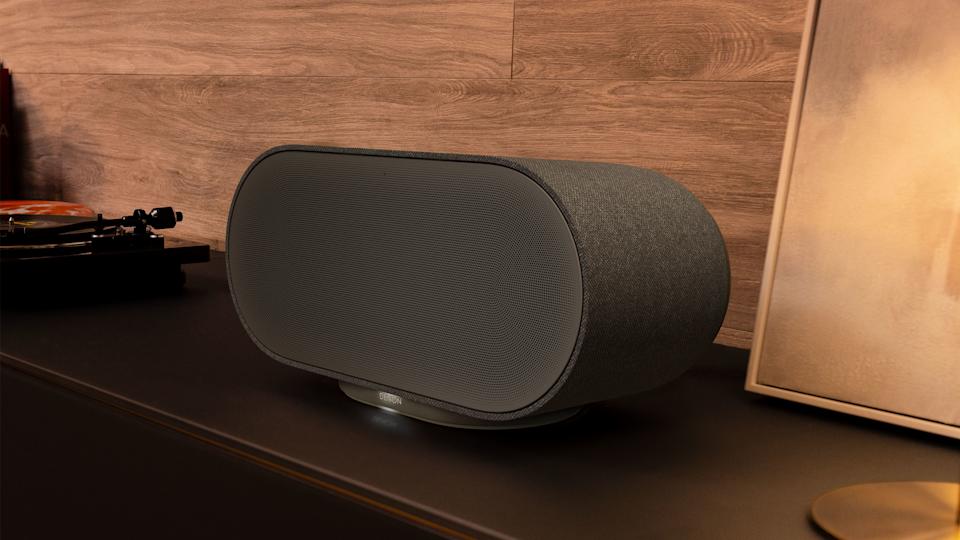
The new Denon Home series share a “unified design and performance philosophy” that Denon says is built for modern living. There’s a choice of Stone of Charcoal finishes (we do like the Stone look), with physical controls used (depending on the device, they’re either on the side or top surface); and there’s support for Wi-Fi, Bluetooth, USB-C audio, aux-in.

Advertisement

What ties the experience together is Denon’s HEOS app, through which you can connect up to 64 HEOS products (AV receivers, mini systems, etc) across 32 zones in your home. High-resolution audio support is provided from Tidal, Amazon Music and Qobuz; while you can stream audio with Spotify Connect as well.

Denon Home 200 newDenon Home 200 new
Image Credit (Trusted Reviews)

We’ve heard the new speakers in the flesh and they sounded good, with an emphasis on rich, warm sound, decent bass thump and a wide soundstage. We also heard how they play with Dolby Atmos music, the soundstage stretching quite high with the Home 600 to create a sound bigger than the speaker itself.

It remains to be seen how well this new era of Denon’s Home speakers with Sonos set to release new speakers in 2026, and Bluesound releasing more models. But you can find out for yourself how good the Denon Home 2.0 serie is, as they’re on sale now from Denon and authorised retailers.

Advertisement

Advertisement

Source link

Continue Reading

Tech

Denon expands its multi-room speaker lineup with the Home 200, Home 400 and Home 600

Published

on

If the Sonos app saga still has you down, Denon has three new multi-room speakers that give you some fresh alternatives. The company’s Home 200, Home 400 and Home 600 offer audio flexibility with other HEOS-enabled products. These new devices were also designed so that they blend in with home decor better than most speakers, coming in stone and charcoal color options for that purpose. As you progress up in number, the speakers not only get physically larger, but their sonic output is also more robust.

The Denon Home 200 houses three drivers and three amplifiers for “natural, room-filling sound” in a compact speaker. More specifically, you get two 0.98-inch tweeters and a single 4-inch woofer. The Home 200 looks a kind of like the Sonos Move 2, although Denon’s new compact unit isn’t portable. However, you can use a pair of them for a stereo setup, or connect two 200s to Denon’s Home Sound Bar 550 and Home Subwoofer for a 5.1 home theater system.

Next up is the Home 400, which carries two 0.75-inch tweeters, two 4.5-inch woofers and six amplifiers, in addition to two 1-inch up-firing drivers. Here, Denon says you can expect “a wide, airy soundstage” that provides room-filling audio coverage. What’s more, those upward-facing drivers project sound overhead, so there’s a greater sense of dimensionality and immersion here.

Denon Home 600 speaker

Denon Home 600 speaker (Denon)

The Home 600 is the largest speaker in the new trio, with dual 6.5-inch woofers alongside two tweeters, two midrange units and two up-firing drivers. Denon explains that this configuration offers “deep, authoritative bass” that provides more depth in your tunes than other two models.

Advertisement

All three of the new Home speakers have Wi-Fi, Bluetooth USB-C and aux connectivity with the wireless streaming powered by Denon’s HEOS tech. As such, you can connect these Home speakers with up to 64 other HEOS devices — including A/V receivers and Denon’s new DP-500BT turntable — and arrange your audio gear in up to 32 different zones. You’ll have access to tunes from Tidal, Amazon Music HD and Qobuz in the HEOS app, and all three new Home speakers support Dolby Atmos Music where available.

The Home 200, Home 400 and Home 600 speakers are available today for $399, $599 and $799 respectively. They’re available from Denon directly or other authorized retailers.

Source link

Advertisement
Continue Reading

Tech

Sony Dev Says This Is The Console Coming For Playstation

Published

on


We don’t really know anything concrete about PlayStation 6 just yet (it’s not even official at the time of writing), but you can be sure it’ll face considerable competition when it finally drops. That competition, however, may not be spearheaded by one of Sony’s traditional industry rivals. 

According to Peter Dalton of Bluepoint Games, a subsidiary of PlayStation Studios, which is sadly closing its doors in March 2026, it’s a historically very different gaming heavyweight that Sony really needs to fear: Valve. Steam is one of the biggest names in the medium, powering an immense storefront that’s essentially a one-stop shop for many customers’ gaming needs. According to Dalton, a system such as the Steam machine could herald a paradigm shift in the industry. He noted in a post on X, “If Valve releases a new Steam console that provides a console-like experience while still giving players access to the entire PC game library, that could become a very compelling option.” 

The resulting blend of “console simplicity with the full breadth of PC gaming,” Dalton goes on, could be a very potent one-two punch. It’s certainly possible that this could be a major threat to Sony, perhaps more so than Microsoft’s Xbox family or Nintendo’s Switch and Switch 2. However, some important factors could limit its reach.

Advertisement

Steam Machine poses a potent new threat, with some caveats

The Steam Machine is a system with set specs out of the box, and with 16GB of DDR5 RAM, 8 GB GDDR6 VRAM, and a 4.8GHz CPU (AMD Zen 4), Digital Foundry‘s first conclusion was that it would offer “performance at some mid-way point between Xbox Series S and the standard PlayStation 5.” 

Advertisement

Unfortunately, tied into that, potential leaks about the Steam Machine’s price back in January 2026 suggest it could be pricier than we’d hoped. Here, then, are two significant potential barriers to a Valve console/PC hybrid taking off to the extent it could: Its all-important price, which has yet to be officially confirmed for the Steam Machine at the time of writing, and the fact that its specs are so comparable to both Sony and Microsoft’s existing systems. On top of that, of course, the PlayStation brand has generations of successful consoles behind it, and the latest is available from other retailers, while the Steam Machine may only be available from Valve itself. Loyalty to a brand is a powerful force.

At the same time, it’s about establishing a foothold in a space dominated by more traditional consoles. A Valve device, fully integrated with the Steam ecosystem, gives access to an enormous library of games (there are more than 125,000 games on Steam as of early 2026, according to SteamDB) in a potentially more user-friendly package.  This new iteration of a Steam Machine has potential, building on what the Steam Deck achieved. While you might want to consider building your own Steam Machine alternative and saving some money, it’s also worth keeping an eye on what Valve is cooking up.

Advertisement


Source link

Continue Reading

Tech

You are out of time to update: Severe iOS hack code leaks to everyone

Published

on

The DarkSword exploit, which primarily targets devices running older iOS versions, has unfortunately made its way to GitHub. It has been patched, so update now.

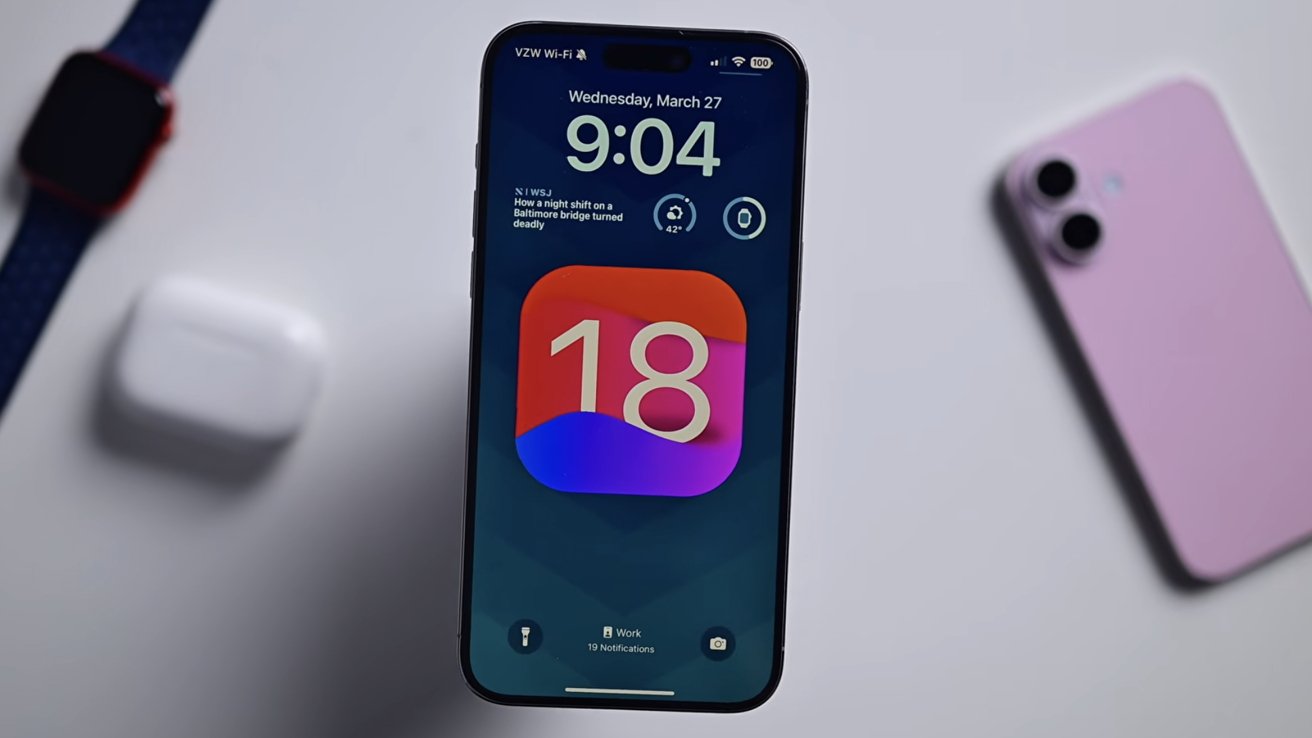
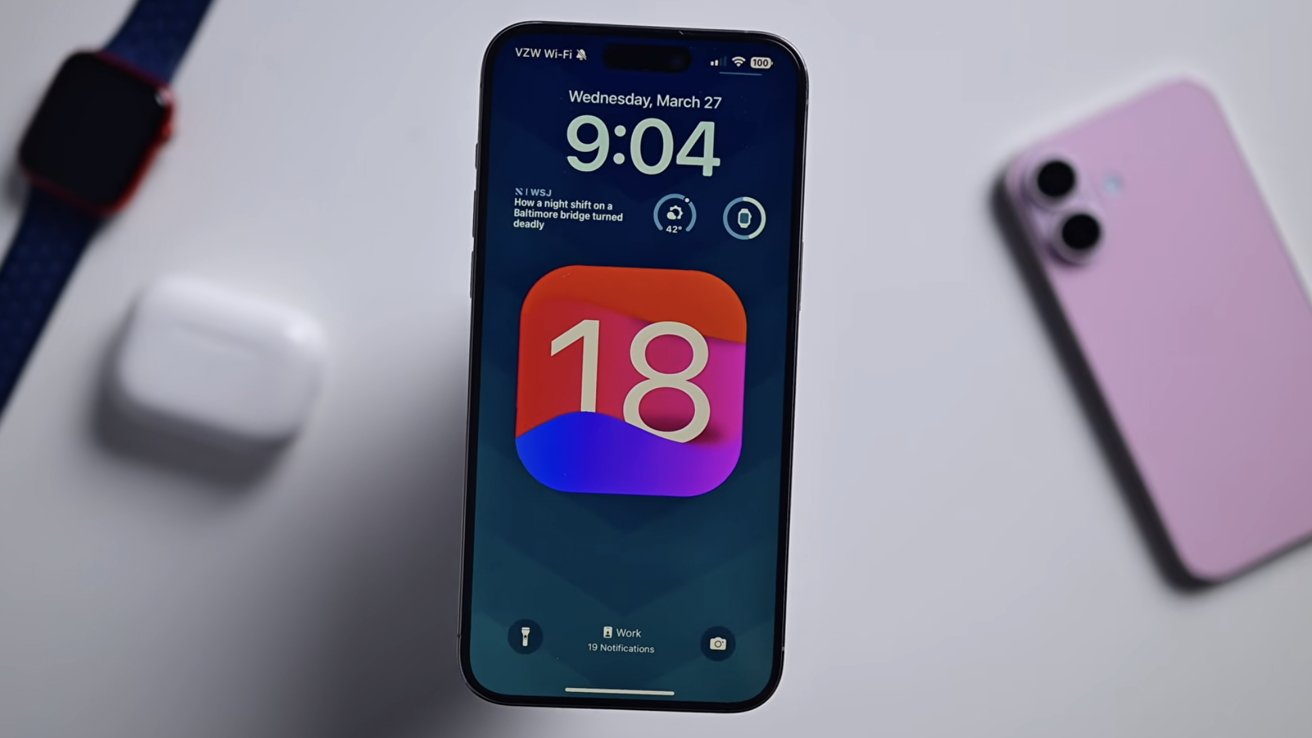
iPhone showing lock screen with large colorful 18 logo and 9:04 time, surrounded by blurred Apple Watch, AirPods case, and pink smartphone on a white surface
The DarkSword exploit targets devices running older versions of iOS 18 and below.

After Coruna, an exploit tool potentially developed by the US government, surfaced on the black market, the same thing happened with another tool, dubbed DarkSword. Now, DarkSword has been made publicly available on GitHub.
DarkSword primarily targeted iOS 18.4 through iOS 18.7, though older versions of iOS were vulnerable as well. The exploit relied on Safari and WebKit for initial code execution, after which it escaped multiple sandbox layers before fully compromising an iPhone or iPad.
Continue Reading on AppleInsider | Discuss on our Forums

Source link

Continue Reading

Tech

Nvidia CEO Says He’s ‘Empathetic’ To DLSS 5 Concerns

Published

on

Nvidia CEO Jensen Huang says he understands the concerns about “AI slop” with DLSS 5 but insists the feature preserves a game’s underlying geometry and artistic intent. “I think their perspective makes sense, ” said Huang during a recent appearance on the Lex Fridman podcast. “And I could see where they’re coming from because I don’t love AI slop myself. You know, all of the AI-generated content increasingly looks similar, and they’re all beautiful… so I’m empathic toward what they’re thinking. That’s just not what DLSS 5 is trying to do.” Tom’s Hardware reports: Although Huang is striking a more conciliatory tone, much of his response is similar to what we heard at GTC [where Huang said gamers were “completely wrong.”] The artist determines the geometry, we are completely truthful to the geometry… so every single frame, it enhances, but it doesn’t change anything.” There was some confusion about how DLSS 5 worked when it was first announced, and although the inner workings of it still aren’t clear on a technical level, Huang has said that it isn’t a general-purpose generative AI model. He describes it as “content-controlled generative AI.” On the other end of the spectrum, Huang also said that it isn’t a post-processing filter. The technical details of DLSS 5 live somewhere between that space, and we likely won’t know them until later this year when the feature is set to release.

“The question about enhancing, DLSS 5… in the future, you could even prompt it. You know, I want it to be a toon shader. I want it to look like this, kind of. You could even give it an example and it would generate in the style of that, all consistent with the artistry, the style, the intent of the artist,” Huang continued. “All of that is done for the artist so they can create something that is more beautiful but still in the style that they want.” Although the talking points about DLSS 5 remain unchanged, it seems that Huang has at least heard the criticism. “I think that they got the impression that the games are going to come out the way the games are… and then we’re going to post-process it. That’s not what DLSS is intended to do.”

Huang also made assertions that DLSS is “integrated” with the artist, and suggested that it would put the power of generative AI in the hands of artists working in game development […]. Although DLSS 5 looks like it’s doing a lot, Huang said that it’s just another tool, not an essential feature. “The gamers might also appreciate that, in the last couple of years, we introduced skin shaders to game developers, and many of those games have skin shaders that include sub-surface scattering that makes skin look more skin-like… [DLSS 5] is just one more tool. They can decide what to use,” Huang ended the conversation about DLSS 5. Immediately after, without missing a beat, he said 1993’s Doom was the most influential video game ever made.

Source link

Advertisement
Continue Reading

Tech

Report: Helion is working on a massive fusion power deal with OpenAI

Published

on

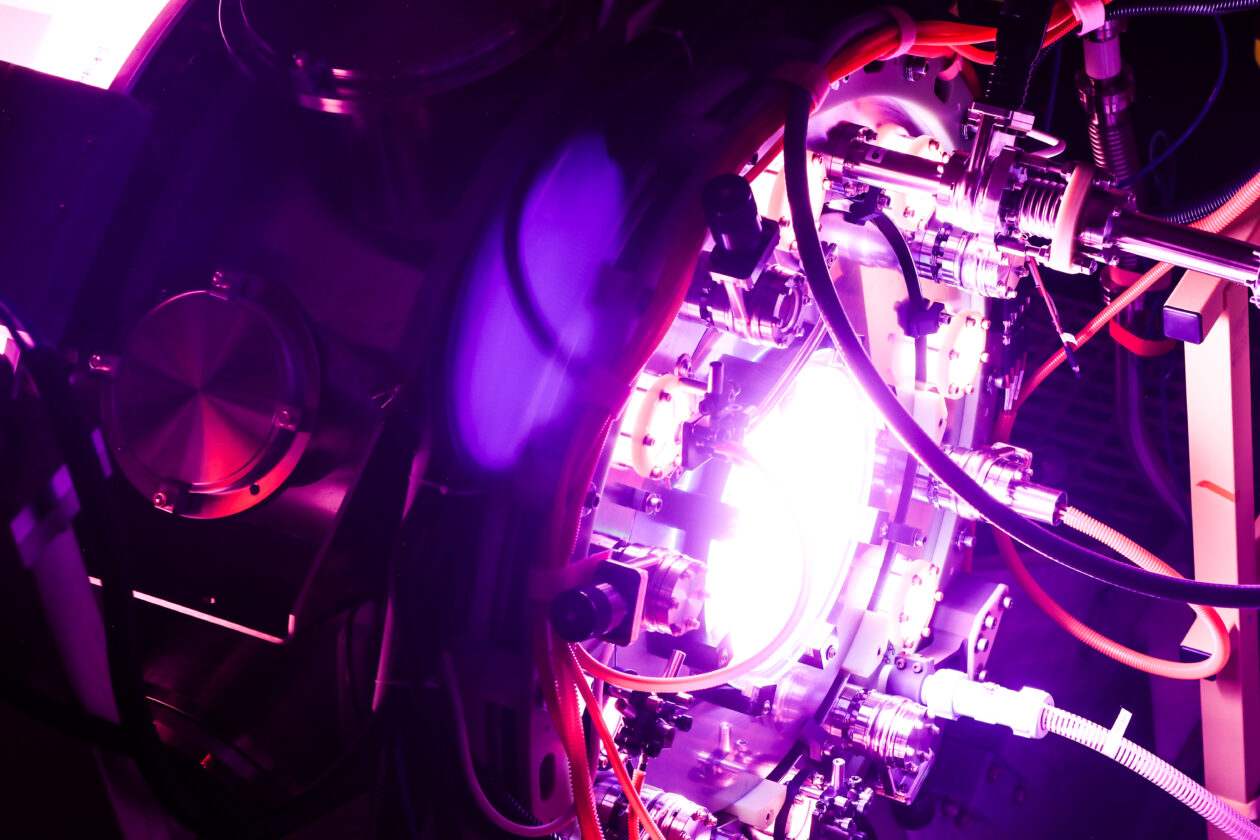
Helion Energy’s Polaris fusion demonstration reactor operating with tritium and deuterium fuel. (Helion Photo)

The Seattle-area fusion company Helion Energy is negotiating a deal to supply OpenAI with massive amounts of energy, Axios reported Monday.

The deal under discussion would have OpenAI receiving an eye-popping 5 gigawatts of power by 2030, ramping up to 50 gigawatts by 2035, according to Axios, which cited an unnamed source familiar with the talks. By comparison, Washington state’s Grand Coulee Dam — America’s largest hydroelectric facility — has a 6.8 gigawatt capacity.

Helion has yet to demonstrate that its electricity-generating technology is commercially viable. The company is currently operating its seventh-generation prototype in Everett, Wash., and has raised more than $1 billion from investors — including Sam Altman, CEO of OpenAI.

Helion told GeekWire that Altman is stepping down from its board of directors after more than a decade.

“This decision enables Helion and OpenAI to partner on future opportunities to bring zero-carbon, safe electricity to the world,” said Helion CEO David Kirtley via email.

Advertisement

The company did not confirm the reported discussions with OpenAI, saying it “has not announced any new customer agreements” beyond deals with Microsoft and the steel manufacturer Nucor.

Altman led Helion’s $500 million funding round in 2021, personally investing $375 million, and also participated in the company’s $425 million round in January 2025.

“Sam has played an integral role in Helion’s development, helping us focus on the thing that matters most: deploying fusion for customers as quickly as possible to fully satisfy the world’s need for clean and abundant energy,” Kirtley added. “We look forward to continuing to work with him in this new capacity.”

Helion recently climbed to the No. 1 spot on the GeekWire 200, our list of the top privately held startups in the Pacific Northwest.

Advertisement

The company is building its first commercial facility — a 50-megawatt plant called Orion — in Malaga, Wash. The plant is expected to begin smashing atoms by 2028 and Microsoft has agreed to purchase its energy if the project succeeds.

The reported 5-gigawatt target for the OpenAI deal would be 100 times larger than that first plant.

Advertisement

Dozens of fusion companies worldwide are racing to replicate the nuclear reactions that power the sun and stars, with the goal of producing nearly limitless, carbon-free energy. None have yet achieved viable fusion power, though many are making incremental advances and signing agreements for full-scale facilities.

Skeptics argue that commercial fusion remains many years away, but growing demand for clean energy to power data centers and an increasingly electrified economy is stoking interest and funding for fusion.

As Helion develops its fusion technology, it’s also building a 166,000-square-foot manufacturing facility. The site will assemble the thousands of capacitors needed to deliver massive electrical surges to its fusion generator and capture the power it produces.

Production is expected to begin at the facility later this year. It will help supply the roughly 2,500 capacitor units needed for the Orion plant, but is designed with broader scaling in mind.

Advertisement

“These high volume lines are not for our Orion machine, but for the next machine,” Sofia Gizzi, Helion’s director of production, told GeekWire in October. “A factory operating at 50% of its design capacity or less can spit out Orion, no problem. But we’re really looking beyond that into 2030.”

RELATED:

Editor’s note: Story updated at 9:50 a.m. with comments from Helion.

Source link

Advertisement
Continue Reading

Tech

Trump Administration Tries To Rein In RFK Jr. As A Midterms Liability

Published

on

from the too-late dept

I’ve obviously talked a great deal about how RFK Jr. and his activity as the Secretary of HHS has been a massive health liability for the American public. The implementation of his batshit anti-vaxxer stances have, of course, grabbed most of the headlines here, especially given the recent pushback he received from the courts, but it’s also worth noting the other craziness he’s spouted at the same time. He co-signed Trump’s nonsense about Tylenol giving all the kids autism. He’s overseen the worst measles outbreak in America in several decades. It seems likely he lied to Congress about his “work” in Samoa. He has vindictively repealed grant funding to groups that disagree with him on public health matters. He’s very interested in teenager sperm counts. He once took his grandkids swimming in a river known to be filthy with human waste.

It’s bad for the health of America. The Trump administration hasn’t really seemed to care all that much about that fact, of course, but it certainly does care about retaining power through the midterms. To that end, it seems the White House has finally woken up to the idea that most Americans hate what Kennedy and HHS are doing and has decided to pare back his activity because it’s a political liability.

The White House has taken steps to assert tighter control over HHS amid leadership and messaging changes tied to concerns that department Secretary Robert Kennedy Jr.’s focus on vaccine policy could pose political risks heading into the 2026 midterm elections, The Wall Street Journal reported March 13.

While Mr. Kennedy remains in good standing with President Donald Trump, administration aides have grown frustrated with what they described as disorganization and missteps inside HHS, according to the report. Among them: a delayed response to a measles outbreak in Texas, backlash over mental health grant cuts and internal tension surrounding the FDA’s approval of a generic abortion pill.

We somehow are not at a place yet where the Trump administration realizes that they put a loon in charge of public health and are looking at making a leadership change. But they can read the polling as well as I can and they damned well know that the majority of America is not happy with Kennedy’s performance generally, and especially unhappy with his anti-vaxxer bullshit. To that end, the White House is making several moves to try to steady the waters and keep Kennedy and HHS out of the headlines.

Advertisement

Basically, it looks like they’re trying to provide a bit of more adult supervision, moving Chris Klomp up from managing Medicare to managing Kennedy… er… being Kennedy’s deputy, while moving Peter Thiel’s former righthand man, Jim O’Neill, out of his HHS Deputy Secretary role and over to the FDA where there’s hope he “reduce internal friction.”

The problem is that Captain Brain Worm remains at the top of all of this. Trump and his advisers know the country doesn’t like what HHS has done. They see the chaos, the resignations, and the bullshit that gets spewed out in press conferences and courtrooms alike. It would be nice if the government did this for reasons having to do with the American people rather than for its own political ramifications, but I suppose I’ll take what I can get under the circumstances.

Filed Under: chris klomp, donald trump, health & human services, jim o’neill, maha, rfk jr.

Advertisement

Source link

Continue Reading

Tech

The US government just banned all foreign-made Wi-Fi routers

Published

on

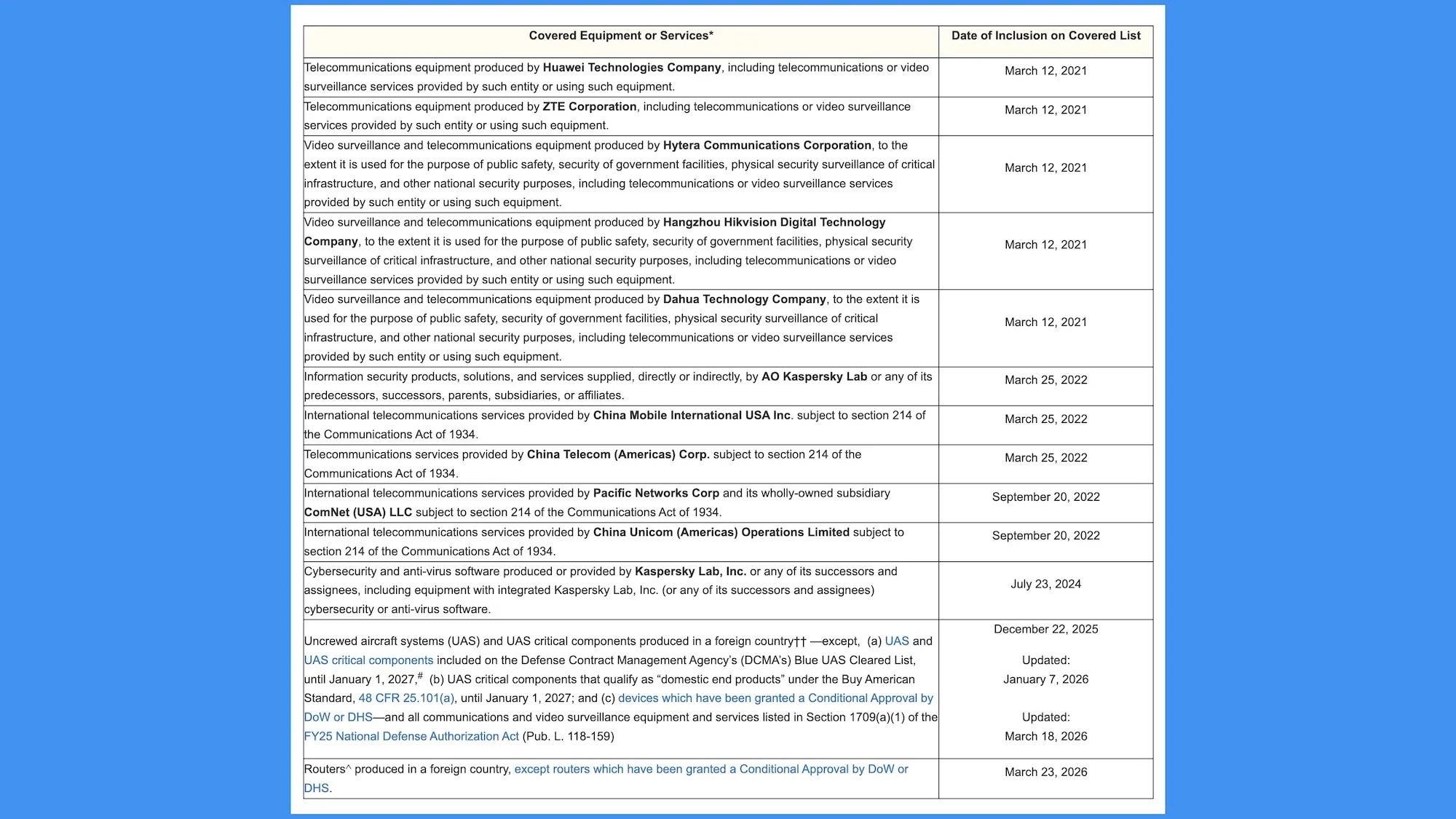
The FCC has officially added foreign-made routers to its Covered List, a list of equipment deemed a national security threat to the United States. This means no new foreign-produced routers can be sold in America, unless they are granted a special exemption.

If you are wondering what that means for your current router sitting in your living room, don’t panic yet. For now, the ban only affects new router approvals.

Why is the US government worried about your router?

According to the National Security Determination issued on March 20, 2026, routers have become the target for hackers and state-sponsored cyber attackers. In the public notice the FCC released today, it said, “From disrupting network connectivity to enabling local networking espionage and intellectual property theft, foreign-produced routers present unacceptable risks to Americans.”

The notice points to a series of high-profile attacks as evidence, stating that “routers produced abroad were directly implicated in the Volt, Flax, and Salt Typhoon cyberattacks which targeted critical American communications, energy, transportation, and water infrastructure.” 

The conclusion from national security agencies is blunt. Foreign routers are giving bad actors a “built-in backdoor to American homes, businesses, critical infrastructure, and emergency services.”

Advertisement

Does this mean you need to replace your router?

Not immediately. The notice does not address routers already in use by the public. It only talks about the routers’ sales going forward.

Foreign routers that have FCC authorization can still be sold. Router manufacturers that produce their devices abroad can apply for the Conditional Approval, which buys them time while they develop a plan to move manufacturing to the US. 

You can find the names of brands under the Covered List and those that received Conditional Approval on the FCC’s website. Popular brands like TP-Link, which were already under investigation by the US government, will need to either relocate manufacturing or apply for these exemptions to continue selling new models in the US.

This is a significant move that will reshape the router market. Whether it will translate into better security for everyday users remains to be seen, but one thing is clear: the era of affordable, foreign-made routers dominating American homes could soon be coming to an end.

Advertisement

Source link

Continue Reading

Trending

Copyright © 2025