Tech
Campfire Audio Trifecta IEM Review: The Bass Final Boss

Campfire Audio (aka CFA) is a boutique hi-fi brand based in Portland, Oregon. The company specializes in building in-ear monitors, most notably the renowned Campfire Audio Andromeda. The CFA IEM lineup is wide and varied, offering high-performance staples like the Supermoon, all the way to pricey exotics like the Chimera.
Today, we’re taking a look at Campfire Audio’s dynamic-driver flagship IEM, the Trifecta: an enduring model first released in 2022. Initially offered at an eye-watering price of $3,375, its price has recently dropped to $2,699. But a roughly $600 price drop, while significant, doesn’t free the Trifecta from the understandably high expectations placed on it as an ultra-luxury product.
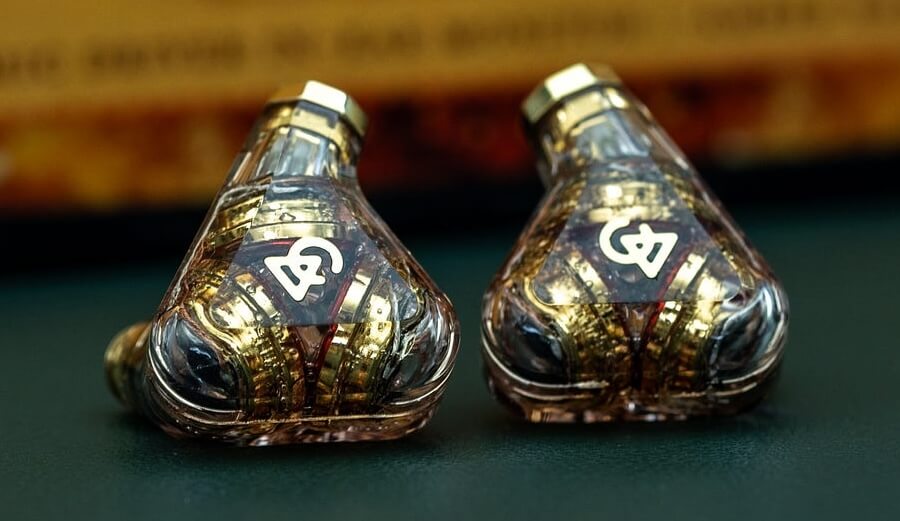

Does this venerable IEM have what it takes to compete in the cutthroat 2026 IEM market? Well, let’s get into it.
About My Preferences: This review is a subjective assessment and is therefore influenced by my personal preferences. While I try to mitigate this as much as possible during the review process, I’d be lying if I said my biases were completely erased. So, for you, my readers, keep the following in mind:
- My ideal sound signature includes competent sub-bass, textured mid-bass, a slightly warm midrange, and extended treble.
- I have mild treble sensitivity.
Testing equipment and standards can be found here.
Related Reviews:
Key Specs:
- Drivers: 3 x 10mm full-range ADLC dynamic drivers
- Driver Configuration: All three drivers reproduce the full frequency range; no crossover network
- Acoustic Design: Triangular additive acoustic chamber with individually vented drivers
- Frequency Response: 5 Hz – 20 kHz
- Sensitivity: 94 dB SPL @ 1 kHz (16.9 mVrms)
- Impedance: 6.3 ohms @ 1 kHz
- THD: Less than 1%
- Connectors: Custom-matrix MMCX
- Included Cables: 3 x Time Stream Metal cables
- Cable Terminations: 3.5mm single-ended, 2.5mm balanced, and 4.4mm balanced
- Hardware: Stainless steel
Build

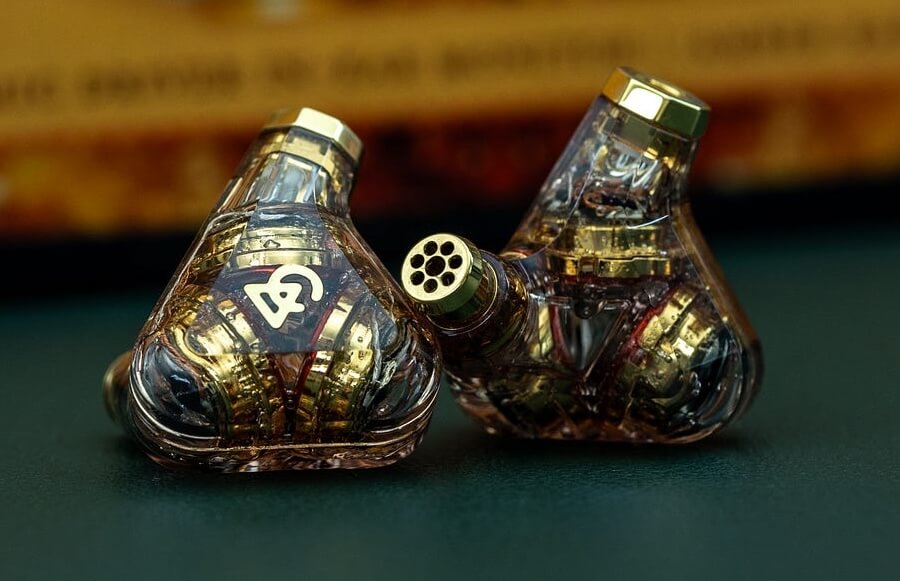
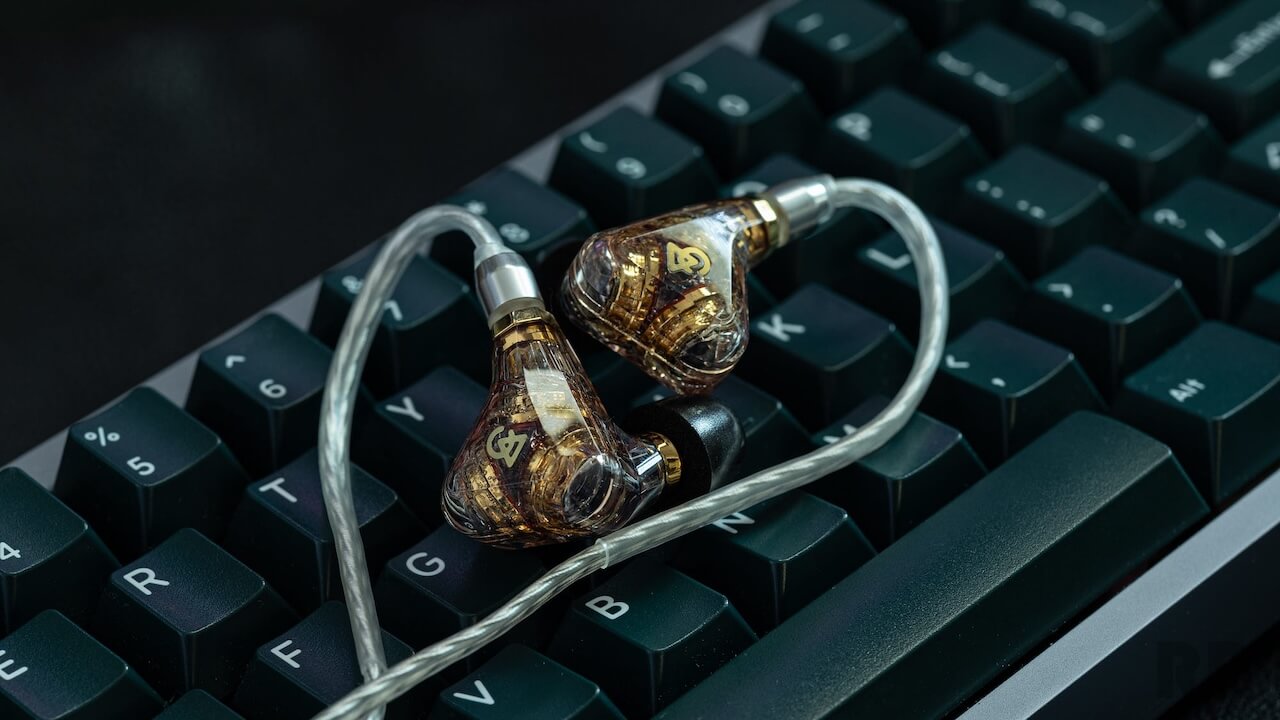
You’ve probably never seen an IEM that looks like the Trifecta before, and that’s because it has a truly unique structure. Embedded within its hand-dyed shells are three mutually opposing dynamic drivers, each independently vented. While not technically isobaric, the Trifecta’s drivers operate cooperatively to move massive quantities of air without distortion.
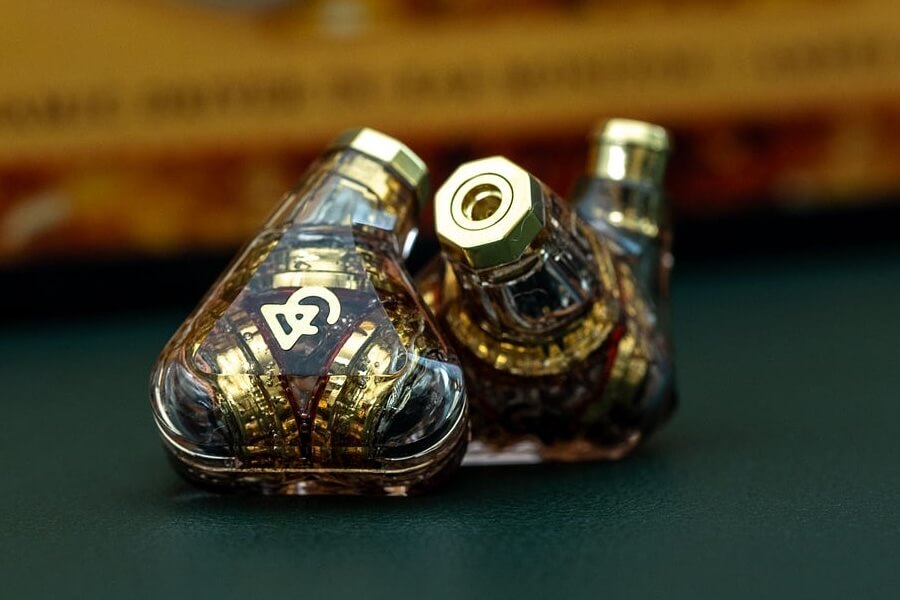

The Trifecta features firm, high-quality MMCX connectors and precisely cut metal nozzles. The entire IEM feels sturdy and genuinely flagship-grade. There are plenty of IEMs that cost more than the Trifecta yet feel considerably worse in the hand, and that’s not surprising. Campfire Audio’s commitment to luxury construction and sound engineering is real, backed by an excellent two-year warranty and extended-support repair policy.
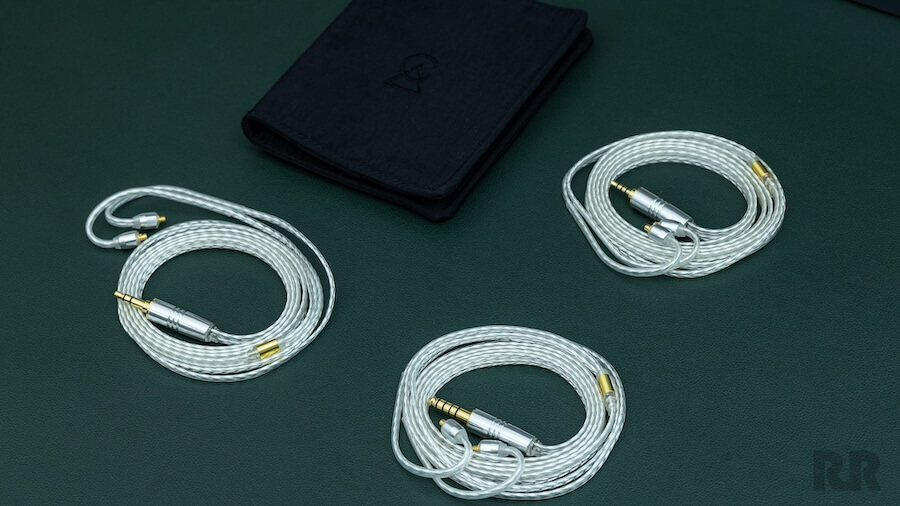
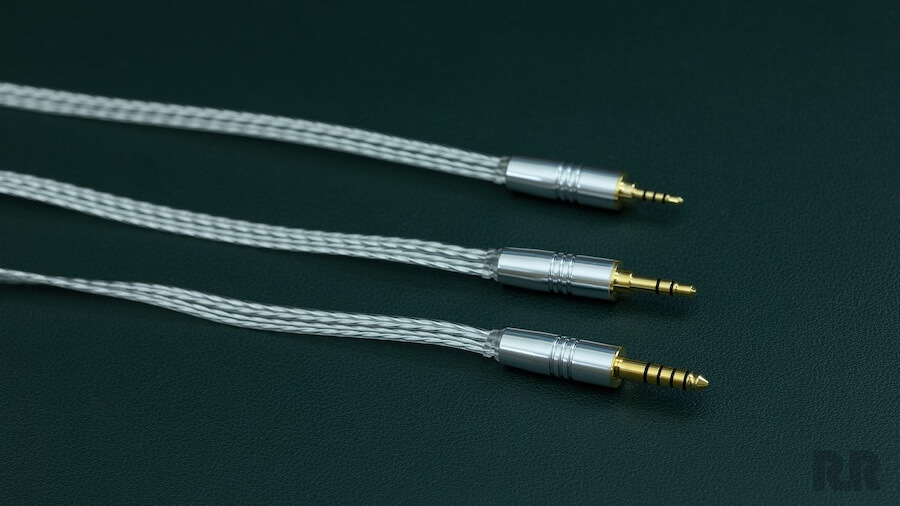

The Trifecta includes three Timestream Metal cables, each with a different termination: 2.5mm, 3.5mm, and 4.4mm. These are among Campfire Audio’s staple premium cables, and they’re excellent. They feature a two-wire flat braid and are soft, lightweight, and visually striking.
The MMCX housings, termination housings, and Y-splitters are all constructed from silver-finished metal with impeccable fit and finish. You’ll be hard-pressed to find stock cables from another brand that are this ergonomically sound.
Comfort
Comfort is a metric that relies heavily on factors influenced by your individual ear anatomy. Mileage will vary.
For as large as the Trifecta looks, it is actually quite comfortable. Its shells are reasonably light, and the included Time stream cables pair nicely with it. I was able to complete long, multi-hour listening sessions with the Trifecta without discomfort or irritation.
For me, the Trifecta is more comfortable than several other popular Campfire Audio IEMs, including the Alien Brain, Astrolith, and Andromeda 10.
Accessories
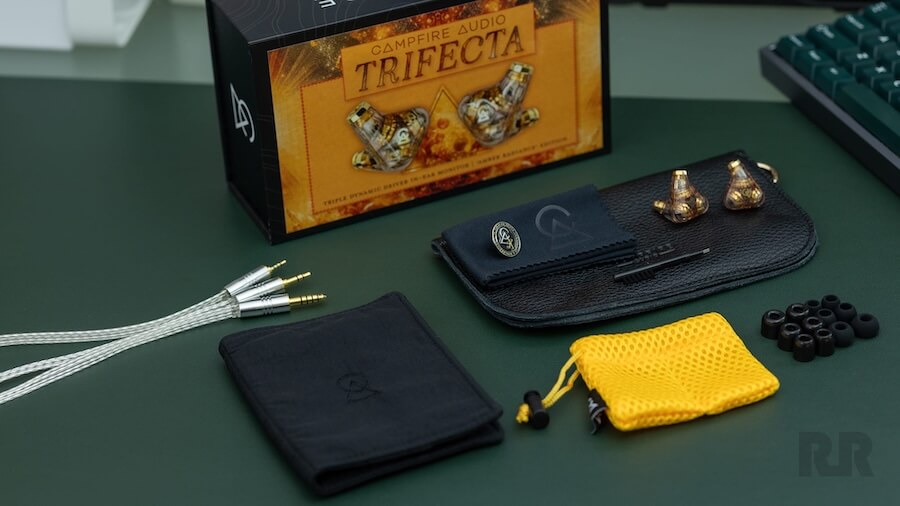
Inside the box, you’ll get:
- 3x Time stream Metal cables (2.5mm, 3.5mm, and 4.4mm)
- 1x leather “Dimensional” folding wallet
- 1x RipStop cable bag
- 1x Breezy Bag Micro IEM bag
- 3x pairs of “Marshmallow” foam eartips
- 3x pairs of standard silicone eartips
- 1x IEM cleaning tool
- 1x microfiber cleaning cloth
I’ve been on Campfire Audio’s case about standardizing the accessory packages for its IEMs, as they’ve become a bit fragmented. Unlike many modern hi-fi brands, Campfire Audio actually keeps its models on sale for more than a year, so updates to staple accessories like cases and eartips that appear with newer models don’t always make their way back to older products like the Trifecta.
Two notable omissions from the Trifecta’s accessory package are a proper carrying case and Campfire Audio’s excellent “High and Clear” liquid silicone eartips. I actually stole a set of those from one of my other CFA IEMs to use with the Trifecta, with great results.
Aside from those two omissions, the Trifecta’s accessory package is fairly well-rounded. You get some nice foam eartips, high-quality standard silicone eartips, and a beautiful leather folding wallet. The wallet is fine for static storage but isn’t suited to protecting the IEMs from crushing forces. A semi-hard carrying case, or even a proper clamshell like the Pelican 1010, would be my choice for storing the Trifecta while traveling or commuting.
Listening
The Trifecta’s sound signature is Harman-inspired, offering a hybrid between L-shaped and V-shaped tuning with a focus on mid-bass. Its lower midrange is warm and full, contrasting nicely with its moderately lifted upper mids. There’s a small shelf of emphasis blending the upper mids and treble, followed by a few small peaks in the upper treble before a roll-off in the 12 kHz region. The Trifecta may as well have a single driver inside, as its sound is so incredibly cohesive that you’d never guess there are multiple drivers at play.
Overperformant DD Treble
The Trifecta’s treble is moderately bright, rendering high-pitched elements with clarity and distinction but not sharpness. The Trifecta’s upper treble, while not airy in the way that EST-based TOTL IEMs are, still captures a nice sense of space when the track demands it. As much as it would be cool, I can’t say that the Trifecta matches the incredible treble performance of other similarly priced IEMs, even within the Campfire Audio lineup. Models like the Andromeda 10 and Astrolith render micro-details with more nuance and increased clarity during busy passages. Even the less expensive Alien Brain undercuts the Trifecta in terms of transparency and subtlety in the upper register.
The strength of the Trifecta’s treble, however, is its natural and organic presentation. Hi-hats and cymbals are placed toward the rear of rock and alternative tracks, rendered with plenty of precise decay. You’ll need to listen for them, however, as the Trifecta does not do much to draw your attention to them. Listening to “Bulletproof Heart” by My Chemical Romance demonstrates this behavior, as the Trifecta has absolutely no problem capturing the clashing, crashing slams of metallic percussion, but it does so at its own pace.
The Lazyboy of Midranges
The Trifecta’s midrange is warm and welcoming, striking a nice balance between weight and articulation. Vocals are set toward the middle of the mix but don’t sound particularly recessed. Vocal and instrumental separation is excellent, with the Trifecta rendering lyrics with a level of clarity not often heard on dynamic-driver IEMs. Harmonic fullness is on another level with the Trifecta’s midrange, and there’s no track I’ve played that did not sound rich and complete.
The Trifecta layers complex instrumentation nicely but lacks a bit of the separation you can get from modern hybrid setups. Layered instruments are distinct but feel a little close together, a behavior likely linked to the Trifecta’s more relaxed upper register. Hectic tracks like “Born Too Late” by Middle Class Rut demonstrate both sides of the Trifecta’s midrange: incredibly lush and lifelike tonality, plus a denser and decidedly intimate staging habit.
You Better Love Bass
For as much praise as the Trifecta gets for its bass, you’d think it was an absolute bass cannon. While it definitely possesses a strong emphasis on bass, it is actually fairly controlled, distinctly avoiding the bloated presentation common to other mega-bassy IEMs. The Trifecta’s lower register is concentrated around a punchy, weighty mid-bass and capped by a well-extended, very tight sub-bass. Few IEMs carry down below the 50 Hz region as well as the Trifecta, and its incredible bass capabilities allow it to generate a level of visceral immersion that rivals even the best-implemented bone-conduction drivers.
The Trifecta’s bass is prominent but balances its tonal expression very well. It sits right between being truly juicy and tonally neutral, occupying a line between control and fun that feels explicitly unique. There are many IEMs that might sound “faster” in the lower register than the Trifecta, but none communicate the amount of texture and tactility that the Trifecta does. It truly operates on another axis of experience, and it’s one that needs to be felt to be fully understood.
Drum slams in tracks like “Better Strangers” by Royal Blood are communicated with a sense of spatial realism and convincing body. Electronic tracks are a slam dunk, as the Trifecta is more than willing to fill out rumble-heavy passages with texture and precision. Frank Ocean’s “Ivy (Noobody Remix)” is a great showcase of the Trifecta’s capabilities, generating substantial body across both the mid- and sub-bass.
Comparisons
Comparisons are selected solely based on what I think is interesting. If you’d like me to add more, feel free to make a request in the comments below.
Volk x Astell&Kern Stella

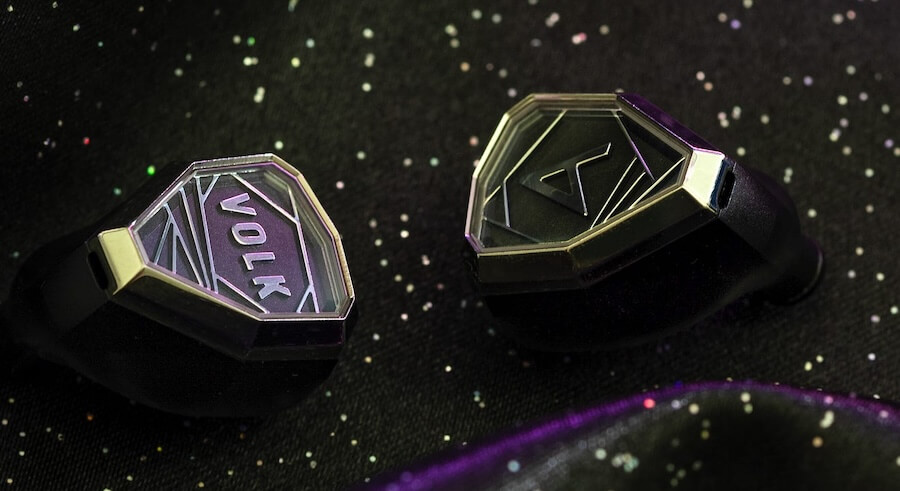
The Stella is a much pricier IEM than the Trifecta, costing nearly twice as much at $3,900. It uses high-end luxury materials akin to those found in an expensive watch, as opposed to the Trifecta’s lighter, hand-dyed resin shells. The Stella also has a larger, more complex driver configuration featuring four EST drivers per side, along with a thick, luxurious cable. The Trifecta’s Timestream Metal cables, while more ergonomic, are admittedly less premium-feeling.
Sonically, the Stella has a brighter, more forward upper treble and a similar level of emphasis in the lower treble. Its midrange is cooler, with a more prominent upper midrange and a less linear lower midrange. The Stella’s mid-bass sits further back than the Trifecta’s, but its sub-bass actually has a little more emphasis, giving it a more “casual” sense of depth with certain styles of electronic music.
The Trifecta has much more texture and intensity overall, rendering bass notes with greater precision and realism. The Stella’s midrange is cleaner and feels better composed on very busy tracks, but it lacks some of the organic timbre expressed by the Trifecta. The Stella’s upper register is also more detailed and lacks some of the subtle grain present in the Trifecta, although it can occasionally exhibit sibilance.
Between the two IEMs, I’m going with the Trifecta. There are certainly technical improvements to be found in the Stella’s midrange and treble, but the Trifecta’s impressive bass response and more organic overall presentation make for a much easier listening experience. Once you consider the Trifecta’s substantially lower price, it’s pretty clear which way I’m leaning.
Meze Astru


The Meze Astru is an all-titanium IEM with a single dynamic driver per side. It runs $900, costing roughly one-third as much as the Trifecta. It comes with a nice, premium cable that feels weightier in the hand. The Trifecta comes with multiple cables, but your preference between ergonomics and premium hand-feel will ultimately determine which approach you prefer.
Sonically, the Astru is much closer to a “normal” sound signature than the Trifecta. It has a gentle V-shaped tuning with a lifted upper register, a mildly warm midrange, and a forward bass region. The Astru’s bass is more concentrated toward the sub-bass than the mid-bass, unlike the Trifecta. The Trifecta’s insistence on broad, commanding mid-bass and lower mids makes it tonally weightier, and this can make it sound denser on busy tracks.
The Astru is a class act when it comes to dynamic-driver performance, and it appears to capture a greater degree of detail retrieval in the upper register than the Trifecta. That said, the Trifecta absolutely dominates the Astru when it comes to rendering the spirit of excitement. The Trifecta’s ability to so precisely emulate the intensity and tactility of live music is something the Astru, as competent as it is, simply cannot do.
The Astru is cheaper, more ergonomic, and features a more mainstream tuning than the Trifecta. It would not surprise me if there’s a sizable crowd that therefore prefers the Astru. But lovers of bass, and those who truly crave an exotic listening experience, will almost certainly still prefer the Trifecta. As good as IEMs like the Astru are, there’s a level of charisma that simple competence cannot recreate.
Campfire Audio Grand Luna

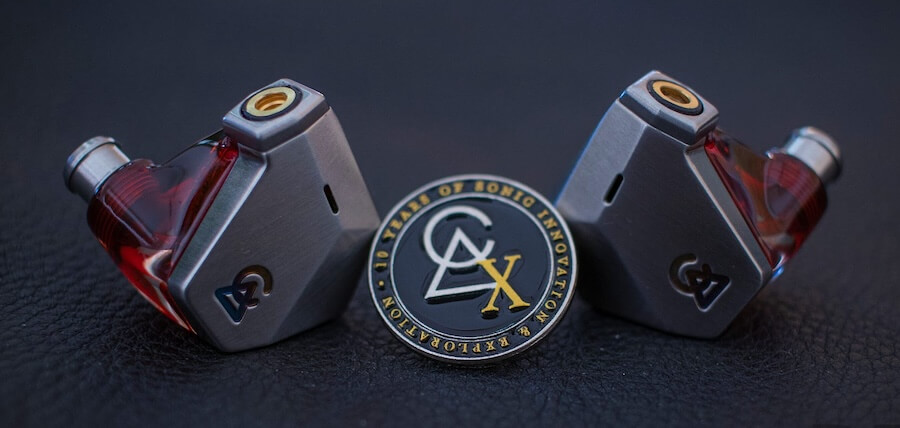
The Grand Luna is another experimental IEM from Campfire Audio, featuring one full-size planar driver and one balanced-armature driver per side. It has metal nozzles, resin shells, and a metal faceplate and costs $1,399, about $1,300 less than the Trifecta.
The Grand Luna is a much less dramatic IEM, featuring a more linear, warmer presentation. It has a more forward upper treble that pulls out detail more easily than the Trifecta, but it also has a comparatively relaxed lower treble and upper midrange. The Trifecta’s vocal range is more forward and therefore more intelligible during busy passages, but it lacks some of the smoothness presented by the Grand Luna.
The Grand Luna’s lower register is slightly warmer than the Trifecta’s but is far less weighty. You might enjoy this more relaxed presentation, but the Trifecta’s intensity makes for a far more engaging listening experience for me. The lifelike and visceral reverberation of the drum beats in “Sleep” by My Chemical Romance exemplifies the root of my preference for the Trifecta. It is the more organic and dynamic IEM, and the Trifecta’s uniquely inspiring bass response is consistently more entertaining for me.
If you’re looking to stay within the $1,500 range, the Grand Luna might be the better choice, but only if you’re looking for a linear, warm IEM. If you want something with greater energy or prefer traditional V-shaped tuning, the Grand Luna’s laid-back nature likely won’t work for you either.

The Bottom Line
IEMs are often described as “exotic” simply because they use uncommon drivers or unusual crossover arrangements, but many of those designs employ novel techniques to achieve fairly conventional tuning goals. The Trifecta is different. From its three full-range dynamic drivers and distinctive physical design to its unconventional acoustics, it genuinely wants to be exotic.
The tradeoff is broad appeal. The Trifecta’s visceral bass response, lifelike imaging, and rich tonal character can deliver a profound listening experience if bass, texture, and musicality sit high on your list of priorities. At the same time, there are plenty of similarly priced IEMs that offer greater technical refinement, stronger upper-treble extension, and cleaner separation, including models within Campfire Audio’s own lineup.
But that isn’t really what the Trifecta is about. It’s about drama. It’s about charisma. It’s about bass.
The Trifecta doesn’t apologize for what it is, and it doesn’t need to. If you want a neutral, analytical reference tool, look elsewhere. If you want an IEM that makes music feel physical, exciting, and unapologetically alive, the Trifecta remains one of the most distinctive high-end IEMs you can buy.
Pros:
- Uniquely tactile and visceral bass response
- Bold, expansive sound signature
- Wide and deep soundstage
- Excellent sub-bass extension and control
- Rich, natural vocal timbre
- Cohesive presentation despite its three-driver design
- Excellent Time stream Metal stock cables
- Distinctive design and premium build quality
Cons:
- No proper carrying case
- Does not include Campfire Audio’s “High and Clear” eartips
- Limited upper-treble extension compared with some high-end rivals
- Vocals can lose definition during especially busy passages
- Some similarly priced IEMs offer greater technical refinement and detail retrieval
- Highly distinctive tuning will not appeal to listeners seeking a neutral or analytical presentation
Our Ratings:
★★★★★★★★★★ Sound Quality
★★★★★★★★★★ Build Quality
★★★★★★★★★★ Comfort
★★★★★★★★★★ Value
You must be logged in to post a comment Login