




Connect with us
DAPA Banner

Tech

CanJam NYC 2026 & the Rebirth of Physical Media: Editor’s Round-Up

Published

on

Personal audio is no longer some gateway drug into traditional hi-fi. It is the drug. The energy, crowds, and money are here. And judging by the number of legacy high-end brands still trying to figure out how to get into the category, the window may already be closing. The companies already in the pool are doing very well. The ones still standing on the deck trying to appeal to Mrs. Wheeler might want to find a towel. Fast.

Now that CanJam NYC 2026 is in the rearview mirror, that reality feels even clearer.

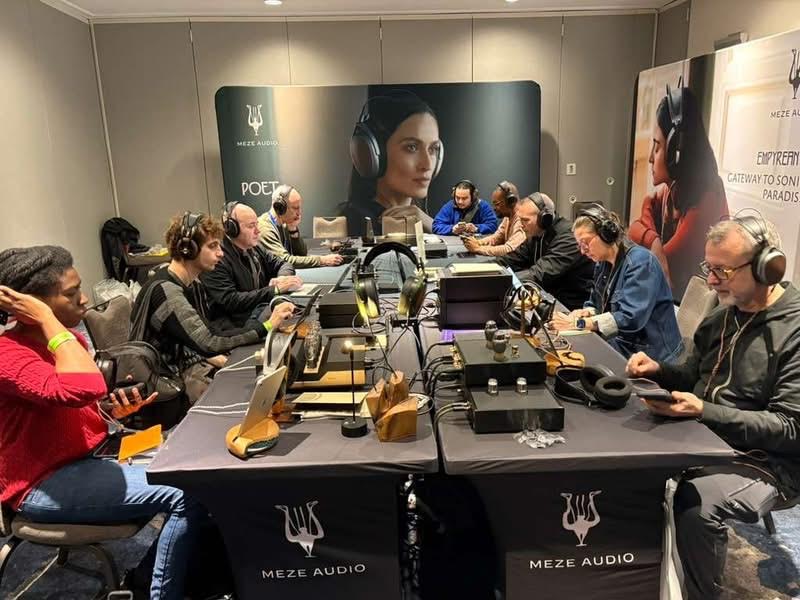
meze-audio-canjam-nyc-2026

What unfolded over the weekend inside that packed hotel ballroom wasn’t just another headphone meet. It was a very visible reminder that personal audio has become one of the most dynamic, and crowded corners of the entire hi-fi industry.

This wasn’t a niche gathering of a few hundred die-hards swapping cables and arguing about burn-in. The lines outside the ballroom doors early Saturday morning told a different story. Hundreds of people were already queued up before the doors opened, waiting for the chance to hear the latest headphones, IEMs, DACs, and amplifiers. That kind of turnout doesn’t happen unless the category has real momentum. When thousands show up, it’s time to accept that we’re living in two very different worlds right now in the high-end audio segment.

Credit where it’s due.

Advertisement

The team behind the CanJam Global series knows exactly what it’s doing. Jude Mansilla and Ethan Opolion have spent more than a decade turning what began as a relatively small headphone gathering into some of the most focused and consistently packed audio events anywhere on the calendar.

dunu-canjam-nyc-2026

Not every stop along the way has been a home run. That’s the reality of ever growing event series. But the level of interest in personal audio has never been higher, and a large portion of that momentum can be traced directly back to the ecosystem built around CanJam Global and Head-Fi.

After spending two days walking those rooms in New York, the conclusion feels unavoidable.

Personal audio isn’t the gateway to hi-fi anymore.

For a lot of people walking through those doors, it is hi-fi.

Advertisement

The Good

The enthusiasm at CanJam NYC 2026 was impossible to miss. Packed rooms. Long listening lines. People carrying Pelican cases full of IEMs like they were transporting crown jewels. Personal audio might be the most obsessive corner of the hobby right now, but it’s also one of the most energized.

Advertisement. Scroll to continue reading.

That said, a little personal space wouldn’t be the worst thing in the world.

There’s a certain breed of attendee who believes the correct way to audition a $3,000 pair of headphones is to hover six inches behind the person already listening. Close enough to fog up the back of your neck. As if the pressure alone will somehow convince you to wrap it up. Five minutes into a track and they’re shifting their weight like TSA agents who missed lunch. Relax. The headphones will still be here when I’m done.

Advertisement

My Saturday started well before any of that.

5 a.m. alarm. Quick shower and shave. Irish Spring for the win. Walk the dog in the dark while staring down the neighborhood red fox that has apparently decided my dog looks like breakfast. Bad decision. Tyrion would tear this furry idiot apart and turn it into a winter jacket.

Bagel run. Coffee run. Daven. Walk to the train station.

Thanks to the ongoing Portal Bridge construction project, NJ Transit has been doing its best to remind those of us living south of Newark that patience is a virtue. My commute from the Jersey Shore into Penn Station clocked in at about 100 minutes. Plenty of time to stare out the window, drink mediocre coffee, read the news from Israel, and think about headphones.

Advertisement

All of this before 7 a.m. on what might have been the nicest Saturday morning in the tri-state in two months.

Because the winter that just crawled out of this region wasn’t some mild seasonal inconvenience. We’re talking snow measured in feet, weeks of frozen tundra that would have looked perfectly at home on Hoth, and winds ripping off the Atlantic like they were personally offended that anyone still lived along the Jersey Shore.

And judging by the crowd already gathering outside the ballroom doors when I arrived, I wasn’t the only one willing to wake up early for this show.

Feliks Audio at CanJam NYC 2026
Feliks Audio BLISS Electrostatic Headphone Amplifier ($22,800) at CanJam NYC 2026

What showed up in New York was serious hardware. Flagship headphones pushing well past the $5,000 mark. Electrostatics that require dedicated energizers. DACs and portable amplifiers with engineering that would have been considered state of the art in traditional two-channel systems not that long ago. The performance ceiling keeps moving higher, and the companies building this gear clearly understand that their audience is paying attention.

Then there were the IEM tables.

Advertisement

An insane number of them.

Advertisement. Scroll to continue reading.

Everywhere you looked there were cases full of wired in-ear monitors. Universal fits. Custom demos. Multi-driver designs that look like miniature spacecraft. Some companies had entire tables dedicated just to different variations of their flagship IEM lines. It wasn’t just a handful of boutique builders either—established brands and newer players were all leaning heavily into the category.

If anyone still thinks wired IEMs are some niche side hustle inside personal audio, they probably didn’t walk the floor at CanJam this weekend.

Advertisement

And the crowds kept coming.

One of the most impressive things about CanJam NYC 2026 was the constant flow of people moving through the show. Not just a big opening rush and then a slow taper. Waves. All day.

Which is even more remarkable when you consider the location. The hotel sits right in the middle of Times Square, arguably one of the most chaotic intersections of humanity on the planet. Outside the doors you’ve got tourists staring at LED billboards the size of aircraft carriers, Elmos asking for tips, and someone selling $12 hot dogs that probably violate several international treaties.

And inside?

Advertisement

Thousands of people quietly listening to headphones.

Only in New York could you walk out of a room filled with $6,000 electrostatic headphones and immediately get run over by a guy in a Spider-Man costume holding a margarita the size of a fire extinguisher and chanting for the Ayatollah.

The Bad

Not everything about CanJam NYC 2026 was perfect.

The biggest absence was impossible to ignore.

Advertisement

CanJam Honcho Ethan Opolion wasn’t there.

Ethan was stuck at home in Israel because of the ongoing war between America, Israel, and Iran, which made international travel impossible. That’s a tough break for someone who has been a constant presence at these shows since the beginning. In fact, this was the first CanJam he’s missed since the series launched nearly a decade ago.

Advertisement. Scroll to continue reading.

Considering how much work Ethan and Jude Mansilla put into organizing these events, his absence was definitely felt.

Advertisement

There were also a few notable no-shows.

Focal and Naim didn’t make an appearance this year. That raised a few eyebrows at first, but we now know the reason. They were in the middle of the Barco acquisition, which likely pushed a headphone show in Times Square a little further down the priority list.

Still, their absence was noticeable.

Another surprise was the lack of a presence from Headphones.com, which has become one of the most influential retailers in the personal audio space.

Advertisement

A couple of companies also showed up with smaller footprints than usual.

Dan Clark Audio and Schiit Audio both had scaled-back tables compared to previous years. That was a bit of a bummer. Both companies usually bring a larger spread of gear and draw a steady crowd throughout the day.

fiio-canjam-nyc-2026

And while there was plenty of excellent equipment on display, I’ll be honest about something else.

I didn’t walk away feeling like I had witnessed a lot of earth-shattering innovation.

That doesn’t mean the show lacked interesting products. Far from it.

Advertisement

Companies like Grell, iFi, Chord, Meze AudioGrado, and HiFiMAN all had new gear worth hearing. Some of it sounded fantastic. Some of it pushed design ideas forward in smaller, incremental ways.

But nothing made me want to sell my firstborn son to the Dothraki as payment and spend the rest of my days beyond the Wall trapped in a frozen hut with Cersei.

Advertisement. Scroll to continue reading.

And this is only the first part of the “bad.” There’s more.

Advertisement

More of the Bad

Another thing that stood out to me this year had less to do with gear and more to do with the crowd itself.

Having attended CanJams before there even were CanJams; back when they were basically Head-Fi meets, I’ve been genuinely impressed by how the demographics have evolved over the years.

Those early events were…let’s call them special.

Picture small headphone gatherings in dingy hotel mini-ballrooms. The kind of rooms where nobody would ever admit to having their Bar Mitzvah, Bat Mitzvah, or Communion, mostly because the catering trays looked like they came from the “we have glass for a reason” Chinese restaurant next door. A lot of folding tables. Extension cords everywhere. And a crowd that skewed heavily toward white and Asian single or married men who could spend three hours debating driver metallurgy without coming up for oxygen.

Advertisement

Fast forward to the past few CanJam NYC events and the shift had been pretty noticeable.

Still plenty of guys. This is hi-fi after all. But there were far more women in attendance. Women of different ages, backgrounds, and cultures. Some attending with partners. Some clearly there on their own. Young professionals who can absolutely afford this gear. Couples sharing listening sessions. Music lovers who were just as curious about the newest IEM or headphone amplifier as anyone else in the room.

But CanJam NYC 2026 felt a little different.

The crowd this year seemed to tilt back toward the more traditional male-heavy demographic. Plenty of White, Asian, African American, Indian, and Hispanic attendees, but overwhelmingly men of all shapes and sizes. Perhaps even a few too many of the white-haired older audiophiles who make hi-fi shows so inspiring about the future of the hobby.

Advertisement
CanJam NYC 2026 show floor
CanJam NYC 2026

There was still a lot of youth in the room, which is great. That’s been one of the more encouraging developments at recent CanJam events. Younger listeners discovering personal audio, building systems, and actually caring about sound quality instead of whatever algorithm Spotify decides to shove into their ears that day.

But when the old guard starts showing up in droves, and that includes the older generation of hi-fi journalists born before the Nixon administration…some even before Kennedy, you have to wonder what it really means.

Is that growth?

Advertisement. Scroll to continue reading.
Advertisement

Or just the same crowd discovering a new category of gear to argue about?

There were women at the show. Absolutely.

But having attended the past four NYC CanJams, this one definitely felt like it had fewer women in attendance than recent years. Whether that’s just a one-year anomaly or something else entirely is hard to say.

Still, it was noticeable.

Advertisement
used-cds-monks-music

Something else has been quietly happening alongside the explosion in personal audio.

Physical media is coming back.

Not in some ironic, retro, nostalgia cosplay kind of way. Not because a handful of aging collectors refuse to move on. What I’m observing, both at shows like CanJam and out in the real world is something broader.

It’s multi-generational.

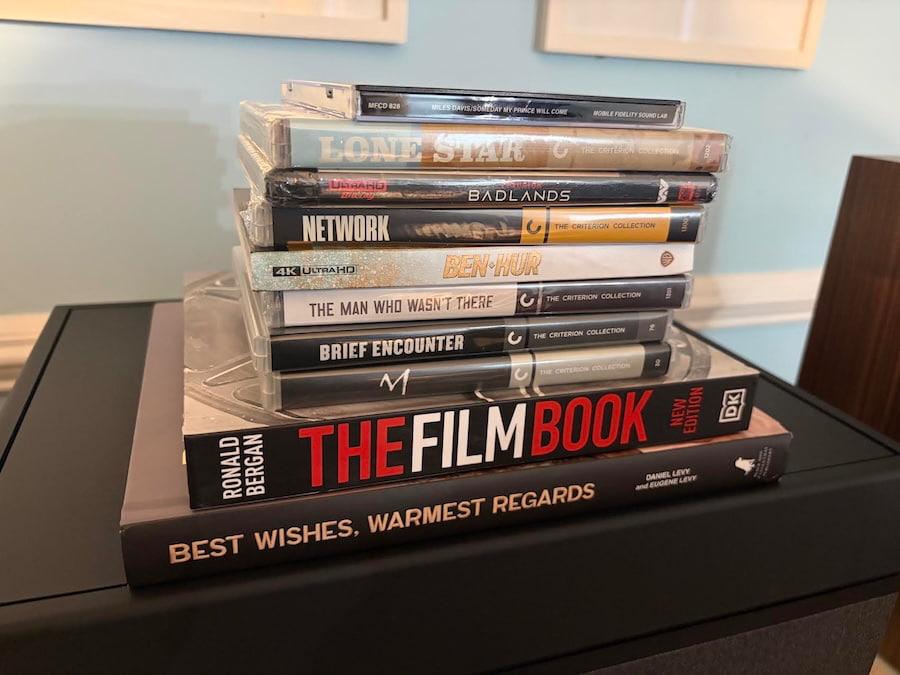
Young listeners discovering vinyl for the first time. Film fans hunting down UHD 4K Blu-rays because streaming services keep editing or removing the movies they want to watch. Readers buying physical books because staring at another glowing rectangle after ten hours of work feels like a punishment, not a reward.

Advertisement

And for some of us, it never really left.

I’ve been buying and collecting books, movies, and music for more than 50 years. It’s not a hobby. It’s part of how my brain works.

Just how important?

Advertisement. Scroll to continue reading.
Advertisement

I turned 56 last week.

My family offered to buy me hockey tickets as a birthday gift. Given how the Devils and Rangers have been performing lately, tickets are suddenly a lot easier to come by as the NHL season winds down. Normally that would have been an easy “yes.” I’ve played hockey most of my life. I still follow the league obsessively. My brain stores NHL statistics the way other people remember their kids’ birthdays.

But I said no.

What did I want instead?

Advertisement
ian-white-books-2026

Books. Movies. Music.

Better than a game. Better than a new watch. Better than just about anything else they could have wrapped in a box.

Because physical media does something that streaming never will.

It stimulates the brain.

Advertisement

The ritual of picking a record. Pulling a disc off the shelf. Opening a book and feeling the paper between your fingers. Your mind engages differently. The senses fire in ways that a scrolling app menu simply can’t replicate.

Streaming is convenient. I use it every day.

But it doesn’t stimulate my brain or frankly my loins, the way physical music does.

And before someone says it, yes, eReaders have their place. I know that better than most. I helped Barnes & Noble launch the Nook between 2009 and 2011. The technology solved real problems and made reading more accessible for a lot of people.

Advertisement
Advertisement. Scroll to continue reading.

But nothing compares to a physical book.

Not ever.

To sit and read next to the most glorious blonde space princess in the galaxy. To fall asleep watching a movie together pulled from the collection. That’s the dream. Always has been.

Advertisement
In the Heat of the Night and Some Like It Hot Criterion Collection 4K Movies

And judging by what I’m seeing in record stores, bookstores, from boutique film labels, and the listening habits of younger audiences discovering this stuff for the first time…

I suspect I’m not alone.

Source link

Continue Reading
Click to comment

You must be logged in to post a comment Login

Leave a Reply

Tech

NVIDIA announces DLSS 5 with photorealistic lighting to change the future of gaming

Published

on

At its GTC 2026 event, NVIDIA has officially announced DLSS 5, a new version of its Deep Learning Super Sampling technology. The next generation of its AI-powered graphics technology introduces neural rendering techniques designed to create more realistic lighting and materials in games. The feature is expected to launch later this year.

DLSS has long been used to upscale lower-resolution frames into higher-resolution images using AI, boosting performance while maintaining visual quality, with DLSS 4.5 being the most recent update. The new version takes that concept further by using neural networks to assist with parts of the rendering pipeline itself, rather than simply reconstructing pixels.

What’s new in DLSS 5?

The biggest shift with DLSS 5 is the introduction of neural rendering, a technique where AI helps generate elements of a scene, such as lighting, materials, and surface detail, rather than relying entirely on traditional rendering methods. The system can produce photorealistic lighting effects and more accurate material reflections, potentially improving realism in ray-traced environments while maintaining high frame rates.

The technology builds on earlier DLSS features like Super Resolution, Ray Reconstruction, and Frame Generation, but moves further toward an AI-assisted graphics pipeline where neural networks play a bigger role in how scenes are constructed.

Advertisement

Which hardware will support DLSS 5?

NVIDIA hasn’t officially confirmed which GPU architectures will support DLSS 5 yet, but the company has said the technology will arrive alongside RTX 50-series GPUs later this year. According to Digital Foundry, NVIDIA described the lighting improvements shown in its demo as “transformational,” with the feature expected to roll out around Fall 2026.

Interestingly, the demo setup used to showcase DLSS 5 wasn’t running on a typical gaming PC. Digital Foundry reports that NVIDIA used two GeForce RTX 5090 GPUs: one dedicated to running the game itself, while the second handled the DLSS 5 neural-rendering workload. This setup is currently required because the technology still needs significant optimization, particularly in terms of performance efficiency and VRAM usage.

That said, NVIDIA says DLSS 5 is ultimately designed to run on a single GPU, and that’s how it’s expected to ship when the technology launches publicly later this year.

Advertisement

Source link

Continue Reading

Tech

OnePlus’ upcoming budget phone will raise the bar for Apple and Samsung mid-rangers

Published

on

OnePlus could soon launch a budget phone that could seriously endanger the so-called feature-packed mid-ranger from other brands. The company has already kicked off the handset’s teaser campaign in India, dropping cryptic visuals of a silhouette smartphone, alongside a tagline that reads “Entering the Nord era soon.”

The handset, purported to be Nord 6, could put other mid-rangers to shame, or at least that is what the leaked specifications suggest. Before we talk about the hardware upgrades, it’s important to note that the Nord 6 is believed to be a rebranded version of the OnePlus Turbo 6, which is available only in China. 

So, what’s actually inside the upcoming OnePlus midranger?

That said, let’s tackle all the leaked Nord 6’s specifications one by one. First of all, the upcoming smartphone could sport a 9,000 mAh battery that supports 80W wired charging. 

Currently, the OnePlus 15R holds the crown for the company’s biggest battery smartphone, but it might not hold that position for much longer. 

Advertisement

To give you some perspective, 9,000 mAh is almost as big as the combined battery capacity of the new Galaxy S26 Ultra and the iPhone 17 Pro Max

The Nord 6’s battery could, in a very real way, provide over 12 to 14 hours of screen-on time between charges, making it a two-day battery phone for most users. 

Many of you have been asking about this..

OnePlus Nord 6 is launching soon..

Same specs as Turbo 6

Advertisement

price going up, see you early April..

— Yogesh Brar (@heyitsyogesh) March 14, 2026

Upgraded specs could result in a serious price jump

On the performance front, the handset will offer a serious jump, thanks to the Snapdragon 8s Gen 4 (4nm) chipset. Its GPU is powerful enough to support high frame rate gaming.

For capturing pictures, the smartphone could come with a 50MP primary camera with optical image stabilization and a 16MP selfie shooter. Finally, the OnePlus Nord 6 could also feature a 6.78-inch 1.5K AMOLED screen that supports a refresh rate of up to 165Hz. 

Advertisement

However, all the upgraded specifications could result in a serious bump in the phone’s price. The Nord 6’s price tag could be around $500 in India, where it is confirmed to launch in early April. A United States launch is still under question, though. 

Source link

Advertisement
Continue Reading

Tech

What was the ‘lightbulb moment’ for this senior software engineer?

Published

on

Workhuman’s Ciara Walsh discusses career development and her advice to others looking to take a similar professional route.

“Growing up, I was always interested in science and engineering, so I knew I would end up in some kind of STEM-related field, but I had quite a difficult time figuring out which direction to go in when approaching my career initially,” said senior software engineer at Workhuman, Ciara Walsh. 

Encouraged to build computing skills from a young age, she joined a local CoderDojo, which is a community-based coding club, where she helped the younger children with basic computer skills and later taught her own classes. From there, she realised that she could have a future in software.

“The connection that this could be my career eventually came through my late grandmother, who suggested it one afternoon while I was struggling with my CAO application. That conversation was a lightbulb moment for me and my whole career journey has followed from it.”

Advertisement
What do you enjoy most about your job?

I really enjoy problem solving and having to really think about how to approach solutions. Software engineering is essentially problem solving as a career in many ways, whether that’s figuring out how to build a new feature for users or triaging why a test is failing. At the core of what I do every day involves figuring out a way forward on some combination of puzzle or problem. For me, that’s really satisfying, and I love getting to the ‘aha’ moment at the end where it all works. 

What’s the most exciting development you’ve witnessed in your sector?

I remember a meeting very early in my career which was centred on the ‘internet of things’ and how connected devices were going to change everything about daily life within the next 10 to 15 years. The conversation at that time was around how ambitious of an idea it was, and how many technologies and tools would need to be invented to even achieve a quarter of the concepts being laid out at that stage. It’s been fascinating to be part of the industry since then and see many of the ideas that were being discussed in that meeting come to life within the real world.

The sheer number of technologies that we use daily now which simply didn’t exist when I started my career is amazing. It’s exciting to be part of a sector that moves this quickly, and I’m looking forward to seeing what the next 10 to 15 years brings us.

What’s been the hardest thing you’ve had to face in your career and how was it overcome?

The hardest thing I’ve had to face so far was the decision to step away from my career for a year, without knowing what came next.

Advertisement

In 2024, I decided to return to college and study for a master’s degree in electronic engineering. At that stage, the industry had slowed down quite a lot in terms of companies hiring, so stepping away from a job where I had a reasonable level of security was a big risk. However, I also felt that I needed to take that step back and spend time growing my knowledge and skills to be successful moving forward, especially given the direction that the industry has moved in, with AI and machine learning, so I took the risk.

During the course, I tried to ensure that I kept a balance between new topics I wanted to learn and those that I had some knowledge of but in which I could develop further depth, and this was of huge benefit to me because I managed to avoid losing my existing skills in the process of gaining new ones.

Having said that, the imposter syndrome and stress associated with that journey – particularly during the later stages, when my course had finished and I was trying to restart my career – wasn’t something I anticipated. I found it significantly more challenging than I expected and even after joining my current role it took some time to have full confidence in myself again. Looking back on it now though, I think the risk paid off, as I have a more solid understanding of some key concepts and – maybe more importantly – a stronger set of research skills, which will be useful going forward in my career.

If you had the power to change anything within the STEM sector, what would that be?

STEM is a very broad sector, so it’s hard to outline any specific things that I’d change across it all, but I think something I’d like to see celebrated and emphasised more is how creative many of the fields under the STEM umbrella are.

Advertisement

We tend to focus a lot on being data-driven and efficient, but the reality is that the majority of the work we do in STEM involves some kind of inventing and/or creative thinking. I think sometimes we lose sight of that amongst the deadlines and client requests, and we don’t leave ourselves enough space to be innovative and to really explore the crafts hidden in behind the science and technology of it all. If I could change anything, it would be that we gave ourselves more space and time to be purely creative, rather than always doing the most efficient thing.

Hackathons are a great example of this, where time is given to just experiment and explore with the tools of the trade. I’ve been involved with multiple hackathon projects that ended up being deployed as full products after some polishing. Those only exist because the team members were given the space to think and explore outside the structure of the usual day-to-day.

How do you make connections with others in the STEM community? 

I have been incredibly fortunate in my career so far when it comes to mentors and mentoring in general. I was a recipient of a women in technology scholarship during my undergraduate degree, which provided me with some amazing mentors from the very beginning. Their advice and guidance have stood the test of time at this stage, and I genuinely think I’m a better engineer because of all the people who’ve worked with me along my career path so far.

I’ve continued to benefit from mentoring of many different forms throughout my career, and had the opportunity to mentor some people myself, which I think was equally beneficial to me. Mentoring others gives you so many opportunities to really explore your own growth, and for me it has also often resulted in development of my own in parallel to my mentees.

Advertisement
What advice would you give to someone thinking about a career in your area?

I think the best advice I could give someone looking to go into software engineering as a career is to just start coding and experimenting with building simple programs. Start with something like Scratch so you get to learn the basic logic patterns, and then experiment with other languages and tools as you get comfortable. There are lots of free resources and tutorials online, and you can actually learn all the technical skills you need to know to do this job using them. I still use some of them when I need to learn something new for my role.

The other advice I would give someone considering this career is that software is always changing, and there are always new frameworks and tools to learn. To be a successful software engineer, you need to be willing to learn new things across your whole career. This can be challenging at times, but once you learn the general basics, it’s a lot easier than you might expect to transfer skills.

Don’t miss out on the knowledge you need to succeed. Sign up for the Daily Brief, Silicon Republic’s digest of need-to-know sci-tech news.


Advertisement

Source link

Continue Reading

Tech

Save Almost 20 Percent On Our Favorite Portable Bluetooth Speaker

Published

on

Looking for a Bluetooth speaker that’s portable, affordable, and waterproof? You can pick up the Tribit Stormbox Mini+ for just $33 from Amazon, a $7 discount from its usual price. It’s super portable, totally waterproof, and has big, bold sound that’s great for traveling, backyard parties, or bike rides, making it an easy pick for our favorite portable Bluetooth speaker.

While there are plenty of Bluetooth speakers that are table-worthy, there are far fewer competent speakers at this more pocketable footprint. At 4.69 inches tall and 3.58 inches and diameter, it’s just about the same size as the Ultimate Ears Wonderboom 4, but at less than half the price. It sports similar features too, with 360-degree speakers for complete sound no matter where you’re standing, albeit without quite as much clarity. You can also pair up multiple speakers for a proper stereo setup that will cover your whole backyard, a trick not a lot of speakers at this price point have up their sleeve.

Despite its compact size and affordable pricing, the Stormbox Mini+ is surprisingly sturdy. It has an IPX7 rating, which means you can submerge it fully underwater for up to 30 minutes, although it doesn’t float the right way, so it’s probably better for surviving a quick rainstorm than powering a pool party. You can crank the volume without any distortion, although it will affect your battery life, which is typically just under 10 hours with the lights on and volume up. It also has a speakerphone mode, in case you want to give that one friend running late to the party some FOMO.

While all the Stormbox Mini+ is marked down by $7 in all three colors, the black version has a lower starting price of $40, while the blue and green models started at $42, and are now marked down to $35. There was also a coupon on the page for an extra 10% off applied at checkout, but your mileage may vary. Make sure you check out our full roundup if you’re curious which other Bluetooth speakers we like, or you’re willing to spend a bit more.

Advertisement

Source link

Continue Reading

Tech

Judge rules that Krafton must rehire fired Subnautica director

Published

on

A judge has ruled that publisher Krafton must reinstate Ted Gill as CEO of Unknown Worlds Entertainment, . The company fired Gill and two other co-founders last year as part of a shakeup .

The Delaware judge said Krafton had violated the terms of its contract with Unknown Worlds when it fired the executives. “To remedy these breaches, Gill is reinstated as CEO of Unknown Worlds with full operational authority over the studio,” wrote judge Lori W. Will.

A Krafton spokesperson said in a statement that “we respectfully disagree with today’s ruling” and that “we are evaluating our options as we determine our path forward.” Further litigation over potential damages is still pending.

This legal battle has been brewing for a while. Krafton bought Unknown Worlds back in 2021 and the contract stipulated that executives and staff would get to share in a $250 million bonus if they hit certain revenue targets by 2025. Those targets were not reached, and could not be reached, because .

Advertisement

According to the pre-trial brief, Krafton CEO Changham Kim allegedly nixed the payout because it would be a “professional embarrassment” and make him look like a “pushover.” He reportedly to ask about ways to avoid paying the bonus and, oddly, seemed to consider a hostile takeover by a newly-formed entity.

Judge Will dinged the CEO on both counts, saying that Kim regretted committing to the payout and “consulted an artificial intelligence chatbot to contrive a corporate ‘takeover’ strategy.” Engadget reached out to Krafton and the company re-emphasized it was displeased with the ruling but said that it doesn’t resolve the ongoing litigation.

As for the game, Krafton says Subnautica 2 is coming sooner rather than later. We’ve heard that one before.

Source link

Advertisement
Continue Reading

Tech

Apple Drops AirPods Max 2 After Five Years of Silence, and Here’s Every Upgrade Explained

Published

on

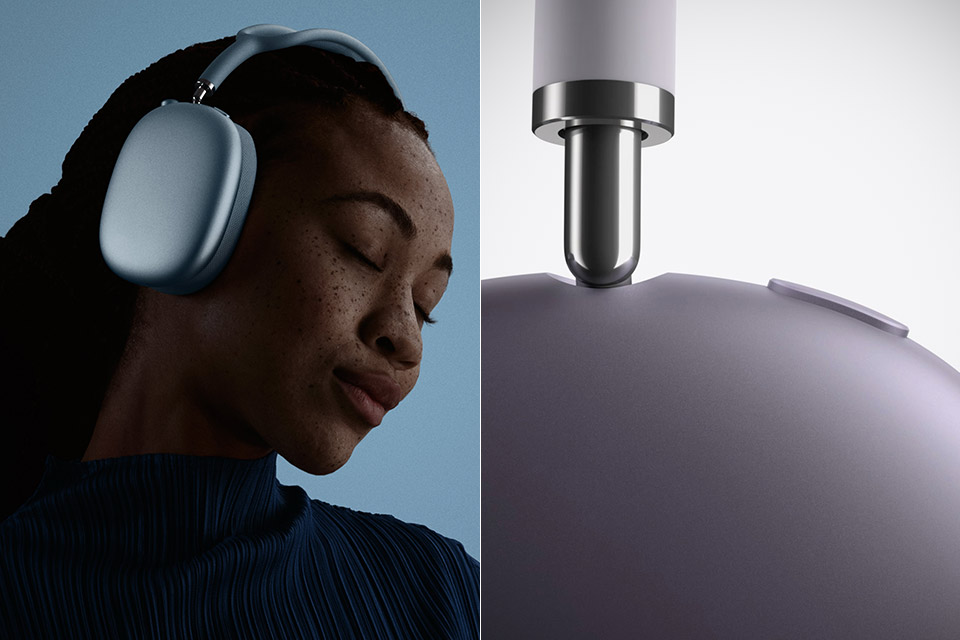
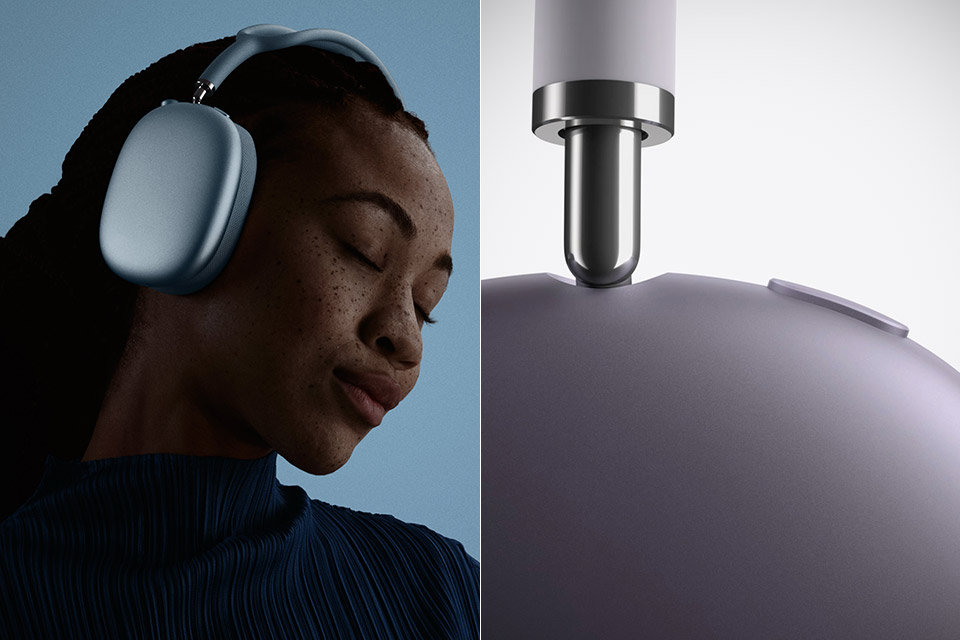
Apple AirPods Max 2 Reveal
Five years have passed since Apple initially began selling its over-ear headphones, and many people were left wondering if a true update would ever happen. The wait is over for AirPods Max 2, and most of the changes trace back to one quiet upgrade.


Powering the whole thing is the new H2 chip, a single component responsible for some meaningful improvements across the board. Noise cancellation has taken a significant step forward, blocking out twice as much background noise as the previous generation. Jet engines and train rumble are dealt with far more convincingly now, which should make long haul travel considerably more bearable. Transparency mode has also been sharpened up considerably, with voices and ambient sound coming through with noticeably less distortion and a much greater sense of clarity and precision than before.

Sale


Apple AirPods Pro 3 Wireless Earbuds, Active Noise Cancellation, Live Translation, Heart Rate Sensing…
  • WORLD’S BEST IN-EAR ACTIVE NOISE CANCELLATION — Removes up to 2x more unwanted noise than AirPods Pro 2* so you can stay fully immersed in the…
  • BREAKTHROUGH AUDIO PERFORMANCE — Experience breathtaking, three-dimensional audio with AirPods Pro 3. A new acoustic architecture delivers…
  • HEART RATE SENSING — Built-in heart rate sensing lets you track your heart rate and calories burned for up to 50 different workout types.* With…

Sound quality has taken a step forward across the board, helped along by a new amplifier that keeps the output clean and consistent even at higher volumes. Instruments sit exactly where they should in the mix, the bass is tight and controlled, and the mids and highs carry a natural warmth without any harshness creeping in. Plugging in via USB-C unlocks lossless audio at full 24 bit, 48 kilohertz resolution, and wireless gaming gets a notable boost as well, with the gap between on screen action and audio response cut down significantly.

Advertisement

The H2 chip also unlocks a handful of genuinely useful listening modes. Adaptive audio uses the built-in microphones to read the environment around you and adjust noise control levels on the fly without any input needed. Conversation awareness picks up when someone nearby starts talking and eases the volume down while softening background noise so you can engage naturally without pulling the headphones off. Calls benefit from voice isolation, which keeps your voice front and center while pushing room noise well into the background. Personalized volume learns your preferences over time and adjusts levels automatically, and in particularly loud environments the AirPods Max 2 will gently dial things back while keeping the character of the music intact.

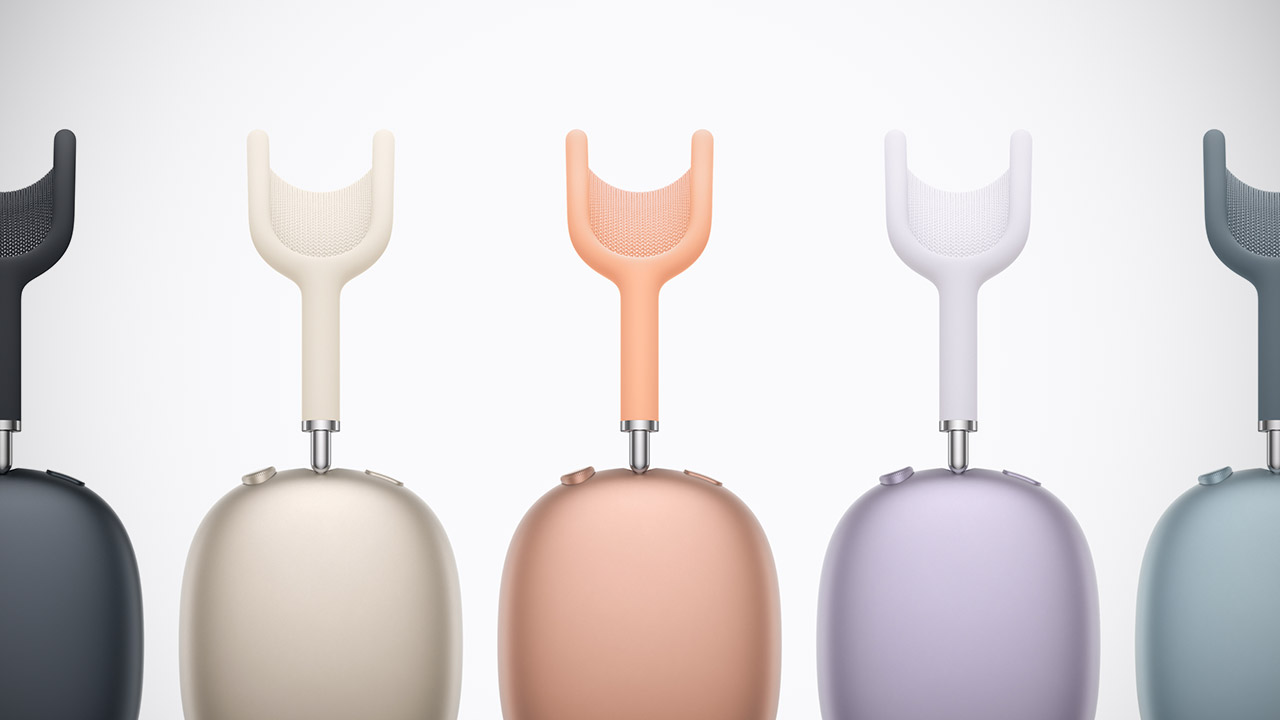
Apple AirPods Max 2 Reveal Colors
Live translation is one of the more exciting additions for anyone who travels frequently or works across language barriers. It handles real time translation during face to face conversations, letting you speak in one language and hear the response in another without any awkward pauses or reaching for your phone. An up to date iPhone or iPad running the latest software is required, and it is worth noting that the feature is still in its early stages, currently supporting a limited number of languages with a gradual regional rollout underway.

Creators get some useful tools to work with as well. The microphones are capable of capturing studio quality audio, making them a solid option for podcasts or voiceover work without needing dedicated recording gear. A single press of the digital crown triggers the camera shutter or starts and stops video recording in both the native camera app and supported third party options. Siri integration has also picked up a neat trick, letting you nod to confirm or shake your head to decline without having to say a word out loud, which turns out to be more useful than it sounds.

Battery life stays at twenty hours with noise cancellation running, matching the original model. The over-ear design and headband carry over unchanged as well, and the color lineup keeps things consistent with the rest of Apple’s range, spanning midnight, starlight, orange, purple, and blue. Recycled materials feature heavily throughout, with the magnets, ear cushions, and circuit boards all made entirely from reclaimed components. The smart case keeps its familiar folding design, compact and easy to slip into a bag without taking up much room.

The price has stayed the same at $549 and pre-orders are opening on March 25 with delivery starting early April in the US and more than thirty other countries. If you buy some new Max 2s you can also add in optional AppleCare+ protection, but they do come with a three month trial of Apple Music.

Advertisement

Source link

Continue Reading

Tech

Apple acquires popular video editing software company MotionVFX

Published

on

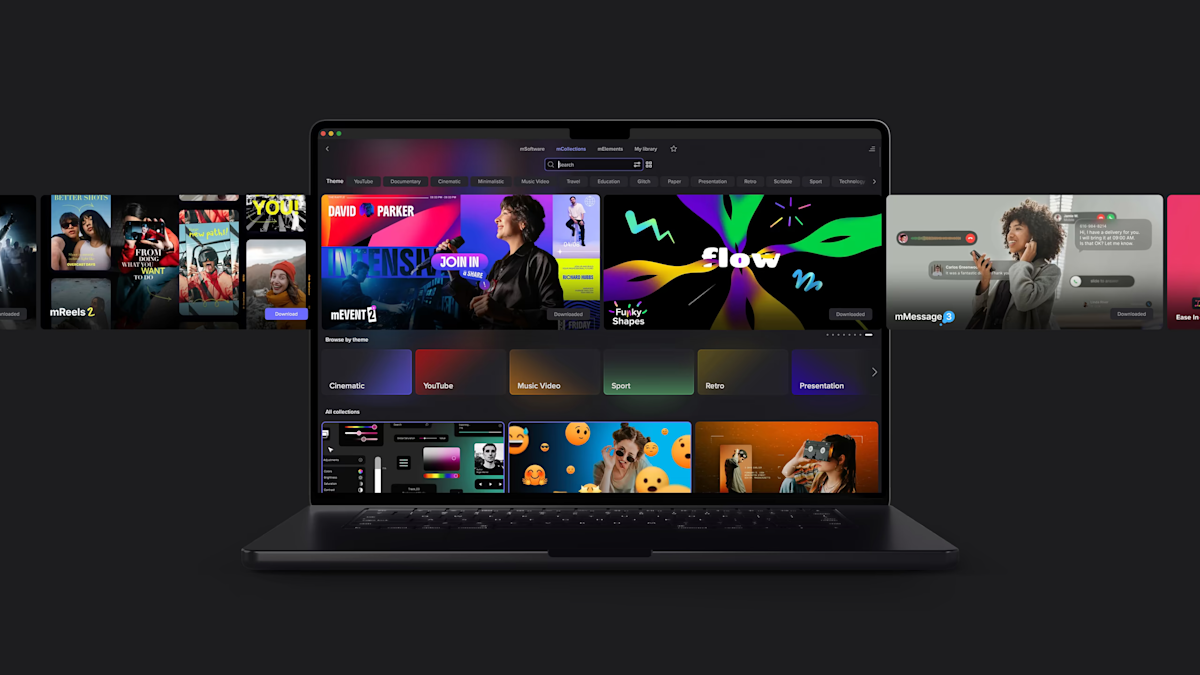
Apple’s latest acquisition could be a hint towards improvements for Final Cut Pro. The tech giant acquired MotionVFX, as seen on the company’s website and first reported by MacRumors, which is known for providing plugins, templates, visual effects and more to video editors. MotionVFX currently offers its software for a handful of video-editing apps, like DaVinci Resolve and Adobe Premiere, but is also listed as a trusted Apple partner and found in the Final Cut Pro ecosystem of third-party products.

Apple hasn’t revealed an acquisition price nor details of the deal. On its website announcement, MotionVFX wrote that it’s “thrilled to embrace” similar values seen with Apple products and that it’s the “beginning of something wonderful.”

Considering a lot of MotionVFX’s tools are designed for Final Cut Pro and Apple’s Motion app, we could see native integration of popular visual effects and templates into Apple’s app interfaces. It’s worth noting that MotionVFX already offers an extension that creates a panel directly in Final Cut Pro for users to browse, download and apply visual effects from its repository. The acquisition could also hint at Apple trying to make its Creator Studio more enticing in the future, since it includes both Final Cut Pro and Motion. However, there hasn’t been any clarity on what will happen to MotionVFX’s monthly or annual subscription plans, nor its support for competing products.

Source link

Advertisement
Continue Reading

Tech

No Oscar nods for Amazon this year, but company is among tech targets from host Conan O’Brien

Published

on

Academy Awards host Conan O’Brien. (ABC via YouTube)

Amazon has a solid record of success at the Academy Awards, scoring dozens of Oscar nominations and a handful of wins for its studio business over the past nine years.

Amazon MGM Studios was shut out of the race this year, but the tech giant still got a mention in host Conan O’Brien’s monologue to open the show on Sunday night.

“Amazon Studios didn’t receive any nominations this year,” O’Brien said (at the 6:44 mark in the video below). “Yeah. Also, shut out: Walmart, Alibaba, and Chewy. Why isn’t the website I order toilet paper from winning more Oscars!?”

Amazon’s rise from e-commerce juggernaut to real Hollywood player began in earnest more than 10 years ago, and it was the first streaming service to win an Oscar in 2017, when the studio took home three awards.

Sunday was not the first time the company has ended up in O’Brien’s Oscars crosshairs. Last year, the host joked about Amazon’s takeover of the James Bond franchise and founder Jeff Bezos’ arrival at the ceremony in an Amazon box. At least Bezos and wife Lauren Sánchez did manage to get photobombed by Nicole Kidman on Sunday at the Vanity Fair after-party.

Advertisement

Sunday’s show was peppered with a number of tech references, including how artificial intelligence can’t replace the human creators behind animation, as well as a look at how classic films can be cropped for the smartphone generation.

O’Brien took a shot at another streamer with a joke about Netflix and CEO Ted Sarandos, who was in attendance. “It’s his first time in a theater!” O’Brien said, before mocking Sarandos’ fake take (below) on why people would gather in such a place.

In a bid to preserve classic films for the smartphone generation, O’Brien spotlighted a studio named Ventura Crossroads, which is committed to “making movies very tall and very skinny.”

Advertisement

It’s not easy to reach a younger audience addicted to screens, especially with a broadcast television event dedicated to films they didn’t see in a theater. O’Brien lowkey tried anyway.

The Oscars are moving to YouTube in 2029 and O’Brien showed what that could look like for viewers who aren’t used to such abrupt commercial interruptions.

And finally, Oscar nominee Leonardo DiCaprio — the “King of Memes” — did it again, and again, with a little help from O’Brien.

Source link

Advertisement
Continue Reading

Tech

Amazon drops Apple's iPad 11 to $299 with March markdowns

Published

on

Amazon’s March iPad sale delivers prices as low as $299, with discounts of up to $300 off new and closeout models across Apple’s tablet line.

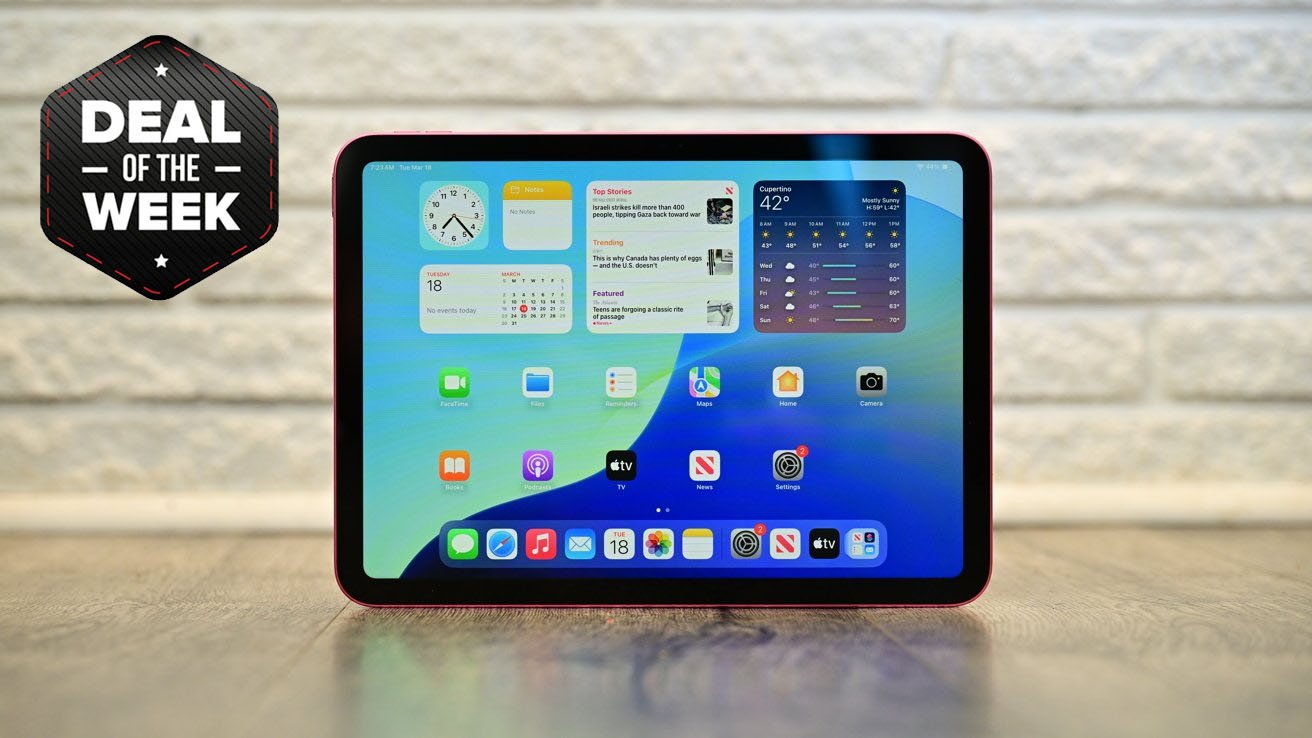
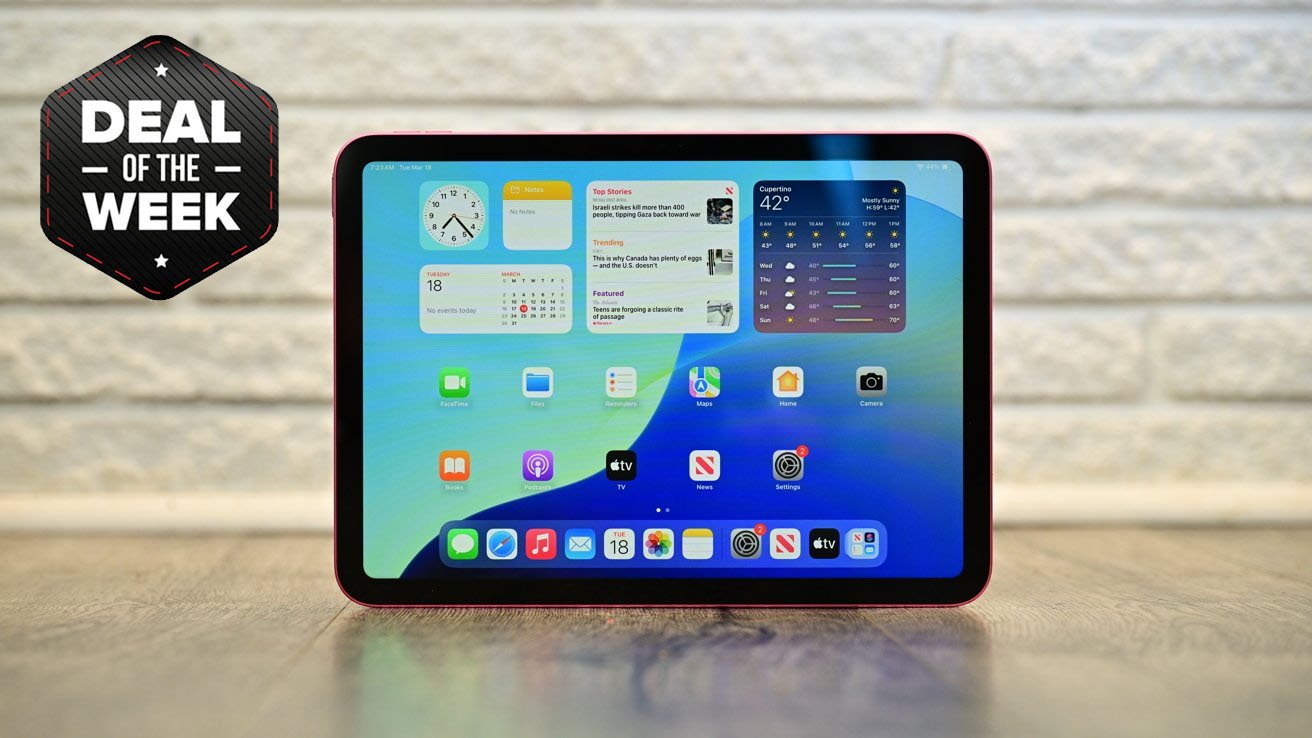
Pink iPad 11 on wooden surface displaying colorful home screen widgets and apps, against a light brick wall background, with a black badge reading DEAL OF THE WEEK on the left
Get Apple’s iPad 11 for just $299 at Amazon.

Steeper discounts on Apple’s iPad line are in effect at Amazon as March hits the midway point, with Apple’s 11-inch iPad available for $299 thanks to a $50 discount in three colors.
Buy iPad 11 for $299
Continue Reading on AppleInsider | Discuss on our Forums

Source link

Continue Reading

Tech

JBL’s Best Wireless Headphones Are $170 Off at Walmart

Published

on

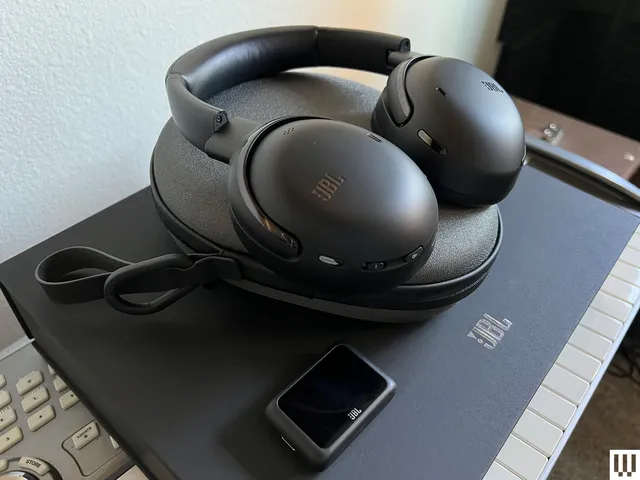
JBL makes a lot of headphones, but its Tour One M3 sit at the top of the stack. To borrow a phrase from Bill Hader’s indelible character, Stefon, these headphones have everything: quality sound and noise canceling, incredible comfort, immaculate calling performance, and this weird little transmitter device that lets you control them wirelessly and even transmit audio from wired sources like a turntable. Even if you never use the transmitter, the M3 are great, and for some reason, the Mocha colorway is on super sale at Walmart for $170 below retail price.

Image may contain: Electronics, Mobile Phone, Phone, and Headphones

The Tour One M3’s blitz of features might be intimidating to some, but these noise cancelers also stand on their own for basic use. The sound performance isn’t the best I’ve heard at their price point, but it’s still quite good, with brilliant instrumental separation and enough detail to surface new moments in songs you’ve heard dozens of times. The noise canceling is even more impressive, able to suppress low-end sounds like airplane drones and midrange noises like vocal chatter as well or better than some of the best noise cancelers out there.

Features include everything from a volume limiter to keep your hearing safe to Smart Talk that pauses sound when you speak, and a Sound Level optimizer that evens out voices on calls. Speaking of calling, the Tour One M3’s excellent microphones and software combine for impressively clear calls that reduce noises around you as well as any pair in their class.

As for the transmitter device, it can feel a little gimmicky when it comes to controlling the headphones, since you can just as easily control settings in the app, but connecting it to wired sources offers real value. That’s especially true if you want to listen wirelessly to legacy audio sources like an older amplifier or turntable. What’s more, the system uses a new Bluetooth protocol called Auracast, which lets you share audio lag-free with an unlimited number of supported devices, including other JBL headphones and Bluetooth speakers like the Flip 7.

Getting back to basics, JBL’s Tour One M3 are convenient to use, and their thick foam pads offer a fit as comfortable as any headphones I’ve tested in recent memory. The Mocha version may not be everyone’s cup of tea, but it’s been holding at its low price for some time now, so it’s worth hopping on the deal now if you’ve been considering a new pair. If you’re looking for the best deal around on a pair of great noise-canceling headphones, this one will be very hard to beat.

Advertisement

Source link

Continue Reading

Trending

Copyright © 2025