Tech
CanJam SoCal 2026 IEM Roundup: 35 In-Ear Monitors Tested From $75 to $8,000

Back in March, eCoustics asked whether wired IEMs were having a moment after we counted roughly three dozen IEM brands showing new models at CanJam NYC 2026. CanJam SoCal did nothing to slow that momentum. Wireless earbuds may dominate everyday listening, but the wired side of personal audio keeps getting busier, more technically adventurous, and considerably more expensive at the top end.
We have followed that surge closely, building an extensive IEM archive of reviews, new product coverage, and show reports. The category now stretches from affordable single-driver models to increasingly elaborate combinations of dynamic, balanced-armature, planar, electrostatic, MEMS, and bone-conduction drivers.
For CanJam SoCal 2026, I listened to 35 IEMs across that entire spectrum. Rather than grouping them by booth, we’ve organized this roundup by current U.S. price so readers can more easily compare products occupying similar territory. Prices shown are current U.S. list or retail prices where they could be confirmed; unreleased models and prototypes without verified U.S. pricing are grouped at the end.
Keep in mind that these are initial show impressions, not full reviews, and they may not represent how each product performs in a more controlled environment or after I’ve had enough time to properly experiment with fit and eartips.
The CanJam SoCal venue has awful lighting. I’ve done my best with editing, but these beautiful products deserve proper photos in decent lighting.
IEMs Under $250
I didn’t get a chance to listen to the PRS5, but I did catch a few other models. I listened to the rest of the DUNU lineup in previous years of CanJam SoCal (2025), so you can check out those impressions for more info. For many of those models, I’ve also released full reviews.
DUNU PRS6 — $249

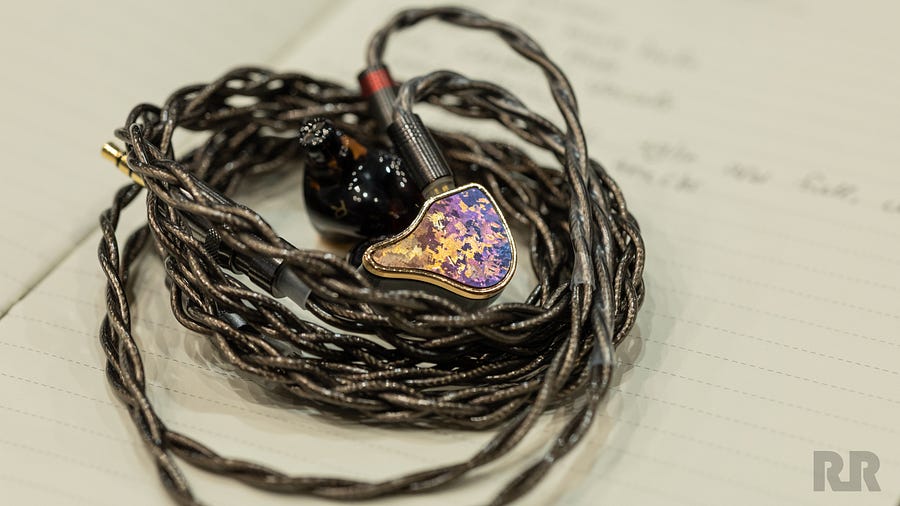
The PRS6’s mids are the star of the show, and they’re tuned extremely well. The PRS6’s bass is tight and punchy, but doesn’t command too much emphasis. It blends into a nice, warm lower-midrange before picking up steam in the upper-mids, ultimately tapering down into a linear but extended treble. DUNU’s signature energetic upper register is here, but not in as dramatic a fashion as IEMs like the DN142/DN242. In all, a pretty compelling IEM.
This brand kind of came out of nowhere for me. I’m sure I’ve seen “EPZ” in passing before, but I didn’t really have a grasp on what their lineup looked like. I’m glad they came to this year’s CanJam SoCal, as I really enjoyed what I heard.
EPZ P40 — $159
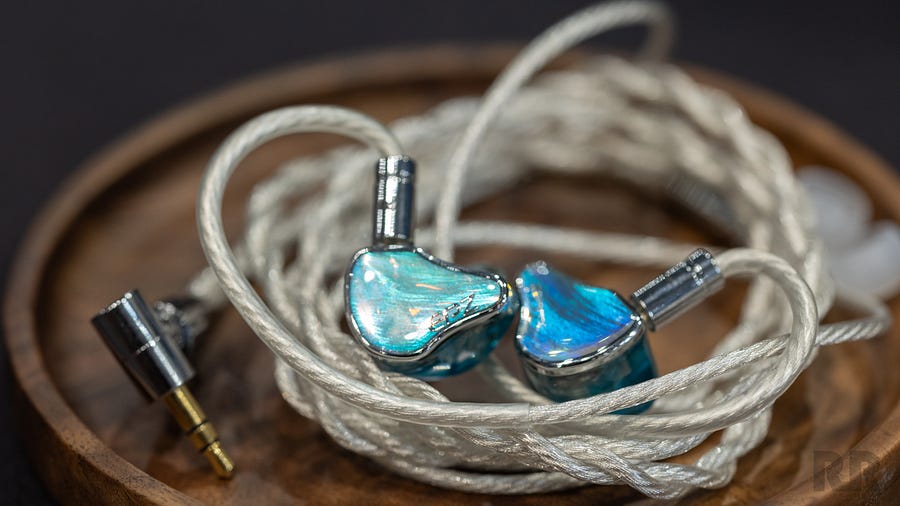
This is a sub-$200 IEM from EPZ featuring 2 dynamic drivers + 1 micro-planar driver + 1 PZT driver per side. It has resin shells and metal nozzles with a pretty decent stock cable. The L-shaped modular termination is something you don’t see every day, though I wish it used a proper locking mechanism rather than relying on friction to keep the parts together. Sound-wise, the P40 is classically V-shaped with a moderate brightness in the upper treble, mild lift in the lower treble, and a smooth, clean midrange. The P40 is slightly tilted towards cool midrange tone, but isn’t lacking in depth thanks to its prominent and well-extended bass. The P40’s bass is dynamic and energetic, rendering mid-bass and sub-bass textures nicely. I found the P40 to be one of the easiest, least-picky listening experiences at the show, which is precisely what I want from a lower-cost IEM. This is another one of the rare few IEMs that fits my wife’s tiny ears, so ergonomics are solid, to say the least.
I’ve written extensively about Linsoul’s IEMs over the years, so if there’s something missing from here, I encourage you to browse through my reviews for more info or to take a read through my CJ SoCal 2024 and CJ SoCal 2025 impressions.
Kiwi Ears Stardust — From $76.99
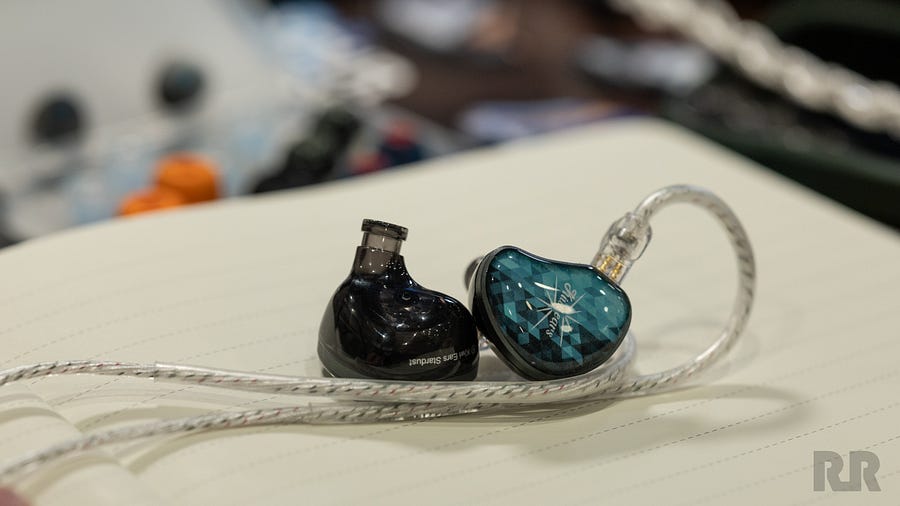
Among all the new Linsoul releases, the one I may be the most excited for is the Stardust. This $76.99 hybrid so competently balances performance, tone, and ergonomics that I think it will be a breakout IEM in the sub-$100 range. Like the KE4 Mk II, the Stardust has a relaxed, chill tuning. The Stardust is actually a little reminiscent of the KBear SR-08, just with a tighter bass response and a bit more treble energy. The Stardust sounds broadly V-shaped, but doesn’t lean too heavily on either extreme, instead relying on subtlety to make its points. Overall cohesion and timbre are excellent, rendering ranges of instrumentation consistently. I particularly enjoy the balance between precision and tone struck by the Stardust’s treble, as I found that it kept up with most complex/congested tracks while never sounding sharp or artificially boosted.
Oh yeah, and did I mention that it is small enough for my wife to wear comfortably with her tiny ears? That’s good stuff.
ZiiGaat Thunder — Reported Price: $150
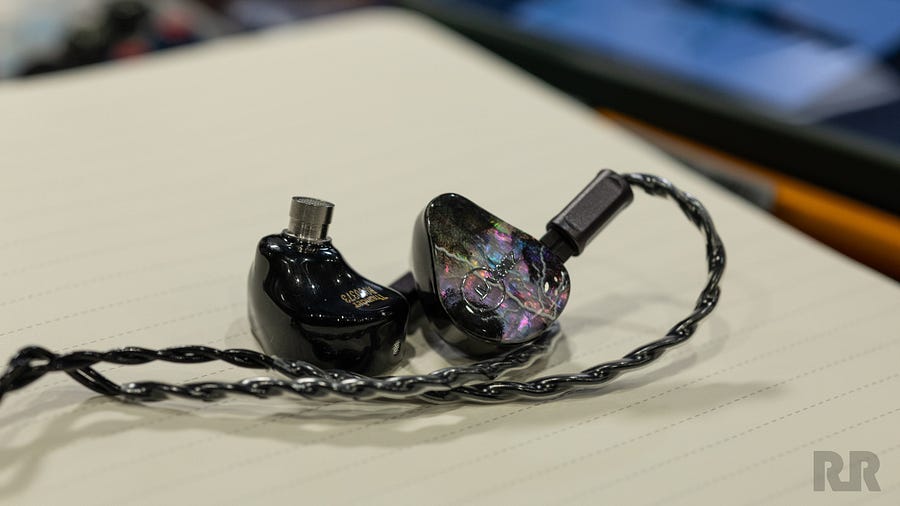
Is the Kiwi Ears Punch a basshead IEM? What about the Punch Audio Martilo? I’ve seen the debates and arguments, and there’s no real consensus. But that won’t be the case for the Thunder, as anyone without reverse-slope hearing loss will hear the obviously massive mid and sub-bass emphasis on this V-shaped IEM. I mean, I consider myself a basshead, but this actually may be a bit too much bass for me. It’s powerful, punchy, and capable of impressive degrees of rumble—FatFreq levels of rumble. Its midrange is cool and a bit recessed, and the treble has a little grain to it, which I imagine is a price many bassheads are willing to pay for this level of intensity. I’ll have to experiment a bit more with tip selection, and I’m interested to see how the community feels about this one.
IEMs From $250 to $499
How have I not tried FlipEars’ IEMs before? Their lineup is solid, with a number of evocative models stretching from “affordable” all the way to “ultra flagship.”
Linsoul Avant — $369

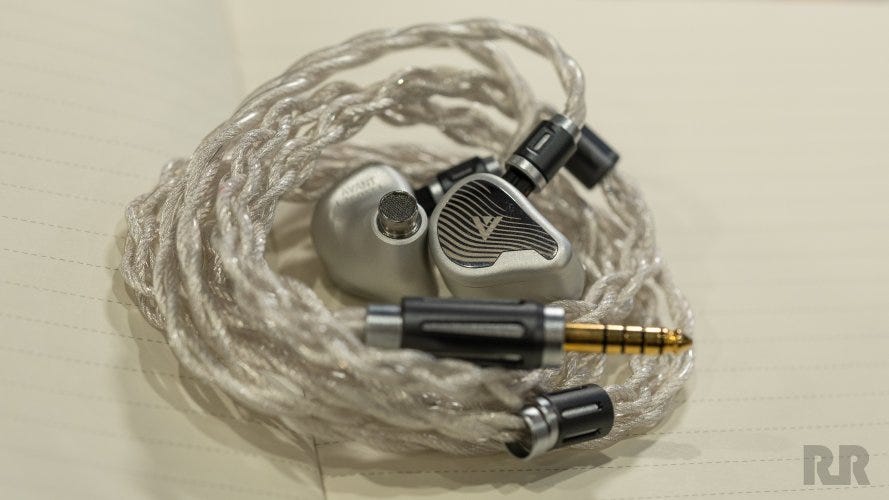
The Avant is the very first IEM sold under the actual “Linsoul” brand, and it appears that the folks in R&D wanted to make sure they came out swinging. This aluminum-shelled 2DD + 3BA + 1MEMS tribrid feels weighty and premium in the hand, more so than many far pricier IEMs in the Summit-Fi segment. I love the cable, and it looks to have borrowed bits from the Orchestra II and THIEAUDIO lineup. As you’ve likely noticed thus far, I’m a bit treble-sensitive, so the new wave of MEMS and EST IEMs has been tough on me, and the Avant falls into the same general camp of “pretty bright.” Its upper register sounds a bit crowded and dense, though it renders transients with precision and speed. Treble and vocals are just about the center of attention with the Avant, and its lower register is relaxed, though extended. There’s a small bass shelf that holds from the mid-bass down to the 20 Hz region, save for a very subtle bump in the 100 Hz region. While my initial impressions were that it was too bright, I didn’t get much of a chance to experiment with tips or insertion depth, so I’ll have to circle back around once units start shipping.
Hercules Audio Noah — $379

Noah, Noah, Noah. Lightning in a bottle, and a sub-$400 IEM that caught Head-Fi massively off guard. It isn’t getting much airtime these days, and that’s a darn shame as it still presents one of the most compelling “Mid-Fi” experiences to date. Beautiful build quality and a refined take on warmth that rivals the best Meze has released, there’s a lot worth appreciating. The Noah’s gentle, refined V-shaped tuning is flexible and broadly appealing, working well on dryly mastered tracks as well as warmer, more modern ones. The Noah’s sub-bass is well-extended and excellently controlled, possessing plentiful texture even at very low frequencies. And texture really is what the Noah has to offer, and at nearly every point in the sonic spectrum. The Noah also possesses some of the best comfort of any IEM I’ve tested at CanJam, though that is pretty dependent on my particular ear shape.
I’ve listened to some of the previous Ice Lab models at other CanJams, but I don’t think I’ve ever had a quiet space to do so, nor did I ever get a proper seal. This year I came prepared, loaded with a suite of pre-tested eartips to get the full, proper experience from the Prismatica in particular.
Ice Lab Lumira — $399
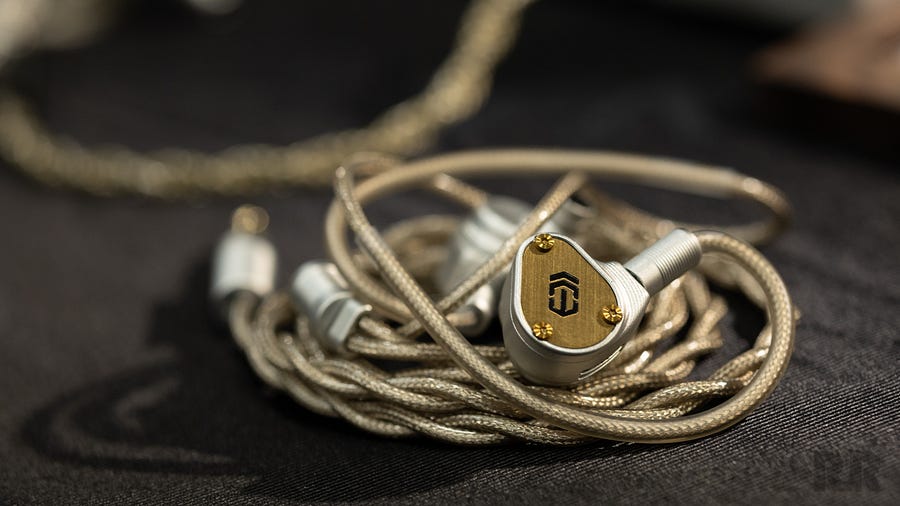
The Lumira is a new IEM from Ice Lab, featuring the brand’s signature quality metalwork. I took notice of the Lumira’s bespoke, matching cable, as the attention to detail here is top-notch. Sonically, the Lumira is gently V-shaped, capturing an excellent sense of balance. The Lumira toes the line between warmth and air excellently. Bass-wise, I think Ice Lab nailed it: nice weightiness in the Lumira’s mid-bass and plenty of extension in the sub-bass. Big bass drops render with substance and size, and the bass is sufficiently well controlled to get out of the way in tracks that aren’t as boisterous. The Lumira’s technical abilities are nothing to scoff at, and it offers full-spectrum texture and resolution, even during congested song passages. This is another IEM I’m keenly tracking, and I’d like to see how the greater community receives it once they have time to properly compare it.
FlipEars Aegis — $479
The Aegis is FlipEars’ entry-level IEM, coming in at $479. It features a single dynamic and a single bone-conduction driver per side. It has a thick, weighty bass region that renders deep-set sonic elements with body and presence. Its mids are warm and rich, lending vocals richness and substance. That said, it can sometimes come off as a bit too warm, rendering dense guitar passages without the requisite air. The Aegis’s treble is well-extended and delivers smooth, refined upper-register elements with a surprising level of competence. In all, an intriguing IEM, though one I’m not certain outdoes Mid-Fi staples like the Tea Pro SE .
I listened to the HA lineup at previous CanJams, but I still feel they’re good enough to revisit in 2026.
IEMs From $500 to $999
There might be too many IEMs in the Bloom Audio room. I could spend hours in there, but given how crowded it was this year, I opted to relinquish my seat after about 30 minutes. I listened to a few interesting IEMs in that time, which you can find below.
Effect Audio Perseus — $999 (Best in Show)
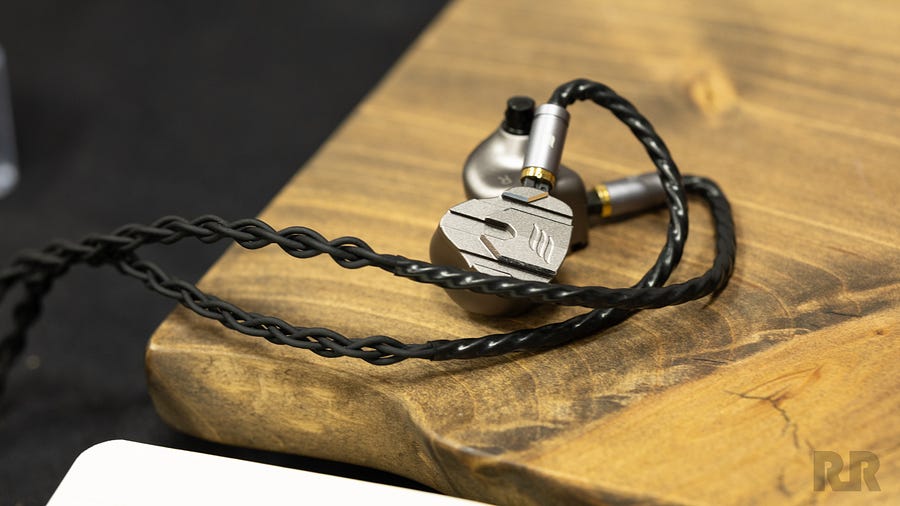
Effect Audio had their own booth (staffed by volunteers) this year with the Perseus, but I wanted a quieter listening environment, so I went to demo it at the Bloom Room. In short, why has this IEM not gotten more attention? I’ve seen a few grumblings here and there about it being “decent,” but lord, there are few IEMs out there that so quickly outdo staples in my collection like the Campfire Audio Alien Brain—an IEM I consider to be a penultimate example of what high-end audio should sound like.
The Perseus features beautiful, solid metal shells and a comfortable braided cable. Its sound signature is properly V-shaped with a nice, forward treble and full bass response. Its midrange is very slightly tilted towards the warm side of neutral and gifts vocals a wonderfully organic timbre. “Effortless” is a good word to use here, and the Perseus cruises through pretty much everything I throw at it. I’m particularly satisfied with its bass response, given its tight, punchy disposition. Electronic genres are well-served by the Perseus’s excellent sub-bass extension and control, and I found that even challenging tracks were nicely rendered. That said, some mastering styles with lighter bass levels can sound a bit dry, owing to the Perseus’s fairly linear intra-bass tuning.
Normally I’d say, “I hope I can spend more time with the Perseus,” but I’m actually going to make a concerted effort to get it in for a proper full-length review. It’s gonna happen, just you wait.
EPZ 550 — $519
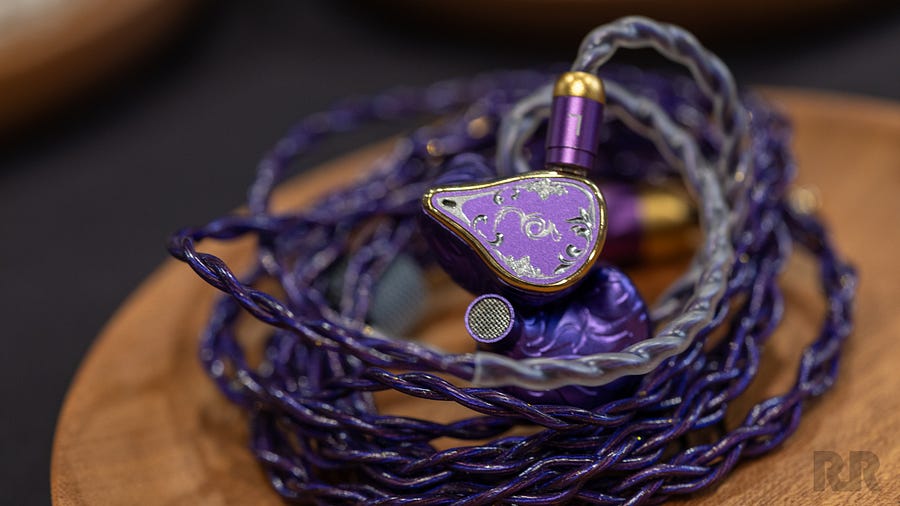
The 550 is an all-BA 5-driver metal IEM. It’s pricey, coming in at $519. It feels pretty nice in the hand, and aside from its bold color choices, is much less visually dramatic than many of the ornate designs coming out these days. The 550 was really comfortable for me, and I got an excellent passive seal. The 550 is an entirely different beast compared to the P40, owing to its all-BA driver setup and flagship-level aspirations. It sounds like a reference IEM with a subtle, linear bass shelf. It is extended nicely below 50 Hz, rolling off gently into the 10 Hz region. Its bass is forward but not dominant, and the 550 has no issue filling out electronic tracks at slightly elevated volumes. The 550’s mids are warm-ish and forward, placing vocals pretty forward. The 550’s treble is bright, but not dominant, generating a great sense of air without devolving into sharpness or sibilance. In all, a solid all-BA IEM, and one I can see myself listening to when craving a ref-style listening session.
FlipEars Aisha Electri — $699 (Best in Show)

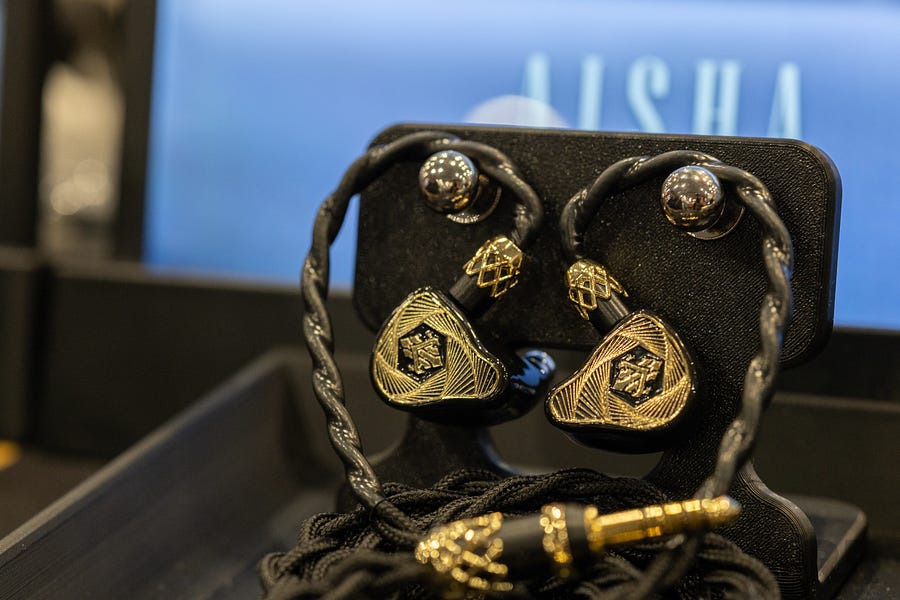
I sought out the Electri at the suggestion of a few friends on Head-Fi, and boy, they were on to something. The Electri has a beautiful V-shaped sound signature with clear, cohesive treble, a natural midrange, and a meaty bass region. It is free from sharpness or inorganic timbre, leaving you with a technical, engaging, and refined experience. I was particularly impressed by the Electri’s bass region: it is tight, deep, and authoritative without a hint of bloom or blur. This places it in a great spot when rendering a wide variety of genres, and I had a blast listening to rock, alternative, and EDM on the Electri. It has a lot of competition in the sub-$700 segment, but man, I think that it competes extremely well. FlipEars’s suite of proprietary drivers really shines in the Electri, and I hope I get to spend more time with it in the future.
FlipEars Legion — $849
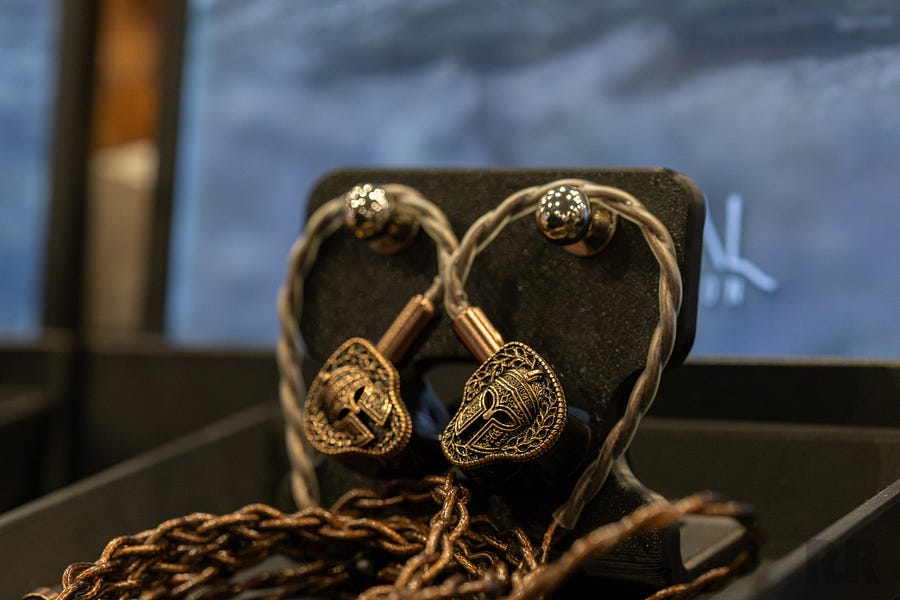
The Legion is an $849 tribrid IEM with a broad, weighty V-shaped sound signature. Its treble is fairly neutral in terms of emphasis, but remains very expressive and robust. It has a thicker, firmer bass region than the Electri, taking up more space on the soundstage. It is pretty warm, though, and this can weigh down vocals a bit. With a bit of brain burn-in and tip-rolling, the Legion seems like an excellent daily driver, especially for those partial to emphasized lower registers.
Hisenior Mega5-EST Bass+ — $589
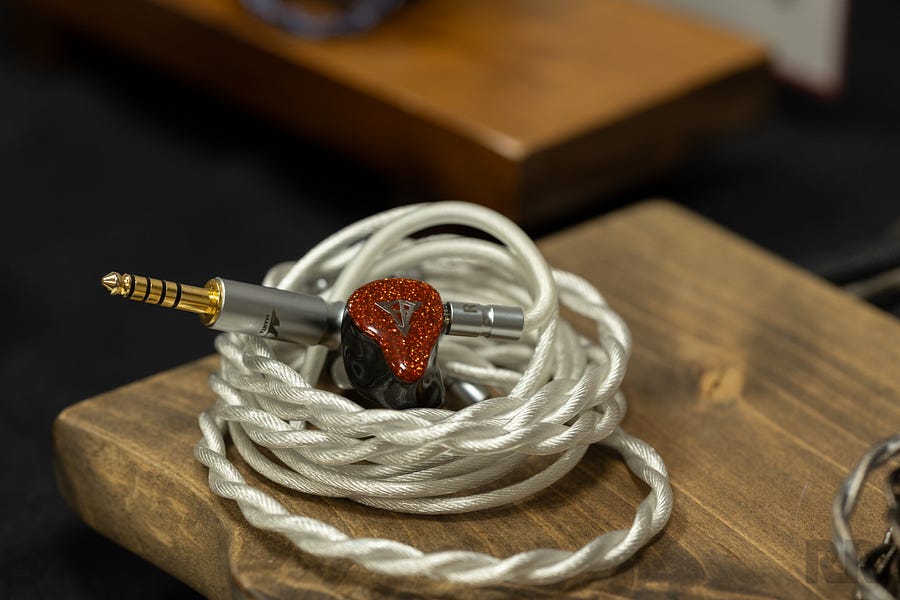
A veteran of the audiophile IEM market, the Mega5-EST Bass+ is an intriguing IEM that blends signature reference-grade mids with an irresponsibly fun dose of engaging bass. The Mega5-EST Bass+ captures the essence of neutrality while adding plentiful punch and rumble to the bottom end, giving you a unique mix of critical listening and casual engagement you’ll not find elsewhere. I tried to EQ my Mega7 to reproduce this type of tonal balance, but my efforts are thus far in vain.
I recently published my Artemis review and have a review for the Vanguard on the way, so those models aren’t covered here.
Noble Audio Iris — $699
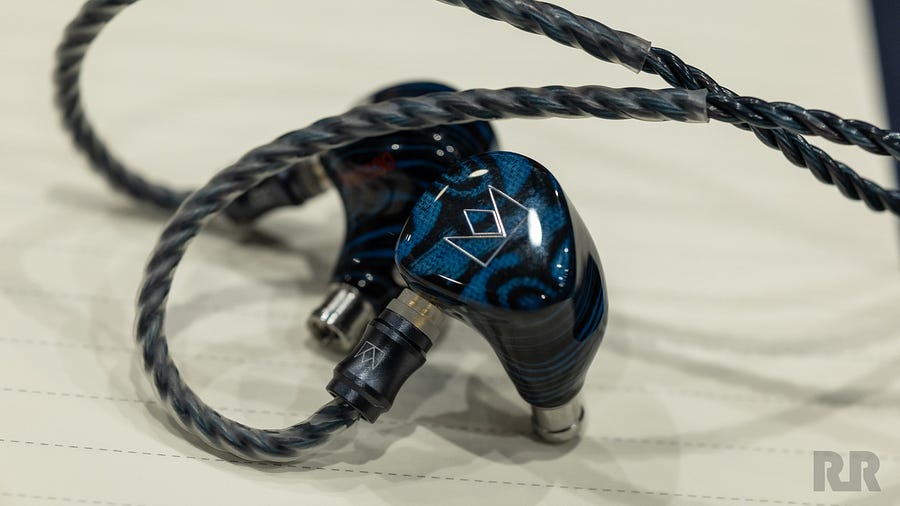
To be frank, I’m not sure if I understand the Iris. It’s pretty expensive, coming in at $699, but only offers a pretty pedestrian experience you can find in other 1x DD IEMs at much cheaper prices. It’s beautiful, don’t get me wrong, but I can think of a number of less costly IEMs I’d rather listen to, including Noble’s own Vanguard. I’m happy to give it a proper listen in a quiet environment and re-assess it — and who knows, maybe I’ll have to eat my words.
THIEAUDIO x Elise Audio Vera — $619
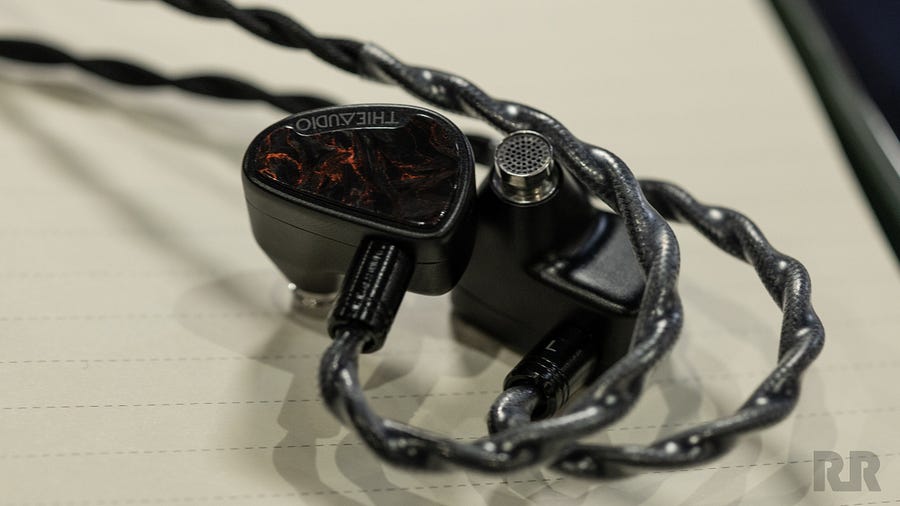
This 1 DD + 2 BA + 2 EST IEM is intriguing, not just because of its surprisingly “Mid-Fi” price point but also because it’s a rare THIEAUDIO collab IEM. THIE tuned this to be a very “Hi-Fi-esque” IEM, with a forward, breathy upper register that renders bright elements front and center. If you’ve heard the THIEAUDIO Hype 4 Mk II, that’s a good analog. The Vera’s mids are cool and clean, blending gently into a slightly lifted mid-bass. The Vera’s sub-bass is polite and unemphasized but extends very well below 50 Hz. Liquid-silicone eartips are a no-go for me on the Vera, as they amplify the already-aggressive EST-based treble, but Symbio foam eartips helped bring things back in line. Technical abilities are stellar, as one might imagine, and I have a great deal of respect for just how much resolution you can get from a fairly compact and ergonomic IEM these days. Of the high-end IEMs I tested at CanJam this year, the Vera is easily top 3 in terms of comfort.
IEMs From $1,000 to $1,999
Campfire Audio is a familiar name in my content, and I’ve spent a lot of time writing about their IEMs over the years. I’ve reviewed most of the 2024-2026 models they released, except the Axion and Chimera. Most of those impressions can be found in my previous CFA impressions posts, and my Chimera impressions can be found below.
Campfire Audio Clara — $1,999 (Best in Show)
When I first heard the Clara at CanJam SoCal 2024, I referred to it as my “hype IEM.” Since then, I’ve had many opportunities to listen to it and have come away equally impressed each time. Campfire Audio collaborated with renowned musician Alessandro Cortini, a member of Nine Inch Nails, to tune it and, wow, this IEM remains one of the classiest and most refined options in the TOTL segment. It contains 1 dynamic driver + 3 balanced-armature drivers and leverages each one to great effect. It is optimized for Alessandro’s favorite genres (which are all electronic), but it performs well across a ton of other genres. I played all manner of rock, alternative, punk, and electronic tracks through it and the Clara responded beautifully.
The Clara’s gentle V-shaped sound signature features a comfortable but well-extended treble. Its bass is, well, fantastic. It is cohesive, punchy, and often feels voluminous. The Clara is not the bassiest IEM in the Campfire lineup, but its bass is extremely textured and expressive, more so than the Cascara, Grand Luna, Iris, and perhaps even the Astrolith.
Ice Lab Spectrumica — $1,999
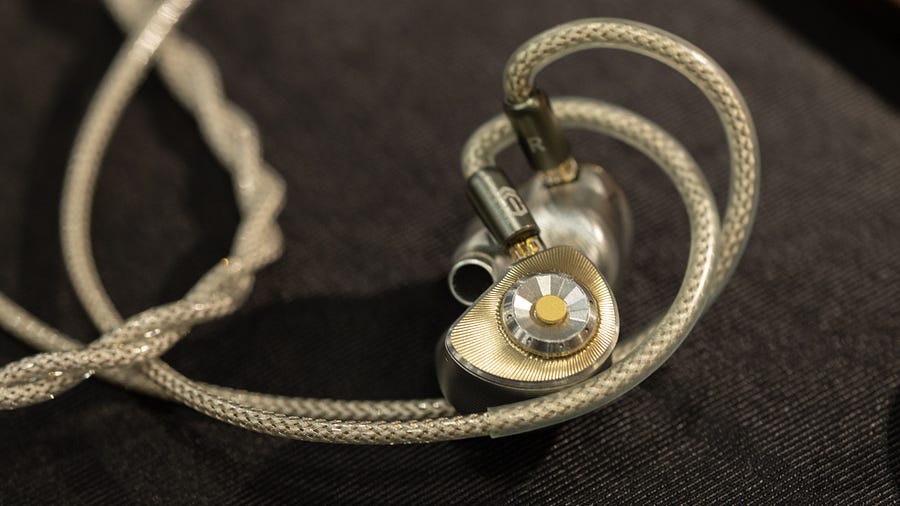
An 8-driver quadbrid (1 DD + 1 BCD + 4 BA + 2 EST) with large metal shells, the Spectrumica is a complex, imposing IEM. Those with small ears are totally out of luck, as you’re gonna need real estate to comfortably settle these into place. At $1,999, the Spectrumica also imposes on the wallet, placing itself in direct competition with a swathe of incredibly capable competitors.
Sonically, the Spectrumica has a warm, boisterous V-shaped sound signature with a nice and clean EST implementation. The overall presentation is fast, cohesive, and rich, with the Spectrumica rendering harmonically complex elements with depth and precision. Vocal timbre is on the heavier side, but it doesn’t sound claustrophobic or dense. The Spectrumica’s emphasis in the lower register allows it to communicate a sense of immense substance, but at the cost of vocal placement. Perhaps with some additional time I could address this with brain burn-in or tip-rolling, but that will have to wait for another day.
Noble Audio Agis II — $1,799
This is an IEM I’ve heard many good things about, and it replaces the Spartacus — an IEM I really liked at CanJam SoCal 2024. The Agis II is an 8-driver hybrid, combining a suite of balanced-armature and bone-conduction drivers, costing $1,799. BCD-based IEMs can be fickle, as their final perceived sound signature varies based on skin contact, so tip selection and positioning matter quite a bit. It’s possible that my impressions here are colored by that reality, so keep it in mind.
The Agis II is V-shaped, but has a few quirks that I don’t recall on the Spartacus. Its treble is peaky, especially above 8 kHz. The Agis II’s vocals are pretty well rendered, though, and they’re intelligible, clear, and nuanced even during busy passages. That said, something about the Agis II’s bass felt off to me. Odd tonality, combined with an unusual decay pattern, was distracting, and the Agis II’s bass didn’t have enough emphasis to fully stage big bass elements in EDM. Between the lack of overall contrast in the sound signature and the spicy, overheated treble, I found myself wishing for the Spartacus to make a comeback.
IEMs $2,000 and Up
I’m a big fan of 64 Audio’s lineup. These guys are legendary for a reason, with fans spanning from Beyoncé to average Joes listening to IEMs in the living room. Models like the Aspire 3 and Volur have long since caught my attention, and the new 64 Audio flagship, Ocean, was therefore a near must-listen for me.
64 Audio Ocean — $3,999
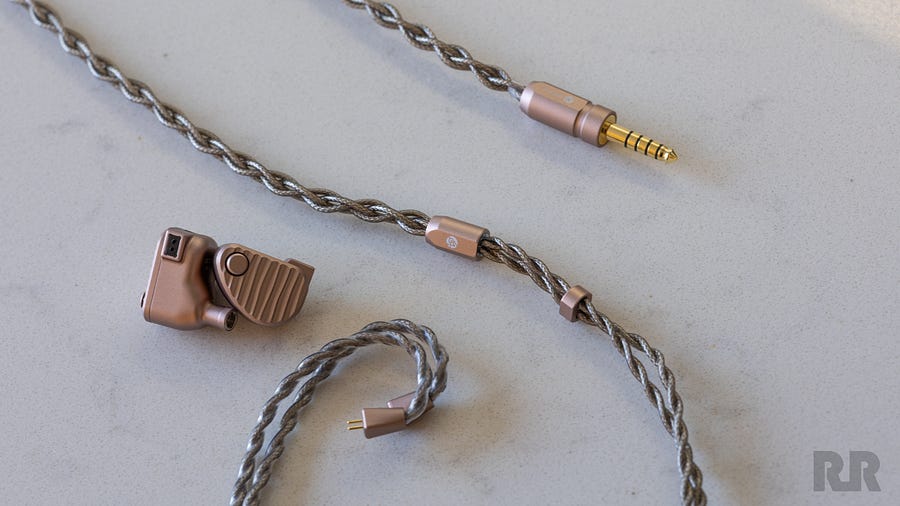
The Ocean has been hyped by 64 Audio as a true evolution of their flagship IEM, promising a new era of sophistication and refinement. As someone who has been chronically impressed with 64 Audio’s high-end models for a while now, I was skeptical of how much better things could realistically get, especially once you factor in the infinitely subjective and fickle reality of human perception. I got a chance to listen to the Ocean in a quiet room and take my time experimenting with the different tuning filters, but I’ll start with how it sounds “stock.”
Without any tweaks applied, the Ocean is a proper “reference-style” IEM. It has a neutral, uncolored midrange and forward treble region. The Ocean’s lower register is rich and complete, competently balancing warmth and transparency. The Ocean is clearly intended for those who prefer a more “pro” style of tuning.
After installing the “Bass+” rear-vent filter, the Ocean added some heft to its mid-bass and lower-midrange, warming up a bit and generating more substance when punching. This filter pulls vocals a bit more towards the middle of the mix but adds a little dynamism overall.
The Ocean can be further tweaked by installing apex modules, which change isolation and bass response. There’s also a set of interchangeable tia screens that adjust high-frequency damping, though I was not too interested in pulling out any top-end energy from the Ocean’s already-subtle presentation.
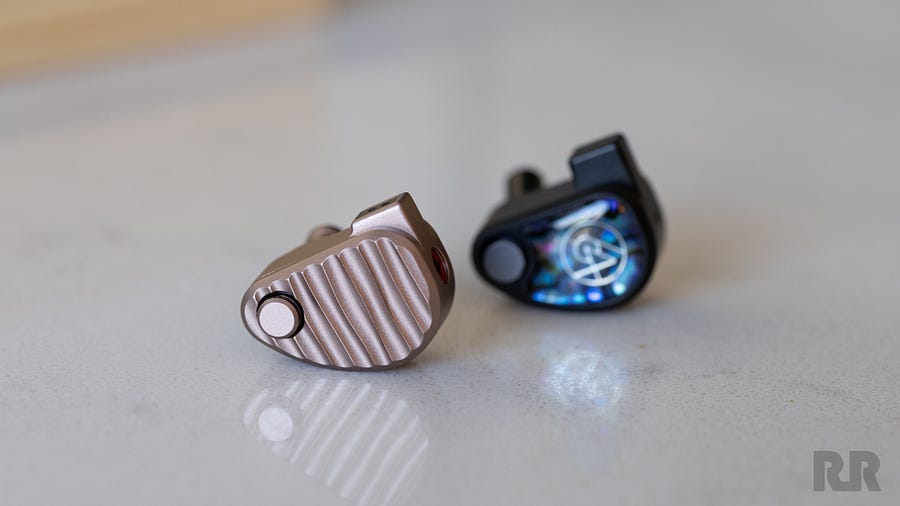
My favorite 64 Audio IEM is the Volur, so it was imperative for me to A/B it against the Ocean. The Volur is a bit smaller and slimmer, and I prefer it aesthetically over the Ocean. Sonically, the Volur has a tighter, more forward mid-bass region (compared to the Ocean with its Bass+ rear-vent filter installed), cooler and cleaner lower mids, and a more forward upper treble. The Ocean renders vocals with a slightly more organic timbre. The Ocean also produces a more convincing body for bass guitars, though it lacks the convincing substantive heft in drum slams that the Volur seems to nail effortlessly.
Between the two IEMs, I still find myself drawn to the Volur. The Ocean, while impressively technical and tunable, lacks the engagement and charisma of the Volur. The Volur also costs a good bit less than the Ocean which, to me, is the cherry on top.
Campfire Audio Chimera — $7,500
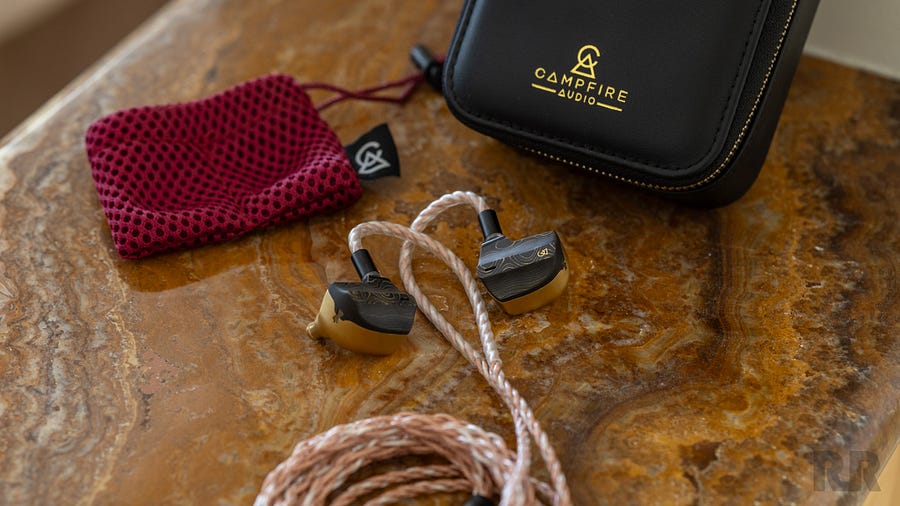
The Chimera is an evocative IEM; from its ornate faceplate design to its substantial price tag, there’s nothing generic about the Chimera. I was able to spend a good bit of time with it in a quiet space, thanks to the kind team at CFA allowing me to borrow it during off-hours.
Firstly, I’d like to talk about build quality. Campfire Audio has a history of building wild IEMs, from the Solaris variants to the titanium edition of the Clara, but the Chimera really ups the ante. I won’t dive too deep into the details, but needless to say, it feels as luxurious in the hand as it looks.
Sonically, the Chimera is enigmatic. For starters, it is shockingly tip-dependent, surfacing subtle, though very real, changes in tone and behavior depending on insertion depth and tip material. I tested Symbio foam tips, Campfire foam tips, and Campfire liquid-silicone eartips, though with more time I’d have experimented far more. I found the “best” eartip to be the Symbio foams, so that’s what my impressions use.
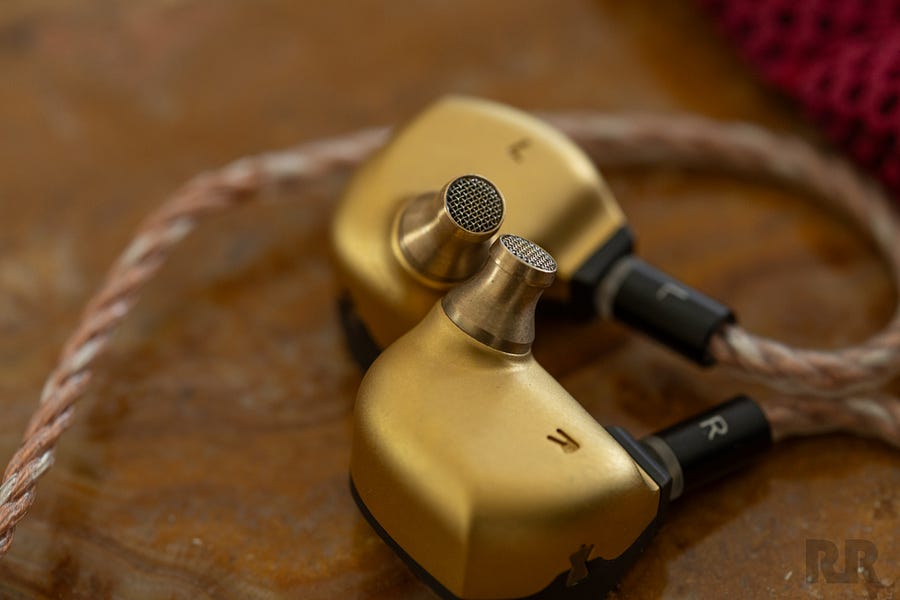
The very first thing I noticed about the Chimera was how… massive it feels. Not massive in the frequency response sense, or the physical sense, but just how truly spatial everything felt. In a way, it shifted my perspective on the entire concept of spatial rendering, and I’d have liked to see what it does in a truly 3D sound space in something like a video game. Alas, I was limited to music, but the effect remained — wide, deep, and dimensional. In terms of tone, the Chimera is very much a refined gentleman, keeping bass and treble in check.
Occasionally, the Chimera will exhibit subtle signs of treble bite, but nothing even close to the likes of the Astrolith or Iris. I mentioned in an earlier impression about how impressed I was with the Hercules Audio Moses’s EST implementation, but I have to say that the Chimera is just as good if not a bit better. It is integrated into the frequency response with such cohesion that you wouldn’t guess it was there without a spec sheet. Transparency is excellent, and I found myself simply forgetting about the Chimera and diving headfirst into my music, which is ultimately the best possible outcome for my personal pursuit of musical enjoyment.
That said, the Chimera is still a relaxed, subtle IEM. My desire for engagement remains, and the Chimera’s subdued bass response doesn’t fulfill it. EDM and bass-heavy genres lack some dynamism, simply because the Chimera is too dignified to punch, let alone rumble. As such, I’d label the Chimera squarely as a refined critical-listening IEM — unsuitable for bass-craving knaves like myself.
FlipEars Arion — $2,499
The Arion is a pricey quadbrid IEM, using a mix of DD, BCD, BA, and electret drivers. At $2,499, the Arion has many incredible peers, including greats like the CFA Clara, Vision Ears VE10, and 64 Audio Volur. That said, the Arion holds its own, presenting a balanced, easy-to-listen mild V frequency response to the listener. Texture and micro-detailing abound, with the Arion capturing tons of air and spatial nuance. Its BCD implementation is excellent, with the driver adding subtle hints of rumble to perfectly fill out even subtle bass-centered elements. While I’m usually more interested in IEMs with more forward bass regions, the Arion clearly has what it takes to stand in the TOTL segment.
Hercules Audio Moses — $3,799 (Best in Show)
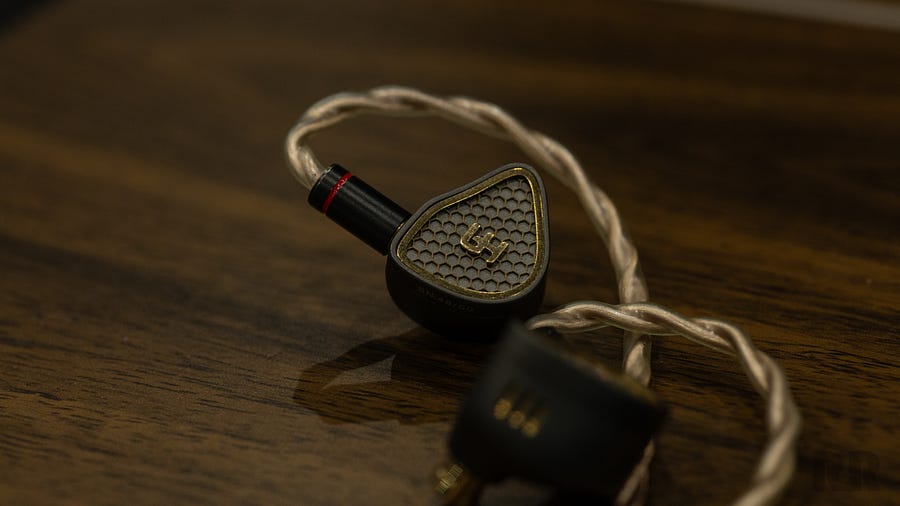
Ah, Moses, an IEM with biblical levels of balance. Between its beautiful shells and refined U-shaped sound, there’s very little you can complain about—and deservedly so, as the Moses carries a $4,200 MSRP and is currently listed at $3,799 in the U.S. Gentle, warm, and rich, the Moses’s tuning is decidedly TOTL-worthy, rendering diverse suites of instrumentation with precision and sophistication. This is one of the best EST implementations I’ve heard, taking full advantage of EST’s signature smoothness while sidestepping the sharp, overwound timbre many competitors suffer from. From smooth, atmospheric tracks to raw and emotional ones, I failed to find a single track that the Moses did not properly present. I could go on, but rambling any more than this would be more fitting for a proper review.
Hercules Audio Moses Legend — $8,000
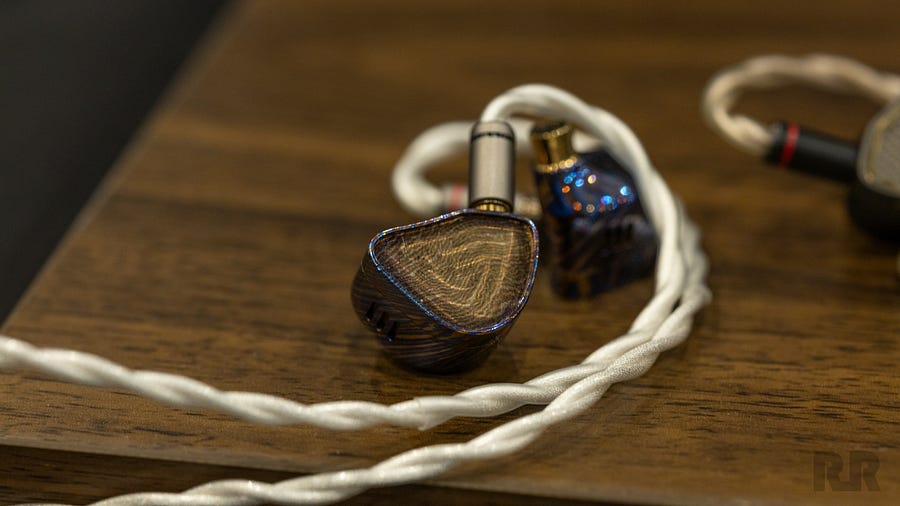
Hercules Audio Moses Legend, sans faceplate. Final design will feature a proper face design.
The Moses Legend is a so-called “ultra flagship,” with expected pricing around $8,000. If you think that price is crazy, you’re not alone. At the very least, Hercules Audio tries to justify this doubling in cost with truly exotic materials and experiences. The case that ML comes in alone is befitting of a $10,000 watch, so it appears that Hercules Audio really wants to drive home that this is intended to be a special experience.
Sonically, I have to say that the Moses Legend deviates pretty strongly from what I’ve grown to expect from HA — it replaces the original Moses’s subtlety and nuance with sheer energy and drama, running a much deeper V-shaped frequency response. The Moses Legend’s broader, warmer lower register is certainly punchier and juicier, but can sometimes distract from finer details in the mix. The same can be said for its more forward and brighter treble. My favorite part of Moses’s tuning has always been its refined and restrained use of its EST drivers, but it appears that the Moses Legend is more interested in flashiness than subtlety.
Noble Audio Kronos — $4,500
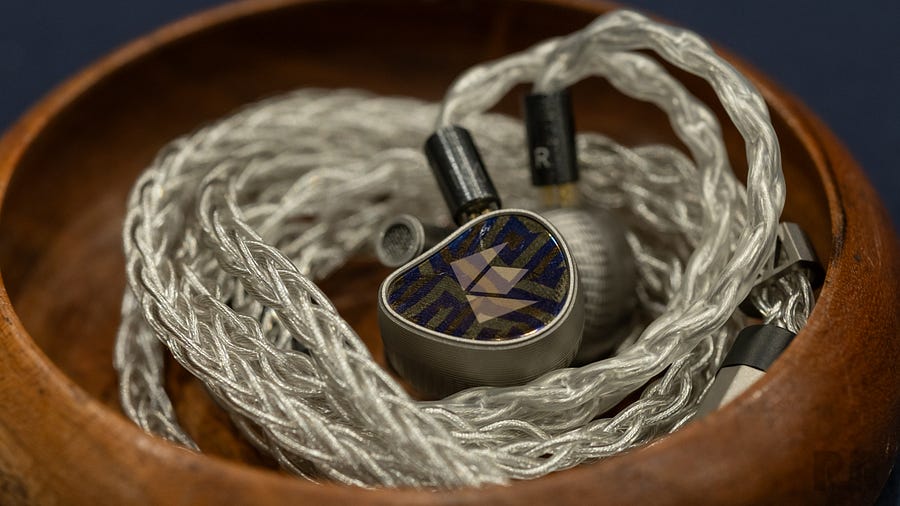
Kronos is an IEM I first heard at E-Earphone in Akihabara, and I fell in love with it. From its shells to its cable to its sonic performance, there’s not much you could even nitpick with it. The Kronos embodies the “we know what we are doing” vibe, projecting a wildly refined V-shaped sound with confidence and precision. Its treble is bright and breathy but only rarely steps over the line of comfort. Texture and transparency are fantastic on the Kronos’s upper register, and there are few IEMs that give you this much energy while retaining tonal cohesion. The Kronos’s mids are on the cool side, but they’re backed up by incredible resolution and a healthy bass response, lending it much-needed contrast. The Kronos cleanly earns a spot in my “TOTL hall of greatness” alongside other heavy-hitters like the VE10, Volur, and Moses.
Vision Ears PHöNIX Final Edition — $4,899
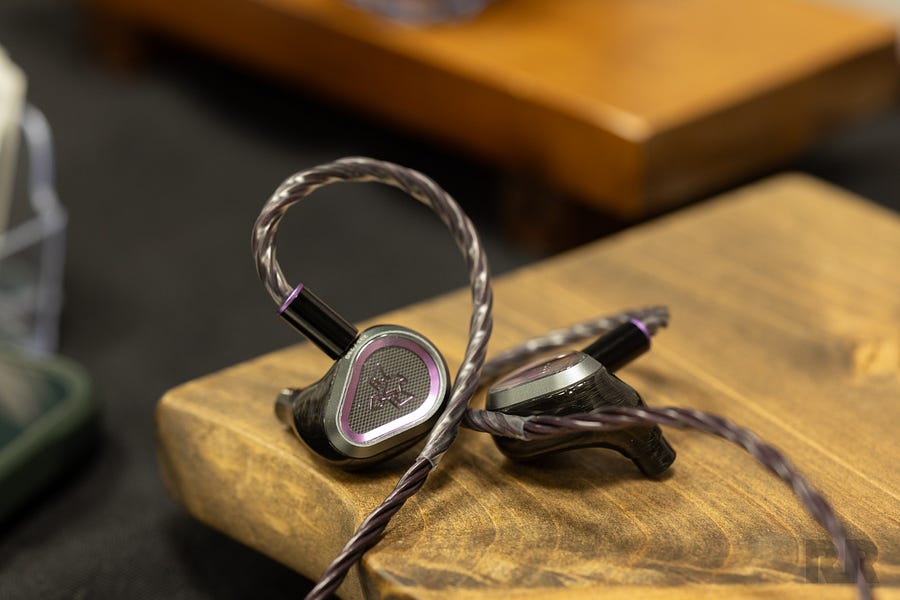
I’ve raved about the VE10 on multiple occasions. I still consider it to be one of the most engaging V-shaped IEMs I’ve heard to date, despite it recently being killed off. Vision Ears has shifted its focus to the PHöNIX Final Edition, putting the final garnish on a long and storied series of flagship IEMs. I didn’t much care for the previous iterations of the VE PHöNIX, owing to their sharp treble presentations, but the wicked-looking material Vision Ears used for the Final Edition’s shells convinced me to at least give it a listen. And yes, the PHöNIX Final Edition is an impressive IEM: big, broad V-shaped sound backed by incredible precision and technical acumen. But my issue, sharp treble, remains. That’s a deal-killer, as I cannot listen comfortably at reasonable volumes, defeating the purpose of listening at all. Maybe there’s some secret trick I can use to address this issue, but I’ve yet to discover it. Until then, my focus will lie elsewhere.
IEMs With Pricing Not Yet Announced
DUNU Noctua (Best in Show)
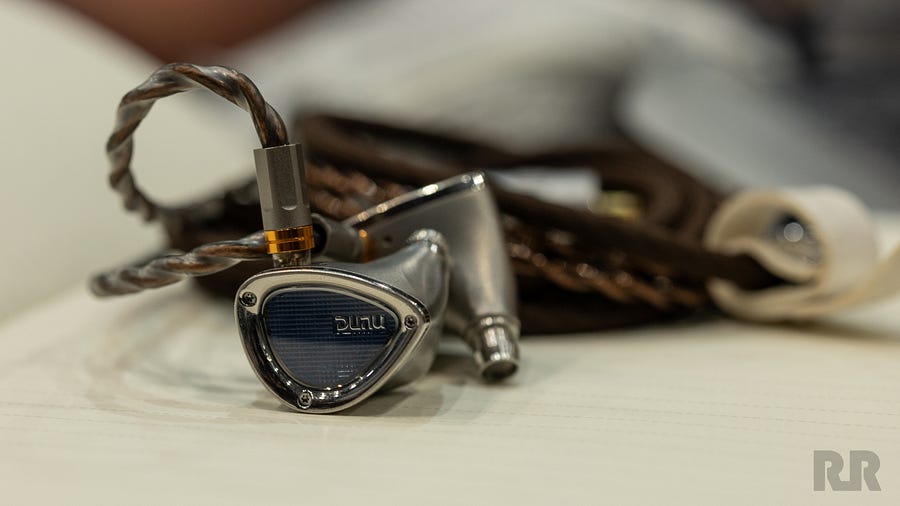
I’ve written about the Glacier twice now, and while I think it’s a pretty interesting IEM, I find its particular brand of V-shaped tuning to be on the tiring side. The Noctua feels much more up my alley, delivering a true “flagship” reference-inspired tuning. This is a very different style compared to the PRS6, as it feels much more mid-forward. The Noctua’s V-shaped, perhaps W-shaped, frequency response is addictive and gets better the longer you listen. Its bass is slightly lifted, delivering highly textured bass notes without being commandeering. Traditional V-shaped tuning has much more bass, but this tamer approach works well nonetheless. Everything from the top of the upper treble to the depths of the sub-bass is high-res on the Noctua, and it truly feels like you’re getting a special rendition of each track. This is one of the TOTL IEMs on my radar for the end of 2026, and I’m keenly watching DUNU’s social media for more launch details.
EPZ EST Prototype
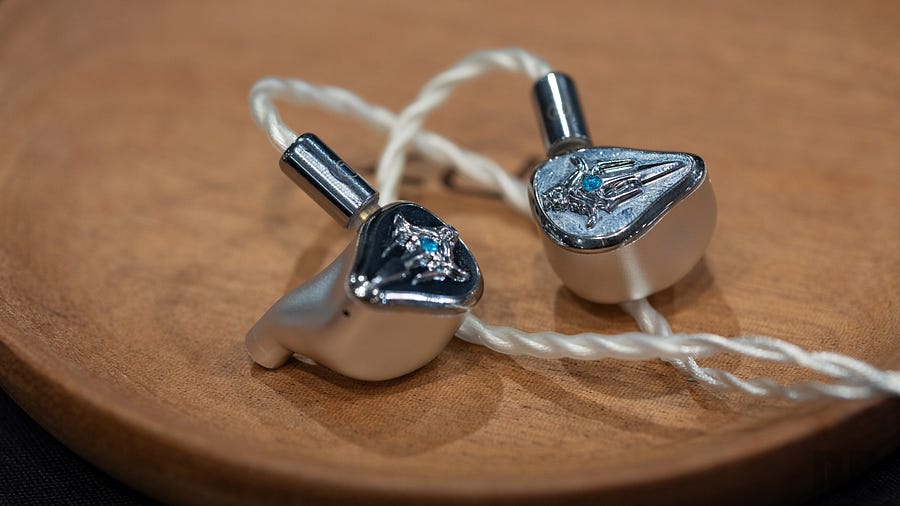
I don’t recall the name of this prototype, but its shells are sweet. Solid, unadorned aluminum with polished faceplates, this was the most comfortable IEM I tested at the EPZ table. I didn’t catch the full driver setup for it, but I did hear that it has an EST in it. Its sound signature is gently V-shaped, with plenty of lower treble emphasis and an inoffensive, careful upper treble lift. There’s zero sharpness or sibilance in this IEM’s upper register, which is a major plus for more-sensitive ears like mine. Treble resolution is crazy, and this IEM pulls details into the mix that I often only hear on very high-end IEMs. The mids are on the cooler side, and the bass region is pretty tame, but with a bit of EQ in the 10–150 Hz region, the drivers wake up. I added a pretty significant 3 dB in my music app’s 10-band EQ and it transformed the IEM’s presentation. Big, bold punches and tightly controlled rumble became the norm rather than the exception in EDM, and there was no hint of blur or messiness. This tells me that whatever drivers are in here have tons of available headroom, and that’s pretty exciting to say the least.
FlipEars Astra
The Astra is an interesting IEM, but one that doesn’t agree with me. It features a U-shaped frequency response that pushes treble elements too far forward, ultimately sounding tinny and overwound. Its mids are quite cool and sound somewhat unnatural, especially when listening to harmonically complex instrumentation. If you’re a fan of meta IEMs, you may like the Astra, but to me it seems like a much more expensive Kiwi Ears Astral, which isn’t something I’m too interested in.
Hidizs always has a bunch of stuff to show off, and this year is no exception. I recently covered the MP145 Pro, MyLin, AP80 Pro Max, and AP30, so take a look at those reviews for my thoughts on them.
Hidizs MK11
This is a pretty standard 1x DD IEM. It is cohesive, warm, expressive, and smooth. There’s a surprising amount of resolution in its treble, despite its upper register sounding fairly relaxed. That said, this is still ultimately a budget-friendly single DD IEM and it comes with the common performance constraints you’d imagine. Complex tracks can overwhelm the MK11, and it often smudges finer textures.
Hidizs MK12L

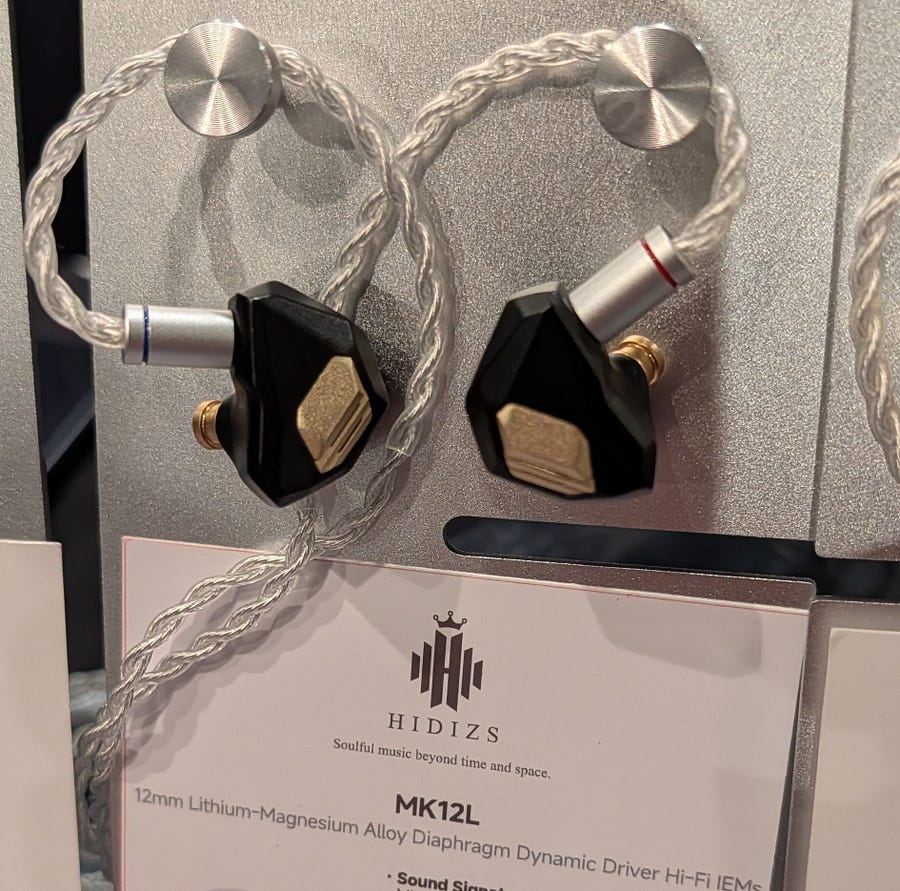
The MK12L is the final new 1x DD IEM from Hidizs, and is my least favorite of the bunch. It does feature metal shells, but isn’t particularly tuned to my preferences. It has a mild U-shaped frequency response, but features grain in the upper register and subtle bloom in the lower. The MK12L’s treble can also sound a bit stiff and overwound, giving it an artificial timbre. Not my favorite IEM, and in a market with lots of great 1x DD options, I’m not sure where the MK12L stands.
Hidizs MK15

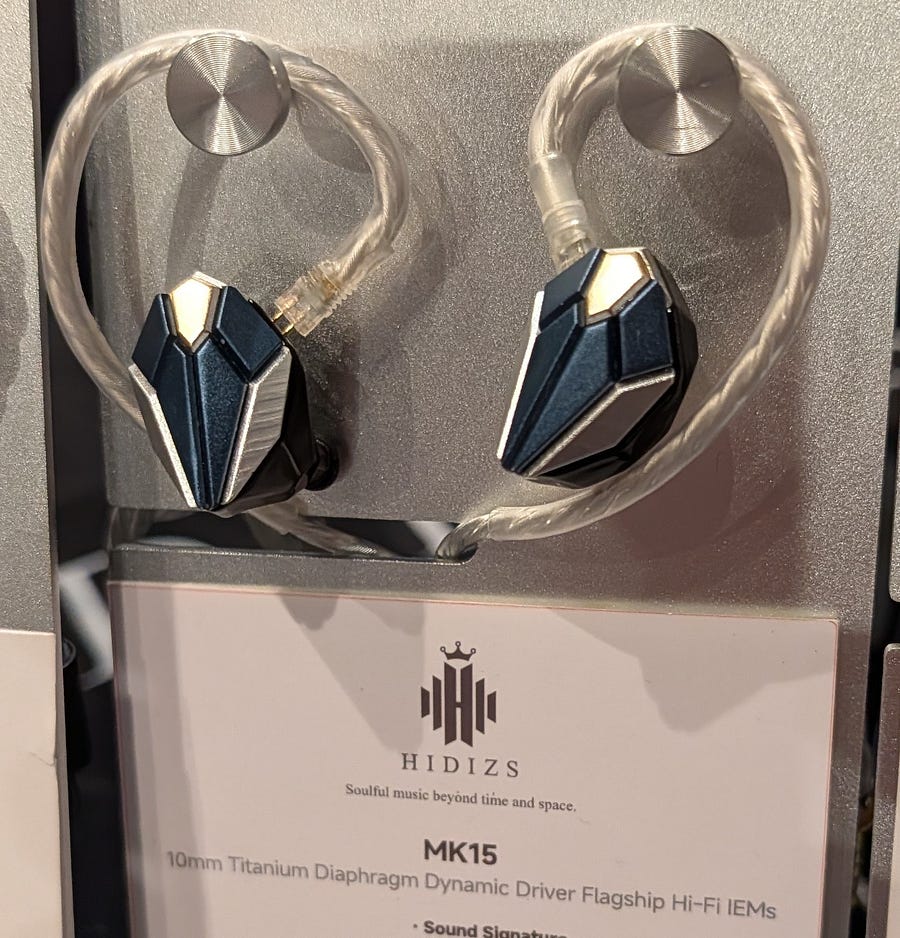
Like the MK11, the MK15 is a single DD IEM. It has an interesting metal faceplate, but has cheap-feeling plastic shells and nozzles. It follows a traditional V-shaped tuning. Forward bass, a recessed and cool midrange, and bright treble. The MK15’s upper treble has a subtle grain to it, but it still renders hi-hats and cymbals well. While I’m not thrilled with the MK15’s build, I’m sure its tuning will have a degree of broad appeal.
Hidizs MS10 Pro

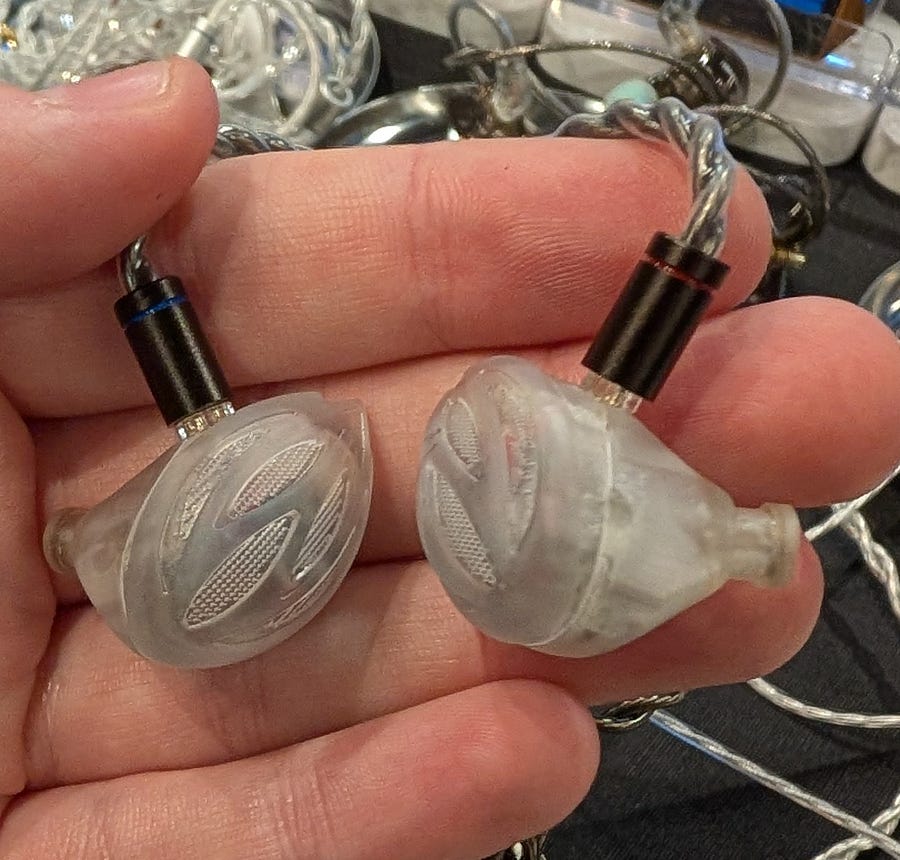
I was able to get a much better seal with the MS10 Pro. It features more drivers and a wider selection of driver types compared to the MS4 Pro but feels a little smaller in the hand. Sonically, the MS10 Pro is much more relaxed than the MS4 Pro, possessing a much greater degree of balance and tonal nuance. The MS10 Pro’s treble is lifted a little beyond its reference-style mids, giving it air, transparency, and excellent transients. The MS10 Pro feels like a true flagship, which Hidizs has historically lacked. If you’re looking for a point of reference for what might sound like the MS10 Pro, think NiceHCK Rockies with a moderate increase in bass emphasis.
Hidizs MS4 Pro

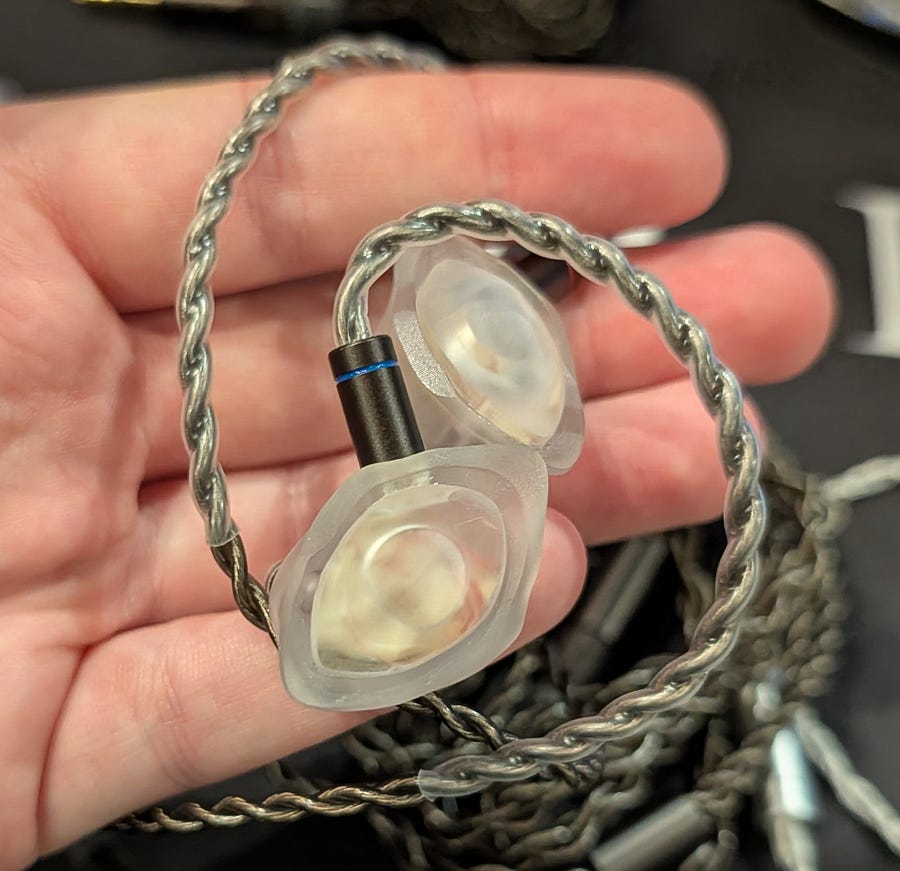
As a disclaimer, I struggled to get a good fit with these plastic test shells, and I ended up resorting to using undersized foam eartips to get some semblance of a seal. This almost certainly affected my perception of the sound, so take that into account.
The MS4 Pro is a tribrid IEM from Hidizs featuring a meaty, broad sound signature. It has smooth, lively vocals with moderate overall vocal clarity and rich timbre. It features an EST-based upper register that renders treble elements with precision and air, but it feels just a bit disjointed. The MS4 Pro’s bottom end is warm and forward but exhibits a small degree of bloom.
Kiwi Ears Ember
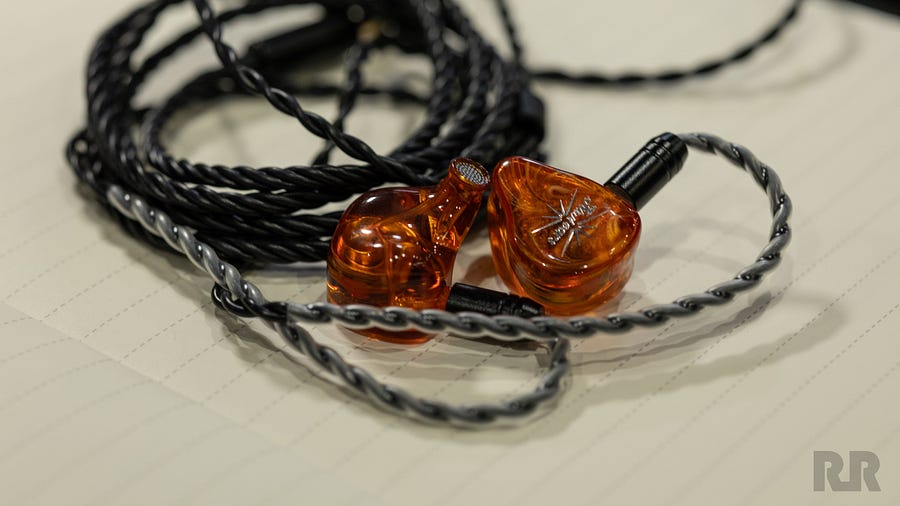
The Ember is V-shaped with a bright, though well-behaved, treble. It has a relaxed midrange and renders vocals more towards the middle of the mix. The Ember’s bass is likewise relaxed and unimposing. In all, I feel that the Ember lacks engagement, ultimately feeling like a cut-down KE4 Mk II rather than a proper “new” IEM. I’ll probably skip this one, as it doesn’t do anything particularly interesting.
Kiwi Ears KE4 Mk II

I’ve always liked the original KE4’s take on reference-style tuning, and the KE4 Mk II iterates on it nicely. While I’m not certain if this is the final shell design (and cable) for the KE4 Mk II, I was told that voicing is complete, and honestly, I think they did an outstanding job. A smooth, tonally neutral presentation with an emphasis on comfort and long-term listening, the KE4 Mk II is just engaging enough to keep me listening without fatigue. In a show filled with aggressive EST and MEMS tweeters, the KE4 Mk II’s more reasonable upper register was a nice refuge for my tired, sensitive eardrums. In short, the KE4 Mk II is resolving, organic, and cohesive without resorting to cheap tuning tricks or dramatic peaks. I’m a fan.
The Bottom Line
If there was one major takeaway from CanJam SoCal 2026, it’s that the wired IEM market has absolutely no intention of slowing down. The sheer variety of driver technologies, tuning philosophies, and prices on display was almost absurd, and the performance gap between affordable models and the established high-end continues to shrink.
Some of the biggest surprises were not the most expensive IEMs in the room. The Effect Audio Perseus was one of my favorite discoveries of the show, while the FlipEars Aisha Electri and Ice Lab Lumira delivered compelling performance without wandering into four-figure territory. DUNU’s Noctua was another standout and one of the high-end models I most want to hear again once the production version and final pricing are announced.
At the other end of the spectrum, spending several thousand dollars no longer guarantees that an IEM will be more engaging or even more convincing. The Hercules Audio Moses and Campfire Audio Clara remain examples of what can happen when expensive driver arrays and sophisticated tuning actually come together, while the Noble Audio Kronos also reinforced why it belongs among the better flagships I’ve heard. But there were disappointments. The Noble Iris did little for me at its price, the Agis II left me missing the Spartacus, and the Vision Ears PHöNIX Final Edition still has more treble energy than I can comfortably tolerate. The technically impressive 64 Audio Ocean also failed to displace the less expensive Volur as my favorite from the company.
That may be the most interesting thing happening in high-end wired IEMs right now. Manufacturers have access to increasingly exotic combinations of dynamic, balanced-armature, electrostatic, planar, MEMS, and bone-conduction drivers, but throwing more technology inside a shell does not automatically produce better sonic performance. Integration and tuning remain considerably more important than the number of drivers on the spec sheet.
And that is probably good news for everyone who doesn’t have $4,000 to $8,000 burning a hole in their pocket. The very top of the IEM market has become increasingly extravagant, but some of the most interesting products at CanJam SoCal 2026 were considerably more affordable. High-end wired IEMs have never offered more choices, but they have also never made it clearer that price and enjoyment are not the same thing.
You must be logged in to post a comment Login