Internal battery firewall stops overheating before fires begin during failure conditions
Ampere-hour sodium-ion cells demonstrate complete suppression of thermal runaway reactions
Three-part safety system improves stability without reducing energy output performance
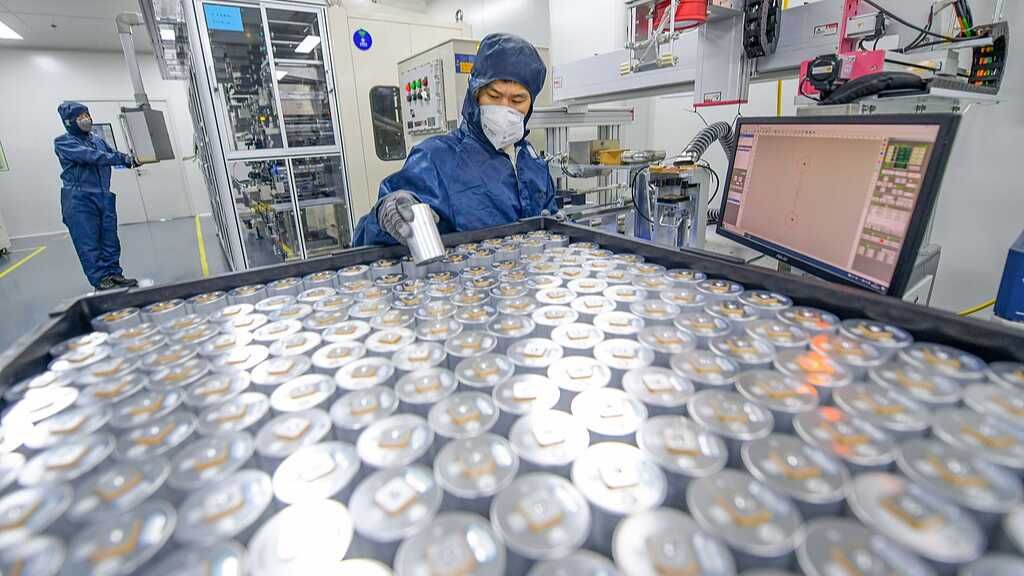
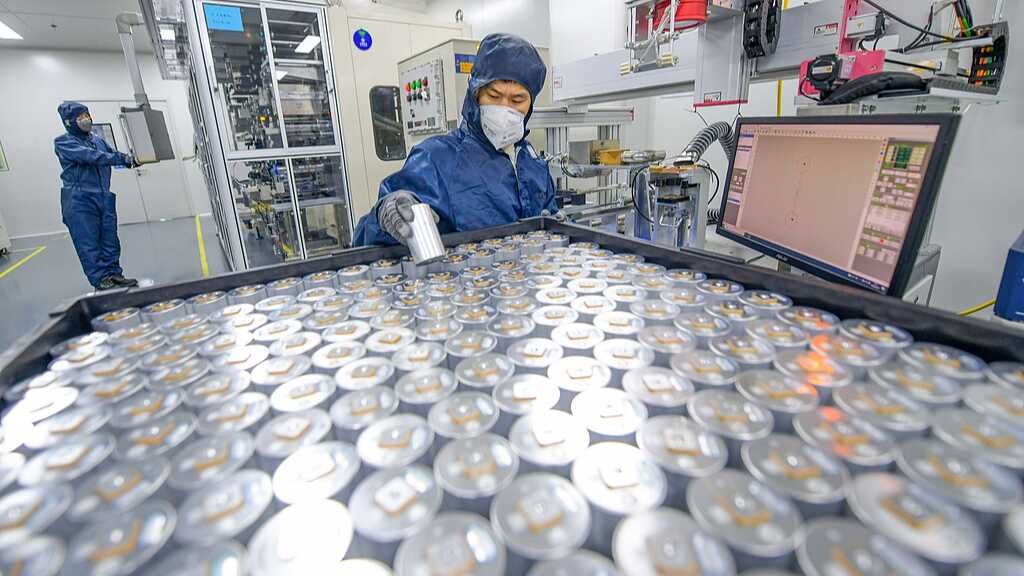
One of the biggest risks in modern batteries is overheating which can lead to fires, but scientists at the Chinese Academy of Sciences (CAS) claim to have developed a sodium-ion battery material that forms a solid internal barrier when temperatures rise, stopping fires before they begin.
The dangerous chain reaction it addresses is known as thermal runaway, and it happens when heat inside a battery builds faster than it can escape. Once it starts, temperatures rise quickly and can lead to gas release, fire, or explosions.
That failure mode remains one of the biggest safety concerns for electric vehicles and grid-scale storage systems. Preventing the reaction entirely, rather than trying to contain it afterward, has been a major goal for battery developers.
Article continues below
Advertisement
A three-part structure
Electric vehicles are often compared with internal combustion engine (ICE) vehicles, which carry gasoline that can ignite if damaged. A battery that stops overheating before it spreads could reduce fire risk.
The Chinese research team built what it calls a polymerizable non-flammable electrolyte, or PNE. This liquid changes into a dense solid when temperatures exceed about 302°F (150°C).
Advertisement
That transformation creates an internal layer that blocks heat movement between battery components. In other words, the battery builds its own firewall at the moment overheating starts.
Researchers described the chemistry behind the system in their work published in Nature. “Here we propose a polymerizable and non-flammable electrolyte, which leverages the synergistic anion-cation solvation effect and undergoes thermally triggered polymerization,” they said.
Sign up to the TechRadar Pro newsletter to get all the top news, opinion, features and guidance your business needs to succeed!
The safety design works as a three-part structure that supports thermal stability, interface stability, and physical separation inside the battery. Each layer plays a role in preventing reactions from spreading once temperatures build.
Advertisement
Testing was carried out using a 3.5Ah cylindrical sodium-ion battery, a capacity considered meaningful beyond small laboratory samples.
The researchers reported that this marked the first demonstration of complete thermal runaway suppression in ampere-hour-scale sodium-ion cells.
During nail penetration testing, the method typically used to simulate internal short circuits, the battery produced no smoke, fire, or explosion. The cell also remained stable at temperatures reaching 572°F (300°C).
Advertisement
Researchers reported that safety gains did not reduce performance levels either. The battery achieved an energy density of 211Wh/kg, placing it within the expected range for advanced sodium-ion systems.
Reliable operation was recorded across temperatures from -40°F to 140°F, covering conditions from deep winter to extreme summer heat. Voltage stability above 4.3V was also maintained during testing.
The researchers say the materials used in the system are already common in industrial production, which could simplify scaling should the technology reach the commercial manufacturing stage.
After achieving an 8.5 out of 10 repairability score, the Pixel 10a is one of the most serviceable mid-range smartphones currently on the market.
Following a teardown of the handset, PBKreviews awarded the Pixel 10a maximum marks in three of five repairability categories: finding replacement parts, replacing the screen, and replacing the battery.
This strong repairability result is a big win for the Pixel 10a, especially when considering its £/$499 RRP, as many rivals in the same price range score significantly lower. With this in mind, consumers could be more likely to opt for a Pixel 10a and seek out repair options, rather than buying replacements.
A rubberised mesh gasket protects the speaker from water ingress, a design detail that contributes to the phone’s IP68 water resistance credentials while keeping the internal layout accessible enough to avoid significantly complicating disassembly during repair procedures.
Advertisement
The teardown process also requires a hair dryer or heat gun to loosen the adhesive securing the back plate which although is a common approach among mid-range smartphones, this does add a step that less experienced users may find challenging without the right tools.
Advertisement
However, the Pixel 10a does lose ground in one area, with the USB port soldered directly onto the mainboard proving the trickiest fix in the entire teardown. This is an issue because soldered ports typically require mainboard-level replacement rather than a straightforward component swap, a limitation that offsets some of the accessibility gains elsewhere in the internal layout.
The internal organisation and time required for repairs sit in a middle ground, with the overall layout considered enough to avoid major disassembly headaches but not streamlined enough to match the simplicity of the battery and screen replacement processes.
The Pixel 10a officially launched in March, with an RRP of £/$499 for the 128GB model and £/$599 for the 256GB variant, both with 8GB of RAM.
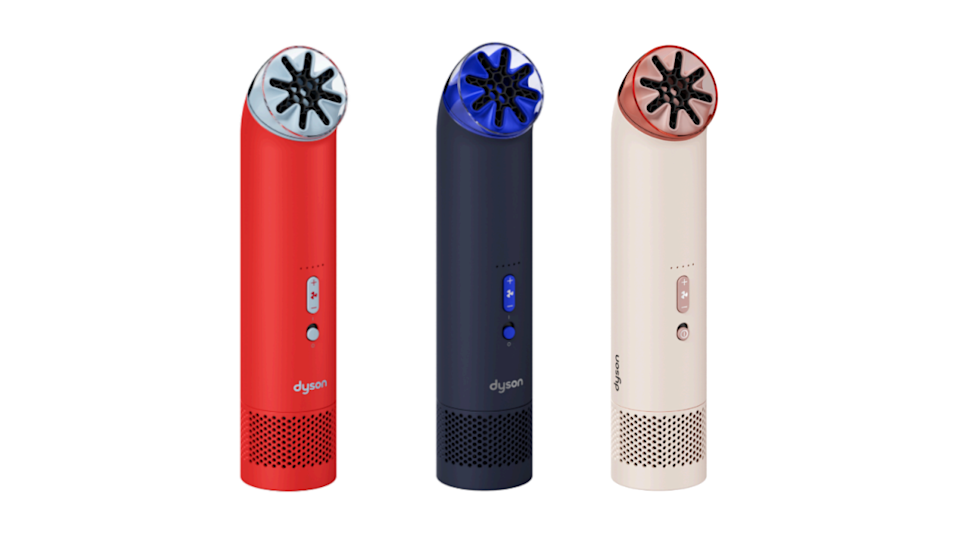
Dyson just announced its first-ever handheld fan, the HushJet Mini Cool. As the name suggests, it uses the company’s proprietary HushJet air projection system. This tech first showed up on an air purifier that .
Dyson promises the fan can deliver focused airflow of up to 25m/s, which works out to 55mph. The brushless motor spins up to 65,000 RPM. This thing looks like a legitimate cooling system, despite its size. It also weighs just 7.5 ounces.
It offers five speeds and a boost mode, which should be useful during that next heat wave. It charges via USB-C and ships with a charging stand. The fan can also stand on its own, making it a decent choice for a desk. The rechargeable battery can get up to six hours of use per charge.
Dyson
The HushJet Mini Cool costs $100, which is cheap for a Dyson product but expensive for a handheld fan. It’s available in a trio of colorways. The gray model is available tomorrow. The red version goes on sale this May and the blue one will be available for purchase in June.
The courts keep pounding the nails home. What this government is engaged in is illegal, on multiple levels. If you subtract the pro-MAGA Fifth Circuit and 6/9ths of the Supreme Court, you have a judicial quorum that says rights are still rights, despite this administration’s claims otherwise.
DHS has issued memos claiming (without facts or law in evidence) that officers can arrest people and enter homes without signed judicial warrants. This has always been false. And it’s not edging any closer to the truth no matter what this administration might say in Truth Social posts and/or court filings.
The administration is losing repeatedly in its bigoted war on non-whites. But it never accepts obvious defeat. It always heads back to court, full of steam and bullshit. And, in most cases, its losses are even more obvious the second time around.
A federal judge in California found on Wednesday that U.S. Customs and Border Protection officials had violated a previous order regarding warrantless arrests, and ordered agents operating in her judicial district to fully document their reasons for making any future stops.
The judge, Jennifer L. Thurston of the Federal District Court for the Eastern District of California, had previously found that immigration operations in Kern County, Calif., appeared to have been based on racial profiling, with agents making arrests when people they stopped could not produce proof of citizenship on the spot. Last year, she restricted the agency from continuing to carry out random immigration sweeps in the region, citing a “pattern and practice of agents performing detentive stops without reasonable suspicion.”
Advertisement
On Wednesday, Judge Thurston found that border agents appeared to have violated that order when they carried out an immigration sweep last year in a Home Depot parking lot in Sacramento.
The opinion [PDF] doesn’t cut corners or grant Trump’s DOJ more respect than it has earned. (It’s running in the red at the moment.) Multiple people who were arrested following a “targeted” operation, that saws mostly involved federal officers waiting in a Home Depot parking lot in hopes of rounding up day laborers, sued the government. The government has already lost once. This order clearly explains why the government is losing twice. Pretending conjecture is the same thing as established facts does nothing more than inform the court that you suck at your job.
The surveillance two days earlier somewhat contributes to understanding the statistical relationship, revealing that on one prior occasion, two out of a group of 20 individuals gathered in that location were noncitizens (roughly 10%). Yet, that statistic, which leaves the remaining 90% of the group unclassified, does little to dispel the concern that seeking work as a day laborer may be “[a] characteristic common to both legal and illegal immigrants.” See Manzo-Jurado, 457 F.3d at 937. Nor does it demonstrate that the Home Depot parking lot is used “predominantly” by noncitizens seeking day labor work.33 See id. at 936. Rather, the present record reveals little more than that the Home Depot parking lot is “a location . . . frequented by illegal immigrants, but also by many legal residents, [which] is not significantly probative to an assessment of reasonable suspicion.”
Yep. Fuck your “Kavanaugh stops.” Probable cause has never been “wow, they look kinda Mexican.” Hanging around places where you have a [checks government’s claims in support of its actions] 10% chance of catching illegal immigrants isn’t “probable.” It’s an inadvertent admission that you might be wrong 90% of the time.
The upshot of the ruling is this: The government needs to provide individualized reasonable suspicion, if not actual probable cause, to arrest migrants in California. The court does grant some concessions this DOJ definitely hasn’t earned, but at least it adds some guardrails:
Advertisement
The Court declines to preclude Defendants from using “boilerplate” when documenting stops and/or arrests pursuant to the PI Order and this clarification. However, Defendants are cautioned that copy and paste language may give rise to an inference that an individualized assessment was not made.
In short, if the government wants to claim its anti-migrant arrests are supported by reasonable suspicion and/or probable cause, it needs to show its work. And if the only work it can show has been cribbed from other cases, it should expect its overtures to be rejected by the court.
While this may not seem like much, it is at least worth the paper it’s printed on. The Trump administration seems incapable of flooding the zone at this point. It ran out of energy (and personnel) barely over a year into its unexpected resurrection. The DOJ no longer has enough lawyers to do everything the administration demands of it, much less press the dubious “but I’m a king tho” assertions Trump seems to feel it should be doing day in and day out.
Running a fast-break offense and a bet-you-miss defense only works until it doesn’t. The courts are delivering a counter-flood and the DOJ doesn’t have enough loyalists left to overpower the full-court press. The administration is headed towards an institutional collapse because whatever can be considered the “center” of this whirlpool of bigoted fuckwits will never hold. We’ll take every win we can get until we can finally celebrate the demise of a president who seems to think he’s the King George incarnation that makes his voter base so erect it will vote against its own interests.
from the this-is-why-we-can’t-have-nice-things dept
There’s a meaningful push afoot to implement statewide “right to repair” laws that try to make it cheaper, easier, and environmentally friendlier for you to repair the technology you own. Unfortunately, while all fifty states have at least flirted with the idea, only Massachusetts, New York, Texas, Minnesota, Colorado, California, Oregon, and Washington have actually passed laws.
Passage can be a challenge due to the relentless lobbying of numerous industries that very much enjoy a monopoly over repair (especially tech and auto). New York State’s law, for example, was watered down by NY Governor Kathy Hochul after passage because tech companies didn’t like it.
The same thing is afoot in Colorado, where tech companies are trying to neuter that state’s right to repair laws. Colorado’s assortment of laws, which first appeared in 2022, have implemented protections covering wheelchairs, agricultural farming equipment, and consumer electronics, making it easier for consumers in all those sectors to afford repairs and gain easier access to parts, manuals, and tools.
But tech companies like Cisco and IBM have pushed Colorado lawmakers to sign off on SB26-090, the Exempt Critical Infrastructure from Right to Repair law, which would neuter much of the protections under the pretense of making the public safer. As you might imagine, the companies’ are trying to use a definition of “critical infrastructure” that’s so large and vague as to render all the protections meaningless:
Advertisement
“I can point out at least five problems with the bill as drafted,” Gay Gordon-Byrne, the executive director at the Repair Association, said during the hearing. “The definition of critical infrastructure is completely inadequate. The definition that has been proposed in this bill is not even a definition.”
While tech company lobbyists have convinced the Colorado Labor and Technology committee to advance the bill, it still needs approval by the Colorado Senate and House, which may prove more difficult now that outlets like Ars Technica and Wired have shed a little light on the effort.
It’s worth pointing out that while eight states have now passed right to repair laws, none have actually enforced them despite numerous, ongoing infractions across countless industries. That’s something that’s going to need to change if state rhetoric on the subject is to be taken seriously.
A massive campaign impacting nearly 100 online stores using the Magento e-commerce platform hides credit card-stealing code in a pixel-sized Scalable Vector Graphics (SVG) image.
When clicking the checkout button, the victim is shown a convincing overlay that can validate card details and billing data.
The campaign was discovered by eCommerce security company Sansec, whose researchers believe that the attacker likely gained access by exploiting the PolyShell vulnerability disclosed in mid-March.
PolyShell impacts all Magento Open Source and Adobe Commerce stable version 2 installations, allowing unauthenticated code execution and account takeover.
Sansec warned that more than half of all vulnerable stores were targeted in PolyShell attacks, which in some cases deployed payment card skimmers using WebRTC for stealthy data exfiltration.
Advertisement
In the latest campaign, the researchers found that the malware is injected as a 1×1-pixel SVG element with an ‘onload’ handler into the target website’s HTML.
“The onload handler contains the entire skimmer payload, base64-encoded inside an atob() call and executed via setTimeout,” Sansec explains.
“This technique avoids creating external script references that security scanners typically flag. The entire malware lives inline, encoded as a single string attribute.”
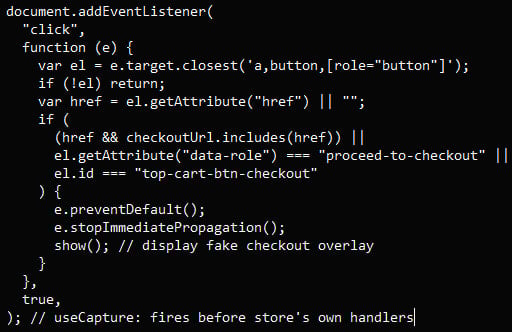
When unsuspecting buyers click checkout on compromised stores, a malicious script intercepts the click and displays a fake “Secure Checkout” overlay that includes card details fields and a billing form.
Advertisement
Payment data submitted on this page is validated in real time using the Luhn verification and exfiltrated to the attacker in an XOR-encrypted, base64-obfuscated JSON format.
Decoded payload Source: Sansec
Sansec identified six exfiltration domains, all hosted at IncogNet LLC (AS40663) in the Netherlands, and each getting data from 10 to 15 confirmed victims.
To protect against this campaign, Sansec recommends the following:
Look for hidden SVG tags with an onload attribute using atob() and remove them from your site files
Check if the _mgx_cv key exists in browser localStorage, as this indicates payment data may have been stolen
Monitor and block requests to /fb_metrics.php or any unfamiliar analytics-like domains
Block all traffic to the IP address 23.137.249.67 and associated domains
As of writing, Adobe has still not released a security update to address the PolyShell flaw in production versions of Magento. The vendor has only made a fix available in the pre-release version 2.4.9-alpha3+.
Also, Adobe has not responded to our repeated requests for a comment on the topic.
Website owners/admins are advised to apply all available mitigations and, if possible, upgrade Magento to the latest beta release.
Advertisement
Automated pentesting proves the path exists. BAS proves whether your controls stop it. Most teams run one without the other.
This whitepaper maps six validation surfaces, shows where coverage ends, and provides practitioners with three diagnostic questions for any tool evaluation.
Garmin has added fertility tracking to many of its best wearables
The feature comes via a partnership with Natural Cycles
It’s coming to the Fenix 8, Forerunner 570, Venu 4, and more
The best Garmin smartwatches are more than just fitness trackers these days — they can help you get a clearer picture of your overall health, with many metrics that extend well beyond exercise. That’s just been expanded further with the introduction of fertility tracking, which is bound for Garmin users thanks to a collaboration with Natural Cycles.
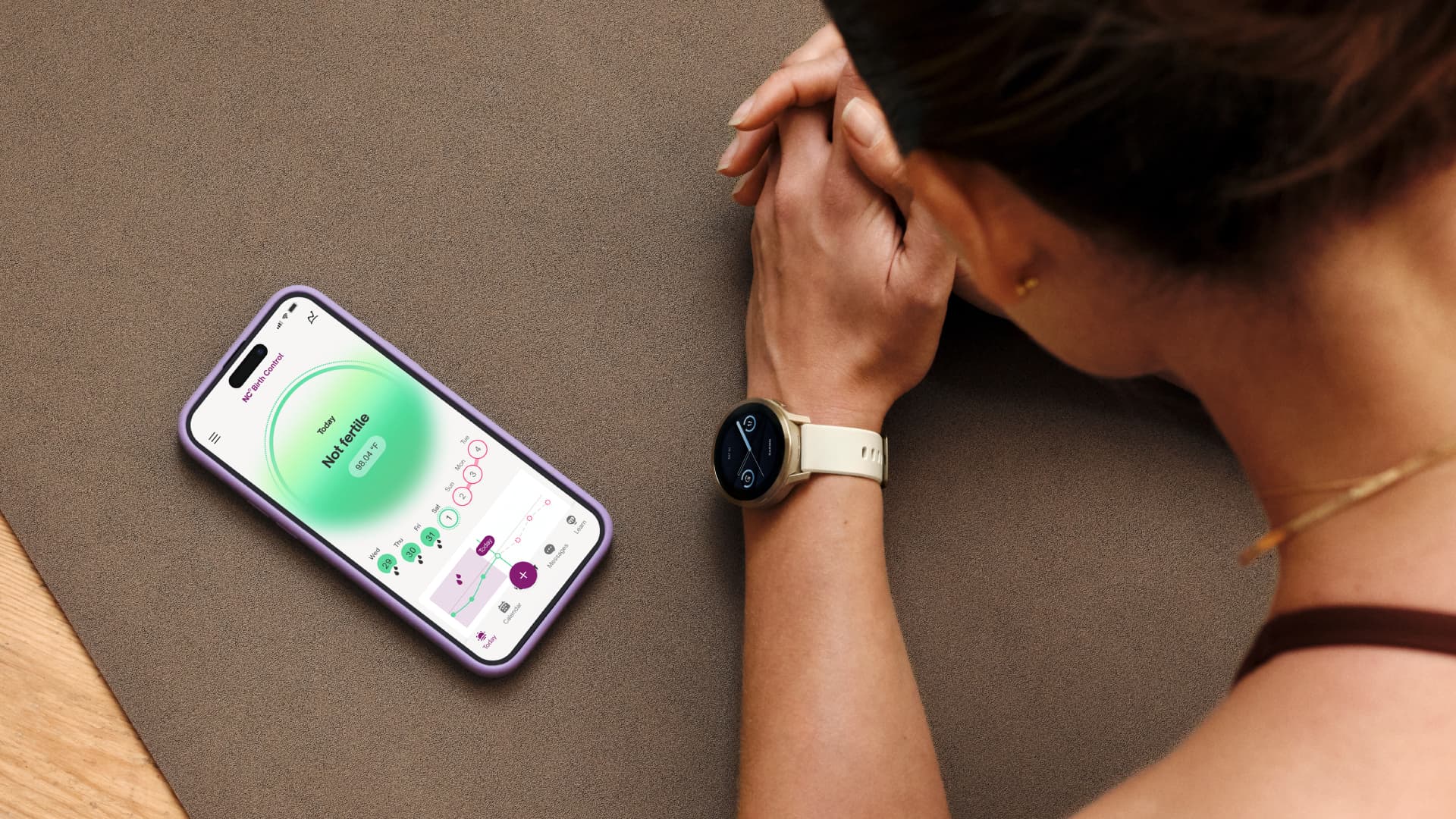
If you haven’t heard of Natural Cycles, it is currently the only birth control app cleared by the FDA. That means it’s well placed to enable cycle tracking on Garmin wearables and make understanding your fertility a little easier.
The new feature is coming to many of Garmin’s most popular watches, including the Fenix 8, Forerunner 570, Venu 4, and Venu X1. It should therefore be available to a wide variety of Garmin’s customers.
Article continues below
Advertisement
It works by measuring your skin temperature and then uses that reading to “unlock fertility insights in the Natural Cycles app,” Garmin says. This empowers users to “better understand their reproductive health.” Your temperature is tracked overnight, with information synced to the Natural Cycles app in the morning.
Plan or prevent a pregnancy
(Image credit: Garmin / Natural Cycles)
One of the benefits of using a smartwatch to track your fertility is that it is simple and non-invasive. There’s no need for any kind of hormone-based treatment or complex procedure, just a few metrics that can be gathered from your wrist.
Advertisement
Garmin is not the first nor the only company to have added fertility features to its wearables. Rivals, including Apple, Whoop, Fitbit, and more, also offer some kind of cycle tracking, meaning you’ve got a lot of options if you want this kind of functionality on your wrist.
The cycle-tracking features from Garmin and Natural Cycles aren’t available everywhere just yet. Garmin says it’s currently available in Australia, Brazil, Canada, the European Union, Norway, Singapore, Switzerland, the United Kingdom, and the United States. There’s no word yet on when it might be rolled out elsewhere.
Sign up for breaking news, reviews, opinion, top tech deals, and more.
But for now, it’s a welcome improvement to Garmin’s wearables and one that could help you keep track of a vital part of your life.
Our pets can’t speak up and tell us how they’re feeling, or why and where they are hiding. Tractive, an Austria- and Seattle-based tech company that creates GPS tracking devices for pets, announced on Wednesday two new smart collars that, according to the press release, “will redefine pet care for millions of families.”
Is your pet stressed, breathing unusually or scratching too much? Much like the basic health-tracking features you can find on a smartwatch, the collars — the Cat 6 Mini ($79) and Dog 6 XL ($89) — are designed to track this behavior and communicate the issues to help maintain your dog or cat’s quality of life.
“Pets can’t tell us when something is wrong, but their bodies can,” Michael Hurnaus, CEO and founder of Tractive, said in a statement. “With cutting-edge sensors on every tracker, learnings from millions of pets and AI-powered insights, we’re turning one of the world’s largest pet data platforms into clear, simple information so pet parents can act sooner and care even better.”
Advertisement
When it comes to tracking collars, dogs have usually been the target pet audience for such devices. Tractive’s new Cat 6 Mini collar aims to provide the same service for your feline friend. You can use it to monitor your cat’s respiratory rate and resting heart rate and identify any health concerns early. It’s expected to ship on May 31.
The Dog 6 XL collar, an upgrade from the company’s previous dog wearable, is designed for dogs weighing over 55 pounds. It’s more durable for outdoor use and offers up to four weeks of battery life between charges. It comes equipped with a scratch-monitoring system that flags unusual scratching behavior caused by allergies, skin irritants and other stressors.
You can also use the app to access your pet’s travels and mark safe zones regarding walks, entries and exits. An AI-powered health hub displays your pet’s overall health stats and also acts as a GPS tracker in case your dog or cat goes missing.
How would a veterinarian interact with the data collected on the device?
Advertisement
A Tractive representative told CNET, “In our experience, veterinarians are most interested in baseline resting heart and respiratory rate, so it’s less about monitoring these vitals in real time during recovery from anesthesia/acute care and more about understanding if the baseline is changing day to day to identify the onset of new conditions or manage existing ones.”
Even though the collars use a SIM card and require a strong cellular connection to work properly, they can capture activity, sleep and health data while offline. However, without connectivity, the devices “ultimately will not provide any utility,” the representative confirmed.
You’ll need to download the accompanying app and select a separate subscription plan at an added cost. The one-year plan costs $120, the two-year plan costs $168, and the five-year plan costs $300.
A $500,000 “Survivor”-style corporate retreat for 120 Plex employees in Honduras “turned into a week-long disaster involving illness, wild animals, armed guards, and employees stranded on a remote island,” reports the Daily Beast. The CEO was bedridden by E. coli, staff were collapsing in brutal heat during Navy SEAL-led drills, there were fire ant attacks, uncooked food, and failing utilities. At one point, a porcupine even crashed through the ceiling of a guest’s room. Here’s an excerpt from the report: Tech media company Plex flew its 120 employees to a Honduran resort in 2017 for what was billed as a Survivor-style getaway. They called it “Plexcon.” The first harbinger of trouble was an email that arrived before the group departed, informing them that the hotel manager and chef had both quit within days of each other. Things went sharply downhill from there.
CEO Keith Valory, 54, had flown out a day early, intending to channel his inner Jeff Probst and welcome his staff off the buses like a game show host. Instead, he spent the arrival morning flat on his back. “I got E. coli, which is maybe the worst thing you could get, possibly, ever,” Valory told the Wall Street Journal this week. “Just as people were arriving on the buses, I was like, ‘Uh oh.’ I lost 8 or 10 pounds. They had a doctor come to me, which apparently is pretty standard. They nailed an IV bag to the bedpost.”
With the CEO incapacitated, chief product officer and co-founder Scott Olechowski, 52, stepped in to run proceedings — beginning with a forced eating challenge in which one employee had to consume a dead tarantula. […] Sean Hoff, 42, founder of Moniker Partners, the independent retreat agency that planned the trip, was running himself ragged attempting damage control — the showers, water, and electricity kept cutting out. […] Meanwhile, senior software engineer Rick Phillips, 53, was trying to sleep when he heard a crash in his room. He ignored it until morning. “I got up and went over to get in the shower, and there was a porcupine,” he said. “It must have climbed a tree and fallen through the ceiling.”
Farthest humans have ever traveled in space? Check.
First Black, woman, and Canadian astronauts to make it around the moon? Also check.
First time a toilet has made this journey? Big, important check.
Advertisement
Because while there are many significant questions about space — Is life out there? Could we settle Mars? How far does the universe stretch, really? — one question holds plenty of gravity: What happens when nature calls in space?
This mission hopes to return with answers.
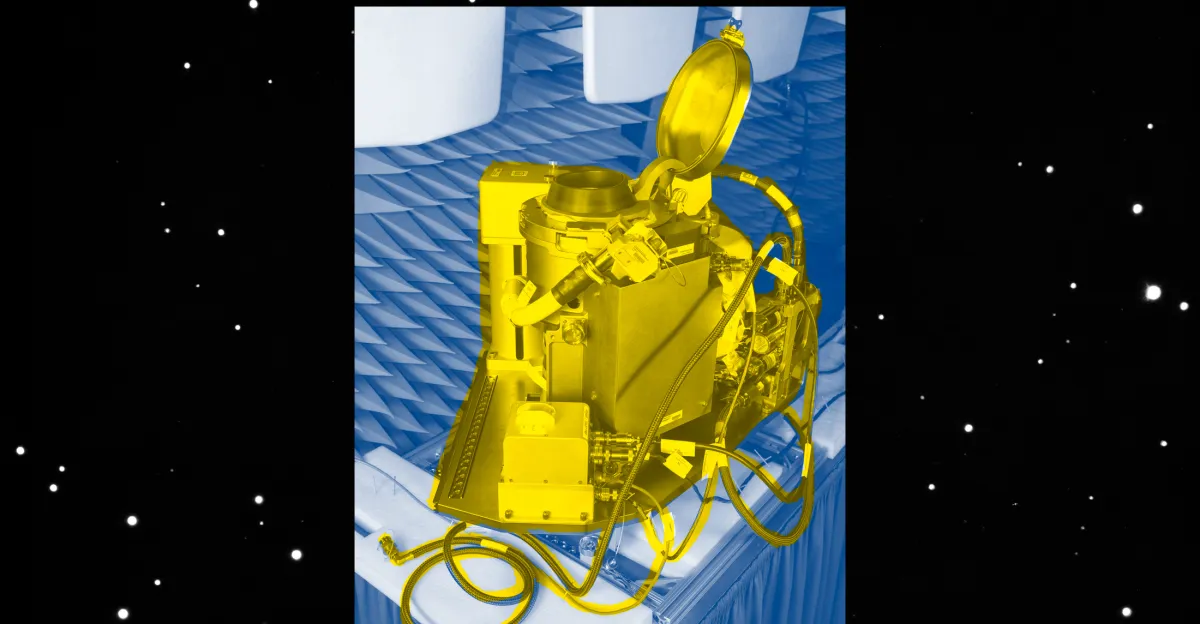
After years of research, the Orion spacecraft used in the Artemis II mission has departed Earth with an actual toilet, door and all.
In the initial hours after the Orion capsule launched, some of the first reports from the astronauts were about their toilet malfunctioning. They quickly fixed it. But, as they approached the moon, potty problems reigned again.
Advertisement
“If you’re going to do longer missions and eventually potentially even have a base on the moon or go even further onto Mars, you first need to figure out: what are you going to be doing for food, for water, and also for peeing and pooping on the spacecraft and on the surface?” K.R. Callaway, a writer with Scientific American, told Today, Explained co-host Sean Rameswaram.
So the simple presence of a toilet on this mission?
“Definitely history-making,” she said.
To understand the significance, Sean sat down with Callaway to discuss the history and future of space toiletry. Below is an excerpt of their conversation, edited for length and clarity. There’s much more in the full podcast, so listen to Today, Explained wherever you get podcasts, including Apple Podcasts, Pandora, and Spotify.
Advertisement
Tell us about the history of using the facilities in space.
So back in the ’60s and ’70s, [the] Apollo [program] used these bags. They had different ones for peeing, different ones for pooping, but it was still essentially a bag that you would tape onto your body and just go. It obviously didn’t provide a lot of privacy. We aren’t talking like going into a room with a door and doing this; this was just done in the cabin, and it was not super user-friendly either.
They had a lot of issues with leaks. You know, it’s just an adhesive. It can become unstuck and in low gravity, that can be a big problem for particles escaping.
I had a lot of fun going through the Apollo mission transcripts and just looking at all of the ways that astronauts were describing this after use. They were pretty upset about it. During the Apollo 10 mission, they said, There’s a turd floating through the air.
Advertisement
So they had to wrangle that themselves. And even before that, they were having issues. During Apollo 8, there was another pretty notable mission where a crew member was ill. And so the other crew members were chasing down these blobs of both vomit and feces that were just floating wildly through the cabin.
And one of the astronauts you quote in your piece was Ken Mattingly, whose name people might be familiar with from the Apollo 13 mission and of course the Apollo 13 movie.
This was actually one of my favorite quotes that I came across while I was going through the mission transcripts. This is something that Ken Mattingly said on Apollo 16, which is that, “I used to want to be the first man to Mars. This has convinced me that if we got to go on Apollo, I ain’t interested.”
As in, this whole toilet situation is so insufferable, I maybe don’t really want to spend too much time in space anymore.
Advertisement
So NASA, I imagine, after all the Apollo missions, realizes it needs to advance this technology. How does it do so?
I spoke to Melissa McKinley over at NASA. She is the head of the Toilet Project — the Universal Waste Management System is their technical name, though I’ve been assured that just “toilet” is okay to say. And she mentioned that everything that’s happened from the ’60s and ’70s to now has really been a feat of engineering and design.
They’ve been able to implement a vacuum system that uses airflow to pull particles down instead of just having them float through space and relying on you to seal the bag yourself and keep everything in.
Help me picture what it looks like, because I’m guessing it does not look like any toilet in one of our homes.
Advertisement
More like an airplane toilet is how I would describe it.
The toilet has a seat and it has a funnel on the side for collecting urine and everyone gets their own separate piece to attach for the part that actually would touch your skin, luckily.
For the toilet itself, it’s pretty loud in there.
Astronauts have to wear hearing protection and they also have handles to hold on to because you’re working in no gravity or low gravity and you need a little bit of help to stay in the right position.
Advertisement
So these aren’t plastic bags anymore. Where’s this stuff going? Are we just shooting it out into space?
We are partially shooting it out into space. For urine, it is collected and then it’s going to be vented a couple of times. It’s going to be a controlled process, so it will be just a lot of liquid at once, but yeah, that is where the urine is going.
For poop, they are storing that on board and then it will be kept in an area of the spacecraft that will actually burn up upon reentry. It’s not coming back to Earth with them, but it is going to stay with them for a while.
And yet, all this testing, all this hype about this new toilet, and one of the first stories we get once the astronauts are up in Earth’s orbit is that something has gone wrong with the toilet! What happened?
Advertisement
Already the toilet has had a few issues. It’s kind of the equivalent of a plumbing issue, but for space.
When they were trying to use it on one of the early days of the mission, they found that there was an error. The issue ended up being with the fan that helps to get the airflow to help with the urine collection — kind of a big problem. And luckily with ground control support, [astronaut] Christina Koch was actually able to fix this almost immediately after it had happened.
The latest I heard over the weekend is that they had toilet trouble again, so maybe not the best plan to have your astronauts also be your plumbers. What’s the latest on this very expensive, very important toilet?
It did seem to break again over the weekend. From what the NASA people were saying, it seems like it’s the same problem again with the urine collection system. The engineers have looked into it a little bit more deeply and they think that it might be ice blocking the tube that would help fully collect the urine.
Advertisement
Astronauts have reported issues with that system collection and then also a smell coming from the toilet area. Definitely a problem that they say they’re going to just keep working on.
This whole toilet thing can feel inconsequential considering what we’re really doing up there in space: exploration, making history, trying to get to Mars one day, all the rest. Why is the toilet important?
One of NASA’s goals with this particular toilet is that it’s a modular design, which means that they can put it not just in the Artemis II capsule, but they can also put it in a lot of different space vehicles.
They could potentially even adapt it to be on a Mars mission and longer-term missions. They can adapt it so that they can do what the ISS does in terms of liquid recycling and make longer-term, more sustainable missions possible.
Advertisement
Even though it seems very mundane to us as something that you use every day, for being in space, it’s actually one of the key things that stands in the way of making space more homelike and more able to be a place where we can do longer-term science.
If you can’t figure out the facilities, you’re never gonna figure out Mars.
“The Scuba V3 punches above its weight-class with both outstanding performance and value”
Pros
Lightweight
Cleans well
Intuitive app
Cons
Will not clean the water surface
Mediocre battery life
Instant Insight
I have always maintained that owning a pool is like owning a boat – you will spend 90% of your time maintaining and cleaning it and 10% of your time enjoying it, especially if you live in Oregon as I do. Over the years, we have seen robot cleaners evolve from erratic, cord-tangled wall-bumpers to reliable vacuums, and technology keeps getting better, especially in the age of AI. Priced at $1,199 MSRP (with a street price currently around $970 USD), the Aiper Scuba V3 is not trying to be the cheapest impulse buy at the pool store, but instead, positions itself as a premium AI-driven assistant that brings sophisticated navigation of high-end robot vacuums to the bottom of your backyard oasis.
New for 2026, the Aiper Scuba V3 robotic pool cleaner has new AI features and more value, although it sacrifices some tech to offer such a good value. The Scuba V3 is currently priced between the top-of-the-line Scuba X1 Pro Max ($1699) and the Scuba X1 ($899.99), offering newer AI-focused features for just $70 more. The Scuba V3 is equipped with AI Vision and dToF(Direct Time of Flight) sensors, which give this pool cleaner more of an organized purpose than recklessly bouncing around the pool.
Ian Bell / Digital Trends
During my tests, the Scuba V3 proved to be a reliable, hardy worker with long battery life. If you already have a pool cleaner that is a few years old and working great, it’s not worth spending money on the Scuba V3, but if you are in the market, then I would recommend jumping into the pool cleaner ecosystem. Paired with the Aiper EcoSurfer S2 skimmer, both of these devices should do the job in keeping your pool spotlessly clean.
Aiper V3 Specifications:
Here is how the Aiper Scuba V3 measures up :
Advertisement
Specification
Details
Dimensions (L x W x H)
17.48 x 14.96 x 8.58 inches
Weight (Dry)
18.1 pounds
Suction Power
4,800 Gallons Per Hour (GPH)
Filtration Level
3-micron MicroMesh™ Multi-layer Filtration
Debris Basket Capacity
3.5 Liters
Battery Energy Content
149.76 Watt Hours (Lithium-ion)
Run Time
Up to 150 minutes per charge
Charging Time
5 Hours via Wireless Charging Dock
Navigation Technology
AI Patrol, dToF, VisionPath™ Adaptive Planning
Drive System
Tank treads with dual scrubbing brushes
Cleaning Zones
Floor, Walls, Waterline (JetAssist™)
Design and Weight: Like a paper tank
Like most pool cleaners on the market, the Scuba V3 uses a tank tread design to move the unit around. And like the rest of the products in the Aiper robot pool cleaner line-up, the casing is made up of a piano black finish that looks high-quality. Rather than the gold or carbon fiber surround found on the more expensive Aiper units, the V3 has some light blue trim, which would indicate more of a value virtue signal. Dimension-wise, the Scuba V3 is considerably smaller than the Scuba X1 or Scuba X1 Pro Max, which are not only taller, longer, and wider, but also considerably heavier.
I put some charts below that show the weight of the Scuba V3 compared to others in its price range – it comes in on the lighter side in the comparison (when not wet), which is nice for those who really have trouble pulling these cleaners out of their pool. Aiper sells a caddie to help you transport their pool cleaners to and from the pool, but would surmise that most people can skip the caddie, as the V3 is pretty light.
Ian Bell / Digital Trends
I found that the tank treads did a great job moving the V3 around my pool, and they stuck to the side of the pool without issue, despite a suction lower than that of higher-end models. Underneath, you have four scrubbing brushes – two in the front and two in the back – that do a good job agitating algae, mineral deposits, and debris before the suction kicks in. The debris is funneled into a newly designed 3.5-liter collection basket wrapped in a Micromesh filter.
The overall build quality feels premium; the plastics are thick, the moving parts feel solid, and there are no flimsy latches that feel destined to snap off after a single summer in the sun. I noted in my Beatbot Aquasense 2 Ultra review that they put extra screws and parts in the box, which is a clear sign to me that something is going to wear out.
The Aiper Scuba V3 is a thoughtful and rugged piece of engineering.
Ian Bell / Digital Trends
When you are dealing with robotic pool cleaners, dry weight directly correlates to user experience, specifically, how miserable it is to pull the machine out of the water once it has finished its cleaning cycle. Here is how the competitive landscape breaks down:
The Featherweights (Under 20 lbs): The Aiper Scuba V3 (18.1 lbs) and the Dolphin Liberty 400 (17.9 lbs) are the clear winners here. Aiper managed to pack the V3 with a complex AI vision system and heavy-duty tank treads without inflating its mass. It is incredibly easy to retrieve one-handed using the included hook. We also included the corded Dolphin Nautilus CC Plus (20.8 lbs) as a baseline to show that premium cordless tech doesn’t necessarily mean a heavier machine.
The Middleweights (23 to 25 lbs): The highly anticipated Beatbot Sora 70 (23.0 lbs) sits right in the middle of the pack. While it is about five pounds heavier than the Scuba V3, that extra weight is justified by its internal buoyancy chambers, which allow it to float up and clean the surface of the water (a feature the V3 lacks). The older Aiper Scuba S1 Pro (25.0 lbs) and Beatbot Aquasense Pro (24.3 lbs) also live in this tier, representing the maximum weight most users can comfortably lift without straining their backs.
The Heavyweight (30+ lbs): Aiper’s flagship model, the Scuba X1 Pro Max (33.1 lbs), is an absolute behemoth. While it offers a staggering 5-hour battery life and 8,500 GPH of suction, pulling 33 pounds of dead weight (plus trapped water) out of the deep end is a genuine physical workout.
Ian Bell / Digital Trends
Ultimately, the Scuba V3 strikes a near-perfect balance, offering premium AI navigation in a chassis light enough that anyone in the family can confidently deploy and retrieve it.
Navigation: The most important part of any robot cleaner
I get asked a lot about what makes these pool cleaners so much better than the other, and the answer is simple: Does it clean the pool to your satisfaction, and is it low maintenance? Sounds simple, but as you know, it’s not that easy. Pools come in a lot of shapes and depths, so to get a pool clean, you need a good brain to tell the cleaner how to navigate (and you need long battery life, too).
Advertisement
Powered by what Aiper calls its “Cognitive AI Navium Mode” and “VisionPath Adaptive Path Planning,” this robot uses an integrated underwater camera combined with dToF (Direct Time of Flight) optical sensors. Think of dToF as a form of laser radar; it sends out light pulses and measures how long they take to bounce back, creating a highly accurate 3D map of your pool’s interior. When you drop the Scuba V3 into the water, it doesn’t just wander. It assesses the shape of the pool, detects obstacles with its optical sensors, and plans a precise, overlapping, lawnmower-style route.
Ian Bell / Digital Trends
But the really cool trick is the “AI Patrol” mode. I actively tested this by tossing a handful of fine potting soil and a few sunken leaves into the deep end. The Scuba V3’s camera has a 2-meter detection range and is trained to recognize over 20 different types of debris. As it cruised nearby, I literally watched the robot alter its path, turn directly toward the dirt pile, and suck it up before resuming its standard grid.
It was like watching a predator spot its prey.
There is a very visible difference in how the Scuba V3 seems to navigate compared to the Scuba X1, for example. The V3 looks very “aware” almost like a living being; it’s creepy at first. Furthermore, Aiper equipped the front of the unit with dual LED headlights. This allows the AI vision system to function perfectly during night cleanings, illuminating the murky depths so it never loses its way. And for the privacy-conscious, Aiper guarantees zero image storage and zero image upload – what happens in your pool, stays in your pool.
Performance: Suck it up, kid
In all my robot pool cleaner testing, I am still wondering what the point of diminishing returns is when it comes to gallons per hour (GPH) of suction. Spend more on a pool cleaner and get a higher suction rate, but what is the minimum you need for good performance in the category? I have yet to find that out. The Scuba V3 measures in at 4800 GPH, which isn’t nearly at the top of its class, but not weak either. The higher-end and slightly more expensive Scuba X1 comes in at 6600 GPH, which feels like A LOT more compared to the V3, but in my tests, the Scuba V3 did just fine.
Ian Bell / Digital Trends
During my two-week testing period, my pool was subjected to a barrage of spring pollen, wind-blown sand, and the inevitable barrage of leaves. The V3 offers multiple cleaning modes, but “Auto” (which hits the floor, walls, and waterline) and “AI Patrol” were my easy-option choices. Let’s talk about the filtration first. The basket utilizes a 3-micron MicroMesh filter. For context, a single strand of human hair is about 70 microns thick.
This mesh is so fine that it doesn’t just trap leaves and twigs; it captures that incredibly annoying, cloudy silt and fine sand that usually blows right through the exhaust of cheaper robotic vacuums. You can pull the micro-mesh filter out and use the standard filter if you want. I’m located here in Western Oregon, where I do not need to deal with sand or fine debris, as you might get in Arizona or Nevada, so I typically stick with the standard filter.
Advertisement
Ian Bell / Digital Trends
Wall climbing is where the Scuba V3 truly shows off. It scales the vertical walls of my pool effortlessly. But the standout feature is the JetAssist™ horizontal waterline cleaning. Many robots will climb a wall, poke their nose out of the water, and fall back down. The V3 climbs up to the waterline and then uses a directed jet of water to push itself horizontally along the pool tile, vigorously scrubbing the scum line with its dual brushes.
It looks like it is defying gravity.
It did a solid job of cleaning the waterline, cleaning about 1 inch higher up on the side; it literally hit the brick surround that hangs over the pool. One area that the V3 needs help with (and most pool cleaners do) would be the stairs. The Scuba V3 would make it up the first step no problem, then struggle with the second on occasion. I still had to manually clean the stairs every couple of weeks to finish the job thoroughly, though.
It is important to understand where the Scuba V3 sits in terms of raw power. Here is a quick visual breakdown of how it compares to its direct competitors:
Aiper Scuba X1 Pro Max: 8,500 GPH
Aiper Scuba S1 Pro: 6,000 GPH
Beatbot Aquasense Pro: 5,500 GPH
Aiper Scuba V3: 4,800 GPH
Dolphin Nautilus CC Plus: 4,500 GPH
The Aiper App and connectivity: Now with a weather forecast
I’ve always liked the Aiper app and find it to be easy to operate their products. It’s also easy to set up a new Aiper device with the app. Like their previous products, you need to install the app, turn the Scuba V3 into Bluetooth mode, connect the device to the app, and then set up Wi-Fi. 9/10 on the ease of use scale.
Ian Bell / Digital Trends
I find the interface to be clean and functional. It’s easy to find instructions and support for your product through the app in the event that you throw out the setup guide. Aiper calls their app AI Navium because it’s an “advanced, cognitive AI mode designed for intelligent pool and yard management”. The key selling points by Aiper include:
Cognitive Cleaning plans: It will generate weekly cleaning plans based on AI analysis
Weather/History Sync: Analyzes local weather and past cleaning logs to determine optimal cleaning times
Vision Path Integration: Combines AI vision and dToF (direct time of flight) sensors for precise navigation
Smart Yard management: You can store different yards and products so that the system can schedule devices based on yards.
Ian Bell / Digital Trends
AI Navium is an attempt by Aiper to get you to buy into their entire ecosystem of products so they can fully automate your yard. From sprinkler systems to pool cleaners and pool skimmers. I can’t really give you a detailed review of the AI Navium ecosystem based on a couple of products.
I love the idea of scheduling based on the weather, but it feels more gimmicky than anything. For me, it’s as simple as dumping the cleaner into the pool and coming back a few hours later and expecting the pool to be clean. How the cleaner does that isn’t really important to me.
Ian Bell / Digital Trends
I want to point out, like I do for all of my pool cleaner reviews, that once the cleaner is submerged, you will lose a Wi-Fi connection to it. WiFi signals will not travel through water unless you have a special Wi-Fi communication device like the Aiper HydroComm, which will set you back $300-$400.
The Aiper HydroComm product not only extends Wi-Fi to your submerged cleaner, but also gives you pool chemical readings so you know if you need to add more chemicals to your pool. You decide if you need something like that. For me, personally, I am not changing the cleaning settings mid-cycle, so I am perfectly fine without a Wi-Fi connection while it’s underwater.
Advertisement
Skimming off the top
Image used with permission by copyright holder
The Aiper Scuba V3 does have one feature missing that might be important to a lot of people – the ability to skim the top of the water to get floating debris. Here is why I don’t think this is that important: I would prefer to have a dedicated skimmer like the Aiper EcoSurfer S2 than to have it built into the pool cleaner itself. Once my pool bottom and walls are clean, I will pull the cleaner out, but I like to keep the EcoSurfer S2 running all day and sometimes all night.
Since it’s powered by solar, the battery literally never runs out, so you have a product that will likely suck up the debris before it hits the bottom of the pool. It’s like preventative maintenance, and I think the Aiper Ecosurfer S2 is the best skimmer on the market. Aiper sells both the Scuba V3 and the Ecosurfer S2 together in a package that saves you around a hundred bucks; that’s what I would personally recommend.
If you want a pool cleaner that also skims on the top, there are plenty to choose from, but I highly recommend you get one with long battery life so it has plenty of time to clean the surface. Larger pools might give your pool cleaner an impossible challenge in this department if you do not size up the cleaner’s battery with your pool. You can read my Aiper Surfer S2 review if you want to know more about it.
Battery life
Battery life is what will really matter to you, especially if you have a larger pool. In my real-world testing, a full charge reliably delivered around 140 to 150 minutes of continuous cleaning. For my standard 15,000-gallon pool, this was more than enough time for the V3 to meticulously scrub the entire floor, climb every wall, and trace the entire waterline. Once the V3 was finished with the floor and walls, I had about 30 minutes of batter life leftover, not enough for another cleaning before it needed a recharge, but enough time leftover for me to run some errands and know that it’s still floating at the surface waiting for retrieval (the Scuba V3 will find an edge of the pool and float there thanks to its fans, waiting for you to pick it up out of the pool).
Aiper packs a wireless charging dock with the Scuba V3, which lets you just set the robot on the dock without plugging anything into it. Typically, only more expensive robot cleaners come with a dock like this. The Beatbot Sora 70, for example, doesn’t come with a wireless dock and has a price tag of over $300 more. Using the charging dock, fully charging the Aiper Scuba V3 took a few hours to get to a full charge – pretty standard.
Advertisement
Ian Bell / Digital Trends
The chart at the top of this response illustrates how the Aiper Scuba V3’s battery life stacks up against leading cordless robotic pool cleaners in the $900 to $1,900 price bracket.
As the data shows, the Aiper Scuba V3 ($949) sits squarely in the middle of the pack with its 150-minute run time. Here is a breakdown of what that means for your purchasing decision:
The Direct Competitors: The Scuba V3 goes toe-to-toe with the Polaris Freedom, which typically retails for around $1,300 and offers an identical 150-minute battery life. However, the V3 heavily outperforms the similarly priced Dolphin Liberty 400 (~$1,200), which taps out after just 90 minutes of cleaning.
The Budget Alternative: Interestingly, Aiper’s own older model, the Scuba S1 Pro ($549), actually delivers 30 more minutes of runtime (180 minutes total) for less money. While you sacrifice the V3’s advanced AI Vision navigation and wireless charging dock by dropping down to the S1 Pro, it remains a fantastic option if sheer battery longevity on a budget is your top priority.
The Premium Upgrades: If you have an exceptionally large pool that demands marathon cleaning sessions, you will have to pay for it. The Beatbot Aquasense Pro ($1,861 and one of my favorites) pushes past the 3-hour mark with 205 minutes of bottom-cleaning endurance, while Aiper’s flagship Scuba X1 Pro Max ($1,830 and another favorite of mine) dwarfs the competition with an astonishing 300 minutes (5 hours) of battery life on a single charge.
Ultimately, while the Scuba V3 doesn’t claim the crown for the longest-lasting battery on the market, 150 minutes is more than sufficient for the average 15,000-to-20,000-gallon residential pool.
Durability and Warranty
Ian Bell / Digital Trends
When you drop $1,199 on a piece of technology that lives underwater, you want absolute confidence that it isn’t going to short out or fall apart after a few months. The Aiper Scuba V3 feels incredibly robust. The outer shell is made of a high-impact, UV-resistant plastic that showed absolutely no signs of fading or chalking despite sitting out in the sun for hours on end. The tank treads are thick rubber, showing minimal wear even after aggressively scrubbing abrasive pool plaster for two weeks.
Internally, the brushless motors are sealed tightly, and the elimination of the physical charging port via the new wireless dock removes the most common point of failure for underwater electronics (water leaking into the battery compartment).
Aiper backs the Scuba V3 with a comprehensive 2-year warranty. In the world of pool robotics, 2 years is the standard benchmark, though some higher-priced competitors (like Beatbot) stretch to 3 years. Aiper’s customer service has built a solid reputation over the last few years, offering 24/7 support and a 30-day free return window if the robot simply doesn’t gel with your pool’s specific layout. Furthermore, Aiper regularly pushes over-the-air firmware updates via the AI Navium app, ensuring the robot’s navigation algorithms continue to improve over time.
Ian Bell / Digital Trends
Full disclosure on my part: I only had the Aiper Scuba V3 for about a month, and while I had no issues with reliability, one month isn’t nearly long enough to test a pool cleaner in my opinion. So I’ll come back to the review and update it after I have the Scuba V3 for a while longer. I would recommend checking out the customer reviews on their website and any user reviews that might show up on Amazon, Google, and Reddit.
Should you buy the Aiper Scuba V3?
If you are in the market for a new pool cleaner, I would highly recommend the Scuba V3 and the Ecosurfer S2. With both products, you will have a spotless pool in no time. I think the Scuba V3 is a great value for the price; you get an effective cleaner built by a supportive company, a wireless charging doc and a very intuitive app to use.
Advertisement
How I Tested The Aiper Scuba V3
To evaluate the Aiper Scuba V3, I used it as my exclusive pool cleaning solution for 14 consecutive days in a 15,000-gallon, rectangle-shaped, in-ground plaster pool located in a high-wind environment prone to heavy debris. Testing involved subjecting the robot to both high-load days (deliberately dumping measured amounts of fine potting soil, sand, and larger cherry tree leaves into the deep end) and low-load days featuring standard ambient dust and bugs.
I tested the robot in all available app modes, closely monitoring the AI Patrol’s ability to recognize and divert toward specific debris clusters. Battery runtimes were measured from the moment the robot submerged to the exact moment it engaged its Smart Waterline Parking feature. Navigational efficiency was visually tracked to ensure overlapping floor coverage without repeated blind spots, and the wireless charging dock was evaluated for ease of use and consistent charging times in an uncovered outdoor environment.




















































You must be logged in to post a comment Login