Tech
Chord Electronics Quartet Upscaler Targets Reference Digital Audio With Advanced Timing Precision

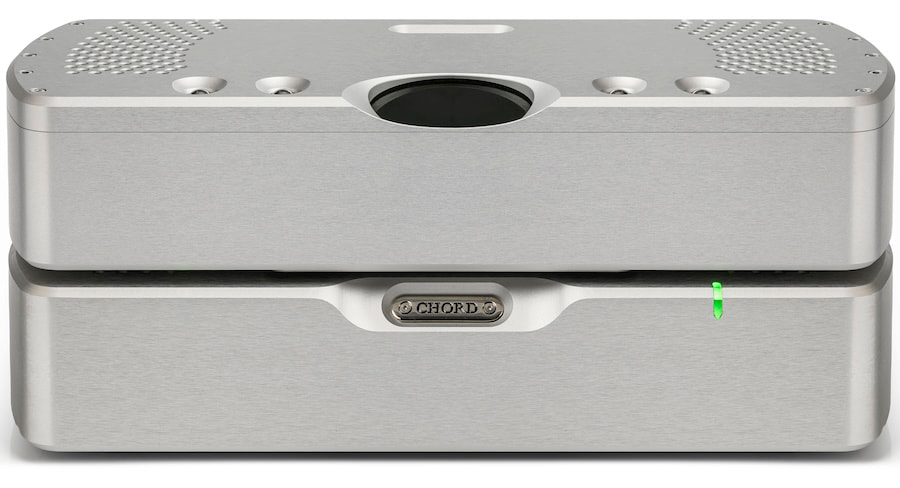
Chord Electronics has officially launched the Quartet upscaler, a £25,000 reference-class digital audio component that the British manufacturer is positioning as one of the most important products in its 37-year history. That is not a timid claim, but Chord’s longtime digital designer Rob Watts has never been especially bashful about where he thinks digital audio still falls short.
On a recent episode of the eCoustics Podcast, Watts had plenty to say about the current state of digital playback, and the Quartet feels like the hardware expression of that argument. At its core is the new Blackbird WTA filter, which Chord says represents the most advanced filtering technology it has ever put into a consumer audio product.
The goal is not just higher numbers for the brochure. Quartet is designed to reconstruct digital audio with greater timing precision, partner with Chord Electronics DACs, and push the flagship DAVE DAC to its full 768 kHz capability.
The surprise is the inclusion of a built-in ADC, which allows analog sources, including turntables, to be converted and upscaled through Quartet for the first time in a Chord Electronics upscaler. Vinyl into a £25,000 digital timing machine? Somewhere, a purist just dropped his carbon fiber record brush.

The Digital Audio Problem Quartet Was Built to Fix
“Conventional digital audio is like putting a steak through a mincer and expecting to reconstruct the original from the mince.”
Rob Watts does not exactly ease into the subject. His point is that when analog sound is converted to digital and then back again, the process is not as harmless as many would like to believe. Something gets lost, and for Watts, the most important issue is timing.
The problem centers on transients, the leading edges of musical notes that help the brain identify pitch, timbre, spatial placement, and the shape of a performance. When those transients are even slightly mistimed, the result can be a loss of depth, separation, and the natural sense of musicians occupying a real acoustic space.
That is the issue Chord Electronics says the Quartet upscaler was created to address. Rather than simply chasing bigger numbers, Quartet uses advanced interpolation to reconstruct the missing information between digital samples with far greater timing accuracy. In other words, it is trying to put the steak back together. Good luck doing that with supermarket mince, but that is the mission.

Blackbird WTA: Four Million Taps, Five FPGAs, and No Digital Shortcuts
Chord Electronics’ previous M Scaler used one million filter taps to reconstruct digital audio timing. The new Quartet raises that figure to four million taps, implemented across five Xilinx FPGAs. For the non-engineers still standing, taps are a measure of interpolation filter complexity. More taps allow the filter to make a more sophisticated calculation about what should exist between digital samples.
According to Chord Electronics, the new Blackbird WTA filter delivers a tenfold improvement over the previous-generation WTA filter and a tenfold improvement in transient timing accuracy. That is the company’s argument for why Quartet is not just an M Scaler with a fancier jacket and a scarier price tag. It also has five times the FPGA processing power of the flagship DAVE DAC.
The more important claim is that nearly all of the Blackbird WTA filter’s mathematical coefficients approach the theoretical ideal, known as the sinc function. In plain English, that is the target for a perfect reconstruction filter. Chord’s position is that Quartet can reconstruct the timing of a musical performance with far greater accuracy than its previous upscaling technology.
Another key distinction is how the filtering is performed. Quartet implements its filtering directly in hardware rather than relying on FFT convolution, a software-based approach that converts audio into frequency data, applies processing, and then converts it back. Chord argues that this process can introduce the same timing errors it is supposed to fix. Convenient? Yes. Innocent? Not according to Watts.
The claimed sonic result is better transient accuracy, more clearly defined bass pitch, improved timbral realism, and a stronger sense of space and reverberation. In other words, Chord is not saying Quartet merely sharpens the picture. It is claiming the device restores more of the timing information that helps music sound like musicians in a room, not data being reassembled by a very expensive toaster.

A Chord Electronics First: Quartet Adds an ADC for Analog Sources
Quartet is the first Chord Electronics upscaler to include a built-in analog-to-digital converter, or ADC. That matters because it allows analog sources, including turntables, tape machines, and other line-level sources, to pass through Chord’s upscaling technology for the first time.
Most of the digital audio conversation focuses on the DAC, which converts digital audio back into analog sound. But the ADC is just as important because it handles the first step: turning an analog signal into digital data. If that first conversion gets it wrong, everything downstream is working with damaged goods. You can season it later, but the steak has already been mistreated.
Chord’s argument is that conventional ADCs can suffer from aliasing, a form of distortion where ultrasonic noise folds back into the audible range. In practical terms, that can corrupt the timing information that helps music sound clean, spacious, and natural. Standard professional recording systems often use half-band filters to control this problem, but Chord claims those filters can introduce their own timing compromises.
Quartet uses a custom Pulse Array ADC with proprietary decimation filters designed to remove aliasing from its 104 MHz noise-shaper output. That is a mouthful, but the basic idea is straightforward: Chord is trying to preserve very small signal details during the initial analog-to-digital conversion without adding measurable noise floor modulation.
For listeners, the promise is simple. Analog sources can now be converted into digital with greater precision before Quartet applies its upscaling. That means a turntable or master tape source can benefit from Chord’s timing-focused digital processing, rather than being left outside the party like a vinyl purist with muddy shoes.

Preserving Transients From Analog Sources
The sonic argument for Quartet’s built-in Pulse Array ADC is not just that it converts analog sources into digital. Any ADC can do that. The point is that Chord Electronics claims Quartet does it while preserving the tiny timing cues that make music sound human rather than mechanically reassembled.
That matters most with sources like master tapes, turntables, and other analog components, where the signal starts and stops in extremely subtle ways. Those leading edges, or transients, help the brain understand where instruments are located, how they are shaped, and how they interact with the space around them.
In listening comparisons using master tapes, Chord says Quartet’s ADC delivered a major improvement over high-end professional studio converters. That is a serious claim, and not one likely to make every studio engineer spill espresso on the SSL console. But the idea is straightforward enough: if the ADC preserves more of the original timing information, instruments should sound less flattened, less mechanical, and more like performers occupying a real acoustic space.
For anyone using analog sources, that is the real appeal. Quartet is not simply digitizing vinyl or tape for convenience. It is designed to convert analog signals into digital while keeping the start, stop, texture, and spatial clues of the performance intact. That is the difference between capturing the event and filing a very expensive police report about what used to be there.
Two Boxes, Cleaner Power, and Lossless Digital EQ
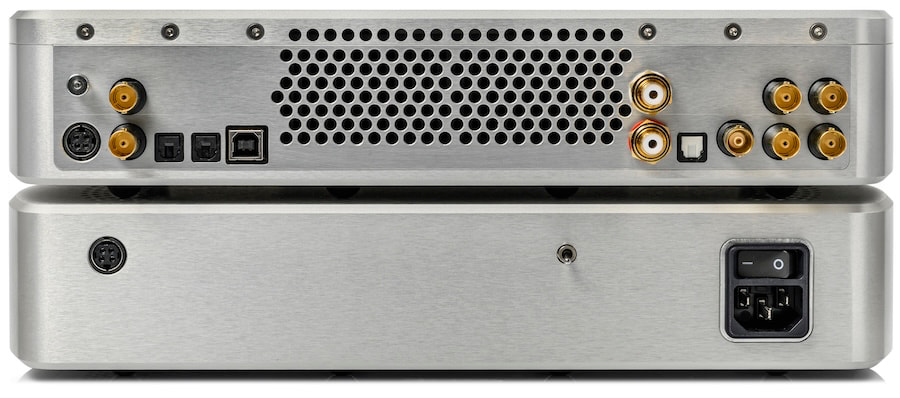
Quartet is a two-box design, which means the main upscaler and the power supply live in separate chassis. That is not just audiophile theater with extra aluminum. Moving the power supply away from the signal-processing hardware can help reduce electrical noise, which matters when a product is trying to preserve microscopic timing information.
The separate power supply was designed by Rob Watts and incorporates sophisticated RF rejection. RF stands for radio frequency noise, the kind of electrical interference that can sneak into audio circuits and degrade performance. Chord’s proprietary pinch-off RF filter architecture is designed to stop internal noise from spreading through the signal path. The goal is to deliver the kind of low-noise performance often associated with battery-powered products, while still running from mains power.
Quartet also includes a 108-bit, ten-shelf lossless digital EQ, technology first seen in the Mojo 2, with ±18 dB of adjustment. In normal-person terms, that gives listeners precise tone-shaping control without throwing away digital resolution in the process. That could be useful for older recordings, wildly inconsistent masterings, or albums from certain decades that sound like they were mixed inside a filing cabinet.
Connectivity includes isolated USB-B, dual BNC outputs supporting up to 768 kHz, optical connectivity, and RCA analog inputs for the built-in ADC. Quartet also provides programmable latency from 10 milliseconds to three seconds, which helps with audio-video synchronization. That means it can be integrated into systems where timing between picture and sound actually matters, rather than forcing you to watch lips move like a badly dubbed crime drama.
The Bottom Line
The Chord Electronics Quartet is a £25,000 digital upscaler designed to improve the timing accuracy of digital audio before it reaches a DAC. The production version will be shown at HIGH END 2026 Vienna from June 4.
The key upgrade is Chord’s new Blackbird WTA filter, which increases processing from the M Scaler’s one million taps to four million taps and is claimed to deliver a tenfold improvement in transient timing accuracy. In plain English, Quartet is trying to make digital music sound more natural by better reconstructing what happens between the samples.
The other major difference is the built-in Pulse Array ADC, which allows analog sources like turntables, tape machines, and line-level components to be converted and processed through Chord’s upscaling system for the first time.
Price & Availability
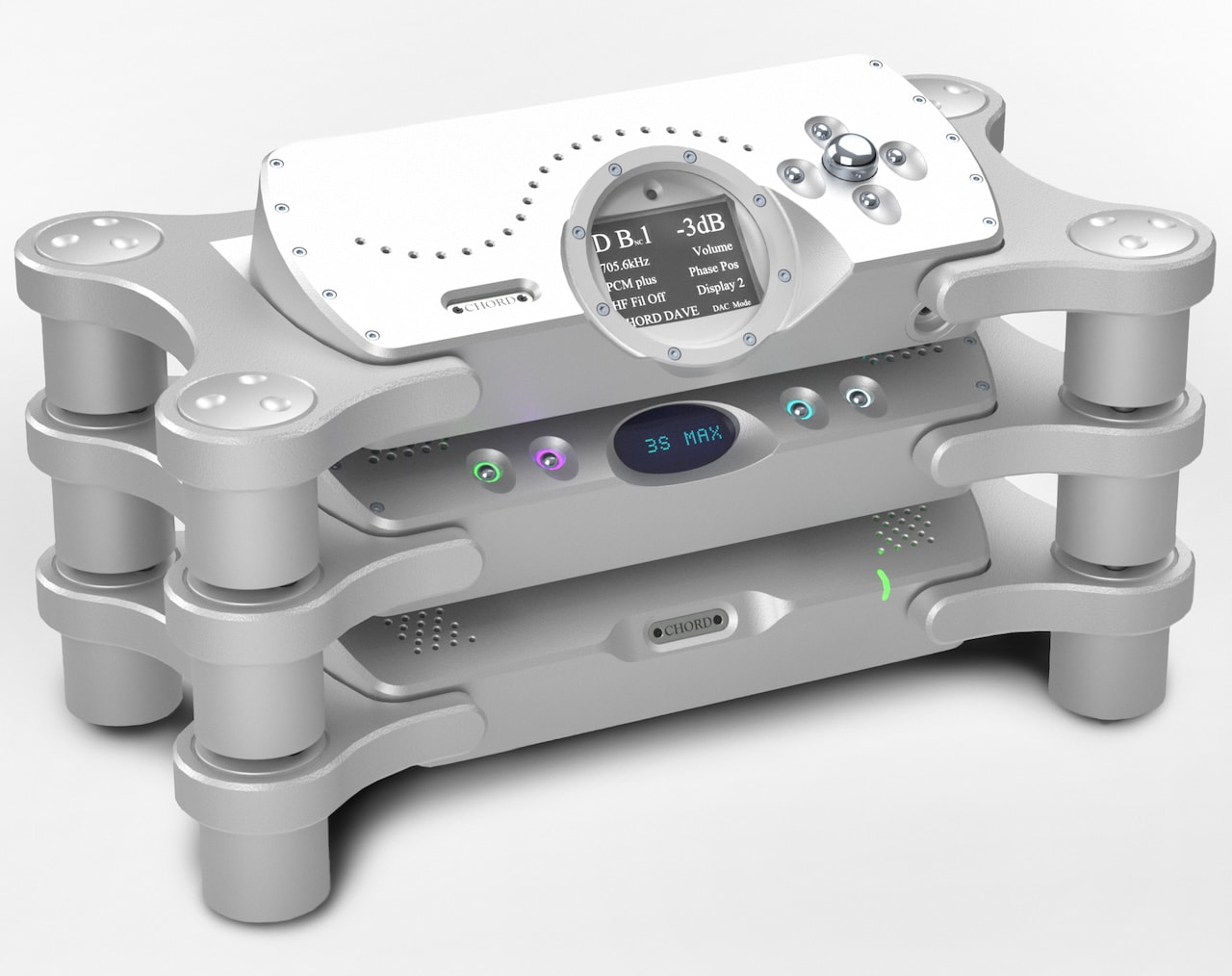
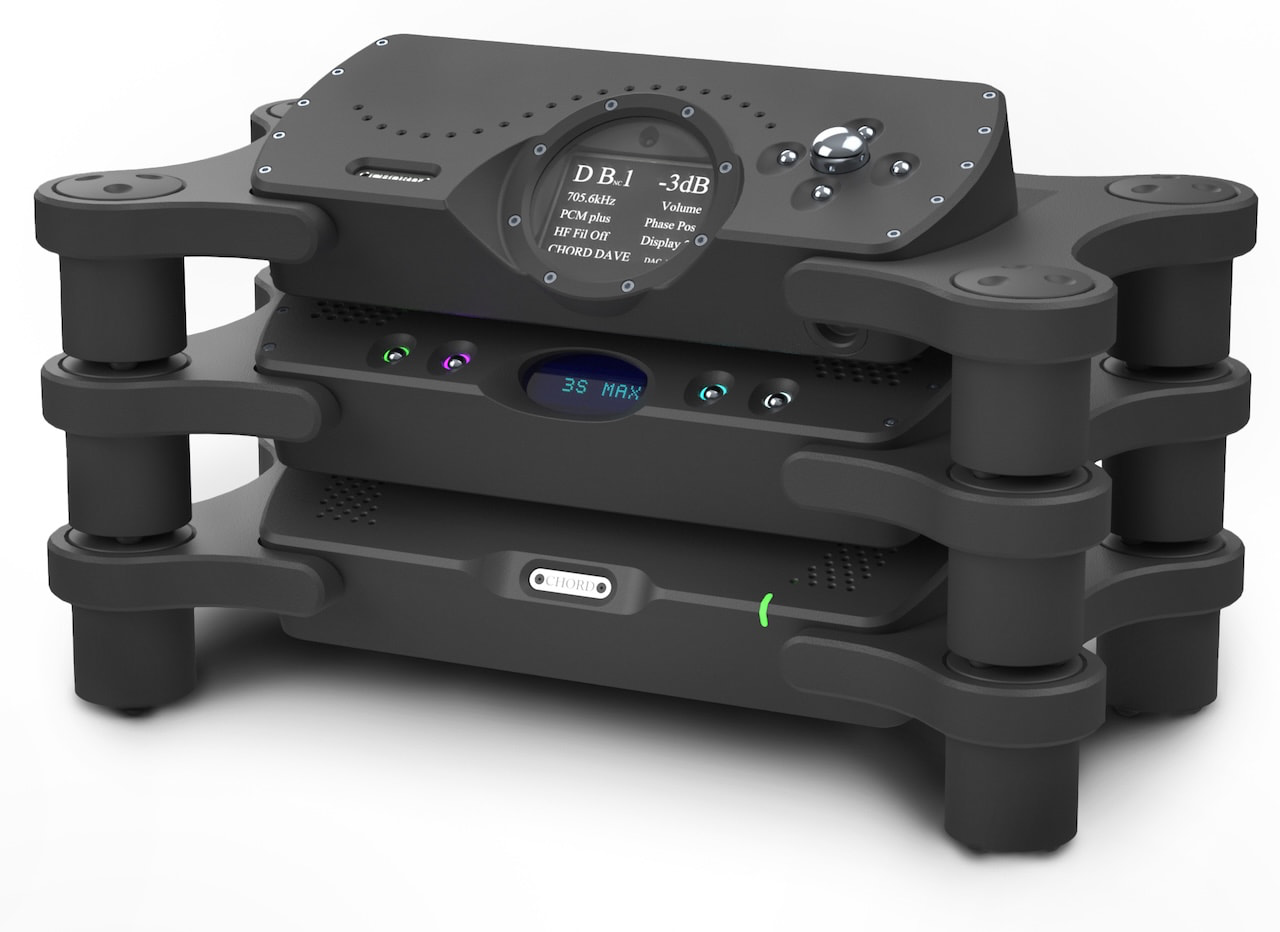
The Chord Quartet is available to order now priced at £25,000. It is supplied with a five-year warranty and is available in Argent Silver or Jett Black. Chord DAVE is available now for $14,900.
Note: the supporting Choral Ensemble Stand System is available separately at $2,550 (£1,595) per tier.
You must be logged in to post a comment Login