

Tech
Congressional Republicans Push Bills That Would Block Kids Access To Content For Ideological Reasons

from the how-is-this-protecting-kids? dept
Should parents have a right to monitor and control which sites and apps their kids use? Today, parents do have that legal right under the Children’s Online Privacy Protection Act (COPPA). The 1998 law requires verifiable parental consent before websites or apps can collect, use or share personal information from teens 13 or under. In practice, that means parents must consent for all social media apps.
The original version of COPPA would have required parental notification whenever teens (ages 14-17) sign up for websites; parents would have had the right to access personal information shared with such sites. Those provisions were dropped after free speech advocates warned that these provisions could “chill protected First Amendment activities and undermine rather than enhance teenagers privacy,” especially when “teenagers may be divulging or seeking information they don’t want their parents to know about.” Thus, the Center for Democracy & Technology warned, while “parents have an important role in protecting their teenager’s privacy, however the bill’s emphasis on parental access may overlook older minors’ interests.”
Now, legislation is moving in Congress that would give parents the right to monitor and control the apps and platforms their teens use. Yesterday, in party-line votes, the House Energy & Commerce Committee sent two bills to the House floor. The “App Store Accountability Act” (ASAA) would require app stores to categorize users by age, associate the minors’ accounts with a parental account, and then obtain consent from the parental account when the minor user creates an account on the app store, or installs any app. This gives parents the right to monitor and control exactly which apps their kids are using. The Committee also approved the KIDS Act, which would require parental consent before any social media “platform” (website or app) could allow teens to use “any direct messaging feature.”
These bills would “make vulnerable kids less safe,” warned the committee’s Ranking Member, Frank Pallone (D-NJ), because they “threaten kids in unsupportive or even abusive households where they can be real-world harms from allowing parents complete access and control over their teens’ online existence.” This is essentially the same concern raised in 1998.
Rep. Diana Harshbarger (R-TN) was more direct than most of her Republican colleagues, insisting that parents need the bills to protect kids “who have access to these online evils.” Which evils? “Kids should not be looking at pornography—this is just common sense, people,” she said. Perhaps so: last year, the Supreme Court upheld age verification mandates for pornography in Free Speech Coalition v. Paxton (2025). But Harshbarger went much further: “We’ve been hearing from a lot of folks who profit off doing harm to kids or have questionable ideological priorities.”
Her fellow Tennessee Republican, Sen. Marsha Blackburn (R-TN), has been clear about just which “ideologies” need to be stopped. Last year, she was recorded, in remarks to a private meeting of social conservatives, saying the quiet part out loud: Republicans’ top priority should be “protecting minor children from the transgender [sic] in this culture and that influence.” Roughly half of American adults tell pollsters that trans people should be legally required to use public bathrooms that match their sex at birth, rather than the gender they identify with. Many of those parents doubtless think their teens need to be “protected” from sites and apps dedicated to helping LGBTQ teens who feel isolated and alone—apps like TrevorSpace and GiveUsTheFloor.
These sites aren’t exploiting anyone for profit. They’re both non-profits dedicated to education and building communities of the kids most at risk for mental illness and suicide. Yet ASAA and the KIDS Act would require parents to approve teens’ access to both sites. This isn’t an accident: where COPPA applies only to sites that operate “in commerce” (i.e., for profit), neither bill contains any such limit, and thus both would apply even to pure non-profits. This problem could be fixed with a surgical amendment, but Republicans would surely object and Democrats failed to raise this issue at yesterday’s markup.
Even if this problem were fixed, the larger problem would remain: for-profit apps are overwhelmingly the ones that vulnerable teens use to access perspectives on the world their parents want to block and to find other teens they can relate to. Popular apps like Snapchat and TikTok are especially vital in regions where they face hostility or violence for expressing their sexuality or gender identity. Under ASAA and the KIDS Act, parents could block such apps to “protect” their teens from “online evils” like subversive ideas about gender, sexuality, contraception or religion.
Parents could, under ASAA, also block AI apps. At a Senate hearing last year on “Examining the Harm of AI Chatbots,” one parent complained that a Character.AI chatbot had “turned [her son] against our church by convincing him that Christians are sexist and hypocritical and that God does not exist.” Sen. Josh Hawley (R-MO) told her: “You didn’t know it at the time, but the chatbot was actively indoctrinating your son into questioning your beliefs as a family, your Biblical beliefs.” Questionable “ideological priorities,” indeed.
Both bills pay lip service to the First Amendment. The KIDS Act shall not be interpreted to “[a]llow a governmental entity to enforce this Act based on a viewpoint expressed by or through any speech, expression, or information protected by the First Amendment to the Constitution of the United States.” Likewise, ASAA “shall not be construed … to affect or restrict the expression of political, religious, or other viewpoints.” These rules of construction might well help ensure that courts scrutinize selective enforcement of these bills aimed at suppressing disfavored speech. But these provisions won’t address the core problem with the bills: that parents will block viewpoints they don’t want their teens to access by controlling which apps and platforms they use.
“Constitutional rights do not mature and come into being magically only when one attains the state-defined age of majority,” as the Supreme Court has noted. “[M]inors are entitled to a significant measure of First Amendment protection,” the Court has said, “and only in relatively narrow and well-defined circumstances may government bar public dissemination of protected materials to them.”
The Court reiterated this point in Brown v. Entertainment Merchants Association (2010), which struck down age verification requirements for video games. Because virtual violence was not obscene to minors, the First Amendment applied—unlike Paxton, which upheld a Texas law requiring age verification for sites whose content was at least one third composed of pornography, which is obscene to minors. In Brown, California argued that its law was “justified in aid of parental authority: By requiring that the purchase of violent video games can be made only by adults, the Act ensures that parents can decide what games are appropriate.” The Supreme Court has long recognized “the liberty of parents and guardians to direct the upbringing and education of children under their control.” But the Brown Court doubted “that punishing third parties for conveying protected speech to children just in case their parents disapprove of that speech is a proper governmental means of aiding parental authority.” Those “doubts” should apply even more strongly to ASAA and the KIDS Act.
Rep. Harshbarger claimed that the KIDS Act hews closely to Paxton. Another member referenced the Eleventh Circuit’s recent decision in CCIA & NetChoice v. Uthmeier, which allowed a Florida law that included an age verification mandate for social media to take effect pending a First Amendment challenge. The appeals court claimed that Paxton “recently clarified that age verification does not automatically trigger strict scrutiny because it does not constitute a ‘ban on speech to adults.’”
Both misread Paxton. Here’s what the Court actually said: “the First Amendment leaves undisturbed States’ power to impose age limits on speech that is obscene to minors.” That’s irrelevant here. Like the age verification requirement for violent video games in Brown, the KIDS Act and ASAA both clearly require age verification for content that is not obscene to minors—and both bills clearly do burden the First Amendment speech of adults to access entirely lawful speech anonymously. True, ASAA tries to reduce this burden by applying the age verification mandate only to the category of users that are found likely to be minors (presumably excluding much older adults), but such a category will necessarily include many adults, who will have to identify themselves to exercise their First Amendment rights—exactly what made age verification unlawful in Brown.
TechFreedom prebutted the Eleventh Circuit’s confusion in Uthmeier. As our amicus brief explained, Paxton essentially said two things. First, for content obscene to minors, age-verification laws are (now—due to Paxton’s contortions) akin to regulations on expressive conduct. When content obscene to minors is at issue, the state’s regulatory power “necessarily includes the power to require proof of age.” In the context of adult content (pornography), in other words, an age-verification “statute can readily be understood as an effort to restrict minors’ access” to speech unprotected as to them. In the context of social media, by contrast, no such assumption applies. Restrictions in that realm remain, as they have always been, presumptively unconstitutional direct regulations on speech—as Brown held. The Eleventh Circuit simply misunderstood this, and buried its misreading of Paxton in a flimsily reasoned footnote.
So, what can lawmakers do, consistent with the First Amendment? Congress might start by creating a more privacy-protective national standard for age verification for pornography. Notably, Texas’s law does nothing to address the data security concerns raised by collecting user information for age verification.
For social media services, lawmakers should focus on what has always been the clearest harm: sexual exploitation by adults. Legislation could start by empowering parents to control who their teens can communicate with. In this sense, the KIDS Act is better than ASAA: it focuses on parents’ access to direct messaging controls rather than approving the installation of each app. Democrats’ alternative bill, the “Safe Messaging for Kids Act,” is still more focused: it would require only that platforms “shall provide a parental tool to allow a parent of a covered user to view the covered user’s direct messaging control settings.” But both bills would require some form of age verification for some adults for lawful content. Paxton doesn’t make that constitutional.
But maybe that’s OK. Do parents really need the government to require platforms and app stores to age-verify users to determine who’s a minor? ASAA requires that a minor’s account “be affiliated with a parental account” but it doesn’t require any effort to prove that the parental account actually belongs to the minor’s parent, because there is no easy or reliable way of doing so. Instead, it’s enough that this account “be established by an individual who the app store provider has determined is an adult.” If we can reasonably assume that person is the parent, why can’t we trust parents to manage the settings on devices they purchase for their teens? After all, mobile carriers allow only adults to set up accounts.
If the existing parental controls in operating systems and app stores are inadequate or too hard to use, that’s where regulation should focus. That would be “less restrictive” of speech, in First Amendment terms, than forcing adults to identify themselves. Perhaps parents do need better controls over direct messaging. Apple iOS currently allows parents to control direct messaging but only for built-in apps. But if any controls required by law should be content and viewpoint-neutral, which means that they should work across all apps, lest they become an indirect way for parents to veto teens’ use of particular apps, like TrevorSpace or GiveUsTheFloor.
Whatever the government might require, it has no business protecting teens from “questionable ideological priorities,” even through the indirect means of requiring parental controls. “Whatever the power of the state to control public dissemination of ideas inimical to the public morality, said the Supreme Court long ago, “it cannot constitutionally premise legislation on the desirability of controlling a person’s private thoughts.” That’s true even if that person is a teenager.
Berin Szóka is President of TechFreedom.
Filed Under: 1st amendment, asaa, children, coppa, diana harshbarger, frank pallone, free speech, josh hawley, kids act, marsha blackburn, parental controls, parents


Apple’s MacBook lineup now includes devices designed for both premium users and budget buyers. The new MacBook M4 Air has a lot to offer with its Apple M-series chip, while the new MacBook Neo has focused on usability. Although they belong to the same family, they have been designed for very different users. Let’s compare them.
Design and Display
The MacBook M4 Air retains its signature design profile: a slim, light aluminum unibody that is just as portable as ever. The 13.6-inch display features a bright, colorful Liquid Retina display, perfect for work, play, and all forms of creativity.
The MacBook Neo, meanwhile, takes a more conservative approach with design. Its 13-inch LCD display is not a Retina display, and while it is perfectly suited for everyday use, it is not quite as bright or colorful as the M4 Air.
In simple terms, the MacBook M4 Air focuses on a premium display experience, while the MacBook Neo prioritizes affordability.
Performance and Processor
The major difference between the MacBook M4 Air and the MacBook Neo is the processor. The MacBook M4 Air is powered by the M4 chip, which has a 10-core CPU and a 10-core GPU.
Meanwhile, the MacBook Neo is powered by the A18 Pro chip, which has a 6-core CPU and a 5-core GPU. The MacBook Neo supports everyday activities like web browsing, streaming media, document creation, and online meetings. Therefore, the MacBook M4 Air is suitable for professionals, while the MacBook Neo is suitable for students.
When it comes to memory and storage, the MacBook M4 Air provides more flexibility. The laptop starts with 16GB of unified memory and can be expanded up to 32GB. Storage options range from 256GB to 2TB, which is useful for professionals who need extra space for files and applications.
The MacBook Neo keeps its configuration simpler. It comes with 8GB of memory and storage options of 256GB or 512GB. These specifications help students and casual users manage documents, applications, and media comfortably.
Overall, the MacBook M4 Air handles heavier loads better than the MacBook Neo.
Connectivity and Battery Life

The MacBook M4 Air takes the game to the next level in terms of connectivity. It has two Thunderbolt ports and Apple’s MagSafe charger. The MacBook M4 Air’s Wi-Fi 6E connectivity delivers fast internet speeds.
The MacBook Neo takes a simpler approach. It mainly includes standard USB-C ports and basic wireless connectivity. Some premium connectivity features available on the MacBook Air are not included in this model.
In terms of battery life, both laptops perform well. The MacBook M4 Air can last up to 18 hours on a single charge. The MacBook Neo is designed to last an entire day, though it does not match the MacBook Air’s battery life.
Price Comparison
In terms of price, there is a significant difference between the MacBook Neo and the MacBook M4 Air. While the MacBook M4 Air is priced at approximately Rs 90,068, the MacBook Neo is priced at Rs 69,990. This is the reason why the MacBook Neo is a good option for anyone looking for a budget-friendly computer.
To summarize, the best MacBook for you will depend on your intended use. The MacBook Neo is good for students and new users, while the MacBook M4 Air is good for professionals.


Off-roading is a beloved pastime for many in the United States, and some off-road trails have become legendary among enthusiasts. Off-roaders in the Mojave Desert, however, will have to contend with shorter trails, as a judicial decision has prohibited off-roading on roughly 2,200 miles of trail in the desert. This leaves avid off-roaders in the area with approximately 3,800 miles of legal trails to traverse. Behind this decision is a long legal struggle over the defense of the endangered tortoise population in the area.
As reported by publications such as the Los Angeles Times, Judge Susan Illston of California ordered the Bureau of Land Management to close down these thousands of miles of trail in January 2026. Illston’s ruling also gives the Bureau until 2029 to revise its off-road routes in the Mojave area. Estimates suggest that the Mojave Desert tortoise population has declined by about 90% since the mid-1980s, with the hope being that restricting vehicle access will help the population bounce back. Despite this, some note that drivers tend to go off-trail anyway, potentially leading to the destruction of tortoise habitats regardless.
As mentioned, debate and legal contests over the Mojave and how the land should be utilized have extended for years. As far as those in the off-roading community, they maintain that their hobby hasn’t led to decreases in the tortoise population.
Off-roaders deny being the cause of the tortoise’s decline

In response to Judge Susan Illston’s ruling, off-roading enthusiasts have come forward to contest it. The prevailing sentiment is that off-roading as a whole doesn’t negatively impact the Mojave tortoise population and that the ruling unfairly punishes those involved in such recreational activities. Speaking to the Los Angeles Times, Ben Burr, executive director of off-roading nonprofit the Blue Ribbon Coalition, claimed that off-roaders “think [the ruling is] an overreach and this judge went a little too far.” The group has turned to the U.S. Department of Justice to appeal Judge Illston’s decision, even circulating a petition to prevent this perceived overreach.
While conflict endures over how much off-roading has impacted the Mojave Desert tortoise’s population, research has found that it’s a multifaceted issue. Cameron Barrows, a desert researcher at the University of California, Riverside, explained to NPR that the tortoises’ natural predators, nearby military bases, and drought have all played a role throughout the years. Climate change is arguably the biggest roadblock to getting tortoises on the right track. Hotter climates and extended droughts negatively impact tortoise health and reproduction, making population growth a serious challenge.
Regardless of the exact reason or reasons for tortoise numbers dropping in the Mojave Desert, the fact remains that, for the time being at least, off-roading trails in the region have been significantly reduced. At least there are multiple apps to find new off-roading trails for drivers whose favorite areas are no longer accessible after this ruling.


Photo credit: Android Headlines | OnLeaks
The Pixel 11 Pro Fold enters familiar ground, with new CAD renders providing the best look yet at what Google has in mind for its next book-style foldable. These photographs, leaked by a reputable source, OnLeaks, in partnership with Android Headlines, reveal a smartphone that moves forward quietly rather than trying to shake things up with crazy innovation.
Measurements reveal a considerable but mild slimming, with the phone measuring 10.1mm when folded, down from 10.8mm on the Pixel 10 Pro Fold, and 4.8mm when unfurled (down from 5.2mm the previous time out), but the height remains constant at 155.2mm and the unfolded width remains at 150.4mm. When folded, the width is approximately 76mm. These little changes improve the phone’s feel in the hand, but it still falls short of the elusive sub-9mm zone claimed by some of its competitors.
Sale

Samsung Galaxy Z Fold7 Cell Phone, 512GB AI Smartphone, Unlocked Android, AI Photo Edits, Large Screen…
- BIGGER, YET SLIMMER THAN EVER: Who would’ve guessed that wider could also be lighter? The design of Galaxy Z Fold7 is refined to feel like a…
- BEST CAMERA ON A FOLD YET: You asked for more – now you can have the most. Galaxy Z Fold7 now boasts an ultra-premium 200MP camera with Pro-Visual…
- SCREENSHARE FOR STREAMLINED ASSISTANCE: Intrigued by something you see? Go Live with Google Gemini, then screenshare or point your camera at it for…
The design remains largely unchanged, with the cover screen featuring a centered hole-punch camera and rounded corners, while the inside display has a top-right hole-punch selfie cam and uniform bezels that help keep things safe when closed. A shiny metal frame replaces the previous models’ matte finish, giving it a cleaner overall appearance. The buttons are in their typical positions, with the power and lock buttons above the volume rocker.

The changes on the back are really catch your eye, as the camera island has been reworked to accommodate the LED flash and microphone in a pill-shaped cutout alongside one lens, giving it a more integrated and modern appearance. The lenses now protrude out in a tiered arrangement rather than lying flat, and the module as a whole appears bigger and sleeker, similar to camera enhancements seen on previous flagships. The backplate remains completely flat, with the Google logo staying securely centered.
The panels are quite similar to last year, with an 8-inch LTPO OLED panel handling the primary unfolding surface with a refresh rate of 1-120Hz, and a 6.4-inch outside OLED running at 120Hz. Don’t expect any size increases or significant panel enhancements.

Performance is a different story, as the Tensor G6 chipset is now in control, developed on a 3nm process that should make it more efficient and snappy, and we may see a transition to a MediaTek modem from the previous Samsung component. RAM is anticipated to remain at 16GB, while storage options range from 256GB to 1TB; the battery is still around 5,000mAh and does not appear to have increased in size. IP68 protection, Qi2 wireless charging, and all of that remains on the table.
The camera hardware is likely to receive the most significant boost; while we don’t know what’s changed beneath the hood just yet, we anticipate a few tweaks borrowed from the non-foldable Pixel siblings, which may help close some of the gaps in areas such as ultrawide performance.

Google often releases its August flagships in late summer, so we can expect the Pixel 11 Pro Fold to follow suit later this year. As for the price, that’s where things get tough, but predictions are that it will cost slightly more than the Pixel 10 Pro Fold, given all of the tariffs and component costs.
[Source]


Gordon Murray’s goal was to create a race car for the track that prioritizes driver connection above all else. This culminated in the GMA T.50s Niki Lauda, a beast of a car that recently demonstrated its capabilities at the Bahrain International Circuit by lapping it faster than any other GT3 race car has ever done.
Dario Franchitti, a development driver and racing veteran with multiple championship victories, set a lap time of 1:53.03 in the closing rounds of testing. This not only broke the GT3 standard by more than seven seconds, but production approval followed immediately, with all 25 examples sold and deliveries expected by mid-2026.

LEGO Speed Champions Ferrari SF90 XX Stradale Sports Car Building Toy for Kids – Building Set W/Ferarri…
- CAR TOY FOR KIDS – Young car fans build a legendary ride with the LEGO Speed Champions Ferrari SF90 XX Stradale Sports Car (77254) building toy for…
- FERRARI’S MOST POWERFUL CAR – The completed build is packed with authentic details from Ferrari’s most powerful street-legal car, including a…
- DRIVER MINIFIGURE & ACCESSORIES – Includes a driver minifigure wearing a Ferrari outfit and helmet with a wig and wrench accessory that can be…
The engine is a 3.9-liter V12 designed by Cosworth. It’s basically a well made work of art. They experimented with the cylinder heads, camshafts, and intake to see what worked best. They even managed to fit a ram air scoop onto the roof. This yields a whopping 761 horsepower at 11,500 rpm, with 367 lb-ft of torque available around 8,000 rpm. This beast is both a screamer and a lightweight, weighing only 166 kg.

When wet, this beauty weighs just under 900 kilograms. The monocoque, body panels, and the majority of other important pieces are made of carbon fiber. The suspension is equipped with adjustable R53 dampers for compression and rebound, as well as carbon-ceramic brakes and magnesium wheels, to reduce unsprung mass. They were able to get the most out of it by employing slick Michelins specifically designed for circuit work.
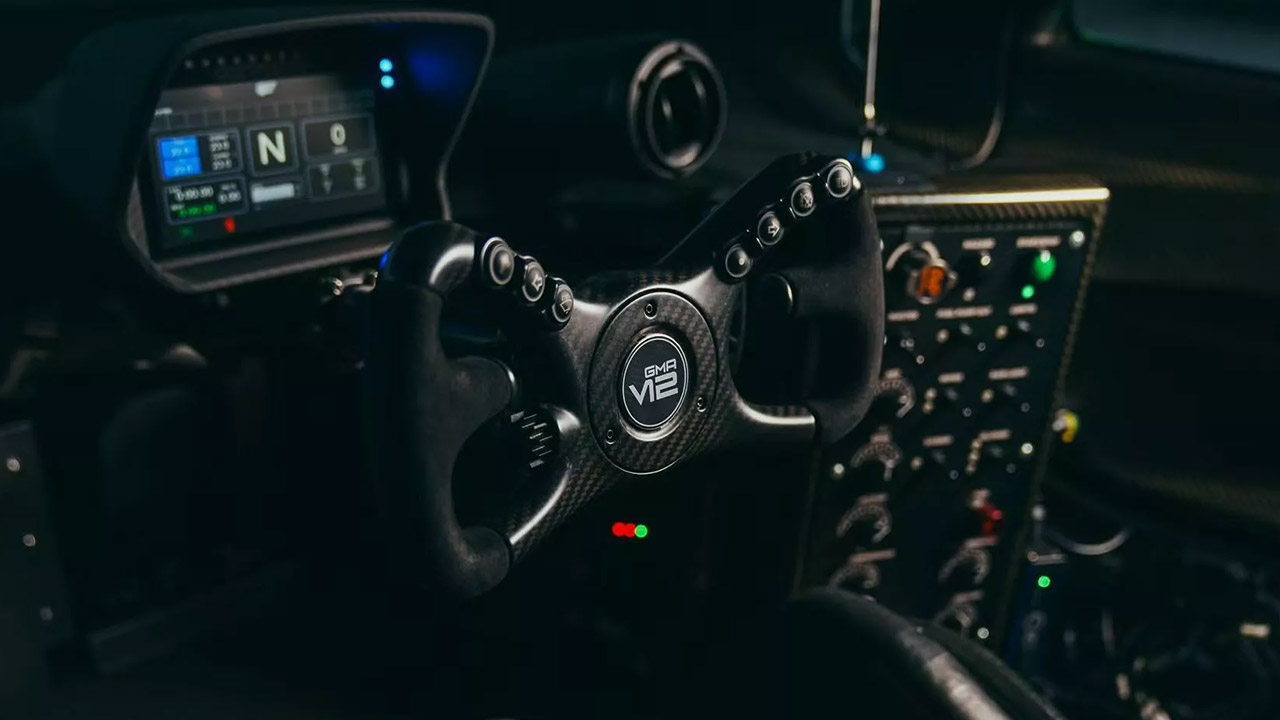
They replaced the road car’s manual transmission with an Xtrac six-speed sequential gearbox. It’s not that the road car’s manual was horrible, but the paddles on the new one deliver quick, positive changes, and the entire transmission is lighter by about 5 kilograms. It all adds up to shifts that feel F1-like, keeping the driver completely focused on the road ahead.
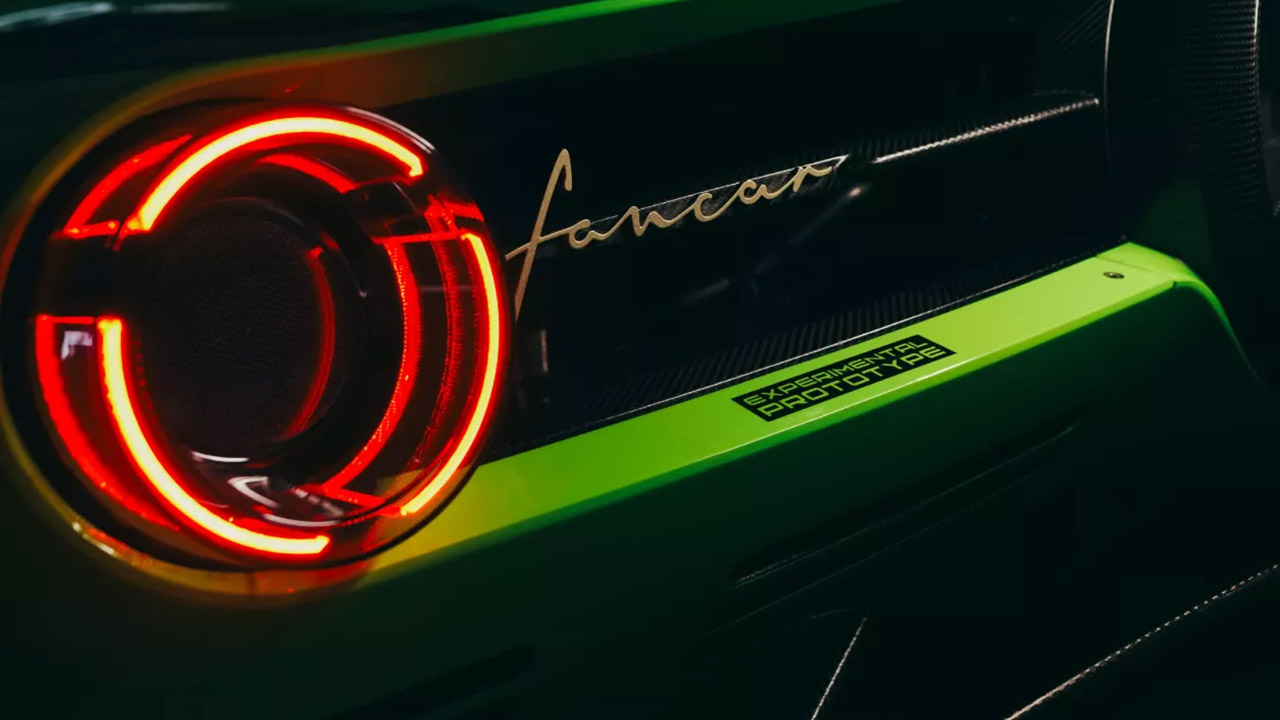
Then there’s the aerodynamics, with the rear fan reaching 7,000 rpm even at low speeds, pulling air through the underbody and producing a remarkable 2,645 pounds of downforce. Combine that with an aggressive front splitter, dive planes, a rear diffuser, and a fixed wing, and you have a rocket that stays planted at high speeds no matter how soon the driver decides to push the throttle after a corner.
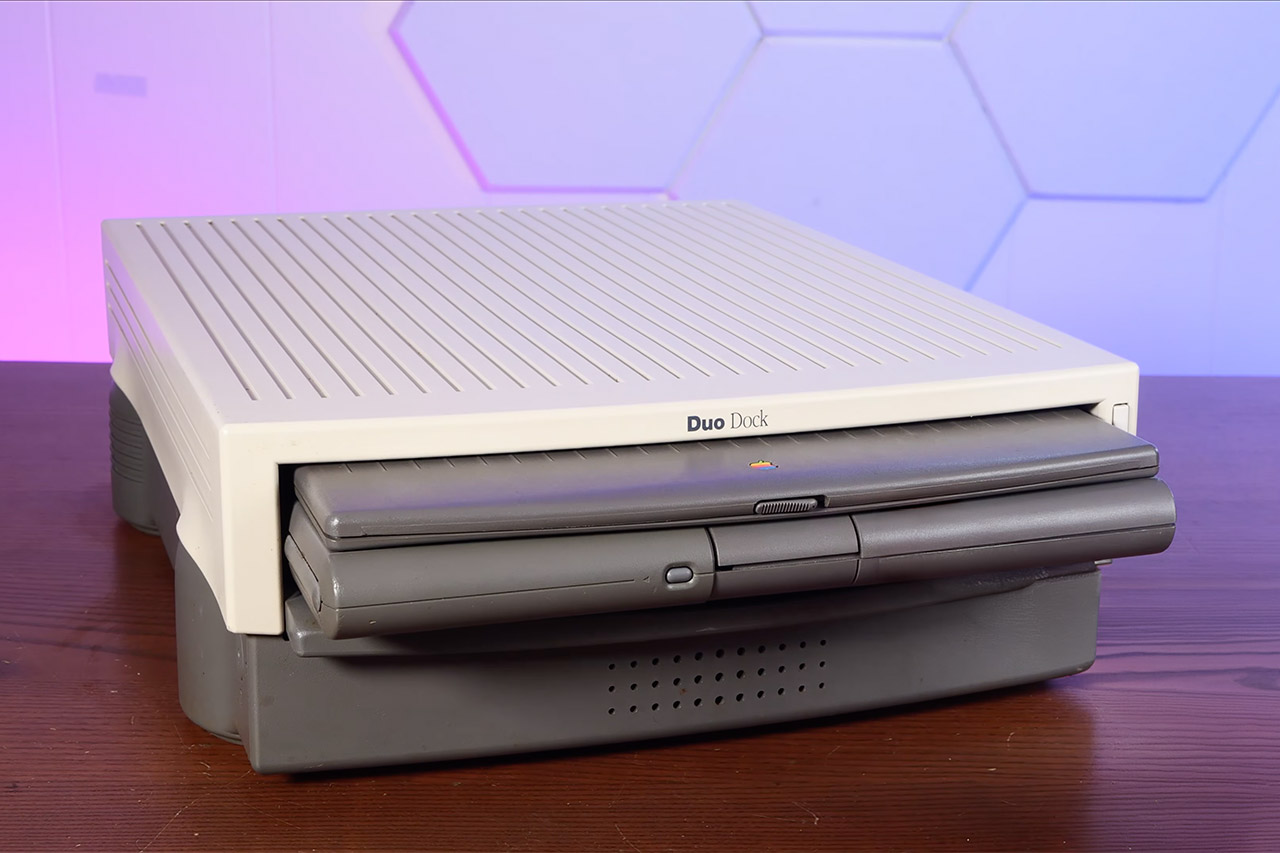
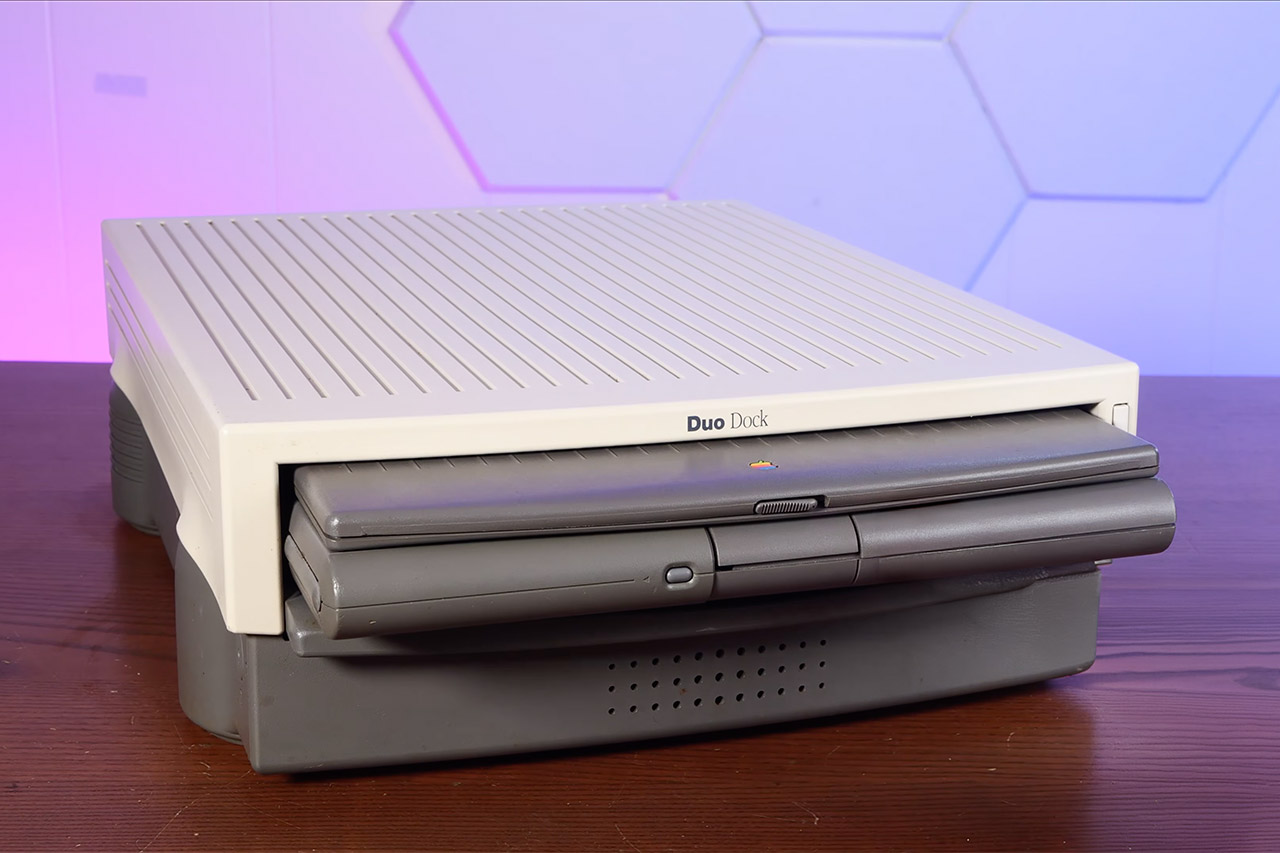
Apple released the PowerBook Duo 230 in October 1992 at a hefty $2,610 ($6,050 today), and what a powerhouse it was. This small laptop, weighing only 4.2 pounds and measuring 1.4 inches by 10.9 by 8.5 inches, fits neatly into a briefcase or bag, eliminating the bulk that made other portables of the time difficult to transport. The reason for its slim appearance is that the internal floppy drive had just been removed totally, and engineers went to town on reducing weight wherever possible, a move that reflected what they had done previously with the PowerBook 100, but on a whole new level.
The real genius was in how it dealt with expansion. Apple included a convenient 156-pin docking connector on the back of the Duo 230. Put it in the full-sized Duo Dock, and it instantly transforms into a full-fledged desktop machine with all the bells and whistles. The dock itself included a 1.4 MB disk drive, additional serial ports, a sound output, an ADB port for keyboards and mice, a DB-15 video connector for connecting to an external monitor, and even NuBus expansion slots. You could add a floating-point unit for faster calculations, extra video RAM, a second internal hard drive, or pretty much anything else you needed to complete the job. This configuration allowed the Duo 230 to act as both a lightweight travel companion on the road and a full-fledged workstation when connected at home or in the workplace.

Apple 2026 MacBook Neo 13-inch Laptop with A18 Pro chip: Built for AI and Apple Intelligence, Liquid…
- HELLO, MACBOOK NEO — Ready for whatever your day brings, MacBook Neo flies through everyday tasks and apps. Choose from four stunning colors in a…
- THE MOST COLORFUL MACBOOK LINEUP EVER — Choose from Silver, Blush, Citrus, or Indigo — each with a color-coordinated keyboard to complete the…
- POWER FOR EVERYDAY TASKS — Ready the moment you open it, MacBook Neo with the A18 Pro chip delivers the performance and AI capabilities you need to…
Without the dock, the laptop remained light on its feet. You had a single mini-DIN-8 serial port to perform printer or modem chores, and the internal slot accepted a proprietary modem card up to 57.6 kbps (but some variants reached as fast as 14.4 kbps). The base unit did not have any built-in SCSI, ADB, or video interfaces, so docking was required for any real work. The trackball was slightly smaller than on full-size PowerBooks, and the keyboard was roughly 88 percent of a regular desktop layout, but with little effort, you could get used to it.
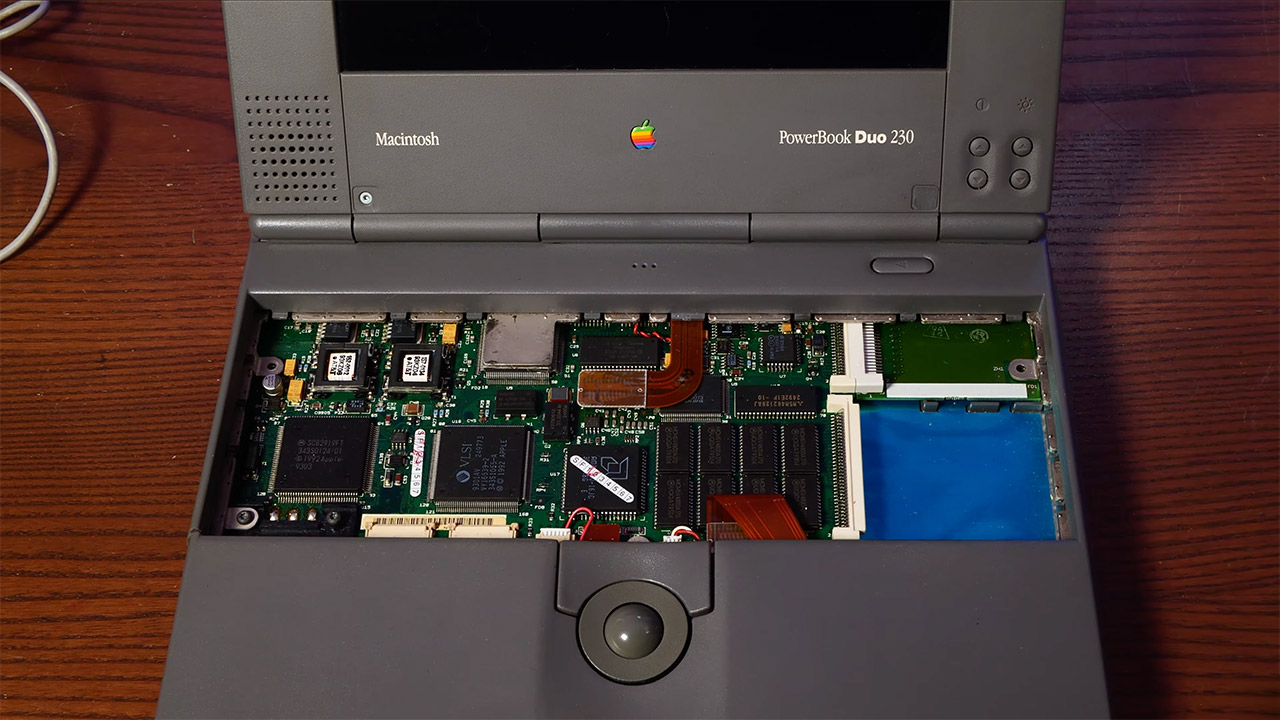
A 33 MHz Motorola 68030 processor powered the system, with 4 MB of RAM that could be expanded to 24 MB via a single dedicated card slot. Storage comes via an 80 MB or 120 MB hard drive, which was quite generous for 1992. The 9.1-inch Supertwist passive-matrix screen displayed 640 by 400 pixels in four-bit grayscale with 16 shades, which was quite impressive given the limitations of passive displays at the time. The battery life of the nickel-metal hydride pack ranged between two and four hours, which was reasonable for the period.
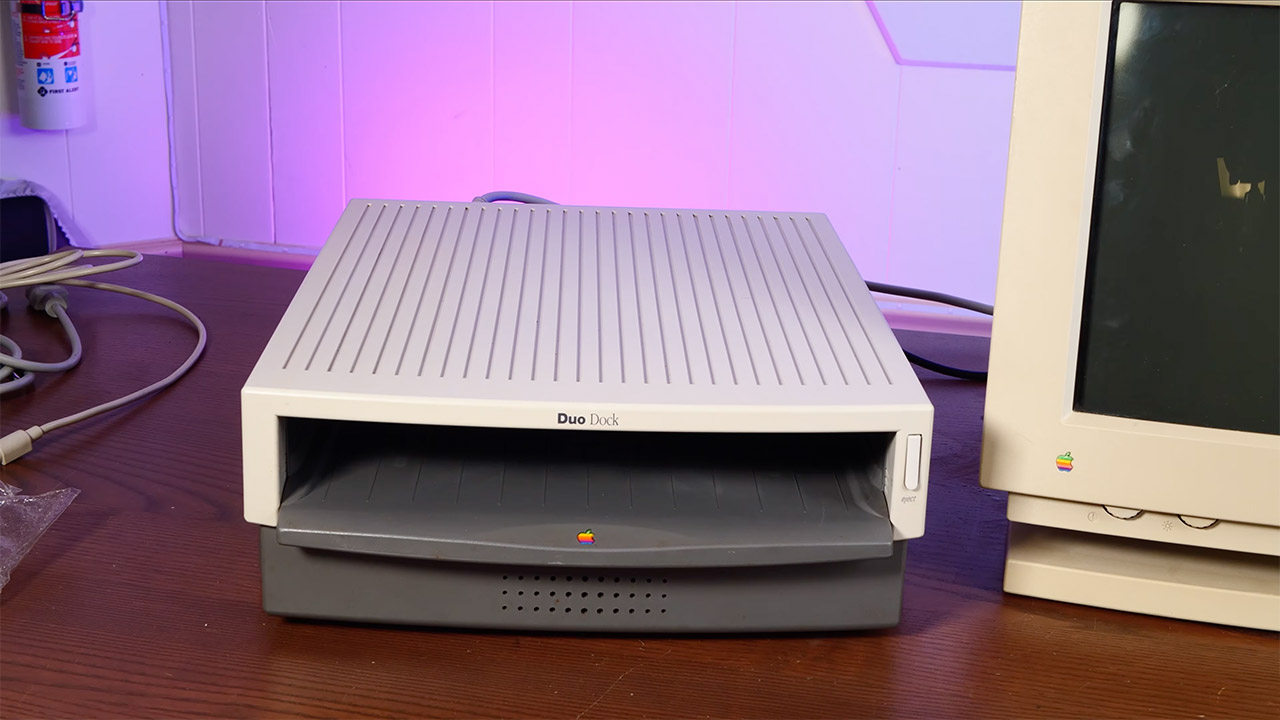
People who owned this machine frequently used it with the Duo Dock for everyday desk work before removing the laptop and transporting it. Honestly, the design of this thing was extremely ahead of its time; it even predated current docking stations by years, but it all relied on an old-school mechanical connection that provided that reassuring click as you secured it firmly into place. To get the most out of their hardware, some eager owners went so far as to overclock it or add more memory. The support extended from System 7.1 to Mac OS 8.1, therefore the Duo 230 lasted far longer than many expected.
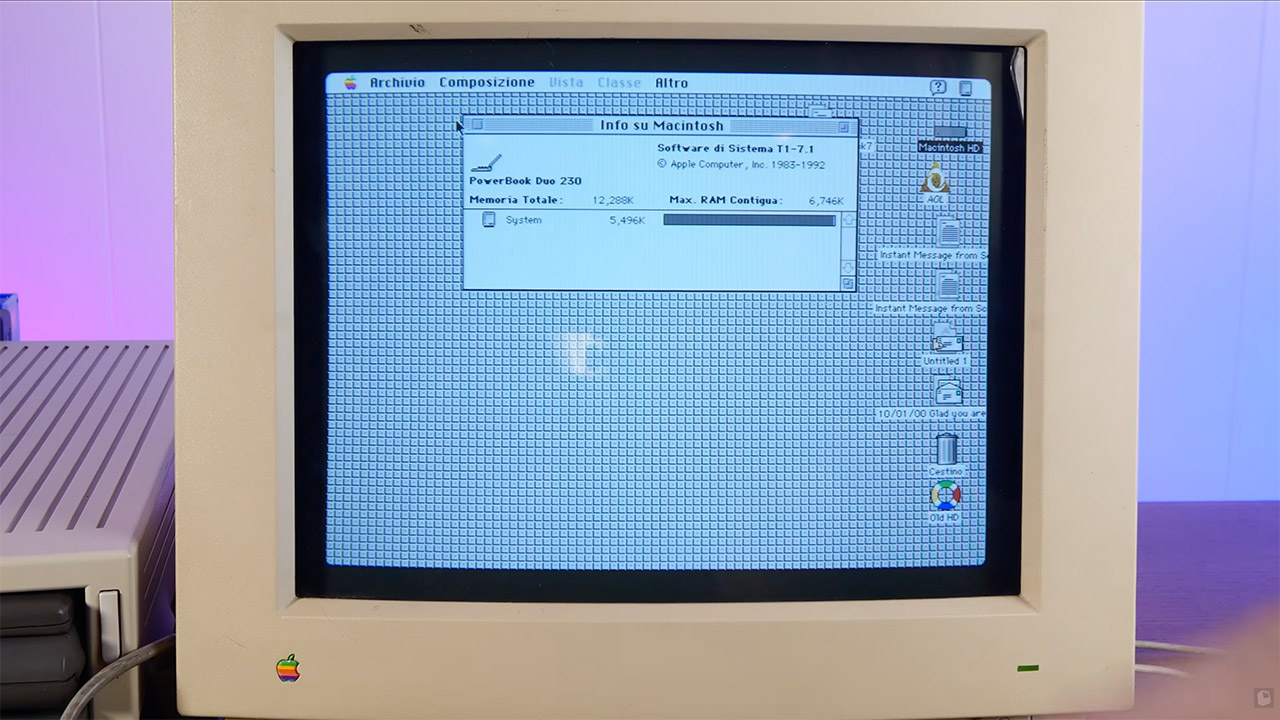
Although Apple discontinued this model in July 1994, its concepts had a long-lasting impact on subsequent laptops. The PowerBook Duo 230 demonstrated how a compact laptop might shrink drastically while still providing desktop-style flexibility, owing to some innovative expansion concepts.


Most Americans spend much of their income on necessities: housing is typically their biggest monthly expenditure, followed by transportation, and then food. On average, a roof over our heads, a way to get to work or school, and groceries take up almost half of our income. We spend what’s left on a variety of things, from insurance to entertainment, and hopefully have enough left over for a vacation. Those that are lucky enough to have a budget for luxury items typically focus on small items like footwear or watches, not high-end cars or yachts. While many Americans own a boat, about 95% of those are considered small craft at less than 26 feet long. Larger, luxurious yachts are out of reach for most of us, but a Chinese company hopes to change that, at least in China.
Richard Liu, the founder of online Chinese retailer JD.com, recently launched a new brand called Sea Expandary in the hopes of opening up the country’s leisure vehicle industry to consumers that many not otherwise be able to afford luxury boats, planning to sell yachts for what Americans may pay for a used car. He will invest about $723 million in the venture and is strategizing with two coastal cities in the province of Guangdong for research and development, manufacturing, sales, and after-sales services. At a signing event for the new company, Liu told reporters, “Yachts should be affordable for ordinary salaried workers and everyday consumers.”
Are accessible yachts a reality?

The word yacht brings to mind wealth and a lavish lifestyle most of us can only dream about. In fact, according to U.S. News & World Report, the average cost of a yacht in 2023 ranged from $500,000 to $10 million or more, with super yachts like those owned by billionaires ranging in the hundreds of millions. It’s hard to imagine the words “yacht” and “affordable” existing in the same sentence, but Liu hopes to build yachts that will sell in the same price point as inexpensive cars, for about $14,500 in U.S. dollars.
The yacht industry is booming in China, increasing from around 4,500 to nearly 10,000 over the past three years, and is expected to continue growing for the foreseeable future. That number may sound small, but the middle class is a rapidly growing sector in China, and is a demographic that Liu clearly hopes to tap into.
The manufacturing of pleasure vehicles lags behind commercial shipbuilding, however — more than half of global shipbuilding is done in China. The country hopes to see growth in tourist industry beyond making yachts more affordable for the average joe, with plans to expand yacht tourism routes and programs. What does this mean for Americans? Not much for now, especially with the Trump administration’s sky-high tariffs on Chinese imports, but if affordable yachting takes off in China, it has the potential to boost industry growth elsewhere.
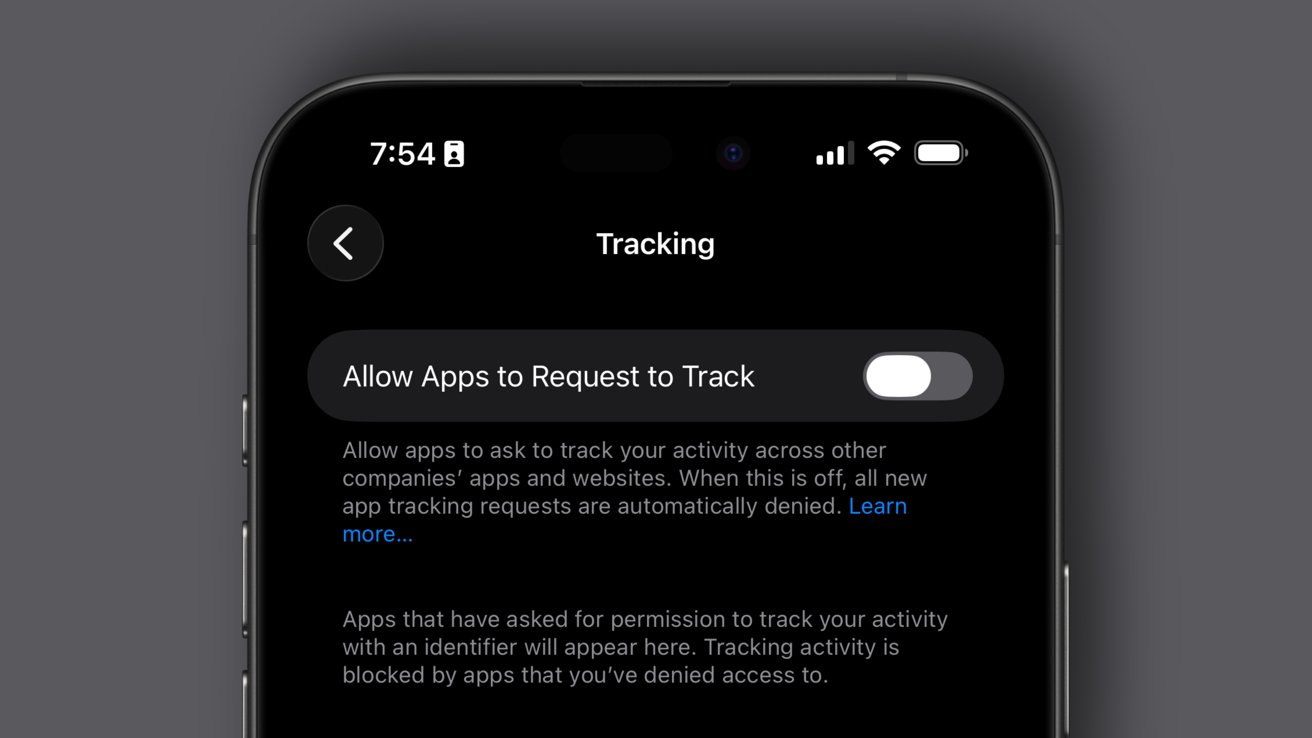
German publishers hope that Apple will be hit with fines and forced to change App Tracking Transparency rules after an antitrust investigation. The feature allegedly favors Apple’s apps.
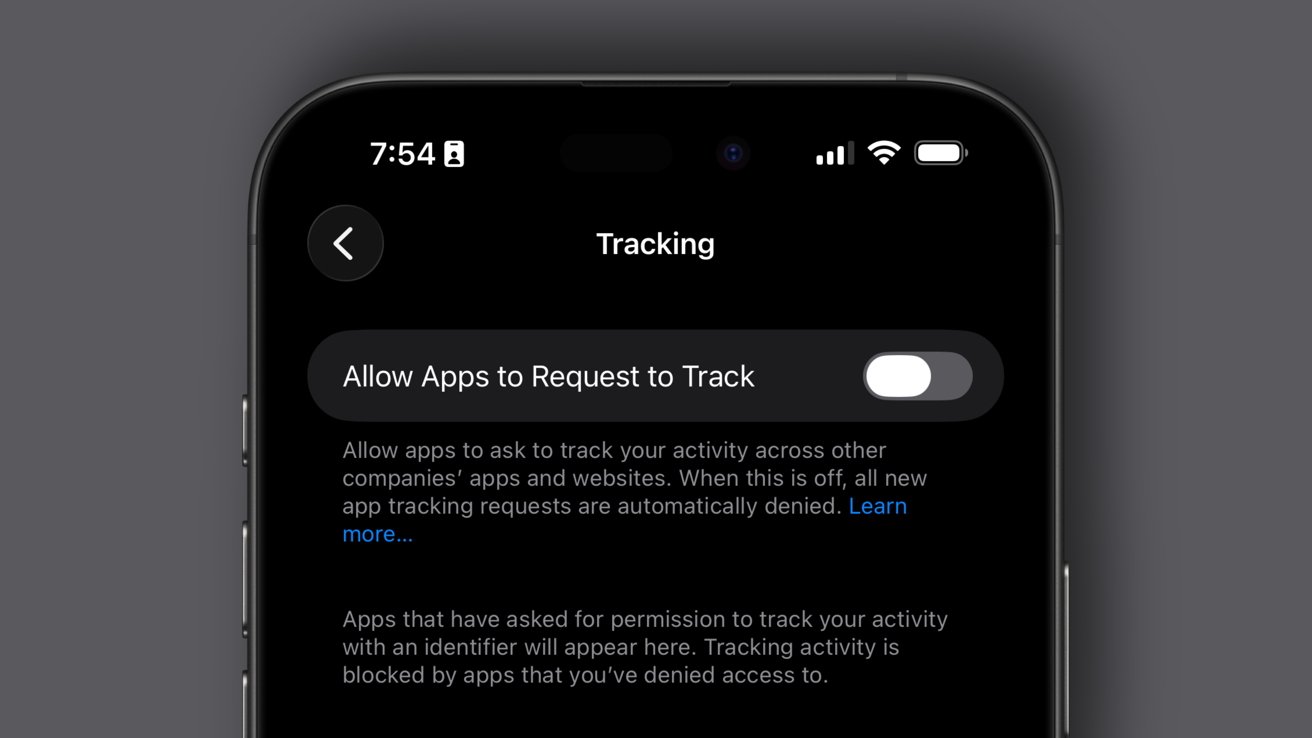
App Tracking Transparency
The German Association of the Branded Goods Industry and various other groups are appealing to the German antitrust regulators. In December, the Bundeskartellamt, Germany’s federal antitrust authority, announced a review of Apple’s App Tracking Transparency features.
According to a report from Reuters, the various German groups say Apple’s proposed changes to App Tracking Transparency don’t address the issues in the mobile advertising market. Apple had proposed more neutral language for its prompts and an easier process for developers requesting permission to use advertising data.
Continue Reading on AppleInsider | Discuss on our Forums

Within the first 24 hours of my daughter’s life, I put a screen in her face.
I know. That’s the opposite of all the research I had highlighted and annotated while my wife was pregnant. But it wasn’t by choice. That screen was the only way my wife could meet our newborn.
As soon as our daughter was born, she was rushed to the NICU, tubes and cords draped across her swaddle while clinicians moved quickly around her. My wife was rolled out of the operating room in the opposite direction to receive intravenous magnesium for suspected preeclampsia.
She couldn’t hold our baby for the first 24 hours of her life. So I held up a phone.
Through FaceTime, my wife met the tiny fighter she had just brought into the world. I still have the screenshot from that moment. When we finally brought our baby home, we tried to avoid screens altogether. We had read the guidance: infants should have little to no screen exposure. But screens were everywhere.
We became parents at the height of the COVID-19 pandemic, when every new virus variant seemed to appear just as we were finally ready to walk into a grocery store again. So our daughter met grandparents, cousins and friends through screens.
As parents of a premature baby, we watched her like hawks. Every eye movement. Every babble. Every head lift. Our developmental pediatrician warned us about possible delays, so we studied every tiny milestone. Ironically, it was a screen that gave us one of our most reassuring moments.
During the 2020 Summer Olympics, our barely 60-day-old preemie tracked a ping-pong rally across the television. Her head moved side to side, and her tiny eyes followed that tiny ball. Another time, she would instantly stop crying or giggle when the catchy theme song from the ’90s sitcom Smart Guy came on. (Yes, we are those nostalgic millennials rewatching childhood shows.)
Because we weren’t around many other people during lockdown, the sounds and visuals in our home became strange little markers of development.
When our daughter grew into toddlerhood, we cautiously experimented with a few children’s programs.
Our rotation included Ms. Monica’s Circle Time and Ada Twist, Scientist for culturally relevant and playful introductions to phonics, object identification, and scientific thinking. Word Party was great for reinforcing vocabulary and early language exposure.
But we rarely just pressed play. Most of the time, we were watching with her, singing along, repeating sounds and asking questions.
Researchers call this co-viewing: when adults watch and interact with media alongside children. Studies show that when caregivers talk with children during media use, repeating words, asking questions or connecting what’s on screen to real life, children process and remember more of what they see.
In other words, the screen isn’t doing the teaching by itself. Much of the learning happens in the conversation around it.
But I’ll be clear: we have not figured this out. Parenting and technology evolve at about the same pace, and that pace is quick.
We’ve had our share of “Here, take the tablet and sit still while I finish this” moments. And we learned quickly how counterproductive that can be. Because when screen time stretches too long, the cognitive overload monster shows up.
Young children’s brains are still developing the executive functions that regulate attention, emotion and self-control. These skills rely heavily on the prefrontal cortex and develop gradually throughout childhood. Highly stimulating digital media that includes features like fast pacing, constant motion, bright colors, and rapid scene changes can overwhelm children’s brains. Experimental studies have found that exposure to fast-paced media can temporarily disrupt executive function in preschool children.
In other words, the same design features that capture children’s attention can also overstimulate their developing brains. That complexity is part of why pediatric guidance around screen time is evolving.
For years, the conversation focused on how many minutes children spent in front of screens. But newer research suggests the question isn’t just how much screen time children get. A major update in science shows that what also matters is what kind of digital environment surrounds them.
The American Academy of Pediatrics’ updated guidance reflects this shift. Instead of focusing only on minutes, the organization encourages adults to think about children’s digital ecosystems, which are the broader environment of devices, content, digital algorithms, and interactions shaping how children experience media.
Their recommendations still include familiar guidance:
- avoid screen exposure for children under 18 months, except for video calls
- ensure media does not interfere with sleep, physical activity or social interaction
- prioritize high-quality programming
- co-view whenever possible
The updated framework recognizes what many families already know: screens are not disappearing from children’s lives. In fact, they’re becoming ubiquitous earlier in children’s lives. The goal is not to pretend they don’t exist. Guidance from pediatricians suggests we carefully curate how the environments surrounding them influence children’s development.
For my family, that realization started with a phone screen glowing in a hospital room. That moment reminds me that screens themselves are not inherently problematic. What matters is the environment we build around them.
In my next column, I’ll look at how this research is shaping debates over screen use in schools and what educators should consider as states begin regulating instructional technology. In the meantime, let me know what you think about screens in schools.
The new deal ties Google’s CEO to the future of its most ambitious bets, and signals that the board has finally decided they’re bets worth making.
Sundar Pichai has run Google since 2015 and Alphabet since 2019. In that time, the company’s market value has grown from roughly $535 billion to approximately $3.6 trillion. On Friday, Alphabet’s board decided what that performance is worth going forward: a three-year pay package that could reach $692 million, but only if Pichai actually earns it.
The deal was disclosed in an SEC filing and first reported by the Financial Times. Its structure is telling. The headline figure assumes maximum performance across every component.
Most of the value is tied not to Alphabet’s core search and advertising business, but to two subsidiaries that have spent years consuming capital without generating it: Waymo, the autonomous vehicle unit, and Wing, the drone delivery arm.
How the package is built

The 💜 of EU tech
The latest rumblings from the EU tech scene, a story from our wise ol’ founder Boris, and some questionable AI art. It’s free, every week, in your inbox. Sign up now!
The base components are relatively standard for a CEO at Pichai’s level. His salary remains $2 million a year, unchanged since 2020. He will receive $84 million in restricted stock units that vest monthly over three years, contingent on his remaining at the company.
A tranche of performance stock units, with a target value of $126 million, is tied to Alphabet’s total shareholder return relative to companies in the S&P 100; if Alphabet significantly outperforms, that component could reach $252 million. If it underperforms, it pays nothing.
The genuinely new element is the Waymo and Wing incentives. For the first time, Pichai’s pay is directly linked to the per-unit valuation of both subsidiaries. The Waymo component carries a target value of $130 million, with a ceiling of $260 million if the business grows strongly.
The Wing component has a target of $45 million, rising to $90 million at maximum performance. Both awards vest between zero and 200% of their targets, depending on how Alphabet’s compensation committee values each unit over the three years.
In Alphabet’s filing, the board described both subsidiaries as “tackling enormous challenges in autonomous driving and delivery” while making “strong progress.” Waymo, which began as a Google research project in 2009, now operates commercial robotaxi services across ten US markets and has logged more than 200 million autonomous miles. Wing, launched in 2012, has announced plans to expand drone delivery to hundreds of Walmart stores by 2027. Neither is yet profitable.
The maximum figure of $692 million, if achieved, would place Pichai among the highest-paid executives in corporate history. Whether it is achieved depends on outcomes that remain genuinely uncertain: autonomous vehicle regulation, drone airspace policy, competitive pressure from rivals including Tesla’s robotaxi programme, and whether Wing can scale its delivery network at the pace its targets imply. The board’s bet is that the person best positioned to navigate all of that is the one already running the company.
The iOS 26 Liquid Glass update has been one of the most troublesome iOS releases ever. It is marred by inconsistencies and design choices that cause several UI and readability issues.
One of the issues that was more noticeable on older Apple devices with SDR screens, including the iPad mini, iPhone SE, iPhone 11, and earlier models, was the liquid glow effect that caused text and certain UI elements to become unreadable when you interacted with them.
Apple adds a new fix in iOS 26.4 developer beta 4
After the release of iOS 26, Apple has been listening to user feedback and providing options to reduce the Liquid Glass effect. One of the most prominent options was introduced with the iOS 26.1 update, which let users switch from the default “Clear” design to a “Tinted” look.
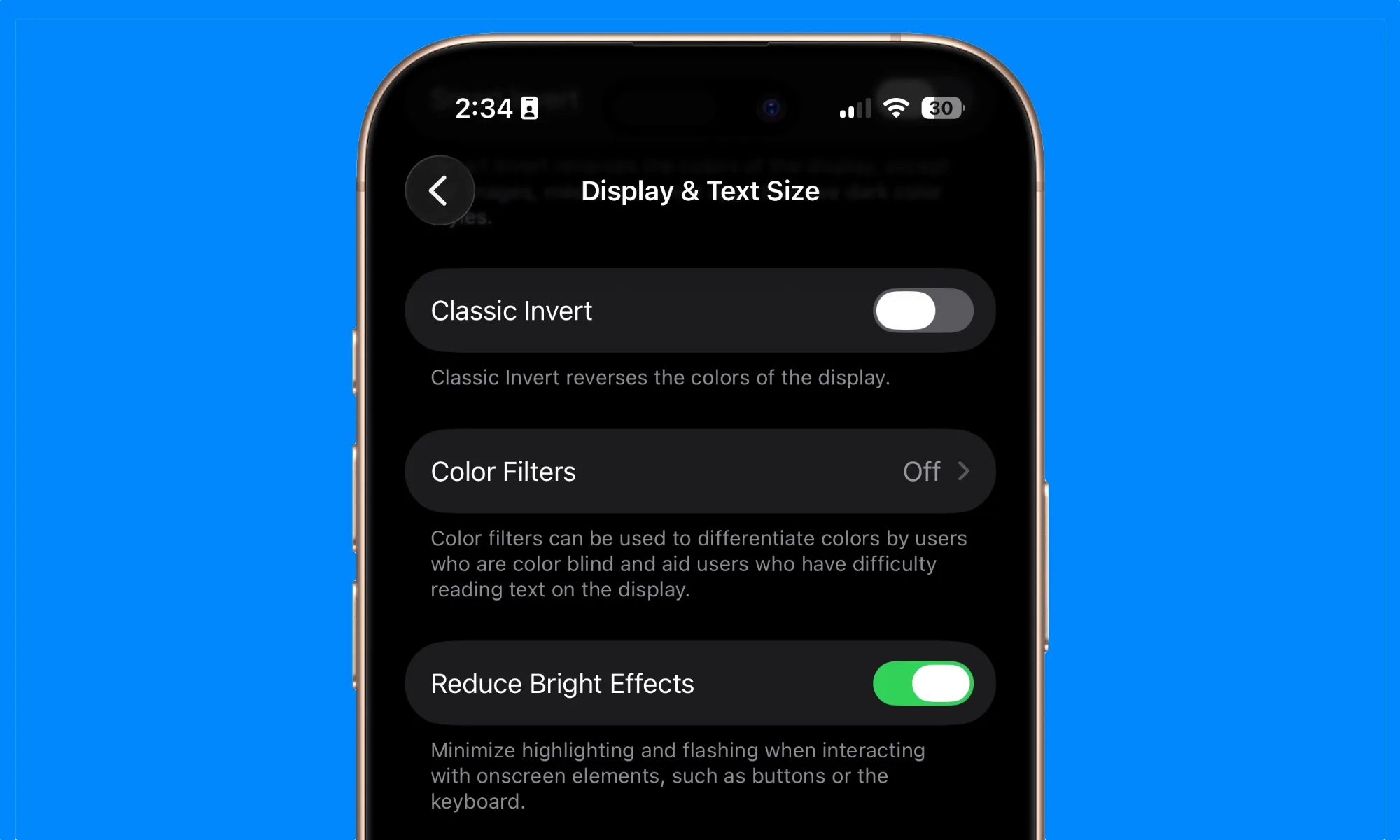
In the latest iOS 26.4 developer beta 4, Apple has added another setting called “Reduce Bright Effects” that minimizes highlighting and flashing when interacting with onscreen elements, such as buttons or the keyboard.
These flashing effects were particularly prominent on Apple devices with SDR screens, as shown by an X user in his post.
If this effect has been bothering you, you can finally turn it off using the new setting.
How to enable the Reduce Bright Effects setting on iPhone
The new setting has been released as part of Apple’s developer beta program. To get it, you need to be on the latest iOS 26.4 developer beta 4 version. Once you have updated your device, go to Settings → Accessibility ⇾ Display & Text Size, and turn on the toggle for “Reduce Bright Effects” settings.

If you are not running the developer beta on your iPhone, which I do not recommend installing on your primary device, you have to wait for the public beta or the stable release, which should arrive in about two weeks.

96% of UK adults unaware most Mother’s Day flowers come from East Africa

XRP Is BEST ALTCOIN Last 12 Months

York accountancy firm Clive Owen LLP wins awards in Leeds


-
Business4 days ago
Form 8K Entergy Mississippi LLC For: 6 March
-

 Fashion4 days ago
Weekend Open Thread: Ann Taylor
-

 News Videos1 day ago
10th Algebra | Financial Planning | Question Bank Solution | Board Exam 2026
-

 Crypto World21 hours ago
Paradigm, a16z, Winklevoss Capital, Balaji Srinivasan among investors in ZODL
-

 Tech5 days ago
Bitwarden adds support for passkey login on Windows 11
-
 Sports5 days ago
499 runs and 34 sixes later, India beat England to enter T20 World Cup final | Cricket News
-

 Sports3 days ago
Three share 2-shot lead entering final round in Hong Kong
-

 Sports2 days ago
Braveheart Lakshya downs Lai in epic battle to enter All England Open final | Other Sports News
-

 Business6 days ago
Guthrie Disappearance Enters Fifth Week as Family Visits Memorial
-

 Politics4 days ago
Top Mamdani aide takes progressive project to the UK
-

 NewsBeat5 days ago
Piccadilly Circus just unveiled ‘London’s newest tourist attraction’ and it only costs 80p to enter
-

 Entertainment3 days ago
Hailey Bieber Poses For Sexy Selfies In New Luscious Lip Thirst Traps
-

 Business2 days ago
Search for Nancy Guthrie Enters 37th Day as FBI Probes Wi-Fi Jammer Theory
-
 NewsBeat12 hours ago
Pagazzi Lighting enters administration as 70 jobs lost and 11 stores close across Scotland
-

 Tech22 hours ago
Despite challenges, Ireland sixth in EU for board gender diversity
-

 Crypto World6 days ago
New Crypto Mutuum Finance (MUTM) Reports V1 Protocol Progress as Roadmap Enters Phase 3
-
 Tech5 days ago
ACIP To Discuss COVID ‘Vaccine Injuries’ Next Month, Despite That Not Being In Its Purview
-
Entertainment5 days ago
Harry Styles Has ‘Struggled’ to Discuss Liam Payne’s Death
-

 Business17 hours ago
Search Enters 39th Day with FBI Tip Line Developments and No Major Breakthroughs
-
 NewsBeat5 days ago
Good Morning Britain fans delighted as Welsh presenter returns to host ITV show