Tech
Could a Bag of 20-Sided Dice Keep James Bruton’s Rideable Walker From Toppling?

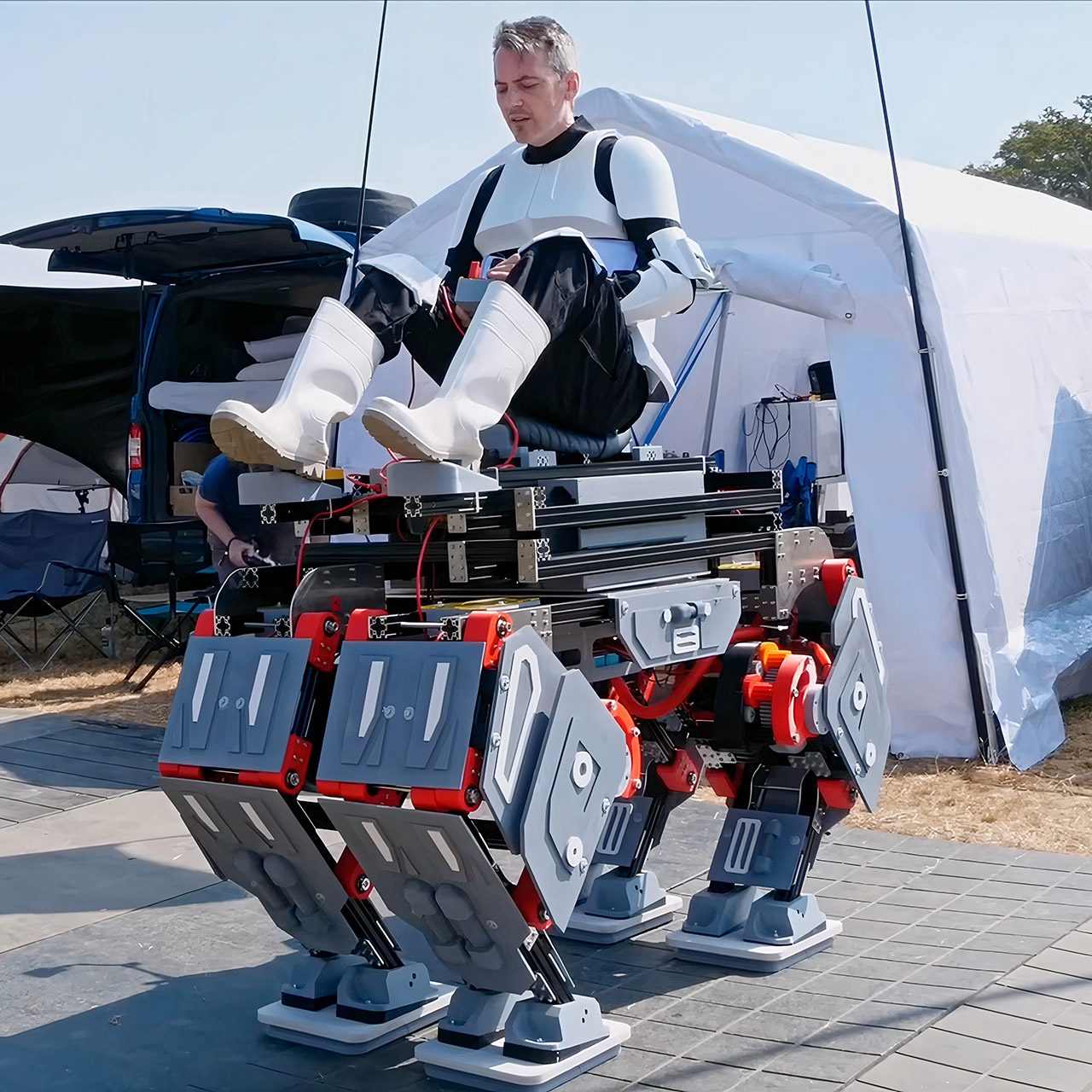
James Bruton keeps building machines that walk and are capable of carrying a person. His latest one is a compact quadruped he calls the Mid-Walker, open-sourced on GitHub under XRobots. Diagonal legs are mechanically linked so they swing in pairs. That means only two feet stay planted at any moment. On flat ground the setup works, but on anything uneven, it tips.

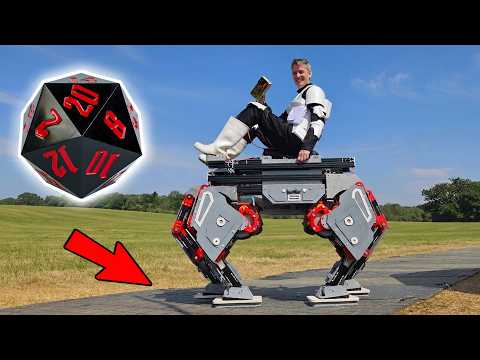
He added a third sliding portion beneath the seat that operates on desk-drawer sliders and is powered by a 2 kilowatt motor and controlled by an ODrive. That motor is powered by a ball screw. The seat adjusts left or right to keep the rider’s weight centered over the foot on the ground. It’s all held together with aluminum extrusions, bespoke plates, and T-nuts. One advantage of the sliding mass is that it helps, but it is insufficient to totally eliminate the problem of dips, uneven ground, and soft grass.


Bambu Lab A1 mini 3D Printer + LED Lamp Kit, Ready-to-Use for Beginners
- A1 mini + LED Lamp Kit for Creative Light Projects: Bring your ideas to life with the included LED Lamp Kit. Simply print compatible lamp models and…
- The Perfect 3D Printer for Beginners: A1 mini 3D Printer is designed to make 3D printing easy from day one with automatic calibration, simple setup…
- Experience the Bambu Lab Ecosystem: Access MakerWorld’s huge library of ready-to-print models, manage prints through the Bambu Handy app, and enjoy…
The earlier solid feet were built of hard materials with basic wedge-shaped plywood soles, which reduced the current required by the motors to maintain weight, but they still sat badly on uneven ground. Bruton investigated how a bean bag works and how it changes shape when you sit on it. A bean bag becomes stiff beneath your weight as the beans pack and lock together. So he decided to do the same with his feet.
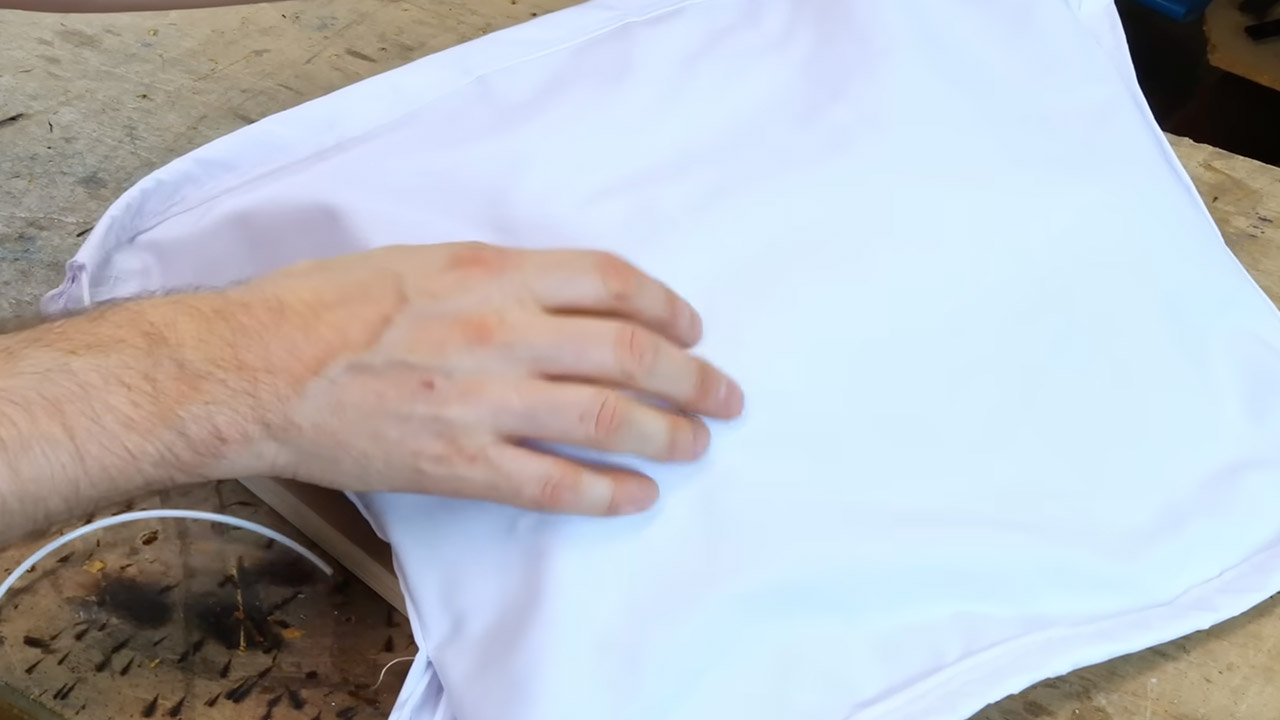
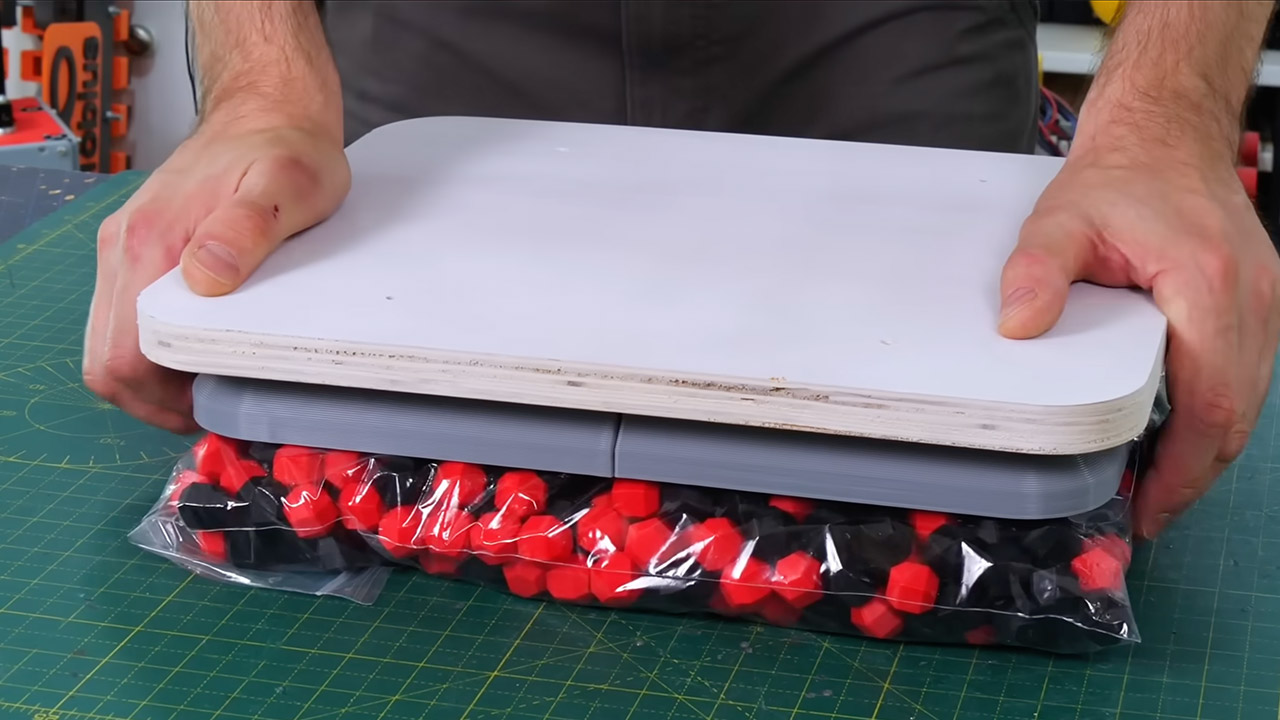
He packed the insides of the coverings with a combination of regular fabric and airtight, waterproof ripstop kite fabric. The drawstring at the top is printed with TPU to keep everything closed. He filled the covers with a mixture of dried beans and 3D printed 20-sided dice because real dice would have been too expensive, so he printed the icosahedron himself. The flat triangular faces were designed to give more edges for the beans to grab against each other, giving them a solid shape when pressed down. A small 3D printed component at the bottom of each foot was designed to assist the beans settle and provide a more solid structure.

Earlier this year, he took the machine to Electromagnetic Field Camp and ran it trough grass and trails with small edges and hollows. On level ground, everything worked flawlessly, and he and the machine could move around easily. When one of his feet landed on a dip, the beans piled up unevenly, the sole curled, and the entire machine rolled over. Overfilling made things worse. He tried cutting the fill in half and then using zip ties to secure the bags. This eased matters marginally, but the feet continued to shift when stressed and refused to form a strong solid grasp on the ground.
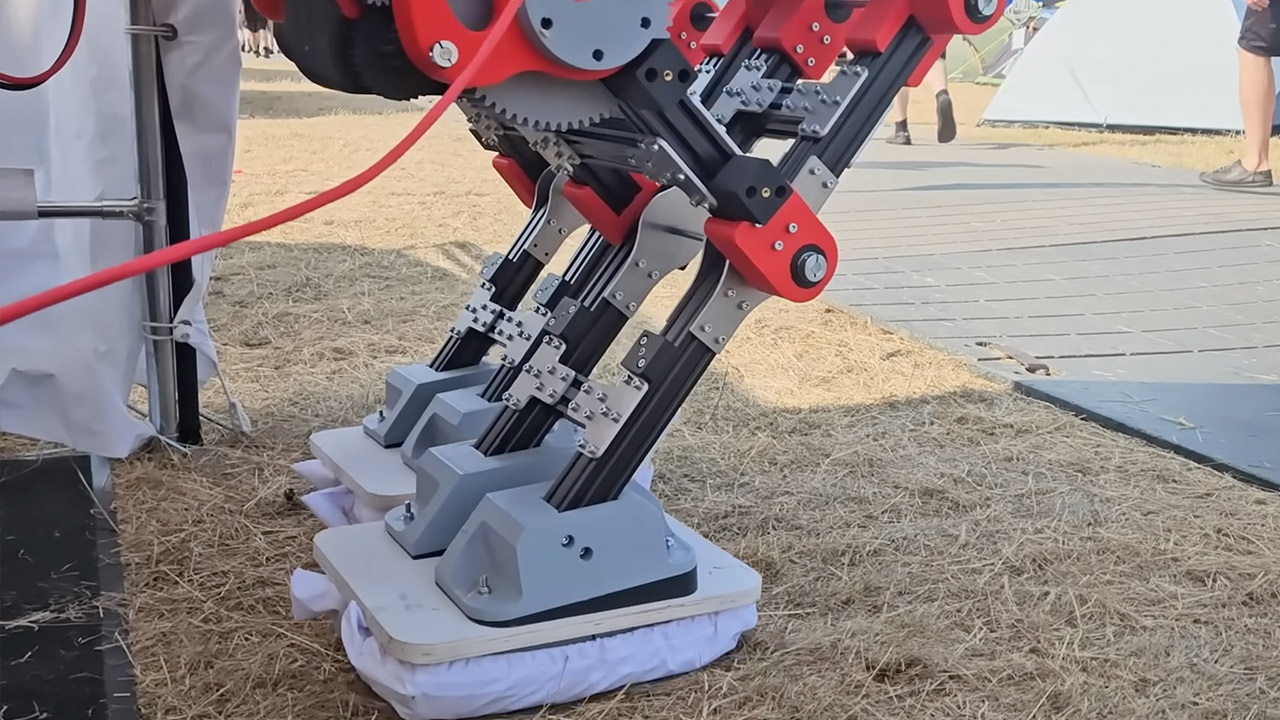
The difficulty was that the high mass caused the beans to move around rather than lock into place. Low mass made them feel as if they were sitting on a regular bean bag, but it wasn’t what he was looking for. The dice added some facets, but they couldn’t keep the beans from shifting when the machine began leaning, and the plastic bags just split under the strain. As a result, he was forced to utilize a more durable cloth in the end.
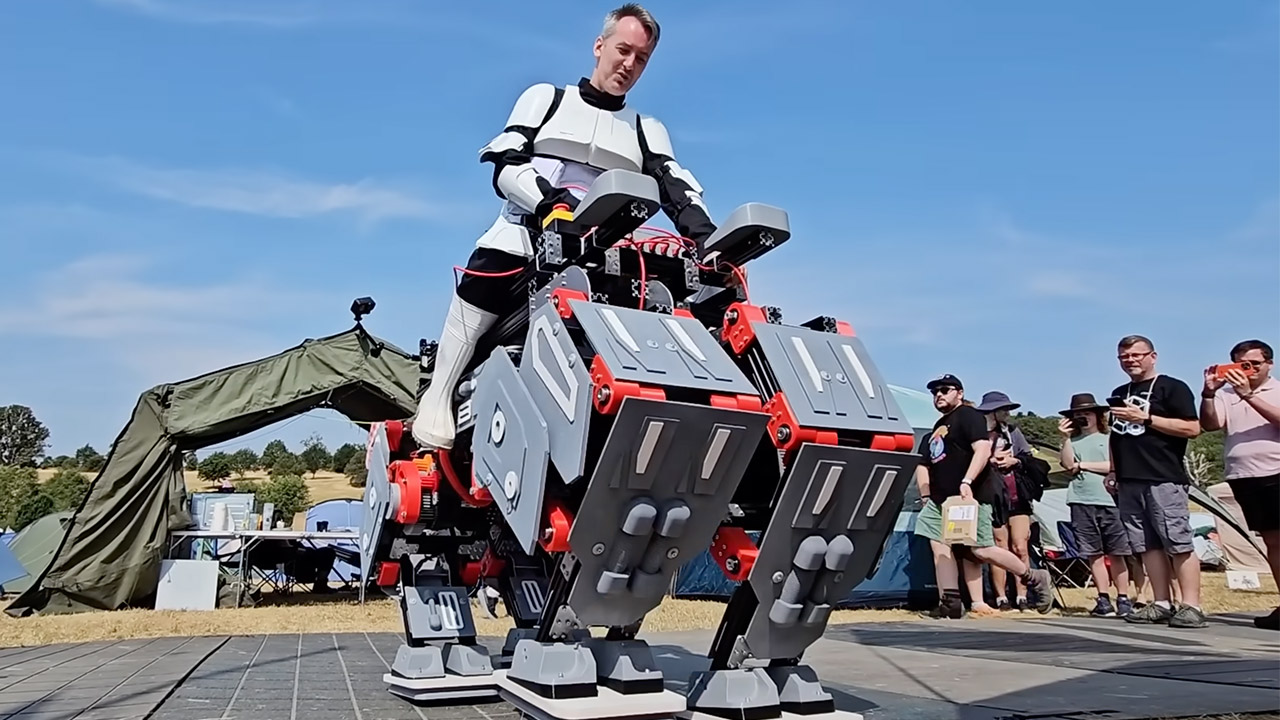
By the end of the tests, it was clear that the bean bag and dice concept had limits. Bruton reasoned that using smaller particles, such as BB pellets, could increase flow and locking, or that a vacuum system, similar to those used in soft robotics, would suffice. However, he prefers to keep things simple. Next, he plans to use passive two-way pivot ankles that can self-level and, once flat, be securely fastened in place with bar-clamp hardware. Load cells or an inertial sensor would inform the device when it makes solid contact, allowing it to engage the clamps without any motors competing with the gait.
You must be logged in to post a comment Login