Tech
Craft Recordings and Bluesville Announce Jimmy Reed and Skip James Vinyl Reissues

Craft Recordings and Bluesville are adding two more essential titles to one of the stronger all-analog blues reissue programs currently on vinyl: Jimmy Reed’s Jimmy Reed at Carnegie Hall and Skip James’ Devil Got My Woman. Both LPs have been cut from the original analog master tapes by Grammy-nominated engineer Matthew Lutthans at The Mastering Lab, using an AAA mastering chain, and pressed on 180-gram vinyl in partnership with Acoustic Sounds.
The packaging is not an afterthought, either. Each release comes in a tip-on jacket with an obi strip and new album reflections by Grammy-winning producer, songwriter, and bluesman Scott Billington—details that help distinguish Bluesville from the usual bare-bones catalog recycling. High-resolution and standard digital remasters will also be released alongside the vinyl editions.
Reed’s 1961 Jimmy Reed at Carnegie Hall is a studio recording despite the misleading title, and includes “Bright Lights Big City.” Skip James’ Devil Got My Woman, released in 1968, is a far starker and more intimate affair, built around the Delta blues legend’s singular guitar work, fractured vocals, and the title track that became his signature song.
The new releases follow Bluesville’s recent AAA editions of Albert King’s I’ll Play the Blues for You and Eddie Kirkland’s It’s the Blues Man!, both of which we just reviewed. Those records demonstrated that Craft is taking the series seriously: strong tape work, clean pressings, properly made jackets, and prices that have not yet wandered into the usual audiophile nonsense.
Related Reviews:
Jimmy Reed at Carnegie Hall Vinyl Reissue Brings a Blues Essential Back
Jimmy Reed’s Jimmy Reed at Carnegie Hall is not a live album, despite the title’s rather shameless attempt to borrow some Manhattan prestige. Originally released by Vee-Jay in 1961 as a double LP, the record was assembled from studio material rather than Reed’s actual Carnegie Hall appearance the previous year. Bluesville’s new edition focuses on the first disc, collecting sides A and B on a single 180-gram LP.


That distinction matters less once “Bright Lights Big City” begins rolling out of the speakers. Reed’s best work was built from deceptively modest ingredients: a loose, infectious shuffle, clipped electric guitar, harmonica, and a vocal delivery so relaxed it could sound almost casual. Yet the groove was nearly impossible to resist. “Bright Lights Big City” reached No. 3 on the R&B chart in 1961, crossed onto the Billboard Hot 100, and later became a No. 1 country hit for Sonny James. The song’s influence on British rock, country, and American blues is difficult to overstate.
Born Mathis James Reed in Dunleith, Mississippi, Reed became one of the defining figures of postwar electric blues after signing with Vee-Jay in 1953. Working closely with guitarist Eddie Taylor and drummer Earl Phillips, he built an extraordinarily successful run of singles that included “You Don’t Have to Go,” “Honest I Do,” “Baby What You Want Me to Do,” and “Big Boss Man.” His appeal was never about virtuoso fireworks. Reed made the blues feel conversational, danceable, and accessible enough that everyone from Elvis Presley and the Rolling Stones to Van Morrison and the Grateful Dead eventually came knocking.
The new Bluesville pressing includes “Bright Lights Big City,” “Tell Me You Love Me,” “Hold Me Close,” and “Blue, Blue Water,” the latter featuring Eddie Taylor and Phil Upchurch. It also benefits from the same careful production approach as the recently reviewed Bluesville editions of Albert King’s I’ll Play the Blues for You and Eddie Kirkland’s It’s the Blues Man!.
For listeners who know Reed only through compilations, or through somebody else covering “Big Boss Man” — this is a strong place to start. It is not the full double album, but it contains enough of Reed’s particular magic to explain why so many musicians spent the next several decades trying to find that same pocket.
Where to buy: $32.99 at Amazon (available August 21, 2026)
Skip James Devil Got My Woman
There are plenty of Delta blues records that sound old. Devil Got My Woman sounds as though it was transmitted from a place slightly outside time, where conventional tuning, meter, and emotional restraint were politely asked to leave the building.
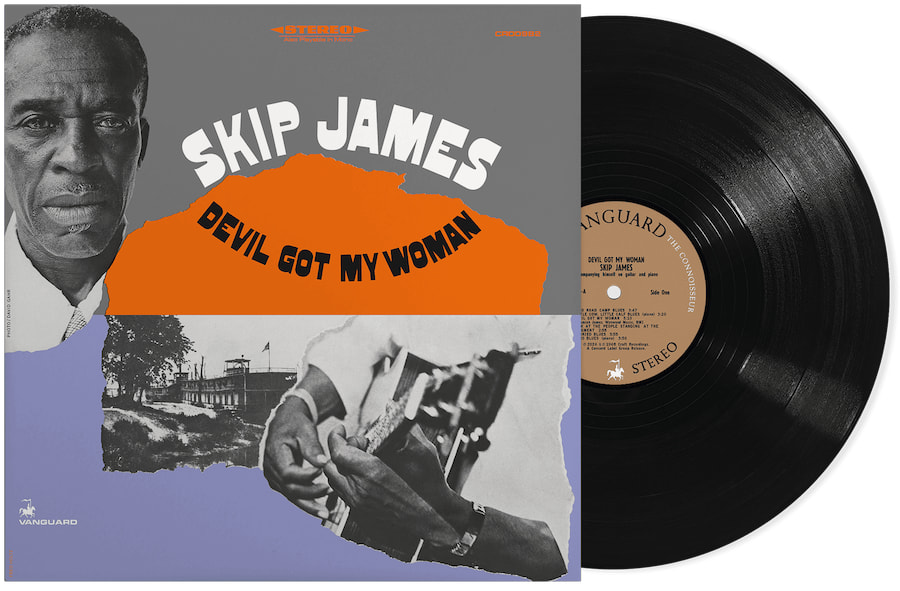
Born Nehemiah Curtis “Skip” James in Bentonia, Mississippi, James was never a conventional bluesman. His singing could rise into a high, ghostly falsetto, while his guitar work moved through unusual minor-key voicings and open D-minor tuning with a fluidity that still feels unnerving almost a century later. He was also a formidable pianist, and the music rarely follows the tidy twelve-bar rules that made other Delta blues artists easier for later generations to imitate.
James recorded for Paramount in 1931, but the records did not turn him into a star. The Depression did not help, nor did the fact that his music was too strange, too personal, and too far removed from the more accessible blues styles of the day. He largely disappeared from public view for more than three decades before John Fahey, Bill Barth, and Henry Vestine found him in a Tunica hospital in 1964.
That rediscovery brought James to the Newport Folk Festival and back into the studio, where he recorded a run of material for Melodeon, Takoma-related sessions later issued as She Lyin’, and Vanguard. Today! arrived in 1966, followed by Devil Got My Woman in 1968, his final album released during his lifetime.
The Vanguard set is a solo performance in the truest sense. James handles the vocals, guitar, and piano himself, moving between instruments rather than relying on a backing band to soften the edges. The title track, a revisiting of one of his 1931 Paramount sides, remains the centerpiece, but the album is deeper than a single famous song. “Little Cow, Little Calf Blues,” “22-20 Blues,” “Sickbed Blues,” and “Illinois Blues” reveal a musician still capable of making familiar blues language feel unsettling, intimate, and completely his own.
James died in 1969, only a year after Devil Got My Woman was released, but the music kept finding new listeners. The title track later reached a wider audience through Ghost World and was inducted into the Grammy Hall of Fame in 2020. That is deserved recognition, although the better reason to own this album is simpler: nobody else in blues sounded remotely like Skip James, and nobody has managed to replace him since.
Where to buy: $32.99 at Amazon or get both for $57 at Craft Recordings (available August 21, 2026)
You must be logged in to post a comment Login