Tech
Craftsman Chris Transforms a Dumpster Window Air Conditioner Into a DIY Geothermal Heat Pump

Two thousand feet of half-inch PEX already slept six to eight feet under Craftsman Chris’s yard when his first homemade cooling plan came up short. Four parallel five-hundred-foot slinky loops and a Taco 009 pump pushed water through a heat exchanger in the furnace plenum, yet the dirt had baked in the sun after excavation and the loop stayed warmer than he needed. Direct ground water barely cooled the house. He needed a machine that could pull heat out of indoor air and dump it into that soil instead of into hot summer wind.


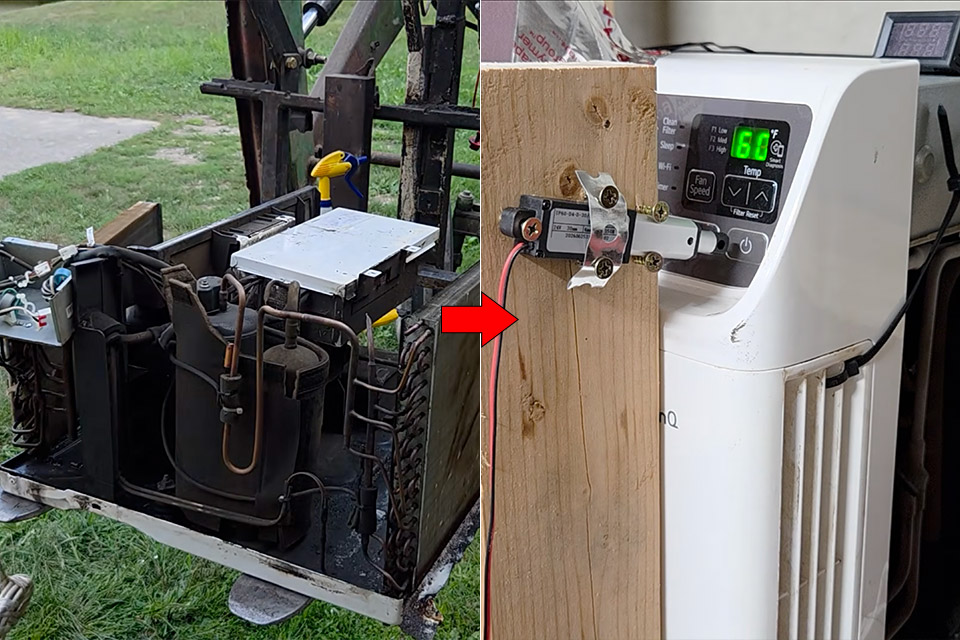
Chris ended up with a 14,000 BTU LG Dual Inverter window unit that he fished from a dumpster. After cleaning the coils with Simple Green and a fin brush, and then washing them with soapy water, he was able to free up the condenser fan without touching any of the copper piping. He then moved the outdoor coil roughly 90 degrees without damaging a single copper line, ensuring that the refrigerant remained sealed. A little of scrap sheet metal and a MIG welder came in helpful for creating a water jacket around the coil, and to make it all work, he rigged up the ground-loop water to feed in at the top, surround the condenser, and exit at the bottom into the underground PEX tubing.
Sale

JISULIFE Handheld Fan Pro1S – Next-Gen Airflow: Up to 40H Runtime
- Brushless Motor – Super Power: The combination of a three-phase brushless motor and a 5000mAh battery significantly improves the wind speed, power…
- Scroll Switch – Customizable Wind Speed: This small fan adopts a scroll switch design, and the wind speed can be adjusted steplessly. The portable fan…
- Fashionable Design – Metal Body: The body of this handheld fan is made with advanced oxidation technology, giving it a metal-like texture. Its smooth…
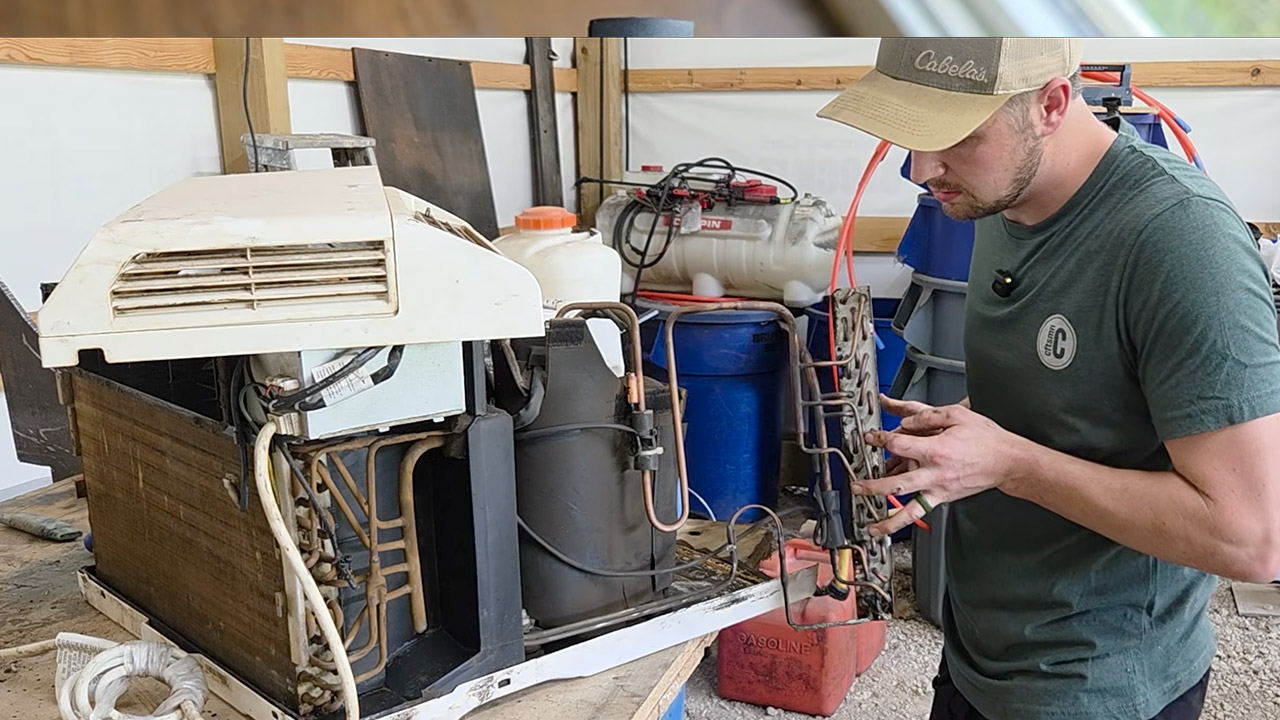
Keeping the sealed circuit intact was important since he never cut any tubing or vented the refrigerant, thus the compressor and valves continued to function properly. Of course, new problems arose anyhow. For one reason, oil might accumulate at the new low point of the spun coil, starving the compressor. Then there was the issue of uninsulated aluminum on the water jacket absorbing extra heat, as well as air bubbles requiring a long time to purge. I suppose the final nail in the coffin was that the safety plug on the original power cord wouldn’t reset, so he had to temporarily replace the power cord end. Nonetheless, none of these concerns prevented him from running the test.

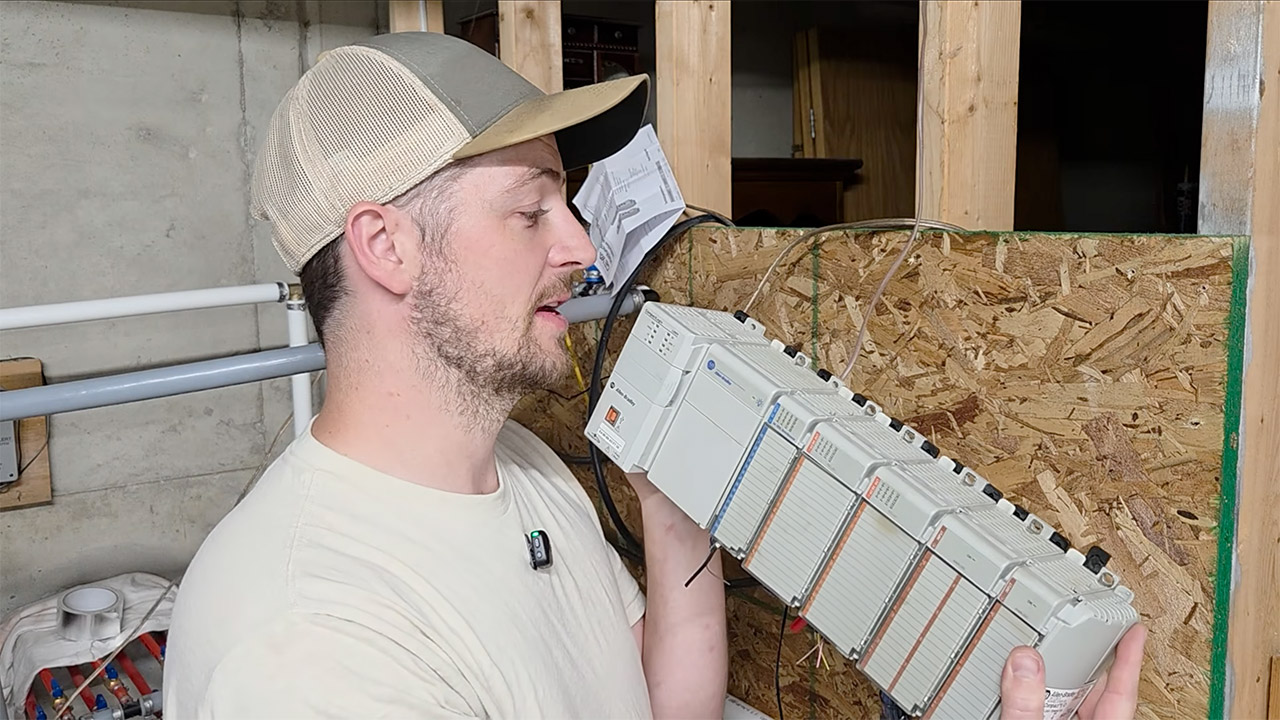
The control system for the device remained fairly rough, almost as beat up as the tank. He set together an old programmable logic controller and a linear actuator to hit the stock power button whenever the thermostat signaled for cooling. Not exactly a beautiful interface, but rather a production remnant that looks like it belongs on a plant floor and is being used to click a single button on a thermostat. The water flow rate through the jacket was around 3.3 gallons per minute, utilizing the same Taco pump that already serves the loops.
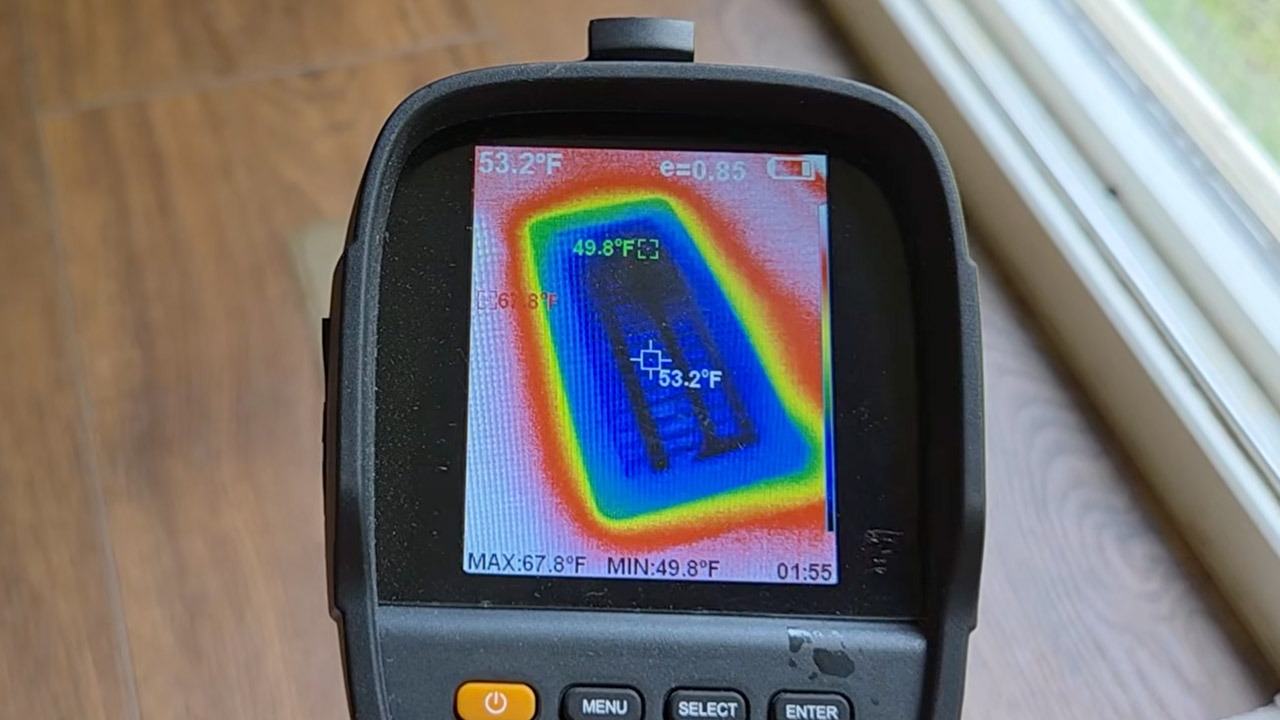
The first true run produced somewhat better results than the previous plenum-only setup. The air leaving the unit was between 49 and 54 degrees. He detected a temperature split of 26.5 degrees, which is fairly good. Water entering and leaving the underground loops varied by barely 3 to 5 degrees, but the jacket itself typically reached the upper 70s or low 80s. As an extra benefit, the cool air was actually making its way upstairs into the main living area. The next topic on the agenda is whether a single window unit and 2,000 feet of piping in the backyard can keep the entire house cool all summer.
[Source]
You must be logged in to post a comment Login