Tech
Custom-Built Spray Paint Machine Creates Any Color You Want, Right When You Need It
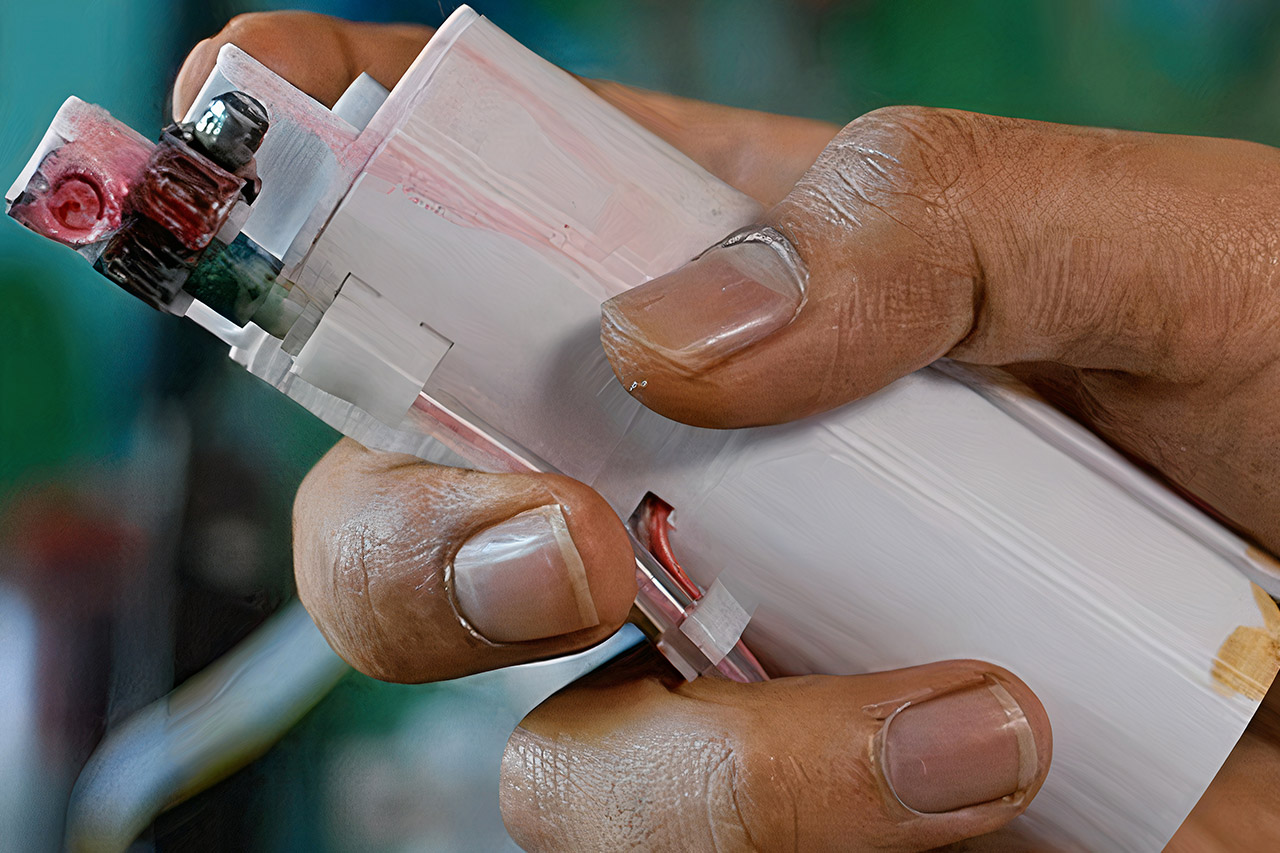
Spray paint artists have long dealt with a frustrating problem. Getting the range of colors a single mural might need means carrying a heavy collection of cans and inevitably running out of one shade mid-project with a pile of barely used others left over. Sandesh Manik spent years as a mechatronics student building a solution he calls Spectrum, a compact machine that draws from four standard spray cans and blends them into hundreds of custom shades on demand.


Spectrum gives artists the freedom to call up any color on the fly and spray it through a single nozzle without stopping to swap cans or pre-mix batches. Manik’s goal from the start was to build something that worked with standard off the shelf spray cans, avoiding the need for custom components or expensive pumping systems. Early testing quickly revealed just how difficult that constraint would make things.
Sale


SCRIB3D P1 3D Printing Pen with Display – Includes 3D Pen, 3 Starter Colors of PLA Filament, Stencil Book…
- [FOR CREATIVE PROJECTS] Create, draw, doodle, and build in 3D with this versatile, high-quality 3D pen. The SCRIB3D P1 enhances spatial thinking…
- [READY-TO-USE KIT] Includes 3 colors (30 feet) of PLA plastic to keep you Doodling for ages, as well as a power adapter, step-by-step manual, and a…
- [BEGINNER FRIENDLY] Plug the adapter into the back of the pen and choose your filament. The red light will turn on indicating warm up, this will take…
The core problem turned out to be trickier than expected. Different cans operate at slightly different pressures, and trying to push multiple colors through the same tube simultaneously was a reliable recipe for leaks and backpressure. Manik worked around issue by using a pulsing mechanism that opens valves one at a time, unleashing short bursts of each hue in quick succession. A ratio of one part red to eight parts white, for example, indicates that the white valve remains open for longer than the red valve throughout each cycle. These pulses pass down a small one-millimeter tube, where turbulence thoroughly blends them before they reach the nozzle. Color changes take only a second or two, and the tube diameter is important to its effectiveness, large enough to sustain spray pressure but tiny enough to keep color transitions sharp.
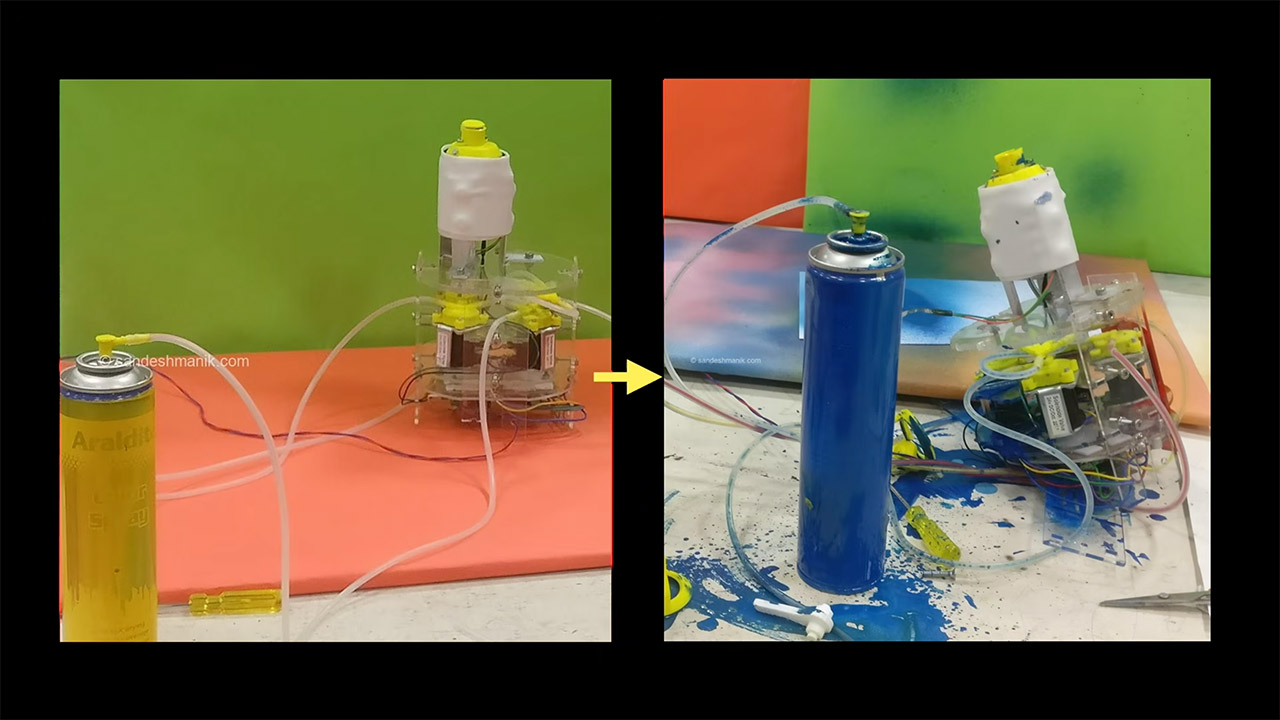
Getting the pulse system to work consistently was the most difficult aspect of the build. Standard solenoid valves clog easily because dried paint collects inside the moving parts, so Manik designed his own rotational pinch valves instead. A small stepper motor turns a lever that squeezes or releases a flexible silicone tube, which is frequently pinched tight to prevent leaks or backflow. The paint never comes into touch with the mechanism, therefore the entire system stays clean and uniform. An Arduino Nano sits at the heart of it all, reading four knobs on the handle, calculating the exact pulse lengths for each hue, and firing the valves at precisely the right time, all while a display on the side indicates the current settings.

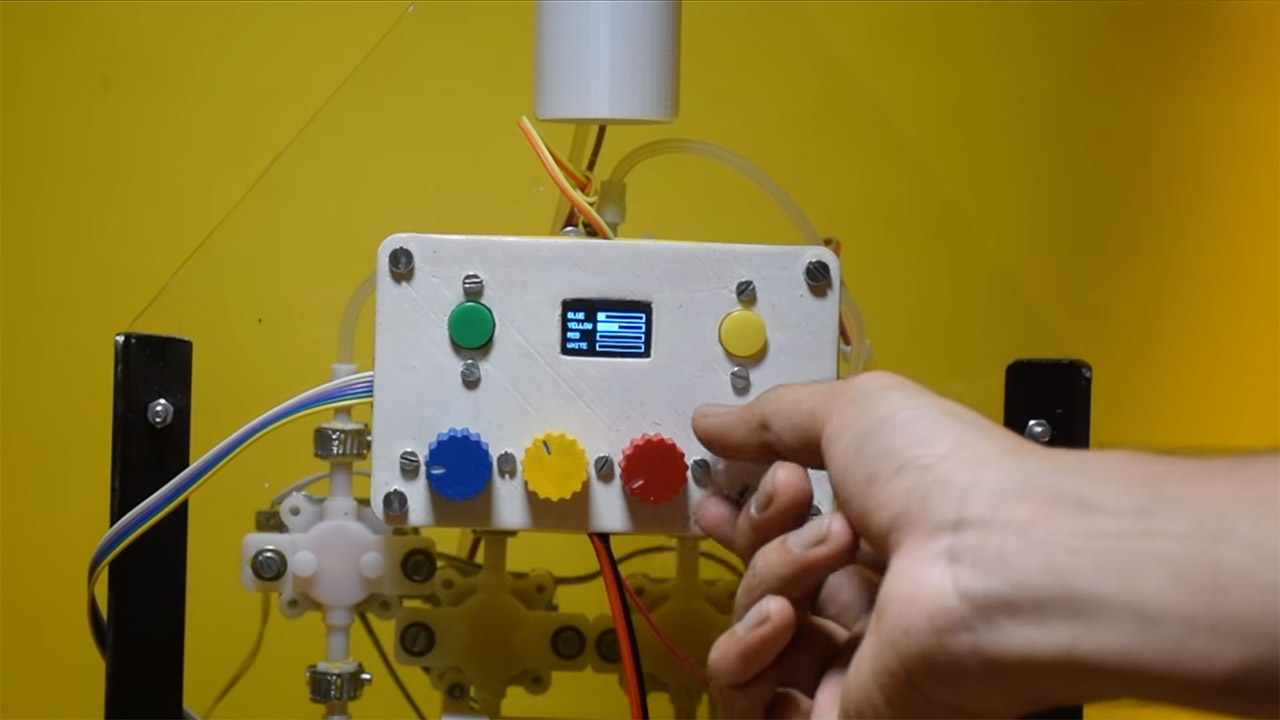
Pulling the trigger gets the paint moving, and a force sensor built into the trigger adds an extra layer of control. Squeeze harder and the color mix shifts smoothly toward a different tone, creating natural looking gradients through pressure alone without touching a single dial. The whole build is designed for a home workshop, using silicone tubing to carry the paint, 3D printed fittings to keep connections tight, and simple toggle levers to hold the can nozzles open when needed. Total materials cost came in at under $150.
[Source]
You must be logged in to post a comment Login