Tech
Custom Hammond Organ Boasts Hand-Cranked Tonewheels and Twelve Keys That Sing Through Steel

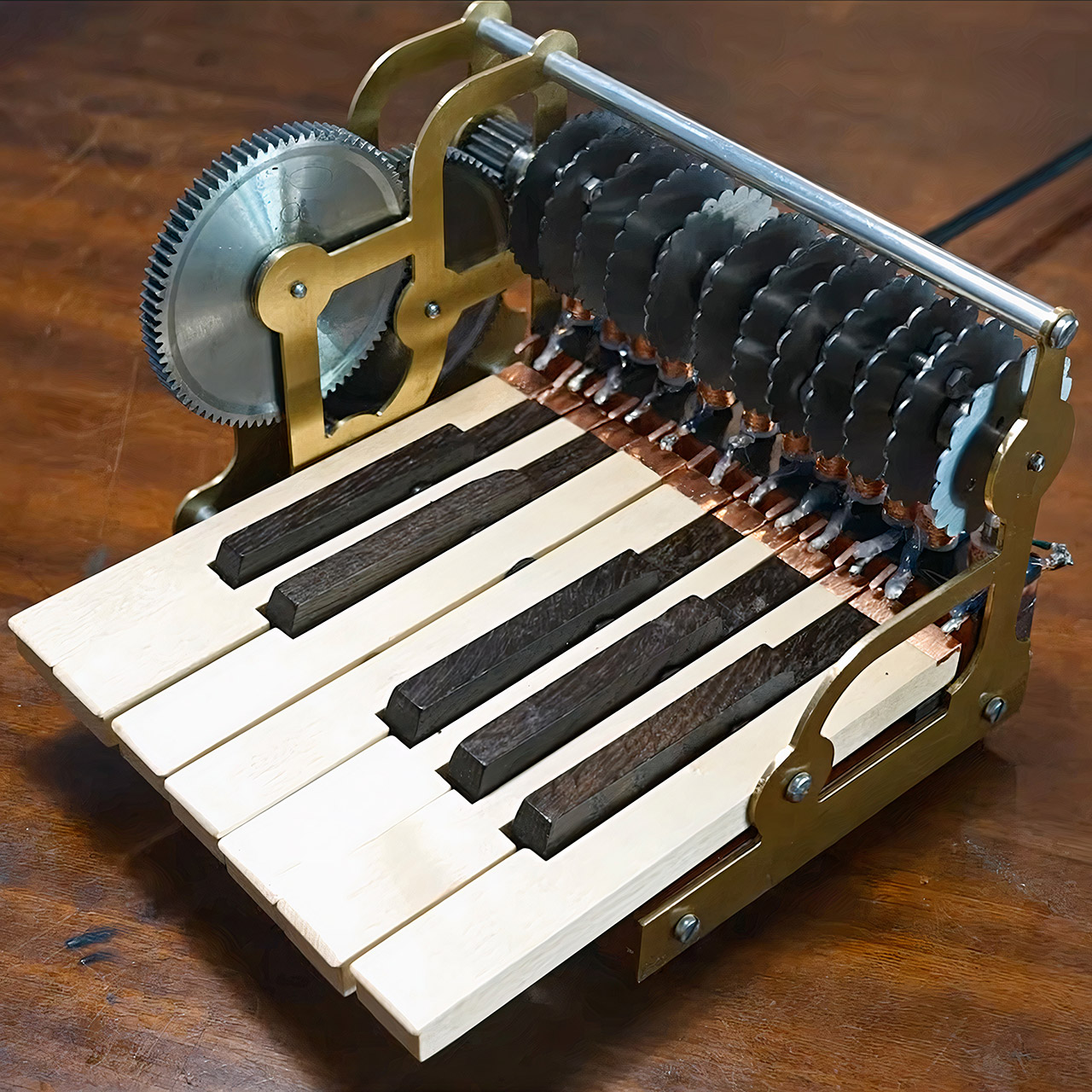
Uri Tuchman decided a musician friend needed a present that could actually make noise. He chose the Hammond organ, that old electromechanical machine whose spinning iron disks and magnetic coils once filled churches and stages with pure tones. Instead of a full console, he built a single octave version he could turn by hand. The result sits somewhere between a careful reconstruction and a living demonstration of how sound can come from metal moving past a coil.


He began with these keys, the white ones made of strong maple wood and the black ones from a denser hardwood that didn’t have a fancy name. Each key boils down to a simple on/off switch; press it, and the circuit closes. Twelve keys, twelve switches; that portion seemed almost routine until you looked closer at the woodwork, how clean the cuts were, and how perfectly the entire mechanism fit inside the brass frame.
Sale


Elgato Stream Deck MK.2 Studio Controller, 15 Macro Keys
- 15 Customizable LCD Keys: instantly control your apps, tools and platforms.
- One-Touch Operation: trigger single or multiple actions, launch social posts, adjust audio, mute mic, turn on lights, and much more.
- Visual Feedback: know that your command has been executed.
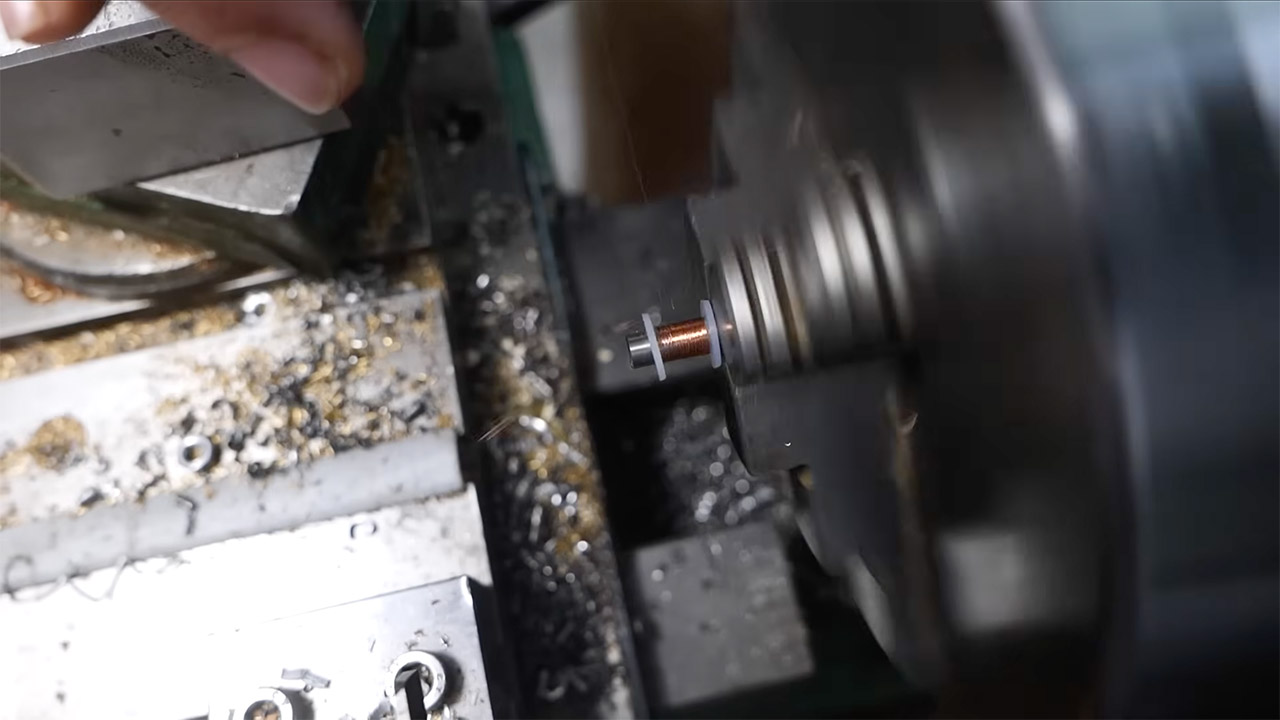
Next came the pickups. Each is a coil of copper wire wrapped around a steel rod, similar to how a guitar pickup works. The coil is up against a revolving tonewheel. When the edge of the iron disk moves past the rod, the changing magnetic field creates a little current. The little current is the note. Uri coiled the coils carefully to ensure that the signal was powerful enough to drive a standard guitar amp with no further electronics in between the pickups and the amp. One key, one tonewheel, and twelve notes.

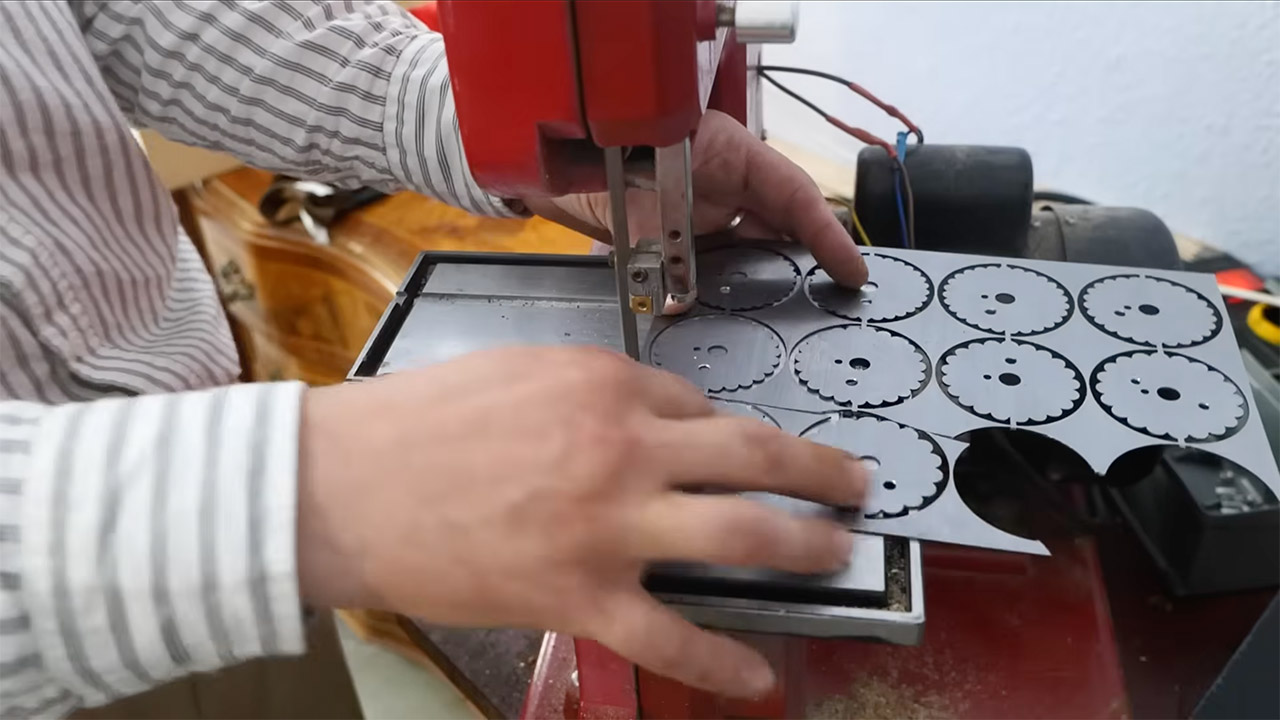
The tonewheels themselves had to be built of iron or steel because it was the only metal that had enough of an effect on the magnetic field to produce a useful signal. Uri had them laser cut to ensure precise results. The edges are not sharp gear teeth, but rather smooth rounded profiles designed to produce something similar to a sine wave when they spin past the pickup. The tough part is finding the perfect spacing between those profiles. Equal temperament necessitates ratios based on the twelfth root of two, which is a tall order considering you’re working with metal; gears and cut disks can only scrape the surface of those ratios. Hammond’s first machines never quite achieved perfect equal temperament, but they came close enough that the ear was content to accept the result, and that minor imperfection became part of the instrument’s character. Uri’s smaller set operates on the same principle: the disks rotate on a common shaft powered by a hand crank and a few gears.
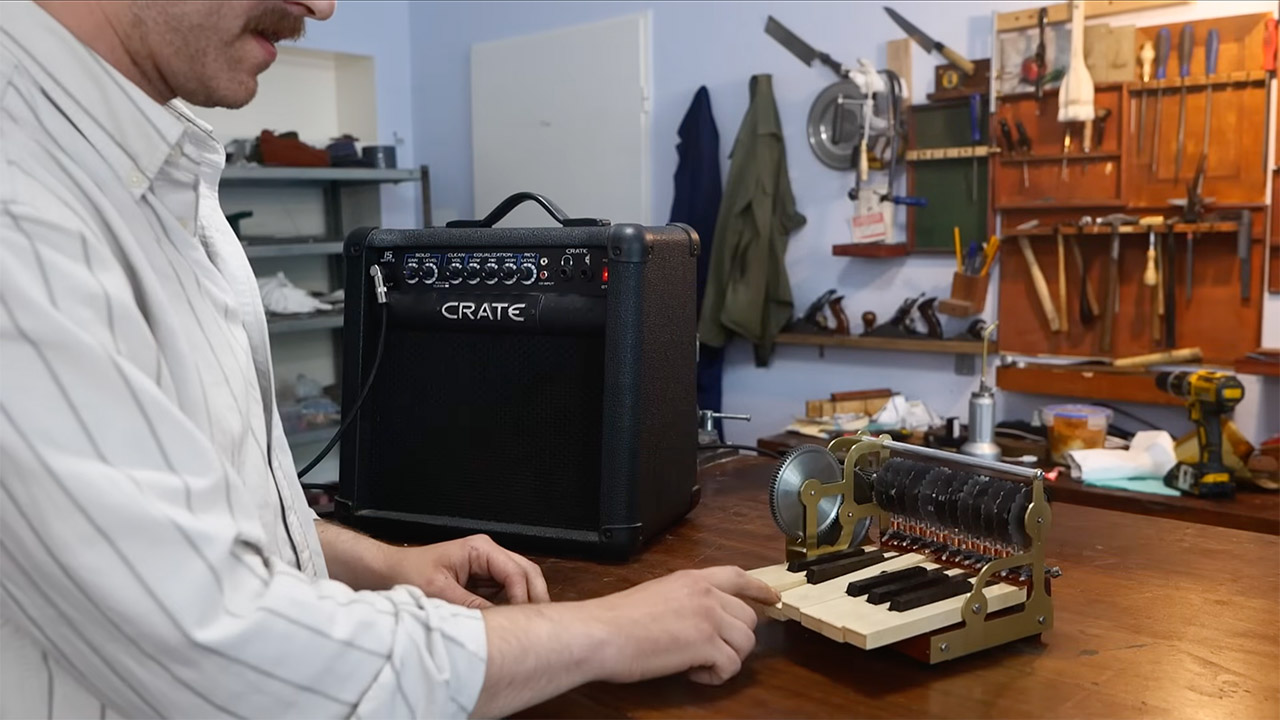
Because everything can spin at any pace you like, tuning is entirely up to you. If you spin it too slowly or too fast, every note begins to tremble. That constraint becomes a feature in the finished instrument. Changing the speed of the crank while a key is still held down causes all of these sliding warbling effects that a fixed speed motor could never achieve. The device simply plugs into a guitar amplifier. No fancy Leslie speakers, no drawbars, and no frequency doubling. You get the raw output of twelve mechanical oscillators.
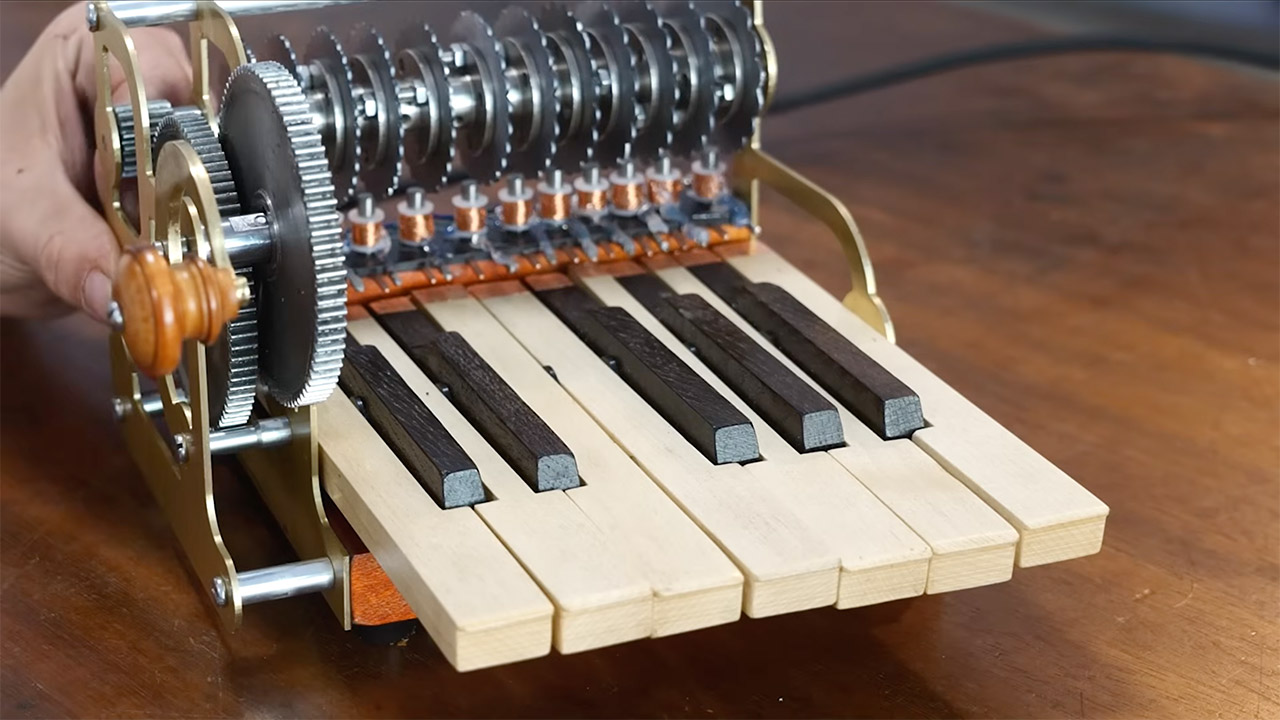
The finished organ is pretty compact, made largely of brass and wood, with dark iron disks poking out from the inside. It appears more like a well-made tool than a polished musical instrument. Which is suitable for the project. Uri has a long history of creating things that clearly demonstrate how they work. This organ does the same. The wheels spin, the keys close the circuit, and the pure tones appear as soon as the crank reaches the proper speed. The sound is a little thin compared to a full-on Hammond, and it’s intentionally faulty, but the mechanism is obvious.
[Source]
You must be logged in to post a comment Login