

Connect with us

Tech

Daily Deal: The 2026 Microsoft Office Pro Bundle

Published

on

from the good-deals-on-cool-stuff dept

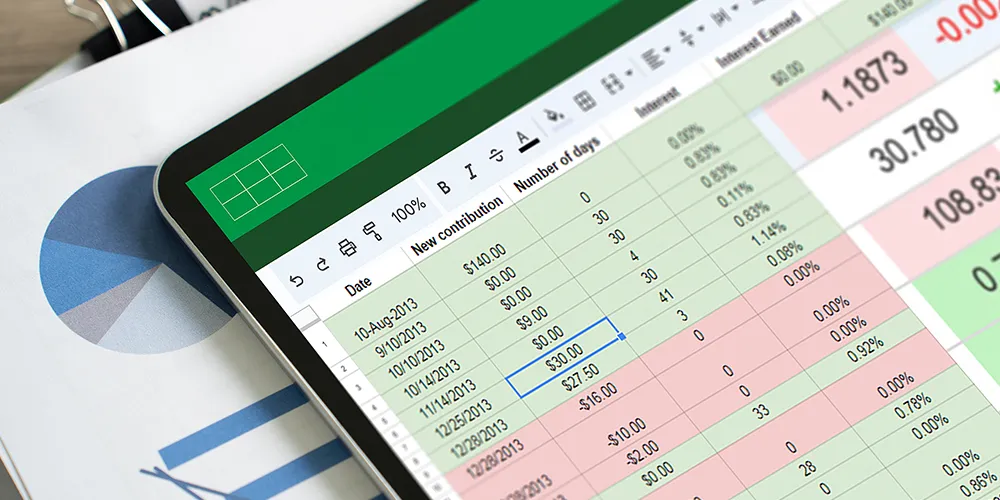
The 2026 Microsoft Office Pro Bundle has 8 courses to help you master essential Office skills. Courses cover Access, PowerPoint, Word, Excel, and more. It’s on sale for $25.

Note: The Techdirt Deals Store is powered and curated by StackCommerce. A portion of all sales from Techdirt Deals helps support Techdirt. The products featured do not reflect endorsements by our editorial team.

Filed Under: daily deal

Source link

Advertisement
Continue Reading
Click to comment

Leave a Reply

Your email address will not be published. Required fields are marked *

Tech

Palantir Sues Swiss Magazine For Accurately Reporting That The Swiss Government Didn’t Want Palantir

Published

on

from the surveillance-streisand dept

If you run a company whose entire value proposition is the ability to see patterns, predict outcomes, and connect dots that others miss, you’d think someone in the building might have flagged that suing a small independent magazine over unflattering-but-accurate reporting would only guarantee that millions more people read it.

And yet, here we are.

Palantir Technologies, the infamous surveillance and data analytics giant chaired by Peter Thiel, has filed a lawsuit against Republik, a small Swiss online magazine, over a pair of investigative articles published in December. The articles, produced in collaboration with the investigative collective WAV, detailed a years-long, multi-ministry charm offensive by Palantir to sell its software to Swiss federal authorities. The campaign was, by all accounts, a comprehensive failure. Swiss agencies rejected Palantir at least nine times, with concerns ranging from data sovereignty to reputational risk to the simple fact that nobody needed the product.

The reporting was based on documents obtained through 59 freedom of information requests filed with Swiss federal agencies. The key finding was an internal Swiss Armed Forces report that concluded Palantir’s software posed unacceptable risks because sensitive military data could potentially be accessed by U.S. government intelligence agencies. As the Republik article details:

Advertisement

The authors of the report state that using Palantir’s software would increase dependence on a U.S. provider. It also poses the risk of losing data sovereignty and thereby national sovereignty.

Above all, however, the army’s staff experts say it remains unclear who has access to data shared with Palantir. The following sentence from the Swiss Army report is particularly relevant: “Palantir is a U.S.-based company, which means there is a possibility that sensitive data could be accessed by the US government and intelligence services.”

As if it’s any sort of surprise that European governments are wary of betting on US tech companies with close ties to the US government. It’s not like reports of US spies co-opting US tech companies for surveillance efforts haven’t been front page news over the past twenty years. And now, this administration—with its willingness to antagonize everyone in Europe, and its close ties to Palantir and Thiel? It’s no freaking wonder that the Swiss government was like “yo, maybe pass.”

So how does a sophisticated data intelligence company respond to well-sourced investigative journalism based on official government documents?

By suing the journalists, of course.

Advertisement

But here’s the thing that makes this even more absurd: Palantir isn’t even claiming the articles are false. The company isn’t suing for defamation. It isn’t seeking damages. Instead, it’s invoking a Swiss “right of reply” statute, alleging that Republik didn’t give the company a sufficient opportunity to respond. Palantir wants the court to force the magazine to publish lengthy counter-statements to each article.

According to the FT:

Palantir’s lawsuit, filed in January, is not seeking damages or making libel claims against Republik, but instead alleges that the company was not given sufficient right to reply under Swiss media law. The company objects to Republik’s presentation of the public documents and believes its right to reply has been wrongfully denied.

….

Republik’s managing director Katharina Hemmer said Palantir had wanted the magazine to publish a very lengthy counterstatement to each article. Republik believed the proposed statements did not fairly address or rebut the reporting, she said, adding that the magazine stands by its reporting.

Advertisement

To which I say: good. Because Palantir’s demand here is absurd. Oh boo-fucking-hoo, the big defense contractor didn’t like the coverage? Pull on your big boy pants and get over it. Switzerland’s right of reply law exists so people can correct factual errors, not so corporations can force publications to run PR copy because they didn’t like the tone of accurate, document-based reporting.

And it’s worth noting: Palantir has already used other avenues to respond. The company published a blog post complaining that the Republik article “paints a false and misleading picture” and “hinders important discussions about the modernization of European software.” They’ve got the platform. If Palantir wants to push back on the story, they have many methods of doing so. Hell, they can do so on X any time they want—on what Musk and company like to call the global town square for free speech.

But that’s apparently not enough. Instead, a multibillion-dollar American defense and intelligence contractor is hauling a small independent Swiss magazine into court, not because anything the magazine published was wrong, but because Palantir wants to force the publication to run its talking points under legal compulsion.

Compelled speech isn’t free speech, guys. And this is nothing more than a blatant intimidation campaign to frighten away reporters from reporting the truth about Palantir.

Advertisement

The European Federation of Journalists has called this exactly what it is: a SLAPP suit—a strategic lawsuit against public participation, designed to use the weight and cost of litigation to intimidate and punish journalists for doing their jobs.

“The investigation conducted by WAV and Republik into Palantir is largely based on official documents that journalists were able to access thanks to Swiss freedom of information law,” notes EFJ President Maja Sever. “The legal action brought by this powerful multinational firm against a small Swiss media start-up is, in our view, an attempt at intimidation aimed at discouraging any critical analysis of Palantir’s activities.”

And in case you didn’t catch the irony: the Swiss military rejected Palantir in part because of fears about a heavy-handed American entity with uncomfortably close ties to U.S. intelligence. Palantir’s response to the reporting of that rejection? Behave like a heavy-handed American entity trying to bully a small foreign publication into submission. If anyone at Palantir had run this decision through their own pattern-recognition software, you’d hope a few red flags would have popped up.

Meanwhile, the lawsuit has done exactly what anyone with a passing familiarity with the Streisand Effect could have predicted. The original Republik articles were about the Swiss government politely but firmly declining Palantir’s advances—an embarrassing but relatively contained story.

Now, thanks to the lawsuit, the story has gone international. The Financial Times is covering it. The European Federation of Journalists is covering it. A UK member of parliament has already cited the Republik investigation during a debate on British defense contracts with Palantir, using the story to suggest that the British government “pivot away” from Palantir.

Advertisement

The Republik investigation itself is genuinely worth reading, and not just because Palantir desperately doesn’t want you to.

It paints a picture of a company that spent seven years working every angle to get Swiss federal agencies to buy its products—approaching the Federal Chancellery during COVID, pitching the Federal Office of Public Health on contact tracing, presenting anti-money laundering software to financial regulators, making repeated runs at the military—and getting turned away at every door. Sometimes embarrassingly, such as the Federal Statistical Office director apparently just ignoring Palantir’s outreach entirely.

For a company that brags about its ability to “optimize the kill chain” and whose CEO once told investors that “Palantir is here to disrupt… and, when it’s necessary, to scare our enemies and occasionally kill them,” getting politely rejected by the Swiss statistical office has to sting a little.

But suing the journalists who reported on it? When the entire basis of your lawsuit is “we want you to publish our talking points” rather than “anything you published was wrong,” it makes pretty clear you don’t actually have a substantive response to the reporting. If Palantir thinks the picture is false, the remedy is to demonstrate that the documents are wrong—not to drag a small magazine through expensive litigation until it capitulates or goes broke.

Advertisement

Seriously, how fucking fragile are the egos in the Palantir executive suite that they can’t handle a bit of mildly embarrassing reporting? Grow up.

A Zurich court is expected to rule on the case in March. Whatever the outcome, Palantir has already lost the only contest that matters: the one for public perception. For a company that sells the ability to see around corners, they apparently never thought to search “The Streisand Effect.”

Filed Under: chilling effects, free speech, journalism, right to reply, swiss government, switzerland

Companies: palantir, republik

Advertisement

Source link

Continue Reading

Tech

Skullcandy Crusher PLYR 720 review: a thumping gaming headset with an equally hard-hitting price tag

Published

on

Why you can trust TechRadar


We spend hours testing every product or service we review, so you can be sure you’re buying the best. Find out more about how we test.

Skullcandy Crusher PLYR 720: two-minute review

The Skullcandy Crusher PLYR 720 is an open-back headset with a bass-heavy sound designed to impart as much impact as possible when playing games.

For a gaming headset, the Crusher PLYR 720 has quite a muted appearance; even the RGB lighting is restrained. In fact, the most prominent feature is the sheer bulk of the drivers, which are hard to ignore and aren’t exactly flattering when cupped over your ears.

Advertisement

Source link

Advertisement
Continue Reading

Tech

NASA Is Making Big Changes to Speed Up the Artemis Program

Published

on

“This is just not the right pathway forward,” Isaacman said.

A senior NASA official, speaking on background to Ars, noted that the space agency has experienced hydrogen and helium leaks during both the Artemis I and Artemis II prelaunch preparations, and these problems have led to monthslong delays in launch.

“If I recall, the timing between Apollo 7 and 8 was nine weeks,” the official said. “Launching SLS every three and a half years or so is not a recipe for success. Certainly, making each one of them a work of art with some major configuration change is also not helpful in the process, and we’re clearly seeing the results of it, right?”

The goal therefore is to standardize the SLS rocket into a single configuration in order to make the rocket as reliable as possible, and launching as frequently as every 10 months. NASA will fly the SLS vehicle until there are commercial alternatives to launch crews to the moon, perhaps through Artemis V as Congress has mandated, or perhaps even a little longer.

Advertisement

Is Everyone on Board?

The NASA official said all of the agency’s key contractors are on board with the change, and senior leaders in Congress have been briefed on the proposed changes.

The biggest opposition to these proposals would seemingly come from Boeing, which is the prime contractor for the Exploration Upper Stage, a contract worth billions of dollars to develop a more powerful rocket that was due to launch for the first time later this decade. However, in a NASA news release, Boeing appeared to offer at least some support for the revised plans.

“Boeing is a proud partner to the Artemis mission and our team is honored to contribute to NASA’s vision for American space leadership,” said Steve Parker, Boeing Defense, Space & Security president and CEO, in the news release. “The SLS core stage remains the world’s most powerful rocket stage, and the only one that can carry American astronauts directly to the moon and beyond in a single launch. As NASA lays out an accelerated launch schedule, our workforce and supply chain are prepared to meet the increased production needs.”

Solid Reasons for Changing Artemis III

NASA’s new approach to Artemis reflects a return to the philosophy of the Apollo program. During the late 1960s, the space agency flew a series of preparatory crewed missions before the Apollo 11 lunar landing. These included Apollo 7 (a low-Earth-orbit test of the Apollo spacecraft), Apollo 8 (a lunar orbiting mission), Apollo 9 (a low-Earth-orbit rendezvous with the lunar lander), and Apollo 10 (a test of the lunar lander descending to the moon, without touching down).

Advertisement

With its previous Artemis template, NASA skipped the steps taken by Apollo 7, 9, and 10. In the view of many industry officials, this leap from Artemis II—a crewed lunar flyby of the moon testing only the SLS rocket and Orion spacecraft—to Artemis III and a full-on lunar landing was enormous and risky.

Image may contain Adult Person Astronaut Face Head Clothing Coat and Jacket

The Artemis II crew rehearse a walkout from the Neil A. Armstrong Operations and Checkout Building at NASA’s Kennedy Space Center.Photograph: Joe Raedle/Getty Images

Source link

Continue Reading

Tech

This $35,000 computer made of living human neurons can run Doom

Published

on


The CL1 is the first commercial system from the same researchers who wowed the tech world in 2022 by teaching a cluster of 800,000 neurons to play Pong. The new CL1 pushes the idea into engineered hardware, built around 59 electrodes positioned on a planar array of metal and glass….
Read Entire Article
Source link

Continue Reading

Tech

Alogic Clarity Touch 6K monitor review: When a $2,500 display is considered cheap

Published

on

Choosing a high-resolution display for your Mac doesn’t mean splashing out on an Apple Pro Display XDR, and the $2,500 Alogic Clarity 6K Touch monitor proves it.

Large desktop monitor showing colorful abstract waves on a desk, with a mechanical keyboard, wireless earbuds case, and plaid-upholstered chairs in the background
Alogic Clarity Touch 6K review: 32 inches makes for a huge canvas

At $4,999 before you add a stand, the Pro Display XDR is a beast of a display. Its 32-inch size makes it a great option for productivity and creativity alike, and the 6K resolution makes for Retina-like pinpoint sharpness.
Alogic’s alternative matches all of those specs. It also measures 32 inches from corner to corner, and its 6K resolution gives it a pixel density of 216 pixels per inch.
Continue Reading on AppleInsider | Discuss on our Forums

Source link

Continue Reading

Tech

Verizon Continues To Make Phone Unlocking Annoying (With The Trump FCC’s Help)

Published

on

from the competition-is-a-dirty-word dept

Earlier this year we noted how the Trump FCC, at the direct request of wireless phone giants, destroyed popular phone unlocking rules making it easier and cheaper to switch wireless carriers. The rules, applied via spectrum acquisition and merger conditions after years of activism, required that Verizon unlock your phone within 60 days after purchase so you could easily switch to competitors.

Verizon, as we’ve long established, hates competition, and early last year immediately got to work lobbying the Trump administration to destroy the rules (falsely) claiming, without evidence, that the modest phone unlocking requirements were a boon to criminals and scammers.

The pay-to-play Trump administration quickly agreed, killed the rules, and shortly thereafter Verizon started telling wireless customers on its many prepaid phone brands (including Tracfone) they had to wait a year before switching phones after purchasing one from Verizon:

“While a locked phone is tied to the network of one carrier, an unlocked phone can be switched to another carrier if the device is compatible with the other carrier’s network. But the new TracFone unlocking policy is stringent, requiring customers to pay for a full year of service before they can get a phone unlocked.”

Recently, Verizon implemented a whole bunch of additional restrictions made possible by the Trump administration. More specifically, they imposed a new 35-day waiting period when a customer pays off their device installment plan online or in the Verizon app and wants to take their device to another carrier:

Advertisement

“Payments made over the phone also trigger a 35-day waiting period, as do payments made at Verizon Authorized Retailers. Getting an immediate unlock apparently requires paying off the device plan at a Verizon corporate store.”

So first, they implemented the most draconian restrictions on its prepaid customers, who tend to be lower income and the most impacted from high prices. Now they’re starting to push restrictions onto their more lucrative postpaid (month to month) customers.

Verizon insists (falsely) that these restrictions are necessary to “prevent fraud,” but the real goal is to increase friction when it comes to switching to a competitor. They don’t want the press to outright acknowledge this is anti-competitive in coverage, so they’re engaging in the slow-boiling frog approach that just steadily makes porting your phone out steadily more difficult and annoying.

These unlocking conditions were broadly popular, served the public interest, and took decades of activism and reform advocacy to pass. They ensured that it was easier for consumers to switch between our ever-consolidating, anti-competitive wireless phone giants (consolidation directly made possible by the Trump administration’s past rubber stamping of shitty telecom mergers).

Verizon lobbied the FCC by repeatedly lying, without evidence, that these conditions resulted in a wave of black market phone thefts. FCC boss Brendan Carr, ever the industry lackey, parroted the lies in his subsequent industry-friendly rulings. You know, to make America great again via “populism” or whatever.

Advertisement

Verizon (and Carr) know that there’s a lot going on and the mundanity of a subject like phone unlocking won’t get much attention in the press. Given that the Trump administration has largely lobotomized regulatory independence (at Verizon’s request), there’s very little chance Verizon will see any future accountability, but it’s positively adorable that they’re proceeding cautiously just in case.

Filed Under: brendan carr, competition, fcc, smartphones, spectrum, telecom, unlocking, wireless

Companies: verizon

Source link

Advertisement
Continue Reading

Tech

America’s Teenagers Say AI Cheating Has Become a Regular Feature of Student Life

Published

on

Tuesday Pew Research announced their newest findings: that 54% of America’s teens use AI help with schoolwork:
One-in-five teens living in households making less than $30,000 a year say they do all or most of their schoolwork with AI chatbots’ help. A similar share of those in households making $30,000 to just under $75,000 annually say this. Fewer teens living in higher-earning households (7%) say the same.”

“The survey did not ask students whether they had used chatbots to write essays or generate other assignments…” notes the New York Times. “But nearly 60% of teenagers told Pew that students at their school used chatbots to cheat ‘very often’ or ‘somewhat often.’” Agreeing with that are the Pew Researchers themselves. “Our survey shows that many teens think cheating with AI has become a regular feature of student life.”

One worried teenager still told the researchers that AI “makes people lazy and takes away jobs.” But another teenager told the researchers that “Everyone’s going to have to know how to use AI or they’ll be left behind.”

Thanks to long-time Slashdot reader theodp for sharing the article.

Advertisement

Source link

Continue Reading

Tech

The Xiaomi 17 Ultra has the specs to be the best smartphone camera

Published

on

Xiaomi has officially unveiled the Xiaomi 17 Ultra, and on paper, it has one of the most ambitious camera systems we’ve seen on a smartphone to date.

Built under an expanded co-creation partnership with Leica, the new flagship combines a 1-inch main sensor with a 200MP telephoto lens with mechanical zoom and advanced cinema-grade video tools. Xiaomi is positioning it as its most serious photography phone yet.

At the heart of the setup is a 50MP Leica 1-inch “Ultra Dynamic” main camera using the new Light Fusion 1050L sensor with LOFIC HDR technology. It is designed to boost dynamic range and improve colour accuracy in high-contrast scenes.

Xiaomi 17 Ultra rear camerasXiaomi 17 Ultra rear cameras
Image Credit (Trusted Reviews)

Advertisement

Xiaomi pairs that with a 200MP Leica telephoto camera. This camera offers a 75–100mm mechanical optical zoom range and up to 400mm (17.2x) optical-level zoom without heavy in-sensor cropping.

Advertisement

The optics themselves lean heavily into Leica’s influence. Xiaomi uses a 1G+6P hybrid lens design with multi-layer coatings to reduce ghosting and colour fringing. Meanwhile, the telephoto module includes Leica’s first APO optical lens in the company’s flagship line-up.

Video gets a notable upgrade too. The 17 Ultra can shoot 8K at 30fps, as well as 4K at 120fps with Dolby Vision. It also supports 4K 120fps Log recording with ACES colour encoding. This gives creators far more room to grade footage in post.

Despite the large sensors and 6000mAh battery, Xiaomi says this is its thinnest and lightest Ultra model yet, measuring 8.29mm thick. It features a flat 6.9-inch HyperRGB OLED display with 2K-level clarity. There is a 1–120Hz LTPO refresh rate and up to 3500 nits peak brightness.

Powering everything is Qualcomm’s Snapdragon 8 Elite Gen 5, paired with up to 16GB RAM and 1TB storage. A 3D Dual-Channel IceLoop cooling system keeps performance stable during extended shooting sessions. Meanwhile, 90W wired and 50W wireless charging aim to minimise downtime.

Advertisement
Xiaomi 17 Ultra camera kitXiaomi 17 Ultra camera kit
Image Credit (Trusted Reviews)

Advertisement

Xiaomi is also introducing upgraded Photography Kits, including a Pro version with a built-in 2000mAh battery and Leica-inspired grip.

If Xiaomi’s previous Ultra models were about pushing boundaries, the 17 Ultra looks more focused: bigger sensors, smarter optics, and tools designed for people who actually care about colour science and long-range detail. Whether it lives up to that promise will depend on real-world testing, but the spec sheet alone makes a strong case.

Source link

Advertisement
Continue Reading

Tech

A premium 4K projector under $1,000 is the kind of deal home theater fans wait for

Published

on

Projectors usually fall into one of two buckets: cheap models that look underwhelming the second you turn them on, or premium ones that feel great until you see the price. This deal lands in a very appealing middle ground. The XGIMI HORIZON Ultra is down to $998.98 for a limited time, which is a big drop from $1,699.99. That’s a 41% discount on a projector that’s clearly aimed at people who want a real living-room upgrade, not a toy for occasional use.

What you’re getting

The HORIZON Ultra is a 4K projector with Dolby Vision, 2300 ISO lumens, and dual light technology that combines LED and laser light sources. XGIMI also lists 3840 x 2160 resolution, built-in Bluetooth, and a set of smart image features like auto focus, auto obstacle avoidance, and auto screen alignment.

This isn’t a barebones projector where you’re expected to do all the work yourself. XGIMI says it uses its Intelligent Screen Adaption 3.0 system to adjust screen correction, handle wall color, and make setup smoother. That matters because the difference between “I use this all the time” and “this was a fun idea” often comes down to how annoying setup is.

It also includes 2 x 12W Harman Kardon speakers, plus Wi-Fi and Bluetooth, which makes it easier to use as an all-in-one entertainment device instead of immediately needing to add more stuff to your cart just to make things happen.

Advertisement

Why it’s worth it

This deal works because the HORIZON Ultra checks the boxes people actually care about. It’s bright enough to be practical, it supports premium HDR-friendly viewing with Dolby Vision, and it has the kind of built-in intelligence that makes everyday use feel easier instead of fiddly. That is exactly what you want if this projector is going in a living room, media room, or shared space where people want to press play, not troubleshoot.

The 2300 ISO lumens spec is the part that helps this feel more serious than the flood of bargain projectors online. It gives you more flexibility for rooms that aren’t perfectly dark, which is important in the real world, where not everyone is building a blacked-out theater cave. And the 200-inch image potential is the kind of thing that reminds you why projectors are fun in the first place: this can create a much bigger-feeling setup than most TVs, especially for movies and sports.

The bottom line

At $998.98, the XGIMI HORIZON Ultra feels like the sweet spot version of a premium projector buy. You’re getting 4K, Dolby Vision, strong brightness, smart setup features, and built-in speakers in a package that now costs hundreds less than usual. If you’ve been waiting for a home theater upgrade that feels substantial without going fully overboard, this is a very easy deal to like

Advertisement

Source link

Continue Reading

Tech

Leica’s Leitzphone by Xiaomi has a huge 1-inch camera sensor and a stylish new design

Published

on

Alongside a global launch for Xiaomi’s 17 Ultra (read about that right here), the company announced a further deepening of its relationship with Leica. The CEO of Leica, Mattias Harsch, took to the stage to announce a new Leitzphone, which appears to be an even deeper collaboration than 17 Ultra by Leica, which is a different phone. Confused? That’s fair.

Design-wise, Leica has shifted back to a single tone body color, which looks more “Leica” to this camera dilettante’s eyes. And if you’re thinking you’ve heard of the Leitzphone before, you probably have: it was a series of phones made by Sharp that launched in Japan in 2021. They all had a 1-inch camera sensor and yes, as does Xiaomi’s first Leitzphone. It also gets a customizable ring to control camera settings.

The camera interface is also designed by Leica. with the aim of being as intuitive as possible, with a new Essential mode within the camera app for stripping away all those modes and labels, showcasing whatever you’re looking to shoot.

Leica Leitzphone

Image by Mat Smith for Engadget

The regular Xiaomi 17 Ultra and Leica edition have a Snapdragon 8 Elite Gen 5 chip and a 6.9-inch 120Hz display that can reach up to 3,500 nits of peak brightness. While cameras are the focus, it’s a flagship device by pretty much any metric — and the Leitzphone seems to have a very similar specsheet. We’ll be taking a closer look at what’s different when we get to test it out very soon.

Advertisement

After years of collaboration (and cute little badges), this may be the first pure “Leica phone” manufactured by Xiaomi but sold directly by both companies. It’s priced at €1,999 (roughly $2,362), but it’s not known yet whether this phone will launch in the US.

This is a developing story…

Source link

Advertisement
Continue Reading

Trending

Copyright © 2025