
If you own a computer that’s not mobile, it’s almost certain that it will receive its power in some form from a mains wall outlet. Whether it’s 230 V at 50 Hz or 120 V at 60 Hz, where once there might have been a transformer and a rectifier there’s now a switch-mode power supply that delivers low voltage DC to your machine. It’s a system that’s efficient and works well on the desktop, but in the data center even its efficiency is starting to be insufficient. IEEE Spectrum has a look at newer data centers that are moving towards DC power distribution, raising some interesting points which bear a closer look.
A traditional data center has many computers which in power terms aren’t much different from your machine at home. They get their mains power at distribution voltage — probably 33 KV AC where this is being written — they bring it down to a more normal mains voltage with a transformer just like the one on your street, and then they feed a battery-backed uninterruptible Power Supply (UPS) that converts from AC to DC, and then back again to AC. The AC then snakes around the data center from rack to rack, and inside each computer there’s another rectifier and switch-mode power supply to make the low voltage DC the computer uses.
The increasing demands of data centers full of GPUs for AI processing have raised power consumption to the extent that all these conversion steps now cost a significant amount of wasted power. The new idea is to convert once to DC (at a rather scary 800 volts) and distribute it direct to the cabinet where the computer uses a more efficient switch mode converter to reach the voltages it needs.
It’s an attractive idea not just for the data center. We’ve mused on similar ideas in the past and even celebrated a solution at the local level. But given the potential ecological impact of these data centers, it’s a little hard to get excited about the idea in this context. The fourth of our rules for the responsible use of a new technology comes in to play. Fortunately we think that both an inevitable cooling of the current AI hype and a Moore’s Law driven move towards locally-run LLMs may go some way towards solving that problem on its own.
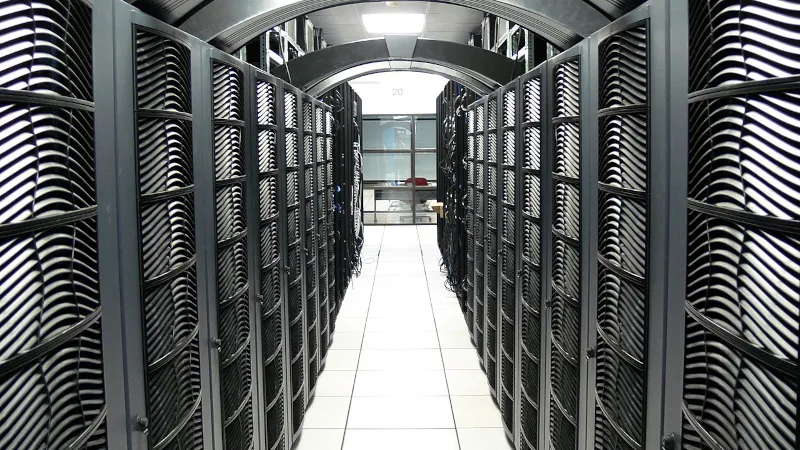
header image: Christopher Bowns, CC BY-SA 2.0.
You must be logged in to post a comment Login