Tech
DEEP Robotics’ Lynx M20 Holds Its Line Across Red Sand and Steep Desert Grades
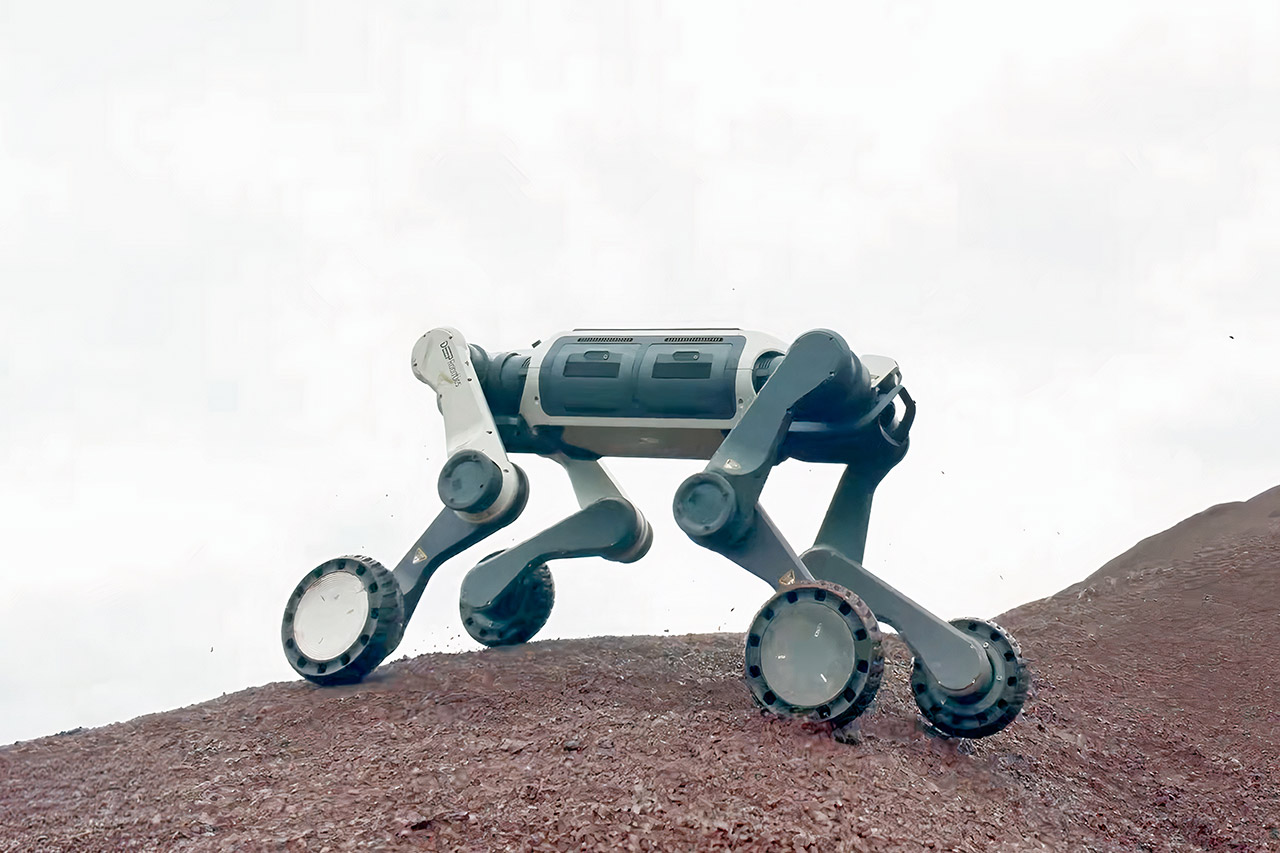
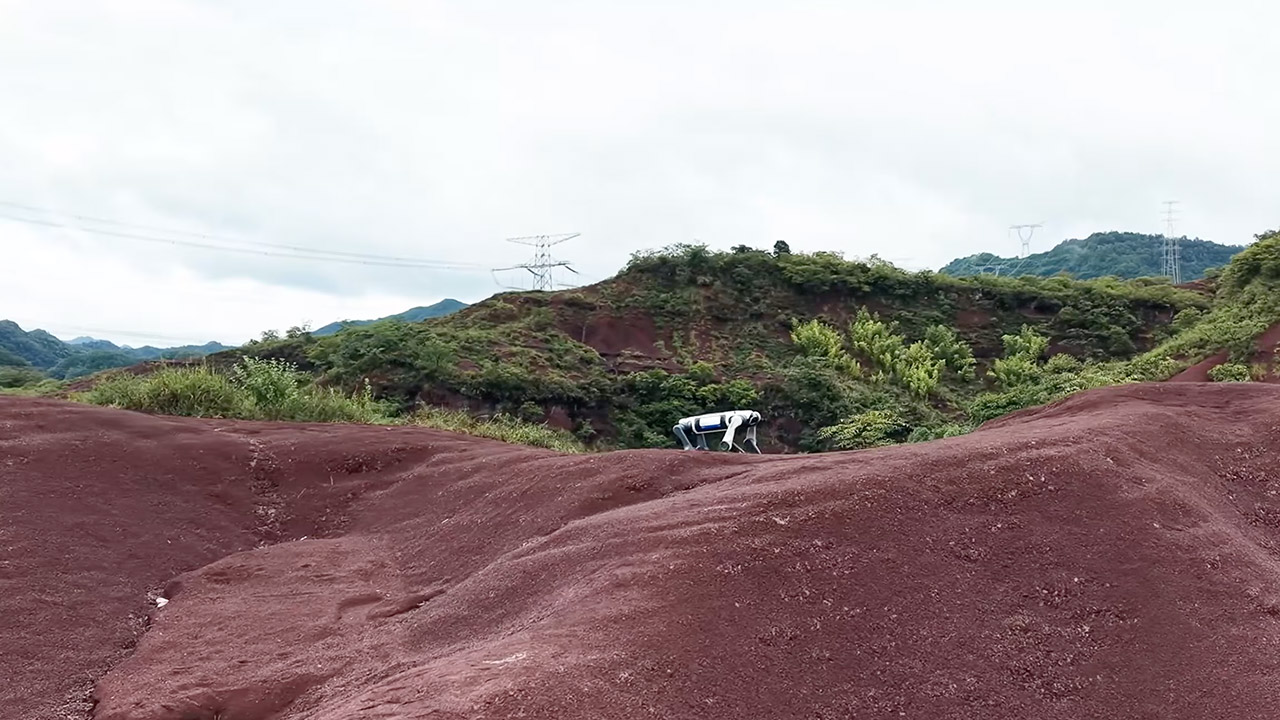
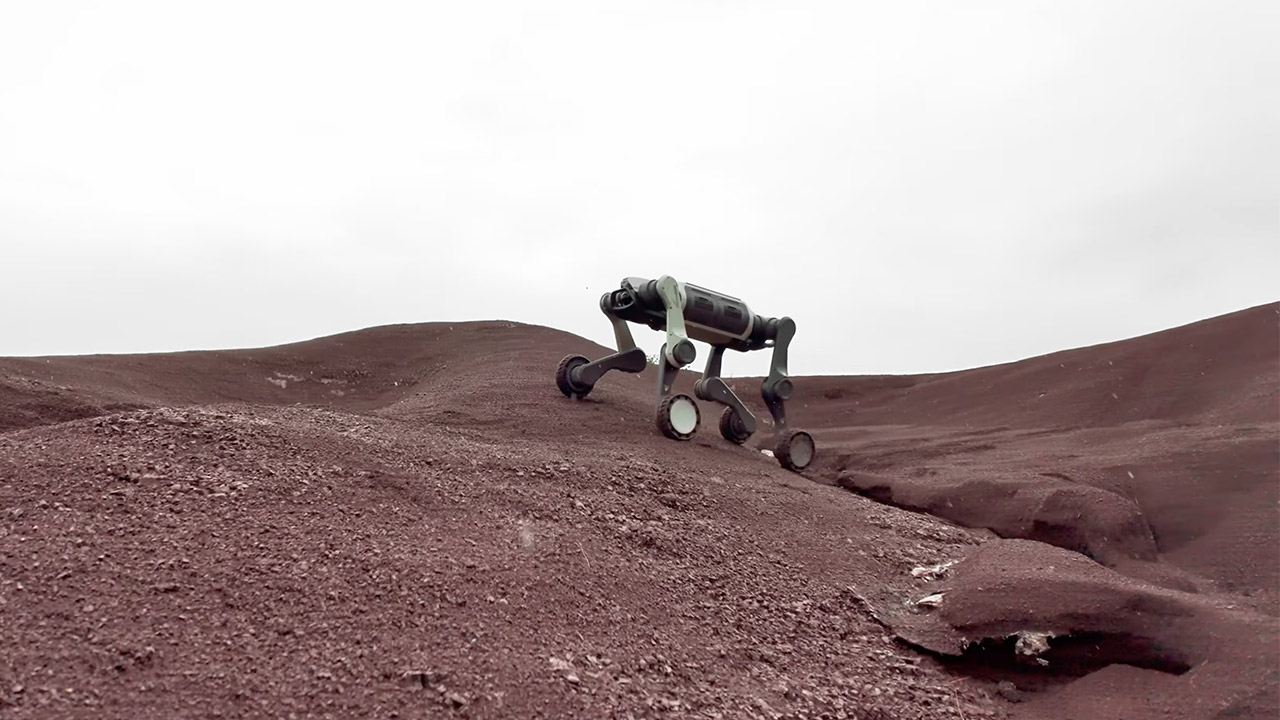
DEEP Robotics sent its Lynx M20 into a stretch of red desert in early September and the machine kept moving across loose sand and rising slopes that usually stall ordinary wheeled platforms. Footage released as “Conquering the Red Desert” shows the compact wheel-legged quadruped rolling on firmer patches, then lifting individual limbs and shifting its body to stay level as the ground turns powdery and the grade steepens.


Hangzhou engineers designed the Lynx M20’s mid-size platform around a hybrid drivetrain that allows it to roll most of the time for increased speed and energy economy, but then locks the wheels so its legs can take over for significant climbing or stance-changing. A clever trick allows the front legs to fold forward and the rear legs to fold back, reducing both its height and length to the point where it can squeeze through openings only 50 centimeters wide, and because the active joints act as shock absorbers, the chassis remains rock steady even when three wheels are on the ground and the fourth wheel is up in the air, allowing it to get over a rock or a sandy dune.

Unitree Go2 Robot Dog Quadruped Robotics for Adults Embodied AI (Go2 Air)
- 【Next-Generation Robotic Companion: Meet the Unitree Go2 Robotic Dog】 The Unitree Go2 Air is an intelligent quadruped robot, perfect for beginners…
- 【Intelligent Navigation with 3D LiDAR & Obstacle Avoidance】 Featuring ultra-wide 3D LiDAR with 360°x96° perception, the Go2 Air detects…
- 【High-Definition Vision & Seamless App Integration】 A front HD camera streams 1280×720 video to the app. Control the robot, view real-time data…
The Lynx M20 stands 820 by 430 by 570 millimeters tall and weighs 33 kilograms with its battery. It can carry a 15-kilogram payload at work and a 50-kilogram peak load. On its own, it can run for three hours and 15 kilometers before needing to be recharged, but adding a 15-kilogram weight reduces that to 2.5 hours and 12 kilometers. The good thing is that you can simply replace the battery pack without shutting down the robot. In laboratory experiments, it can achieve a speed of 5 meters per second, but in real-world use, you can expect to see around half that, or roughly two meters per second. Lynx claims it can handle slopes up to 45 degrees, continuous stairs of 25 cm, and single obstacles up to 80 centimeters high.
Two LiDAR systems, each capable of outputting 96 lines of data, provide the Lynx with a 360-degree view of its surroundings, allowing it to map them in real time at 860,000 points per second. Dual cameras and front and rear lighting provide additional capabilities, such as color vision and nite vision. On the inside, dual octa-core computers aggregate all of that data to provide the Lynx with a 3D picture of where it is and where it is heading, owing to live point cloud mapping. To top it all off, the Lynx is sealed to IP66 standards, allowing it to endure the elements. You can even upgrade its software over-the-air and stream live footage back to the operator via a radio link.

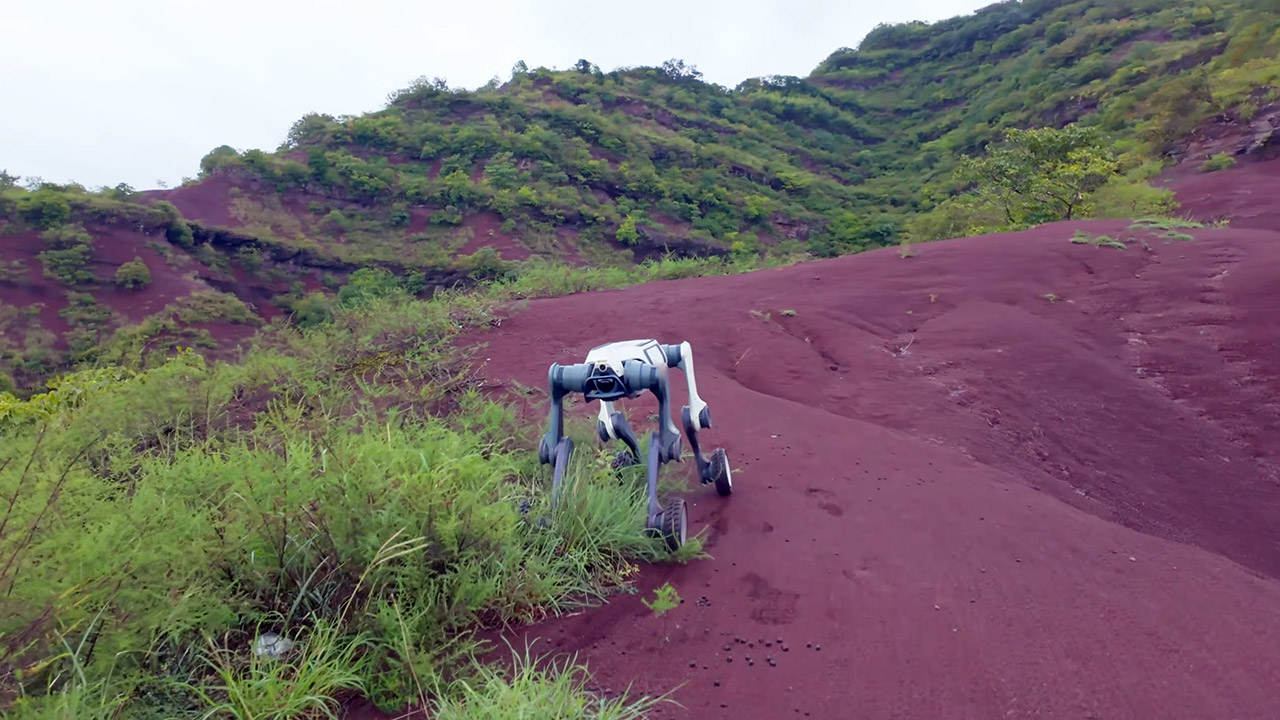
Sand that would bury a typical rover will just slide right by thanks to the Lynx’s unique adaptive stride. Lynx initially dispatched a crew to work in Tibet’s Serling Tso reserve, where soft meadows, permafrost, and gravel made for a harsh environment at an elevation of 4700 meters. More recently, the upgraded M20S model has been deployed to patrol the Tengger Desert, carrying a continuous payload of 35 kg.
The engineers improved the new version’s sealing to IP67, cold tolerance to -30C, and lab speed to 9 meters per second. Despite surface temperatures of up to 50 degrees Celsius and the occasional blast of grit in the face, the M20S has been able to carry all of its equipment, including tree markers, water, and tools, in a single trip, and has even done so with a dual-light gimbal pointing out any signs of collapsed vegetation, damaged fencing, or wildlife lurking in the darkness.
You must be logged in to post a comment Login