Tech
DeVore Fidelity Orangutan O/Reference at AXPONA 2026: When Tone Matters More Than Everything Else

Year 26 for DeVore Fidelity and John DeVore wasn’t chasing spectacle at AXPONA 2026. He was doing something far more dangerous. In a show packed with $100,000 loudspeakers, including his own Orangutan O/Reference, most systems impressed for five minutes and then slowly gave the game away. This one didn’t follow that script. It didn’t try to overwhelm you. It didn’t ask for attention. It just sat there and delivered tone, weight, and emotional clarity in a way that made a lot of other rooms feel like expensive distractions.
That should make people uncomfortable. It should. Because once you hear it, the usual suspects asking for down payment money and ballroom sized rooms to prove their point start to feel a little less convincing.
This is a four piece system with real bandwidth and real room flexibility, but that’s not the point. It sounds like music with consequences. And at six figures, it has to do more than impress. It has to mean something.
We all claim we’re chasing the same thing, but it’s more complicated. This has always been a solitary pursuit. After decades and more than 80 shows, it’s clear the draw isn’t the gear. It’s the search. The hope that a system can deliver both emotional and intellectual connection. Not just analysis, but something that lingers after the last note fades, when the glow of the tubes slips into darkness and you’re left alone with it, letting whatever it stirred settle in. And it has to cut through whatever you brought with you into the room, including the cheap Scotch.
That’s where the divide really lives. Technical precision is easy to admire. Resolution, speed, imaging. We can all point to those things and agree they exist. But connection is harder. It asks more from the listener and more from the system. It demands that the music move beyond being a collection of sounds and become something personal. Something that reaches past the brain and settles somewhere deeper. That’s the part no spec sheet can quantify, and the part most systems never quite deliver.
The problem is that a lot of high-end audio, especially at the six figure level, mistakes luxury for meaning. It reminds me of riding in a Mercedes Maybach S-Class. Immaculate finishes. Impressive engineering. A price tag that clears the room. And total isolation from the experience. You’re removed from the road. Removed from the moment. Audio can fall into the same trap.
At some point, you have to feel something or the whole thing starts to ring hollow.
If you’ve never had that moment, where a system pushes you past analysis and into something uncomfortable and real, then none of this matters. The gear. The price. The endless debates online with nasty idiots. It’s just expensive insulation from the thing you said you wanted in the first place.
DeVore Fidelity Orangutan O/Reference: Engineering That Serves the Music

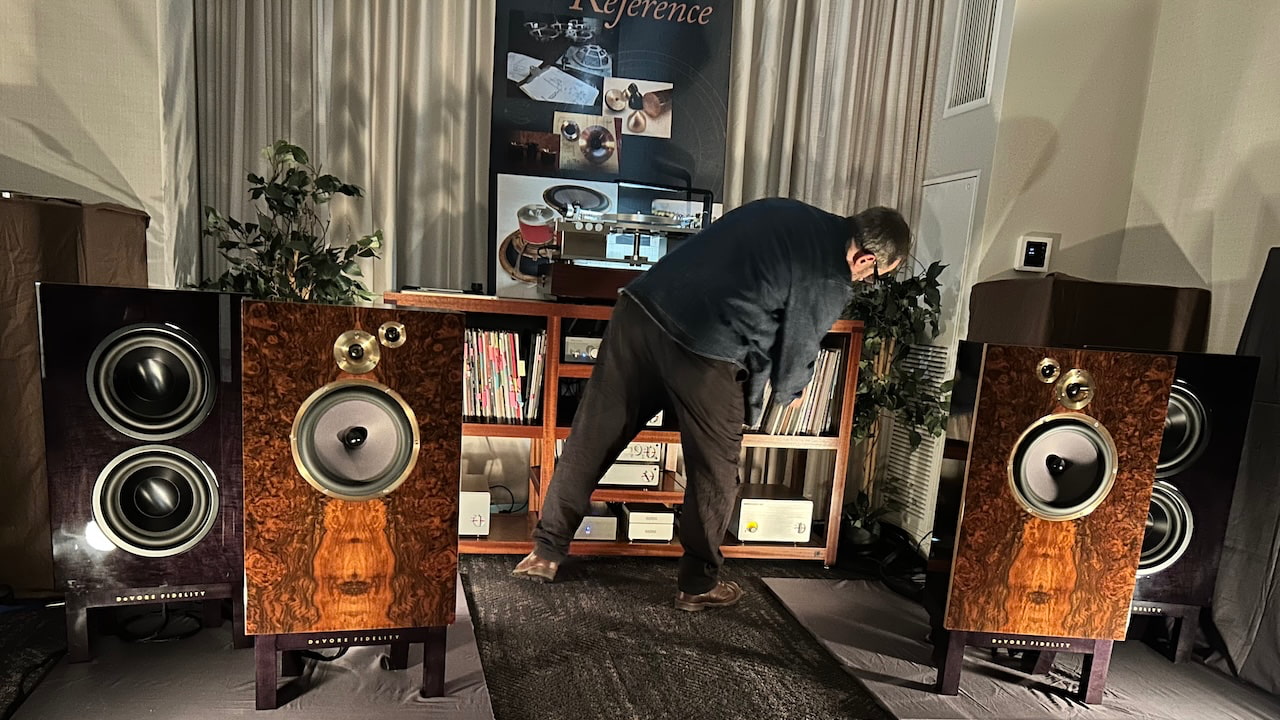
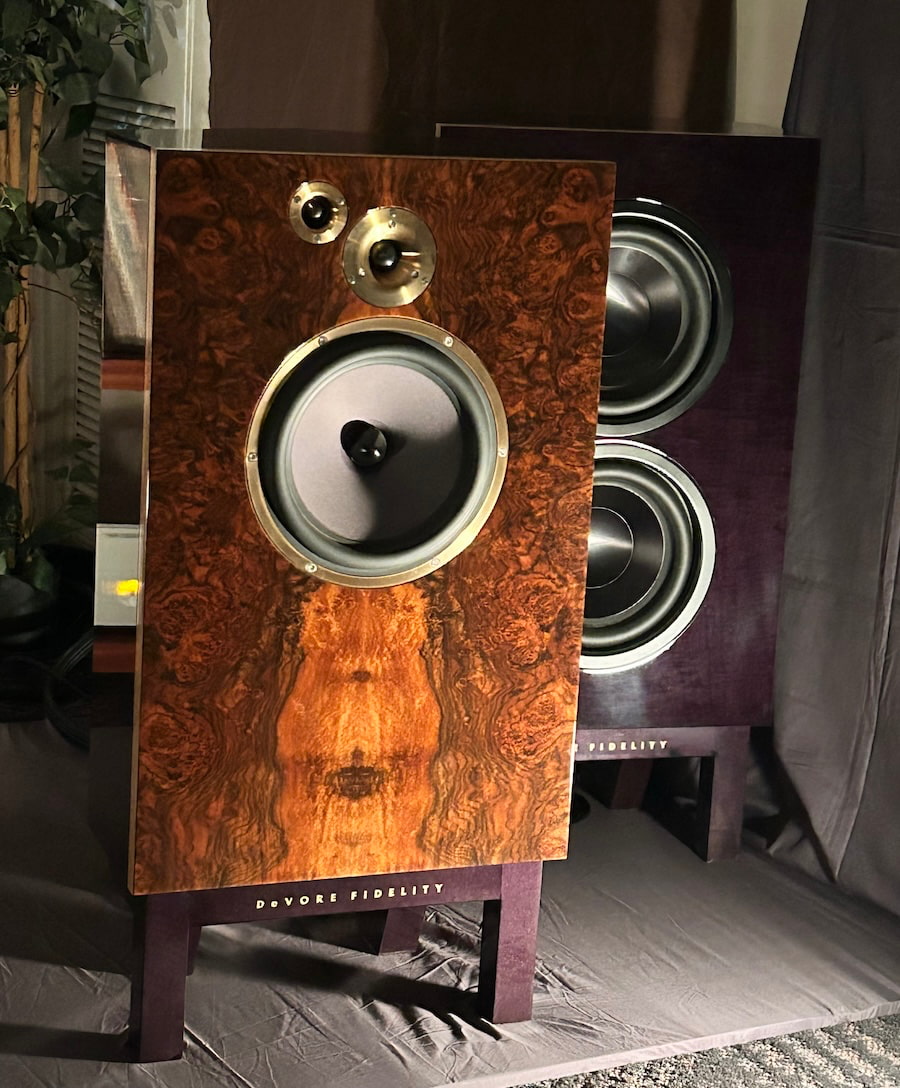
The Orangutan O/Reference is a four piece system split into the A and B modules, each with a clear role. The A handles the main range with a 10-inch paper cone woofer built around an AlNiCo motor, copper Faraday rings, and a bronze phase plug to keep distortion low and behavior consistent across the band. Above that, a 1-inch silk dome tweeter and 0.75-inch super tweeter are both horn loaded in machined bronze, which helps with sensitivity and control without pushing the top end into something aggressive. The cabinet details are not cosmetic. Bronze ports and a decoupled brass input plate are there to reduce vibration and keep things clean.
The B module takes care of the bottom end with an 11-inch aluminum woofer and a matching passive radiator tuned below 20 Hz, powered by a dedicated 700 watt Class D amplifier with an all analog control section. You get adjustable crossover, phase, and low frequency EQ, but the key is how it connects to the rest of the system. The bass section takes its signal from the same amplifier driving the A module, so the tonal balance and texture remain consistent from top to bottom. It is not doing its own thing off to the side. It follows the same chain, which makes integration far less of a guessing game.
At $99,000, none of this should surprise anyone. What does stand out is that DeVore Fidelity actually gives you a meaningful range of finish options that let the speakers work in real living spaces. That should be standard at this level, but too many brands still treat it like an afterthought. John DeVore has never had that problem. His speakers don’t dominate a room visually, even when they are capable of filling it sonically.
They scale in a way that feels almost deceptive. Bigger than they look. More powerful than they have any right to be. And maybe most important, they invite experimentation.
I’ve heard DeVore systems driven by everything from low powered tubes to blowtorch solid state, across a wide range of sources, and there isn’t a single “correct” answer. That’s rare. Most speakers at this level demand a specific chain and punish you if you get it wrong. These don’t. They let you find your own way.
Where Tone Stops Being a Preference and Starts Being the Point

One of the constants in any DeVore room is that you’re not subjected to the same audiophile greatest hits you’ve heard 500 times. No safe demo tracks polished to death. If you’ve spent any time watching John DeVore speak on YouTube, you already know where that comes from. He’s direct. Intelligent. Thoughtful. He understands the subject and doesn’t hide behind it. And in the room, that translates to a kind of quiet confidence. He’s not hovering. Not steering reactions. He built it. He knows what it does.
There’s a reason his speakers divide people. Some listeners want scale, impact, and the visual statement of something that looks engineered to within an inch of its life. Polished metal. Exotic materials. A kind of precision that feels clinical. DeVore goes in a different direction. Across his lineup, including the Orangutan series, the emphasis is on how instruments and voices actually sound. Not as data points, but as living things.
Tone is the anchor. The weight of a piano. The texture of a saxophone. The human edge in a voice when it starts to crack. These speakers are not microscopes. They behave more like instruments themselves, moving air, resonating, and shaping energy in a way that feels closer to the real thing.
By his standards, the system looked almost restrained. A rack of Nagra electronics, not the top tier, feeding a Yuki AP-01EM with Glanz tonearms into a Phasemation phono stage and cartridges, all tied together with AudioQuest. Nothing about it leaned on excess. The sound told a different story. It was clear, grounded, and saturated with tone, with bass that filled the room without taking control of it.
Before I left, the gentleman running the room put on Nick Cave. Just a quiet nod and the needle dropped. That voice carries history. The piano behind it has mass and decay that can collapse into something flat if the system misses the mark. I’ve heard far more expensive setups get it wrong. This one didn’t. It held together. It felt intact.
I moved into the second row and leaned forward, resting my chin on my hands against the back of the chair in front of me. Closed my eyes and remembered her. Her soft blonde hair in my hands. Those eyes. The smile that made me feel like I could take on the entire Empire by myself. It wasn’t nostalgia. It wasn’t distant. It was right there. Immediate. And a little dangerous in how quickly it pulled me in.
When a system can pull something like that out of you without asking permission, it’s doing something very few ever manage. If you’re looking for a reason to care, that’s it. And if you’re wondering what it might take to get there, start saving.
And before anyone starts wondering if I stumbled into a pot of gold after AXPONA, between the ATC EL50 Anniversary, Quad 2912X, and these from DeVore Fidelity, let’s be clear. I’ll be reviewing a pair of Orangutan O/baby this summer. Those I can afford. The emotional aftermath is another story.
MSRP: $99,000/pair at devorefidelity.com/oref/
You must be logged in to post a comment Login