

Connect with us

Tech

Disney+ loses access to Dolby Vision and HDR10+ in some European countries

Published

on

Disney+ subscribers in some European countries have lost access to advanced HDR features like Dolby Vision and HDR10+, TechRadar and FlatpanelsHD report. The issue was first spotted by German Disney+ subscribers on Reddit, but currently also impacts subscribers in Portugal, Poland, France and the Netherlands, according to FlatpanelsHD.

“Dolby Vision support for content on Disney+ is currently unavailable in several European countries due to technical challenges,” Disney said in a statement. “We are actively working to restore access to Dolby Vision and will provide an update as soon as possible. 4K UHD and HDR support remain available on supported devices.”

If the issue is in fact a technical one, it seems like it could be around for the long-term. Disney has removed any reference to Dolby Vision from its Disney+ video quality support page in Germany. As of now, the company lists HDR10 as its default HDR format, despite Dolby Vision support being a feature of Disney+ for several years now.

FlatpanelsHD writes that the real issue might be legal, rather than technological. A company called InterDigital won an injunction in a German court against Disney in November 2025 because it violated at least one of the company’s patents on streaming video technology. The injunction specifically requires Disney to stop violating InterDigital’s patent on “a method for dynamically overlaying a first video stream with a second video stream comprising, for example, subtitles.” It’s not entirely clear how that plays into the company offering Dolby Vision and HDR10+ in Europe, but it would explain why subscribers in Germany were some of the first people to notice Dolby Vision’s absence.

Advertisement

Engadget has contacted Disney for more information about Disney+’s missing HDR support and whether InterDigital’s injunction played a role. We’ll update this article if we hear back.

Mentions of Dolby Vision and HDR10+ were also stripped out of the US version of Disney+’s video quality support page. InterDigital hasn’t won an injunction in the US, but the company is pursuing a patent case against Disney in the United States District Court for the Central District of California. That doesn’t necessarily mean Dolby Vision support will be taken from US subscribers next, but it does suggest there’s more happening here than just technical challenges.

Source link

Advertisement
Continue Reading
Click to comment

Leave a Reply

Your email address will not be published. Required fields are marked *

Tech

Mail2Shell zero-click attack lets hackers hijack FreeScout mail servers

Published

on

Mail2Shell zero-click attack lets hackers hijack FreeScout mail servers

A maximum severity vulnerability in the FreeScout helpdesk platform allows hackers to achieve remote code execution without any user interaction or authentication.

The flaw is tracked as CVE-2026-28289 and bypasses a fix for another remote code execution (RCE) security issue (CVE-2026-27636) that could be exploited by authenticated users with upload permissions.

Researchers at OX Security, a company that secures applications from code to runtime, say that an attacker can exploit the new vulnerability by “sending a single crafted email to any address configured in FreeScout.”

According to them, the fix attempted to block dangerous file uploads by modifying filenames with restricted extensions or those starting with a dot.

Advertisement

The OX Research team discovered that a zero-width space (Unicode U+200B) could be placed before the filename to bypass the recently introduced validation mechanism, since the character is not treated as visible content.

Subsequent processing removes that character, allowing the file to be saved as a dotfile, and hence, still triggering CVE-2026-27636 exploitation by completely bypassing the latest security checks.

The exploitation chain
Source: OX Research

Making matters worse, CVE-2026-28289 can be triggered by a malicious email attachment delivered to a mailbox configured in FreeScout, the researchers say.

The program stores the attachment in “/storage/attachment/…,” enabling the attacker to access the uploaded payload through the web interface and execute commands on the server without authentication or user interaction, making it a zero-click vulnerability.

Advertisement

“A patch bypass vulnerability in FreeScout 1.8.206 allows any authenticated user with file upload permissions to achieve Remote Code Execution (RCE) on the server by uploading a malicious .htaccess file using a zero-width space character prefix to bypass the security check,” the vendor says in a security bulletin.

FreeScout is an open-source help desk and shared mailbox platform used by organizations to manage customer support emails and tickets. It’s a self-hosted alternative to Zendesk or Help Scout.

The project’s GitHub repository has 4,100 stars and over 620 forks, and OX Research reports that its Shodan scans returned 1,100 publicly exposed instances, indicating it’s a widely used solution.

CVE‑2026‑28289 affects all FreeScout versions up to and including 1.8.206 and was patched in version 1.8.207, released four days ago.

Advertisement

The FreeScout team warned that successful exploitation of CVE‑2026‑28289 may result in full server compromise, data breaches, lateral movement into internal networks, and service disruption. Hence, immediate patching is advised.

OX Research has also recommended disabling ‘AllowOverrideAll’ in the Apache configuration on the FreeScout server, even when on version 1.8.207.

No active exploitation of CVE‑2026‑28289 has been observed in the wild as of writing this, but given the nature of this flaw, the danger of malicious activity starting soon is very high.

Malware is getting smarter. The Red Report 2026 reveals how new threats use math to detect sandboxes and hide in plain sight.

Download our analysis of 1.1 million malicious samples to uncover the top 10 techniques and see if your security stack is blinded.

Advertisement

Source link

Continue Reading

Tech

Feds call Anthropic supply-chain risk, tech companies aren't happy about it

Published

on

A group that includes Apple, Google, and others has sent a letter to the US Department of Defense concerning Anthropic’s supply-chain risk designation, clearly concerned about how that might affect future tech contracts.

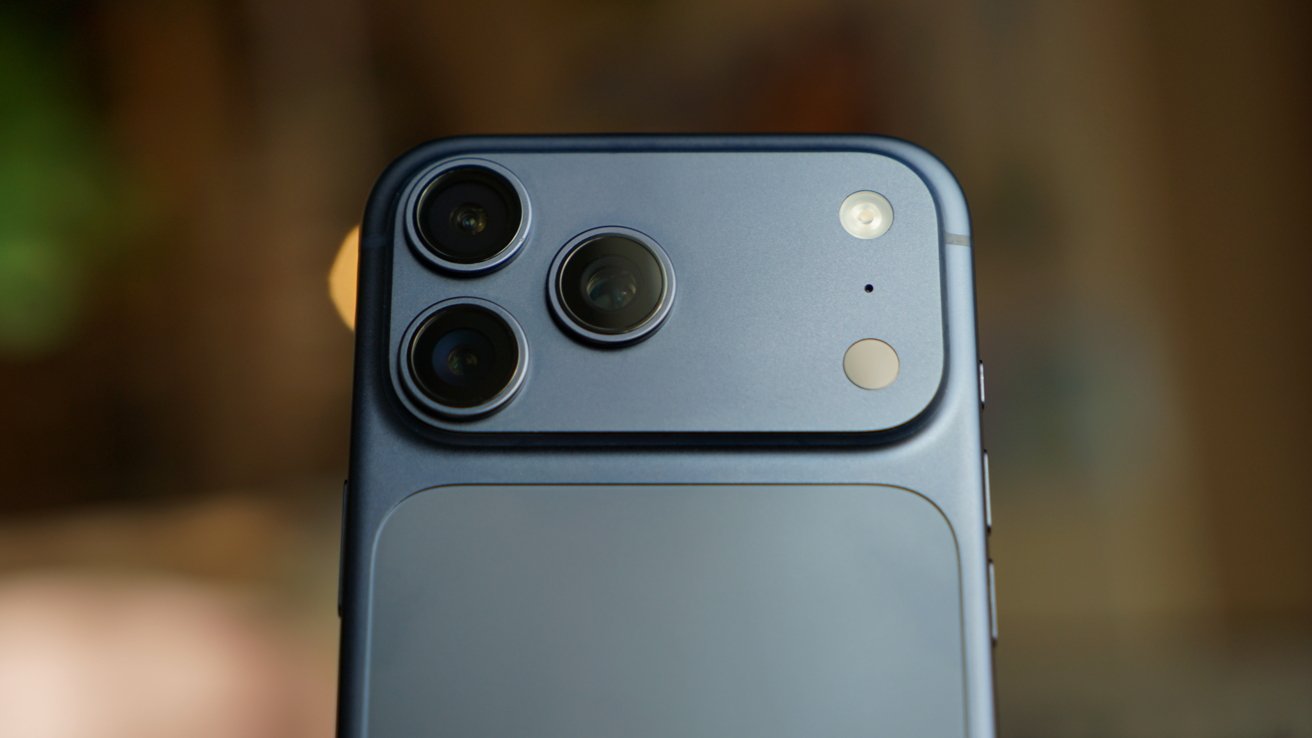
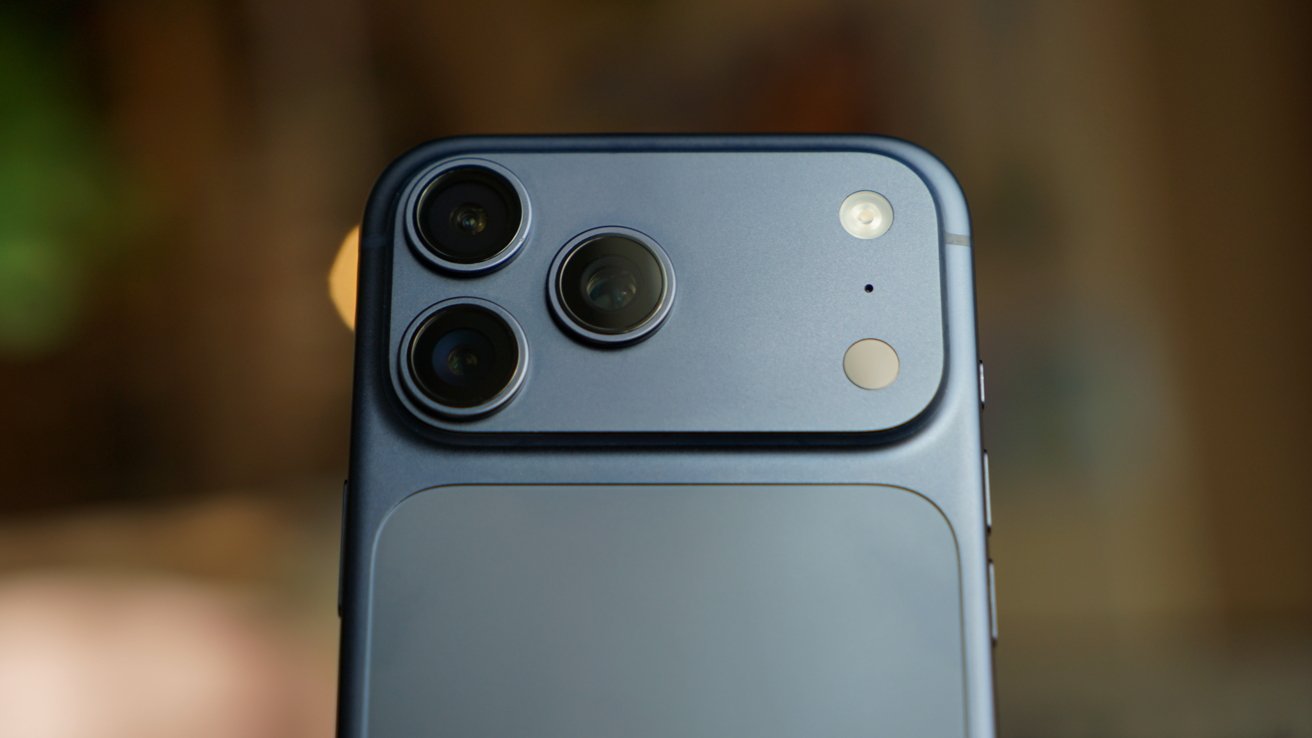
Close-up of an iPhone 17 Pro Max triple camera module and flash against a blurred, colorful neon infinity symbol background
The tech industry could be affected by arbitrary use of supply-chain risk designations

Anthropic took a moral stand against the United States government’s request for unrestricted access to AI tools. The Trump administration retaliated by ordering all government entities to stop using Claude and designated the company as a supply-chain risk.
The designation is usually reserved for foreign national entities that pose a threat to United States infrastructure.
Continue Reading on AppleInsider | Discuss on our Forums

Source link

Continue Reading

Tech

vivo X300 Ultra Global Launch Confirmed With a 400mm Telephoto Extender

Published

on

The vivo X300 Pro already redefined smartphone photography last year. But it looks like the Chinese smartphone maker isn’t done yet. vivo has confirmed that the vivo X300 Ultra will launch globally after its unveiling at MWC 2026 in Barcelona, Spain. The showcase offered the first look at what could become one of vivo’s most powerful flagship phones of 2026. The smartphone is said to be at the top of the X300 series, with a major emphasis on camera quality and hardware.

Exact details about price and availability are still under wraps, but the global confirmation points to broader availability this time. The device will become part of the X300 series, alongside the X300 and X300 Pro. However, vivo has not yet confirmed whether it will launch in India.

A Strong Focus on Camera Performance

At MWC, vivo presented the X300 Ultra as more than just a regular smartphone. The device was placed inside a SmallRig video cage and connected to a large Zeiss telephoto extender, showing that the company is targeting serious photography users.

According to reports, the Gen 2 extender can achieve up to 17x optical zoom equivalent. With this level of zoom, the X300 Ultra aims to handle long-range photography in a way that feels closer to dedicated camera systems.

Advertisement

Professional-Style Photography Setup

Vivo X300 Ultra launch

vivo ensured the teleconverter was firmly mounted rather than simply clipped onto the device. The circular mount system built into the SmallRig cage provided a stable and professional attachment mechanism. It also enhanced control and reduced shake during handheld recording. Demo setup included:

  • A large detachable 400mm telephoto extender.
  • A SmallRig cage for better grip and protection.
  • A compact LED panel light mounted on the top cold shoe.
  • A stabilised grip or gimbal-style handle for smoother shots.

What to Expect Next

After vivo officially announced that it will release the smartphone globally, it is likely to reveal the smartphone’s specifications and pricing. Moreover, it is now clear that the vivo X300 Ultra smartphone is a camera-centric flagship smartphone meant for photography enthusiasts.

Source link

Continue Reading

Tech

Bitwarden adds support for passkey login on Windows 11

Published

on

Bitwarden

Bitwarden announced support for logging into Windows 11 devices using passkeys stored in the manager’s vault, enabling phishing-resistant authentication.

The new feature is available for all plans, including the free tier, and allows logging into Windows by selecting the security key option and scanning a QR code with a mobile device to confirm access to the passkey stored in the Bitwarden encrypted vault.

Bitwarden is an open-source password and secrets manager that can store account passwords, passkeys, API keys, credit card details, identity data, and private notes.

To use the new feature, there are three required conditions:

Advertisement
  1. Have Entra ID–joined devices
  2. FIDO2 security key sign-in is enabled
  3. Have a registered Entra ID passkey stored in their Bitwarden vault

“Windows now supports industry-standard passkeys secured in the Bitwarden vault, enabling passwordless authentication during sign-in,” Bitwarden says in a press release.

“Users can choose to log in with a passkey stored in the Bitwarden vault, allowing Windows to authenticate using cryptographic credentials rather than passwords, without transmitting shared secrets.”

Bitwarden acts as the passkey provider in the Windows authentication flow, storing the credential in the user’s synced vault rather than binding it to a single device. This also allows recovery using other devices in case of losing the phone.

More importantly, by removing password entry from the login process and using cryptographic challenges signed with private keys stored in the vault, the risk of credential exposure to phishing drops dramatically.

Bitwarden states that Microsoft will roll out passkey login on Windows this month, and it depends on the Microsoft Entra ID configuration.

Advertisement

In November 2025, Microsoft announced the introduction of a passkey provider API on Windows 11, allowing third-party apps like Bitwarden and 1Password to store and manage passkeys for websites and apps on the OS.

The latest announcement extends this further, to a more fundamental authentication layer, that of the OS itself.

Malware is getting smarter. The Red Report 2026 reveals how new threats use math to detect sandboxes and hide in plain sight.

Download our analysis of 1.1 million malicious samples to uncover the top 10 techniques and see if your security stack is blinded.

Source link

Advertisement
Continue Reading

Tech

AI treated nuclear threats as a routine strategy in 95% of war games, according to new research

Published

on


  • A new study has found that AI models are fine threatening nuclear attacks in 95% of simulated war games
  • The models treat nuclear threats as just another strategic tool
  • The behavior may reflect the popularity of nuclear strategy in the war game training data

AI generals are big fans of nuclear weapons.

That’s the conclusion of a new study of how AI models handle high-stakes geopolitical crises. GPT-5.2, Claude Sonnet 4, and Gemini 3 Flash turned to nuclear threats in about 95% of the simulated crises.

Researchers at King’s College London wanted to see how AI tools dealt with strategy in war-gaming scenarios. Each AI was assigned the role of a state leader responsible for protecting national interests while navigating a tense international confrontation.

Source link

Advertisement
Continue Reading

Tech

A Game of Thrones movie about Aegon the Conqueror is reportedly in development

Published

on


Masthead image: Aegon with his sister-queens Visenya and Rhaenys. Credit: Amok
Read Entire Article
Source link

Continue Reading

Tech

Inside the 500 Vape Battery Electric Car Experiment

Published

on

Vape Battery Powered Electric Car Project
A UK maker has transformed a collection of discarded disposable vapes into a functional car. Chris Doel, the man behind a number of projects that recycle vape batteries, has recently installed his 500-cell lithium pack in a small electric vehicle and driven it on public roads.


He describes the end result as the world’s only vape-powered automobile. The base vehicle is a Reva G-Wiz, a compact four-seater from the early 2000s that is generally dubbed one of the most unimpressive electric automobiles ever built. It weighs a hefty 400kg without batteries and runs on a very primitive 48volt system, as it originally required heavy lead acid batteries to power its tiny 17 horsepower motor, which could only reach barely more than 50 mph on a good day.

Sale


Anker Laptop Power Bank, 25,000mAh Portable Charger with Triple 100W USB-C Ports, Built-in Retractable…
  • Triple 100W USB-C Ports for Multi-Device Charging: Ideal for laptop users, this 25,000mAh power bank features three 100W USB-C ports for simultaneous…
  • 25,000mAh for Long-Haul Power: Tackle week-long trips or extended camping with 25,000mAh capacity and ultra-fast recharging, reaching 30% in just…
  • Dual Built-In Cables for Travel: Features two USB-C cables, one extendable up to 2.3 ft with 20,000 retractions, and another at 0.98 ft cable that…

Doel already had the battery pack figured out; he’d taken 500 discarded vapes, ensured that each and every cell was still functional, and assembled them all in 14 little modules connected in series to achieve roughly 50 volts. On paper, that yields approximately 2.5 kilowatt hours, but in fact it is closer to 2.1. The same battery had previously powered his workshop’s tools and lights.

Advertisement

Vape Battery Powered Electric Car Project
Mounting the lot was a little difficult because he had to fabricate an aluminum box to keep everything in place, add some extra insulation, and regulate the vibrations with thermal pads, foam padding, and silicone dampening. A clever battery management system keeps track of the voltages and currents for each individual cell, and individual fuses keep things from turning pear-shaped. There’s also a temperature probe that sounds a small bell when things get too heated. There is Kapton tape and other safety measures in place to ensure that it does not catch fire. The complete unit bolts nicely into the back seat area, replacing the old lead acids.

Vape Battery Powered Electric Car Project
Electronics were simple enough, as the G-Wiz just utilizes a contactor to switch electricity to an inverter, which operates the motor with three phase AC. Doel simply added a circuit breaker, reprogrammed the inverter to limit the output slightly, and swapped in a DC-DC converter for the 12volt components such as headlights / wipers, and since charging must be done slowly, he simply used a USB-C adapter plugged into a small 138W laptop charger.

Vape Battery Powered Electric Car Project
So, what happened on the road? Well, it moved. Initial tests indicated it could travel both forwards and backwards, and a proper drive revealed it was pulling approximately 160 amps at 15 mph, reducing to 90-100 amps at 30-35 mph on flat ground. Hills pushed 130-150 amps, but regenerative braking returned roughly 10 amps, keeping the pack nice and cool, peaking at 29°C. On a casual run that included some shopping and fast food, the range was 17-18 miles. Voltage sag from unequal cells eventually caused a cutoff, but no big crisis happened.

Vape Battery Powered Electric Car Project
Doel purposefully capped the power so it wouldn’t be able to draw too much, as the car can actually handle a lot more current than it was drawing, but by limiting draw to about 120 amps, he was able to avoid blowing any fuses and giving the old recycled cells some breathing room.
[Source]

Source link

Continue Reading

Tech

Embossing Precision Ball Joints For A Micromanipulator

Published

on

[Diffraction Limited] has been working on a largely 3D-printed micropositioner for some time now, and previously reached a resolution of about 50 nanometers. There was still room for improvement, though, and his latest iteration improves the linkage arms by embossing tiny ball joints into them.

The micro-manipulator, which we’ve covered before, uses three sets of parallel rod linkages to move a platform. Each end of each rod rotates on a ball joint. In the previous iteration, the parallel rods were made out of hollow brass tubing with internal chamfers on the ends. The small area of contact between the ball and socket created unnecessary friction, and being hollow made the rods less stiff. [Diffraction Limited] wanted to create spherical ball joints, which could retain more lubricant and distribute force more evenly.

The first step was to cut six lengths of solid two-millimeter brass rod and sand them to equal lengths, then chamfer them with a 3D-printed jig and a utility knife blade. Next, they made two centering sleeves to hold small ball bearings at the ends of the rod being worked on, while an anti-buckling sleeve surrounded the rest of the rod. The whole assembly went between the jaws of a pair of digital calipers, which were zeroed. When one of the jaws was tapped with a hammer, the ball bearings pressed into the ends of the brass rod, creating divots. Since the calipers measured the amount of indentation created, they was able to emboss all six rods equally. The mechanism is designed not to transfer force into the calipers, but he still recommends using a dedicated pair.

In testing, the new ball joints had about a tenth the friction of the old joints. They also switched out the original 3D-printed ball mount for one made out of a circuit board, which was more rigid and precisely manufactured. In the final part of the video, he created an admittedly unnecessary, but useful and fun machine to automatically emboss ball joints with a linear rail, stepper motor, and position sensor.

Advertisement

On such a small scale, a physical ball joint is clearly simpler, but on larger scales it’s also possible to make flexures that mimic a ball joint’s behavior.

Source link

Advertisement
Continue Reading

Tech

Trying A Vibe-Coded Operating System

Published

on

If you were to read the README of the Vib-OS project on GitHub, you’d see it advertised as a Unix-like OS that was written from scratch, runs on ARM64 and x86_64, and comes with a full GUI, networking and even full Doom game support. Unfortunately, what you are seeing there isn’t the beginnings of a new promising OS that might go toe to toe with the likes of Linux or Haiku, but rather a vibe-coded confabulation. Trying to actually use the OS as [tirimid] recently did sends you down a vibe-coded rabbit hole of broken code, more bugs than you can shake a bug zapper at, and most of the promised features being completely absent.

[tirimid] is one of those people who have a bit of a problem, in that they like to try out new OSes, just to see what they’re like. The fun starts with simply making the thing run at all in any virtual machine environment, as apparently the author uses MacOS and there it probably ‘runs fine’.

After this the graphical desktop does in fact load, some applications also open, but it’s not possible to create new folders in the ‘file explorer’, the function keys simply switch between wallpapers, there’s no networking or Doom support despite the promises made, there’s no Python or Nano support at all, and so on.

Advertisement

Clearly it’s still got the hallmarks of a functioning OS, and it’s sort of nice that you don’t need to know what you’re doing to create a sort-of-OS, but it will not appease those who feel that vibe-coding is killing Open Source software.

Advertisement

Source link

Continue Reading

Tech

These $500 Windows Laptops Show the MacBook Neo’s Competition

Published

on

Today, Apple announced its new budget MacBook. At $599, it looks seriously impressive. While I haven’t tested its performance, battery life, or display just yet, it may end up being hard to beat at that price based on some of the specs alone.

But that doesn’t mean the competition isn’t there. I want to recommend a couple of Windows laptops deals that offer various advantages over the MacBook Neo, showing where the Neo has both strengths and weaknesses.

First, check out this Asus Vivobook 14, a laptop I’ve been happy to recommend as a budget computer for the past year. In many ways, this is the Windows version of a laptop like the MacBook Neo. It uses a highly-efficient ARM chip, the Qualcomm Snapdragon X, meaning it gets great battery life and performs admirably in daily tasks. It’s not quite as thin or light as the MacBook Neo, but it’s fairly portable for a laptop at this price.

Image may contain: Computer, Electronics, Laptop, and Pc

Asus

Vivobook 14 (X1407QA)

Advertisement

Unlike the MacBook Neo, the Vivobook 14 comes with 16 GB of RAM and 512 GB of storage. That’s twice what you get in the MacBook Neo’s starting configuration. Right now, this configuration of the Vivobook 14 is on sale for $539. That’s a killer deal for those specs. It even comes with a healthier mix of ports, including HDMI, two USB-A, one USB-C, and a headphone jack. That also means it can support two external displays unlike the MacBook Neo, which can only handle just one.

Don’t get me wrong—I’m not at all saying the Vivobook 14 is a slam dunk over the MacBook Neo. Based on specs alone, I know the Vivobook 14 is a serious step down when it comes to the display. It’s less sharp, stretched across a larger screen, and the color performance isn’t so good. The Vivobook 14 maxes out at 280 nits, whereas Apple says the MacBook Neo can go all the way up to 500 nits. I have a hunch that the MacBook Neo will deliver a much better display in just about every regard.

There’s also the touchpad. It’s a little clunky to use, which is typical of budget Windows laptops. This is just a guess—but the touchpad on the MacBook Neo will likely feel smoother. It’s a mechanical trackpad (unlike the MacBook Air’s haptic feedback trackpad), but Apple has almost never made a bad trackpad.

If you’re not convinced by the Asus Vivobook 14, I’d also recommend the HP OmniBook 5, which is currently on sale for $500 and uses the same Snapdragon X chip. While it only has 256 GB of storage, it has a much better screen than the Vivobook 14, using an OLED display. It’s not any brighter than the Vivobook 14, but it gives you far better color performance and contrast. It’s also just 0.50 inches thick, matching the MacBook Neo exactly in portability.

Advertisement

Source link

Continue Reading

Trending

Copyright © 2025