Tech
Do Wireless Headphones Need 24-Bit/192kHz Lossless Audio? Major Brands Disagree

Wireless headphones have never sounded better. Focal, Bowers & Wilkins, DALI, Sony, Sennheiser and HiFiMAN have all released products that demonstrate how far the category has progressed through better drivers, amplification, DSP, ANC and increasingly sophisticated wireless technology. We have reviewed enough of them to know that the days when buying wireless meant accepting mediocre sound are disappearing rather quickly.
What comes next is considerably less obvious. Some of the biggest names in premium headphones are not convinced that fully scalable, lossless 24-bit/192kHz wireless playback should be the industry’s next major priority, while others believe reaching that level of performance matters quite a bit.
That disagreement becomes especially interesting when two of the brands now live under the same corporate roof.
Bowers & Wilkins joined HARMAN following its acquisition of Sound United in September 2025. HARMAN, which already owns Mark Levinson, is itself wholly owned by Samsung Electronics. Yet Bowers & Wilkins and Mark Levinson have distinctly different views about how aggressively the industry should pursue 24-bit/192kHz lossless wireless playback.
Apparently, even inside Samsung’s rather enormous audio family, there is no consensus about what premium wireless headphones need next.
Related Reviews:
Do Consumers Actually Care?

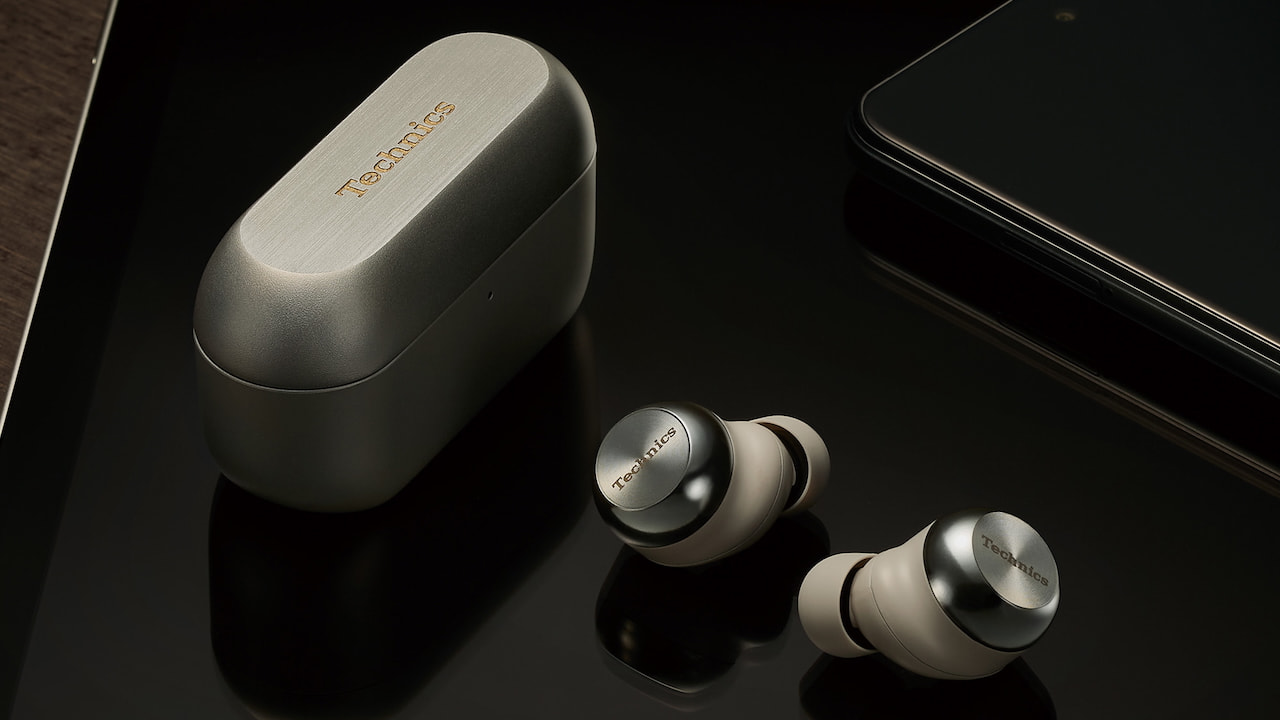
What Hi-Fi? recently asked executives from Sennheiser, Bowers & Wilkins, Technics and Mark Levinson about the slow arrival of scalable 24-bit/192kHz lossless wireless audio, and the responses reveal a genuine philosophical split.
Sennheiser believes the broad majority of consumers are already satisfied with the combination of sound quality and convenience available from existing Bluetooth technologies. Bowers & Wilkins knows that some owners use USB connections to obtain higher-resolution playback, but also recognizes the obvious problem: plugging a cable into wireless headphones rather defeats part of the reason someone bought them. Technics points toward comfort, ANC, connectivity and battery life as priorities that matter more to many mainstream consumers.
Those companies have a point. A great wireless headphone is the sum of its drivers, tuning, amplification, DSP, ANC implementation, ergonomics and connectivity. Slapping “24-bit/192kHz” onto the carton will not transform mediocre drivers or poor tuning into something worth listening to.
It might, however, improve an already excellent headphone if the rest of the playback chain can actually deliver it.
And there sits the problem.
Welcome to Compatibility Hell
The technology needed to push wireless audio further already exists. Qualcomm’s XPAN can dynamically move between Bluetooth and Wi-Fi and supports lossless streaming up to 24-bit/192kHz over Wi-Fi, scaling according to bandwidth and connection conditions.
HiFiMAN has already taken the Wi-Fi approach with headphones including the HE1000 WiFi. Our testing demonstrated that high-performance wireless playback can sound superb, but also exposed the compromises involved: we achieved roughly five hours of battery life over Wi-Fi versus about 12 hours over Bluetooth.
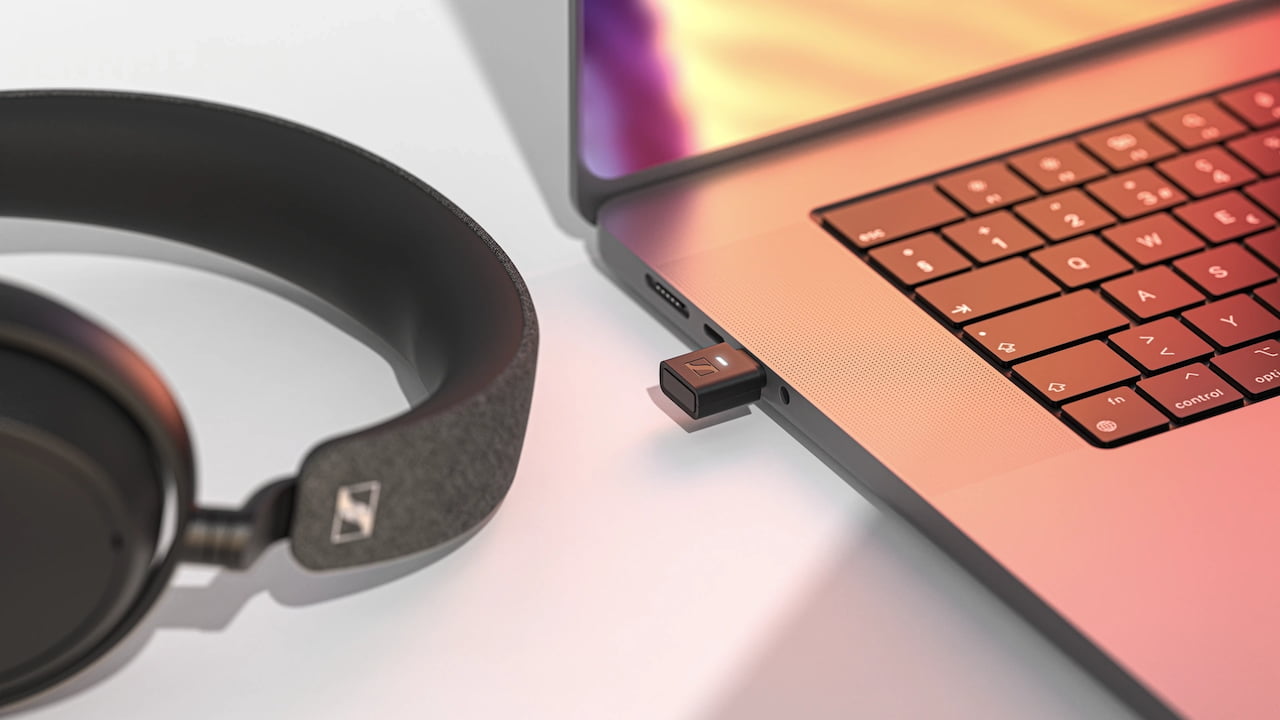
Sennheiser has attacked the compatibility problem differently with the HDB 630. Its included BTD 700 USB-C transmitter gives users across Android, iOS and computers easier access to aptX Adaptive and higher-resolution wireless playback when their source device cannot provide it natively. It works extremely well, but the fact that the solution involves plugging another transmitter into your supposedly wireless source tells you almost everything about the state of the market.
Nothing says wireless freedom quite like wondering which USB-C dongle you left in the other laptop bag.
And Then There Is Apple

The situation gets even more confusing depending on which smartphone you own. Android has supported technologies such as Sony LDAC at the operating-system level for years, although codec availability and implementation still vary by manufacturer, chipset and device.
Apple takes a different approach. Apple Music offers Lossless and Hi-Res Lossless playback, but Apple explicitly states that Bluetooth connections are not lossless. Even its own wireless headphones rely on AAC over conventional Bluetooth; lossless playback on compatible AirPods Max models requires a USB-C cable.
Think about that for a moment. An iPhone owner can subscribe to a streaming service offering high-resolution lossless music, spend $500, $800 or $1,500 on premium wireless headphones and still have the smartphone sitting in the middle of the chain determining what can actually reach them wirelessly.
You can solve some of this with an external USB-C transmitter, which brings us back to the dongle drawer.
This is why the hesitation from Sennheiser, Bowers & Wilkins and Technics deserves more consideration than it might initially receive. Building headphones capable of 24-bit/192kHz lossless playback is only part of the job. The phone, operating system, wireless protocol and headphones all need to cooperate without destroying battery life or requiring consumers to study codec compatibility charts before boarding a flight.
Mark Levinson Wants More
Mark Levinson takes the more traditional high-end audio position. HARMAN Luxury Audio’s Matt Dever says reaching lossless 24-bit/192kHz performance in an active wireless headphone is an important goal, and the company is examining technologies including XPAN, Airia, LDAC and LHDC as it looks for ways to get there.
That puts Mark Levinson in a noticeably different place from its new corporate sibling Bowers & Wilkins, but neither position is necessarily wrong. B&W is asking whether 24/192 wireless meaningfully improves the ownership experience enough today to justify additional expense and complexity. Mark Levinson is arguing that premium audio companies should continue moving the performance ceiling higher because that is rather the point of high-end audio.
What Does This Mean for Consumers?
Nobody should postpone buying an excellent pair of wireless headphones because they cannot transmit 24-bit/192kHz losslessly through the air. The best wireless headphones available today already demonstrate that outstanding sound quality involves far more than a resolution number.
Manufacturers should keep pushing, however. Consumers spending increasingly large sums on premium wireless headphones have every right to expect continued improvements in sound quality, connectivity, battery life and transmission technology rather than being told today’s performance is permanently good enough.
Sennheiser, Bowers & Wilkins and Technics believe convenience and compatibility deserve priority. Mark Levinson believes the high end should keep chasing maximum wireless fidelity. Apple and Android complicate the entire discussion by offering very different paths from the smartphone to the headphones.
Perhaps the real breakthrough will not be 24-bit/192kHz itself.
It will be the day you can connect an iPhone or Android phone to a premium pair of wireless headphones and get the best sound quality available without knowing what AAC, LDAC, aptX Adaptive, XPAN or any other acronym means.
Until then, the industry can argue about the numbers. Consumers just want the damn thing to work.
You must be logged in to post a comment Login