

Connect with us
DAPA Banner
DAPA Coin
DAPA
COIN PAYMENT ASSET
PRIVACY · BLOCKDAG · HOMOMORPHIC ENCRYPTION · RUST
ElGamal Encrypted MINE DAPA
🚫 GENESIS SOLD OUT
DAPAPAY COMING

Tech

Docusign moving downtown Seattle offices, leaving its namesake tower

Published

on

The JPMorganChase Center in downtown Seattle will be getting a new tech tenant, Docusign. (GeekWire Photo / Taylor Soper)

Electronic signature powerhouse Docusign is reportedly moving its offices in downtown Seattle a few blocks north, leaving the tower that bears its name. 

The Seattle Times reports that Docusign signed a 115,000 square foot lease at JPMorganChase Center, with plans to move onto multiple floors in the building next to the Seattle Art Museum in the summer of 2027. That’s about the same footprint that Docusign currently holds at Docusign Tower, the former Wells Fargo Center at 999 Third Avenue. 

It will join law firm Perkins Coie and real estate juggernaut Zillow in the JPMorganChase Center.

San Francisco-based Docusign moved into its current home in Seattle in 2015, expanding its footprint at the time to 119,000 square feet. It secured naming rights to the building in January 2020 when it took over additional floors and boosted its space 227,000 square feet in the building.

Covid hit that same year, sending teams to remote work locations. DocuSign started to bring workers back to the office more strictly in 2023, but it never needed the same amount of space in Seattle. It cut employees in 2022, and then laid off 10 percent of its workforce in 2023 and another six percent in 2024

Advertisement

In 2024, Docusign also announced the $165 million acquisition of Seattle startup Lexion, an AI-powered contract management system.  Lexion employed more than 100 people, with Docusign saying at the time that the acquisition brought the company “a team of world-class AI engineers.” 

According to LinkedIn, Lexion co-founder Gaurav Oberoi serves as DocuSign’s group vice president of product. Other Docusign leaders in Seattle include Chief Financial Officer Blake Grayson and Chief Product Officer Graham Sheldon, who just announced he was joining the company earlier this week after extended stints at UiPath and Microsoft, where he served as a corporate vice president of product for Teams.  

Docusign was founded in 2003 in Seattle by Tom Gonser, Court Lorenzini and Eric Ranft.

The company’s latest move is really a homecoming of sorts, at least when it comes to office space. Before moving to its namesake building in 2015, Docusign occupied space at the Russell Investments Center, which is now JPMorganChase Center.

Advertisement

Publicly-traded with a market valuation of nearly $10 billion, Docusign on Thursday reported first quarter revenue of $830.2 million, a nine percent year-over-year increase. The stock was down more than two percent in trading Friday on a weaker than expected outlook for the months ahead. 

We’ve reached out to Docusign for comment, and we’ll update this post as we learn more. 

Source link

Advertisement
Continue Reading
Click to comment

You must be logged in to post a comment Login

Leave a Reply

Tech

Logitech G512 X 98 Review: A Hybrid Mish-Mash

Published

on

The transition from analog switches back to mechanical isn’t perfect, either. When you plug in a normal switch and press the “scan” button to reset the board, the multi-input functionality still stays semi-functional. In my testing, where I set a WASD half-press to be the normal letter, and a full press to be [Shift + WASD], pressing any of those keys and a second key immediately after would cause the next input to combine with the Shift input, resulting in wOrdS with raNdOMly capitaLized letters! The strangest part is that the G-Hub app knows when a mechanical switch is plugged in, and gives you an alert that the multi-input won’t work with a standard switch, but it doesn’t default to the key’s standard input to avoid issues.

The tedium of swapping out switches, scanning, and changing keymaps every time you start up a game is not ideal. I found myself groaning at the prospect, and using only the mechanical switches for gaming. Much like glasses with transition lenses, the BMW i8, or a McRib, this keyboard creates a hybrid version of two things that is, across the board, worse than its individual parts.

One nice touch is that the removable angled feet on the underside of this keyboard also function as keycap and switch pullers. If you’re traveling with this keyboard, you’ll always have these tools with you. But it also means, if you don’t like using your keyboard at an 8-degree angle, you’ll have awkwardly-designed switch and keycap pullers sitting on your desk. The mild added convenience of part-time storage is nowhere near as practical as the standard flip-out feet and separate keycap/switch puller that most keyboards today include. It’s also not as practical as Steelseries’ silicone flap to hide a keycap puller.

Internal Assembly

Image may contain Electronics Hardware Computer Hardware Computer and Computer Keyboard

Photograph: Henri Robbins

If you’re expecting a keyboard of this caliber to have a complex internal assembly, you’re right on the money. Taking it apart involves removing the bottom feet and the back sticker, removing a few screws, removing the back panel, unscrewing another dozen screws, then separating the front and middle sections, after which you’re left with four major components: The top shell, the main assembly of the PCB and plate,, the middle shell (which houses the LED bar, along with the daughterboard housing the USB-C port back buttons), and the bottom shell. While disassembly is fairly lengthy, I actually quite like the assembly. Besides the adhesive feet, everything seems incredibly rigid and well-designed internally. The only real improvement would be replacing the plastic screw posts with heat-set metal threads.

Advertisement

Source link

Continue Reading

Tech

The most interesting startups right now want to get you off your phone

Published

on

While the AI fundraising machine keeps breaking its own records, some founders are building in the other direction.  Mirror founder Brynn Putnam just raised money for Board, a startup focused on bringing people together through in-person games and social experiences. Cyberdeck creators are going viral crafting whimsical DIY computers that literally encourage users to touch grass. Unlike the AI-free browser crowd, this doesn’t just feel like backlash, […]

Source link

Continue Reading

Tech

DaVinci Resolve 21 (2026) video editing software review

Published

on

Why you can trust TechRadar


We spend hours testing every product or service we review, so you can be sure you’re buying the best. Find out more about how we test.

I consider Blackmagic’s DaVinci Resolve to be among the best professional-grade desktop non-linear video editing software out there.

You’ll find it a core part of our guides to the best free video editing software and best video editing software we’ve ever tested. So, I was keen to see what the latest version (21), offers. And to say I was surprised would be an understatement. This is one of those tools that just keeps getting better.

Advertisement

Source link

Advertisement
Continue Reading

Tech

The next-gen Siri in iOS 27 might still ship as a beta experience in the early days

Published

on

Apple has spent the better part of a year trying to convince users that a smarter Siri is still on the way. Now, a new report suggests the company may be preparing expectations before the assistant finally arrives.

According to Bloomberg’s Mark Gurman, Apple is internally referring to the revamped Siri as a “beta” and “preview” product, signaling that the company may not present the software as a finished experience when it launches later this year. If that sounds familiar, it’s because Apple followed a similar playbook with the original Siri, which carried the beta label for roughly two years after its debut.

Apple appears to be lowering the stakes

The decision would be a notable departure from Apple’s traditional approach to introducing major software features. The company is known for polished launches, but artificial intelligence has proven to be a different challenge altogether. Labeling the new Siri as a preview could give Apple more room to improve the assistant in public without promising perfection on day one. It would also help explain why the company has been unusually careful when discussing Siri’s next-generation capabilities after earlier delays pushed the project back.

The move reflects a broader reality facing the AI industry. Whether it’s chatbots generating inaccurate information or digital assistants misunderstanding context, even the biggest tech companies are still figuring out how to make AI reliable enough for everyday use.

Not everyone may get access immediately

Gurman’s report also points to another possibility: Apple could introduce a waitlist for users who want to try the upgraded Siri. That wouldn’t be unprecedented. Apple used a similar strategy when it rolled out Apple Intelligence in 2024, gradually expanding access rather than opening the floodgates immediately. A waitlist would allow the company to monitor performance, gather feedback, and manage demand while ironing out bugs behind the scenes.

Advertisement

For users, that means the arrival of Apple’s AI-powered assistant could look less like a traditional software release and more like an early-access program. That may disappoint those hoping for an instant upgrade, but it could ultimately be the safer path. After all, a smarter Siri that arrives slowly is probably better than one that arrives quickly and struggles to deliver on Apple’s biggest AI promises.

Source link

Continue Reading

Tech

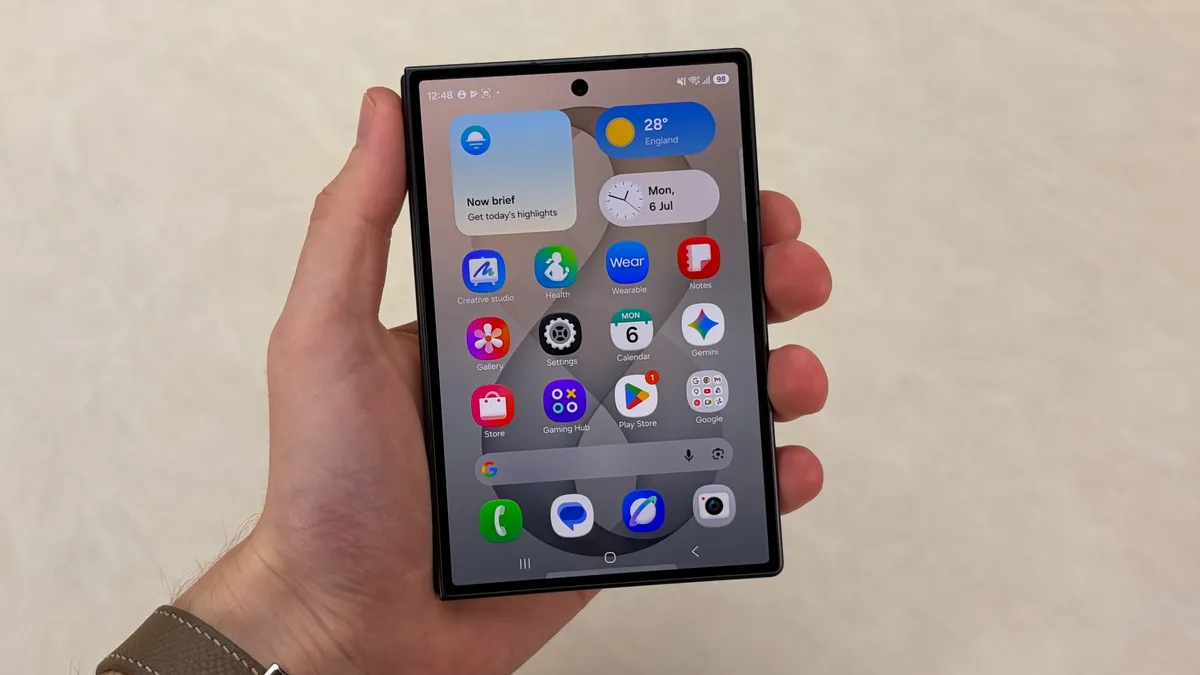
Smartphone screens are about to enter ridiculous refresh rate territory like gaming monitors

Published

on

For years, smartphone makers have been locked in a race for brighter screens, thinner bezels, and sharper resolutions. Now, it looks like the next battleground could be refresh rates — and things are getting a little absurd.

A new leak suggests OnePlus is exploring a roadmap that could eventually bring 240Hz OLED displays to its flagship phones. That’s a number typically associated with competitive gaming monitors, not devices that spend most of their time scrolling through social media feeds and watching YouTube videos. According to tipster Digital Chat Station, OnePlus is considering a gradual jump through 165Hz and 185Hz panels before ultimately reaching 240Hz in future devices.

The refresh rate race is heating up

Most flagship smartphones today top out at 120Hz, which already feels incredibly smooth for everyday use. Animations are fluid, scrolling feels responsive, and games that support high frame rates look noticeably better. But OnePlus appears interested in pushing beyond what most users would consider necessary.

Recent rumors surrounding the upcoming OnePlus 16 have already hinted at a 165Hz-to-185Hz jump while retaining the company’s preferred 1.5K display resolution. That suggests OnePlus may be prioritizing speed over pixel count, at least for now. It’s not hard to see the appeal. Higher refresh rates can make supported games feel more responsive, especially in fast-paced shooters and racing titles. The challenge is that the benefits become increasingly difficult to notice as the numbers climb.

The real challenge isn’t speed

Getting to 240Hz is one thing; doing it without destroying battery life is another. That’s likely why OnePlus reportedly continues to favor 1.5K panels over sharper 2K displays. Combining ultra-high refresh rates with higher resolutions demands more power, more processing muscle, and more aggressive thermal management.

Advertisement

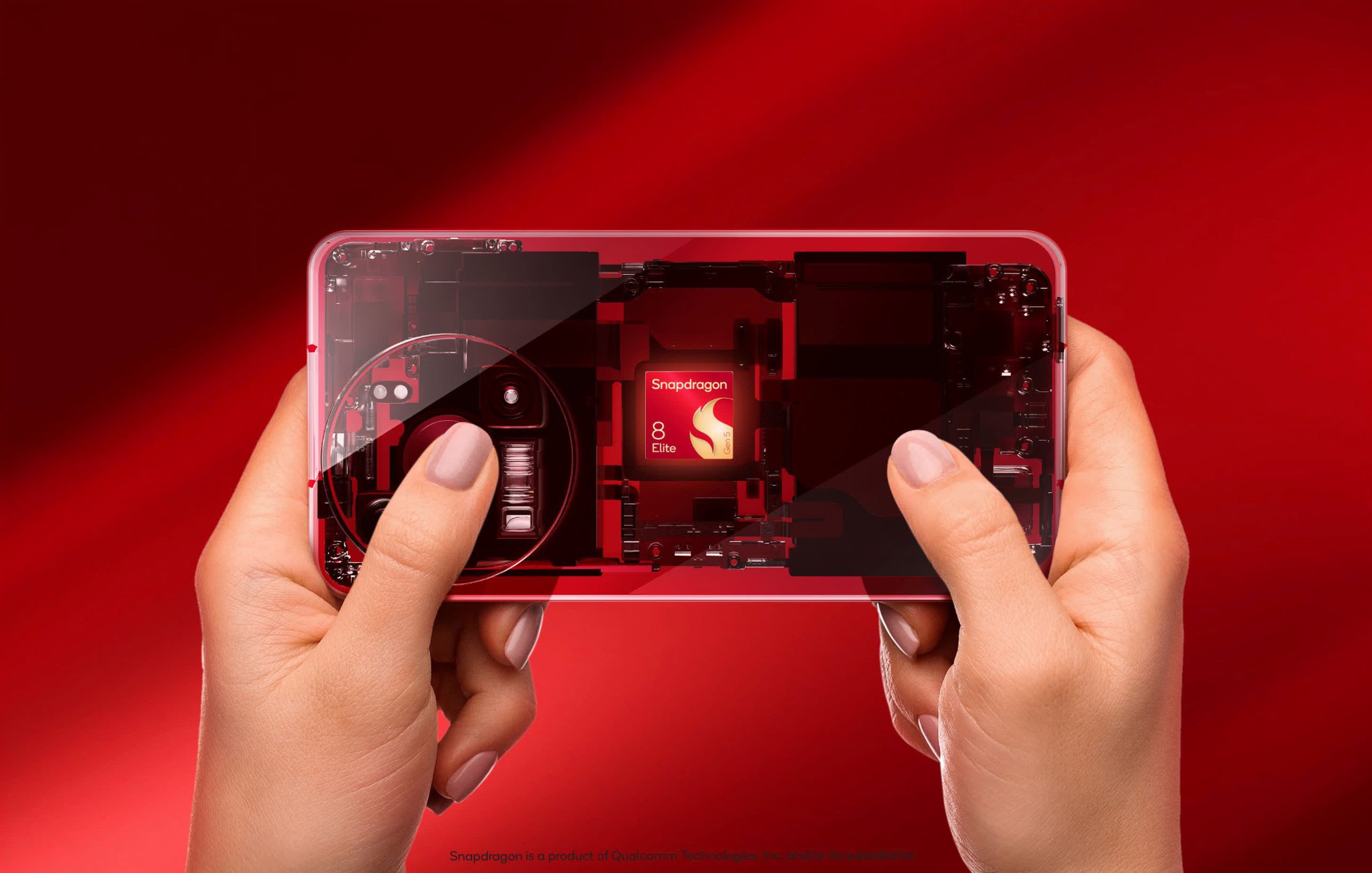
The company could revisit 2K screens in the future, but only if display technology improves enough to avoid major compromises. For now, the rumored OnePlus 16 is expected to arrive later this year with Qualcomm’s Snapdragon 8 Elite Gen 6 chip and a larger silicon-carbon battery, both of which could help support more demanding display hardware. Whether anyone truly needs a 240Hz smartphone screen is another question entirely. But if the leak is accurate, OnePlus seems determined to find out.

Source link

Continue Reading

Tech

iOS 27 could change how your muscle memory swipes notifications on a phone

Published

on

Apple is reportedly preparing a potentially disruptive change to how notifications work in iOS 27 and iPadOS 27.

According to Bloomberg’s Mark Gurman, incoming notifications now slide in from the left side of the screen in internal builds of the software. On its own, that might sound like a simple visual tweak. But it appears to be part of a much larger rethink of navigation gestures — one that could force longtime iPhone users to retrain years of muscle memory.

The familiar swipe may no longer do what you expect

For years, iPhone users have relied on a simple gesture: swipe down from near the center of the screen to access notifications. That reportedly changes in iOS 27.

Under Apple’s new system, swiping down from the center would instead open Search or an AI-powered assistant panel. Notifications would move to a separate gesture, requiring users to swipe down from the left side of the display to access Notification Center. Anyone who has picked up a new smartphone after years on another platform knows how deeply ingrained these gestures become.

Apple’s AI ambitions may be driving the shift

The reported redesign suggests Apple wants to give Search and AI features a much more prominent role in the iPhone experience. Rather than hiding AI tools behind buttons or menus, the company appears to be assigning them one of the most natural gestures on the phone. That’s a strong signal about where Apple sees user interactions heading.

Advertisement

The notification animation itself also seems designed to reinforce the new behavior. If alerts now arrive from the left side of the screen, the visual cue naturally matches the new swipe direction required to view them. Whether users embrace the change is another matter. History shows that even small adjustments to familiar gestures can spark strong reactions. But if the report is accurate, iOS 27 may not just look different — it could change how millions of people instinctively interact with their iPhones every day.

Source link

Continue Reading

Tech

Microsoft Surface Laptop Ultra Brings Nvidia Spark Power to Windows PCs

Published

on

Microsoft unveils the Surface Laptop Ultra, its newest AI-enabled laptop. As this is one of the early laptops equipped with Nvidia’s RTX Spark platform, it features improved speed, graphics, and AI performance due to localized processing. The company believes this product has potential and considers it a worthy competitor to other high-performing laptops, such as the MacBook Pro.

The most interesting thing about the Surface Laptop Ultra is its new Nvidia RTX Spark processor. It is also known as the Nvidia N1X processor, which integrates CPU, GPU, and AI into a single chip. Thus, the laptop can handle high loads much more efficiently than other laptops.

Microsoft Surface Laptop Ultra Specifications

Surface Laptop Ultra was specifically created for individuals who require high performance on a daily basis. The laptop can handle demanding tasks like video editing and graphic design. Also, the computer can perform local AI computing, meaning data analysis can be done on the computer itself. It makes the job much easier for those working on AI technology.

The Surface Laptop Ultra offers up to 128 GB of memory for high-performance workloads. Unified memory enables the central processing unit and the graphics to share the same memory pool whenever necessary. The technology can help boost performance while using multiple apps at once.

Advertisement
Microsoft

According to Microsoft, the screen delivers a peak HDR brightness of 2,000 nits, making the picture bright and clear. Besides, the monitor ensures accurate colors suitable for work. The laptop has HDMI ports, a USB-C port, a USB-A port, an SD card slot, and a headphone jack. Microsoft has also designed a large haptic touchpad for easier navigation. The machine comes in Platinum and Nightfall colors and is said to provide a full day of battery life.

Expected Release And What To Expect Next

Microsoft is planning to introduce the Surface Laptop Ultra later this year. Even though many features have been revealed for the device, there has been no announcement on pricing. With the laptop’s launch approaching, more performance information is expected to be released. The device marks Microsoft’s most aggressive move into AI-enabled hardware yet.

Source link

Continue Reading

Tech

ISS Astronauts Told To Prepare For Possible Evacuation Over Air Leak

Published

on

NASA ordered astronauts on the International Space Station to shelter in their spacecraft and prepare for possible evacuation after a worsening air leak in the Russian Zvezda service module’s transfer tunnel. The Guardian reports: The four astronauts of NASA’s Crew-12 mission on the station — two US astronauts, a French astronaut and a Russian cosmonaut — received orders from NASA mission control at 9.04am ET (2pm BST) on Friday to enter their Crew Dragon spacecraft docked to the station and don their spacesuits in case the air leak warranted an emergency evacuation, a NASA official said.

NASA and Russia’s space agency Roscosmos, the station’s two primary operators, have debated for months over the cause and potential fixes of small air leaks onboard Russia’s Zvezda service module, a key structure of the football-pitch-sized laboratory. The air leaks have been relatively minor in recent months. But on Monday the problem escalated from a pound of air per day to two pounds (0.9kg) a senior Nasa official told Reuters on condition of anonymity. UPDATE: “Roscosmos has paused Friday’s structural repair efforts inside the Zvezda service module transfer tunnel, known as PrK, as more measurements and data is assessed,” Bethany Stevens, a spokesperson for NASA, posted on X.

“Given this development, NASA has instructed the crew members inside the Dragon spacecraft to end the safe haven procedures and return to planned operations aboard the International Space Station. We look forward to working with Roscosmos on a collaborative approach to address the leaks.”

Developing…

Advertisement

Source link

Continue Reading

Tech

The University Of Cambridge Says It Successfully Tested A Vaccine With An AI-Designed Antigen

Published

on

The “super-antigen” could provide long-term protection against a wide range of diseases spread by humans.

Wherever you stand on the role of AI in the future of humanity, it has undeniably proved useful in the field of medical research. And now a team of researchers from the University of Cambridge have utilized the technology to create what they call a universal vaccine that could be used to prevent future pandemics before they take hold. It’s the first time that a vaccine with an active component designed entirely by a computer has been used in human trials, which reported no significant side effects.

The vaccine was given to 39 healthy volunteers between the ages of 18-50 at two UK medical facilities located in Southampton and Cambridge. It was designed to protect people against a number of Sarbeco coronaviruses, a group of viruses that include SARS-CoV-2, which was responsible for the global COVID pandemic in 2020.

The groundbreaking antigen — the active ingredient in a vaccine — triggered a protective immune response in the volunteers against SARS-CoV-2 and SARS, as well as related bat viruses that could cause pandemics in the future. Because of the way the vaccine was developed, it will likely also provide protection against diseases that haven’t even emerged yet.

Advertisement

Unlike most vaccines, which are developed in reaction to an outbreak and struggle to keep up with virus mutations, this new “super-antigen” could provide an all-in-one solution to diseases like flu and Ebola that jump between humans.

“We’ve converted vaccine development from being reactive to being future proof. Our vaccines will continue to provide protection against viruses even as they mutate into new strains,” said Professor Jonathan Heeney from the Lab of Viral Zoonotics, University of Cambridge’s Department of Veterinary Medicine, which lead the research. “We’ve overcome the problem of traditional vaccines, which have limited protection. It means we can escape the constant cycle of chasing the virus variants circulating in humans and updating the vaccines to try to catch up, like a dog chasing its tail.”

To create it, the research team fed the AI model all available genetic sequence data for Sarbeco coronaviruses that had been logged around the world. They then used machine learning to design an antigen that contained features common with the whole group of viruses.

As the sample size was relatively small, the next phase of the trial will give the vaccine to a broader and more diverse number of participants and again assess its effectiveness.

Advertisement

Source link

Advertisement
Continue Reading

Tech

The token bill comes due: Inside the industry scramble to manage AI’s runaway costs

Published

on

Across the industry, companies are starting to balk at the price of AI. Uber blew through its entire 2026 AI coding budget by April. Microsoft revoked its developers’ Claude Code licenses months after enabling them. A Priceline employee told TechCrunch that a routine Cursor contract renewal came back 4-5x more expensive.

Even though per-token prices have fallen, the push for more AI adoption and increasingly autonomous agents have driven token consumption higher and higher. Companies that gorged themselves in early 2025 on all-you-can-eat subscriptions are now scrambling to understand where their money is going, pull back spending, and figure out whether they can salvage some ROI from the wreckage of their budgets.

Meanwhile, a market is forming to meet them there. Startups, established vendors, and a new standards body are all racing to give companies the tools and language to track what they spend.

“Six months ago, I would have a conversation with a customer and it would be all about ‘What can it do? Is it good enough?’” Alexander Embiricos, OpenAI’s head of enterprise, told TechCrunch at an event in New York City this week. “Our conversations are never about that now. Now the conversations are about, ‘hey, we’re spending so much. What visibility do you have? What auditability do you have? What token controls do you have? What is the efficiency of your models?’”

Advertisement

It’s against this backdrop that the Linux Foundation this week unveiled plans for the Tokenomics Foundation, a new standards body that aims to instill the same cost discipline around AI tokens that FinOps did for cloud spend.

“In April and May, I started hearing from companies: ‘Oh my god, we are 3x over our entire 2026 token budget and it’s only April,’” J.R. Storment, executive director of the FinOps Foundation, a project under the Linux Foundation, told TechCrunch. “We started hearing existential crises, and the whole conversation shifted from tokenmaxxing and ‘go fast’ to ‘we need guardrails, how do we control this?’”

The cries heard round the tech world followed fervent demands from CEOs pushing their teams to use the best models and move fast, costs be damned. New models released in November like Anthropic’s Claude Opus 4.5, OpenAI’s GPT-5.1, and Google’s Gemini 3 Pro brought significant improvements to agentic tools, which have multiplied consumption. It’s how one company reportedly found itself with a $500 million Claude bill after forgetting to set usage limits for employees. 

“It’s like the crack-cocaine epidemic,” said Chris Reed, senior director of IT finance at Priceline, noting the company had begun placing token limits on certain groups. “They let you try it to get you hooked on it, and now you’re kind of beholden to it.”

Advertisement

Vitaly Gordon, CEO of engineering operations platform Faros AI, said he recently spoke to a CTO who told him: “One of my engineers spent $40,000 on tokens last month, and I genuinely don’t know whether I should stop him or should I go and tell everyone else to be like him.“

A March survey by Faros found that among 20,000 developers, output was rising, but so were bugs and rewrites. Jellyfish, an engineering management platform, similarly found engineers who used the most tokens were about twice as productive than those who used AI less, but they spent 10x the number of tokens to get there.

Nicholas Arcolano, head of research at Jellyfish, told TechCrunch via email that expenditure on AI is exploding in large part due to agentic features, with per-developer consumption rising about 18.6x in nine months. All in all, these stats make the productivity case murkier than the spending suggests.

“Whether extreme spend pays off comes down to the ultimate business value of shipped code (e.g. revenue), which most companies still can’t measure,” Arcolano said.

Advertisement

At least some of that measurement issue is the sheer scale at which AI is being used today.

“Tracking cloud costs is a hundreds-of-millions-of-rows-a-month data problem,” Storment said. “Tracking token costs is a trillions-of-rows-a-month data problem. You can’t just stick that into whatever spreadsheet or even basic tool. You’ve got to fundamentally rethink your tooling, your specs and your accounting systems to do that.”

At Priceline, Reed is already seeing discrepancies. He noted issues between a vendor’s reported usage and Priceline’s internal data.

“I started my career in telecom expense management, and I’m seeing all the same parallels, from telecom to cloud to AI,” he said. “Anytime you introduce something new, it’s ripe for billing errors and audit and optimization opportunities.”

Advertisement

A market is beginning to form around this problem. There are the pure-play companies, like Pay-i, which tracks, measures and optimizes the costs and performance of GenAI investments. Paid, meanwhile, lets developers track costs, measure usage and bill users based on actual value rather than subscription fees.

Then there are companies like Jellyfish, Waydev and Faros AI, which all provide AI agent monitoring to prove the ROI of developer tools. Storment says most of the 180 vendors within the FinOps Foundation are leaning towards this space. 

Companies with existing distribution are also adding new features to capitalize on this new market. Ramp has recently moved into AI spend management; Datadog and New Relic have tacked on services like cloud cost management, token-level observability, and GPU monitoring. At the FinOps X conference next week, AWS is expected to introduce new financial management features geared toward enterprise AI spending.

Tiffany Luck, a partner at NEA, thinks token efficiency and observability will likely be added in at the “harness or app layer.” She pointed to Factory, a startup that makes AI agents for enterprises, which this week launched a model router that automatically picks the right model for every task. 

Advertisement

Gordon expects frontier labs and other model providers to adopt OpenRouter-style optimization to drive queries to the cheapest models — a trend already showing up on enterprise Claude bills. 

“The financial report for how much you spend on Anthropic, even if you call the Opus model, some of the spend will be on Sonnet or Haiku, because they are smart enough to do it,” Gordan said. “I think this will become more and more of a thing.”

But all these tools are being built without a common language or shared definitions for how much a token costs, what it produces, and how to compare spend across vendors. That’s where the Tokenomics Foundation hopes to prove useful.

The Foundation is building a canonical definition and framework for “tokenomics;” open standards, specifications and metrics for AI token usage and billing; as well as new metrics for AI economics, like cost-per-intelligence or tokens-per-watt. It also plans to define metrics across token factory effectiveness and consumption efficiency. The group is planning a formal launch in July, and is about to announce more members at the FinOps X conference next week. 

Advertisement

“Token economics is fundamentally more abstract and opaque than anything we’ve managed at this scale before,” Nishant Gupta, chief availability officer at Salesforce, said in a statement. “It requires a different operational muscle than the one the industry built for cloud.”

That said, Goldman Sachs projects global token usage to multiply by 24 times by 2030. The companies already over budget need solutions now, and the foundation’s first deliverable is still months away.

“Maybe we created a steam engine, but we still haven’t figured out the assembly line,” said Gordon.

According to Arcolano, the smart move is broad, moderate adoption. 

Advertisement

“The best ROI comes from moving the broad middle from low to moderate usage, not pushing heavy users higher,” he said.

Russell Brandom and Tim Fernholz contributed to this reporting.

When you purchase through links in our articles, we may earn a small commission. This doesn’t affect our editorial independence.

Source link

Advertisement
Continue Reading

Trending

Copyright © 2025