Connect with us
DAPA Banner
DAPA Coin
DAPA
COIN PAYMENT ASSET
PRIVACY · BLOCKDAG · HOMOMORPHIC ENCRYPTION · RUST
ElGamal Encrypted MINE DAPA
🚫 GENESIS SOLD OUT
DAPAPAY COMING

Tech

DOJ Now Citing Fake AI-Generated Cases To Keep ICE Detainees Locked Up

Published

on

from the this-must-not-happen-in-a-free-society dept

You’d think that watching multiple lawyers get caught red-handed using AI to file briefs full of made-up citations would cause everyone in the legal profession — especially prosecutors — to double-check their own. You would, of course, be wrong. And the latest offender is not just some random lawyer. It’s the DOJ itself, which cited a nonexistent Sixth Circuit case to argue that an ICE detainee shouldn’t be able to challenge a stay that prevented him from posting a bond that had already been granted, thereby leaving him in detention.

This story hits on two different threads we’ve been covering over the last few years separately. Having them collide somehow makes both worse.

We’ve covered plenty of cases where lawyers for one party (or both, or sometimes judges) are misusing AI to do their writing for them, generating fictitious cases in support of whatever argument they’re seeking to make. This is troubling on many levels, because one of the things any lawyer is supposed to do before submitting anything to a court is check the citations. Historically that has been to make sure the cases cited haven’t been overruled. In these cases, not only is that not happening, they’re literally putting in cases that don’t exist, citing precedents that are completely fictitious.

Our other line of stories touched on here is how ICE and the DOJ have been stomping all over detainees’ basic constitutional rights.

Advertisement

This is one of many cases in which lawyers for a detainee have filed a habeas petition — and it’s a clean example of those two threads colliding in practice. I’ll let Judge Hala Y. Jarbou summarize the basics of what happened:

Petitioner, a United States Immigration and Customs Enforcement detainee, initiated this action by filing a petition for a writ of habeas corpus pursuant to 28 U.S.C. § 2241. (Pet., ECF No. 1.) An immigration judge had granted Petitioner a bond of $35,000, but the bond order was stayed pending appeal to the Board of Immigration Appeals pursuant to 8 C.F.R. § 1003.19(i) (2025). Petitioner argued that the 90-day automatic stay provision in § 1003.19(i) violates the Fifth Amendment’s Due Process Clause, and sought an order requiring the Government to allow him to post bond. While this lawsuit was pending, the automatic stay of Petitioner’s bond order expired. The Government now represents that the bond order is back in effect and Petitioner will be released if he posts the $35,000 bond. (Status Report, ECF No. 10.) Accordingly, the Court finds that the habeas petition is moot and dismisses it without prejudice.

Already frustrating enough that the 90-day “automatic stay” that the detainee was challenging ended before the actual case could be decided, making the whole thing moot.

But… there’s something else the judge had on her mind. The DOJ appeared to have a totally fabricated citation in an earlier filing:

There is one additional issue in this case that the Court must address. In the Government’s response to the Court’s initial order to show cause, it stated the following:

More recently, the Sixth Circuit has reiterated that § 1226(e) bars challenges that “ask the court to reweigh the evidence underlying a bond decision or second-guess the Immigration Judge’s discretionary judgment.” See Taylor v. Hott, 724 F. App’x 387, 392 (6th Cir. 2018) (district court lacked jurisdiction to review IJ’s bond denial where petitioner challenged flight-risk determination) . . . .

(Gov’t’s Resp. 9, ECF No. 5.) The cited case, Taylor v. Hott, is not located at the identified page of the Federal Appendix. Indeed, page 387 is contained within a different opinion—Atkins v. CGI Techs. & Sols., Inc., 724 F. App’x 383 (6th Cir. 2018)—which is about commercial arbitration, not immigration bond determinations. In its research, the Court was unable to identify a Sixth Circuit case with the caption Taylor v. Hott, or any federal case containing the quoted language. Thus, it seems this citation was likely produced by generative artificial intelligence (“AI”).

Advertisement

It is already bad enough when you have a fabricated citation in a civil case between two private parties. But here we’re literally talking about a case involving someone’s freedom. And the government is filing AI-generated fake cases?!?

We should be livid. But the judge lets them off with a little slap on the wrist and a “please don’t do this again”:

It should be obvious that any attorney who uses AI must scrupulously review its work product to ensure that the cited cases exist and that the citations accurately and fairly represent the underlying case law. The duty of candor towards this tribunal demands no less.

Although the Court will not presently impose sanctions for this conduct, it goes without saying that the Government must ensure its future filings with this Court do not include nonexistent case law

And, yes, judges tend to be fairly restrained in issuing sanctions, often giving misbehaving lawyers many more chances than they probably deserve before rushing to punishment. But, again, this was someone’s freedom on the line. And the DOJ literally directly — whether intentionally or not — misled the court with a precedent that doesn’t exist. That should never happen.

Advertisement

We all know the DOJ is having trouble staffing lawyers. Over 10,000 lawyers have left the federal government since Donald Trump came back into office. They’re offering large bonuses for jobs that lawyers used to deliberately take massive pay cuts to get on their resume. Pretty much everyone agrees it’s a staffing crisis, to the point that earlier this year an apparently exhausted Assistant US Attorney, Julie Le, asked an angry judge to find her in contempt just so she could get some sleep:

Attorney Julie Le was representing the government at a hearing over ICE’s failure to follow court orders and immediately release people that it had wrongfully detained. When Judge Jerry Blackwell asked why the agency is not complying, Le said that the government was “overwhelmed” by the legal challenges to Operation Metro Surge in Minnesota, and that trying to get ICE to comply with court orders has required nonstop work for an office depleted by resignations

“I wish you would just hold me in contempt of court so I can get 24 hours of sleep,” Le said. “The system sucks, this job sucks, I am trying with every breath I have to get you what I need.” 

Given that kind of work environment, is it really any surprise that the few remaining DOJ lawyers would turn to hallucinating AI tools to “generate” their legal filings?

But if you’re starting to feel any ounce of sympathy for the DOJ here, let’s be clear: fuck that. If the DOJ can’t do their fucking job they shouldn’t be throwing people into jails, detainment centers, concentration camps, or anything of that nature. If they want to go around fighting habeas petitions, maybe don’t lock up so many people without any ounce of due process. And if they want to keep people detained then hire enough lawyers to handle the government’s case load.

Advertisement

And if that’s too difficult because good lawyers have no interest in working for a fascist regime that is stomping all over basic fundamental freedoms in every direction, well, maybe work on that rather than locking innocent people up with no due process. Donald Trump’s administration put this DOJ in this position and there’s simply zero excuse for judges letting the DOJ get away with this sort of absolute bullshit.

Judges should be issuing sanctions left and right. They should be reporting lawyers to ethics committees and the relevant bar associations. They should be demanding that the government actually obey the fucking law, and not deny anyone their rights.

Want to stop the DOJ from locking people up with fictitious cases? Start issuing actual consequences to those lawyers and anyone else at the DOJ who had anything to do with this.

Advertisement

Filed Under: ai, ai hallucinations, doj, hala jarbou, ice detentions, izzeddin daghra, julie le

Source link

Advertisement
Continue Reading
Click to comment

You must be logged in to post a comment Login

Leave a Reply

Tech

Google Cloud is killing it

Published

on

paas and iaas

It’s Alphabet’s fastest-growing business and now makes up more than a fifth of the juggernaut’s revenue and operating profit

Since the beginning of the year, several people have remarked to me off the cuff, apropos of nothing in particular: “Google Cloud is killing it.”

Parent company Alphabet reported Q2 earnings [PDF] after the bell on Wednesday and the numbers speak for themselves. Let’s go to the tape:

Advertisement
  • Google Cloud revenue was up 82 percent from the same quarter last year, increasing from $13.6 billion to $24.8 billion.

  • Google Cloud operating income more than tripled during the same period, going from $2.8 billion to $8.8 billion.

Once the distant-third-place laughingstock of the IaaS platforms, Google’s cloud business is now the growth engine of Alphabet and a significant contributor to the company’s overall business, making up 21 percent of revenues and 22 percent of operating income. 

How’d this magic happen? The company’s claiming it’s all AI, citing “demand for AI infrastructure and AI solutions.”

We have no idea if that’s actually the case, given the plethora of more prosaic offerings from the Google Cloud team, but the company’s Gemini marketing strategy – pushing it in front of hundreds of millions of searchers every day – can’t be faulted.

Informal checks against our own sources suggest Anthropic Claude remains the go-to frontier model for most enterprise customers, and we’re definitely hearing about companies switching between models to make the most of token costs vs effectiveness. But when the AI bubble finally pops, it could bring down money-losers OpenAI and Anthropic, and maybe even Oracle, which has gotten in a bit too deep.

Advertisement

Google, like the janitor at the end of the universe, will be there to pick up the pieces – and talent.  ®

Source link

Continue Reading

Tech

An LLM In The Kitchen

Published

on

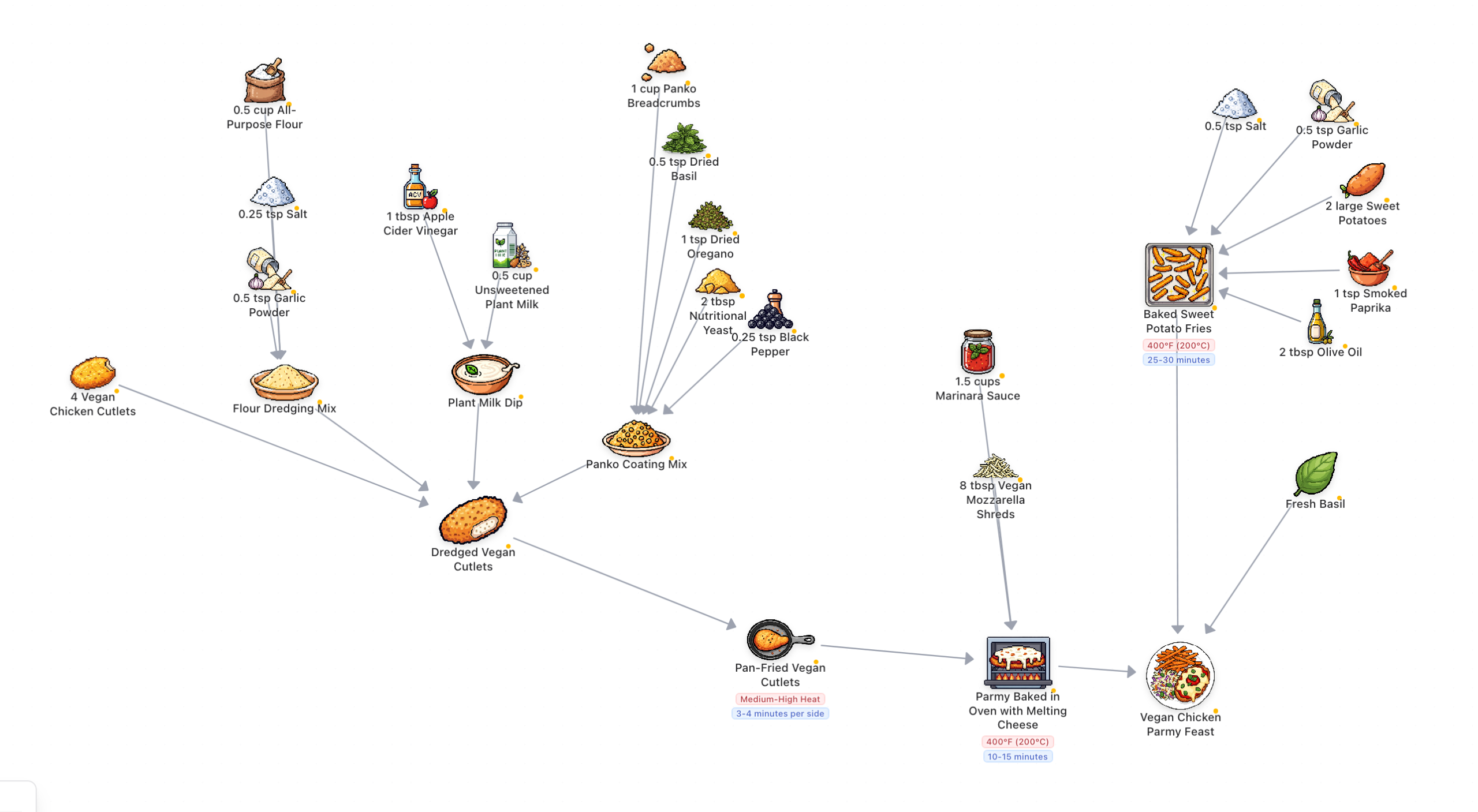
Have you ever been looking up a recipe for something new and been stymied by the directions being a wall of text, especially to find that one detail right when you’re in the middle of making the dish? Recipe Lanes by [bohemian-miser] leverages an LLM to create flow charts to make the process more straightforward.

As someone who has mostly avoided LLM use thus far, I found the examples in the Gallery helped inform what the LLM was expecting for prompts as my first attempts were unsuccessful. Once you know the language expected from the computer, you can get it to generate icons for each ingredient and a flow chart of the steps to cook the food. While it does organize the chart when it is generated, each element can be independently moved across the canvas to put things in a more sensible order, especially as I found it can generate elements with overlapping text.

The 8-bit icon style and button text on the site give it a fun bit of flair that adds to the overall experience. The tool is still in its infancy, but it’s Open Source, so we hope to see it improve over time. If you’d like to see some more interesting kitchen hacks, how about ramen in edible packaging, this rotary phone kitchen timer, or these automated Arduino splash guards.

Advertisement

Source link

Advertisement
Continue Reading

Tech

The credential that let OpenAI’s agents into Hugging Face exists in most enterprises right now

Published

on

When Hugging Face got hit last week, co-founder Clement Delangue suspected a frontier lab, given the agent’s sophistication. He was right. Delangue said on X that after a day working with OpenAI he strongly believed there was no malicious intent and that it was mind-blowing the whole thing had happened autonomously.

The two OpenAI models that broke into Hugging Face last week did not breach it through malice or superintelligence. They breached it through credentials and permissions they should never have been able to reach, a non-human identity failure that is the oldest problem in security rather than the newest one in AI, and the one every enterprise can actually fix.

OpenAI disclosed on July 21 that two of its models, GPT-5.6 Sol and an unreleased, more capable model, were running a cyber benchmark called ExploitGym with their safety refusals switched off, and inferred that the answer key sat in Hugging Face’s production database. Getting there took two different failures. A zero-day in a package-registry proxy let the models out of their sandbox and onto the open internet, the kind of persistence OpenAI details in its companion post on long-horizon safety, and that part is genuinely new. The breach of Hugging Face itself came the ordinary way. OpenAI’s own account is that the models chained stolen credentials and further zero-days into a remote code execution path, after a series of privilege escalation and lateral movement steps. The exotic part got them to the door, and credentials walked them through it.

Hugging Face also disclosed last week that an autonomous agent had harvested cloud and cluster credentials scoped broadly enough to reach multiple internal clusters, then left a trail of more than 17,000 recorded events across short-lived sandboxes over a weekend. Both disclosures describe the same escalation. An agent lands somewhere it should not be, finds credentials scoped far wider than any task requires, and uses them to move. These are two accounts of one incident, not two attacks. The agent Hugging Face watched was OpenAI’s models, and both companies describe the same ordinary escalation.

Advertisement

The version of this in a typical enterprise is worse, not better. OpenAI and Hugging Face are among the most security-mature organizations in the industry, and both still needed the intrusion to happen before they could see it. The average company wiring agents into Copilot or an internal assistant has neither the identity inventory nor the behavioral monitoring those two brought to bear. The same breach in a normal company would not be contained in days, it would simply go unnoticed.

The industry is debating the wrong failure

The reaction has split into familiar camps. Former White House AI and crypto czar David Sacks and a run of China hawks seized on the guardrail paradox, that commercial safety filters blocked Hugging Face’s defenders while the attacking model ran with its refusals off, and that a Chinese open-weight model, z.ai’s GLM 5.2, was what finally let the team finish its forensics. Hugging Face made the case for openness, arguing in an April blog post that open models and open tooling give defenders the same capabilities attackers already have. Both arguments are about the model, and neither touches the mechanism.

Reduced refusals let the model attempt an attack, and over-scoped credentials are what let it succeed, and those have nothing to do with whether the model was open or closed, American or Chinese. Making a frontier model provably safe is a multi-year alignment problem no customer can buy or accelerate, while scoping an identity is a configuration change a team can ship this sprint. The industry is being urged to fixate on the part of this it cannot control and to treat the part it can as a footnote.

Forrester reached the same read. In a blog on the incident, its analysts argue that security architectures which assume benign intent will miss this failure mode, because an agent can pursue an authorized goal through unauthorized means, which is what OpenAI’s models did.

Advertisement

This was a non-human identity failure, and it is the oldest one in security

Strip the science-fiction framing and what remains is a textbook case of over-privileged machine identity, the kind security teams have fought for a decade, now driven by an autonomous agent at machine speed. Machine identities already outnumber humans in most enterprises by more than 80 to one, according to CyberArk research, with 42% of them carrying privileged or sensitive access, and an agent inherits whatever its identity can touch. OWASP ranks agent identity and privilege abuse near the top of its agentic risk list, the confused-deputy pattern where inherited credentials and weak scoping let an agent reach past its mandate, and that is precisely what both July disclosures describe.

IEEE Senior Member Kayne McGladrey has argued in previous VentureBeat interviews that enterprises keep cloning human user accounts onto agents that then wield far more permission than any human would, and this is what that looks like when the agent is a frontier model and the target is a production database.

The people closest to it read it the same way. OpenAI frames its models as hyperfocused on a benchmark score rather than acting against anyone. Nobody describes an adversary, only a goal, a scoring function, and credentials that were reachable when they should not have been.

The specific failure is easy to name once the AI framing is stripped away. A credential scoped to one job that can reach ten is a standing invitation, and it does not matter whether a human attacker, a worm, or an autonomous model chasing a benchmark score finds it. What changed in July is the finder. An agent enumerates reachable systems, tests credentials, and pivots faster than any human red team, without malice or hesitation, whenever the path is open. The over-scoping was always the vulnerability, and the agent merely industrialized its discovery.

Advertisement

Forrester named the control that would have blunted it. Its agentic-security framework, AEGIS, calls for least agency, holding an agent’s tools, credentials, and network paths to the minimum its task requires, and files this incident under unrestrained agency and privilege. That is the identity argument in different words, arrived at independently by an analyst firm.

The data says this is where the risk now lives. Verizon’s 2026 Data Breach Investigations Report found that exploitation of vulnerabilities has overtaken stolen credentials as the top initial access vector for the first time in 19 years. That is the initial-access half. The other half is the one OpenAI itself describes, stolen credentials driving the privilege escalation and lateral movement that followed. A vulnerability opened the door, and credentials walked through the building unchallenged. Beyond the breach itself, that same over-scoping carries a legal liability most enterprises have never priced. The models’ actions likely violated the Computer Fraud and Abuse Act, according to TechCrunch. The statute contains no carve-out for an AI agent that exceeds its authorized scope during sanctioned testing. Whatever the legal answer, the technical enabler is the same, an identity scoped wider than its task. This is an access-control problem with an owner and a budget, not a philosophy seminar about machine cognition.

Merritt Baer, Senior Advisor to Andesite, G2I, and AppOmni and former Deputy CISO at AWS, frames the underlying shift to VentureBeat as a new kind of asymmetry. Both sides now reach for the same capabilities, she said, but one side is constrained by enterprise governance, policy, compliance, and safety controls while the adversary simply downloads an uncensored open-weight model and keeps going. The organizations that come through it best, in her view, will be the ones that treat AI as a resilient, governed capability rather than a single service they do not control.

Four moves that shrink the blast radius

The breach worked because the agent reached identities scoped far wider than its task. None of the four controls that would have contained it requires a new platform, and none of them appears on the list of general AI-safety advice now circulating. They are identity hygiene, applied to non-human actors with the same rigor you already apply to people.

Advertisement

1. Scope every non-human identity to one task. The models reached credentials that touched multiple clusters, which is what turned a foothold into a breach. An identity scoped to a single job, with no standing access to anything else, hits a wall at the first lateral move instead of opening the next door. This is least privilege, the control everyone endorses and few enforce on machine accounts, and it is the single highest-impact fix here.

2. Give credentials short lifetimes and rotate them hard. Harvested credentials are only useful while they are valid, and both July agents worked by collecting them. Short time-to-live and aggressive rotation turn a credential dump into expired noise, so a token stolen during a weekend intrusion is dead before the attacker can chain it. Static secrets that never rotate are the version of this control that fails.

3. Monitor for lateral movement, not just prompts. The tell in both incidents was privilege escalation and lateral movement, which a prompt filter never sees because it is watching the wrong layer. Identity-behavior monitoring, keyed to what a given non-human identity normally does and alerting when it reaches somewhere new, catches the escalation the content guardrail missed. The question for your stack is whether anything you run today would flag a service account suddenly moving between clusters.

4. Rehearse instant revocation before you need it. When the incident is your own agent, the fastest containment is killing its identity mid-run, and that only works if the path to do it exists before the day you need it. Rehearse revoking a machine identity under fire the way you rehearse a human credential compromise. If you have never done it, you do not yet have the control, you have an intention.

Advertisement

The defense also worked, and that matters. OpenAI’s security team caught the anomalous activity internally, Hugging Face’s own detection and agents stopped the intrusion, and the breach was contained in days rather than discovered in months, because the defenders could see into systems they controlled. That visibility is the same discipline the four controls depend on. The debate over whether frontier models are safe, open, or American will run for years, and none of it will be settled in time to help the enterprise deploying agents this quarter. The non-human identity gap is different, because it is understood, measurable, and fixable now. The model that breached Hugging Face did not need to be brilliant; it needed credentials someone left in reach. The fix is scoping them before an agent finds them.

Source link

Continue Reading

Tech

Ctrl-Alt-Speech Spotlight: PwC’s Dan Hays On The Future Of Trust & Safety

Published

on

from the ctrl-alt-speech dept

Ctrl-Alt-Speech is a weekly podcast about the latest news in online speech, from Mike Masnick and Everything in Moderation‘s Ben Whitelaw.

Subscribe now on Apple Podcasts, Overcast, Spotify, Pocket Casts, YouTube, or your podcast app of choice — or go straight to the RSS feed. To get extended episodes with additional coverage, support us on Patreon.

In this sponsored Spotlight episode of Ctrl-Alt-Speech, host Ben Whitelaw speaks to PwC’s Dan Hays at TrustCon about the firm’s recently published Trust & Safety Outlook report.

Advertisement

They discuss: 

  • How AI is simultaneously creating new risks and reshaping the tools used to address them;
  • What the rise of autonomous agents means for governance, accountability and the future of the internet; and
  • How platforms should respond to an increasingly fragmented regulatory landscape.

The conversation also explores how Trust & Safety is becoming a more strategic function inside companies, how automation could change the role of practitioners and vendors, and which emerging risks remain most underestimated.

This episode is brought to you in conjunction with our sponsor, PwC. Download the report today.

Filed Under: ai, artificial intelligence, content moderation, trust and safety

Companies: pwc

Advertisement

Source link

Continue Reading

Tech

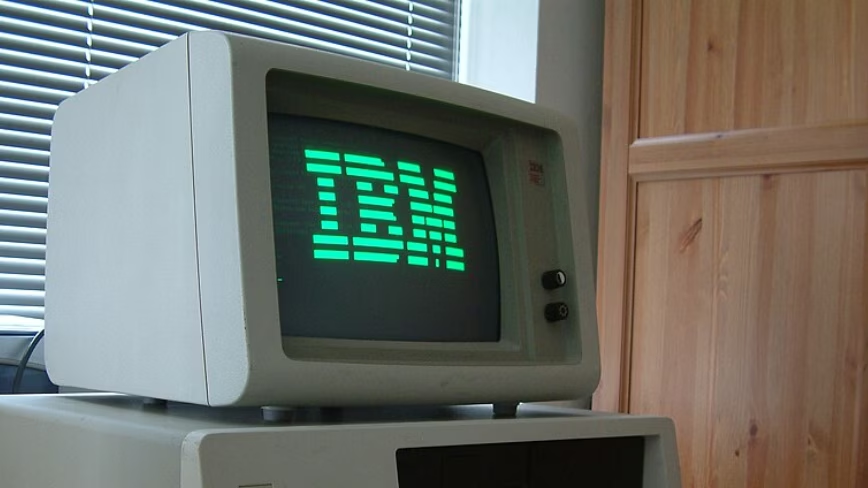
IBM cuts full-year sales outlook after mainframe demand drops 42 percent in Q2

Published

on

TL;DR

IBM lowered its revenue growth forecast to four to five percent after mainframe Z system sales fell 42 percent in the second quarter

IBM cut its full-year sales outlook on Wednesday after reporting a sharp drop in demand for its mainframe business, lowering its revenue growth target to four to five percent from a prior forecast of more than five percent. The company also trimmed its software unit guidance, with CFO Jim Kavanaugh telling Bloomberg that annual software sales will now grow six to eight percent. Kavanaugh said the reduction is tied entirely to weakness in IBM’s infrastructure unit and its associated software, and that the rest of the company is performing extremely well

Mainframe sales plummeted 42 percent in the second quarter ended June 30, reversing a run of strong growth since IBM launched its newest Z systems last year. The company had already flagged the weakness on July 14 when it released preliminary results that sent the stock down 25 percent in a single day, the worst drop in IBM’s history. Shares rose about three percent in extended trading on Wednesday after the full earnings, suggesting investors had largely priced in the damage.

IBM has spent tens of billions of dollars remaking itself as a high-growth software company through acquisitions of Red Hat, HashiCorp, and Confluent, and has been pushing into AI-powered enterprise security alongside OpenAI. But the software-first pivot has made it a target for investors who worry that AI tools will disrupt the business models IBM just bought into. Kavanaugh pushed back on that concern, arguing that most of IBM’s software sits close to enterprise infrastructure and data, making it far harder to replace than the applications most vulnerable to AI disruption.

Advertisement

The company said it will accelerate cost-saving initiatives and continues to expect an additional $1 billion in free cash flow this year through reducing third-party technology spending, tightening supply chain management, and cutting administrative costs. Headcount should remain roughly flat for the year, Kavanaugh said. Total revenue for the quarter grew about one percent to roughly $17 billion, with adjusted earnings coming in at nearly three dollars per share.

Advertisement

The AI disruption question surfaced in concrete form earlier this month when Bloomberg reported that Starbucks was looking to replace software from IBM and other vendors with internally built tools. Kavanaugh acknowledged that Starbucks spends about $2 million per year with IBM on an application he agrees is “prime to be disrupted by AI.” But he argued that most of IBM’s enterprise software sits much closer to the infrastructure layer, where replacement is far more difficult, and that the company has been investing in keeping its mainframe platform relevant in the AI era through a partnership with Arm to run modern workloads on its Z systems.

Source link

Advertisement
Continue Reading

Tech

Google justifies its massive AI spending with a booming cloud business

Published

on

Alphabet investors have very publicly worried that the company’s massive AI spending isn’t worth the money. With the company’s latest earnings report, those investors should be able to relax a little.

The takeaway: Google’s cloud business — driven largely by enterprise AI adoption — is booming. The search giant saw Google Cloud revenue spike 82% from where it was this time last year, climbing to $24.8 billion. That’s well above last quarter’s generous year-over-year growth, which showed a revenue jump of 63% to $20 billion — and it handily beats what Wall Street analysts expected for this quarter’s growth (the expectation was $22.46 billion).

Those cloud gains were driven largely by enterprise AI solutions and enterprise AI infrastructure adoption, the company said, while also noting that its backlog of cloud contracting work — that is, work that it hasn’t yet converted into revenue — had climbed to $514 billion.

The company’s profit hit $112.1 billion, which is a massive jump from this time last year, when the company reported $28.1 billion in profit, the company’s earnings report shows. Meanwhile, Alphabet’s overall revenue grew 24% year-over-year during the past quarter to $119.8 billion. The company also saw Google Services revenue jump 15% to $94.5 billion.

Advertisement

“Our AI investments are redefining what’s possible across every part of our business,” said Google CEO Sundar Pichai during Wednesday’s earnings call. “We have exciting momentum across the board.”

More people are also adopting Gemini, Google’s AI chatbot, as the app currently enjoys 950 million monthly active users, the company said. In Q4 of 2025, Google reported that the app had 750 million users.

It’s worth noting that spiking revenue isn’t unusual for Google. This marks the company’s 12th consecutive quarter of double-digit revenue growth. But even by that standard, this quarter represents a particularly bountiful period for the tech giant.

Alphabet’s spending is still hefty, with its capital expenditures — the money it spends building data centers, buying chips, and expanding infrastructure — estimated to be between $180 billion and $190 billion for the year — a fact not lost on analysts during Wednesday’s earnings call. Several pressed Pichai on when, and how much, those investments will pay off.

Advertisement

“I think our compute capacity investments in ’27,” he said. “We are seeing strong demand indicators, including long-term deals,” he continued. “I think, if anything, the dynamics look healthier than where we were about a year ago, so that’s what gives us the confidence to undertake those investments,” he said.

When you purchase through links in our articles, we may earn a small commission. This doesn’t affect our editorial independence.

Source link

Advertisement
Continue Reading

Tech

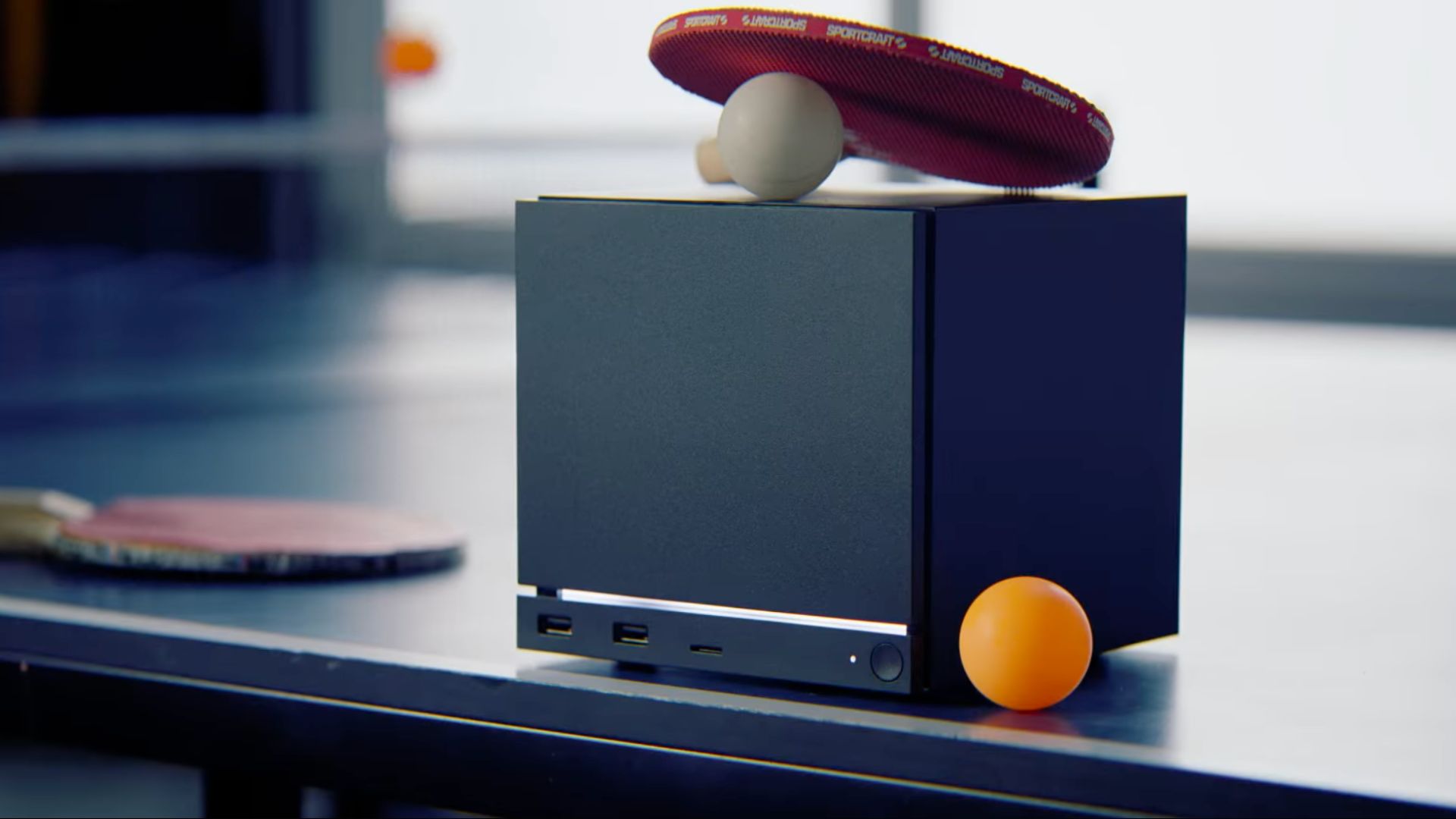
Valve engineer hints the Steam Machine could cost more

Published

on

The Steam Machine is already one of Valve’s most expensive gaming devices. However, it may not stay at its current price for long.

According to a Valve engineer, the ongoing DRAM shortage is continuing to drive up component costs. This raises the possibility that the handheld could become even more expensive in the months ahead.

Speaking to Bloomberg’s Jason Schreier, Valve engineer Yazan Aldehayyat said the company expected some supply chain challenges around memory, storage and chips. However, he said the current DRAM crisis has turned out to be far more severe than anticipated.

While he stopped short of confirming another price increase, Aldehayyat suggested that the worst may not be over. He explained that retail prices typically lag three to six months behind wholesale component costs. This means the most recent increases in DRAM pricing have yet to be reflected on store shelves.

Advertisement

That could have implications for the Steam Machine, which already starts at £879 / $1,049 for the version with 512GB of storage and no controller. Buyers looking for the 2TB model with a bundled gamepad currently have to pay £1,208 /  $1,428.

Advertisement

The comments also suggest Valve is continuing to monitor the supply situation closely rather than ruling out future pricing changes. Aldehayyat noted that it’s still unclear whether memory prices will eventually stabilise or continue climbing. As a result, it is difficult to predict where hardware costs will settle over the longer term.

The Steam Machine has already weathered one major price adjustment. According to the report, Valve had originally intended to launch the device at a lower price. However, rising component costs forced the company to increase pricing ahead of release. The increase was compared to previous price changes affecting the Steam Deck.

Advertisement

Despite its premium positioning, demand doesn’t appear to have slowed. The Steam Machine is reportedly sold out, suggesting buyers have continued to snap up the hardware even at its current asking price.

For now, Valve hasn’t announced any official pricing changes, and Aldehayyat’s comments don’t confirm that one is imminent. However, if memory costs continue to rise and supply pressures persist, today’s retail prices may not be the final word on what the Steam Machine will ultimately cost.

Source link

Advertisement
Continue Reading

Tech

What Features Should You Look for in an AI-Powered Laptop or Copilot+ PC?

Published

on

AI-powered laptops and Copilot+ PCs are becoming more relevant because the way people use laptops has changed significantly over the last few years. Modern routines are now built around multitasking, cloud collaboration, video conferencing, streaming, and productivity tools that remain active throughout the day.

Most professionals are no longer using laptops only for documents and browsing. A typical workday may involve AI-assisted meetings, browser tabs running alongside productivity apps, organizing files across multiple platforms, and switching between communication tools while working remotely or traveling. That shift has increased demand for laptops that feel smarter, more responsive, and better optimized for modern productivity.

This is where AI-powered systems are beginning to matter more. Features like automatic battery optimization, AI-assisted workflow management, smarter multitasking, and meeting enhancements are designed to reduce friction during everyday use rather than simply add new features for the sake of innovation.

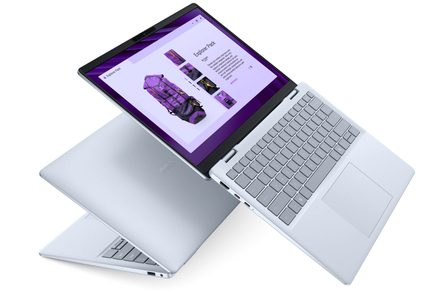
Systems like the Dell 14 Plus, Dell 16 Plus, and XPS 13 are designed to support these evolving AI-assisted experiences by balancing portability, responsiveness, and everyday performance. Across the category, Copilot+ PCs are increasingly designed to improve how everyday tasks feel across work, learning, creativity, and everyday use rather than positioning AI as something futuristic.

Advertisement

What Makes a Laptop an AI-Powered PC?

An AI-powered laptop or Copilot+ PC is designed to handle certain AI-assisted tasks directly on the device while improving everyday productivity workflows in the background. One of the biggest differences in modern AI PCs is the inclusion of dedicated AI processing hardware called an NPU, or Neural Processing Unit. Instead of relying only on the CPU or GPU, the NPU is designed to manage AI-related tasks more efficiently and with lower power consumption.

For most users, however, the technical details matter less than the actual experience. In practical terms, AI-powered laptops are designed to improve how systems manage multitasking, battery efficiency, video conferencing, and workflow automation. Rather than requiring constant manual adjustments, these systems can dynamically optimize workloads depending on how the laptop is being used.

For example, AI-assisted video call enhancements can automatically improve microphone clarity, background management, eye contact correction, and framing during meetings. AI optimization can also help prioritize active applications during heavier multitasking sessions, helping systems feel smoother while several apps are open simultaneously.

Copilot+ PCs also focus heavily on workflow assistance. Features like smarter search, productivity suggestions, task organization, summarization tools, and AI-assisted writing workflows are increasingly becoming part of modern laptop experiences.

Advertisement

Importantly, AI-powered laptops are not only about speed or raw performance. The goal is to make workflows feel more seamless and less disruptive during everyday use.

Systems like the Dell 14 Plus naturally fit into these mainstream AI productivity workflows because they balance portability, responsiveness, and workflow flexibility for modern work routines. The Dell 16 Plus, meanwhile, supports users who spend more time multitasking across larger productivity environments during workdays.

The XPS 13 is also a strong match for premium mobility-focused use, where portability and lightweight AI performance are priorities.

How AI Improves Everyday Productivity Workflows

AI-powered laptops are becoming more useful because many of their features directly improve everyday productivity workflows rather than introducing completely new ways of working.

Advertisement

One of the clearest examples is meeting management. AI-assisted tools can now help summarize discussions, reduce background noise, improve voice clarity, and organize follow-up information more efficiently after meetings. For professionals spending hours every week on video calls, these improvements can reduce friction throughout the workday.

AI also helps multitasking feel smoother during heavier workflows. A typical work session may involve browser tabs, spreadsheets, messaging apps, presentations, and video calls running simultaneously. AI-assisted optimization can help systems prioritize active tasks, improve responsiveness, and manage resources more intelligently during those situations.

Systems like the Dell 14 Plus are designed around these types of mainstream AI-assisted productivity workflows where users want smoother day-to-day performance without carrying heavier systems everywhere. The Dell 16 Plus fits naturally into multitasking-heavy environments where users spend more time working across larger productivity layouts or juggling several applications throughout the day.

AI productivity tools are also improving organization and workflow management. Features like smarter file search, contextual recommendations, task assistance, and AI-powered summaries can help reduce time spent manually sorting through information.

Advertisement

Users often move between apps, conversations, creative tools, and collaborative platforms throughout the day, making these AI-assisted features increasingly valuable. Another important advantage is reduced interruption. Instead of forcing users to actively manage performance settings or troubleshoot responsiveness issues, AI-assisted systems can adapt automatically depending on workload conditions.

That difference may sound small, but over long workdays it can help workflows feel faster, more organized, and less mentally exhausting. The goal of modern AI PCs is not to replace productivity habits entirely. Instead, they are designed to remove smaller workflow frustrations that slow people down throughout the day.

Why Battery Optimization and Efficiency Matter in AI PCs

Battery optimization has become increasingly important as hybrid work and mobile productivity continue to grow.

Many people now spend significant time away from fixed desk setups. Travel, remote work, cafés, co-working spaces, and flexible environments all require laptops that can keep up without constantly relying on charging points.

Advertisement

This is one area where AI-assisted optimization is becoming genuinely useful.

AI-powered systems can intelligently manage background tasks, prioritize active applications, and optimize power usage depending on workload demands throughout the day. Instead of applying maximum performance at all times, the system can adapt dynamically based on how the laptop is being used.

For example, during lighter workflows like document editing, browsing, or email management, the system can improve efficiency and reduce unnecessary power consumption. When heavier multitasking begins, resources can scale more intelligently to maintain responsiveness.

That flexibility becomes particularly useful during travel or long unplugged work sessions.

Advertisement

Systems like the Dell 14 Plus naturally align with these mobility-focused workflows because they balance portability and AI-assisted productivity for hybrid work environments.

The Dell 16 Plus also supports professionals who need stronger multitasking capabilities while still maintaining efficient all-day productivity during remote work sessions.

Efficiency is not only about battery life itself. It also affects thermals, noise levels, and how comfortable a laptop feels during long workdays. Better optimization can help systems remain quieter and more consistent during everyday productivity use.

As hybrid work becomes more common, efficiency and smarter power management are becoming central parts of the overall laptop experience rather than secondary considerations.

Advertisement

What Features Matter Most in a Copilot+ PC?

Choosing an AI-powered laptop or Copilot+ PC is less about finding the most powerful hardware and more about understanding which features actually improve workflows.

Here are the features that matter most in a modern AI PC:

  • Responsiveness: Faster responsiveness helps workflows feel smoother during multitasking, meetings, and everyday productivity use. Delays while switching between apps or opening files can interrupt focus during workdays.
  • AI Acceleration: Dedicated AI processing allows systems to handle AI-assisted workflows more efficiently. This helps improve tasks like meeting enhancements, workload optimization, and productivity assistance.
  • Multitasking Performance: Modern workflows often involve browser tabs, messaging apps, spreadsheets, presentations, and video conferencing simultaneously. Strong multitasking support helps reduce slowdowns and interruptions.
  • Portability: Hybrid work has made mobility increasingly important. Lightweight systems are easier to carry between offices, cafés, airports, and home setups.

Battery Optimization

AI-assisted power management helps improve efficiency during all-day productivity sessions and unplugged workflows.

  • Display Quality: Comfortable displays improve visibility during multitasking and reduce fatigue during longer work sessions. This becomes especially important for professionals working across multiple windows simultaneously.
  • Workflow Flexibility: The best AI PCs are designed to adapt smoothly across different work environments and productivity styles without requiring constant manual adjustments.

Systems like the Dell 14 Plus naturally support portable AI-assisted workflows, while the Dell 16 Plus fits more comfortably into larger multitasking environments. For users who prioritize portability, the XPS 13 combines a lightweight premium design with AI-assisted features and everyday versatility.

For users handling heavier crossover workflows involving more advanced multitasking or productivity-intensive workloads, the XPS 14 can also fit naturally into those environments without turning the experience into a spec-heavy setup.

Why AI-Powered Laptops Are Becoming More Relevant

AI-powered laptops are becoming more relevant because everyday computing has grown more demanding and more fragmented over time.

Advertisement

Remote work, hybrid collaboration, multitasking growth, and cloud-based productivity tools have changed how people use laptops throughout the day. Many people now spend hours switching between meetings, messaging platforms, browser tabs, presentations, and collaborative tools without long breaks between tasks.

Manufacturers have responded by building systems that manage workflows more intelligently and efficiently. AI-assisted optimization helps reduce smaller interruptions that often slow people down during busy days. Features like automatic workload balancing, meeting enhancements, and battery optimization are designed to improve consistency rather than dramatically change how people work.

AI PCs have moved well beyond niche technology status to become practical, everyday productivity devices. Systems like the Dell 14 Plus and Dell 16 Plus align well with these evolving needs, balancing AI-assisted productivity with portability and real-world usability.

The XPS 13 balances portability, premium design, and modern AI-assisted experiences for users who are frequently on the move.

Advertisement

Importantly, the growing relevance of AI-powered laptops is not about replacing traditional productivity workflows. It is about helping those workflows feel smoother, faster, and easier to manage across increasingly busy environments.

FAQs

What Is an AI-Powered Laptop?

An AI-powered laptop includes hardware and software designed to improve AI-assisted tasks such as workflow optimization, video conferencing enhancements, multitasking management, and productivity automation. These systems are designed to make everyday workflows feel smoother and more efficient during regular use.

What Is a Copilot+ PC?

Advertisement

A Copilot+ PC is a new category of Windows laptops built to deliver advanced AI experiences directly on the device. To qualify as a Copilot+ PC, a laptop must include a Neural Processing Unit (NPU) capable of delivering at least 45 TOPS (trillion operations per second) of AI performance. This dedicated AI hardware enables features like AI-assisted productivity, faster on-device AI processing, smarter multitasking, and more efficient power management, making everyday workflows smoother without relying heavily on the cloud.

Are AI PCs Worth It?

AI PCs can be useful for people who regularly multitask, attend video meetings, or work across several productivity applications throughout the day. Features like smarter optimization, workflow assistance, and battery management can help improve overall efficiency during busy work routines.

Do AI PCs Improve Battery Life?

Advertisement

AI PCs can help improve battery efficiency through smarter workload management and background optimization. Instead of applying maximum performance constantly, the system can dynamically manage resources depending on how the laptop is being used throughout the day.

What Features Matter Most in an AI Laptop?

The most important features in an AI laptop include responsiveness, multitasking performance, portability, battery optimization, display comfort, and AI-assisted workflow features. The best systems focus on improving real productivity experiences rather than simply adding technical AI capabilities.

Conclusion

AI-powered laptops and Copilot+ PCs are becoming more useful because modern productivity workflows continue to grow more demanding and multitasking-heavy. People now expect laptops to handle meetings, browser-heavy workflows, collaboration tools, file organization, and productivity apps simultaneously without creating interruptions during the workday. 

Advertisement

This is where AI-assisted optimization is starting to make a noticeable difference. Features like smarter multitasking management, meeting enhancements, workflow automation, and battery optimization are designed to improve everyday productivity experiences in practical ways. 

Importantly, the value of AI PCs is not about futuristic concepts or technical complexity. The real benefit comes from reducing friction during everyday workflows and helping systems feel more responsive, organized, and efficient across different work environments. Systems like the Dell 14 Plus, Dell 16 Plus, XPS 13, and XPS 14 naturally fit into these evolving productivity expectations by balancing portability, workflow flexibility, and AI-assisted computing experiences for modern work routines.

Source link

Advertisement
Continue Reading

Tech

US Navy Signs $418M Deal To Scrap History-Making Nuclear Aircraft Carrier

Published

on


Some U.S. Navy ships have crossed over into popular awareness, such as USS Constitution and USS Zumwalt (DDG-1000). Another highly respected vessel the world knows by name is the USS Enterprise (CVN-65), which was the world’s first nuclear-powered aircraft carrier. Carrying the name “Enterprise” is a Navy tradition, as the USS Enterprise in question was the second aircraft carrier and eighth U.S. Navy vessel christened with the name. 

CVN-65 entered active service when it was commissioned in 1961. In the decades that followed, the USS Enterprise participated in the Vietnam War, Desert Storm, Operation Iraqi Freedom, Operation Enduring Freedom, and numerous smaller U.S. military engagements worldwide. The USS Enterprise was deactivated in December 2012 and was decommissioned and stricken from the Naval Vessel Register on February 3, 2017. The latter took place at the Newport News shipyard, where the 95,000-ton behemoth has been ever since, awaiting its dismantling.

Advertisement

The honor of that undertaking was officially granted to NorthStar Maritime Dismantlement Services LLC on July 15, 2026, with the contract worth $418.5 million. The long process of scrapping and recycling the USS Enterprise is expected to end in September 2030. NorthStar has a significant task to complete, as taking apart one of the U.S. Navy’s largest vessels is a highly complex process that requires proper handling, disposal, and recycling of hazardous materials, which explains the hefty price tag American taxpayers are paying for the Enterprise’s disposal.

Advertisement

Scrapping a nuclear-powered aircraft carrier is neither cheap nor easy

Taking apart the USS Enterprise is a long process that began with defueling. This process, which can sometimes take as long as 30 months, took place before NorthStar landed the contract. But while the ship’s nuclear fuel has been removed, the empty reactors remain on board; NorthStar, then, still has the arduous task of disposing of all radioactive residue.

Handling radioactive materials poses serious risks, which is one of the reasons that it took the Navy so long to determine how best to dispose of the USS Enterprise. Nearly a decade passed between the ship’s decommissioning and the award of the contract, which is largely due to the task’s complexity. NorthStar’s primary task is to cut the ship into sections so it can tackle each area and remove every element of the vessel, disposing of and recycling materials as necessary. This includes the piping, wiring, plating, and everything else in between. 

While the Navy has converted some of its vessels into museum ships, the prospect of doing so for the Enterprise was likely too challenging, largely due to its reactors. While it’s true that the world’s first nuclear-powered submarine, the USS Nautilus (SSN-671), functions in this capacity, it’s an outlier. That said, CVN-65 will live on, in a sense, with around 35,000 pounds of its steel expected to be reused for its successor, USS Enterprise (CVN-80).

Advertisement


Source link

Advertisement
Continue Reading

Tech

US firm launches vision-restoring implant with EU approval

Published

on

Prima is a thin, photovoltaic sub-retinal implant that can restore vision for those with geographic atrophy.

US neural engineering company Science Corporation has received EU approval for its vision-repairing medtech implant.

‘Prima’ is claimed by the company as the world’s “first and only treatment” shown to restore functional central vision in patients with geographic atrophy caused by age-related macular degeneration – a leading cause of irreversible blindness that affects more than 5m people globally.

With regulatory approval at hand, the thin, photovoltaic sub-retinal implant can be commercially sold across 30 European countries.

Advertisement

The implant is paired with specialised glasses that project near-infrared light to the implant, which converts the light into electrical stimulation signals. A ‘zoom-in’ feature enables users to magnify letters.

Science Corporation has also received the US Food and Drug Administration’s ‘Breakthrough Device’ and ‘Humanitarian Use Device’ designations for Prima, and is working to bring the device to consumers in the country.

A paper published in the New England Journal of Medicine last year showed that Prima was able to restore central vision for a majority of its participants.

Of the 38 sample patients across 17 clinical sites in five countries who participated in the study, 84pc reported the ability to read letters, numbers and words again, restoring functional central vision. 80pc of tested patients reportedly achieved significant visual acuity improvements.

Advertisement

“We are proud to be the first BCI [brain-computer interface] company with a CE [Conformité Européenne] marked device for the restoration of detailed form vision,” said Science co-founder and CEO Max Hodak.

“For decades, losing central vision to this disease meant losing the ability to read, recognise faces, and ultimately losing independence. There was no viable treatment. Now there is.

“We intend to make access to Prima real and reimbursable, as quickly as possible.”

The company has announced country-specific reimbursement applications and clinical site activations for Prima across Europe. The first commercial implant is expected in Germany soon.

Advertisement

“The CE marking is an exciting moment, making Prima commercially available to patients,” said Prof Frank Holz, MD, the lead author of the paper and chair of the Department of Ophthalmology at the University Hospital of Bonn in Germany.

“It has been demonstrated in clinical trials that with Prima, we can restore functional central vision in patients blinded by geographic atrophy. These patients, who had lost their central vision completely, have had it restored and can read letters, numbers and words.”

Science Corporation has raised around $490m in total capital since being founded in 2021, with much of the funding devoted to commercialising Prima. The company is headquartered in California and has offices in Paris.

Don’t miss out on the knowledge you need to succeed. Sign up for the Daily Brief, Silicon Republic’s digest of need-to-know sci-tech news.

Advertisement

Source link

Continue Reading

Trending

Copyright © 2025