Tech
Earth’s Airglow Meets the Milky Way from Orbit

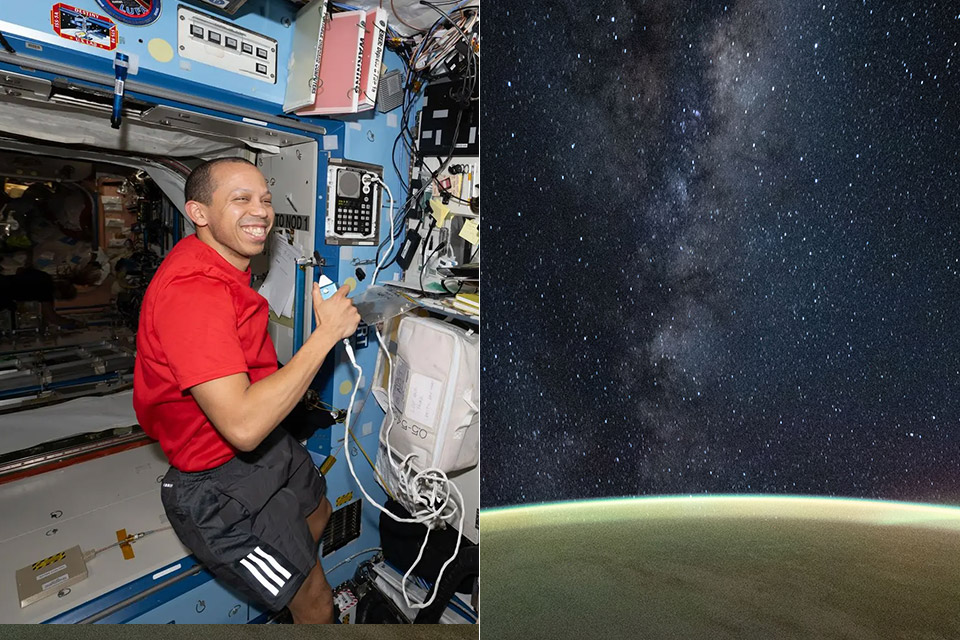
Last month, NASA astronaut Chris Williams floated aboard the Crew Dragon Freedom, pointing his camera out the window. What he photographed shows our planet enveloped in a delicate ribbon of light, called airglow, with the Milky Way arching overhead like a faint road through the stars. The photograph, shot on April 13 while the spacecraft was docked to the International Space Station, provides a clear view of something that occurs high above us every night.


Earth softly curves over the bottom of the frame, with brown and reddish land extending out next to patches of deep blue ocean, all speckled with beautiful white clouds. A thin, consistent ribbon of green and yellow hugs the edge of the atmosphere, where the planet meets empty space. Above that ribbon, the sky becomes absolutely dark, with thousands of sharp stars. The Milky Way traces a wide, hazy path across the top, with dense star fields and dark dust lanes easily visible.
Sale


Gskyer Telescope, 70mm Aperture 400mm AZ Mount Astronomical Refracting Telescope for Kids Beginners…
- Superior Optics: 400mm(f/5.7) focal length and 70mm aperture, fully coated optics glass lens with high transmission coatings creates stunning images…
- Magnification: Come with two replaceable eyepieces and one 3x Barlow lens.3x Barlow lens trebles the magnifying power of each eyepiece. 5×24 finder…
- Wireless Remote: This refractor telescope includes one smart phone adapter and one Wireless camera remote to explore the nature of the world easily…
Williams captured the image from the zenith docking port on the night side of the orbit. The window frame and a bit of the station’s solar array emerge at the borders, reminding viewers that this sight came from a small spacecraft hundreds of miles high. The camera was pointed at the horizon, where the glow is greatest, so no city lights appear. Instead, the attention is on the natural light that surrounds the entire globe.
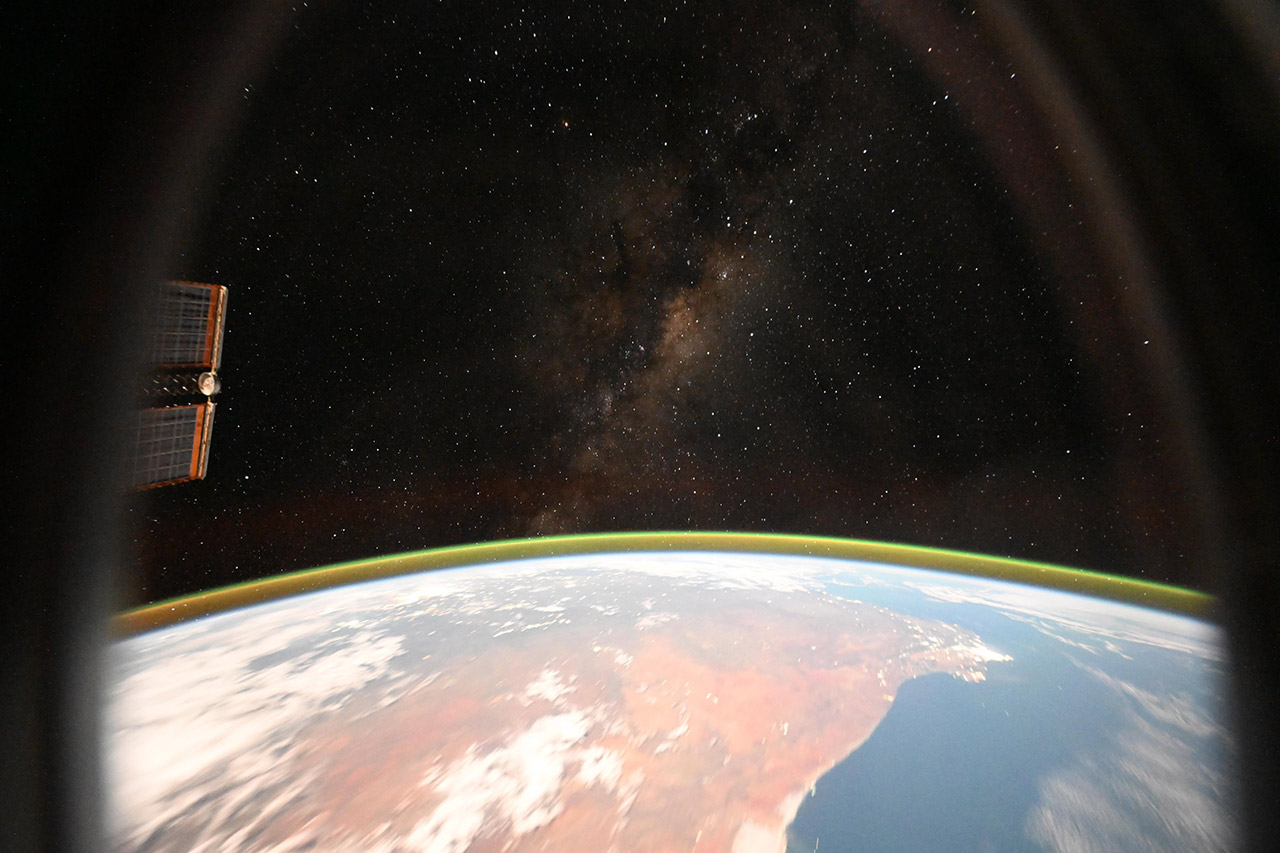
That light is known as airglow, since sunlight penetrates the upper atmosphere during the day and provides energy to the atoms and molecules that float there. After sunset, such particles gradually release their additional energy as weak photons. The procedure creates the colored layers that Williams recorded. Green and yellow tones are most common because oxygen and nitrogen react in different ways at different heights. The effect is similar to the soft brightness inside a glow stick after snapping it, but on a planetary scale and driven by ordinary daylight rather than chemicals.

People occasionally mix airglow with the brighter curtains of an aurora. Both include charged particles emitting light, while airglow relies on consistent solar energy that arrives each day. Auroras require bursts of solar wind to light up. Airglow is always present, but it is too dim for most ground viewers to see unless the sky are very black and the camera exposure is long.
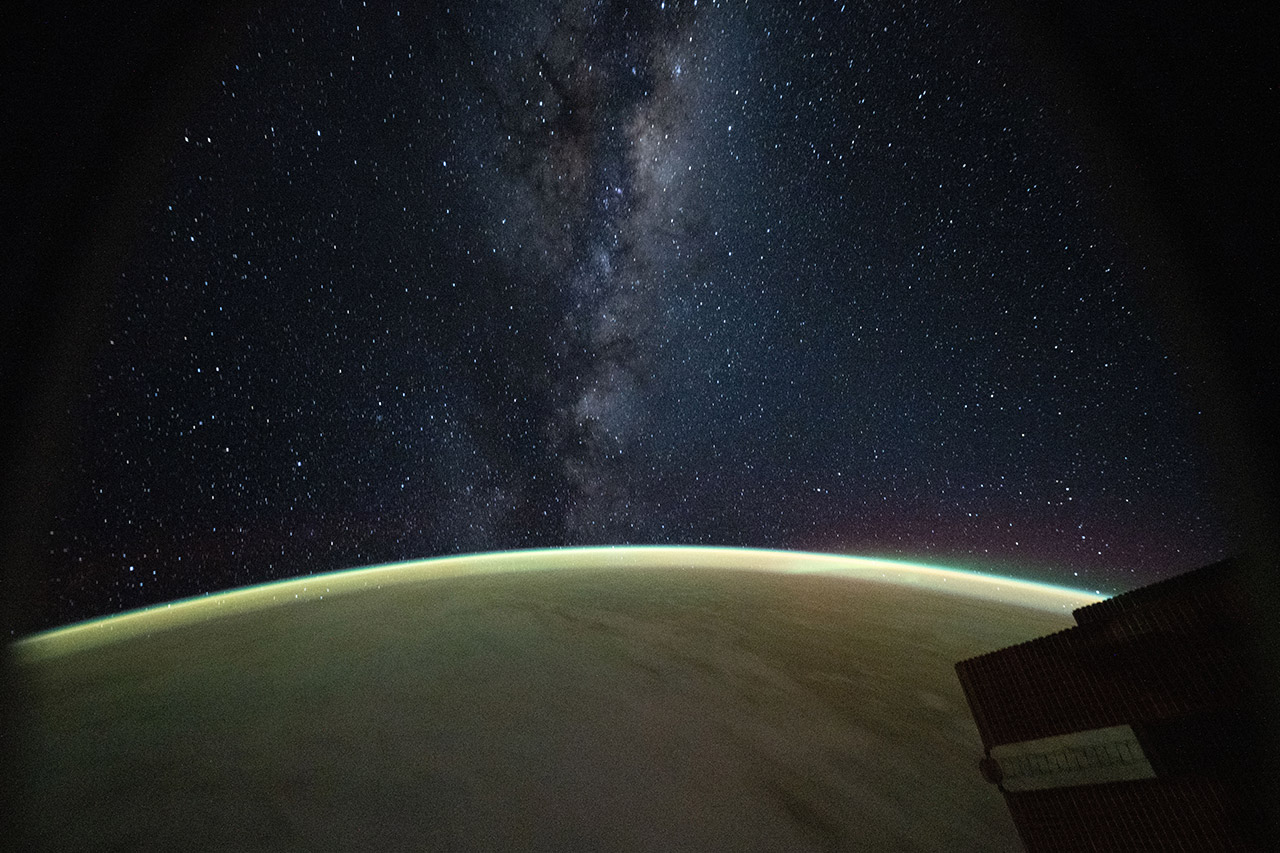
Williams later explained that the night side of the orbit is comparable to standing in one of Earth’s most isolated dark-sky locations. The station’s path allows him to observe stars in both the northern and southern sky at the same time. In his words, the view of the galactic plane is clear because nothing in the thin air above obscures the distant stars. This single frame combines those details: the planet’s curve, the luminous atmosphere shell, and the galaxy beyond.
[Source]
You must be logged in to post a comment Login