Tech
Electrolysis That Pulls Pure Iron From Ore and Powers Flow Batteries, Goes Beyond Simple Bubbles

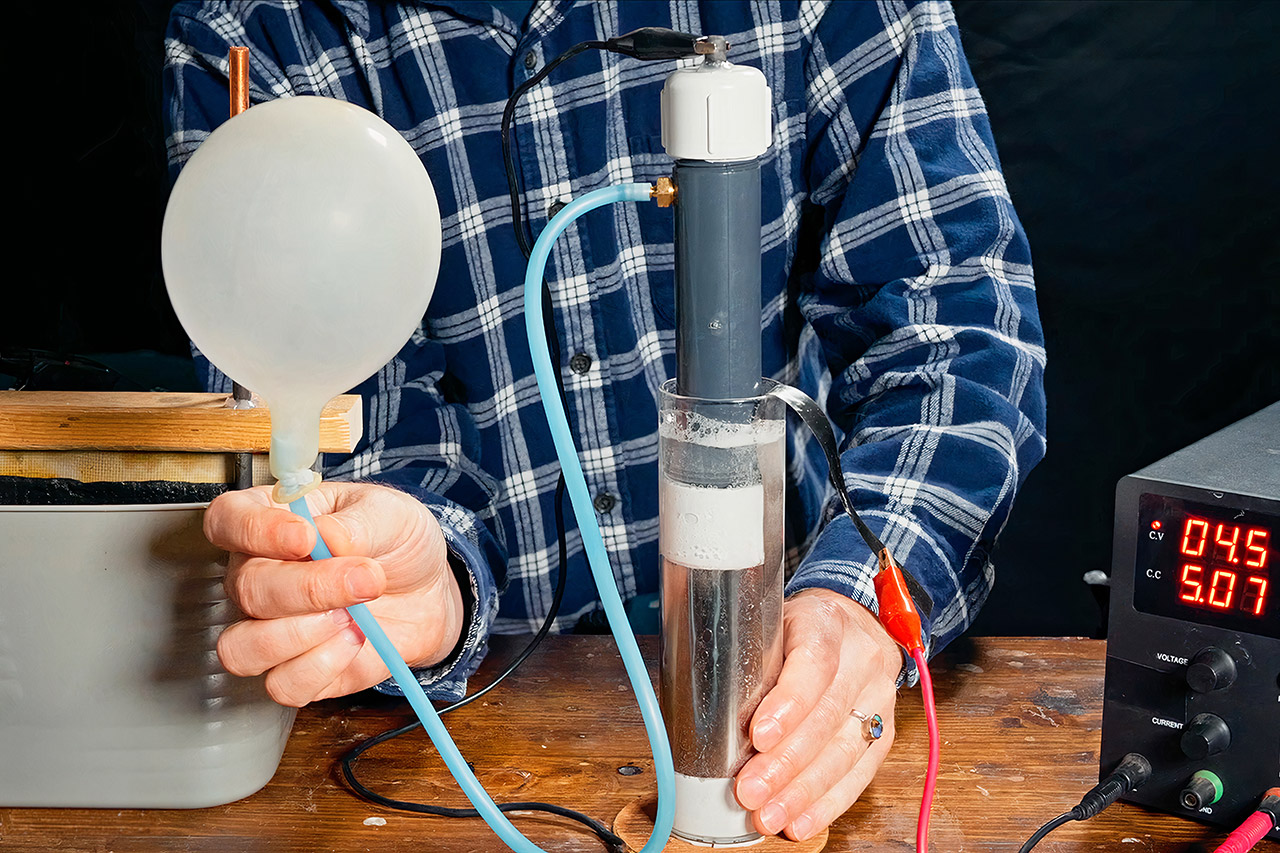
Electricity has split water into hydrogen and oxygen for generations in classrooms and labs. Bubbles form at two electrodes, gases rise, and the show ends there for most observers. A closer look at what actually happens during the process, combined with one key addition, changes the outcome entirely.


A pH indicator dye produces an unexpected reaction in a basic water cell containing water and a trace of sodium sulfate. The solution at the + electrode turns bright red because acid begins to form, but it is the wrong sort, whereas the solution around the electrode turns a beautiful blue as a base forms. Oxygen begins to bubble from one side, while hydrogen does the same on the other. When the two sides are blended, the colors fade, the solution returns to neutral, and the process must be repeated. The reactions do not just split water molecules in two, as one might expect; rather, they create two distinct chemical environments that generally balance each other out and sit there doing nothing.
It simply required a thin barrier to transform everything. Makers are increasingly creating their own ion-exchange membranes from components widely available at hardware stores and water-treatment companies. You can grind up the resin beads from the water softeners, mix them half and half with some PVC cement, and place the mixture on a sheet of fabric or silicone. Once dried, the sheet allows only positive or negative ions through, depending on the resin you use. The two sides of the cell are cleanly segregated, so acid stays acid and base stays base, because each compartment can just go off and do its own thing without interruption.

The separation of iron is one of the most evident examples of this. Take a load of crushed magnetite ore, a type of iron oxide that can be found everywhere, and place it on the acid side of the cell. The acid dissolves the ore and begins to transfer iron ions into the solution. The liquid then moves to the cathode compartment. Next thing you know, electricity is zapping those iron ions out of solution and depositing them as solid metal on the electrode surface, resulting in a clean layer of pure iron. At the same time, chloride ions or whatever carrier you’re using start filtering back through the membrane, regenerating fresh acid on the original side. The acid simply cycles, so you only need to add new ore. If the iron coating becomes too thick, the electrodes may need to be replaced. A tiny cell, on the other hand, may produce useable metal using just about a third of a watt and does not require an oven or high-temperature carbon reduction.

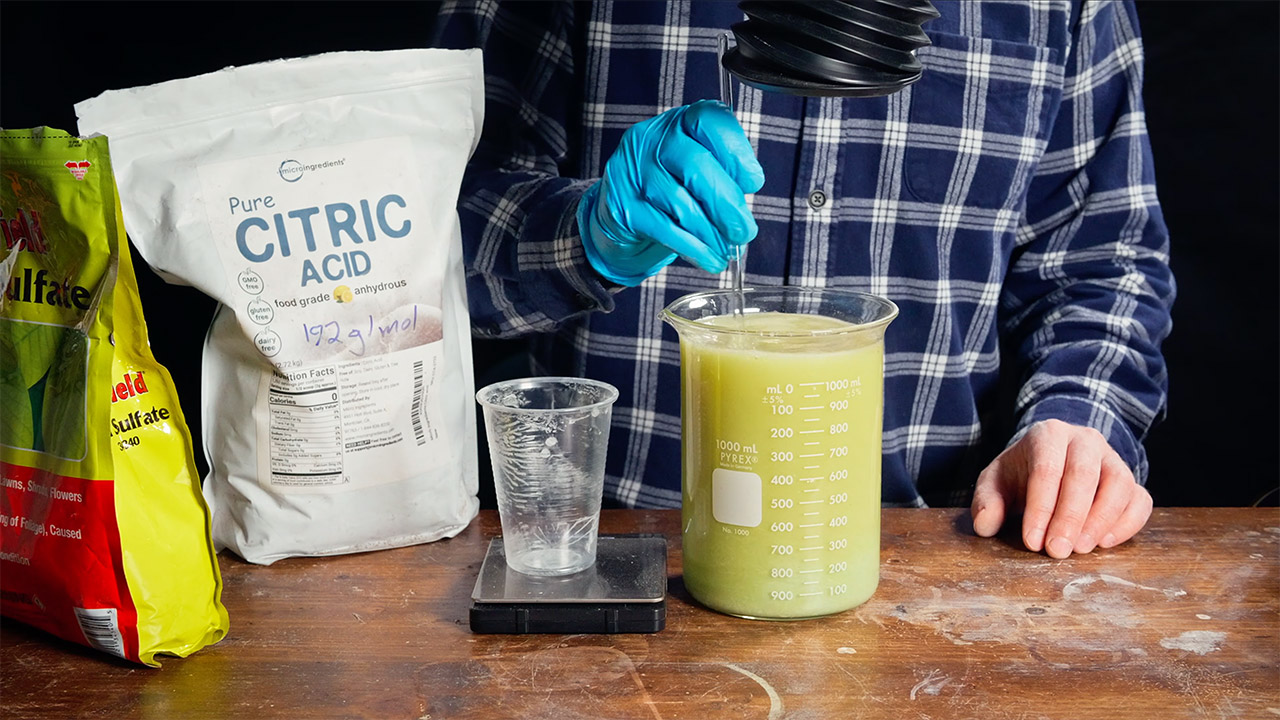
The same concept can be used to produce a far more practical energy storage system. A flow battery consists of an iron sulfate solution in water that has been stabilized with citric acid. Its main components are carbon felt electrodes, which are simply cut from normal welding blankets that have been burnt and cleaned to a nearly pure state before having their surface area blown up with microwaves. These electrodes are on either side of a single membrane. During charging, electricity is used to boost the chemistry’s energy level. When discharged, the ions penetrate the membrane and the cell generates electricity, approximately 1.2 volts and up to half an amp in a simple design using a bucket as the container. Because the active chemicals are floating in liquid tanks rather than fixed inside solid plates, the capacity simply grows with tank size, allowing you to add more solution or larger reservoirs as needed. To increase voltage, simply stack many cells, and because the liquids are in a movable solution, pumps may be employed to move them around and keep the system running longer. Crucially, the architecture allows for extension in ways that standard batteries cannot.
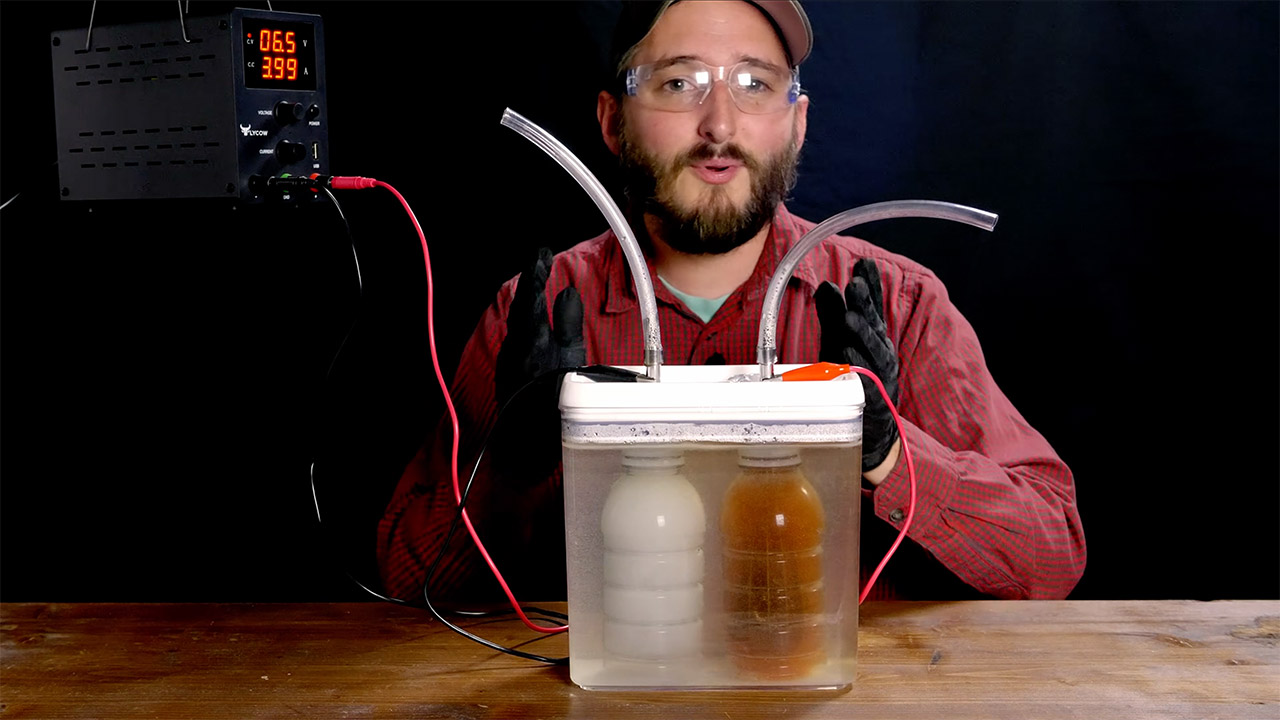
When you employ this simple method, hydrogen generation improves dramatically. With the membrane in place, hydrogen forms at the cathode in a sodium hydroxide solution and simply escapes via a tube via its own steam. The oxygen remains on the other side of the cell. There is no need for an additional compressor, and the gases do not mix within the cell. You can even increase the pressure to a suitable level simply by stiffening the vessel. The efficiency also improves because the reactions are no longer competing for a common place.
[Source]
You must be logged in to post a comment Login