Connect with us
DAPA Banner

Tech

Encyclopedia Britannica sues OpenAI for copyright and trademark infringement

Published

on

OpenAI has been hit with another lawsuit. This time, Encyclopedia Britannica took legal action against OpenAI, accusing the company of copyright and trademark infringements, as first reported by Reuters. More specifically, Britannica alleged that OpenAI illegally used its “copyrighted content at a massive scale” when training its AI models. Not just with training, the encyclopedia company claimed that ChatGPT’s responses to user queries sometimes contain “full or partial verbatim reproductions of [Britannica’s] copyright articles.”

Along with claims of copyright violations, Britannica argued that OpenAI was also responsible for trademark infringement. According to the lawsuit, ChatGPT generates “made-up content or ‘hallucinations‘ and falsely attributes them” to Encyclopedia Britannica. The lawsuit doesn’t specify an amount for monetary damages, but Britannica is also seeking an injunction to prevent OpenAI from repeating these accusations.

When reached out for comment, a spokesperson for OpenAI told Engadget that, “ChatGPT helps enhance human creativity, advance scientific discovery and medical research, and enable hundreds of millions of people to improve their daily lives. Our models empower innovation, and are trained on publicly available data and grounded in fair use.”

It’s not the first time that Britannica has filed a lawsuit against an AI company. In September, the company, which owns Merriam-Webster, also sued Perplexity for similar reasons. On the other side, OpenAI is still embroiled in a legal battle with The New York Times, which also sued the AI giant for copyright infringement.

Advertisement

Source link

Continue Reading
Click to comment

You must be logged in to post a comment Login

Leave a Reply

Tech

Someone gave the MacBook Neo the 1TB storage upgrade it never got from Apple

Published

on

Apple launched the $599 MacBook Neo on March 11, a budget Mac powered by the A18 Pro chip from the iPhone 16 Pro, 8GB of unified memory, and a 13-inch screen. Though it offers decent specifications for the price, there’s a catch: the storage tops out at 512GB. 

However, a Chinese repair technician, DirectorFeng, has swapped the default NAND chip for a 1TB chip, effectively unlocking the MacBook Neo’s storage. The technician has posted the entire video on a YouTube channel. 

How did DirectorFeng pull this off?

DirectorFeng replaced the NAND flash drive soldered to the MacBook’s logic board and then reflashed macOS, so it recognizes the third-party driver and storage. The process involved removing the original chip, cleaning the solder pads, and installing a higher-capacity replacement using professional repair tools. 

Advertisement

This wasn’t a screwdriver-and-YouTube-tutorial situation; this is microsurgery on a logic board, the kind that makes most people’s palms sweat. However, once reassembled, macOS recognized the larger-capacity NAND drive without firmware issues, and storage performance appeared normal as well. 

The storage, as seen in the video, goes up from 256GB to 994.61GB (marketed as 1TB). Once the process was complete, the replaced drive offered read and write speeds of 1,551 MB/s and 1,506MB/s, respectively. 

Should you try upgrading your MacBook Neo’s storage?

It’s worth noting that Apple uses soldered NAND rather than a removable SSD, which implies that any capacity change would require microsoldering and would almost certainly void the manufacturer’s warranty. However, the successful storage upgrade indicates that the Neo is relatively easier to work on than other MacBooks. 

Is this a consumer-friendly upgrade? No. Should you try upgrading your MacBook Neo’s storage yourself? Certainly not. The only key takeaway here is that the device works with third-party storage without any firmware issues. So, a storage upgrade, at least in theory, is possible. 

Advertisement

Source link

Continue Reading

Tech

Trump Gets $10 Billion Kickback To The Treasury For Offloading TikTok To His Billionaire Buddies

Published

on

from the bribes-for-the-king dept

We’ve discussed at length how Trump’s “fix” for TikTok’s problems basically involved forcing the sale of the platform to his greedy billionaire buddies (with the help of pathetic Democrats). The deal fixed none of the real issues Trumpland pretended to be concerned about (national security, privacy, propaganda), and China still maintains a significant ownership stake.

It was one of the more embarrassing examples of U.S. cronyism and corruption in recent memory.

But wait, as they say, there’s more!

As the Wall Street Journal notes (paywalled), the “Trump administration” is set to receive a $10 billion fee from investors for facilitating the deal. The new owners, which include Trump’s friend Larry Ellison, private equity giant Silver Lake, and MGX (controlled by the UAE) are funneling the payments, which will total $10 billion, to the “Treasury Department”:

Advertisement

“They and other backers paid the Treasury Department about $2.5 billion when the deal closed in January and are set to make several additional payments until hitting the $10 billion total, the people said.”

We, of course, don’t actually know where that money is going and will actually be used for. You can confidently assume it will somehow eventually wind its way into Trump’s pocket somehow, since the entirety of U.S. democratic oversight has been wholly corrupted by these whiny zealots, who are busy stripping the country for parts and selling it for scrap off the back loading dock.

Rupert Murdoch’s Wall Street Journal goes to comical lengths to normalize this bribe, though they do at least try to express how “unprecedented” this sort of thing is by citing an unnamed, ambiguous historian:

“The $10 billion payment would be nearly unprecedented for a government helping arrange a transaction, historians have said. Vice President JD Vance previously said the new TikTok entity running the U.S. operations is valued at about $14 billion in the deal, which some tech analysts have said dramatically undervalues the company.”

The outlet goes on to note that the $10 billion fee absolutely towers over any remotely comparable historical precedent:

“Investment bankers advising on a typical deal receive fees of less than 1% of the transaction value, and the percentage generally gets smaller as the deal size increases. Bank of America is in line to make some $130 million for advising railroad operator Norfolk Southern on its $71.5 billion sale to Union Pacificone of the largest fees on record for a single bank on a deal

Administration officials have said the fee is justified given Trump’s role in saving TikTok in the U.S. and navigating negotiations with China to get the deal done while addressing the security concerns of lawmakers. “

Advertisement

The Wall Street Journal can’t be bothered to note that the deal fixed absolutely none of the purported concerns raised about TikTok. China still has a major ownership stake, and the new owners seem every bit as hostile to democracy and free expression as the worst Chinese autocrat (they’re just not honest enough with themselves or you to admit it yet).

All of these owners are equally just as likely to engage in privacy and surveillance violations as the Chinese (which again, despite a lot of pretense, did not have full direct control over the app). In fact, you could even argue that the previous TikTok was likely to be better on all of these subjects because they were at least trying to adhere to ethical standards to remain operating in the country.

TikTok’s new American owners are very up front about their plans to demolish the entirety of regulatory autonomy, corporate oversight, and consumer protection, leaving them with absolute freedom to pursue whatever unethical bullshit they can dream up. I suspect they’ll try to leave things alone for a year (to avoid a mass exodus of young people) before their goals become… unsubtle.

Again, Trump, with Democratic help, managed to steal the world’s most popular short form video app and offload it to his radical billionaire friends under the pretense he was protecting national security and U.S. consumer privacy. Even before you get to this $10 billion bribe, it’s easily one of the ugliest examples of corruption and U.S. tech policy dysfunction we’ve ever seen.

Advertisement

I like to convince myself history will not be kind.

Filed Under: autocrats, billionaires, corruption, donald trump, larry ellison, national security, privacy, propaganda, social media, video

Companies: bytedance, mgx, oracle, silver lake, tiktok

Source link

Advertisement
Continue Reading

Tech

Every Ham Shack Needs A Ham Clock

Published

on

Every ham radio shack needs a clock; ideally one with operator-friendly features like multiple time zones and more. [cburns42] found that most solutions relied too much on an internet connection for his liking, so in true hacker fashion he decided to make his own: the operator-oriented Ham Clock CYD.

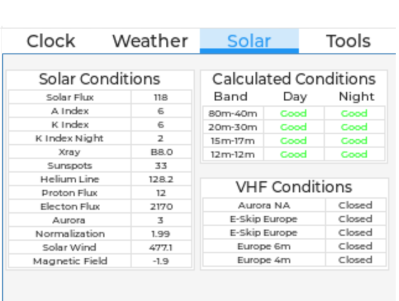
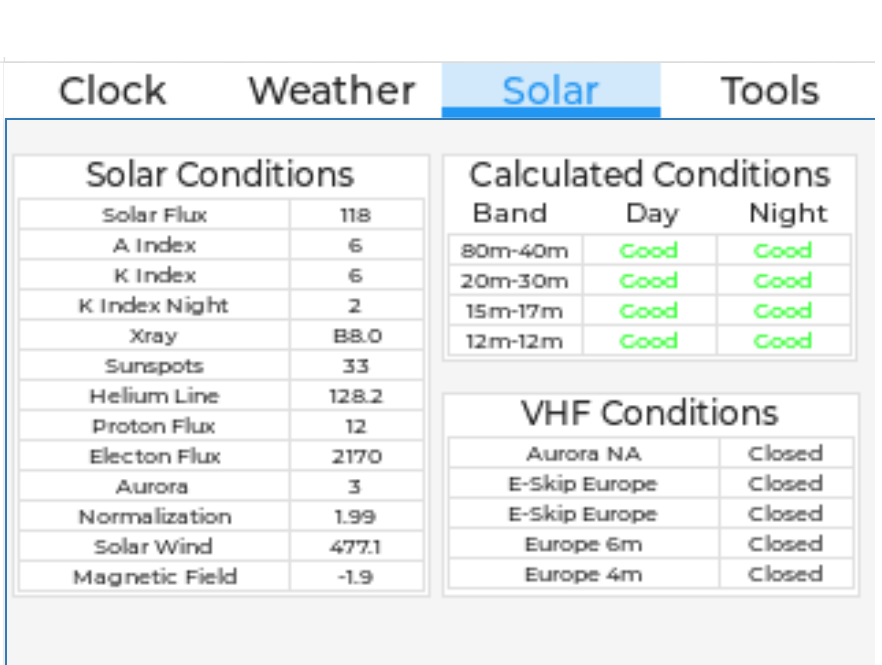
A tabbed interface goes well with the touchscreen LCD.

The Ham Clock CYD is so named for being based on the Cheap Yellow Display (CYD), an economical ESP32-based color touchscreen LCD which provides most of the core functionality. The only extra hardware is a BME280 temperature and humidity sensor, and a battery-backed DS3231 RTC module, ensuring that accurate time is kept even when the device is otherwise powered off.

It displays a load of useful operator-oriented data on the touchscreen LCD, and even has a web-based configuration page for ease of use. While the Ham Clock is a standalone device that does not depend on internet access in order to function, it does have the ability to make the most of it if available. When it has internet access over the built-in WiFi, the display incorporates specialized amateur radio data including N0NBH solar forecasts and calculated VHF/HF band conditions alongside standard meteorological data.

The CYD, sensor, and RTC are very affordable pieces of hardware which makes this clock an extremely economical build. Check out the GitHub repository for everything you’ll need to make your own, and maybe even put your own spin on it with a custom enclosure. On the other hand, if you prefer your radio-themed clocks more on the minimalist side, this Morse code clock might be right up your alley.

Advertisement

Source link

Advertisement
Continue Reading

Tech

What is the release date for Scrubs season 10 episode 5 on Hulu and Disney+?

Published

on

It’s hard to believe that Scrubs season 10 will hit its halfway point with its next episode. By all accounts, the hospital-set sitcom is performing pretty well, so it begs the question why more entries weren’t greenlit.

But that’s a debate for another day. Right now, you’re here to find out when season 10’s fifth episode, titled ‘My Angel’, will premiere on some of the world’s best streaming services. Don’t delay, then — read on for more details!

Advertisement

Source link

Continue Reading

Tech

NVIDIA announces DLSS 5 with photorealistic lighting to change the future of gaming

Published

on

At its GTC 2026 event, NVIDIA has officially announced DLSS 5, a new version of its Deep Learning Super Sampling technology. The next generation of its AI-powered graphics technology introduces neural rendering techniques designed to create more realistic lighting and materials in games. The feature is expected to launch later this year.

DLSS has long been used to upscale lower-resolution frames into higher-resolution images using AI, boosting performance while maintaining visual quality, with DLSS 4.5 being the most recent update. The new version takes that concept further by using neural networks to assist with parts of the rendering pipeline itself, rather than simply reconstructing pixels.

What’s new in DLSS 5?

The biggest shift with DLSS 5 is the introduction of neural rendering, a technique where AI helps generate elements of a scene, such as lighting, materials, and surface detail, rather than relying entirely on traditional rendering methods. The system can produce photorealistic lighting effects and more accurate material reflections, potentially improving realism in ray-traced environments while maintaining high frame rates.

The technology builds on earlier DLSS features like Super Resolution, Ray Reconstruction, and Frame Generation, but moves further toward an AI-assisted graphics pipeline where neural networks play a bigger role in how scenes are constructed.

Advertisement

Which hardware will support DLSS 5?

NVIDIA hasn’t officially confirmed which GPU architectures will support DLSS 5 yet, but the company has said the technology will arrive alongside RTX 50-series GPUs later this year. According to Digital Foundry, NVIDIA described the lighting improvements shown in its demo as “transformational,” with the feature expected to roll out around Fall 2026.

Interestingly, the demo setup used to showcase DLSS 5 wasn’t running on a typical gaming PC. Digital Foundry reports that NVIDIA used two GeForce RTX 5090 GPUs: one dedicated to running the game itself, while the second handled the DLSS 5 neural-rendering workload. This setup is currently required because the technology still needs significant optimization, particularly in terms of performance efficiency and VRAM usage.

That said, NVIDIA says DLSS 5 is ultimately designed to run on a single GPU, and that’s how it’s expected to ship when the technology launches publicly later this year.

Advertisement

Source link

Continue Reading

Tech

OnePlus’ upcoming budget phone will raise the bar for Apple and Samsung mid-rangers

Published

on

OnePlus could soon launch a budget phone that could seriously endanger the so-called feature-packed mid-ranger from other brands. The company has already kicked off the handset’s teaser campaign in India, dropping cryptic visuals of a silhouette smartphone, alongside a tagline that reads “Entering the Nord era soon.”

The handset, purported to be Nord 6, could put other mid-rangers to shame, or at least that is what the leaked specifications suggest. Before we talk about the hardware upgrades, it’s important to note that the Nord 6 is believed to be a rebranded version of the OnePlus Turbo 6, which is available only in China. 

So, what’s actually inside the upcoming OnePlus midranger?

That said, let’s tackle all the leaked Nord 6’s specifications one by one. First of all, the upcoming smartphone could sport a 9,000 mAh battery that supports 80W wired charging. 

Currently, the OnePlus 15R holds the crown for the company’s biggest battery smartphone, but it might not hold that position for much longer. 

Advertisement

To give you some perspective, 9,000 mAh is almost as big as the combined battery capacity of the new Galaxy S26 Ultra and the iPhone 17 Pro Max

The Nord 6’s battery could, in a very real way, provide over 12 to 14 hours of screen-on time between charges, making it a two-day battery phone for most users. 

Many of you have been asking about this..

OnePlus Nord 6 is launching soon..

Same specs as Turbo 6

Advertisement

price going up, see you early April..

— Yogesh Brar (@heyitsyogesh) March 14, 2026

Upgraded specs could result in a serious price jump

On the performance front, the handset will offer a serious jump, thanks to the Snapdragon 8s Gen 4 (4nm) chipset. Its GPU is powerful enough to support high frame rate gaming.

For capturing pictures, the smartphone could come with a 50MP primary camera with optical image stabilization and a 16MP selfie shooter. Finally, the OnePlus Nord 6 could also feature a 6.78-inch 1.5K AMOLED screen that supports a refresh rate of up to 165Hz. 

Advertisement

However, all the upgraded specifications could result in a serious bump in the phone’s price. The Nord 6’s price tag could be around $500 in India, where it is confirmed to launch in early April. A United States launch is still under question, though. 

Source link

Advertisement
Continue Reading

Tech

What was the ‘lightbulb moment’ for this senior software engineer?

Published

on

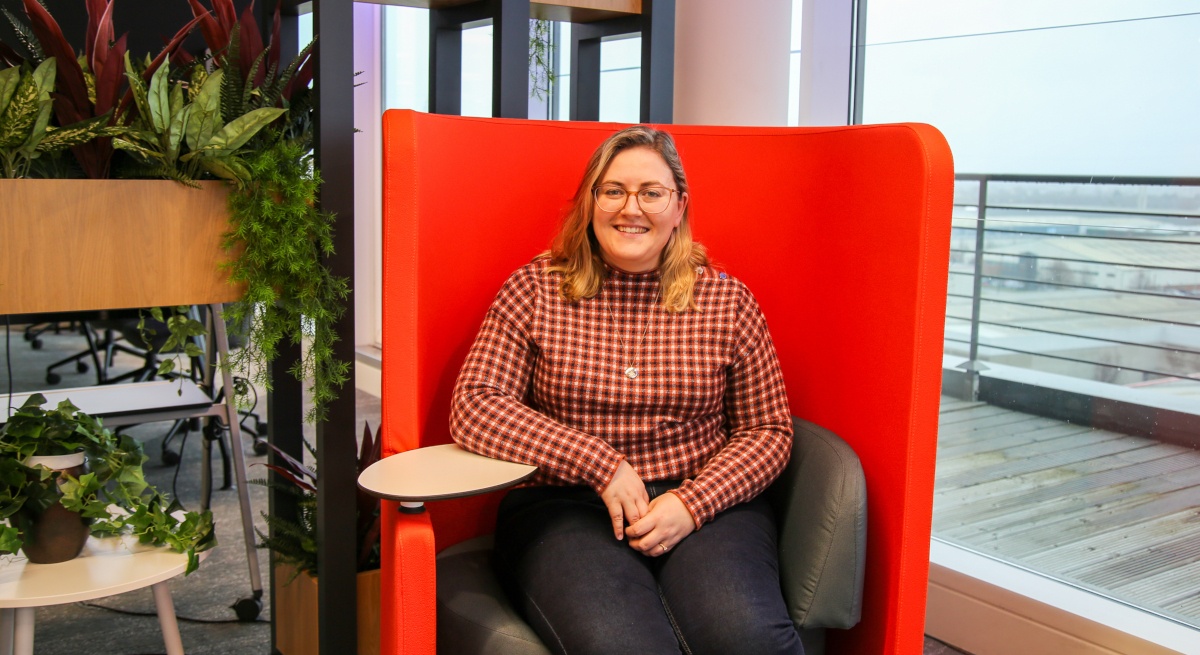
Workhuman’s Ciara Walsh discusses career development and her advice to others looking to take a similar professional route.

“Growing up, I was always interested in science and engineering, so I knew I would end up in some kind of STEM-related field, but I had quite a difficult time figuring out which direction to go in when approaching my career initially,” said senior software engineer at Workhuman, Ciara Walsh. 

Encouraged to build computing skills from a young age, she joined a local CoderDojo, which is a community-based coding club, where she helped the younger children with basic computer skills and later taught her own classes. From there, she realised that she could have a future in software.

“The connection that this could be my career eventually came through my late grandmother, who suggested it one afternoon while I was struggling with my CAO application. That conversation was a lightbulb moment for me and my whole career journey has followed from it.”

Advertisement
What do you enjoy most about your job?

I really enjoy problem solving and having to really think about how to approach solutions. Software engineering is essentially problem solving as a career in many ways, whether that’s figuring out how to build a new feature for users or triaging why a test is failing. At the core of what I do every day involves figuring out a way forward on some combination of puzzle or problem. For me, that’s really satisfying, and I love getting to the ‘aha’ moment at the end where it all works. 

What’s the most exciting development you’ve witnessed in your sector?

I remember a meeting very early in my career which was centred on the ‘internet of things’ and how connected devices were going to change everything about daily life within the next 10 to 15 years. The conversation at that time was around how ambitious of an idea it was, and how many technologies and tools would need to be invented to even achieve a quarter of the concepts being laid out at that stage. It’s been fascinating to be part of the industry since then and see many of the ideas that were being discussed in that meeting come to life within the real world.

The sheer number of technologies that we use daily now which simply didn’t exist when I started my career is amazing. It’s exciting to be part of a sector that moves this quickly, and I’m looking forward to seeing what the next 10 to 15 years brings us.

What’s been the hardest thing you’ve had to face in your career and how was it overcome?

The hardest thing I’ve had to face so far was the decision to step away from my career for a year, without knowing what came next.

Advertisement

In 2024, I decided to return to college and study for a master’s degree in electronic engineering. At that stage, the industry had slowed down quite a lot in terms of companies hiring, so stepping away from a job where I had a reasonable level of security was a big risk. However, I also felt that I needed to take that step back and spend time growing my knowledge and skills to be successful moving forward, especially given the direction that the industry has moved in, with AI and machine learning, so I took the risk.

During the course, I tried to ensure that I kept a balance between new topics I wanted to learn and those that I had some knowledge of but in which I could develop further depth, and this was of huge benefit to me because I managed to avoid losing my existing skills in the process of gaining new ones.

Having said that, the imposter syndrome and stress associated with that journey – particularly during the later stages, when my course had finished and I was trying to restart my career – wasn’t something I anticipated. I found it significantly more challenging than I expected and even after joining my current role it took some time to have full confidence in myself again. Looking back on it now though, I think the risk paid off, as I have a more solid understanding of some key concepts and – maybe more importantly – a stronger set of research skills, which will be useful going forward in my career.

If you had the power to change anything within the STEM sector, what would that be?

STEM is a very broad sector, so it’s hard to outline any specific things that I’d change across it all, but I think something I’d like to see celebrated and emphasised more is how creative many of the fields under the STEM umbrella are.

Advertisement

We tend to focus a lot on being data-driven and efficient, but the reality is that the majority of the work we do in STEM involves some kind of inventing and/or creative thinking. I think sometimes we lose sight of that amongst the deadlines and client requests, and we don’t leave ourselves enough space to be innovative and to really explore the crafts hidden in behind the science and technology of it all. If I could change anything, it would be that we gave ourselves more space and time to be purely creative, rather than always doing the most efficient thing.

Hackathons are a great example of this, where time is given to just experiment and explore with the tools of the trade. I’ve been involved with multiple hackathon projects that ended up being deployed as full products after some polishing. Those only exist because the team members were given the space to think and explore outside the structure of the usual day-to-day.

How do you make connections with others in the STEM community? 

I have been incredibly fortunate in my career so far when it comes to mentors and mentoring in general. I was a recipient of a women in technology scholarship during my undergraduate degree, which provided me with some amazing mentors from the very beginning. Their advice and guidance have stood the test of time at this stage, and I genuinely think I’m a better engineer because of all the people who’ve worked with me along my career path so far.

I’ve continued to benefit from mentoring of many different forms throughout my career, and had the opportunity to mentor some people myself, which I think was equally beneficial to me. Mentoring others gives you so many opportunities to really explore your own growth, and for me it has also often resulted in development of my own in parallel to my mentees.

Advertisement
What advice would you give to someone thinking about a career in your area?

I think the best advice I could give someone looking to go into software engineering as a career is to just start coding and experimenting with building simple programs. Start with something like Scratch so you get to learn the basic logic patterns, and then experiment with other languages and tools as you get comfortable. There are lots of free resources and tutorials online, and you can actually learn all the technical skills you need to know to do this job using them. I still use some of them when I need to learn something new for my role.

The other advice I would give someone considering this career is that software is always changing, and there are always new frameworks and tools to learn. To be a successful software engineer, you need to be willing to learn new things across your whole career. This can be challenging at times, but once you learn the general basics, it’s a lot easier than you might expect to transfer skills.

Don’t miss out on the knowledge you need to succeed. Sign up for the Daily Brief, Silicon Republic’s digest of need-to-know sci-tech news.

Advertisement

Source link

Continue Reading

Tech

Save Almost 20 Percent On Our Favorite Portable Bluetooth Speaker

Published

on

Looking for a Bluetooth speaker that’s portable, affordable, and waterproof? You can pick up the Tribit Stormbox Mini+ for just $33 from Amazon, a $7 discount from its usual price. It’s super portable, totally waterproof, and has big, bold sound that’s great for traveling, backyard parties, or bike rides, making it an easy pick for our favorite portable Bluetooth speaker.

While there are plenty of Bluetooth speakers that are table-worthy, there are far fewer competent speakers at this more pocketable footprint. At 4.69 inches tall and 3.58 inches and diameter, it’s just about the same size as the Ultimate Ears Wonderboom 4, but at less than half the price. It sports similar features too, with 360-degree speakers for complete sound no matter where you’re standing, albeit without quite as much clarity. You can also pair up multiple speakers for a proper stereo setup that will cover your whole backyard, a trick not a lot of speakers at this price point have up their sleeve.

Despite its compact size and affordable pricing, the Stormbox Mini+ is surprisingly sturdy. It has an IPX7 rating, which means you can submerge it fully underwater for up to 30 minutes, although it doesn’t float the right way, so it’s probably better for surviving a quick rainstorm than powering a pool party. You can crank the volume without any distortion, although it will affect your battery life, which is typically just under 10 hours with the lights on and volume up. It also has a speakerphone mode, in case you want to give that one friend running late to the party some FOMO.

While all the Stormbox Mini+ is marked down by $7 in all three colors, the black version has a lower starting price of $40, while the blue and green models started at $42, and are now marked down to $35. There was also a coupon on the page for an extra 10% off applied at checkout, but your mileage may vary. Make sure you check out our full roundup if you’re curious which other Bluetooth speakers we like, or you’re willing to spend a bit more.

Advertisement

Source link

Continue Reading

Tech

Judge rules that Krafton must rehire fired Subnautica director

Published

on

A judge has ruled that publisher Krafton must reinstate Ted Gill as CEO of Unknown Worlds Entertainment, . The company fired Gill and two other co-founders last year as part of a shakeup .

The Delaware judge said Krafton had violated the terms of its contract with Unknown Worlds when it fired the executives. “To remedy these breaches, Gill is reinstated as CEO of Unknown Worlds with full operational authority over the studio,” wrote judge Lori W. Will.

A Krafton spokesperson said in a statement that “we respectfully disagree with today’s ruling” and that “we are evaluating our options as we determine our path forward.” Further litigation over potential damages is still pending.

This legal battle has been brewing for a while. Krafton bought Unknown Worlds back in 2021 and the contract stipulated that executives and staff would get to share in a $250 million bonus if they hit certain revenue targets by 2025. Those targets were not reached, and could not be reached, because .

Advertisement

According to the pre-trial brief, Krafton CEO Changham Kim allegedly nixed the payout because it would be a “professional embarrassment” and make him look like a “pushover.” He reportedly to ask about ways to avoid paying the bonus and, oddly, seemed to consider a hostile takeover by a newly-formed entity.

Judge Will dinged the CEO on both counts, saying that Kim regretted committing to the payout and “consulted an artificial intelligence chatbot to contrive a corporate ‘takeover’ strategy.” Engadget reached out to Krafton and the company re-emphasized it was displeased with the ruling but said that it doesn’t resolve the ongoing litigation.

As for the game, Krafton says Subnautica 2 is coming sooner rather than later. We’ve heard that one before.

Source link

Advertisement
Continue Reading

Tech

Apple Drops AirPods Max 2 After Five Years of Silence, and Here’s Every Upgrade Explained

Published

on

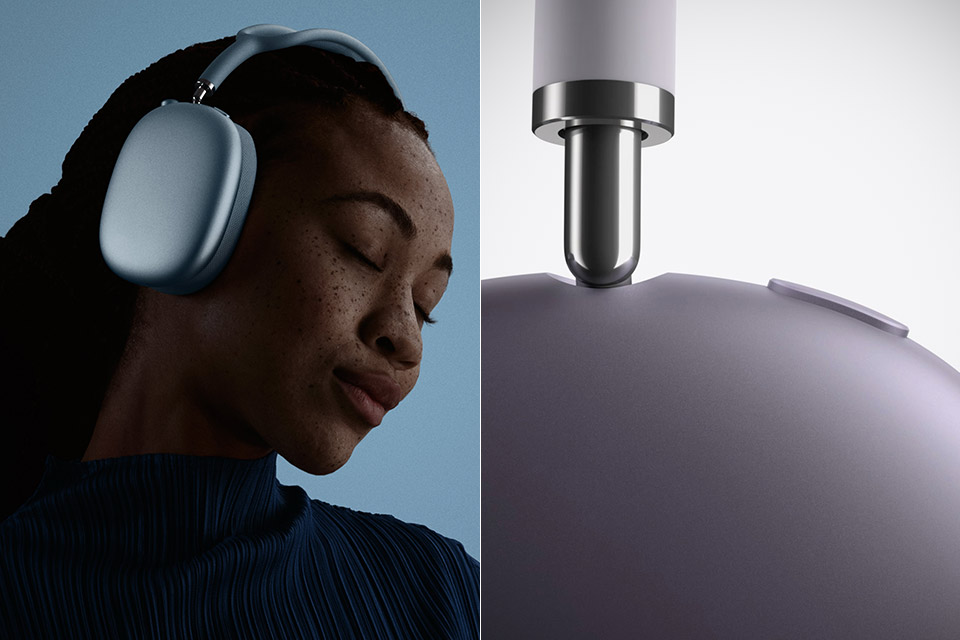
Apple AirPods Max 2 Reveal
Five years have passed since Apple initially began selling its over-ear headphones, and many people were left wondering if a true update would ever happen. The wait is over for AirPods Max 2, and most of the changes trace back to one quiet upgrade.


Powering the whole thing is the new H2 chip, a single component responsible for some meaningful improvements across the board. Noise cancellation has taken a significant step forward, blocking out twice as much background noise as the previous generation. Jet engines and train rumble are dealt with far more convincingly now, which should make long haul travel considerably more bearable. Transparency mode has also been sharpened up considerably, with voices and ambient sound coming through with noticeably less distortion and a much greater sense of clarity and precision than before.

Sale


Apple AirPods Pro 3 Wireless Earbuds, Active Noise Cancellation, Live Translation, Heart Rate Sensing…
  • WORLD’S BEST IN-EAR ACTIVE NOISE CANCELLATION — Removes up to 2x more unwanted noise than AirPods Pro 2* so you can stay fully immersed in the…
  • BREAKTHROUGH AUDIO PERFORMANCE — Experience breathtaking, three-dimensional audio with AirPods Pro 3. A new acoustic architecture delivers…
  • HEART RATE SENSING — Built-in heart rate sensing lets you track your heart rate and calories burned for up to 50 different workout types.* With…

Sound quality has taken a step forward across the board, helped along by a new amplifier that keeps the output clean and consistent even at higher volumes. Instruments sit exactly where they should in the mix, the bass is tight and controlled, and the mids and highs carry a natural warmth without any harshness creeping in. Plugging in via USB-C unlocks lossless audio at full 24 bit, 48 kilohertz resolution, and wireless gaming gets a notable boost as well, with the gap between on screen action and audio response cut down significantly.

Advertisement

The H2 chip also unlocks a handful of genuinely useful listening modes. Adaptive audio uses the built-in microphones to read the environment around you and adjust noise control levels on the fly without any input needed. Conversation awareness picks up when someone nearby starts talking and eases the volume down while softening background noise so you can engage naturally without pulling the headphones off. Calls benefit from voice isolation, which keeps your voice front and center while pushing room noise well into the background. Personalized volume learns your preferences over time and adjusts levels automatically, and in particularly loud environments the AirPods Max 2 will gently dial things back while keeping the character of the music intact.

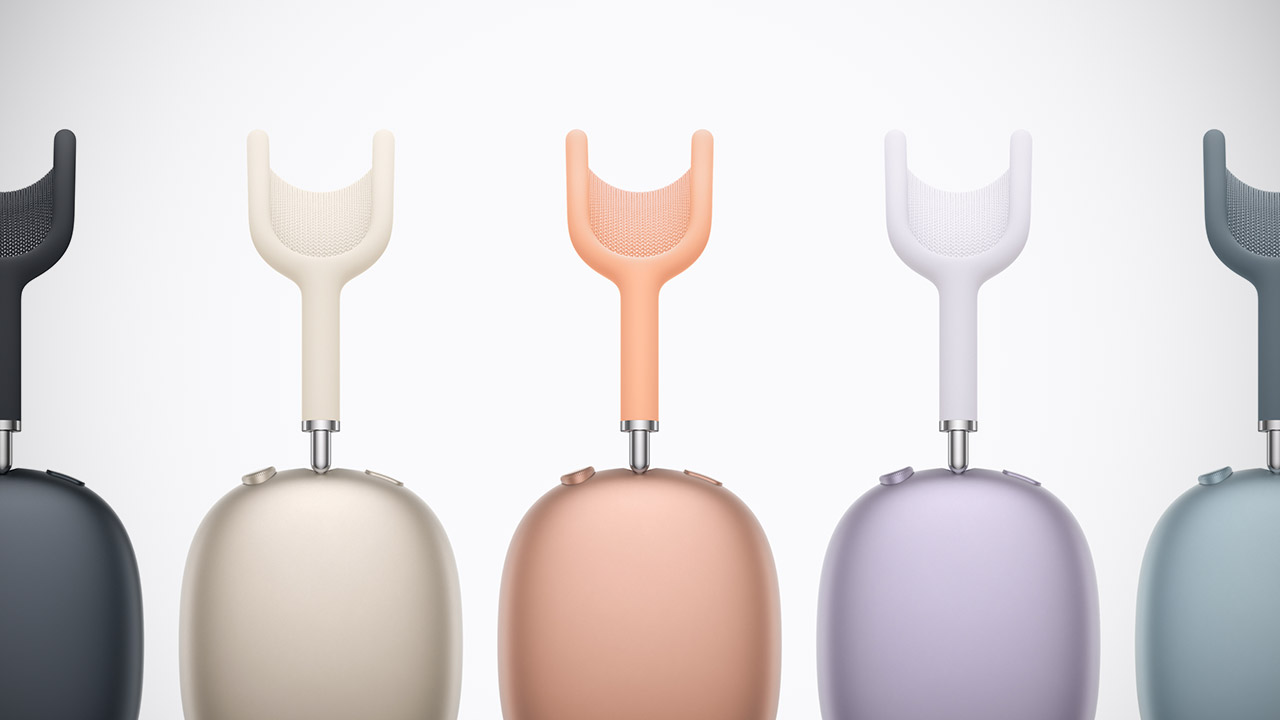
Apple AirPods Max 2 Reveal Colors
Live translation is one of the more exciting additions for anyone who travels frequently or works across language barriers. It handles real time translation during face to face conversations, letting you speak in one language and hear the response in another without any awkward pauses or reaching for your phone. An up to date iPhone or iPad running the latest software is required, and it is worth noting that the feature is still in its early stages, currently supporting a limited number of languages with a gradual regional rollout underway.

Creators get some useful tools to work with as well. The microphones are capable of capturing studio quality audio, making them a solid option for podcasts or voiceover work without needing dedicated recording gear. A single press of the digital crown triggers the camera shutter or starts and stops video recording in both the native camera app and supported third party options. Siri integration has also picked up a neat trick, letting you nod to confirm or shake your head to decline without having to say a word out loud, which turns out to be more useful than it sounds.

Battery life stays at twenty hours with noise cancellation running, matching the original model. The over-ear design and headband carry over unchanged as well, and the color lineup keeps things consistent with the rest of Apple’s range, spanning midnight, starlight, orange, purple, and blue. Recycled materials feature heavily throughout, with the magnets, ear cushions, and circuit boards all made entirely from reclaimed components. The smart case keeps its familiar folding design, compact and easy to slip into a bag without taking up much room.

The price has stayed the same at $549 and pre-orders are opening on March 25 with delivery starting early April in the US and more than thirty other countries. If you buy some new Max 2s you can also add in optional AppleCare+ protection, but they do come with a three month trial of Apple Music.

Advertisement

Source link

Continue Reading

Trending

Copyright © 2025