An aerial view of Shasta Dam in California. After a July 4 visit, computer scientist Daphne Koller argued that America’s signature achievement is taking what was scarce and making it abundant: water into power at Shasta, electricity into a grid anyone could plug into, computation into a pocket. AI, she reasons, is the next chapter, “making abundant one of the world’s scarcest resources: powerful reasoning.” (Flickr Photo via Bureau of Reclamation)
America just turned 250. The founders designed self-government for a world of pamphlets and town meetings, and we now run their political architecture on AI.
The birthday question is whether AI bolsters democracy or undercuts it. Serious thinkers have lined up on both sides with substantial arguments.
Here is my scorecard, distilled from five books and seven articles, and then the question neither side asks: which is growing faster, power over AI or access to it?
Start with surveillance.
Yuval Noah Harari argues in Nexus that a democracy is a distributed information network with self-correcting mechanisms: a free press, opposition parties, and courts that catch mistakes and fix them. A dictatorship is a centralized network that suppresses correction. For two centuries, centralization carried a built-in cost, because total surveillance required armies of human informants, and armies are expensive. AI removes the cost. It watches everyone, all the time, for pennies. The evidence is no longer hypothetical. A study in the Quarterly Journal of Economics documented the feedback loop in China: local unrest leads to government purchases of facial-recognition AI, and those purchases suppress subsequent unrest. The authors titled their paper “AI-tocracy.”
The second argument is economic.
Advertisement
Past technologies replaced particular workers, the switchboard operator, the toll collector, while creating jobs for the people who ran the new machines. AI’s ambition targets the entire workforce. Daron Acemoglu and Simon Johnson devoted a book, Power and Progress, to this worry, writing that “the current path of AI is neither good for the economy nor for democracy.” Acemoglu, a 2024 Nobel laureate, sharpened the point in Fortune this February, warning that on the current path of job destruction and rising inequality, “U.S. democracy is not going to survive.”
The third argument targets the machinery of self-government itself.
I sounded this alarm in Harvard Business Review back in 2019, warning that AI was poised to make high-fidelity forgery of video, audio, and documents cheap and automated, with potentially disastrous consequences for democracy. Forgery is ancient. AI industrializes it. Security technologist Bruce Schneier predicts that AI will optimize lobbying and draft “micro-legislation,” tiny provisions that quietly benefit one group, and he observes that the technology mostly makes the powerful more powerful. He and Nathan Sanders began worrying in earnest when an AI-written letter opposing AI regulation ran in the New York Times. Marietje Schaake supplies the institutional capstone in The Tech Coup: unelected companies now perform functions that once belonged to governments.
The prosecution rests. Now comes the defense.
Advertisement
On July 4, computer scientist Daphne Koller marked the country’s 250th birthday, and her own 37th anniversary as an immigrant, with a visit to Shasta Dam. In a reflection posted that day, she argued that America’s signature achievement is taking what was scarce and making it abundant: water into power at Shasta, electricity into a grid anyone could plug into, computation into a pocket. She has done it herself; Coursera, which she co-founded, put an elite education in front of more than 150 million learners. AI, she wrote, is the next chapter, “making abundant one of the world’s scarcest resources: powerful reasoning.” The judgment once reserved for credentialed specialists now belongs to anyone who can frame the right question. Lawyers and doctors bill by the hour. AI answers by the second.
The economic counter comes from Acemoglu’s MIT colleague David Autor, who argues in Noema that AI can extend expertise to workers without elite credentials and thereby rebuild the hollowed-out middle of the labor market. Early evidence points his way. When a Fortune 500 firm gave its customer-support agents an AI assistant, productivity rose 15% on average, and the gains went overwhelmingly to the newest and least skilled workers, who improved in both speed and quality. The study, published in the Quarterly Journal of Economics, found that the most experienced agents gained little. If the pattern holds, AI could compress the very gaps Acemoglu fears it will widen.
Reid Hoffman and Greg Beato’s Superagency states the optimistic case in general form: AI amplifies individual agency so broadly that the real danger lies in democracies ceding its development to less benevolent actors. In Plurality, Taiwan’s first digital minister Audrey Tang and economist Glen Weyl describe a decade of digital tools that found consensus across a polarized public on live legislation, from ride-sharing rules to pandemic policy. A controlled experiment backs them up. Google DeepMind researchers built an AI mediator, tested it on 5,734 Britons deliberating questions like Brexit and immigration, and reported in Science that participants preferred the AI’s group statements to a human mediator’s, rating them clearer and less biased. The groups also ended up less divided. A town hall has never fit a million people. It might now.
I set the two columns side by side and noticed something odd: they never meet. The pessimists are arguing about who controls AI. The optimists are arguing about who gets to use it. Power and access are different questions, and both camps can be right at the same time.
Advertisement
Koller’s dam makes the point physically. Generation is concentrated, a handful of turbines owned by a few. The grid is distributed, and anyone can plug in. One machine does both at once. AI shares that anatomy: anyone can plug into a frontier model for $20 a month, while the frontier weights and the data centers that train them belong to a half-dozen companies.
Gutenberg adds the time dimension. The press broke Rome’s monopoly on scripture, and four centuries later it built Hearst’s empire; access and power traded places on the same machine. Both forces are real. The open question is which one moves faster, and the current fights over open weights, chip exports, and model ownership are fights that will help settle this question.
The founders faced a similar question about concentrated power and answered it by distributing the vote, narrowly at first, and later to nearly everyone. Koller ended her post with an obligation that fits the country’s 250th year: anyone given more than their share owes the work of making sure the next scarce thing does not stay scarce for long. Intelligence is the next scarce thing. Koller’s dam is already built, along with the frontier models and the data centers that train them. The choice in front of us is whether we also build the grid, providing broad, cheap access to AI for all Americans.
Earlier this week, Bloomberg reported that Microsoft was replacing some of OpenAI’s software with its own in-house models in an effort to cut costs. Those in-house models, known as MAI, were increasingly being used to power apps like Word and Excel, the outlet noted.
The story raised an increasingly common question about the two companies, which were once seemingly inseparable, and have recently sent mixed signals about the status of their situationship: Were the two companies drifting apart?
Now, OpenAI is attempting to put any insinuations of such a break to rest. During OpenAI’s launch of GPT 5.6 on Thursday, the company announced that it would become the “preferred model” powering Microsoft’s 365 Copilot.
OpenAI noted in a blog post published Thursday that GPT 5.6 would support Microsoft users across the company’s suite of productivity apps, including Word, Excel, PowerPoint, and Cowork.
Advertisement
“Our partnership with Microsoft has always been about bringing the benefits of advanced AI to more individuals and organizations, and we’re excited to continue building on that shared commitment,” OpenAI wrote in a blog post.
What being a “preferred model” actually means isn’t entirely clear, other than that OpenAI’s software will continue to power Microsoft’s apps.
That said, it was never reported that ChatGPT’s software would stop powering Microsoft’s apps — merely that Microsoft was relying increasingly on its own software in an effort to reduce costs. The new “preferred model” disclosure doesn’t appear to negate that previous reporting.
On Thursday, multiple news organizations accused OpenAI of withholding evidence about how the company trains its artificial intelligence models in a new motion that’s connected to a series of ongoing copyright lawsuits.
The motion was filed by 17 publishers, including The New York Times, the New York Daily News, the Chicago Tribune and Ziff Davis (CNET’s parent company). Ziff Davis sued OpenAI in 2025, alleging that OpenAI scraped its copyrighted works to train ChatGPT and other large language models.
The initial lawsuit dates back to 2023 when The New York Times first sued OpenAI and Microsoft, alleging the companies built their AI technologies using millions of news articles written by journalists. Microsoft and OpenAI have denied the claims.
The motion asks the court to impose legal sanctions against OpenAI, but not Microsoft, for allegedly withholding evidence, such as datasets and output logs, and claims that “OpenAI chose obstruction” by failing to produce it. If those sanctions are granted, OpenAI could be ordered to pay financial penalties.
“This motion asks the court to punish OpenAI for hiding and destroying evidence showing how ChatGPT was trained on stolen journalism,” New York Daily News attorney Steven Lieberman said, per the Associated Press.
At the center of the lawsuits is how generative AI, such as ChatGPT, is trained and how it sources its information. The Times’ original lawsuit claims that OpenAI’s generative AI tools “can generate output that recites Times content verbatim, closely summarizes it, and mimics its expressive style,” raising questions of copyright infringement.
The lawsuits come amid a broader conversation in the journalism industry: declining traffic across digital media outlets. AI overviews are often cited as a major reason for the decline in clicks to original reporting by writers and editors, which in turn impacts publishers’ advertising revenue.
Advertisement
A growing reliance on AI chatbots for finding news and other content is also a major concern for publishers, as it siphons off loyal readership and audience. Some data shows that small publishers have been hit the hardest, with a reported 60% traffic drop, while another analysis predicts traffic declines of more than 40% by 2029.
A statement by Ziff Davis notes that “OpenAI has copied and monetized Ziff Davis content without permission on a massive scale.” Lance Koonce, partner at Klaris Law and counsel for Ziff Davis, said that, since the lawsuit, “OpenAI repeatedly lied about its ability to search its own data sets for Ziff Davis content and engaged in other serious litigation misconduct.”
An ongoing debate over copyright and AI
OpenAI has long maintained that AI training is fair use. An OpenAI spokesperson denied the allegations in a statement to CNET, stating: “As the Times’ case weakens and they’ve been forced to drop claims against us, they’re persisting with their efforts to invade the privacy of people who have nothing to do with this case, including by making these blatantly false allegations.” The statement went on to say: “We’ll continue defending our users’ privacy and the long-established principles of fair use.”
In a 2024 rebuttal to the original lawsuit filed by The New York Times, OpenAI said the publisher falsely accused the company of destroying data and instead accused the newspaper of “secretly” deleting its own data that would have shown internal use of OpenAI products. Although the Times has dropped one claim against OpenAI, the larger lawsuit remains in litigation.
Advertisement
Other tech giants, including Meta, have also been accused by authors and news publishers of copyright infringement. Many of those cases are still in litigation as courts decide where to draw the line between fair use and infringement in the age of AI.
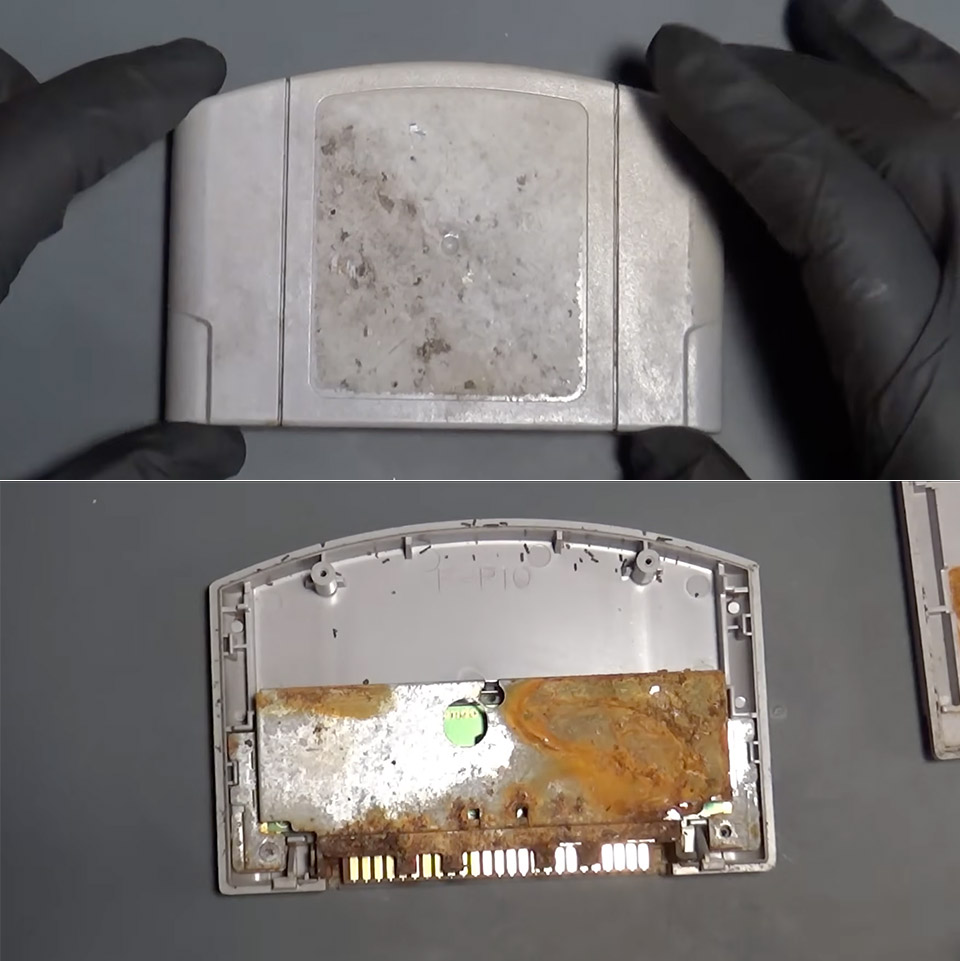
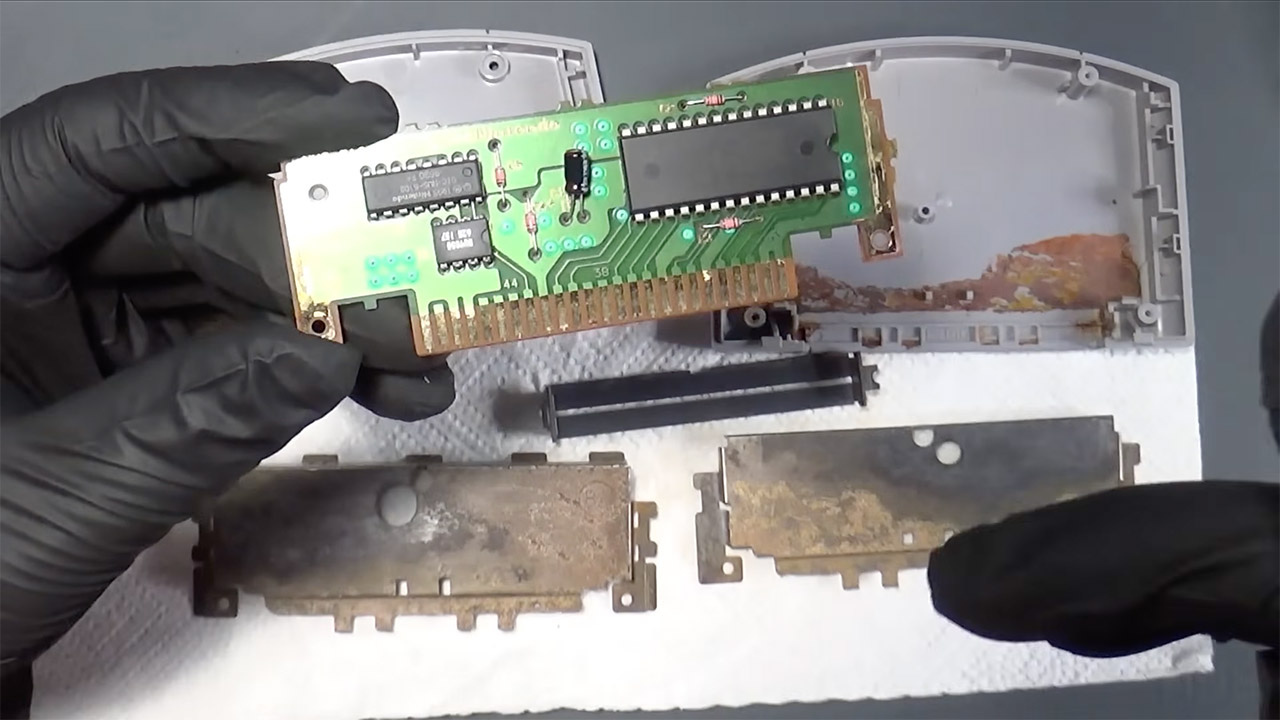
A walk through the trees turned up more than expected a few years ago. One person spotted a plastic Nintendo 64 cartridge half-hidden on the forest floor. Its paper labels had vanished completely, leaving no hint of what game sat inside. The finder brought it home, then passed it along to someone who fixes old consoles for a closer look.
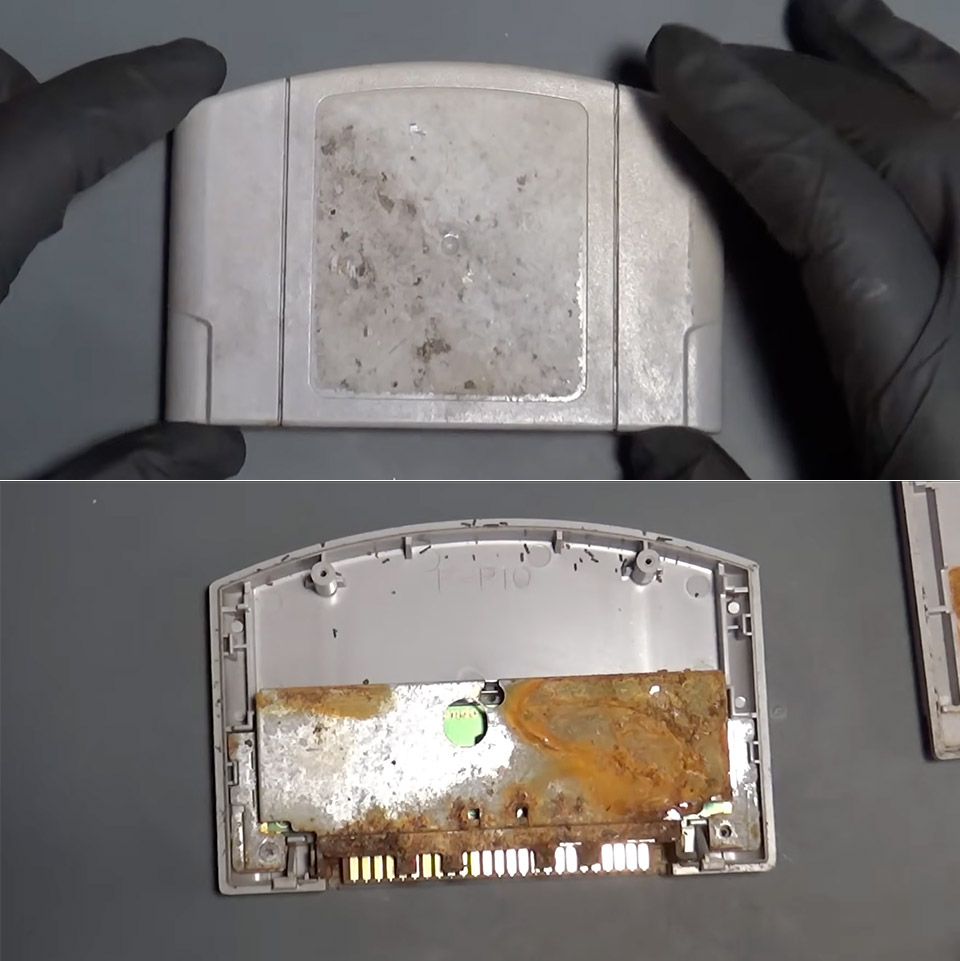
Rust had plainly gotten hold of the metal shield that covers the back, which is normally sealed up tight. The plastic shell that surrounded it had accumulated stains and scrapes from all of its time spent outside over the months or years, not to mention wear and tear. Inside, the circuit board, which is what actually matters, revealed some considerable corrosion around the vias on one side and a rougher surface on the other, and to top it all off, some of the screws had come free, adding to the overall ‘battered’ aspect. The real test would be when someone finally opened it up and attempted to get the parts to work again. First, you’ll need the right screwdriver, which should be a game-bit. When you take the shield off, you’re left with a wonderful mess of heavy crust and pitting across the metal underneath. Given the state of the outside, the board itself appears to be far superior to what you might assume. The pins on the edge connector are still in good condition, with no major damaged traces or fried components visible at first examination.
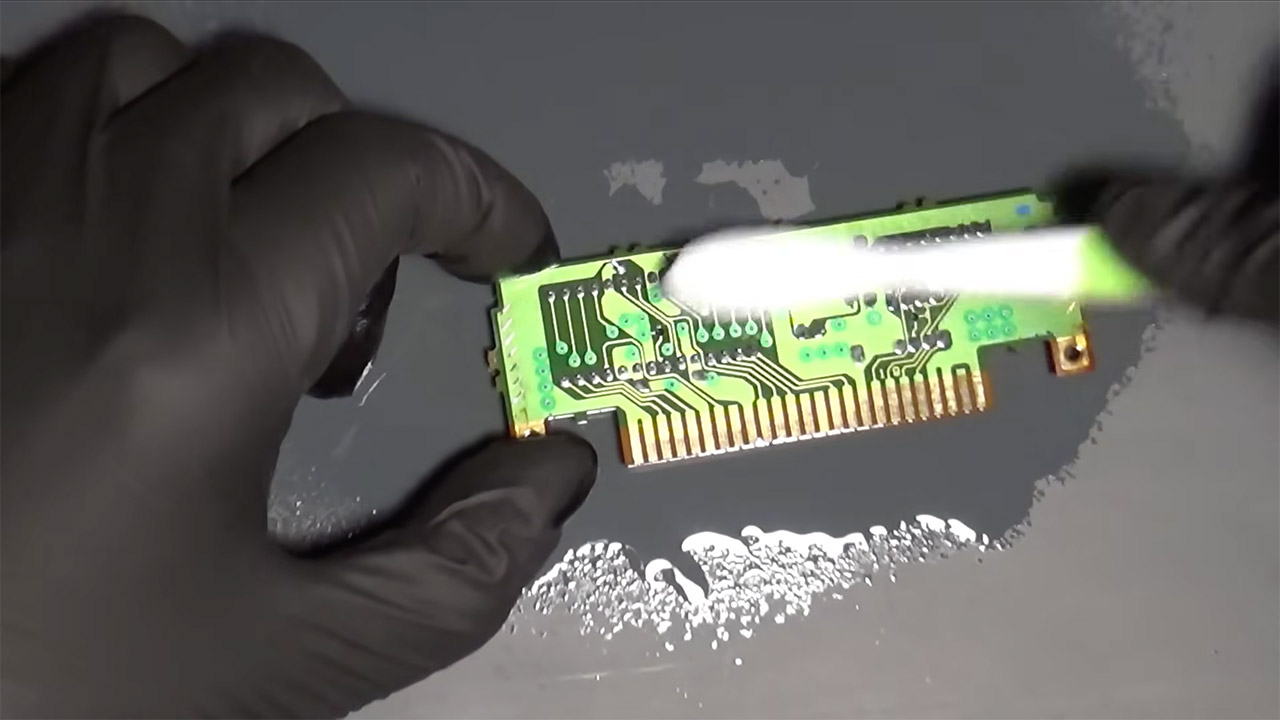
The next step was to clean it, starting with the board, then using high-strength isopropyl alcohol and a delicate brush. The residue is quickly removed without causing any damage, and the contacts can be polished with a Q-tip to look their finest. To be honest, the board appears very clean, nearly immaculate in sections. And the rusting hasn’t really taken hold, which is a comfort. In contrast, the shield and plastic shell told a different tale. Vinegar soaks appeared to dislodge some of the rust, and a combination of wire brushing and hot soapy water removed the most of the gunk. Some of the lighter stuff was removed with a magic eraser, but there is still some discoloration. If you were to restore it to its original condition, you’d probably have to replace the entire shell and shield, which would be a significant undertaking.
Before even attempting to boot the thing, he gave the N64 console a quick scrub just to be safe, and used an old cleaning kit to thoroughly clean the cartridge slot. One of the other known functional games proved that the device boots up normally. Then it was time to verify if our mystery cartridge was still functional. Slide it in, hit the power button, and the familiar title screen shows immediately.
The game was, of course, Super Mario 64, as the markings on the ROM chip showed that it was the regular version, with no special hardware or hidden modifications.The save data was particularly noteworthy, as someone’s previous progress was still present, intact, after years of exposure to moisture and temperature fluctuations. Unlike several other N64 games, Super Mario 64 keeps its saves in a non-battery-dependent manner. That was a pleasant surprise, even if the cartridge still appeared a little rough.
You have to give Nintendo credit because these cartridges were engineered to survive far more than a few scrapes and scuffs. They’re designed to endure dust and harsh handling by children, as well as repetitive insertion and removal, and it turns out the strong plastic shell and metal shield worked harder than we thought. They shielded the electronics within from the woodland environment considerably better than anyone could have anticipated. The shield, in particular, did an excellent job of soaking the majority of the corrosion that had developed in, leaving the board and pins in good shape. One final touch: a quick print of a new label to cover up the old one. [Source]
A new NYT Strands puzzle appears at midnight each day for your time zone – which means that some people are always playing ‘today’s game’ while others are playing ‘yesterday’s’. If you’re looking for Thursday’s puzzle instead then click here: NYT Strands hints and answers for Thursday, July 9 (game #858).
Strands is the NYT’s latest word game after the likes of Wordle, Spelling Bee and Connections – and it’s great fun. It can be difficult, though, so read on for my Strands hints.
Want more word-based fun? Then check out my NYT Connections today and Quordle today pages for hints and answers for those games, and Marc’s Wordle today page for the original viral word game.
Advertisement
SPOILER WARNING: Information about NYT Strands today is below, so don’t read on if you don’t want to know the answers.
Latest Videos From
NYT Strands today (game #859) – hint #1 – today’s theme
What is the theme of today’s NYT Strands?
• Today’s NYT Strands theme is… I think…
Advertisement
NYT Strands today (game #859) – hint #2 – clue words
Play any of these words to unlock the in-game hints system.
STAY
STORY
SNAKE
LEEK
ROBE
HATE
NYT Strands today (game #859) – hint #3 – spangram letters
How many letters are in today’s spangram?
• Spangram has 11 letters
NYT Strands today (game #859) – hint #4 – spangram position
What are two sides of the board that today’s spangram touches?
• First side: left, 1st row
Advertisement
• Last side: right, 6th row
Right, the answers are below, so DO NOT SCROLL ANY FURTHER IF YOU DON’T WANT TO SEE THEM.
Advertisement
NYT Strands today (game #859) – the answers
(Image credit: New York Times)
The answers to today’s Strands, game #859, are…
BELIEVE
HISTORY
HASTE
GOOD
MERRY
LOVE
SENSE
SPANGRAM: WECANMAKEIT
My rating: Hard
My score: Perfect
Is it possible to look at today’s theme and not say to yourself “… therefore I am”? Apparently it is, because the words that complete “I think…” here were instead the more seemingly everyday “we can make it”.
Sign up for breaking news, reviews, opinion, top tech deals, and more.
Advertisement
Thinking that I was missing out on some cultural reference point I googled all of today’s game words, along with the spangram, and the AI result claimed that all the words feature in the 17th-century Irish Jacobite love song, Mo Ghile Mear (My Gallant Hero). And there was me thinking it was from Ted Lasso or a Taylor Swift song I’d not heard of.
Despite my ignorance I was able to navigate the game without using any hints.
Advertisement
Yesterday’s NYT Strands answers (Thursday, July 9, game #858)
STICK
GLOSS
STAIN
LINER
TINT
BALM
PLUM
SPANGRAM: KISSANDMAKEUP
What is NYT Strands?
Strands is the NYT’s not-so-new-any-more word game, following Wordle and Connections. It’s now a fully fledged member of the NYT’s games stable that has been running for a year and which can be played on the NYT Games site on desktop or mobile.
I’ve got a full guide to how to play NYT Strands, complete with tips for solving it, so check that out if you’re struggling to beat it each day.
A new Quordle puzzle appears at midnight each day for your time zone – which means that some people are always playing ‘today’s game’ while others are playing ‘yesterday’s’. If you’re looking for Thursday’s puzzle instead then click here: Quordle hints and answers for Thursday, July 9 (game #1627).
Quordle was one of the original Wordle alternatives and is still going strong now more than 1,500 games later. It offers a genuine challenge, though, so read on if you need some Quordle hints today — or scroll down further for the answers.
Enjoy playing word games? You can also check out my NYT Connections today and NYT Strands today pages for hints and answers for those puzzles, while Marc’s Wordle today column covers the original viral word game.
Advertisement
SPOILER WARNING: Information about Quordle today is below, so don’t read on if you don’t want to know the answers.
Latest Videos From
Quordle today (game #1628) — hint #1 — Vowels
How many different vowels are in Quordle today?
• The number of different vowels in Quordle today is 3*.
* Note that by vowel we mean the five standard vowels (A, E, I, O, U), not Y (which is sometimes counted as a vowel too).
Advertisement
Quordle today (game #1628) — hint #2 — repeated letters
Do any of today’s Quordle answers contain repeated letters?
• The number of Quordle answers containing a repeated letter today is 1.
Quordle today (game #1628) — hint #3 — uncommon letters
Do the letters Q, Z, X or J appear in Quordle today?
• No. None of Q, Z, X or J appear among today’s Quordle answers.
A new NYT Connections puzzle appears at midnight each day for your time zone – which means that some people are always playing ‘today’s game’ while others are playing ‘yesterday’s’. If you’re looking for Thursday’s puzzle instead then click here: NYT Connections hints and answers for Thursday, July 9 (game #1124).
Good morning! Let’s play Connections, the NYT’s clever word game that challenges you to group answers in various categories. It can be tough, so read on if you need Connections hints.
What should you do once you’ve finished? Why, play some more word games of course. I’ve also got daily Strands hints and answers and Quordle hints and answers articles if you need help for those too, while Marc’s Wordle today page covers the original viral word game.
Advertisement
SPOILER WARNING: Information about NYT Connections today is below, so don’t read on if you don’t want to know the answers.
Latest Videos From
NYT Connections today (game #1125) – today’s words
(Image credit: New York Times)
Today’s NYT Connections words are…
OUTKAST
DEPECHE MODE
FRESH-BAKED
BALL GOWN
DO NOT DISTURB
À LA MODE
STRIKE A POSE
AIRPLANE MODE
ERASURE
SAFE MODE
DECADENT
NEW ORDER
HOTSPOT
PET SHOP BOYS
MOLTEN
LOCATION SERVICES
NYT Connections today (game #1125) – hint #1 – group hints
What are some clues for today’s NYT Connections groups?
Advertisement
YELLOW: iPhone options
GREEN: Pudding levels
BLUE: UK chart acts of yesteryear
PURPLE: Umpire beginnings
Need more clues?
We’re firmly in spoiler territory now, but read on if you want to know what the four theme answers are for today’s NYT Connections puzzles…
Sign up for breaking news, reviews, opinion, top tech deals, and more.
Advertisement
NYT Connections today (game #1125) – hint #2 – group answers
What are the answers for today’s NYT Connections groups?
YELLOW: SMARTPHONE SETTINGS
GREEN: DESSERT MENU DESCRIPTORS
BLUE: ‘8OS SYNTH-POP BANDS
PURPLE: STARTING WITH BASEBALL CALLS
Right, the answers are below, so DO NOT SCROLL ANY FURTHER IF YOU DON’T WANT TO SEE THEM.
Advertisement
NYT Connections today (game #1125) – the answers
(Image credit: New York Times)
The answers to today’s Connections, game #1125, are…
YELLOW: SMARTPHONE SETTINGS: AIRPLANE MODE, DO NOT DISTURB, HOTSPOT, LOCATION SERVICES
GREEN: DESSERT MENU DESCRIPTORS: DECADENT, FRESH-BAKED, MOLTEN, À LA MODE
BLUE: ‘8OS SYNTH-POP BANDS: DEPECHE MODE, ERASURE, NEW ORDER, PET SHOP BOYS
PURPLE: STARTING WITH BASEBALL CALLS: BALL GOWN, OUTKAST, SAFE MODE, STRIKE A POSE
My rating: Hard
My score: 1 mistake
There were a number of fashion links among today’s tiles: A LA MODE, of course, STRIKE A POSE — which features in Madonna’s Vogue — BALL GOWN, and DEPECHE MODE, which was the name of a French fashion magazine.
What caught me out, however, was the SMARTPHONE SETTINGS, as I originally included SAFE MODE instead of DO NOT DISTURB.
Today’s game also featured my two favorite bands — PET SHOP BOYS and NEW ORDER, both of whom joined forces in the 1990s with Electronic and who still tour together occasionally.
Advertisement
Yesterday’s NYT Connections answers (Thursday, July 9, 2026, game #1124)
GREEN: MUSIC PUBLICATIONS: BILLBOARD, PITCHFORK, ROLLING STONE, SPIN
BLUE: KINDS OF RUGS: PERSIAN, PRAYER, SHAG, THROW
PURPLE: PONTIAC MODELS: FIREBIRD, G6, GRAND PRIX, TRANS AM
What is NYT Connections?
NYT Connections is one of several increasingly popular word games made by the New York Times. It challenges you to find groups of four items that share something in common, and each group has a different difficulty level: green is easy, yellow a little harder, blue often quite tough and purple usually very difficult.
On the plus side, you don’t technically need to solve the final one, as you’ll be able to answer that one by a process of elimination. What’s more, you can make up to four mistakes, which gives you a little bit of breathing room.
It’s a little more involved than something like Wordle, however, and there are plenty of opportunities for the game to trip you up with tricks. For instance, watch out for homophones and other word games that could disguise the answers.
It’s playable for free via the NYT Games site on desktop or mobile.
Jeff Bezos is letting outside investors into Blue Origin for the first time since he founded it in 2000. The rocket company is seeking about $10bn in fresh capital at a $130bn pre-money valuation, according to CNBC.
For 26 years, Bezos bankrolled the company himself, selling billions in Amazon stock rather than sharing ownership. That solo-funding era is now over.
He is not stepping back entirely, with reporting suggesting he will put around $2bn into the round himself. Hedge fund Coatue Management is expected to add roughly $4bn, with strong institutional interest for the rest.
The obvious question is what changed. The blunt answer is that staying in the space race has outgrown even one of the world’s richest people.
Advertisement
A costly stretch of bad timing
The 💜 of EU tech
The latest rumblings from the EU tech scene, a story from our wise ol’ founder Boris, and some questionable AI art. It’s free, every week, in your inbox. Sign up now!
New Glenn is the vehicle Blue Origin is counting on for lunar and national-security missions. Chief executive Dave Limp has committed to returning it to flight before the end of 2026, with launches planned for NASA, Amazon’s Leo satellite network, and AST SpaceMobile.
Advertisement
That combination of recovery and scale-up, more than any single rival’s move, is the sharper reason for the timing. Founder wealth alone cannot comfortably absorb costs at this pace.
Chasing a rival worth far more
The backdrop is SpaceX, which just pulled off the largest IPO in history. It raised a record sum, reportedly near $86bn, at a valuation around $2tn, even as its filing confirmed Musk keeps dominant voting control.
SpaceX’s lead is built on reusable rockets, Starlink, and government work, including a $2.29bn Space Force contract. Catching up on lunar and defence launches now takes tens of billions, not a founder’s cheque.
Investor appetite for space has swelled since that listing, as money that once flowed into SpaceX proxies now has the real thing to chase. Rivals from Stoke Space to Firefly have raised or gone public on the same wave.
Advertisement
Blue Origin has taken only limited outside money before, including a 2021 grant and a 2022 acquisition, and it has not disclosed a closing timeline. Whether $10bn narrows the SpaceX gap or merely buys time depends far less on the capital than on one thing: getting New Glenn back to the launch pad, and off it.
Every time you use ChatGPT or generate an image with AI, there is a memory chip working at extreme speed behind the scenes. However, that chip has a memory bottleneck problem, and a Korean research team may have just solved it.
Researchers at POSTECH (Pohang University of Science and Technology) developed a new way to stack more than 10 ultrathin semiconductor chips on top of each other, achieving a memory density roughly four times higher than the best commercial chips available today (via TechXplore).
Why is stacking chips so hard, and what makes this one different?
High-bandwidth memory, or HBM, is the type of memory that powers AI accelerators. It works by stacking multiple chips vertically, much like building a high-rise instead of spreading out across land.
The problem is that as chips get thinner, they become incredibly fragile. At one-fifth the thickness of a human hair, they bend, warp, and crack under pressure. Current manufacturing methods make this worse, often damaging chips before they even make it into a stack.
Advertisement
Transfer printing and in-situ bonding conceptScience Direct
The POSTECH team solved this by combining two techniques into one process. Transfer printing precisely places each chip where it needs to go, while in-situ bonding forms the metallic connections at the same moment, all under low heat below 180 degrees Celsius and low pressure below 20 kilopascals. The result is a stack of more than 10 chips with almost no misalignment and very little warping.
Why this matters for the future of AI
More memory packed into the same space means AI tools can run faster and handle bigger tasks without needing larger or more expensive hardware. The researchers also see uses beyond AI, including next-generation micro-LED displays and advanced processor designs that need the same kind of ultra-precise stacking this method delivers.
Getting this into commercial production is the next step, but if it gets there, the memory ceiling that has been quietly holding AI back could finally start to lift.
Uninstalling apps on macOS is usually very easy. You drag an app to the Trash, empty it, and move on. The annoying part is that many apps still leave residue behind, including support files, caches, preferences, containers, and logs. I have always found that frustrating, especially when old app data keeps sitting around long after the app itself is gone.
AppCleaner by FreeMacSoft has been the popular go-to option for this for years, and it still does the job well. But I recently came across a new open-source alternative called Uninstally by Codenta, which solves the same basic problem. It removes Mac apps along with the support files, caches, preferences, containers, logs, and other leftovers they usually leave behind.
How does Uninstally work?
Uninstally can be used directly from Finder. Once its Finder extension is enabled, you can right-click any .app bundle and choose “Uninstall with Uninstally.” The app then opens a confirmation window instead of making you start from a separate app browser.
Uninstally in Finder menuCodenta on GitHub
The cleaner part is how it finds related files. Uninstally uses the app’s bundle identifier and helper namespaces to match leftover items across the Library hierarchy, rather than just looking for folders with the same name. Before anything is removed, it shows the app name, icon, reclaimable storage, item count, and lets you review or deselect matched files.
What else makes it useful?
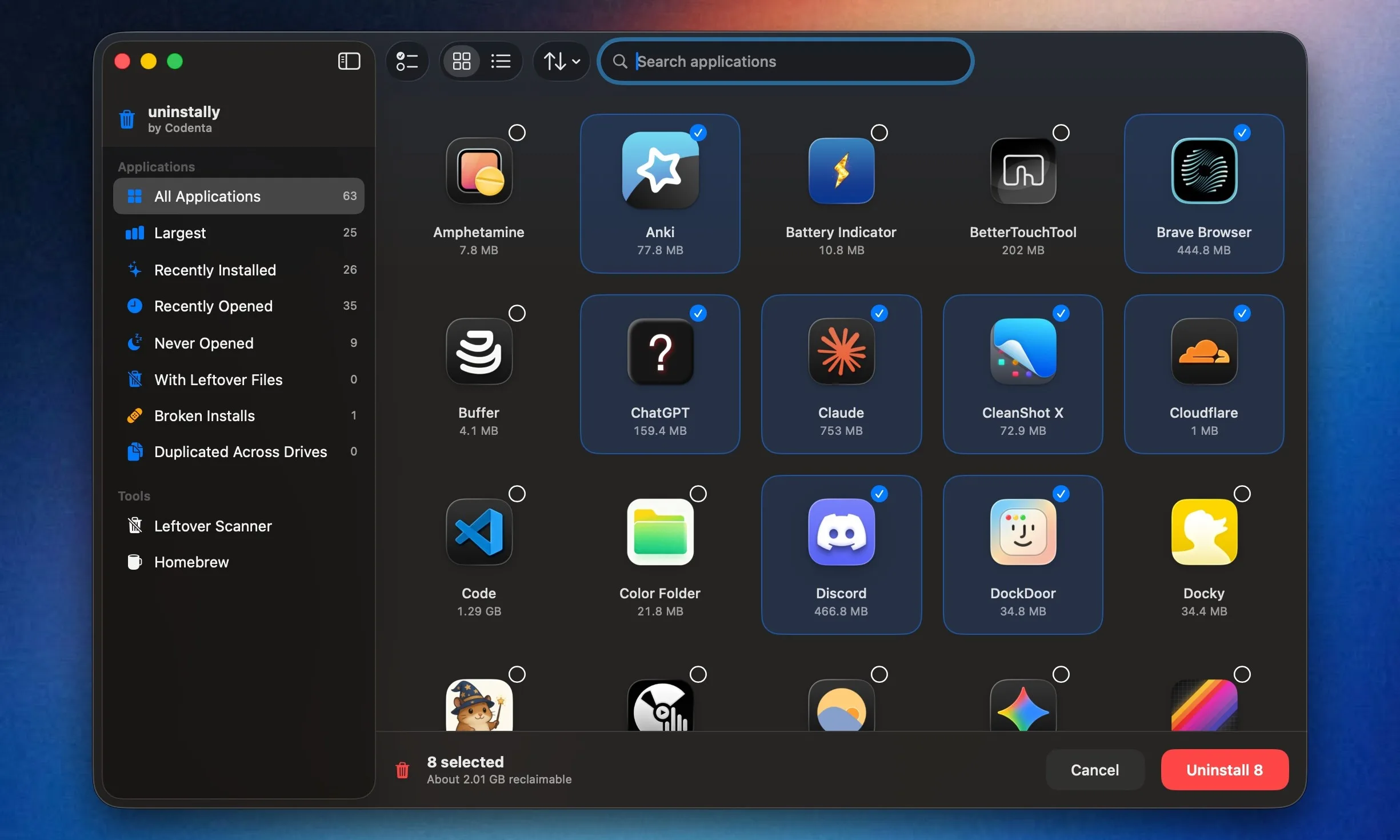
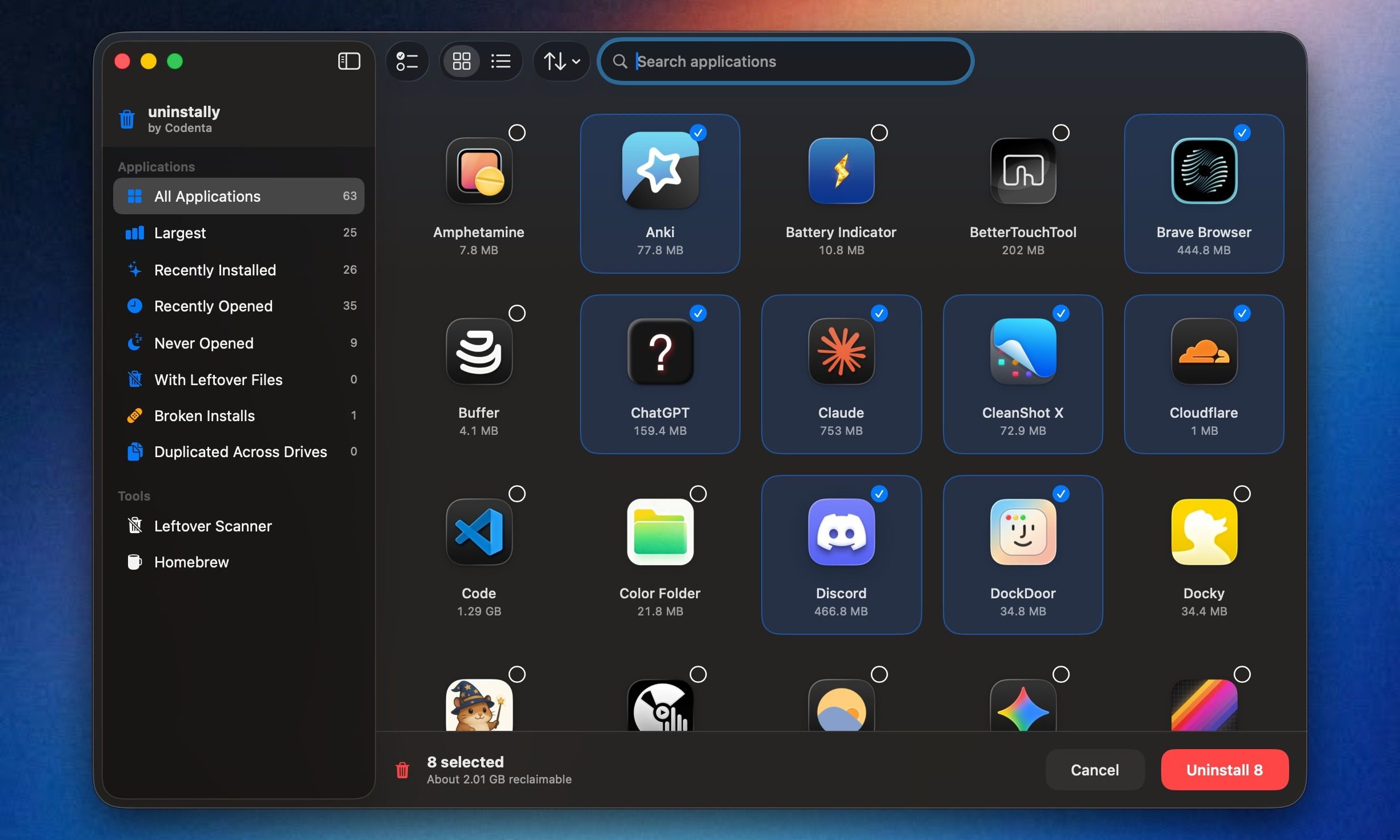
There is also a standalone app browser for a more deliberate cleanup. You can search installed apps, switch between grid and list views, and filter by largest apps, recently installed apps, never opened apps, broken installs, duplicated apps, and apps with leftovers.
Advertisement
Codenta on GitHub
Uninstally also includes a leftover scanner for apps you have already removed. Instead of digging through Library folders manually, you can scan for orphaned support files, caches, containers, preferences, logs, and old installers in one place.
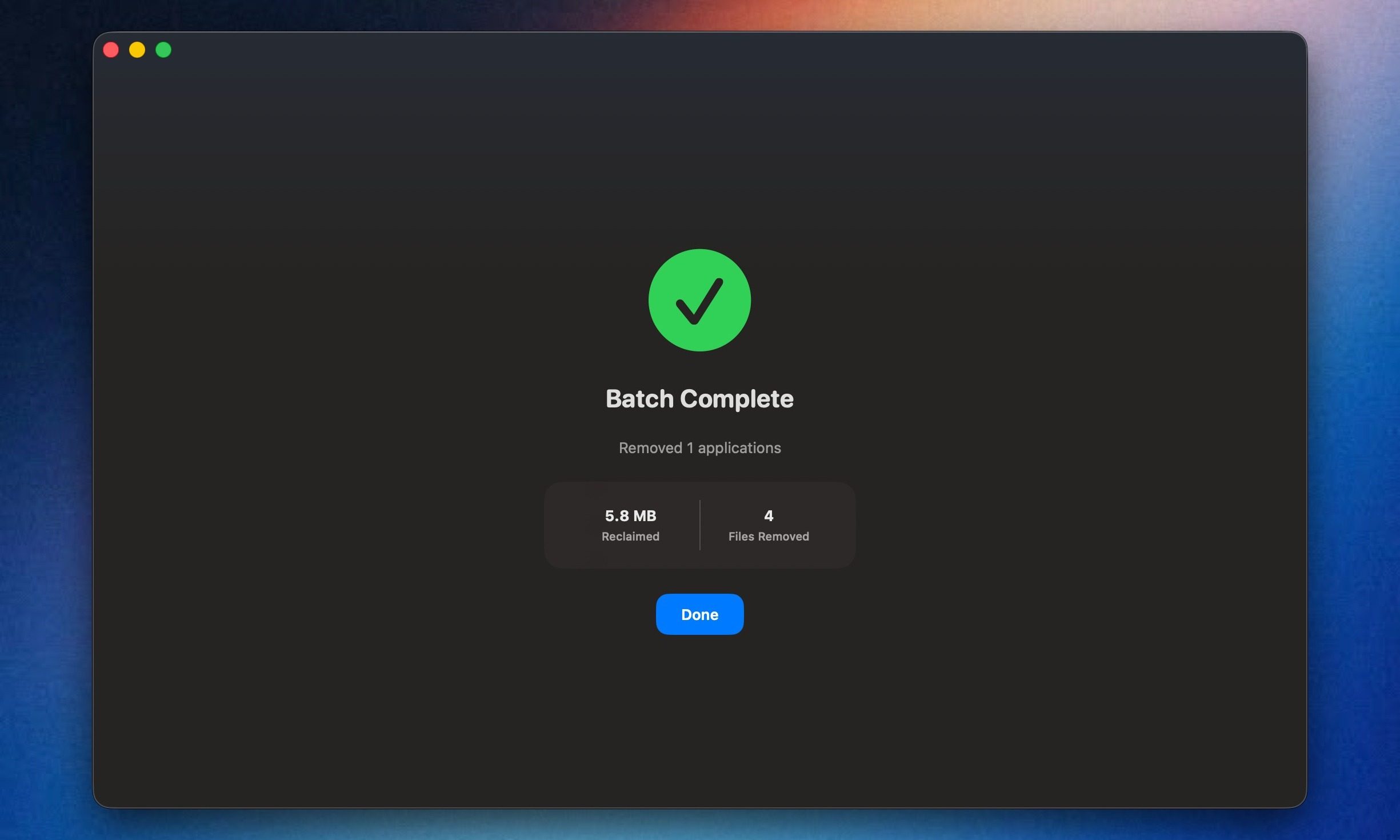
It also supports Homebrew casks and formulae, shows dependency relationships, and can remove Homebrew leftovers through optional zap cleanup. User-domain files are moved to the Trash, while privileged items require an administrator prompt. You can download Uninstally from Codenta’s website or its GitHub repo.
Google is rolling out a feature that flags when an advertisement was made using AI. The label will indicate if an ad was created or edited with generative tools, TechCrunch reports.
The disclosure appears in the “My Ad Center” panel, reachable via the three-dot menu or info icon on ads. It covers ads across Google Search, YouTube, and Google Discover, and is available globally.
That panel already lets users block or report ads and learn why one was shown. Now it adds an option labelled “how this ad was made”, which surfaces any AI involvement.
The rationale is straightforward. AI makes it cheap to generate slick product imagery, which can mislead shoppers who assume they are looking at a real photograph rather than a synthetic one.
Advertisement
The 💜 of EU tech
The latest rumblings from the EU tech scene, a story from our wise ol’ founder Boris, and some questionable AI art. It’s free, every week, in your inbox. Sign up now!
Until now, Google only required AI disclosure on election ads. Extending it to commercial ads is a meaningful widening of the policy.
The honour-system catch
The reach of the feature depends heavily on how an ad was built. When advertisers use Google’s own generative AI ad tools, the disclosure is switched on automatically.
Advertisement
When an ad is made elsewhere, though, the advertiser must actively flag that AI was involved. Google says it will not run its own check to verify the claim, so the label rests on advertisers being honest.
That gap matters because the incentive to stay quiet is real. An advertiser hoping a synthetic scene passes for a genuine photo has little reason to volunteer otherwise, and Google is not looking over its shoulder.
Regulators are forcing the issue
The timing is not accidental. Google’s move front-runs tougher rules, as the EU AI Act’s transparency obligations for AI-generated content start to bite in August.
The feature is still a step toward a market drowning in synthetic media, where even Google has branded some AI content spam. Giving users a place to ask how an ad was made is better than silence.
For now, Google has built the disclosure and handed advertisers the switch. The honest ones will flip it, and the rest are exactly the reason such a label was needed.




















































You must be logged in to post a comment Login