












Connect with us
DAPA Banner

Tech

Ex-data analyst stole company data in $2.5M extortion scheme

Published

on

Extortion hacker scammer

A North Carolina man was found guilty of extorting a D.C.-based technology company while still being employed as a data analyst contractor.

While a Justice Department press release published on Thursday doesn’t name the victim, court documents reveal that he targeted Brightly Software, a Software-as-a-Service (SaaS) company previously known as SchoolDude, which Siemens acquired in August 2022.

Brightly has been in business for more than 20 years, employs over 700 people, and provides intelligent asset management and maintenance software to over 12,000 clients worldwide, mainly in the United States, Canada, the United Kingdom, and Australia.

As revealed in the indictment, 27-year-old Cameron Curry (also known as “Loot”) took advantage of his access to Brightly’s payroll information and corporate data to steal sensitive documents, which he used as leverage in an extortion scheme after learning that his six-month contract wouldn’t be extended.

Advertisement

One day after his contract ended on December 10, Curry began sending over 60 extortion emails to Brightly employees using the lootsoftware@outlook.com Microsoft email address and the Loot alias, threatening to leak sensitive information stolen between August and December 2023 unless he was paid a $2.5 million ransom.

With the extortion messages, Curry also attached screenshots of spreadsheets listing the personal identification information (PII) of Brightly employees, including names, dates of birth, home addresses, and compensation information. He also threatened to report the company to the U.S. Securities and Exchange Commission (SEC) for failing to disclose the breach as required by law.

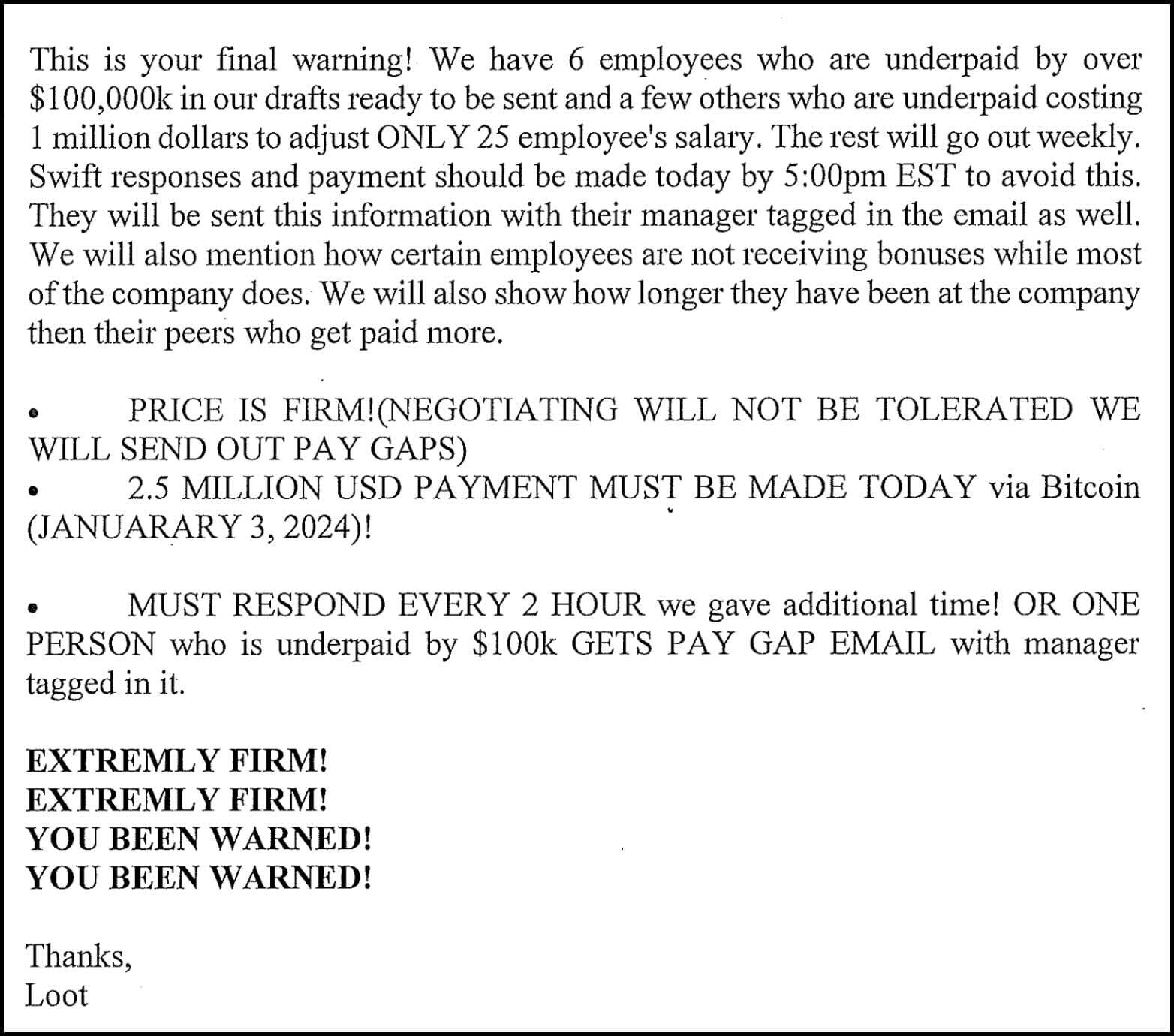
“We will commence the process of disseminating salary information starting January 1,2024 in phases to all employees and will report you to the SEC after for not reporting the breach,” Curry threatened in one of the extortion emails.

“If you wish to reclaim your data, we recommend doing so promptly at 2.5 million USD in order to save your company and stocks, as each subsequent month will incur a $100,000 USD increase. Discrepancies in your books are currently over 16 million USD, posing a potential risk for retention issues, a hostile work environment, resentment, and more.”

Advertisement
Extortion email sample
Extortion email sample (Justice Department)

​Following Curry’s numerous extortion emails, Brightly paid $7,540 in Bitcoin, which was transferred to a cryptocurrency wallet controlled by Curry.

The FBI searched Curry’s residence on January 24 after the company reported the incident and seized various electronic devices containing evidence of his extortion scheme.

Curry was released on bond in January 2024 and now faces up to 12 years in prison for six counts of transmitting or willfully causing interstate communications with the intent to extort a victim company.

Brightly also notified customers of a data breach unrelated to this case in May 2023 after attackers gained access to the database of its SchoolDude online platform and stole credentials and personal data (including names, email addresses, account passwords, phone numbers).

Information filed with the Office of the Maine Attorney General revealed that the intrusion was discovered 8 days after the attackers breached Brightly’s systems on April 20, and that the data breach affected nearly 3 million SchoolDude customers and users.

Advertisement

Malware is getting smarter. The Red Report 2026 reveals how new threats use math to detect sandboxes and hide in plain sight.

Download our analysis of 1.1 million malicious samples to uncover the top 10 techniques and see if your security stack is blinded.

Source link

Continue Reading
Click to comment

You must be logged in to post a comment Login

Leave a Reply

Tech

Massive 41-inch Blades Deliver Clear Efficiency Wins on This Custom-Built Quadcopter Drone

Published

on

3D-Printed Quadcopter Drone 41-inch Blades
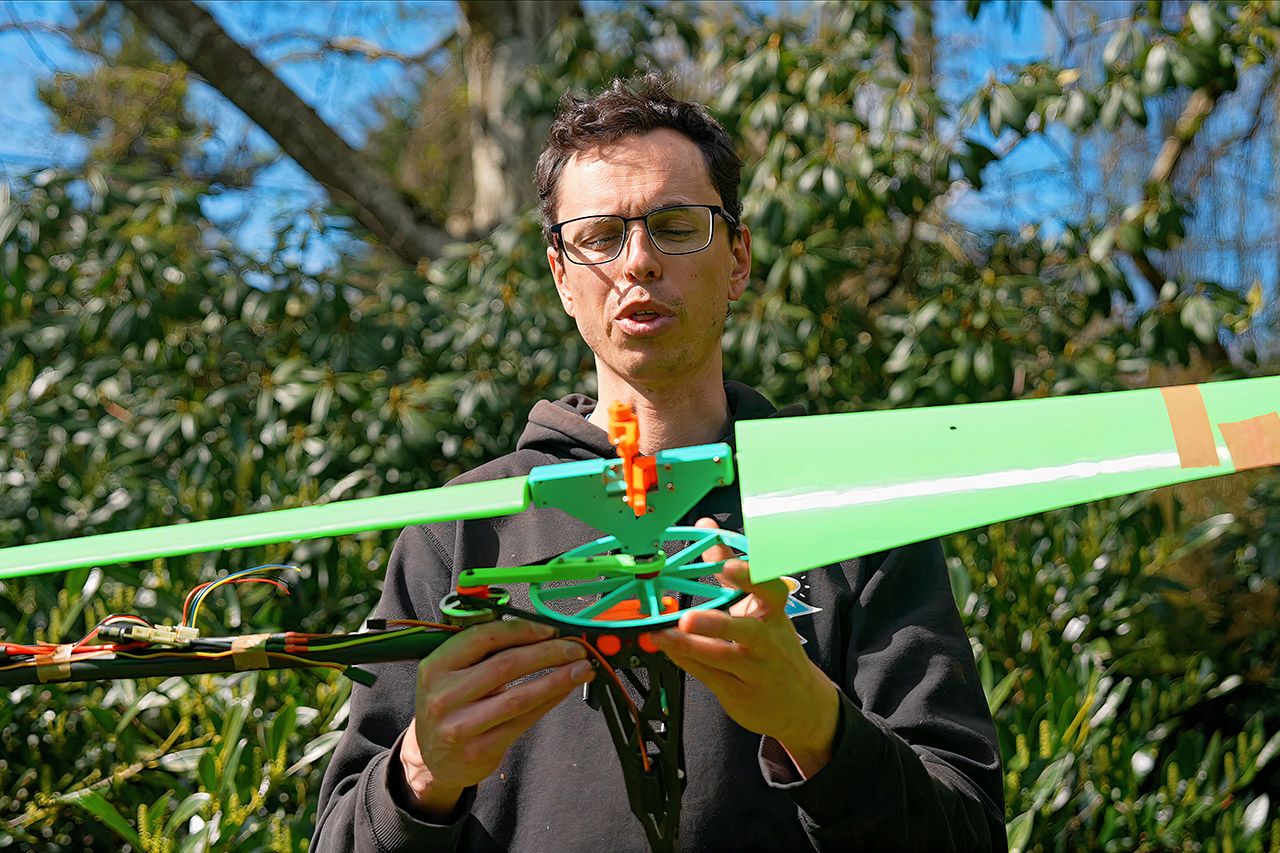
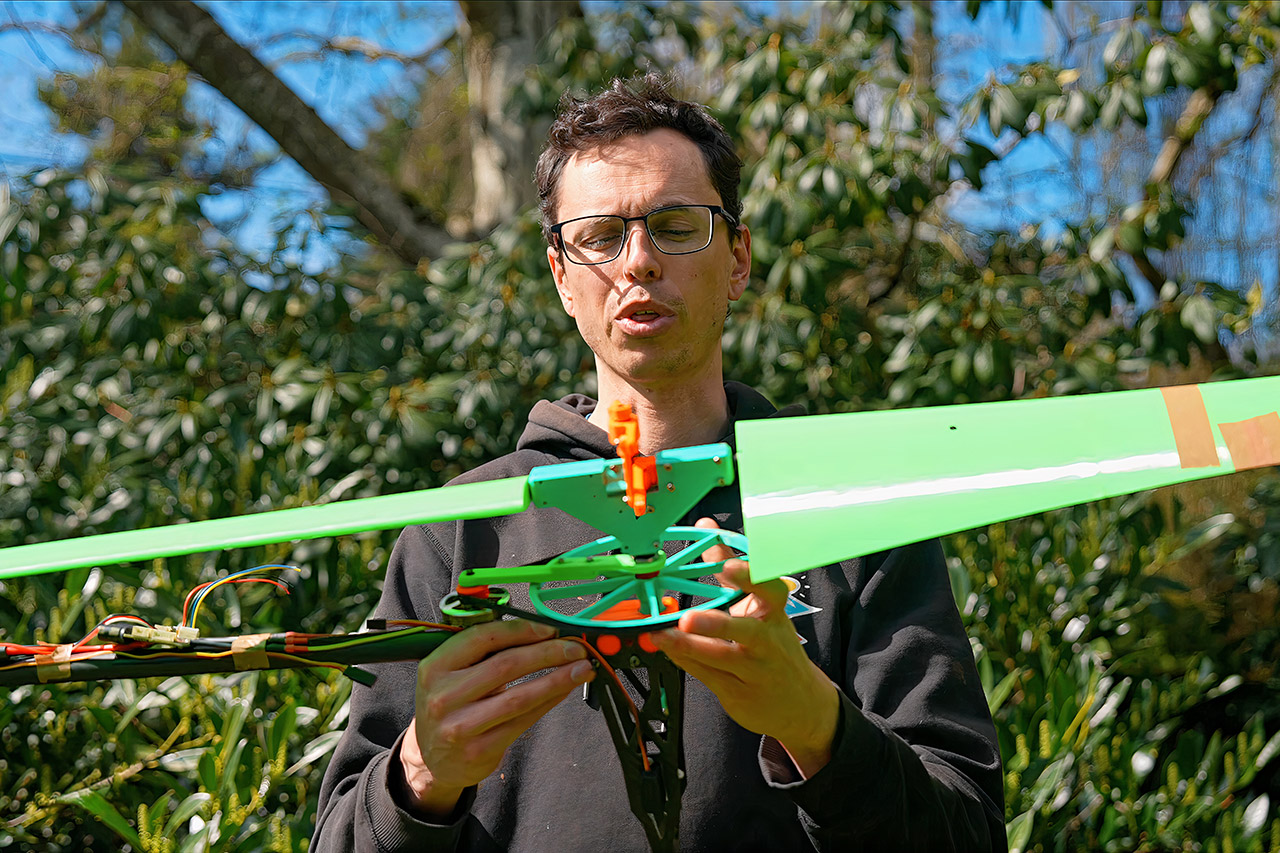
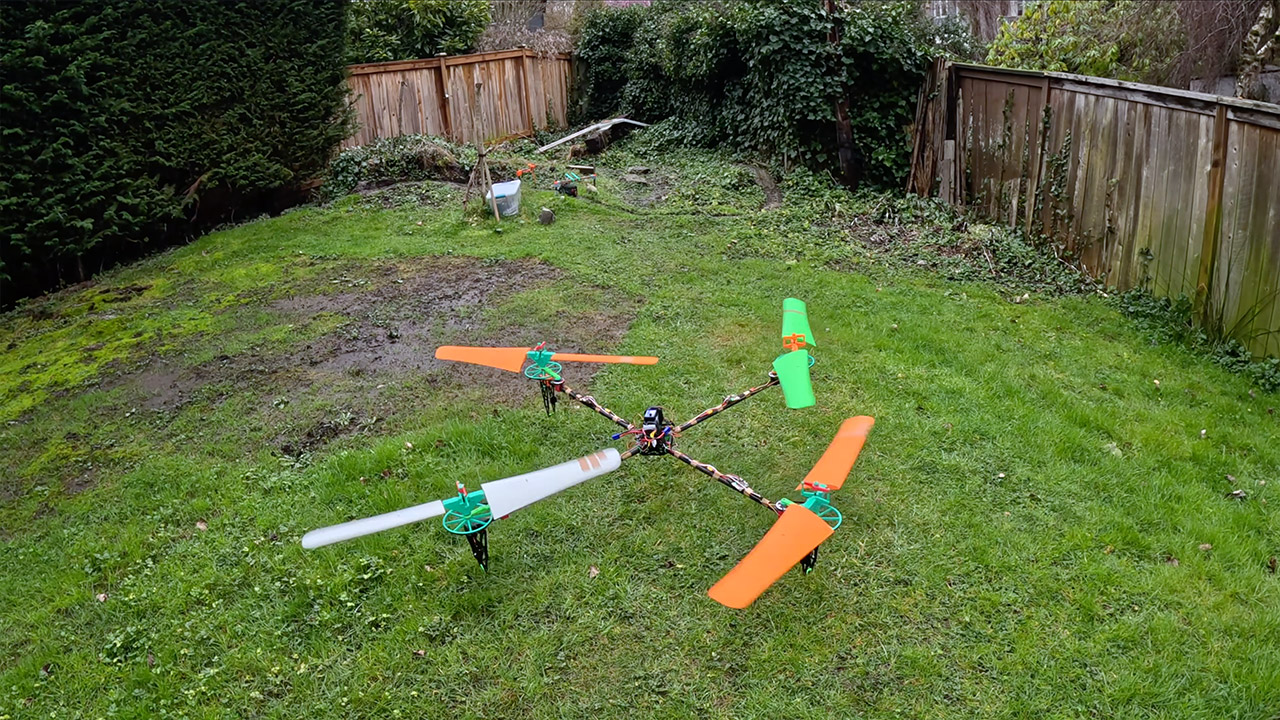
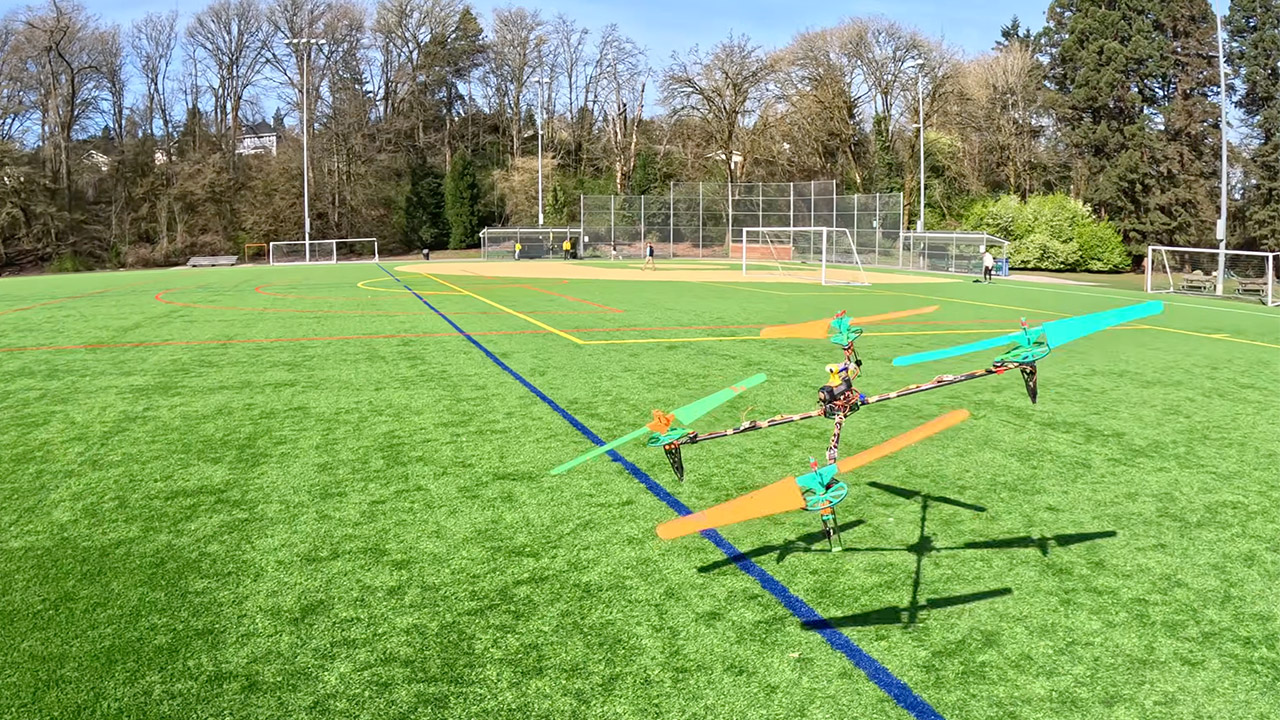
Daniel Riley set out to tackle an issue that had been plaguing him: what if you built a drone with propeller blades a mile longer than regular models? His design features 41-inch blades that reach from tip to tip and spin at a steady 350 to 500 revolutions per minute, a far cry from the tiny, high-speed propellers seen on nearly every commercial drone on the market.


His quadcopter stands out from the crowd due to its gigantic 41-inch blades, and not only because of their size. They also spin at a nice, calm speed of 350 to 500 rpm, as opposed to the thousands of rpm seen on standard models. Riley paired these blades with a sophisticated variable pitch mechanism that allows each rotor to change the angle at which it bites into the air while keeping the motor speed constant. This combination enables the drone to generate lift and remain airborne with significantly less energy than you might expect, especially considering the blades’ high inertia.


Bambu Lab A1 3D Printer, Support Multi-Color 3D Printing, High Speed & Precision, Full-Auto Calibration…
  • High-Speed Precision: Experience unparalleled speed and precision with the Bambu Lab A1 3D Printer. With an impressive acceleration of 10,000 mm/s…
  • Multi-Color Printing with AMS lite: Unlock your creativity with vibrant and multi-colored 3D prints. The Bambu Lab A1 3D printers make multi-color…
  • Full-Auto Calibration: Say goodbye to manual calibration hassles. The A1 3D printer takes care of all the calibration processes automatically…

Riley designed a variable pitch system that allows the servos to change the angle of each blade while the motors continue to run at a consistent speed. This is a creative solution to the problem of high rotational inertia, which would normally make it difficult to swiftly increase and decrease motor speed in order to operate the drone successfully. He mounted high-torque servos at the base of each arm and ran a pushrod through them to the blade roots. As a result, the drone gains precise control over lift and attitude without constantly adjusting the engine speed.

3D-Printed Quadcopter Drone 41-inch Blades
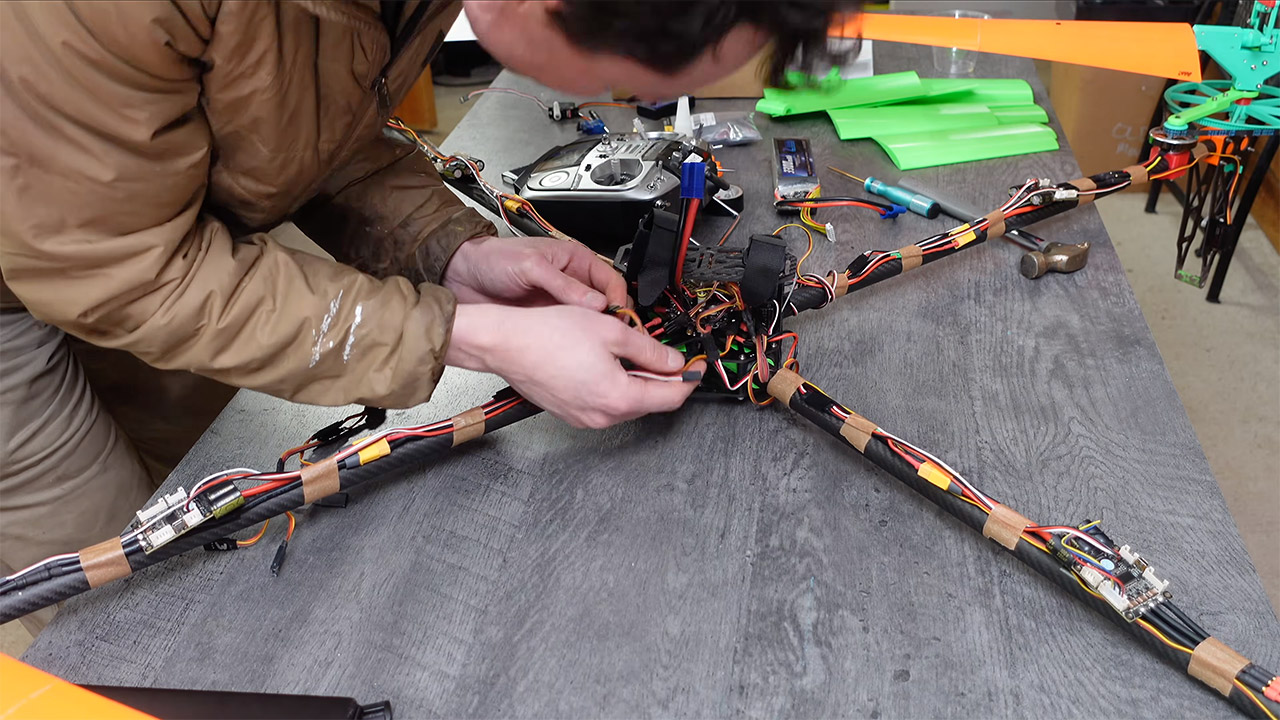
The drone’s chassis was built of carbon fiber tubes attached to 3D printed polycarbonate parts, which gave just enough strength to keep things from breaking without adding too much weight. The propellers were made from PETG plastic reinforced with carbon fiber rods. Four pancake-style 5010 360KV motors power the blades via a belt reduction system, which reduces the speed and increases torque. Riley even removed the motor controllers’ heat sinks and sealed them in epoxy to save a few grams of weight. Every little piece added up to keep the overall power consumption low, allowing the huge rotors to support the airframe with minimal effort.

3D-Printed Quadcopter Drone 41-inch Blades
Ground tests produced some really impressive results. When the drone was hovering in situ, it produced a remarkable 18.1 grams of torque for every watt of electricity used, which is roughly half as much as a well-optimized conventional quadcopter. When the power was turned off, the drone was able to slowly circle its way to the ground. The only reason it didn’t come out of it without losing its balance was that it lacked a stabilisation system and crashed.

3D-Printed Quadcopter Drone 41-inch Blades
Engineers have long recognized that the key to making rotorcraft fly is getting the power loading just right. Spreading the weight over a larger rotor surface allows you to stay aloft with less energy, like Riley did here. He applied a principle that most commercial drone manufacturers are afraid to explore since it is more sophisticated, and it paid off handsomely. His approach demonstrates that scaling up to larger blades and adding some sophisticated pitch control can result in significant increases in flight time without simply throwing some heavier batteries on it.
[Source]

Advertisement

Source link

Continue Reading

Tech

Digital guestbooks are becoming a lucrative biz in S’pore’s wedding industry

Published

on

All it takes is two to three weddings to break even

Two to three weddings. That’s all it takes for entrepreneurs Edmund Teo from Octopus Reels and Jessica Tay from Leave Your Message to fully recoup their startup costs—and everything after is profit.

Their business? Renting out digital guestbooks that capture audio and video messages from wedding guests. As more couples seek personalised, interactive experiences, this niche service is quickly gaining popularity and turning into a profitable opportunity.

Set up is simple, only requires two to three people, and the equipment is reusable, making margins compelling with limited costs. 

Vulcan Post speaks with the two founders to uncover what it takes to run a digital guestbook business—and just how lucrative it can be.

Advertisement

What’s driving couples to ditch traditional guestbooks

digital guestbooks audio video weddings events Leave Your Message, Octopus Reelsdigital guestbooks audio video weddings events Leave Your Message, Octopus Reels
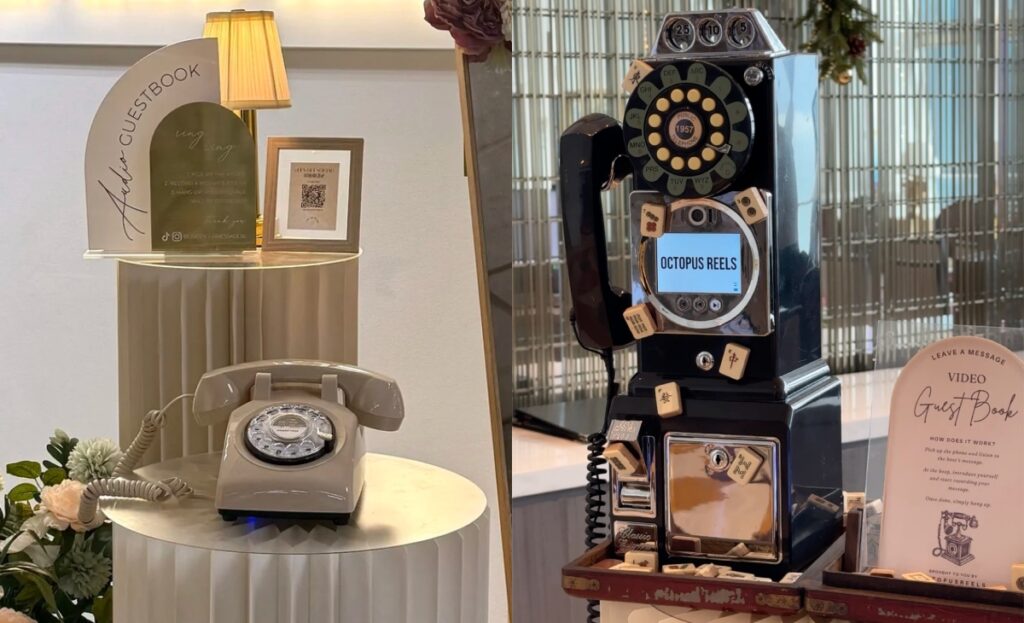
Digital guestbooks that record audio (left) and video (right) have emerged in popularity in recent years./ Image Credit: Leave Your Message/ Octopus Reels

In Singapore, couples are increasingly moving away from traditional guestbooks because digital formats offer something far more engaging and memorable.

While handwritten guestbooks are sentimental, they are often stored away and rarely revisited. More often than not, only a few pages are filled while the rest remain blank.

Audio and video recordings, on the other hand, capture the tone, laughter, and emotions behind each message, allowing couples to relive those moments for years to come.

We have had couples share how moved they were when revisiting their recordings.

Edmund Teo, founder of Octopus Reels

traditional physical guestbooks digital audio video guestbooks vintage octopus reels traditional physical guestbooks digital audio video guestbooks vintage octopus reels
(Left): Traditional physical guestbooks that guests are invited to write in; (Right): Recorded video from a digital video guestbook./ Image Credit: Artisan Prints, Octopus Reels

Jessica added that digital guestbooks make memories feel “more alive” by preserving expressions, voices, and interactions that a page of writing cannot convey.

She also noted that the rise of digital guestbooks connects to broader cultural currents. “In recent years, there has been a strong comeback of nostalgia, like the rise of digital cameras and Y2K aesthetics, where people are drawn to things that feel a bit more raw and authentic.”

Advertisement

Typically, digital guestbooks use a vintage telephone setup. Guests pick up the handset to hear a short, pre-recorded message from the couple, then record their own message after a tone. The retro telephone design, complete with rotary dials or classic handsets, adds a memorable touch.

Weddings, being highly emotional occasions, naturally attract formats that combine familiar, nostalgic elements.

At the same time, the industry itself also offers fertile ground for niche services like digital guestbooks. In 2024, the Singapore wedding market was valued at US$153.22 million (S$196.57 million), and is projected to reach US$292.38 million (S$375.11 million) by 2033, growing at an annual rate of 7.46%.

With approximately 24,700 marriages registered in Singapore in 2025, the addressable market for wedding vendors remains substantial.

Advertisement

A 30% profit margin

digital audio video guestbooks vintage Leave Your Message, Octopus Reelsdigital audio video guestbooks vintage Leave Your Message, Octopus Reels
Image Credit: Leave Your Message/ Octopus Reels

Both founders of Octopus Reels and Leave Your Message now run their businesses full-time, though Jessica initially started hers as a side hustle before leaving her full-time job as demand grew.

At first glance, the business seems simple and low-cost.

Similar digital video guestbook equipment sells for around S$533 on Amazon.sg, while each accordion-style column stand—typically used to hold and elevate the vintage telephone handsets—costs between S$72 and S$101. That totals to S$797 for a digital guestbook telephone setup with three cylindrical columns of varying heights.

With rates starting at S$295 for six hours for a basic digital guestbook setup by Octopus Reels and S$380 for two hours by Leave Your Message, both businesses can recoup their initial setup costs in just three bookings, making them highly lucrative ventures.

However, running the business goes beyond purchasing equipment. Set up, logistics, and manpower are all crucial to delivering a smooth and memorable guest experience. There are also additional technical support and post-production editing required to transform raw footage into polished keepsakes. 

Advertisement

Edmund shared that the average breakdown of costs for each setup, excluding equipment, is as follows:

Category Cost
Manpower S$80-S$200 for two to three people, depending on theme and requirements.
Transport and logistics S$30-S$120. More decor-intensive setups require larger vehicles.
Post-production S$60 to S$300, depending on the number of messages and the amount of footage to process.
Storage and maintenance costs Low, but expected to increase with more props and larger volumes of data as they are handled over time.
Advertising S$70 per booking through Meta, plus ~3% processing fee of S$2.10.

Minus off all these costs, the overall profit margin for Octopus Reels is 20–30% for simpler setups, and tends to increase with larger or customised events, making the business still highly attractive.

Leave Your Message, however, declined to disclose exact figures, with Jessica explaining that these are “commercially sensitive for the business.” She did note, though, that there are “less obvious costs,” including seasonal fluctuations in bookings and downtime between events.

“While this can be a profitable business under the right conditions, there is also a fair amount of operational work behind the scenes that people may not immediately see,” she added.

Advertisement

Standing out in an increasingly crowded market

london phonebooth leave your message octopus reels digital audio video guestbooks vintage london phonebooth leave your message octopus reels digital audio video guestbooks vintage
(Left): Leave Your Message’s London Phone Booth; (Right): Octopus Reels’ setup for a Chinese New Year event./ Image Credit: Leave Your Message/ Octopus Reels

Demand is booming for these businesses’ offerings.

Octopus Reels currently runs 10 to 12 events every weekend, and in 2025, it supported 208 events across 98 venues, with demand peaking in Oct when the company managed up to eight events in a single day. Meanwhile, Leave Your Message has participated in over 400 events since 2023.

While weddings remain the core revenue driver, both companies have expanded into adjacent markets.

Octopus Reels has supported corporate events, birthday celebrations, and community initiatives, including a meaningful project with Sport Singapore for individuals with dementia.

Similarly, Leave Your Message has recorded appreciation messages at company award ceremonies and participated in large-scale activations like the National Day NTUC Youth initiative, where messages collected across institutions were showcased during the National Day Parade.

Advertisement

This diversification reduces reliance on wedding seasonality for sales on digital guestbooks—a critical business strategy in an industry where demand fluctuates throughout the year.

(Left): Today, Octopus Reels also offers interactive wedding experiences such as low-fog effects; (Right): For guests who want to leave a message virtually or are unable to attend in person, Leave Your Message provides QR codes at events to submit videos./ Image Credit: Octopus Reels/ Leave Your Message

As competition intensifies with more businesses offering similar services, differentiation becomes especially important.

Hence, both companies have also diversified beyond their core guestbook services. Octopus Reels now offers interactive photo gallery installations, creating “mini exhibitions” of couples’ memories and low-lying fog effects for “walking on clouds” march-ins. They are also partnering with a local coffee cart vendor to bring Vietnamese coffee experiences into wedding spaces.

Jessica’s company, on the other hand, has expanded its digital guestbook concept with a virtual video option, where guests scan QR codes to record messages on their mobile phones. This extends the experience to overseas guests who cannot attend physically.

Will digital guestbooks stay?

Edmund considers video guestbooks an “early-stage trend,” with the potential to become a standard feature at weddings.

Advertisement

But as with any trend, it can flare up quickly—and fade just as fast. Despite this, Jessica is confident it will endure, at least in terms of its core intent.

“The format may continue to evolve, but the intention behind it, capturing meaningful messages from loved ones, will always be relevant.”

Ultimately, the emotional resonance is a key driver of the business model.

Edmund described parents leaving messages for newlyweds: “In many Asian families, emotions are not always expressed openly. The guestbook creates a space for parents to share heartfelt messages they might not say in person.”

Advertisement

For entrepreneurs entering this space, the playbook is clear: source reliable equipment, master post-production workflows, build vendor relationships for referrals, and differentiate through unique experiential offerings.

The wedding and events industries reward specialists who can deliver reliability and emotional impact.

  • Find out more about Leave Your Message here.
  • Find out more about Octopus Reels here.
  • Read other articles we’ve written on Singaporean businesses here.

Featured Image Credit: Leave Your Message/ Octopus Reels

Advertisement

Source link

Continue Reading

Tech

Google introduces AI-generated avatars to YouTube Shorts

Published

on

A new feature that lets you create an AI avatar with your likeness is now live on YouTube. First in a blog post earlier this year, avatars are designed to be used in Shorts (provided you still them to show up), allowing you to insert yourself into video content in a way that YouTube deems to be safe and secure.

YouTube’s approach to combatting the AI sloppification of the internet and the proliferation of appears to be adding more and more AI features to its platform, framing this latest addition as a tool that gives creators more control of their digital identities. Any video generated using an avatar will feature YouTube’s AI disclosure and include visible watermarks and labels like SynthID and C2PA.

YouTube has published a pretty in-depth on how to create and use an avatar in either the YouTube or YouTube Create app, but here’s a brief summary of how to do it using the former. Once you’ve opened AI Playground, you’ll be taking a “live selfie” that also records your voice. You can then preview your photorealistic virtual self and either proceed with it or redo the process if you’re unhappy with anything. Creating an avatar in the YouTube Create app is broadly similar, but you have to navigate to the My Avatar homepage first.

YouTube recommends that you hold your phone at eye level and keep yourself centered as much as possible. Lighting is also important, as is ensuring your whole face is visible, you’re in a quiet area, and there’s nobody else in the background. You also have to be the account owner to create an avatar, and over the age of 18.

Advertisement

Once you have an avatar you like, you simply type in a prompt and wait for the AI to generate a video, which according to  can be up to eight seconds long. Alternatively, YouTube will also let you add an avatar to existing “eligible” Shorts by tapping “Remix” and then “Reimagine” with your avatar selected.

Avatars can be deleted or retaken whenever you like, as can any video with your avatar in it. You can also limit who’s able to remix your videos, but deleting a video with your avatar in it won’t also delete the original video, or that avatar from your account. YouTube will automatically delete any avatar that hasn’t been used to create new video content for three years.

The new avatar feature will roll out gradually, and is the latest in a long line of AI-centric tools and updates YouTube has added to the platform in the last year, including for low-res videos, for creators and an for search results.

Source link

Advertisement
Continue Reading

Tech

Greece to ban social media for children under 15 starting next year

Published

on


Mitsotakis called the legislation, which is expected to pass this summer, “difficult but necessary.” He started the video by referencing the phrase that became hugely popular among young people last year: “6-7 – Now that I have your attention.”
Read Entire Article
Source link

Continue Reading

Tech

From Apple II to iPhone 17 Pro, Apple's space story comes full circle

Published

on

Apple hardware has gone into orbit, starting with shuttle-era experiments, through a long exclusion, and now a controlled return on Artemis II. Here’s how and when iPhone, Mac Portable, and more have made trips to space over more than four decades.

Metallic Apple logo floating in deep space, encircled by glowing blue-white planetary rings, with distant stars and a hazy galaxy forming the cosmic background
Apple products in space

NASA entered the Shuttle era in 1981 as commercial computing shifted from command-line systems to graphical interfaces. Engineers used off-the-shelf computers to study how crews interacted with software in microgravity, where input methods behaved differently than on Earth.
Early Shuttle experiments unfolded during a brief period when integration barriers remained low. Crews and engineers saw how quickly standard interfaces broke down once gravity was no longer part of the equation.
Continue Reading on AppleInsider | Discuss on our Forums

Source link

Continue Reading

Tech

Portal Space Systems raises $50M as it gets set to launch its first orbital vehicle made for rapid maneuvers

Published

on

An artist’s conception shows Portal’s Starburst spacecraft in the foreground with its Supernova space vehicle and three more Starbursts (plus Earth) in the background. (Portal Space Systems Illustration)

Bothell, Wash.-based Portal Space Systems has raised $50 million in a funding round aimed at speeding up development of the Seattle-area startup’s highly maneuverable space vehicles.

The first such vehicle, Starburst-1, is due for launch as early as this fall as a payload on SpaceX’s Transporter-18 satellite rideshare mission. Portal is also getting ready to move into a 52,000-square-foot manufacturing facility where future Starburst spacecraft and even more capable Supernova space vehicles will be built.

Portal CEO Jeff Thornburg — who co-founded the company in 2021 following stints at tech ventures including SpaceX and Stratolaunch Systems — characterized the newly announced Series A funding round as closer to a giant leap than a small step.

“The thing that’s exciting me the most, and really the company at large, is that it helps us move faster,” he told GeekWire. “We’re obviously focused on getting Starburst and Supernova capabilities demonstrated and available to our customers as quickly as we can.”

The round was led by Geodesic Capital and Mach33, with participation by Booz Allen Ventures, AlleyCorp and FUSE. It builds on a $17.5 million seed round that was announced last year.

Advertisement

Portal is developing a solar thermal propulsion system that will use focused sunlight to heat the ammonia-based propellant for its Supernova space vehicle. The system is designed to allow for rapid adjustments in Supernova’s orbit. Orbital maneuvers that would typically take weeks or months to execute using traditional propulsion systems could be done in hours or days.

Starburst would use a more traditional thruster system, but would take advantage of many of the technologies being developed for Supernova. “Eighty-one percent of the components are shared between Starburst and Supernova,” Thornburg said. “We’ve got a lot of delta-v packed in the Starburst, even though it’s a smaller platform.”

Starburst-1, which is being readied for a potential October launch, will be equipped with TRL11’s video camera and edge processing system plus Zenno Space’s superconducting magnetic actuator for a yearlong test mission in sun-synchronous orbit.

An experimental payload nicknamed “Mini-Nova” was sent into orbit last month to test the control software and power systems for Starburst as well as for Supernova. “Mini-Nova is healthy … and so I think we’re in good shape for what’s to come,” Thornburg said.

Advertisement

The first Supernova is due to be launched next year, thanks in part to $45 million in funding from the U.S. Space Force’s SpaceWERX program. Thornburg said Supernova-1 could take on any of a variety of missions that “support the Defense Department’s needs where it comes down to rapid maneuverability.”

Portal’s team is already looking further out on the mission timeline.

“We have a lot of interest from a lot of different customers, including the government just by itself, as well as commercial companies in the service of defense or commercial missions,” Thornburg said. “So, we’re leaning forward on the second Starburst build. And then, in parallel, one of the first uses of the new building will be assembly work for Supernova-1. … We can continue to build Starburst in our existing facility if we want to, for a certain amount of time.”

Portal is aiming to build as many as four spacecraft per month by the end of 2027 — which means the company is going to need a bigger workforce. “We’re at about 40 people at the company,” Thornburg said. “We’ll probably double in size throughout the rest of this year.”

Advertisement

How would Starburst and Supernova be used? “For defense, what we’re really targeting is areas I would describe as space domain awareness, or being able to observe things that sometimes can be difficult to observe,” Thornburg said. “And then I think the second application in the defense category is to protect and defend. We have adversaries on orbit doing things that are very confrontational, and I don’t know that we always have equivalent capabilities or deterrence in kind.”

On the commercial side, Thornburg points to orbital debris tracking and removal. “Recently you had a Starlink satellite breaking up,” he said. “That creates a problem for SpaceX and other people. Having to move around this stuff costs money and time. So, you’re seeing a profit motive for dealing with orbital debris on the commercial side, as well as their own surveillance.”

Portal and an Australian venture called Paladin Space recently announced a partnership to create an orbital debris tracking and removal service that could go into business as early as next year. Starlab Space, an industry consortium that has been laying the groundwork for a commercial space station, has already signed a letter of intent to integrate the Portal-Paladin service into future station operations.

Thornburg said Supernova could also play a role in NASA’s Artemis moon program, which recently set its sights on building a permanent lunar base. “We have the performance to be able to easily move between GEO [geostationary Earth orbit] and cislunar domains in a way that could be helpful for logistics, experiments, communications, data and other things. We don’t have a lot of spacecraft that can do that without the aid of a rocket right now,” he said.

Advertisement

In all these cases, Portal aims to capitalize on its ability to offer rapid mobility in space — a strategy that received strong backing from the company’s leading investors. “We are confident that Portal will become the Space Mobility Prime in the near future,” said Aaron Burnett, group CEO of Mach33.

“The future of space is dynamic, and that shift is being recognized globally,” said Rayfe Gaspar-Asaoka, partner at Geodesic Capital. “Portal Space is pairing deep propulsion expertise with advanced spacecraft development built for mobility, reliability and scale. Geodesic is thrilled to co-lead Portal’s Series A and work alongside Jeff and the team as they continue to expand what’s possible in space.”

Source link

Advertisement
Continue Reading

Tech

YouTubers sue Amazon for allegedly scraping their videos to train Nova Reel

Published

on

In short: Three YouTube content creators, specifically the company behind H3H3 Productions, a solo golf presenter, and a golf channel, have filed a proposed class action lawsuit in Seattle alleging that Amazon bypassed YouTube’s technical protections using virtual machines and rotating IP addresses to scrape their videos without consent, feeding the footage into training datasets for Nova Reel, its generative video AI model available through Amazon Bedrock. The suit invokes the anti-circumvention provisions of the Digital Millennium Copyright Act and is the latest in a series of similar cases the same group has filed against Nvidia, Meta, ByteDance, Snap, OpenAI, and Apple.

Ted Entertainment Inc., the company behind H3H3 Productions and H3 Podcast Highlights, the YouTube channels run by Ethan and Hila Klein, filed the complaint in the US District Court for the Western District of Washington alongside Matt Fisher, who runs the MrShortGame Golf channel, and Golfholics Inc. The three plaintiffs collectively account for more than 2.6 million YouTube subscribers, approximately four billion combined views, and more than 5,800 original videos. The suit names Amazon as the defendant and targets Nova Reel specifically as the product built, in part, on their content.

The complaint and its legal theory

The lawsuit rests on Section 1201 of the Digital Millennium Copyright Act, the anti-circumvention provision that prohibits bypassing technological protection measures put in place by copyright holders to restrict access to their works. The plaintiffs argue that YouTube’s systems for protecting its video files constitute such technological protection measures and that Amazon circumvented them deliberately and at scale to extract training data. If the theory holds in court, it would establish that the act of downloading YouTube videos for AI training purposes constitutes a DMCA violation regardless of whether the content is publicly viewable, because circumventing the technical mechanisms that enforce terms of service crosses the statutory line.

The complaint draws attention to what the plaintiffs describe as the permanent nature of the harm: “Once AI ingests content, that content is stored in its neural network and not capable of deletion or retraction.” The plaintiffs are seeking both damages and injunctive relief, the latter potentially forcing Amazon to stop distributing a model trained in part on their content or to retrain it without the disputed material.

Advertisement

How the scraping allegedly worked

The complaint centres on two academic datasets: HD-VILA-100M, produced by Microsoft Research Asia in 2021, and HD-VG-130M, produced by researchers from Peking University and Microsoft. Both were published for academic purposes and consist of URL identifiers pointing to YouTube videos rather than the video files themselves. That distinction is legally significant: to use either dataset for AI model training, a company must download the actual video files from YouTube, and the plaintiffs allege Amazon did exactly that.

The 💜 of EU tech

The latest rumblings from the EU tech scene, a story from our wise ol’ founder Boris, and some questionable AI art. It’s free, every week, in your inbox. Sign up now!

According to the complaint, Amazon did not simply download the videos. It deployed automated programmes combined with virtual machines that rotated IP addresses continuously to evade YouTube’s detection and blocking systems. The combination of these technical measures, namely automated mass downloading, virtual machine infrastructure, and IP rotation, is characterised in the complaint as a deliberate circumvention of the technological protection measures YouTube maintains over its video library. The same evasion pattern was alleged in this group of plaintiffs’ earlier suit against Nvidia, which the complaint in that case said had downloaded 38.5 million video URLs using comparable infrastructure.

Advertisement

Nova Reel and Amazon’s video AI ambitions

Nova Reel is Amazon’s text-to-video generative AI model, launched in December 2024 and made available through Amazon Bedrock. The model accepts text prompts and images as inputs and generates video clips ranging from six seconds to two minutes in length, with a watermarking feature that Amazon positions as a content authenticity measure. It sits within the broader Nova model family, which Amazon has been expanding across text, image, and video modalities as competition in enterprise AI accelerates.

The competitive pressure on Amazon to build capable video AI is substantial. Nova Reel represents the company’s attempt to compete with Sora, Google Veo, and other text-to-video systems for enterprise workloads. Amazon’s wider AI infrastructure investment, including its partnership with Uber to deploy custom Trainium chips for large-scale model training via AWS, reflects the breadth of the company’s ambitions across the AI stack, from cloud compute to generative media. The capital available to frontier AI developers has intensified the competitive pressure to acquire training data at speed and at scale, with SoftBank’s $40 billion bridge loan to OpenAI illustrating the resources flowing into the race for generative AI supremacy.

A pattern of lawsuits, and a legal theory in development

The three plaintiffs arrived at this complaint with prior litigation experience. The year 2025 was one in which AI training data practices moved from an industry footnote to the subject of co-ordinated legal action. In December 2025, Ted Entertainment, Fisher, and Golfholics filed a proposed class action against Nvidia in California federal court, alleging that Nvidia scraped their YouTube content using the same HD-VILA-100M and HD-VG-130M datasets and the same IP-rotation and virtual machine infrastructure to train its Cosmos video model. In January 2026 the group extended the strategy, filing suits against Meta, ByteDance, and Snap. In the first week of April, parallel complaints against OpenAI and Apple were filed in the Northern District of California. The Amazon suit, filed in Seattle, is the most recent entry in the sequence.

The suits arrive as the broader wave of copyright litigation against AI developers continues to grow. The number of US copyright cases filed against AI companies has now surpassed 100, a figure that includes a March 2026 complaint from Encyclopaedia Britannica and Merriam-Webster against OpenAI, alleging that nearly 100,000 of Britannica’s articles were used as training inputs without consent. That case, like the YouTuber suits, relies on the argument that AI developers have systematically extracted content from publishers and creators whose work underpins the capabilities that those developers are now commercialising.

Advertisement

The academic dataset mechanism sits at the centre of what the plaintiffs’ legal theory is attempting to challenge. By alleging that downloading video files pointed to by an academic URL index constitutes a DMCA violation, the suits target the gap between the published URL list — which carries a veneer of academic legitimacy — and the actual extraction activity required to use it. Questions about how frontier AI models source and handle their training data have come into sharper focus in 2026, as scrutiny of the industry’s data supply chain has intensified. If courts accept the plaintiffs’ reading of Section 1201, the practical consequence would be that AI developers using academic video URL datasets as a path to training footage face the same exposure as developers who downloaded that footage directly. Amazon, like the other defendants in this series of suits, has not commented publicly on the filing.

Source link

Advertisement
Continue Reading

Tech

Viral iPhone Fold unboxing video is a very well made fake

Published

on

A new video purporting to show the unboxing of an iPhone Fold months before it’s even expected to be announced, is an excellent piece of work. It’s also entirely false.

Two hands hold an open foldable smartphone with two blank black screens side by side against a plain light background.
Turn it on, then – image credit: Viktor Seraleev

This isn’t like the YouTubers who unboxed an M5 iPad Pro back in September 2025. As unlikely as that video had seemed, it turned out to be genuine when Apple released that iPad a few weeks later.
The iPhone Fold unboxing video doing the rounds is instead purporting to be of a product that has only just gone into manufacturing testing. It’s also said to be having problems in that testing.
Rumor Score: 💩 B#$&(*it
Continue Reading on AppleInsider | Discuss on our Forums

Source link

Continue Reading

Tech

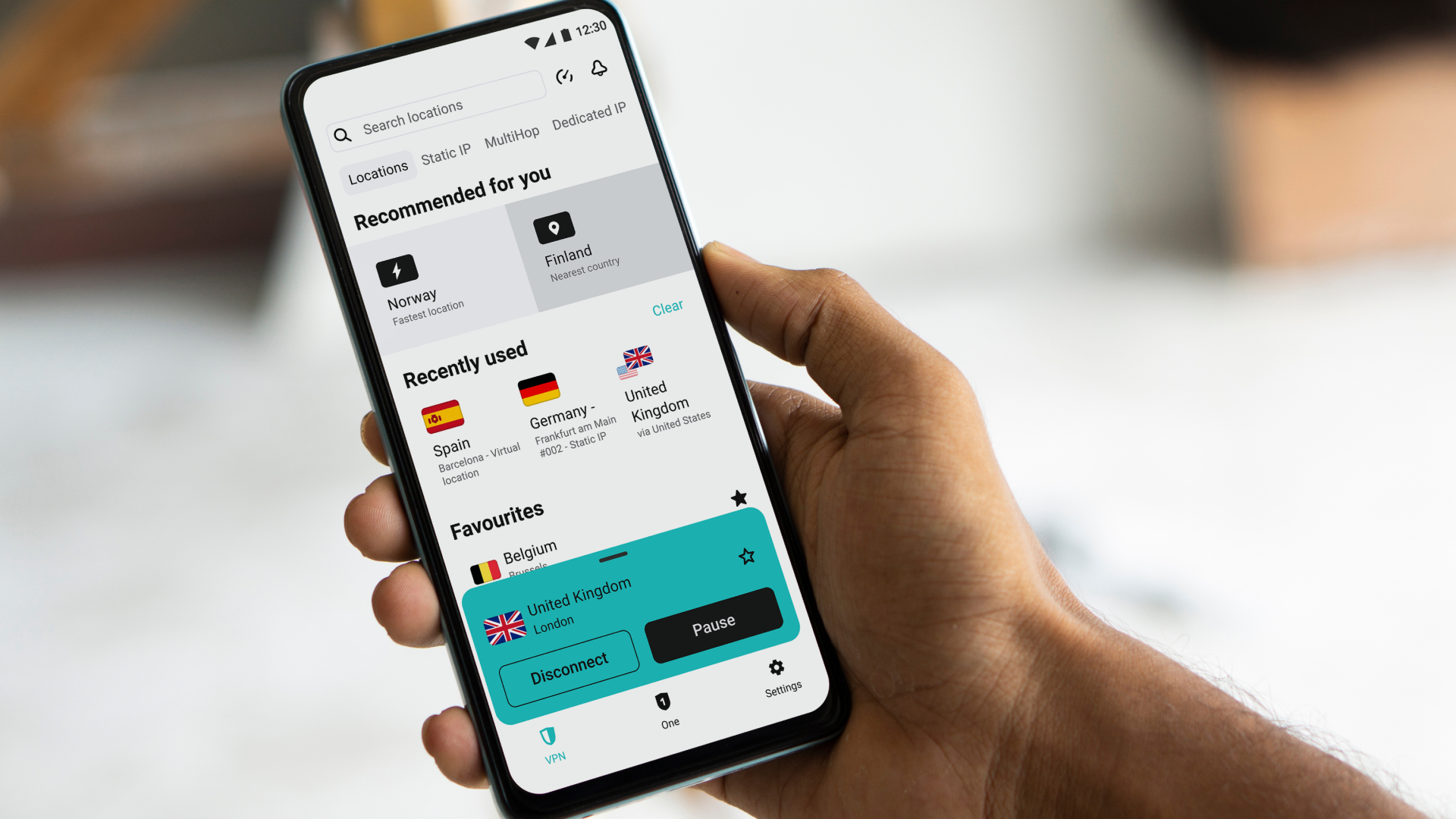
“We want Surfshark to be the Revolut of cybersecurity.”: How Surfshark’s new CEO is looking to shape accessible privacy

Published

on

After eight years under the guidance of company founder Vytautas Kaziukonis, Surfshark has entered its next era with a new CEO – Dovydas Godelis.

In his own words, “Vytautas was more of a visionary at the strategic level”. Godelis, though, is looking to “stay very close to the employees”, retaining the singular vision that’s bound them together, and him to the company, for years.

Source link

Continue Reading

Tech

Forza Horizon 6 Initial Drive Trailer Captures an Epic Opening Drive Across Japan with In-Game Footage

Published

on

Forza Horizon 6 Initial Drive
The just released in-game footage of Forza Horizon 6’s initial drive sequence isn’t messing around. You’re immediately thrust into high-speed pursuits alongside a bullet train on a roadway adorned with cherry blossoms and the distant shape of Mount Fuji. A Polaris RZR Pro 4 truck blasts itself over gigantic off-road jumps, while jets and helicopters fly overhead over the icy mountain passes. The sequence then progresses to precise drifts in a Porsche 911 GT2 as you carve up the twisty touge paths, culminating in an all-out sprint with the cover vehicle, the 2025 Toyota GR GT Prototype.


Following that prologue, you can use the preview builds to create extended sessions that include structured races with plenty of freedom to roam around wherever you choose. The early qualifications are rather simple, with only three events to get you started utilizing cars provided by the game: a modified Nissan Silvia K’s for road racing, a 1994 Toyota Celica GT-Four for rallying, and a 1970 GMC Jimmy jacked up for off-road expeditions. As you level up, wristbands you collect indicate your progress through the automobile classes, essentially guiding you from complete novice to full admission to the festival without overloading you with a million options at away. Meanwhile, there are grassroots circuits all over the world that allow you to simply drive up in any car for a time attack or some local battles.

Sale


ASUS ROG Xbox Ally – 7” 1080p 120Hz Touchscreen Gaming Handheld, 3-month Xbox Game Pass Premium…
  • XBOX EXPERIENCE BROUGHT TO LIFE BY ROG The Xbox gaming legacy meets ROG’s decades of premium hardware design in the ROG Xbox Ally. Boot straight into…
  • XBOX GAME BAR INTEGRATION Launch Game Bar with a tap of the Xbox button or play your favorite titles natively from platforms like Xbox Game Pass…
  • ALL YOUR GAMES, ALL YOUR PROGRESS Powered by Windows 11, the ROG Xbox Ally gives you access to your full library of PC games from Xbox and other game…


Tokyo is a standout on the map, with its tight alleyways, multi-level freeways, and nighttime illumination of sites such as Shibuya Crossing and Tokyo Tower. Then there’s the northern mountain ranges, where gentle snowfall on the green slopes and blossom-covered roads opens up to these breathtaking views of the entire country from far above. Of course, the rural villages, woodland shrines, and dockside container yards all combine to fill in the gaps, resulting in a connected landscape that rewards you as much for leisurely driving as it does for competitive driving. Over 550 cars are released, including Japanese models at the forefront, as well as all of the insane Forza Edition versions that just improve the performance of all regular cars.

Advertisement

Forza Horizon 6 Initial Drive Screenshot
You never know what you’ll find when you start exploring, as roadside parking spaces can include all sorts of amazing aftermarket vehicles, already outfitted with body kits or tuned parts and ready to go. Then there’s the personal estate in the mountains, which you can use as a base and decorate with buildings and garages inspired by community designs. When it comes to the seasons, they just cycle through like they do in the other entries, which means that the activities and road conditions are all refreshed, but the festival atmosphere remains vibrant thanks to all of the organized barriers, marshals, and volunteer crews.

Forza Horizon 6 Initial Drive Screenshot
Touge clashes provide some intense rivalry on the beautifully small mountain roads, and Horizon CoLab allows players to form groups and create and share their own bespoke events in real time. Car meetings are typically held at gas stations or multi-story parking lots, which are ideal for co-op runs or simply hanging out with friends. Accessibility is prioritized, with high-contrast modes, proximity radar, and other features to ensure that everyone can participate and have fun. On PC, you receive the complete treatment, including ray-traced global illumination and reflections; on consoles, quality and performance are balanced for consistent as-you-go frame rates.

Forza Horizon 6 Initial Drive Screenshot
The game will be available for Xbox Series X, Xbox Series S, and PC on May 19th through the Microsoft Store and Steam, with the premium edition arriving a few days earlier. PS5 support arrives later this year. According to previews, this game has toned down some of the more out-there elements from the previous game, allowing the magic of the roads and cars to shine through, resulting in an opening drive that grabs you and an open world that makes you want to keep coming back for more.

Source link

Continue Reading

Trending

Copyright © 2025