

Join Mikko Hyppönen and security leaders from the NFL, CHANEL, and Atlassian for a two-hour digital summit on what AI-speed attacks change, what defenders should stop doing, and how to validate, decide, fix, and re-validate at machine speed.
Tech
Ex-Palantir engineers raise $600m to take on US health insurers

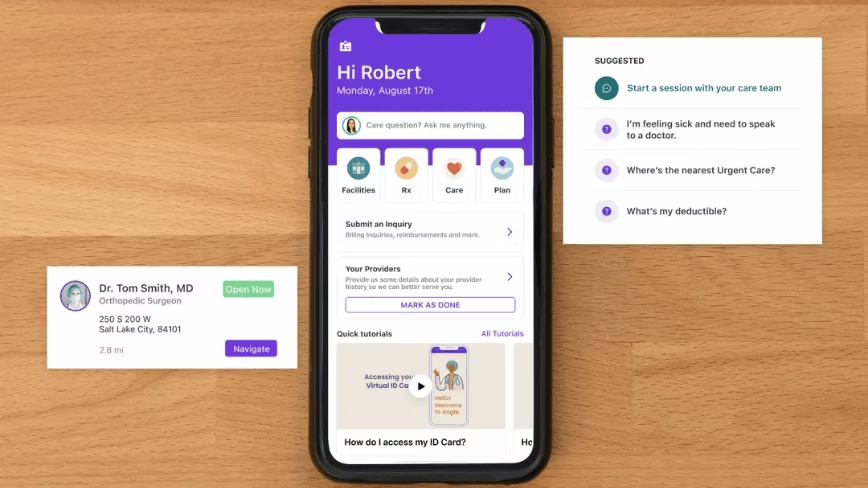
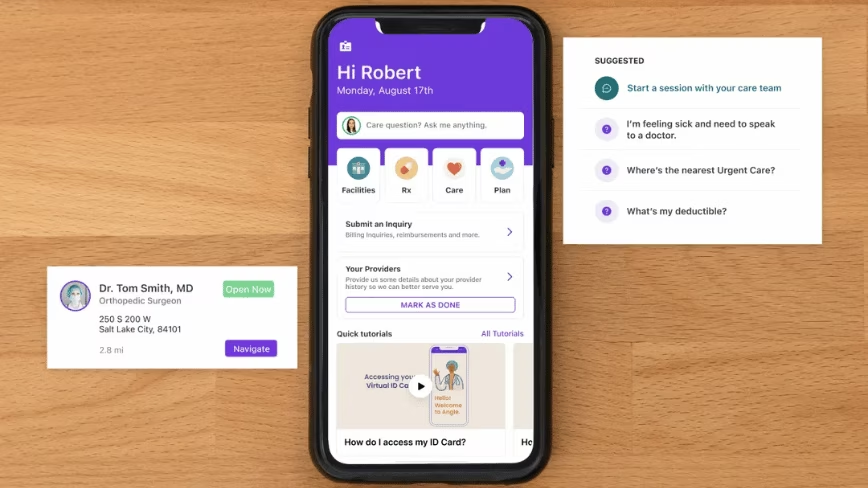
“We did not set out to build another health insurance company,” said Ty Wang, co-founder and chief executive of Angle Health. The aim, he told the Wall Street Journal, was to stop “this kind of death spiral of cost within our healthcare system.”
His company has just raised $600m at a $2.7bn valuation. Vitruvian Partners led it. The growth investor keeps its headquarters in London.
The timing is not accidental. American employers face the largest jump in health insurance costs in twenty years, and small firms carry the worst of it.
Angle Health sells health cover to American small businesses. It says it now serves more than 5,000 employers across 47 states, some with as few as two staff.
Most of the round priced below the headline
The $600m is not one cheque. Angle Health’s own announcement splits it into a $200m Series C and a $400m tender offer.
The tender offer is the larger part, and it is not new money for the company. It buys shares from existing holders, giving early backers a way out.
The company puts a single $2.7bn figure on the whole thing. The Wall Street Journal, which broke the deal an hour before the release went out, reports that the $400m secondary priced at $2.5bn.
That gap is worth noting. The headline valuation applies to the fresh capital, not to the two thirds of the round that changed hands between investors.
Wang also says the company was not looking to raise. It had little debt and was already growing, and the round arrived less than ten months after its Series B. Other founders have made the same claim this year.
Two Palantir engineers who met at school
Wang and chief technology officer Anirban Gangopadhyay founded the company in 2019. It began trading in 2021.
The pair met as high-school students on the Stokes Educational Scholarship programme, a US government scheme that funds college places for students heading into national security work. They later worked together at Palantir.
They say they built it to close one gap. Staff at small firms get less than staff at large technology companies.
“Access to great healthcare shouldn’t depend on the size of the company you work for,” Wang said in the announcement.
What it actually sells
The product is a benefits platform with underwriting attached. Brokers use a tool called Benefit Builder to generate firm quotes in minutes from a staff census, then adjust plans in real time.
The company describes itself as the first AI-native healthcare benefits platform. Its system steers members towards cheaper settings for the same treatment.
Examples it gives include at-home infusions, free-standing imaging centres rather than hospital departments, and international prescription sourcing. Jeremy Gelber, the Vitruvian partner who led the deal, framed the advantage as volume of options.
“Because of AI, they’re able to manage thousands of different designs,” Gelber said.
Two other tools sit alongside it. Quote-to-Card handles implementation, and a Health Scorecard rates plans, which the company calls a first for group underwriting.
Angle Health has also signed care delivery partnerships. Those cover high-cost medications, infusions, outpatient surgery and radiology. The company says the arrangements cut cost without cutting quality.
Several European benefits platforms are chasing the same administrative layer, though none underwrites its own cover.
The numbers the company is claiming
Angle Health reports 120% year-on-year growth and four consecutive quarters of profitability, on both an EBITDA and a net income basis. It oversees close to $1bn in annualised premium equivalents.
Its customer count and revenue both more than doubled in the most recent year, according to the WSJ.
The figure it leans on hardest is renewal pricing. It says median increases for its customers run at 5% to 7%.
It contrasts that with an 18% median for small and midsize businesses, citing a June 2026 study by Morgan Health, a JPMorganChase unit. Consulting firm WTW projects an 11.1% rise in US employer healthcare costs in 2027, the steepest in more than two decades.
Every one of those figures comes from the company. Nobody has independently audited them. A profitability claim from a firm carrying insurance risk reads as a statement of position rather than a settled fact.
The company frames the opportunity around who employs Americans. Small businesses employ close to half the US workforce, and federal data has shown their headcount growing faster than that of larger firms.
The investor is the part that travels
The buyer list is the reason this matters outside the United States. Vitruvian Partners runs more than $23bn in active funds from offices including London, Munich, Madrid, Stockholm and Luxembourg.
Its portfolio is a roll call of European exits: Skyscanner, Just Eat, Wise, Darktrace, Global-e and EasyPark. It also backed Hinge Health, which gives it a route into the same American employer-benefits market.
European growth funds have spent the year raising larger vehicles, and the question has been where that money goes. Here a European firm has written the anchor cheque into a US healthcare business at $2.7bn.
New investor Town Hall Ventures joined the round. Andy Slavitt co-founded that firm. He held health policy roles under Barack Obama and Joe Biden.
Existing backers Blumberg Capital, Portage Ventures, PruVen Capital and Y Combinator all took part. Portage led a $134m round in December, and the WSJ reports the new mark more than doubles that valuation.
The deal closes later this month, the company says. European insurtech has produced its own unicorns this year, though none yet at this scale in health cover.
Continue Reading

In brief: Aside from concerns about human extinction or a massive financial bubble, one of generative AI’s biggest controversies is how tech giants train their models. While OpenAI and Microsoft claim that training AI on copyrighted material falls under fair use, internal comments from the companies could suggest otherwise.
Brent Hecht, Microsoft’s director of applied science, predicted that people worldwide would view large language models as theft on an unprecedented scale, according to court documents released Thursday. The comments appear to counter Microsoft and OpenAI’s public defense against an ongoing lawsuit brought by news outlets.
In the case’s latest filing, Hecht said generative AI could be the largest labor theft in human history while describing how Microsoft, OpenAI, and other AI companies train their models on massive amounts of material from the open internet. The practice lies at the heart of the copyright lawsuit that The New York Times filed in late 2023.
Microsoft and OpenAI argue that training AI models on articles from the NYT and other publications falls under fair use, similar to a student reading books. The defendants also claim that generative AI output based on those articles sufficiently transforms the original material.

However, Thursday’s filing contains internal comments from OpenAI that highlight AI’s ability to reproduce news articles. For example, OpenAI executive Greg Brockman admitted that ChatGPT can predict and complete sentences from NYT articles when working with the outlet’s material. Hecht also argued that winning the lawsuit might require the defendants to “make a complete mockery of the idea of fair use.”
OpenAI has also previously admitted that training AI without accessing copyrighted material is impossible. Former Meta executive Nick Clegg echoed that view last year, claiming AI would die almost immediately if copyright law were enforced against it.
Meanwhile, AI companies have continued training their models on reams of user data, articles, and other material. Meta drew controversy for training its AI on employee behavior, Microsoft’s GitHub Copilot trains on user data unless users opt out, and Twitch only started allowing streamers to opt out after training on their material for years. AI developers are also quietly buying, scanning, and destroying millions of books to gather more training material.
Generative AI’s impact on the news business model is another pillar of the NYT’s lawsuit. Google and other search engines now provide AI-generated summaries of information from articles in response to user queries, potentially discouraging readers from visiting news websites. In this week’s court filing, an OpenAI executive involved in ChatGPT’s development said publishers face an existential threat from AI.
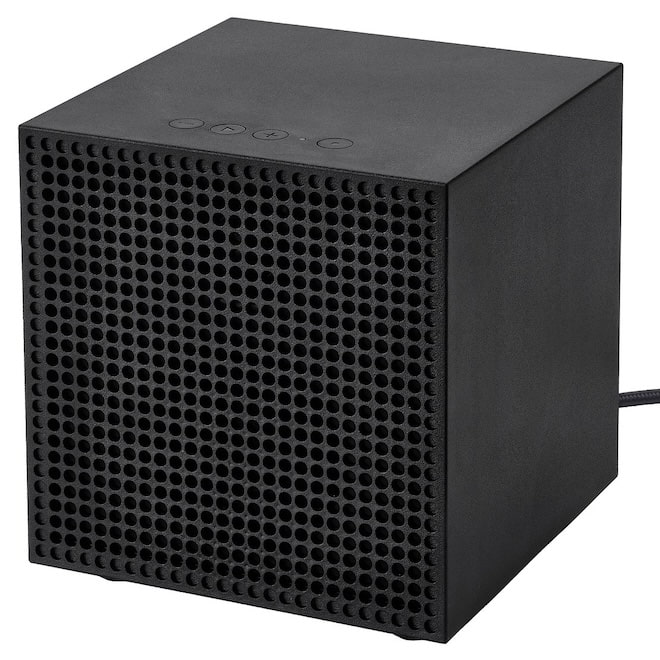
Leave it to IKEA to name its new indoor Bluetooth speaker BADKRUKA, a Swedish word for someone who is reluctant or afraid to get into cold water. That is particularly appropriate because the $59.99 BADKRUKA carries only an IP20 rating and has absolutely no business going swimming.
The name may be amusing, but IKEA has taken a surprisingly practical approach to the speaker itself. BADKRUKA combines Bluetooth with 3.5mm analog and optical digital inputs, along with Spotify Tap, three EQ settings, multi-speaker operation and the ability to pair two BADKRUKA speakers for actual stereo playback. IKEA even includes the optical cable.
That does not suddenly make BADKRUKA a $60 replacement for a serious pair of active loudspeakers. We have not heard it yet. But IKEA has given budget buyers considerably more flexibility than we normally see at this price.
IKEA has been rebuilding its audio lineup since ending its long-running partnership with Sonos. We previously looked at the company’s BLOMPRAKT and NATTBAD Bluetooth speakers and the end of the IKEA and Sonos SYMFONISK collaboration.
More Than Another Bluetooth Box
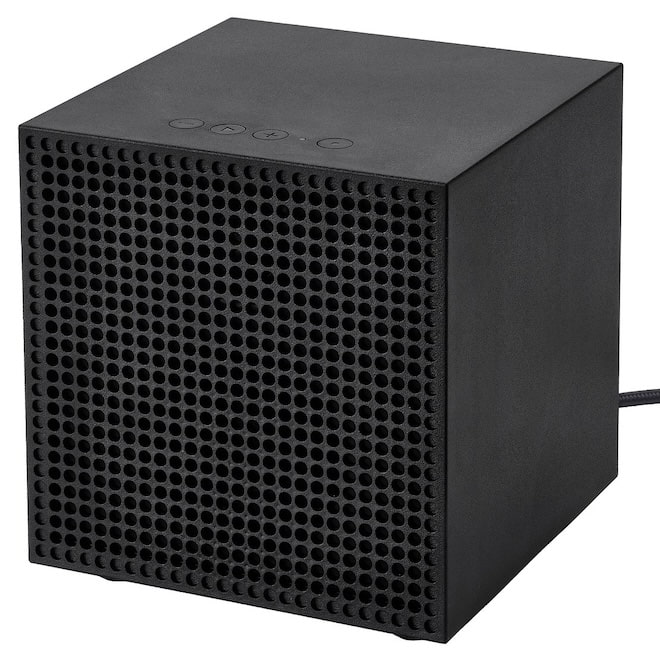
BADKRUKA uses a woofer and tweeter configuration powered by 25 watts of total amplification, with IKEA specifying a frequency range of 50Hz to 20kHz at -6 dB. The enclosure measures 6.25 inches wide and deep and 6.875 inches tall, making it small enough for a desk, bedroom or shelf beside a television.
The optical input is what changes the equation.
Most modern televisions still provide an optical digital output, which means BADKRUKA can function as a very inexpensive alternative to the television’s built-in speakers. Buy two and IKEA says they can operate as a stereo pair with distinct left and right channels.
There is no HDMI ARC here, so television volume control will not be as seamless as it would be with a soundbar or more sophisticated active loudspeaker system. IKEA also does not list Wi-Fi streaming, AirPlay, Google Cast or other network playback features.
At $59.99, that feels less like an omission than a reminder of what this thing costs.

Spotify Tap and Multi-Speaker Playback
BADKRUKA supports Spotify Tap, allowing playback to resume from a paired device with a button press. Pressing the Spotify button again can generate another selection based on the listener’s history.
IKEA has also included its multi-speaker mode, which allows BADKRUKA to play alongside other compatible IKEA Bluetooth speakers. That mode distributes the same mono signal to multiple speakers, while stereo pairing is reserved for two BADKRUKA units.
Three built-in EQ settings provide some control over the presentation, although IKEA does not provide detailed response curves for the presets.
BADKRUKA vs. NATTBAD
The more interesting comparison comes from inside IKEA’s own catalog.

The existing NATTBAD costs $49.99 and provides 10 watts of amplification through a single 2.8-inch full-range driver, with a specified frequency range of 75Hz to 18.5kHz. It supports Bluetooth, Spotify Tap and multi-speaker playback but does not offer stereo pairing, optical or 3.5mm analog input.
For another $10, BADKRUKA increases rated output to 25 watts, uses separate woofer and tweeter drivers, extends the claimed low-frequency response to 50Hz and adds both wired inputs and stereo operation.
We have not compared the two sonically, so specifications should not be confused with a listening test. But unless the smaller NATTBAD design is the primary attraction, BADKRUKA looks like the much stronger value on paper.
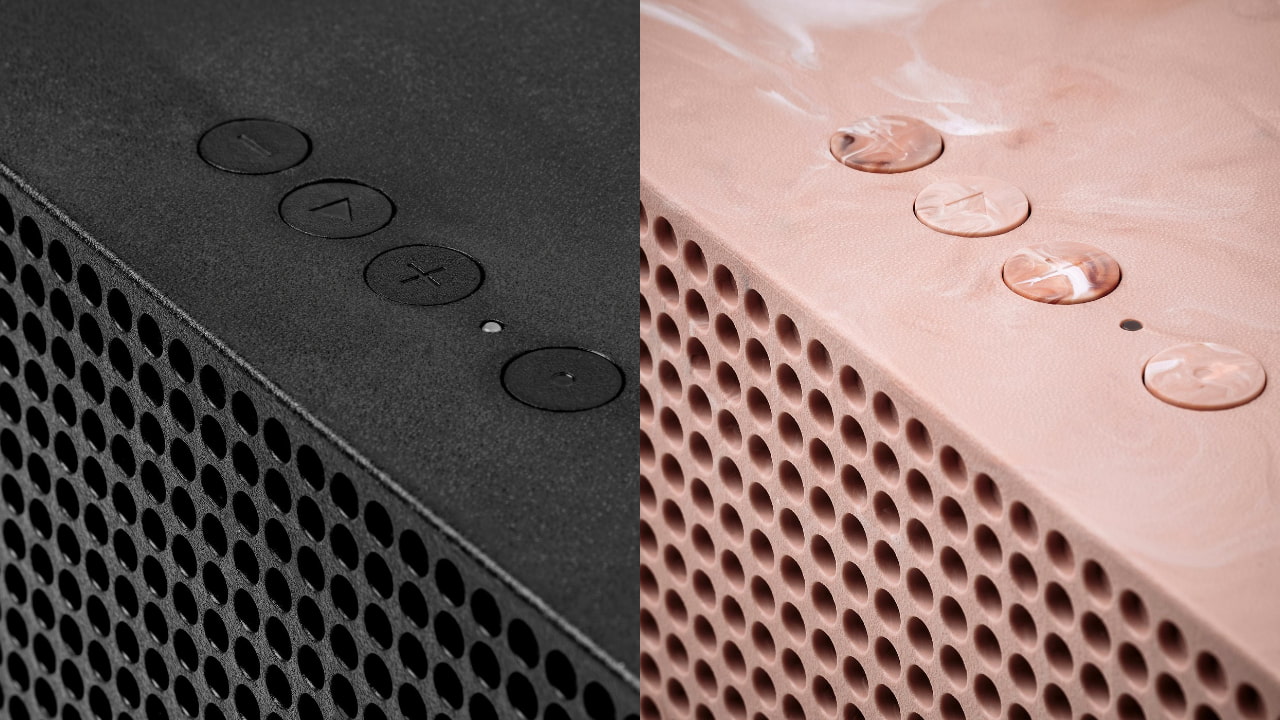
IKEA BADKRUKA Specifications
- Speaker Configuration: Woofer and tweeter
- Total Power Output: 25 watts
- Frequency Range: 50Hz to 20kHz (-6 dB)
- Wireless Input: Bluetooth
- Digital Input: Optical TOSLINK
- Analog Input: 3.5mm
- Spotify Tap: Yes
- Stereo Pairing: Yes
- Multi-Speaker Mode: Yes
- EQ: 3 settings
- IP Rating: IP20
- Dimensions: 6.25 x 6.25 x 6.875 inches
- Included Accessory: Optical cable
- Designer: Ola Wihlborg
The Bottom Line
We are not expecting the IKEA BADKRUKA to send KEF, Sonos or Audioengine executives scrambling into emergency meetings. That would be asking rather a lot from something sold by the same company that expects you to assemble your own dresser with an Allen key.
What makes BADKRUKA interesting is that IKEA has resisted turning it into another Bluetooth-only lifestyle product. Optical and analog inputs make it useful with televisions, computers and other sources, while stereo pairing gives buyers an inexpensive upgrade path if one speaker is not enough.
At $59.99 each, a pair costs $119.98.
That might be the more interesting story.
Price & Availability
The IKEA BADKRUKA Bluetooth Speaker is $59.99 each at IKEA in the United States in black and pink finishes. Availability may vary by store and delivery location.
Related Reading:

Uh oh, we got a cute alert! It’s Bezzy, your adorable, cuddly, anthropomorphized server-rack and stuffed-animal friend! Give this soft lil’ doll a squeeze, and it shall sing you its telltale song: the piercing, grinding ambient squeals emitted from a real US data center.
The Bezzy doll is a stuffed plushie made in a satirical collaboration between the New York–based creative studio Basura and Big Data, the musical project of producer Alan Wilkis, best known for the song “Dangerous,” a 2013 collaboration with the band Joywave. The joint project, which is coming out the same day as a new Big Data single, is called Adopt a Data Center. The goal is to present people with a “cuddly introduction to life with a real data center.”
Data Centers are very un-vogue right now. Built out by all the big AI companies to power their increasingly power-hungry AI tools, data centers have spread across thousands of acres of land in the US. They have been heavily criticized for their energy consumption and expansion of gas power. They have also proven to be audibly annoying, stirring up complaints about noise pollution from those nearby.
The Adopt a Data Center stunt aims to make people think differently about how services produced by data centers fit into their lives. That manifests as a plush stuffie that looks like a server rack in a data center, albeit with long arms and legs and googly eyes. It’s cute in the way Don’t Hug Me I’m Scared is cute. Squeeze Bezzy’s torso and the sound bursts out. It’s a screeching few seconds of a recording taken by a neighbor of a data center in Virginia. The tag on the Bezzy plushie reads, “Hug me for ear-piercing forever hum.”
“We picked this recording as it was the clearest and most suitably irritating,” wrote Rajeev Basu, the founder of Basura, in an email to WIRED. In an interview with the person who recorded the audio, Basu says they described the sound as “like a car alarm going off nonstop. It’s high-pitched, and it’s all you can focus on.”
Basura has worked on other projects like making luxury wear for dogs and a partnership with Yerba Madre that made dirt shoes designed to break apart during a walk to spread wildflower seeds.
Along with Bezzy, the data centers project includes a collection of stickers that say things like “Every data center deserves a forever home” and “Open your heart. And your power grid.” Basu says the project is the result of dozens of interviews with people who live near data centers in the US. The website itself reads, “Adopt a data center: All they ask for is everything.”
Public furor is hard to maintain. It takes a concerted effort from people who have a lot to lose. Not only do they not have anything to gain (financially or otherwise) from engaging in protests, but they face the real possibility of arrests, job losses, beatings, or actual death.
On the other hand, the Trump administration has nothing to lose. It’s not only playing with house money, but it’s infested with racist psychopaths willing to sacrifice an entire nation and its constitutional ideals if that means it might be able to forcibly eject anyone who looks a bit Mexican.
The “worst of the worst” claim made to justify ICE’s violent, unconstitutional tactics was always a dodge. Even before Trump took office for the first time, the data showed migrants committed criminal acts at rates much lower than US citizens. Racists then tried to claim that throwing Black people out of the data would show migrants crossing the border from the south would prove them right. It didn’t, even when those studying the data decided to meet racists halfway and factor in race, rather than citizenship.
In recent weeks, the administration has managed to get somewhat close to the arrest quotas set by resident ghoul Stephen Miller and new ICE boss Markwayne Mullin. What hasn’t changed are the facts: the people being arrested, detained indefinitely, denied access to their civil rights, and summarily ejected to whatever hellhole wants cash in exchange for new government violence victims simply are not criminals, especially not of the violent variety.
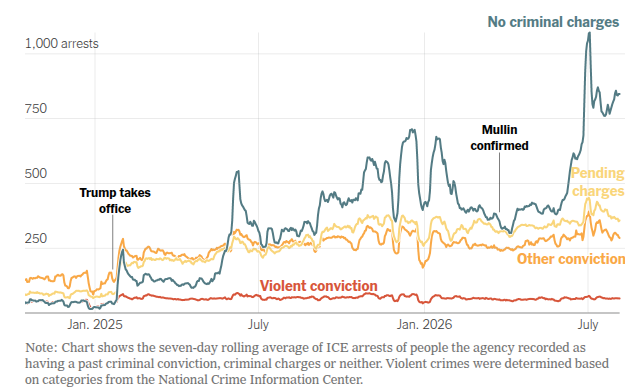
This report from the New York Times breaks down the numbers. We’ll start with this chart, which shows the violent crime rates have remained consistent throughout Trump’s second White House residency. The only thing that has changed is how many people are being swept up by ICE’s roving kidnapping squads.

That nearly-flat line at the bottom is the violent crime rate. Everything else is the escalation of the Trump administration, which continues to pretend it’s the best at hunting down migrant criminals.
The Trump administration is deliberately wrong about the migrant crime rate. The DHS social media feeds are filled with narratives about arresting individuals who have committed serious crimes, but it’s the most extreme form of cherry-picking. For every social media blast about some person ICE has picked up and deported, thousands of arrests of people who are, in most cases, either trying their best to follow the legal path to residency or have lived here for years, if not decades, and done nothing more than work their asses off in hopes of securing the American Dream.
What’s worse is that ICE is back to generating negative press on a daily basis due to its proclivity for engaging in excessive force. But this indirect pressure isn’t working. Neither are the multiple efforts being made around the nation to disrupt opportunistic arrests by ICE officers. The administration has the upper hand.
Overall, immigration arrests rose to record highs with 43,000 ICE arrests in June and 49,000 in July. Two fatal shootings involving Immigration and Customs Enforcement agents, in Texas and Maine, drew outrage but did not meaningfully slow the pace of arrests.
Unofficially (lest it be accused of setting quotas), Trump wants 2,000 arrests per day. The inhumane ghoul currently d/b/a White House advisor, Stephen Miller, has been calling for 3,000 arrests since day one of Trump’s second administration.
The numbers are getting up there, and even a number of murders committed by immigration officers hasn’t managed to slow this down. Neither has the lack of evidence of criminal activity by the people arrested, detained, denied rights, and deported by the Trump administration.
What’s been happening since Trump took office for a second time is a decimation of the US workforce and the ejection of people who pay more taxes and use fewer social services than US citizens. And that’s before you factor in the violent crime rate, which is far lower than the numbers generated by people Trump pretends he’s trying to protect by authorizing opportunistic raids of any place day laborers might be found.
This administration pretends it’s the last hope for law and order, even though it routinely violates laws and disrupts public order. The GOP party made political hay for years by pretending Democrats would bankrupt America financially, if not morally. But while ICE officers kill people and get away with it, Trump’s party has managed to run up a $40 trillion tab, taking us past the watershed mark of the national GDP.
Meanwhile — as the NYT report points out — the administration is leveraging its relationships with red state politicians to juice its arrest stats. The largest increases in arrests in July occurred in Florida, Wyoming, Texas, and Arizona. Blue states saw a drop but only because ICE finds it much easier to engage in bigoted enforcement in states that are run by MAGA-loving bigots.
There’s nothing in this effort that even slightly suggests Trump’s mass deportation efforts have anything to do with making this country safer. It’s always been about making this country whiter and more supportive of whatever Nazi-esque efforts Trump 2.0 decides to pursue next.
Tech
Gears of War: E-Day’s final PC specs target 4K at 60 FPS with an RTX 5070 Ti, but upscaling is required at all levels
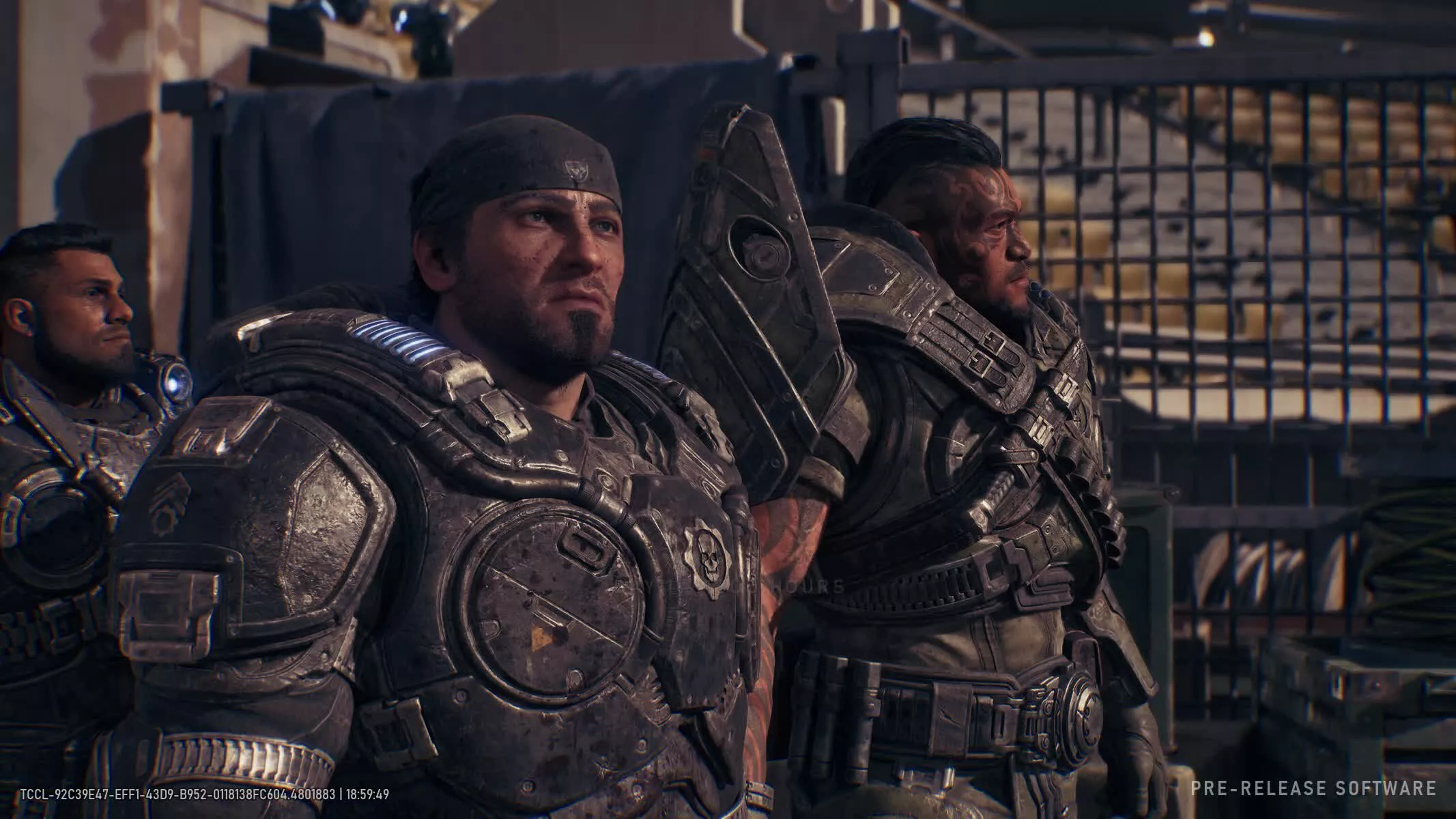
Highly anticipated: We’re only a few weeks away from the release of Gears of War: E-Day, and that means the final PC system requirements have been revealed. This is yet another game where all the listed configurations use upscaling, so hitting 4K/60+ FPS with an RTX 5070 Ti isn’t achieved natively.
Gears of War: E-Day’s system specs first appeared on its Steam page back in June, but the listings were for Minimum and Recommended specs, with no mention of resolutions, presets, upscaling, etc.
Now, developer The Coalition has revealed the final set of requirements ahead of the game’s October 6 release.
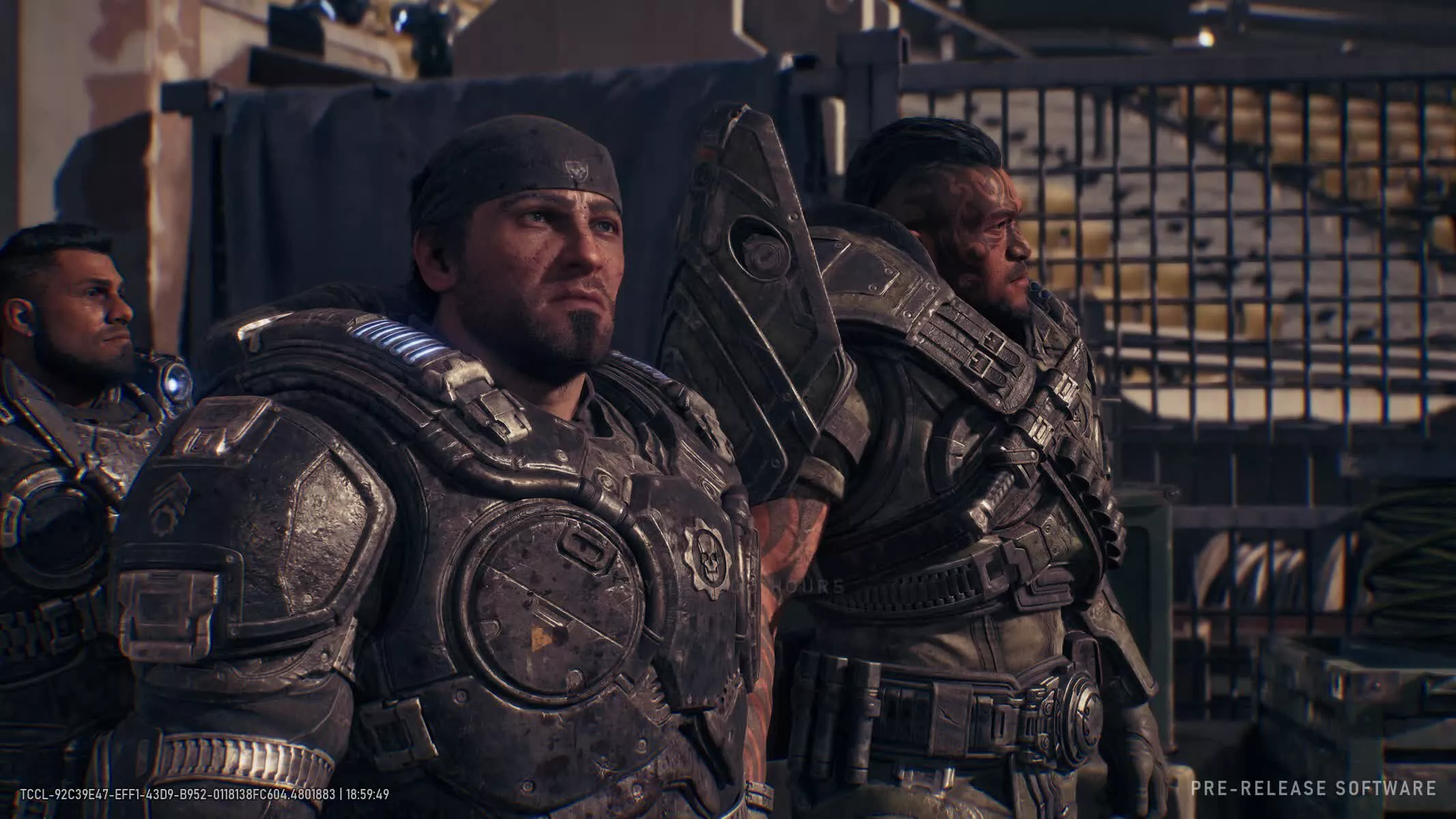
The minimum specs remain the same, requiring just an RTX 5050/RTX 2060 or Radeon RX 6600/RX 9060 combined with an Intel i7-6850K/i5-10400/Ryzen 5 2600X. We now know that this uses a Medium graphics preset and aims for 60 FPS at 1080p.
However, we also know that all the listings are using upscaling, though there’s no mention of whether they are set to Quality, Balanced, Performance, or Ultra Performance. The recommended configuration uses a High graphics preset and aims for 1440p at 60 FPS and higher.
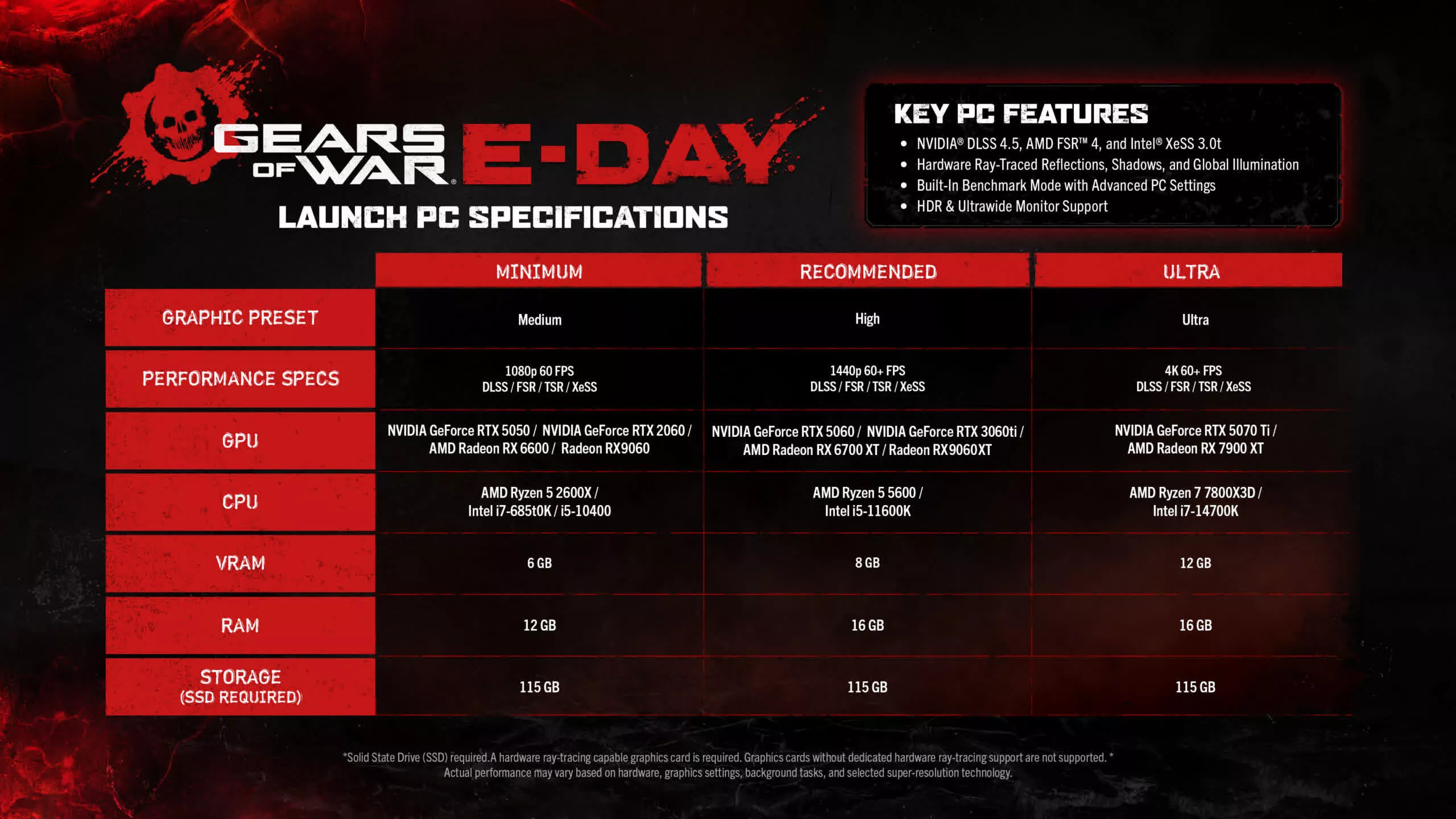
Interestingly, The Coalition has removed the Arc A580 (minimum) and Arc B580 (recommended) from the hardware list. It does list Intel XeSS 3.0, so those with Intel GPUs shouldn’t worry.
The new addition is the Ultra spec category: 4K/60+ FPS at Ultra graphics. It asks for at least an RTX 5070 Ti or Radeon RX 7900 XT combined with an Intel i7-14700K or Ryzen 7 7800X3D.
Another change is the storage requirement. It previously asked for 130GB of free SSD space, but that’s been reduced by 15GB to 115GB. It’s still a lot, but any reduction is welcome.
There’s also a disclaimer at the bottom that warns graphics cards without dedicated hardware ray tracing support are not supported by the next Gears of War entry.

It seems that most games’ system requirements these days include the use of upscaling. It used to be that studios would be less forthcoming about this fact, but this is changing. Control Resonant, for example, even shows the actual upscaler preset for each requirement level. The PC requirements for Blood of the Dawnwalker also specified the use of upscaling, but the recently revealed hardware requirements for Fable don’t clarify whether the performance targets are achieved natively.
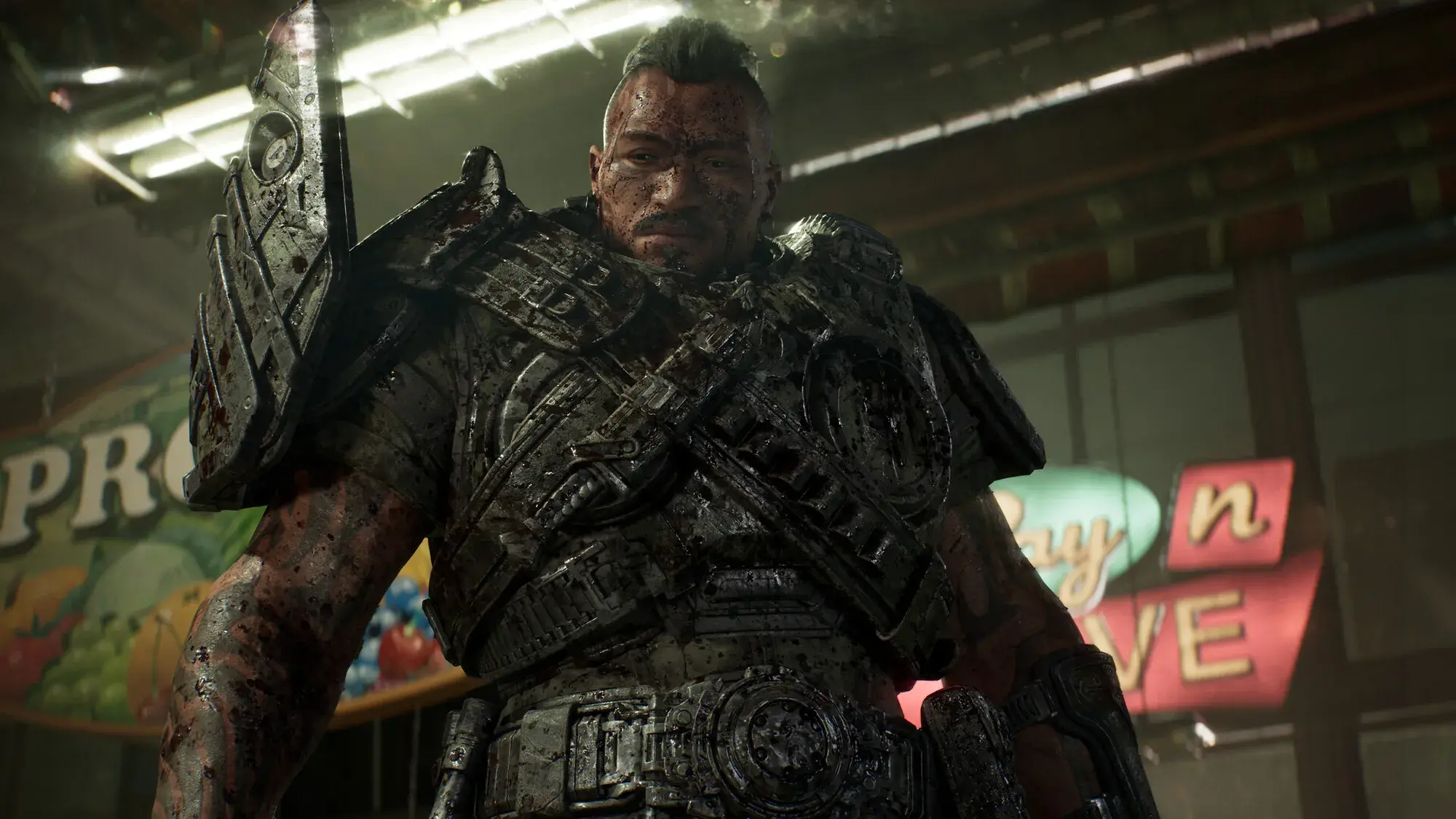
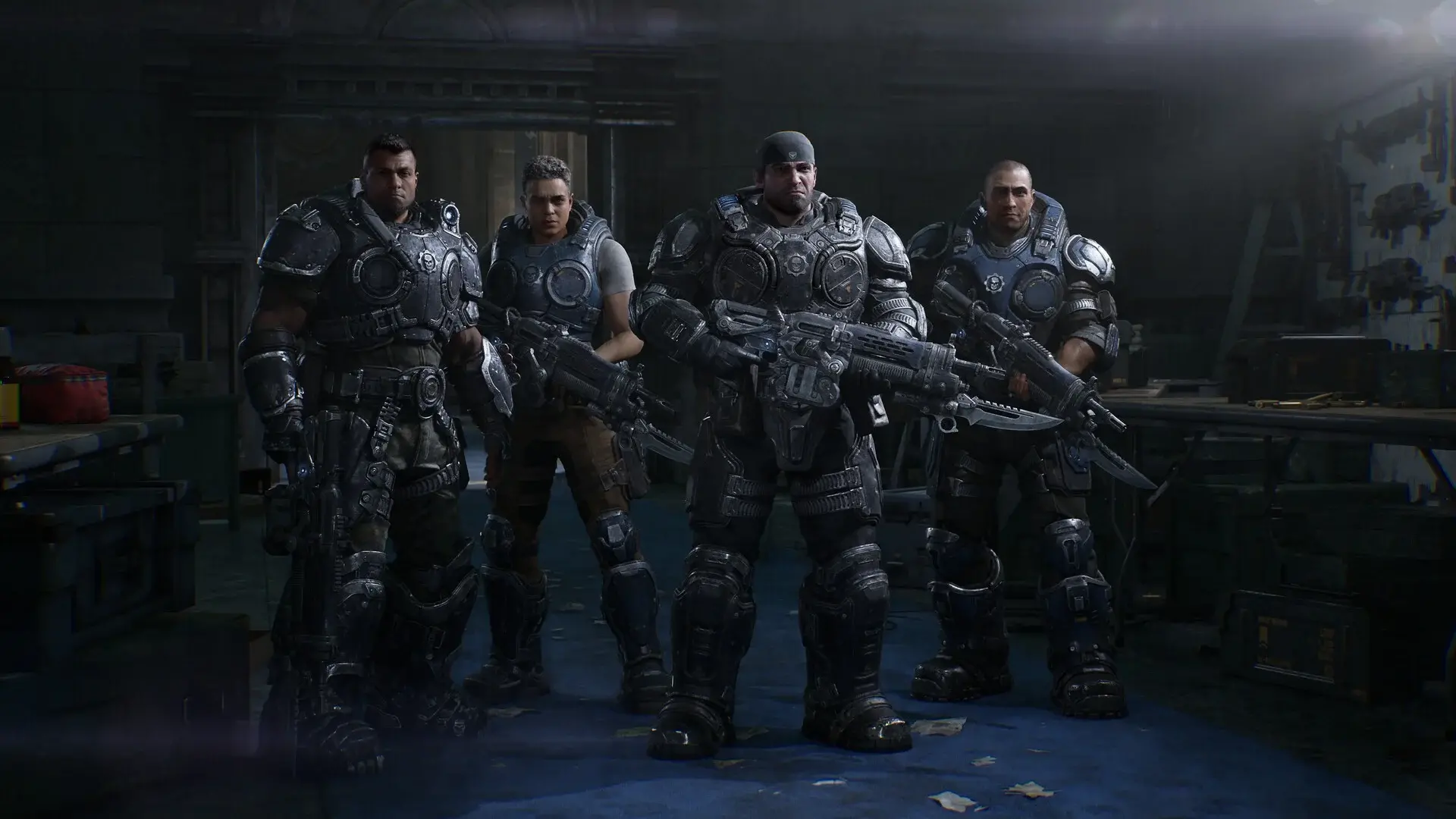
Pre-installation for Gears of War: E-Day begins on September 29. Premium Edition owners can start playing on October 1, five days before the full launch.


Like the Galaxy S25 FE, the S26 FE feels more like the Galaxy S26+ than the S26, with a larger 6.7-inch display and a trio of cameras on the back. It’s hard to spot the differences from its predecessor since there are only a few minor design changes, including a new glossy back finish. It’s a choice: The S25 FE had a matte finish, as does the flagship S26 family. I guess it’s been done to differentiate, but I’m not sure why. The newest Galaxy phone is also marginally taller, wider and heavier (3 grams) than the S25 FE, though the 7.4mm thickness remains identical. It also has a slightly more pronounced chin at the bottom of the device.
Otherwise, it looks and feels like a flagship Galaxy phone that costs several hundred dollars more. Plus, I love the pistachio colored device I received for review. I’m always happy to see more diverse color options appear alongside the monochrome status quo.
The S26 FE also has a new connected camera island, replacing the camera lenses that slightly jutted out of the back of the S25 FE. It’s a minor design tweak, but it does help unify the device with both the Galaxy S and Z families.
The 6.7-inch OLED display looks crisp and vivid, though anyone coming from flagship devices will notice the lower max brightness on sunny summer days. It peaks at 1,900 nits, while the Galaxy S26 series cranks out up to 2,600 nits. The display does, however, reach up to 120Hz, so it’s at least a smooth experience, and compared to the base S26, I appreciate having more screen on a device that’s currently $200 less.
Diving into the rest of the technical specs reveals the tough economic choices made to keep the price low. That said, it’s still $50 more than the S25 FE, with the same 8GB of RAM and only 128GB of storage on the base iteration. This fills up quickly, especially with asset-dense games like Wuthering Waves. (There is a 256GB version, if needed.)
This year’s Fan Edition now has an Exynos 2500 chip, which makes it at least a little more capable for gaming. It’s certainly not a flagship experience, however. The S26 FE struggled with the demands of Wuthering Waves, with frame rates often choking in prettier, more detailed environments or hectic fights. Some may argue this is one sign that this isn’t a fully fledged Galaxy S phone, but it uses the same chip as last year’s Z Flip 7. Unless you’re pushing the phone to its limits, it’s otherwise fast and responsive most of the time.
One thing I did note was that the camera app was occasionally so sluggish it felt like a much cheaper A-series phone. This was intermittent, but also frustrating. Trying to snap an in-the-moment shot demands a zippy camera app. It’s been years since phone companies have bragged about how responsive their camera launchers and shutter are, because they are all pretty swift now, making the S26 FE’s struggles all the more jarring.
At least the battery’s big, matching the 4,900mAh cell in the similarly sized S26+ (and last year’s FE phone, again). In our video rundown test, we eked out just over 21 hours of playback in day-to-day use. Despite the larger battery than what’s in the S26, that’s a big drop in longevity. This means the S26 FE demanded daily charging. Those speeds top out at 45-watt wired charging with support for 15W wireless charging, too. No magnetic rings for mounting, but hey, at least there’s wireless charging.
This story was originally published by ProPublica and the Texas Tribune. Republished under a CC BY-NC-ND 3.0 license.
Texas Attorney General Ken Paxton appears to have violated federal ethics law in significant ways when filing recent disclosures of his assets and liabilities, creating confusion about his net worth and holdings, a review by ProPublica and The Texas Tribune found.
Among them: Paxton, the Republican nominee for U.S. Senate, reported owning seven homes but said he earned no income from any. Yet all but one was listed for rent during the reporting periods, and some current residents and neighbors at those addresses confirmed that the properties were rented, the news organizations found. Receiving income and not reporting it is a violation of federal disclosure law, three ethics experts said.
Additionally, Paxton did not disclose mortgages for three condos at a Utah golf resort that federal law requires him to list as liabilities if they are not personal residences.
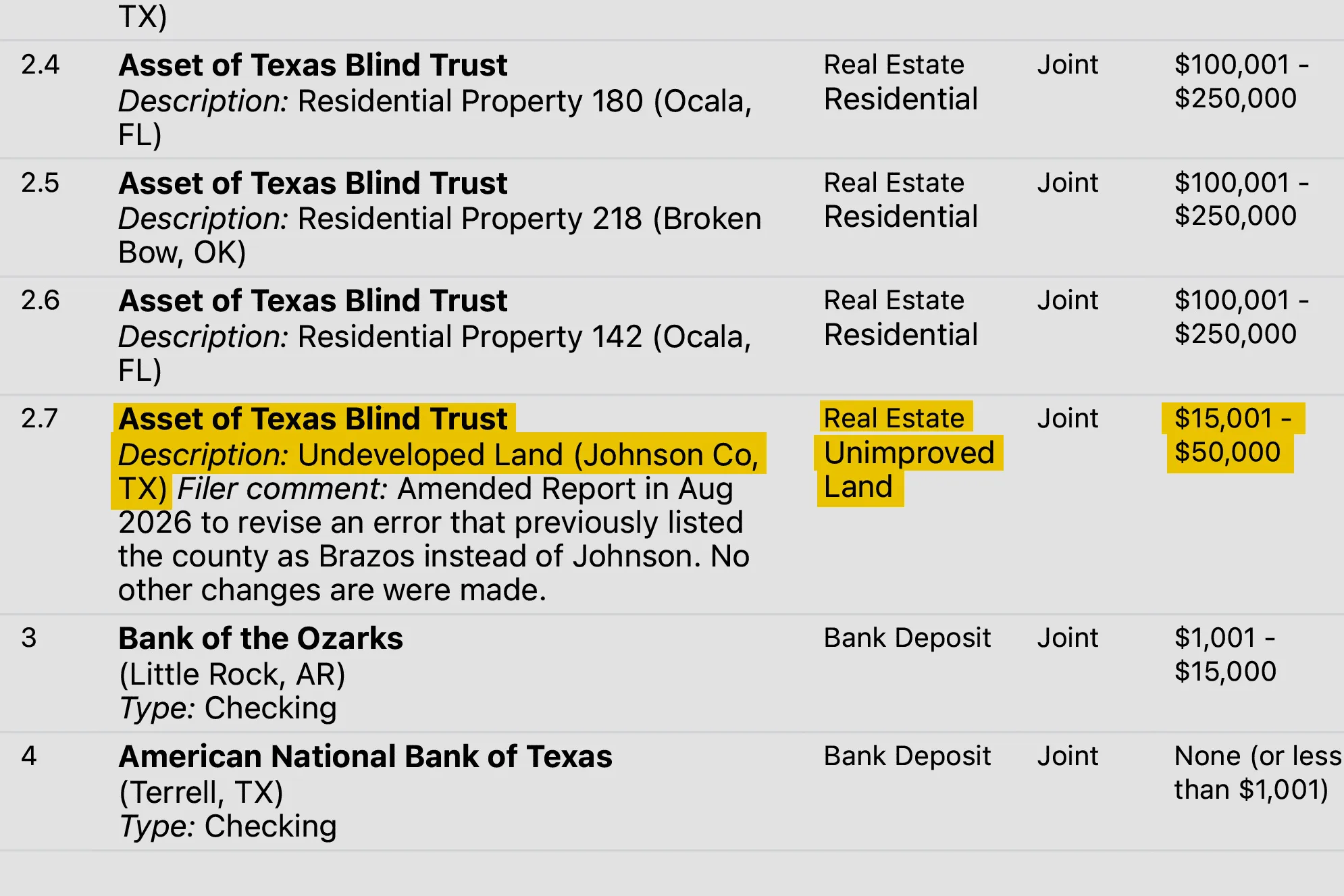
He also valued his stake in a vacant plot of Texas land at up to $50,000 on last year’s filing, but his business partner told the newsrooms Paxton’s share for years has been worth about $1 million. Federal financial disclosure law requires property to be listed at fair market value.
The apparent errors and omissions the newsrooms found obscure the extent of Paxton’s income streams, assets and debt, making it difficult for voters to make sense of his finances as they mull whether to support him in November’s election, the ethics experts said.
“It reflects either pure sloppiness on Paxton’s part or a deliberate effort to conceal some of his investments and property holdings,” said Craig Holman, a government affairs lobbyist for the nonpartisan good-government group Public Citizen.


In Paxton’s filings reviewed by ProPublica and The Texas Tribune, he valued an undeveloped plot of land as worth up to $50,000 in 2025, first image, but then listed it the following year at between $1 million and $5 million, second image. Obtained and highlighted by ProPublica and the Texas Tribune
If Paxton wins, an incomplete picture of his finances could prevent watchdogs from evaluating his conflicts of interest as a senator, Holman and others said.
The apparent omissions are part of a pattern for Paxton. Over three terms as attorney general, he has withheld financial information that could explain how he became a multimillionaire and had the resources to purchase more than a dozen properties in five states. He began including many of these on his state disclosures only after the Texas Ethics Commission closed a loophole in 2024 that Paxton had cited to leave them off. Most were acquired while Paxton earned a government salary of $153,750.
In the new federal disclosure, filed in August after Paxton received a three-month extension, he reported a net worth between $1 million and $27 million. That is a significantly higher range than the negative $1.9 million to $11.1 million net worth he reported a year ago, before he had secured the Republican nomination but after he had declared his candidacy for federal office.
The spike was driven not by Paxton’s acquisition of more assets but because the reported value on several of his properties soared.
Paxton’s report omitted listing as assets seven properties worth about $5.2 million collectively, including the Utah condos for which he did not disclose mortgages. He co-owns all of his known real estate holdings with his estranged wife, state Sen. Angela Paxton, property records show. The eight he reported are held by their blind trust, which is managed by a family friend.
Federal rules do not require candidates to report as assets personal homes or properties from which they don’t earn money, even if the properties are worth millions.
At a time when voters feel anxious about their own personal finances and dislike the idea of politicians getting rich in office, it would be wise for Paxton to be more transparent about his wealth, said Texas ethics and campaign finance lawyer Andrew Cates.
“If it were me trying to get people’s vote, I would err on the side of transparency rather than not,” Cates said.
Paxton declined to be interviewed and did not answer detailed questions about how he filled out the disclosure forms. Madison Cercy, a spokesperson for his campaign, said Paxton “has had a long and successful career outside of public service, including running his own small business as a lawyer. Stirring up partisan allegations is nothing more than a bad attempt to manufacture controversy where none exists.”
Before being elected to the state Legislature in 2002, Paxton worked at a law firm in the Dallas area and was a corporate attorney for JCPenney. His state financial disclosure for 2001 listed assets totaling no more than $170,000, a ProPublica and Tribune analysis found.
By 2015, his household net worth had grown to $5.4 million, according to financial records lawmakers subpoenaed in 2023 after impeaching Paxton on charges that he took bribes in exchange for helping an Austin real estate investor.
The records, few of which were admitted into evidence during the 10-day Senate trial that resulted in his acquittal, document how Paxton built a diverse portfolio that included investments in a cellphone tower, an HVAC company, a cement supplier and a police body camera manufacturer. He netted $2.2 million when Motorola acquired the body camera firm in 2019, according to his income tax return from that year.
Shortly after, he went on a real estate buying spree, snapping up six properties in Oklahoma, Florida, Utah and Hawaii. His impeachment defense team said Paxton made a prudent shift toward real estate at a time of rock-bottom interest rates.
Questions about Paxton’s integrity have dogged him in the race for U.S. Senate. His opponent, Democratic state Rep. James Talarico, entered September with a narrow polling lead — uncharted territory in a state where Republicans have not lost a statewide race in 32 years.
A University of Texas/Texas Politics Project poll released last week found that just a third of respondents viewed Paxton as “honest and trustworthy.” The same day the statewide poll was published, a super PAC supporting Talarico hit the airwaves with an ad that labeled the attorney general as “the most corrupt politician in Texas.” The commercial included a reference to Paxton’s recently disclosed net worth.
Talarico’s net worth, according to his most recent personal financial disclosure, was between $67,000 and $305,000. The range changed little from the previous year. Like Paxton, Talarico did not include his single personal residence among his reported assets.
James Henson, director of the Texas Politics Project, said the questions surrounding Paxton’s latest financial disclosures reinforce a longstanding narrative that the attorney general is secretive about his finances and may have leveraged his public position for personal gain.
“It’s his choice how much he explains or doesn’t explain,” Henson said. “But I think that comes with a potential cost, and we’re seeing that in public opinion.”
Paxton’s pivot to real estate appears to be a way to supplement his salary as attorney general. The newsrooms found recent rental listings for six of the properties he disclosed but for which he said he derived no income: two homes in Ocala, Florida; a home and a condo in Austin; a home in College Station, Texas; and a vacation lodge in Broken Bow, Oklahoma.
A tenant confirmed to the newsrooms she’s living at one of Florida houses. At the Austin condo complex, a next-door neighbor said Paxton’s unit has a renter. And the five-bedroom, three-story Oklahoma lodge he owns is listed online as a short-term rental for up to $1,200 a night, with fall bookings filling up fast.
On his disclosure forms, which require real estate income to be reported, Paxton for each property selected the option “None (or less than $201).”
Federal law requires candidates who aren’t currently in Congress to report all loans exceeding $10,000, except those for personal residences. Paxton did not report three mortgages totaling $1.3 million for condos at the Black Desert Resort in southwest Utah, renowned for its world-class golf course. He purchased the properties in February; the reporting period for the most recent disclosure ran through mid-May.
Reporters found the mortgage documents in local land records. Each contains an addendum to the mortgage that is used for rental properties, said New Jersey real estate lawyer Daniel M. Shlufman. That addendum removes a requirement that the unit be owner-occupied and allows the lender to collect rent directly from tenants if Paxton were to default on the loan.
Paxton purchased another condo at the resort in 2025, which he disclosed on his most recent report as an asset and a liability. The land records show he obtained a $640,000 mortgage for it. The resort advertises a program in which it leases units purchased by investors, but it declined to say if Paxton’s properties were enrolled in it.
“It’s kind of mind-boggling to think about having four homes at one resort property and imagining those are for personal use,” said Cynthia Brown, a senior lawyer at the government watchdog Citizens for Responsibility and Ethics in Washington.
The most significant changes between Paxton’s 2025 and 2026 reports were the valuations of the Oklahoma lodge and a plot of land outside of Fort Worth, whose value he said had increased by millions of dollars.
He appears to have switched from reporting the properties’ assessed values, which are set by the local county, to the loftier estimates of what they would fetch on the open market.
Paxton’s initial use of the lowball values appears to defy federal rules aimed at bringing candidates’ disclosed property values in line with what they’re actually worth. While the Senate Ethics Committee instructs filers that they can use a recent tax assessment to set the worth of certain property, they must adjust it to market value if it is assessed below that. In these cases, valuations must be disclosed as a specific dollar figure rather than a range.
On both his annual reports as a Senate candidate, Paxton listed ranges for the value of each property he disclosed.
Last year, Paxton reported the Oklahoma lodge, just north of the Texas border, as worth between $100,001 and $250,000. The local county assesses the property at $176,000. Its estimated market value, meanwhile, is more than $1.5 million, according to real estate websites. This year, Paxton’s disclosure valued the property at between $1 million and $5 million.
Likewise, Paxton valued a 42-acre plot of undeveloped land in Johnson County, south of Fort Worth, at between $15,001 and $50,000 last year. The county assesses the property as farmland worth $20,008, but estimates its market value is $2.9 million. This year, Paxton’s disclosure said the property was worth between $1 million and $5 million.
Paxton bought the property in 2006 with a group of investors including Rob Orr, with whom he served in the Texas House of Representatives. Orr, who manages the investment, said in an interview that Paxton’s 20% stake is worth about $1 million.
“It would have been around a million for quite a while, probably the last four or five years,” Orr said. “It has increased in value because of zoning and because of time.”
The group bought the plot to hold onto, Orr said, until creeping growth from the Dallas-Fort Worth area made it attractive for redevelopment. He said the group is negotiating a sale to a developer. Last year, Orr persuaded the City Council in Burleson to rezone the land, which had been restricted to agriculture, to permit retail and housing.
Paxton’s move to significantly revalue his assets without explaining why is “very strange,” said Margaret Dylus-Yukins, senior counsel for ethics at the nonpartisan Campaign Legal Center, which advocates for strong disclosure rules. Dylus-Yukins, who worked for six years analyzing executive branch officials’ financial disclosures for the U.S. Office of Government Ethics, said the agency would ask filers to explain major changes in writing.
“When you have public officials that appear to be fudging the numbers on their disclosure forms, and the Senate Ethics Committee is letting that slide, then you’re not only eroding trust in the committee but the candidate himself,” Dylus-Yukins said, referring to the significant differences between the filings.
The ethics committee did not respond to requests for comment. Candidates or senators who willingly falsify financial disclosures can be fined up to $50,000 or prosecuted for making a false statement to the government, a felony. The committee rarely investigates senators and has not formally sanctioned a member in 19 years.
Candidates do not have to file any more federal financial disclosures before the November election.


Microsoft has resolved a known issue that causes incorrect alerts warning that Defender Antivirus was turned off after installing recent updates.
In a Windows release health dashboard update on Thursday, Microsoft said the issue was fixed in the Microsoft Defender Antivirus update (version 4.18.26080.4) released on September 17.
The company acknowledged the bug in late August, even though the issue had affected users in the Release Preview Channel of the Windows Insider program since at least June.
As Microsoft explained, this affects all supported Windows client and server versions, including the latest Windows 11 26H1 and Windows Server 2025 releases, and it triggers erroneous alerts in the Windows Security app that prompt users to “Tap or click to turn on Microsoft Defender Antivirus.”
“After installing the latest updates for Microsoft Defender Antivirus, notifications might appear stating that “Microsoft Defender Antivirus is turned off,” even though the antivirus is functioning correctly and all settings show it as active,” it said at the time.
“These notifications can appear when Windows starts and intermittently afterward. They persist even if notification settings are turned off.”
This isn’t the first time Microsoft asked customers to ignore incorrect errors and alerts displayed on their systems after installing updates.
In April 2025, the company addressed an issue that was triggering incorrect BitLocker drive encryption errors on Windows 10 and Windows 11 devices and fixed a bug that caused invalid 0x80070643 failure errors after installing the Windows Recovery Environment (WinRE) updates.
It also asked users in July 2025 to ignore erroneous Windows Firewall alerts that appeared after rebooting after installing the June 2025 preview update.
One month later, it warned that the July 2025 preview update and subsequent Windows 11 24H2 updates were causing incorrect CertificateServicesClient (CertEnroll) errors.
This week, Microsoft also released emergency Windows updates to fix Remote Desktop Services, Hyper-V, and USB audio issues caused by the September 2026 security updates.

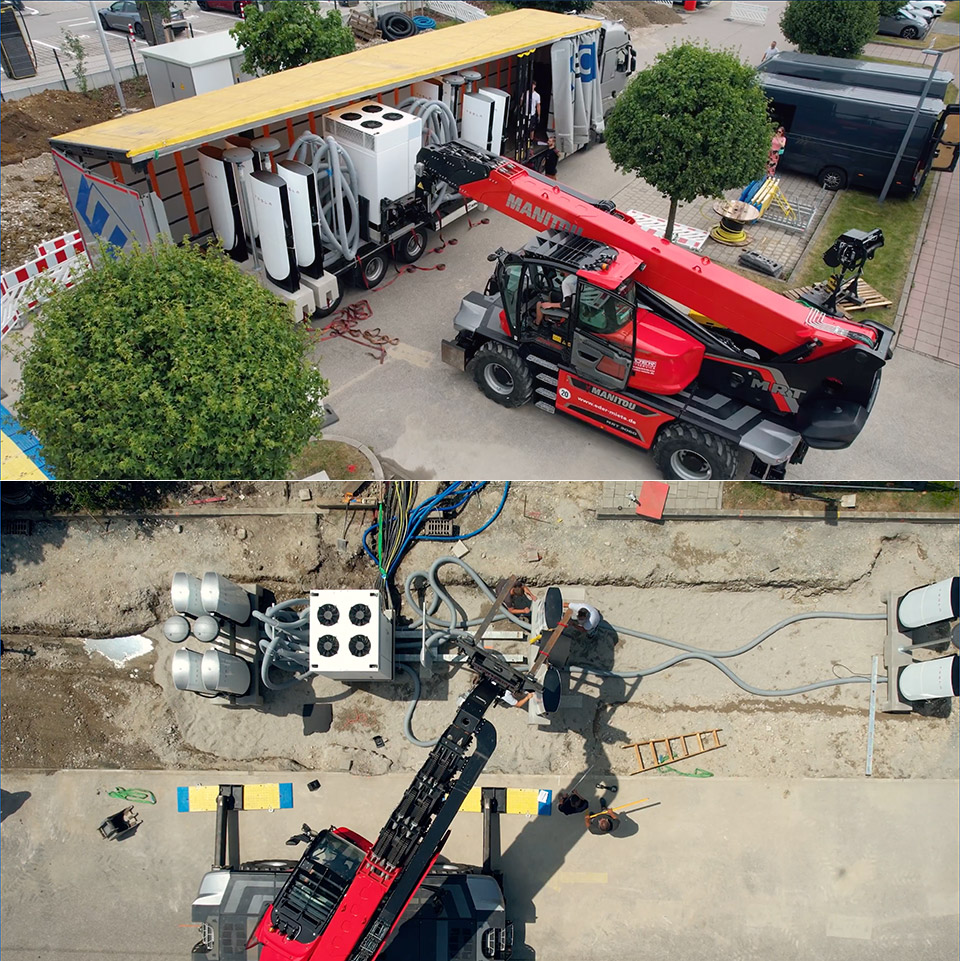
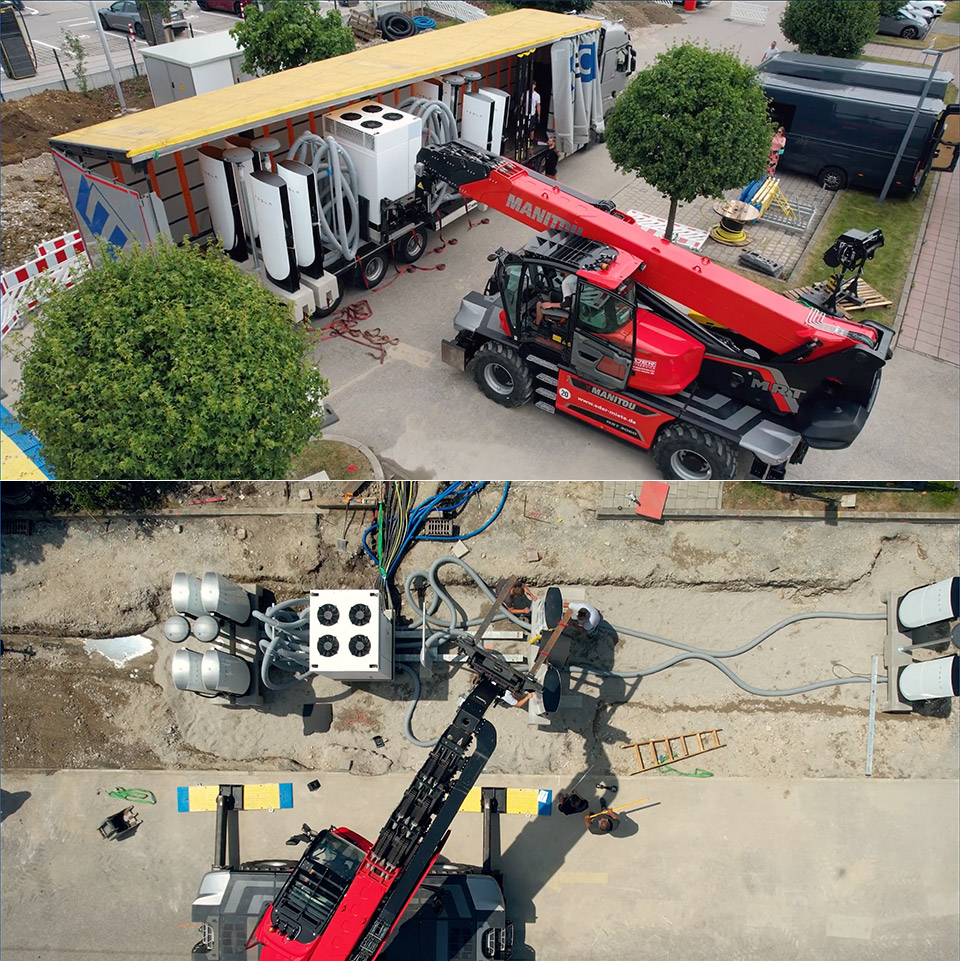
Tesla Charging posted the first Accordion Supercharger on September 15 and laid the plan out in one short clip. Factory work now covers the posts, the cabinet, the wiring, the cooling lines, and the concrete pads so a finished island leaves the plant instead of a pile of parts. Two of those eight-stall packages fit on a single truck, which means sixteen V4 stalls arrive in one run. Tesla says that package costs about 20 percent less to put in the ground than a conventional station and commissions as soon as utility power is tied in.
Our first Accordion Supercharger
Our goal is to pre-assemble all Superchargers in a factory. If we can’t install Superchargers behind a curb, we now have a pre-assembled solution for Superchargers between parking spaces.
16 stalls per truck shipment, 20% cheaper to install,… pic.twitter.com/KlmczpLoPR
— Tesla Charging (@TeslaCharging) September 15, 2026
Factory crews place each pair of stalls on a prefabricated platform and simply insert a central V4 cabinet rated at 1.2 megawatts. Heavy gage conduits extend from the cabinet to the pedestals, allowing the island to fit across a painted parking bay. That’s crucial, because there won’t be enough curb strip on retail properties to dig a standard trench for a cabinet. To set up, a forklift or telehandler takes the entire bundle off the trailer, personnel lower it into a shallow trench, the pedestals spread outwards, the trench is filled back in, pavers are placed in, and the utility feed is connected. There is no need to complete any DC busbar work on-site. There’s no need to call a Tesla service professional to switch everything on either.
Sale
BLUETTI Elite 30 V2 Portable Power Station 288Wh 600W LFP Solar Generator
- [288Wh On-the-Go Power] – Only 9.4 lbs lightweight, carry it anywhere during storms! 288Wh capacity meets daily & outdoor needs—camping, road trips…
- [600W Continuous & 1500W Surge Power] – Get a full 600W output—twice as much as others. When you need serious power, activate Power Lifting Mode for…
- [50% Lower Power Consumption] – Upgraded UltraCell tech & smart cooling system cut power consumption by 50%. Enhances overall energy efficiency…
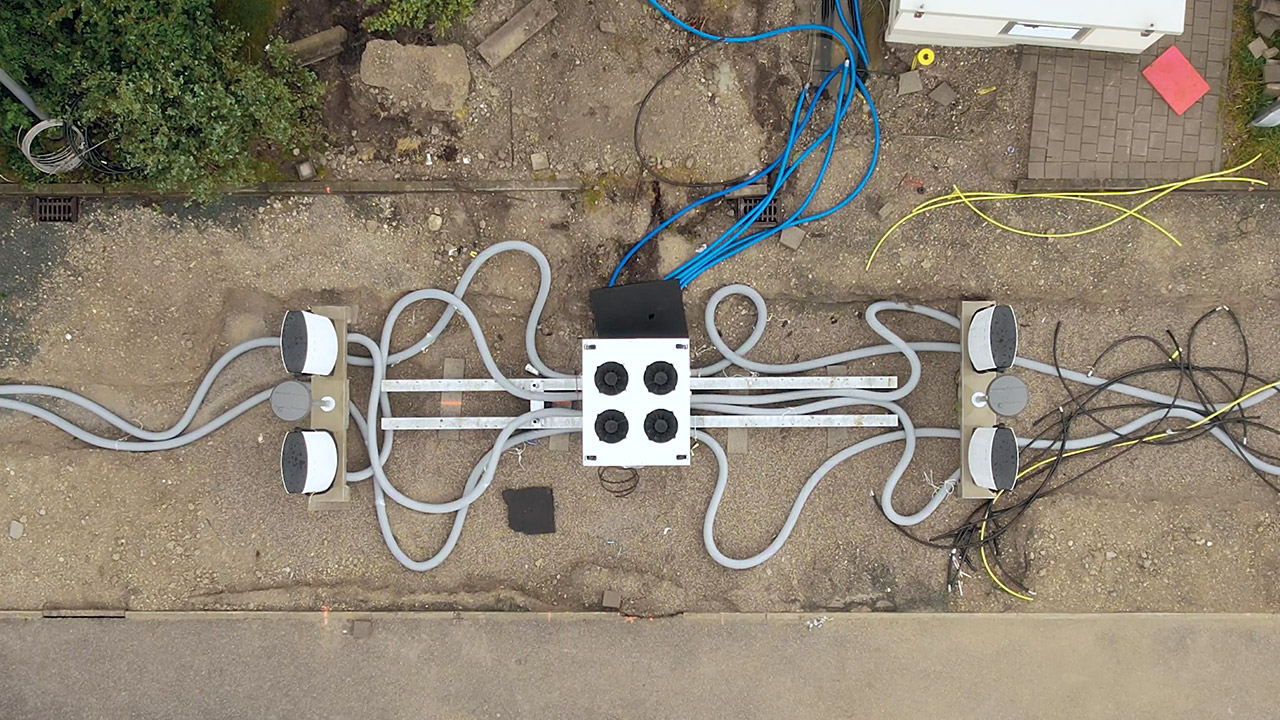
The first real example is already in Irschenberg, Bavaria, and it includes eight V4 Superchargers on display at the FC Bayern store lot, sandwiched between two fast food restaurants. The site became active in August, and each Supercharger can deliver 500 kilowatts to a car. The total combined cabinet power is 1.2 megawatts, which already exceeds the 1,050 kilowatt minimum that Europe will require from all charging pools on major routes by the end of 2027, and they must be located within 60 kilometers of one another.
This variation was inspired by the variety of parking lots found throughout Europe. Tesla unveiled the Folding Unit (FU) a few months ago, with the idea that two fixed portions would fold out along a curb, reducing manufacturing time from eight to four days. Accordion maintains the core idea of being manufactured in a factory first, but with a twist: the pedestals now stretch as needed between rows rather than attempting to line up behind a curb. That is how most supermarket and shop lots are painted. Max de Zegher, the man in charge of Tesla Supercharging, put it simply: building in a factory is preferable to building on-site, and all jobs and servicing comments go directly back to the production line, so the following unit is already better.
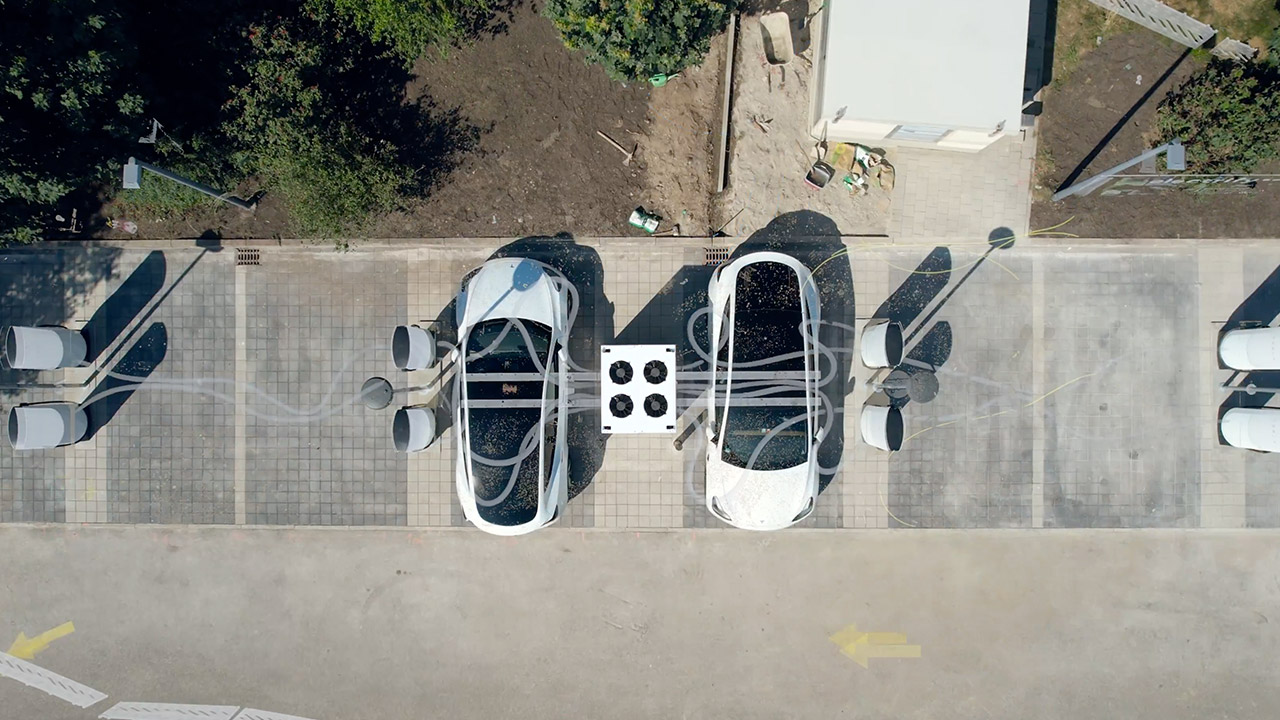
As a result, the parking lot owners receive a finished product without having to deal with weeks of digging trenches, laying conduits, erecting pads, and hammering in single posts. According to Tesla, the plan is to pre-assemble each Supercharger in a factory, with the Accordion version reserved for sites that will not accommodate a cabinet behind the curb. You get 16 stalls per shipment, 20% less installation cost, rapid commissioning, and V4 hardware that can already meet the European power norm for 2027, with the first one now operational in Bavaria; the next ones will demonstrate whether this manufacturing concept can keep up with trucks.
Tech
Most of the world expects AI to shrink the job market, with Americans among the most pessimistic
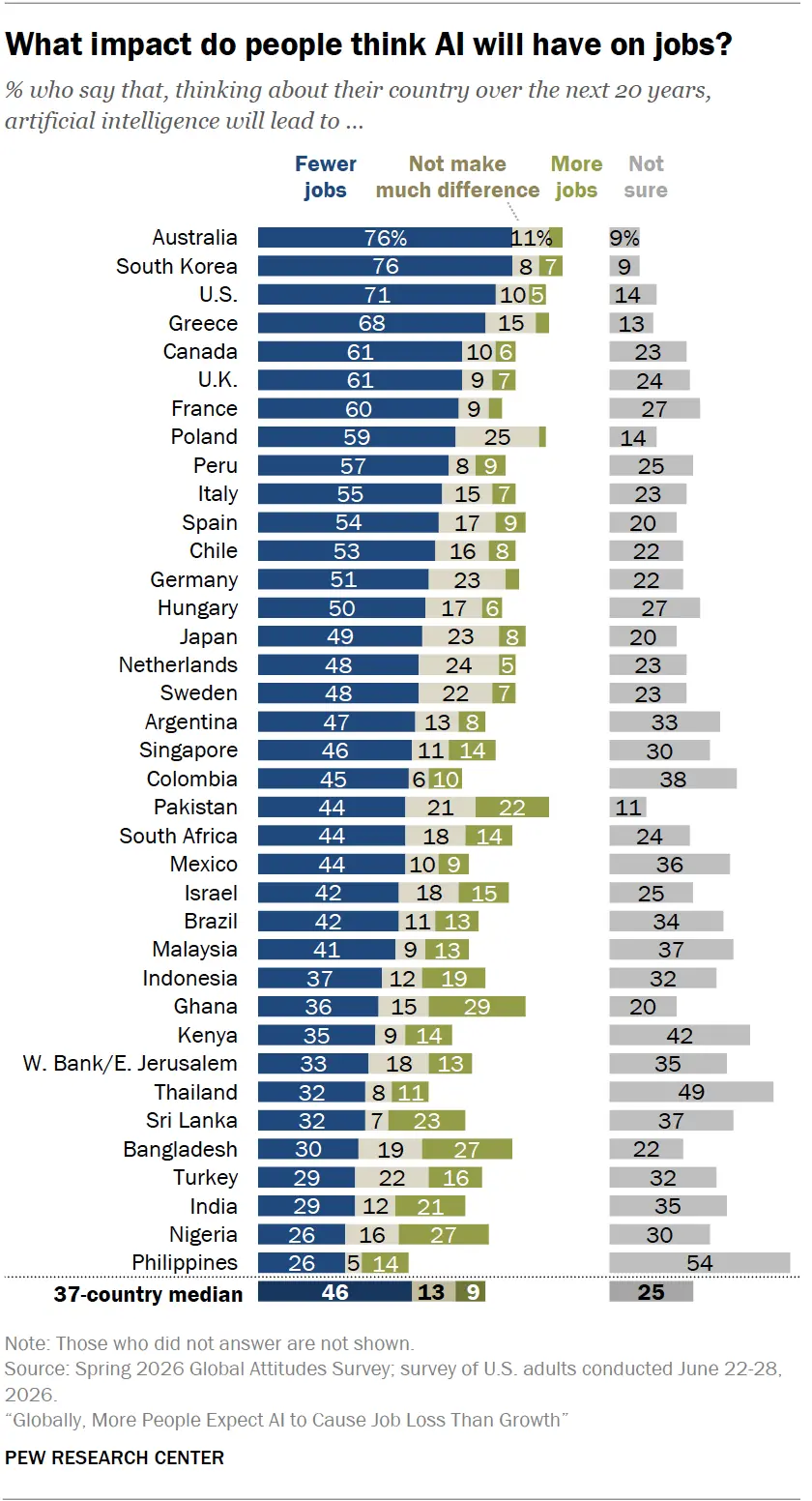
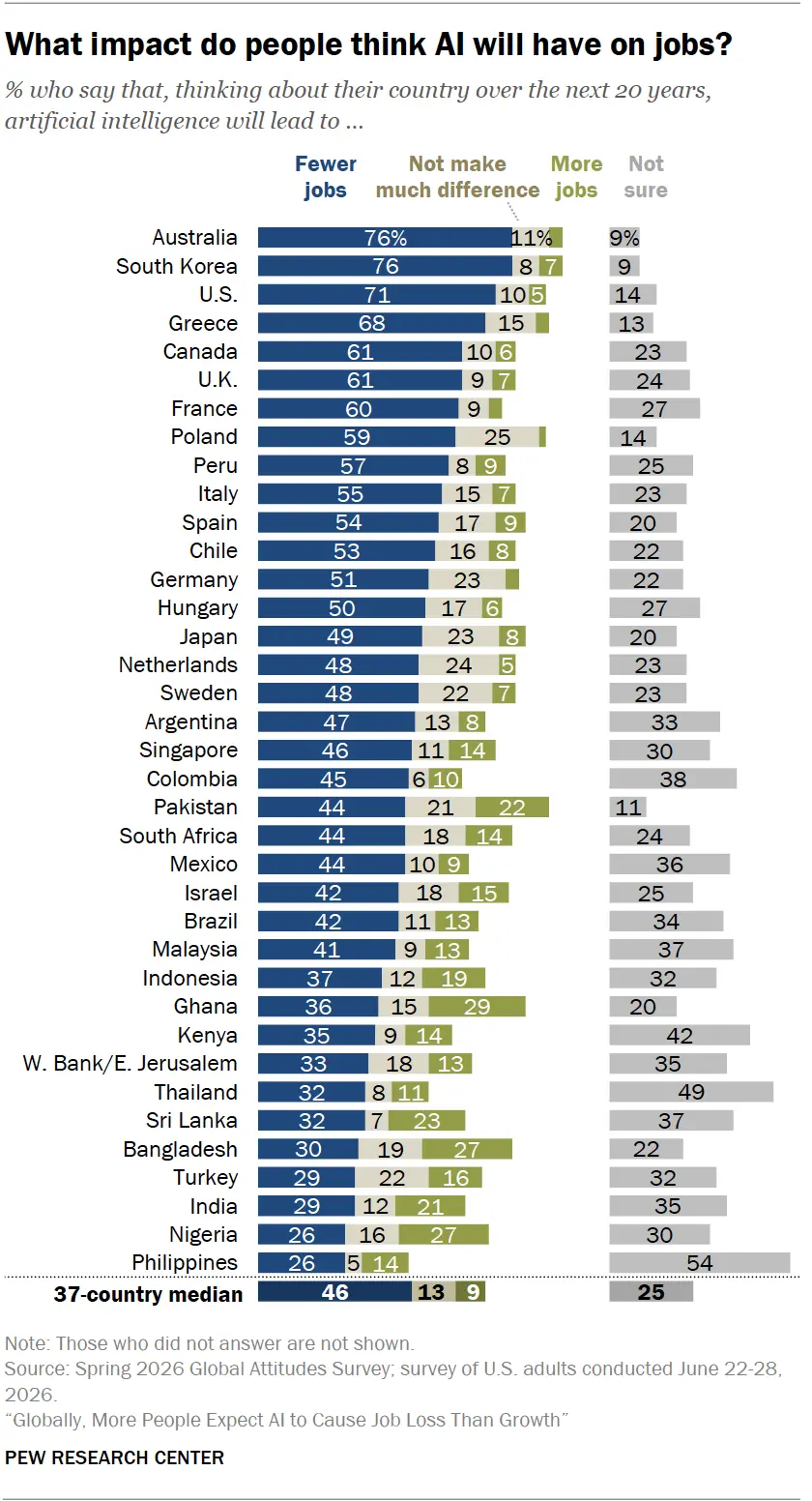
Sounding off: We hear a lot about US views of AI and its effect on jobs, but does the rest of the world agree? Yes, according to a new global Pew Research Center poll, which found that more people in 34 out of 37 countries believe AI will lead to fewer rather than more jobs.
The US was the third most pessimistic nation when it comes to AI’s effect on the workplace, with 71% of participants saying it will lead to fewer jobs in the country over the next 20 years. Only South Korea and Australia, both on 76%, were higher.
Across a 37-country median, 46% said there will be fewer jobs, 13% said there wouldn’t be much difference, 9% said there will be more jobs, and 25% weren’t sure.
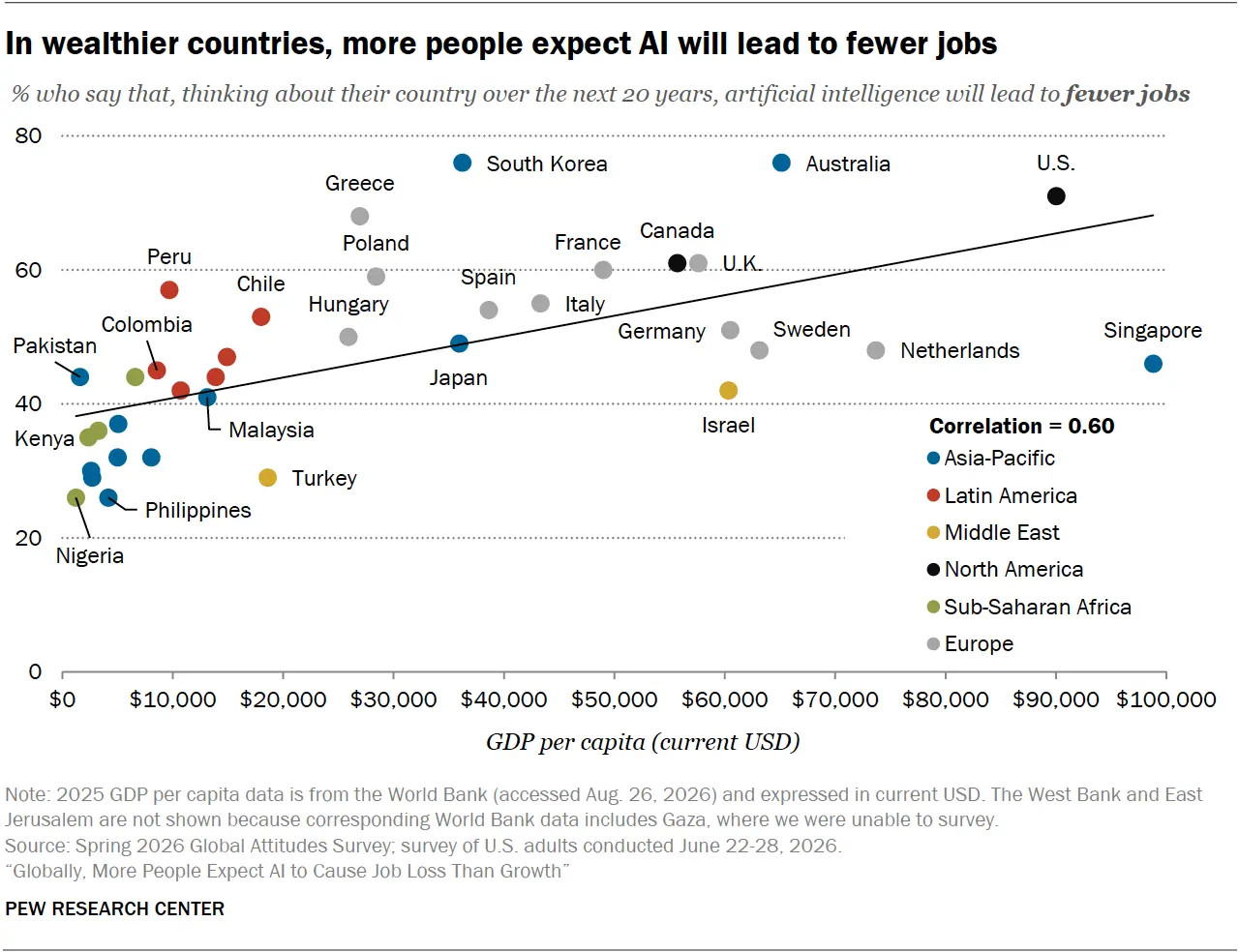
The table illustrates the disparity between nations with higher and lower GDPs. The “fewer jobs” result is much lower in poorer countries: Nigeria was the only one to believe AI will create more jobs (26% vs. 27%), while more people in Thailand and the Philippines picked the “not sure” option. It’s likely that this is a reflection of fears in wealthier regions that AI will take mostly white-collar jobs – as Dario Amodei predicted.
Interestingly, the only country where Pew has asked this question before is the US. Over the past two years, the share of people who believe more jobs will be lost from AI has increased 7 percentage points, showing that fears are intensifying rather than easing in the States.
In a number of countries, younger people aged between 18 and 34 are the group most concerned about AI job losses. In the US, concern about job losses from AI has increased the most among this demographic.
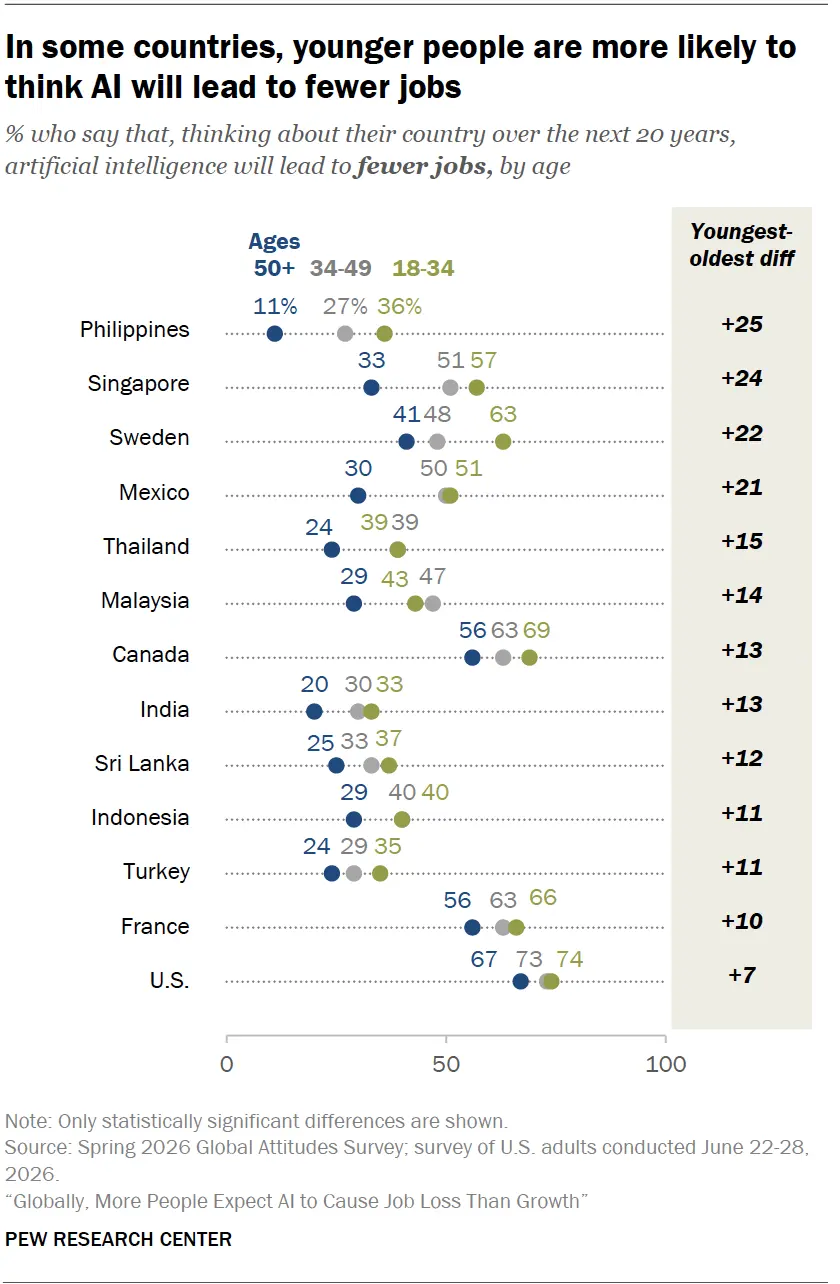
In many of the middle-income countries surveyed, wealthier and more educated respondents are more likely to expect AI to reduce job numbers over the next two decades. Much of that gap reflects greater uncertainty among people with lower incomes and less education about how the technology will affect employment.
It’s certainly telling that more people who have high awareness of AI are more concerned about its impact on jobs.
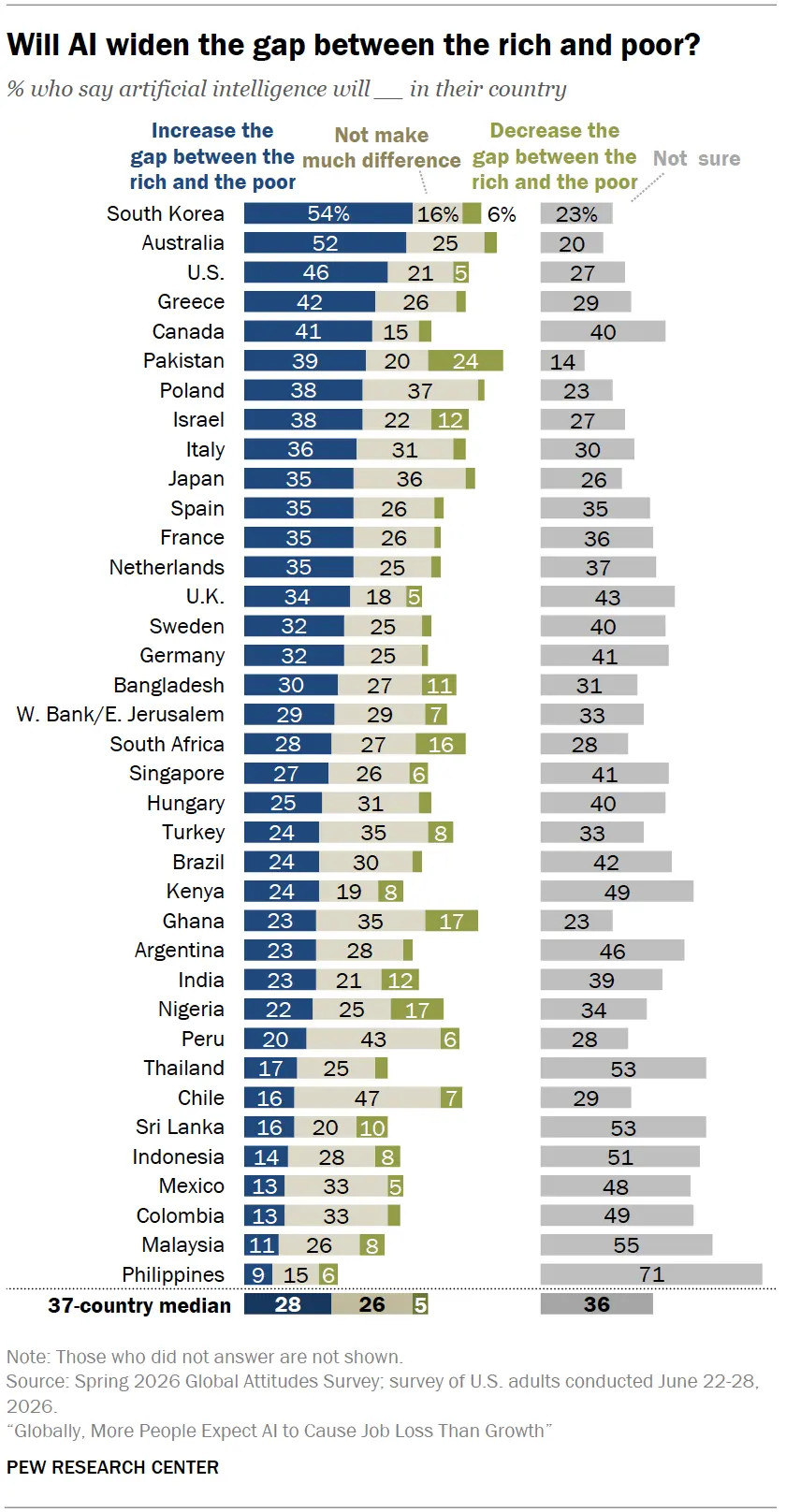
Some industry execs have claimed AI will close the gap between the rich and the poor. But more people believe the opposite is true. Again, this is more often the case in richer countries.
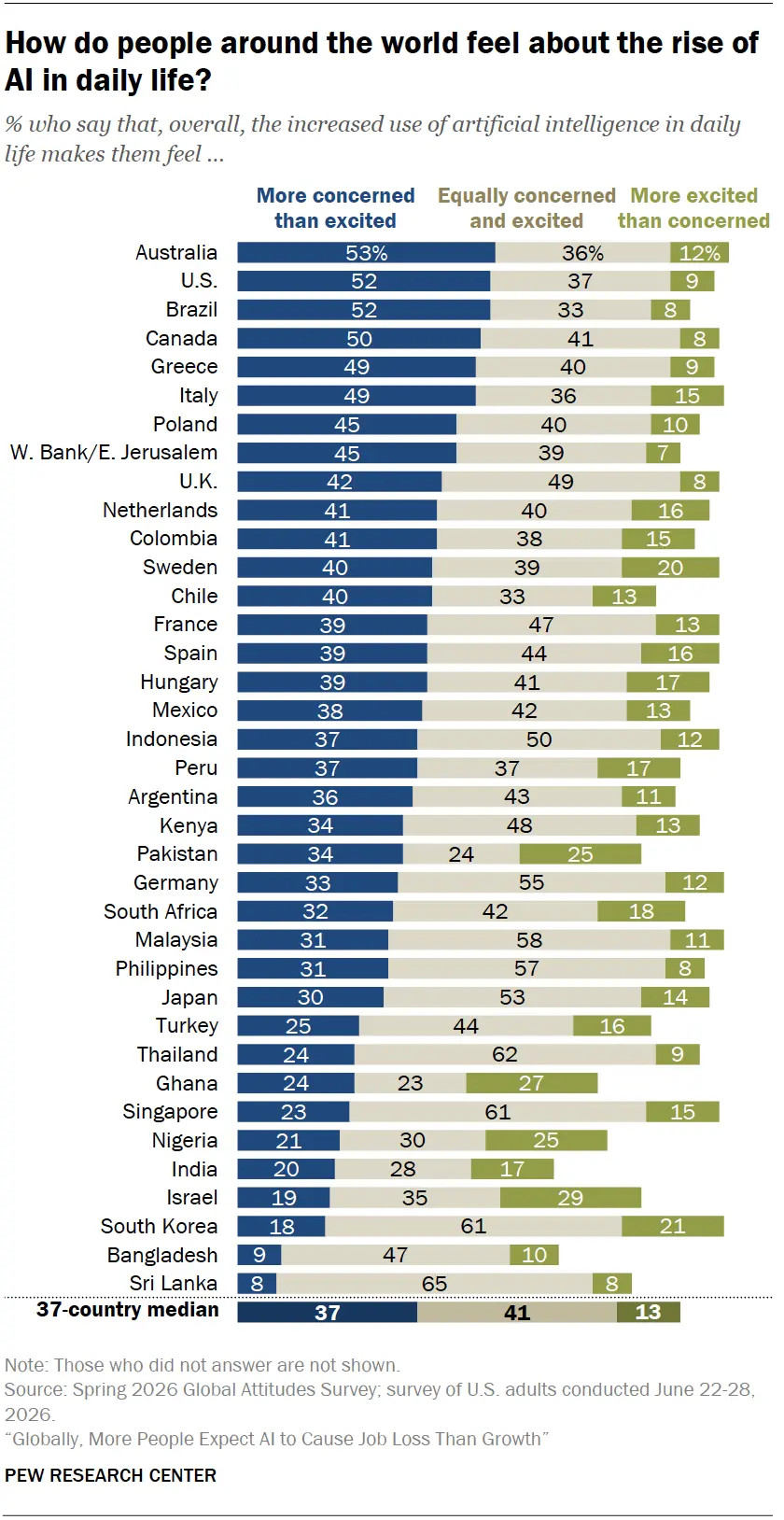
We’ve also heard of some AI luminaries who are genuinely angry that people don’t share their excitement about AI. Results in this area are more mixed, with a 37% median across 37 countries more concerned than excited, while a 41% median are equally concerned and excited. Israel is the only nation in which more people are primarily excited than primarily concerned.
Those fears are understandable. A Mercer survey found that 99% of executives questioned expected AI to lead to job cuts within two years, while Meta cut 10% of its workforce before abandoning plans for a second wave amid disappointing AI results and employee resistance. There have also been signs that companies are putting too much faith in the technology: some employers are rehiring workers they replaced with AI after automation failed to deliver. That offers a bit of hope, though it’s unlikely to reassure all workers.
NewsBeat2 minutes ago
M60 traffic LIVE as queues continue after broken down lorry

Business3 minutes ago
Slideshow: Beverages with benefits | Food Business News

Crypto World4 minutes ago
Morpho adds USDC lending for five Coinbase tokenized stocks

Fashion7 days ago
Weekend Open Thread – Corporette.com

Tech1 week ago
Memory prices are slowing because buyers ran out of money

Business1 week ago
Micron Stock Climbs Above $1,031 as AI Memory Crunch and a $50 Billion Outlook Fuel the Rally

News Videos14 minutes ago
(1) Financial blessing break the cycle of debt #fullarmorofgod #bloodofjesus #financialincrease

News Videos28 minutes ago
Crypto Trading Full Course for Beginners by Mr How | Zero to Master Level

News Videos41 minutes ago
Sapourt my drawing journey #realstick #drawing #money #shorts #youtube #viral #
-
 Fashion7 days ago
Weekend Open Thread – Corporette.com
-

 Tech5 days ago
The Latest Weird Thing to Play Doom Is the Mapped-Out Brain of a Fruit Fly
-

 Crypto World4 days ago
Kraken Lets xStocks Holders Earn Yield Through DeFi
-

 Entertainment7 days ago
News Specials, Movies, Shows, More
-

 Crypto World2 days ago
US Charges Robinhood Engineers Over Crypto Listing Trades
-

 Crypto World6 days ago
Can AI Build a Startup in 72 Hours? Elon Musk's Team Will Livestream the Test
-

 Crypto World4 days ago
Elon Musk Drops a Bombshell: Grok 5 Could Be the AGI Breakthrough
-

 Business5 days ago
Rivals Sam Altman and Elon Musk Rally Behind Dario Amodei’s Call for a Slowdown in AI Development
-
 NewsBeat4 days ago
‘Sick conspiracy’: Trump says only guardrails AI needs is ‘a strong and smart (High IQ!) president’ in all-caps rant
-

 Crypto World5 days ago
New Tesla Roadster Uses SpaceX Tech. Will It Impact the Stock Price?
-

 Crypto World6 days ago
Robinhood Chain Never Stopped But its Blobs Did Stop Reaching Ethereum For 14 Minutes
-

 Crypto World3 days ago
What Is the Status of the U.S.-Iran Peace Talks? Here's What Both Sides Are Saying
-
 Entertainment7 days ago
New Horror Movie Officially Earns a Rare Stephen King Recommendation
-

 Crypto World3 days ago
NVIDIA Analysis: Attempted Rising Wedge Breakout Amid Pressure on the AI Sector
-

 Business6 days ago
Marvell: Most Potent Setup Of The AI Factory Decade
-

 Crypto World4 days ago
DOJ Seeks to Seize $61M in Iran Oil Funds From Binance Accounts It Vouched For
-

 Crypto World6 days ago
Bitcoin ETFs lose $462.7M as Ethereum funds gain $196.9M
-

 Crypto World4 days ago
3 Token Unlocks to Watch in the Third Week of September 2026
-

 Crypto World4 days ago
Revolut Attackers Warn of Ongoing Daily Customer Data Leaks
-
Business4 days ago
SK Hynix ADRs Fall More Than 6% as Memory Rally Breaks on Fears of Slower AI Spending
You must be logged in to post a comment Login