BDX Droid figures and a talking Mandalorian headline Disney Store’s May 4 drop
Light-up gauntlets, action figures, pins, and more join the lineup
All items land on May 4, 2026, at the Disney Store
We’re just weeks out from Star Wars returning to the big screen with The Mandalorian and Grogu, and before its May 22, 2026, opening, we’ll be rolling through May the 4th, aka Star Wars Day.
As we saw a few weeks back, there are some impressive new toys and collectibles themed around the film and Star Wars at large. We already knew that the adorable, lovable BDX Droids that have graced Galaxy’s Edge at Disneyland and Walt Disney World — as well as the high seas on Disney Cruise Line — would land as figures, and now TechRadar can exclusively reveal that the BDX Droid figures, along with the other collectibles and toys below, will launch exclusively at the Disney Store on May 4, 2026.
The BDX Droids still look stunning, and considering they’ll be in The Mandalorian and Grogu, it’ll be a perfect fit for fans of Disney Parks and Star Wars. For $49.99, you get a set of four that will look great on a desk, and just like the real-life set, they’re color-matched here. You get a red, blue, green, and orange BDX unit. While these won’t move or emit sounds, they’re highly detailed. The BDX Droids are the latest drop in the Droid Factory Figures line at the Disney Store.
Article continues below
(Image credit: Disney Store)
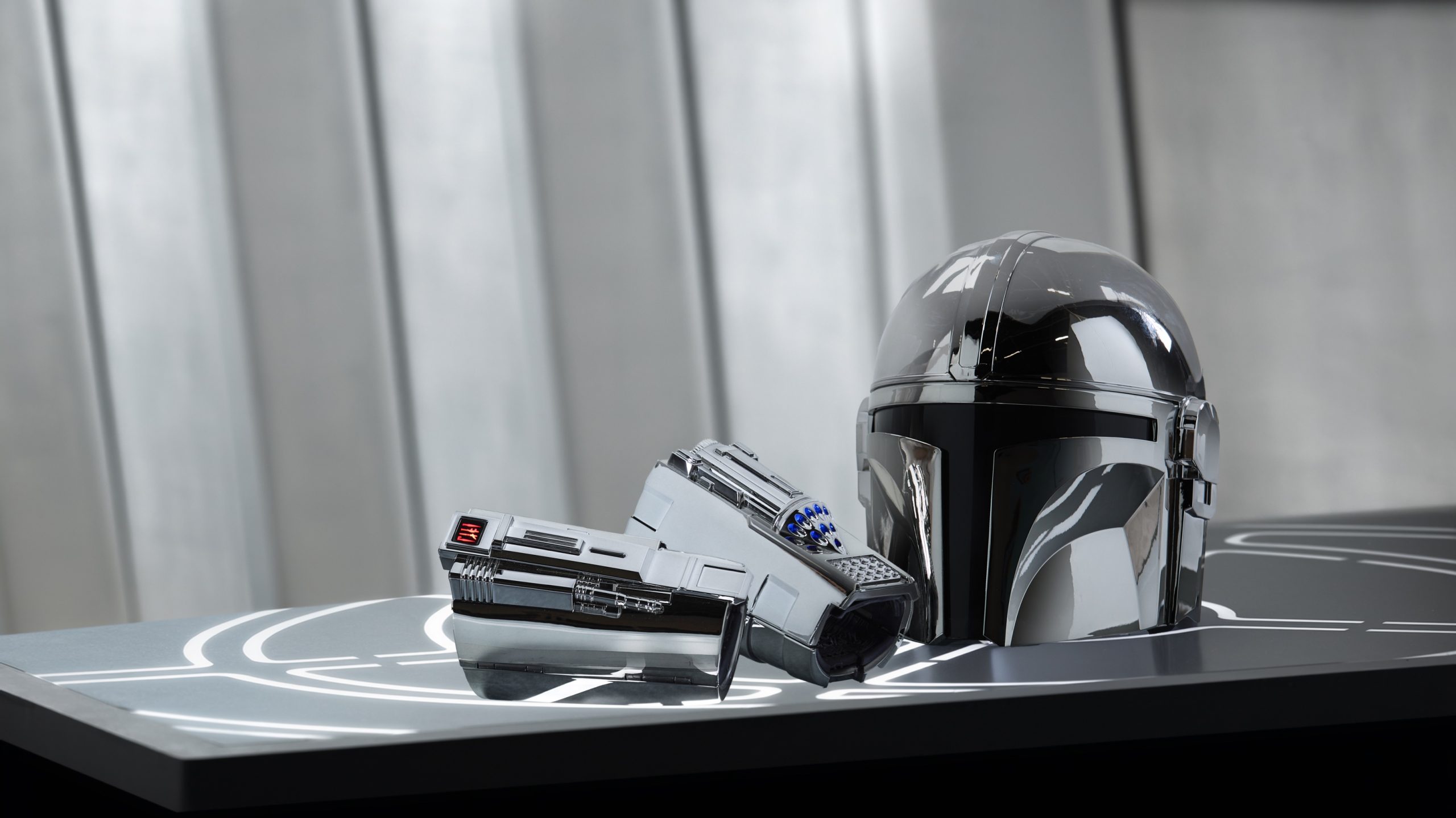
That’s not the only product dropping, though — as teased earlier, Disney Store will also be home to two exclusive collectibles. The first, The Mandalorian Voice-Changing Helmet, looks fantastic and pretty true-to-life compared to what Din Djarin wears in the film and on the show.
It will say iconic lines from the series, and I’d bet “This is the Way” is one of them. If you’re keen to sound like The Mandalorian, there is also a voice-changing mode. This full-size replica, designed for adults, lands on May 4, 2026, and will cost $119.99.
It pairs perfectly with the other collectible drop — the $99.99 Mandalorian Gauntlets, which look highly detailed and even light up. Both of these will be exclusive to the Disney Store.
Advertisement
(Image credit: Future/Jacob Krol)
Nearly as neat as the BDX Droid figures is the 10-inch The Mandalorian Talking Action Figure, which includes scale figures of Grogu and Minch. You’ll also get a jetpack booster and a weapon for Mando in the box. Since it talks, it will say iconic phrases, including some movie-accurate lines. This figure arrives at the Disney Store for $39.99 on May 4, 2026.
Sign up for breaking news, reviews, opinion, top tech deals, and more.
If you’re a fan of Klang, Disney Store also has a detailed talking figure of the Anzellan droidsmith. He’ll play a role in The Mandalorian and Grogu, alongside two other droidsmiths, and this figure won’t just speak — it also features a motorized head, eyes, and mouth for a more immersive experience. This figure launches for $59.99 on May 4, 2026, at the Disney Store.
Image 1 of 2
Advertisement
(Image credit: Disney Store)
(Image credit: Disney Store)
It wouldn’t be a Star Wars toy lineup without some classic figures, and whether you’re excited for the film because of Mando or for the return of Zeb Orrelios — Star Wars Rebels fans know exactly what I’m talking about — this Star Wars Toybox set might be the perfect purchase. You get figures of Zeb, droid R5-D4, The Mandalorian, and Grogu in posable, stylized versions. The Mandalorian and Grogu Action Figure Set — Star Wars Toybox drops for $49.99 at the Disney Store on May 4, 2026.
Pin collectors will be happy to know that the Disney Store has a set of three arriving. The first two retail for $21.99 and are themed around one character each. A Din Djarin Pin and a Grogu Pin both arrive as limited releases with the “Star Wars Day: May the 4th Be With You 2026” logo. The Mandalorian is standing in an iconic pose, while Grogu is using the Force.
Image 1 of 3
(Image credit: Disney Store)
(Image credit: Disney Store)
(Image credit: Disney Store)
Additionally, for $34.99, Disney Store will drop the impressive Star Wars Day: May the 4th Be With You Mini Jumbo Pin, which features Ahsoka, Boba Fett, Bo-Katan, Grogu, and The Mandalorian — essentially putting the main characters from Star Wars: The Mandalorian and Star Wars: The Book of Boba Fett onto one pin. There’s also a Mythosaur icon at the bottom.
Puzzles can be pretty relaxing, and I’m especially a fan when they feature excellent artwork. Disney Store isn’t just spotlighting the two main characters here in an affordable set — it’s also a great landscape from the film. The Star Wars: The Mandalorian and Grogu Puzzle will be just $24.99 at the Disney Store on May 4, 2026.
Advertisement
(Image credit: Disney Store)
Last but not least, you can bring a bit of Galaxy’s Edge home with a mug that will instantly level up any kitchen. The Mythosaur Sculpted Mug looks fantastic and really feels like a prop that could fit perfectly on the big screen, though more likely than not, it would be found at Oga’s Cantina in Galaxy’s Edge. This mug also lands on May 4, 2026, for $22.99.
TerraPower is celebrating the start of construction on its nuclear plant in Kemmerer, Wyo. (TerraPower Photo)
TerraPower announced Thursday that it has started construction on its Natrium plant, making it the first company in the U.S. to break ground on an advanced nuclear power facility.
“This is the moment our industry has been working toward for a generation. We’re not just breaking new ground on a first-of-a-kind nuclear plant in Wyoming; we’re building the next generation of America’s energy infrastructure,” said Chris Levesque, CEO of TerraPower, in a statement.
The Bellevue, Wash.-based company began building its demonstration plant in Kemmerer, Wyo., in 2024, starting with construction of non-nuclear features. Last month, TerraPower received unanimous approval from the Nuclear Regulatory Commission (NRC) to proceed with the nuclear components.
The facility includes a 345-megawatt, sodium-cooled fast reactor paired with a system that holds excess heat inside of molten salt. Tapping the thermal salt battery can boost the plant’s power output to 500 megawatts for more than five hours. By comparison, Seattle uses around 2,000 megawatts during extreme weather events.
TerraPower aims to have the reactor splitting atoms by the end of 2030. Roughly 1,600 workers will be hired during construction, with approximately 250 full-time staff employed once the facility is operational.
Advertisement
The Wyoming plant was estimated in 2021 to cost about $4 billion; no updated figures have been provided. Levesque previously told GeekWire that private investments from Bill Gates and others as well as $2 billion federal grant mean “we’re building that project without burdening the ratepayers.”
The milestone comes as America’s nuclear sector has surged back to life after decades of stagnation, driven by tech giants scrambling to power data centers nationwide and rising energy demands across commercial, residential and industrial sectors.
Founded 20 years ago, TerraPower plans to build hundreds of its reactors, which are smaller and less costly than conventional facilities. Using prefabricated components, the company believes it can compress construction timelines to just three years — a fraction of the time required for traditional plants. The most recently completed conventional nuclear facility in the U.S. — the Plant Vogtle site in Georgia — took more than a decade to build.
TerraPower is already signing customers. In January, the company reached a deal with Meta to build up to eight Natrium reactors in the U.S. with the first two targeted to come online by 2032. If the full order is fulfilled, the additional reactors will be operating by 2035. The company also has memorandums of understanding with government agencies in Utah and Kansas to explore potential sites in those states.
Advertisement
“The start of construction on TerraPower’s Natrium plant in Kemmerer marks a major milestone not just for Wyoming, but for the future of American energy,” said Wyoming Gov. Mark Gordon. “I want to thank everyone at TerraPower for their work getting to this day.”
The laptop is powered by a six-core CPU in a 2P+4LPE configuration, featuring two Cougar Cove P-cores and four Darkmont LPE cores. The SoC also includes two Xe graphics cores and a dedicated 17 TOPS NPU. Intel did not specify the exact CPU model, but it is believed to be… Read Entire Article Source link
For several weeks, a growing chorus of developers and AI power users claimed that Anthropic’s flagship models were losing their edge. Users across GitHub, X, and Reddit reported a phenomenon they described as “AI shrinkflation”—a perceived degradation where Claude seemed less capable of sustained reasoning, more prone to hallucinations, and increasingly wasteful with tokens.
Critics pointed to a measurable shift in behavior, alleging that the model had moved from a “research-first” approach to a lazier, “edit-first” style that could no longer be trusted for complex engineering.
While the company initially pushed back against claims of “nerfing” the model to manage demand, the mounting evidence from high-profile users and third-party benchmarks created a significant trust gap.
Today, Anthropic addressed these concerns directly, publishing a technical post-mortem that identified three separate product-layer changes responsible for the reported quality issues.
Advertisement
“We take reports about degradation very seriously,” reads Anthropic’s blog post on the matter. “We never intentionally degrade our models, and we were able to immediately confirm that our API and inference layer were unaffected.”
Anthropic claims it has resolved the issues by reverting the reasoning effort change and the verbosity prompt, while fixing the caching bug in version v2.1.116.
Her findings suggested that Claude’s reasoning depth had fallen sharply, leading to reasoning loops and a tendency to choose the “simplest fix” rather than the correct one.
Advertisement
This anecdotal frustration was seemingly validated by third-party benchmarks. BridgeMind reported that Claude Opus 4.6’s accuracy had dropped from 83.3% to 68.3% in their tests, causing its ranking to plummet from No. 2 to No. 10.
Although some researchers argued these specific benchmark comparisons were flawed due to inconsistent testing scopes, the narrative that Claude had become “dumber” became a viral talking point. Users also reported that usage limits were draining faster than expected, leading to suspicions that Anthropic was intentionally throttling performance to manage surging demand.
The causes
In its post-morem bog post, Anthropic clarified that while the underlying model weights had not regressed, three specific changes to the “harness” surrounding the models had inadvertently hampered their performance:
Default Reasoning Effort: On March 4, Anthropic changed the default reasoning effort from high to medium for Claude Code to address UI latency issues. This change was intended to prevent the interface from appearing “frozen” while the model thought, but it resulted in a noticeable drop in intelligence for complex tasks.
A Caching Logic Bug: Shipped on March 26, a caching optimization meant to prune old “thinking” from idle sessions contained a critical bug. Instead of clearing the thinking history once after an hour of inactivity, it cleared it on every subsequent turn, causing the model to lose its “short-term memory” and become repetitive or forgetful.
System Prompt Verbosity Limits: On April 16, Anthropic added instructions to the system prompt to keep text between tool calls under 25 words and final responses under 100 words. This attempt to reduce verbosity in Opus 4.7 backfired, causing a 3% drop in coding quality evaluations.
Impact and future safeguards
The quality issues extended beyond the Claude Code CLI, affecting the Claude Agent SDK and Claude Cowork, though the Claude API was not impacted.
Advertisement
Anthropic admitted that these changes made the model appear to have “less intelligence,” which they acknowledged was not the experience users should expect.
To regain user trust and prevent future regressions, Anthropic is implementing several operational changes:
Internal Dogfooding: A larger share of internal staff will be required to use the exact public builds of Claude Code to ensure they experience the product as users do.
Enhanced Evaluation Suites: The company will now run a broader suite of per-model evaluations and “ablations” for every system prompt change to isolate the impact of specific instructions.
Tighter Controls: New tooling has been built to make prompt changes easier to audit, and model-specific changes will be strictly gated to their intended targets.
Subscriber Compensation: To account for the token waste and performance friction caused by these bugs, Anthropic has reset usage limits for all subscribers as of April 23.
The company intends to use its new @ClaudeDevs account on X and GitHub threads to provide deeper reasoning behind future product decisions and maintain a more transparent dialogue with its developer base.
AXPONA 2026 didn’t feel like a show. It felt like a controlled demolition of your free time.
More than 750 brands, thousands of products, and three days that were not nearly enough. We had six people on the ground and still missed entire floors, rooms, and systems that probably deserved attention. That is not poor planning. That is scale. At this point, you could make a serious argument that AXPONA needs another two days just to keep it honest.
Two things hit hard the minute you started opening doors.
First, the money. Six figure systems were not rare. They were the baseline in a lot of rooms. In fact, there were more systems pushing past $200,000 than there were setups under $50,000. Let that sink in for a second. And yes, there were systems that were seven figures or damn close to it, because apparently restraint did not get an invite this year. The industry needs to have a conversation with itself because the next generation is not spending that kind of money anytime soon.
Advertisement
Second, despite all that excess, there were still real finds. We came across genuinely impressive gear under $5,000. The kind of products that do not require a second mortgage or a forgiving spouse. They did not dominate the floor, but they mattered, and we made sure to track them down.
2026 is not lacking for ambition. From Europe to Asia to North America, the level of engineering and execution across two channel and personal audio is on another level right now. Whether you are chasing a reference system or a killer headphone rig, the options have never been deeper or more expensive.
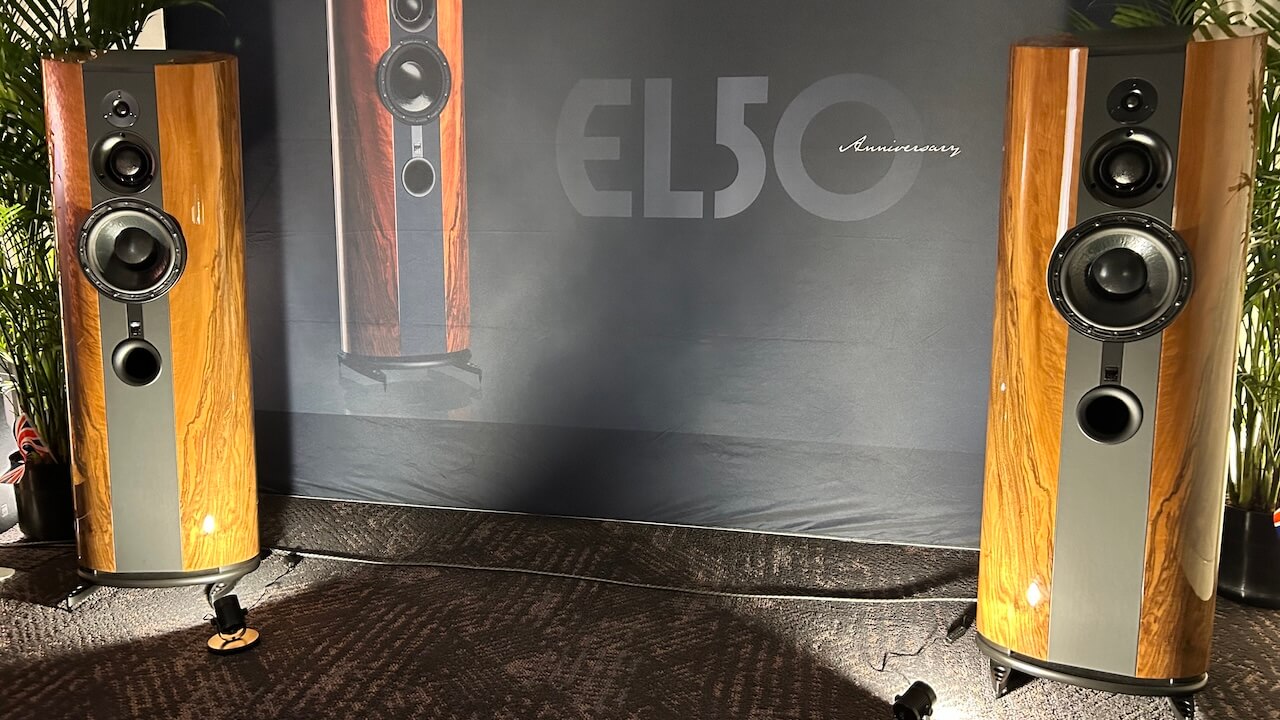
ATC EL50 Anniversary Edition
The ATC EL50 Anniversary makes its case quickly. At $99,999, this isn’t a passive tower that needs help. It’s a fully active three-way system where the amplification, crossover, and drivers are designed to work as one. The crossover is handled at line level using a fourth-order Linkwitz-Riley design at 380Hz and 3.5kHz, which gives ATC tighter control over each driver than a traditional passive network. Each driver has its own dedicated Class A/B MOSFET amplification channel, 200 watts for bass, 100 watts for midrange, and 50 watts for the tweeter, all running fanless with convection cooling. ATC also builds its own drivers in-house, which has been central to its design philosophy for decades. On paper, it covers 32Hz to 25kHz (-6dB), with very low distortion, tight pair matching, and enough output to handle large rooms without strain.
What stood out to me was how it behaved in a room that should not have worked. The space was small, and logic says a speaker like this should overload it. It didn’t. The bass was controlled, evenly distributed, and quick. No bloom, no sense of excess. The presentation had real scale and presence without turning aggressive. It felt composed, which is not something I say often about large systems in hotel rooms. Placement flexibility is always relative, but this demo suggests the EL50 is more forgiving than its size would imply.
I don’t usually get worked up over six-figure speakers. Reality tends to intervene. But this one earns the attention. The U.S. pricing will spark arguments, and not all of them will be wrong. Still, if you’ve been telling yourself that everything above $20K is just diminishing returns and marketing fluff, this is the kind of system that quietly ruins that narrative. Fair warning.
Advertisement
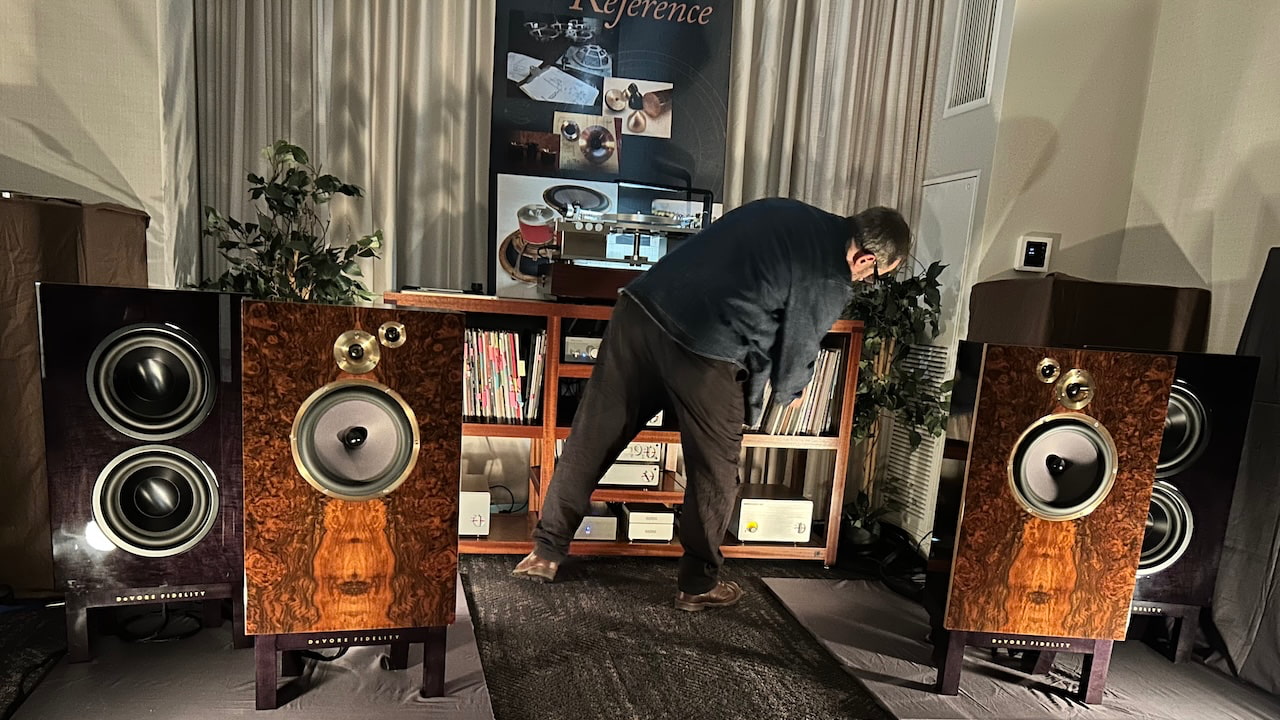
Devore Fidelity Orangutang O/Reference
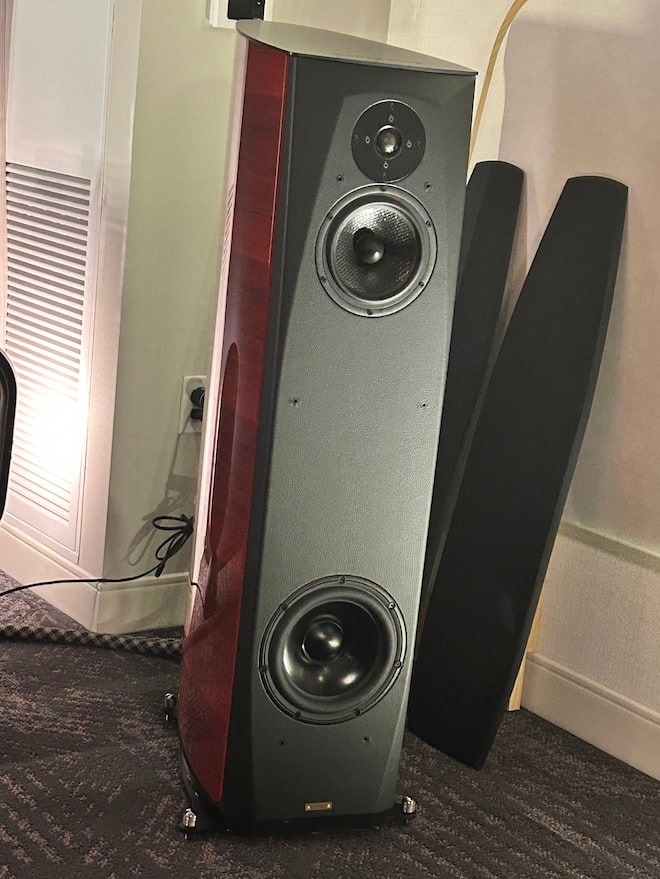
The DeVore Fidelity Orangutan O/Reference didn’t try to win AXPONA the usual way. John DeVore wasn’t chasing spectacle. In a show full of six-figure systems, this room didn’t lean on volume or flash. It just played music with weight, tone, and a sense of control that held up past the first few minutes. That alone separates it from a lot of rooms that impress quickly and then start to fall apart.
It’s a four-piece system with clear roles. The A module handles the main range with a 10-inch paper cone woofer built around an AlNiCo motor, copper Faraday rings, and a bronze phase plug. Above that, a silk dome tweeter and super tweeter are horn loaded in machined bronze for sensitivity and control without pushing the top end. The B module takes care of the low end with an 11-inch aluminum woofer and passive radiator, powered by a 700-watt Class D amplifier with analog controls for crossover, phase, and EQ. The key is integration. The bass section takes its signal from the same amplifier driving the A module, so it follows the same tonal structure instead of acting like a separate system.
Advertisement. Scroll to continue reading.
What I heard was consistent from top to bottom. Piano had weight. Voices carried texture without being pushed forward. Nothing felt exaggerated or dissected. It didn’t behave like a microscope. It behaved like a system that understands how music is supposed to move in a room. And here’s where it gets uncomfortable. If you’re sitting there thinking the jump from this to a $500K or $1M system is going to unlock some hidden level of truth, it’s probably not. At that point, you’re not chasing better sound. You’re negotiating with your ego.
Quad ESL 2912X
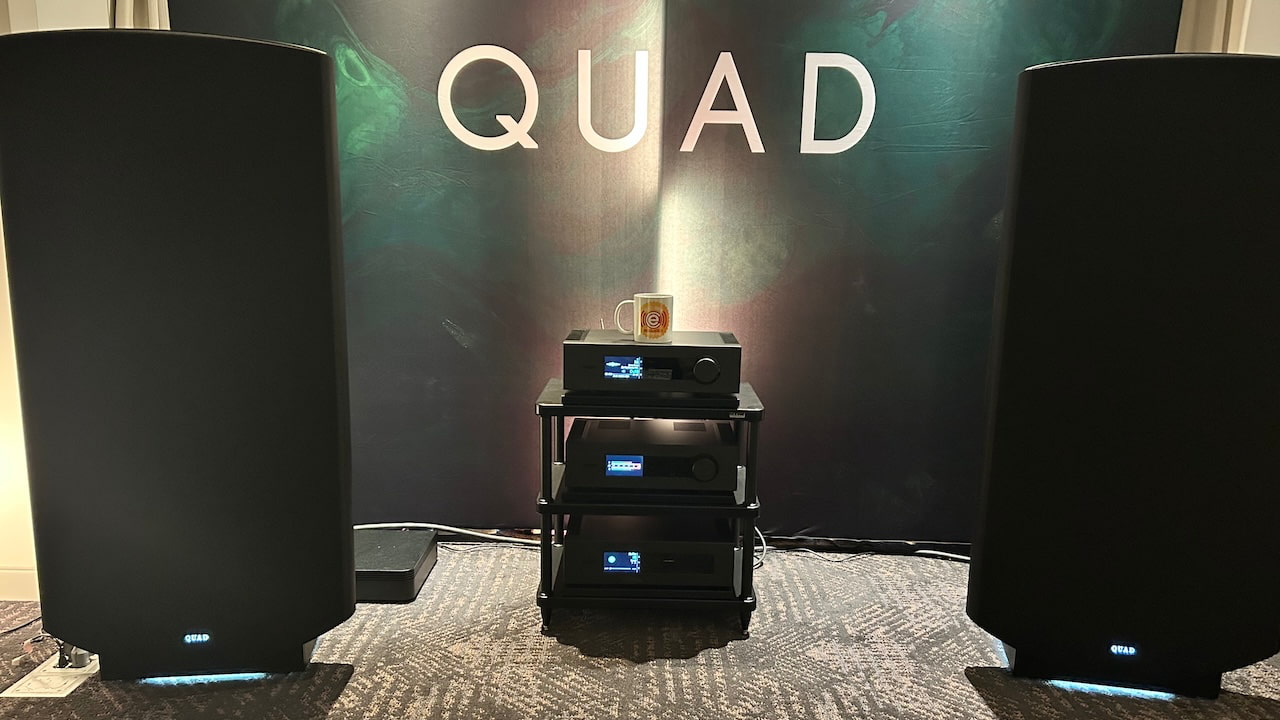
The QUAD ESL 2912X, shown by MoFi Distribution at AXPONA 2026, does something most electrostatics don’t bother trying. It keeps the clarity and speed intact, but adds just enough weight to make it feel like music instead of a lab demo. At $18,000, it’s a long way from the original QUAD panels in both price and expectation, but the core idea is still there. Strip away the noise and let the signal speak. The difference is that here, it doesn’t leave everything hanging in midair. There’s a sense of physical presence that grounds it without turning it into something it’s not.
They still look like QUAD electrostatics. Tall panels, about 58 inches, no attempt to hide what they are. In the room, they didn’t feel as imposing as that size suggests. The new all-black finish helps keep them visually restrained, and more importantly, they didn’t dominate the space sonically. What I heard was scale. Not from cabinet volume, but from how the speaker projects and organizes sound. There was width, height, and depth, but it never felt forced.
Advertisement
That’s what separates this from a lot of the oversized systems at the show. Bigger cabinets, bigger claims, and a lot of effort spent trying to prove something. The 2912X doesn’t play that game. It delivers presence without pushing, and connection without excess. If you think you need something twice the size and five times the price to get closer to the music, you might want to spend some time in front of these first. It won’t flatter your assumptions, but it might save you a lot of money.
Dynaudio Legend
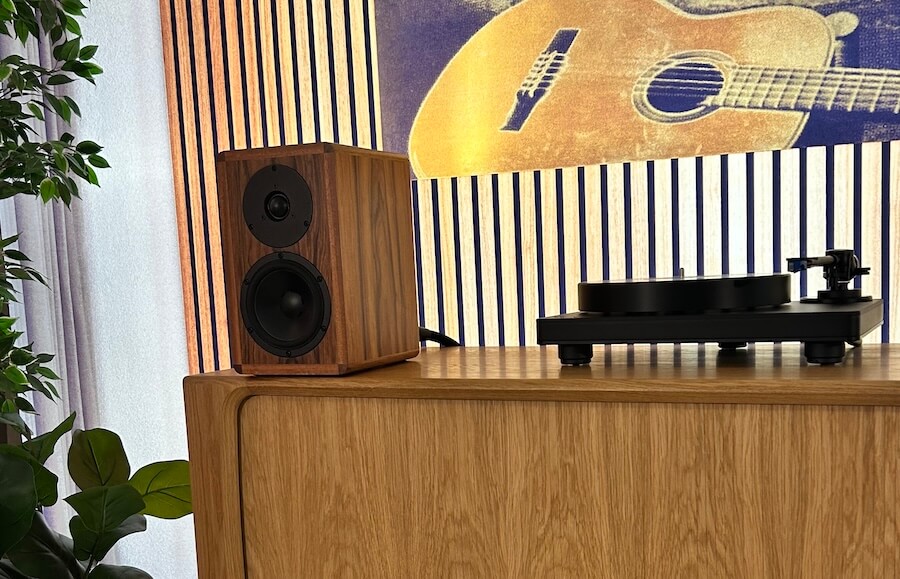
The Dynaudio Legend felt like one of the more important “real world” debuts at AXPONA 2026. In a show dominated by systems that cost more than most homes, this was one of the few new speakers that landed in a price range people might actually stretch for. Built in Denmark with hand-finished rosewood veneer and Jatoba hardwood accents, the Legend looks far better in person than the photos suggest. Online complaints about the finish miss the point. Up close, the fit and texture are exactly what you expect at this level.
It’s a compact two-way with a 28mm Esotar 3 tweeter and a 15cm MSP mid/bass driver, crossed at 3.5kHz. On paper, the 60Hz low-end spec and 83dB sensitivity don’t scream “room filler,” but that’s not how it played out. In the room, with proper amplification, I heard real bass presence. Not subwoofer territory, but far from the “nothing below 70Hz” takes floating around online. The midrange leans slightly warm but stays controlled, with vocals and instruments carrying proper weight. Up top, the Esotar 3 does what it always does. Open, extended, detailed, and clean without turning sharp. The overall presentation had more scale than I expected from a speaker this size, with a soundstage that pushed well beyond the cabinets.
Driven by a MOON by Simaudio network amplifier, the pairing made sense. These need current, and they reward it. For smaller rooms, offices, or a serious nearfield setup, this is one of the more complete packages I heard. If we’re talking about the “best” new affordable loudspeaker at the show, this is right there alongside Paradigm’s latest. And for the forum crowd losing their minds over the price, what exactly were you expecting, $2,500? That ship sailed a long time ago. These are the speakers I’m most likely to buy in 2026. That should tell you everything.
Western Acoustics Type 2.1
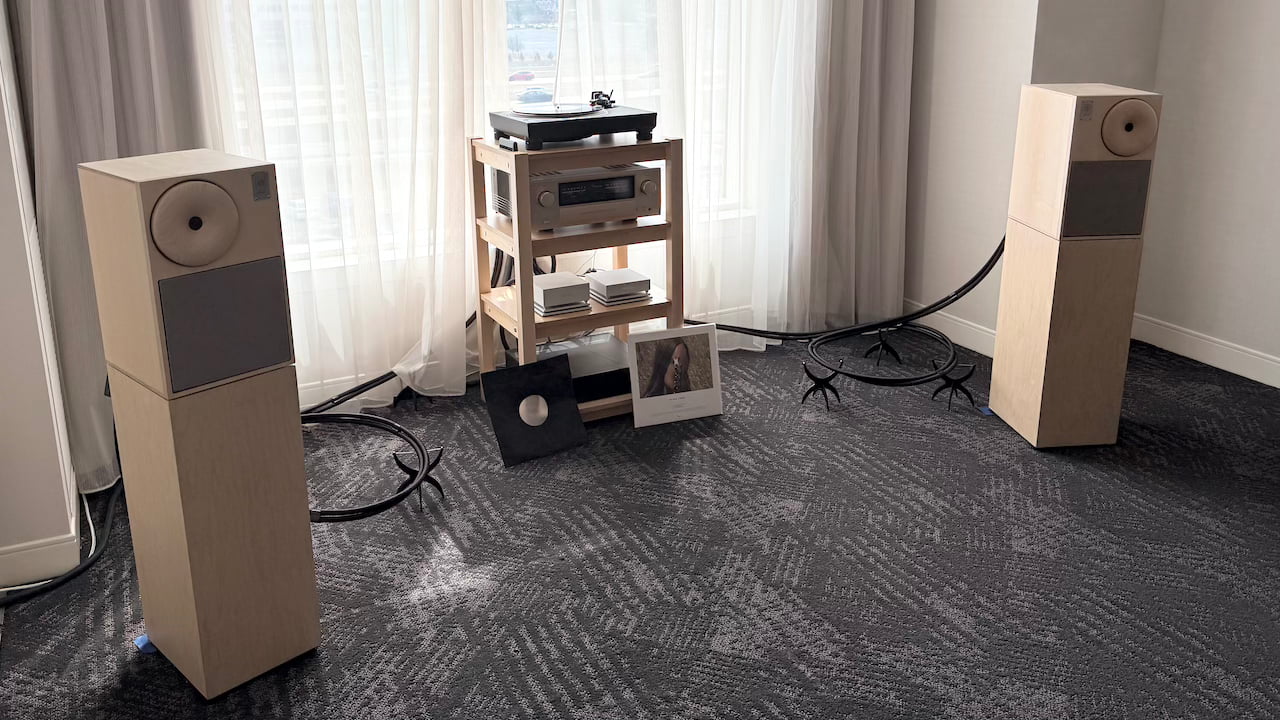
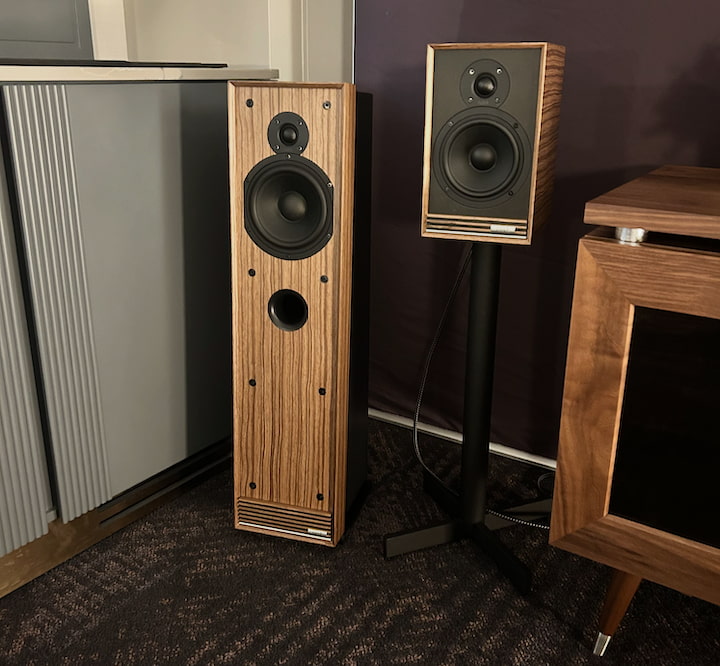
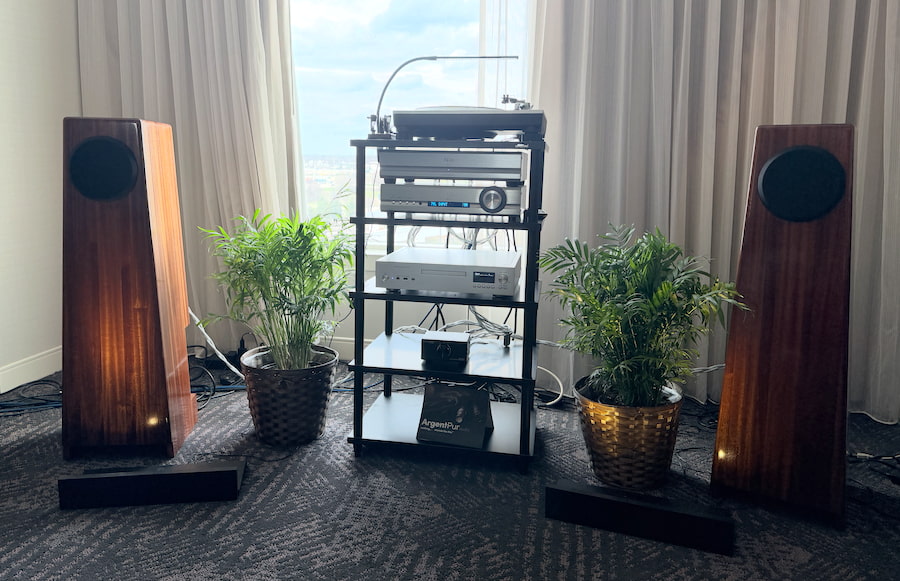
The Western Acoustics Type 2.1 didn’t look like a typical hi-fi play, and that was the point. New brand, simple Baltic birch cabinet, plywood stand, maple horn up front. Nothing about it screamed for attention. At $6,000 per pair, it sat in a system that wasn’t exactly modest either, anchored by an Accuphase integrated, a Technics turntable with a Dynavector moving coil, and a Nagra phono stage. It would have been easy for the speakers to get lost in that chain. They didn’t.
What I heard was unforced. No hype, no exaggerated bass, no artificial width. Just a stable, well-organized presentation that held together when things got busy. The combination of the Purifi PTT6.5X04 woofer and the FaitalPRO compression driver on a wide 110° waveguide explained a lot of that. Imaging was solid beyond a single seat, and the tonal balance stayed consistent as you moved around. The spec sheet lines up with what I heard. Real low-end reach into the high 30s, enough output to scale without strain, and a 4-ohm load that makes it clear these want proper amplification.
Advertisement
They’re also honest about placement. Rear-ported means you give them some room or you deal with it. Six inches or more off the back wall on a credenza would be a good starting point. These aren’t lifestyle speakers trying to fake credibility. They’re also not trying to be traditional hi-fi jewelry. This feels like a brand figuring out its identity in real time, and starting from the right place. If this is the baseline, Western Acoustics is worth keeping an eye on.
Amphion Argon7LX
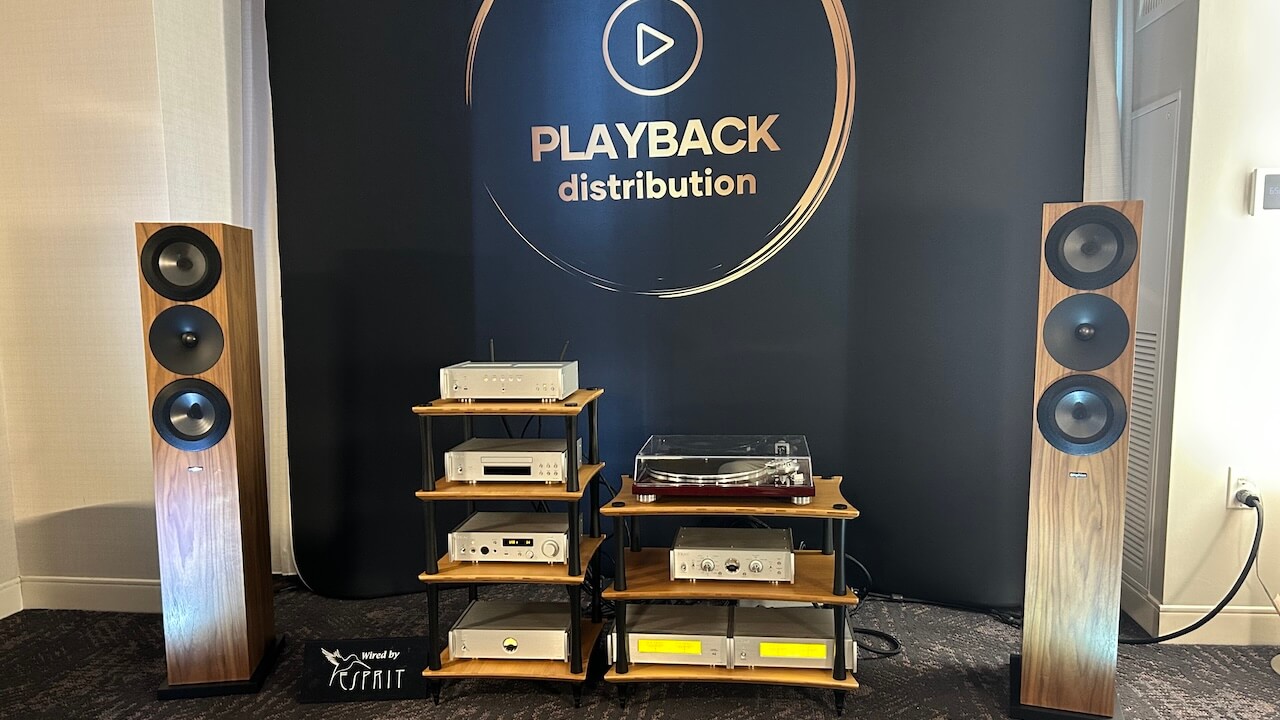
The Amphion Argon7LX doesn’t try to win you over with drama. It’s a straightforward design on paper. Two-way, dual 6.5-inch aluminum woofers, a 1-inch titanium tweeter, and a passive radiator handling the low end. What Amphion Loudspeakers brings is execution. Clean, controlled, and consistent. With expanded U.S. distribution through Playback Distribution, these aren’t a niche import anymore, and that matters.
In the room, the presentation leaned toward precision rather than spectacle. Imaging was stable, placement stayed locked in, and nothing shifted when the material got dense. The bass was controlled, but more importantly, it connected properly with the midrange and top end. That sense of cohesion is what stood out. It didn’t feel like drivers handing things off to each other. It felt like a single system doing its job without drawing attention to itself.
Advertisement. Scroll to continue reading.
On the practical side, it’s a 4-ohm load with 91dB sensitivity, so it’s not difficult to drive, but it benefits from an amplifier with real current. Amphion’s 50 to 300 watt recommendation feels realistic. The rated 28Hz to 55kHz extension is more than enough for full-range listening in most rooms without a sub. No tricks here. Just a speaker that focuses on getting the fundamentals right. If you’re looking for fireworks, look elsewhere. If you want something that stays composed and gets out of the way, this is exactly that.
Advertisement
Michell Audio Gyro
The Michell Gyro has always been one of the more recognizable designs in analog. This new version doesn’t mess with that identity, but underneath, almost everything has been reworked. The acrylic base is gone, replaced by a solid aluminium slab, and the main chassis moves to a precision-machined 19mm aluminium tooling plate. It’s stiffer, better damped, and clearly aimed at reducing resonance. Brass weights are embedded for balance and vibration control, foam inserts manage reflections around the tonearm mount, and the whole structure sits on Sorbothane isolation feet. The motor remains freestanding, connected only by the belt, with both the motor and PSU housed in machined aluminium enclosures to limit interference. Add in the inverted bearing with improved lubrication, re-tuned suspension, and updated tonearm coupling, and it’s clear Michell didn’t just tweak this. They rebuilt it.
Visually, it still looks like a Gyro, but more substantial. More serious. From an industrial design standpoint, it’s hard to argue with. It was the anchor of the Opera/Unison Research system at the show and did exactly what it needed to do. Stable, quiet, and controlled, without drawing attention to itself. That’s the job. It let the rest of the system speak.
The bigger conversation is price. At $8,999 without a tonearm and $10,998 with the TA2, cartridge extra, this is a very different proposition than older Gyros. Michell is clearly aiming at the same buyers looking at VPI Industries, Clearaudio, Thorens, and Kuzma. Whether it earns that spot comes down to performance, and that’s not something a show floor can fully answer. It looks the part. It’s built like it belongs. But at this price, it has to prove it over time.
Opera Callas Diva Edizione Speciale
The Opera Callas Diva Special Edition leans into what Italian brands tend to do well. Materials, finish, and a clear voicing philosophy that favors tone and texture over clinical precision. At $13,999, this is a substantial, reflex-loaded floorstander with a rear-firing dipole element. Built with hand-crafted wood cabinetry and leather-clad baffles, it feels more like something out of an atelier than a factory. Distributed in the U.S. by Fidelity Imports, it’s also physically serious at 65 kg per speaker. Plan accordingly. This is not a solo lift unless you enjoy bad decisions.
The design combines a forward-facing array with a rear dipole tweeter system. Up front, there’s an 8-inch long-throw woofer, a 7-inch midrange with a polypropylene cone and phase plug, and a 1-inch Scan-Speak 9700 tweeter run without ferrofluid and using a double decompression chamber. Around back, dual 1-inch tweeters add ambient high-frequency energy. The crossover uses 12 dB per octave slopes at roughly 200 Hz and 2 kHz, which points to a focus on phase coherence rather than aggressive filtering. On paper, it runs 30 Hz to 25 kHz with 90 dB sensitivity and a 4-ohm load, so it’s reasonably friendly but still wants an amplifier with some stability and current.
In the room, the presentation followed that philosophy. Not neutral in the strict sense, but balanced in a way that emphasizes flow and texture. The rear array added space without turning things diffuse, and the timing stayed intact. It didn’t shout to get your attention, which is the whole point. If you’re looking for something analytical, this isn’t it. If you want a speaker that leans into musicality without losing control, it makes a strong case.
Advertisement
Focal Mu-so Hekla
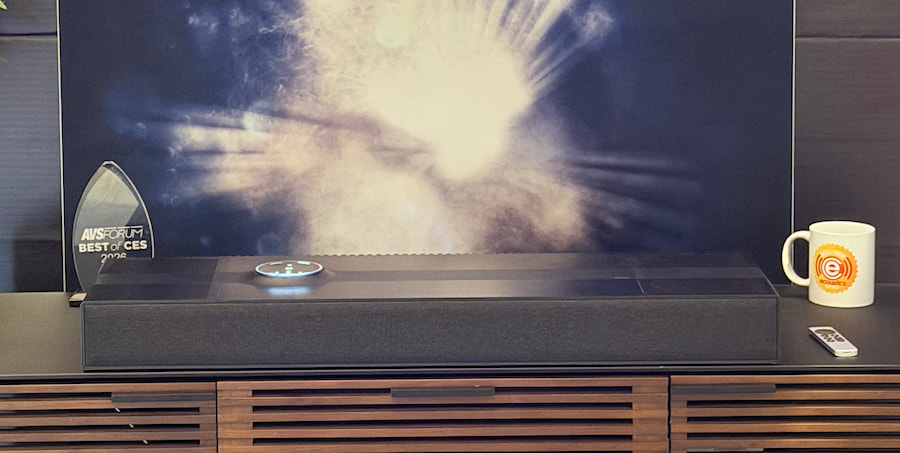
The Focal Mu‑so Hekla doesn’t pretend to be a soundbar, even if it lives in the same spot. At $3,600, it’s a single-box system built around Naim Audio’s Pulse platform, with Focal’s ADAPT room correction handling setup. Inside is a 15-driver array firing forward, sideways, and upward, designed to handle both stereo and Dolby Atmos without relying on external speakers. Setup is simple. No sweeps, no tones. You enter room dimensions in the app, and the system adjusts from there.
In use, it works. Atmos material has real width and height, and it doesn’t collapse into a front-heavy presentation. There’s enough spatial information that you start second-guessing where the sound is coming from. Bass extension is stronger than expected for the size, reaching into the low 30 Hz range, and it stays controlled. The overall presentation is composed. Effects move when they should, not because the system is trying to show off. Imaging holds together, and nothing drifts out of place.
Build quality is in line with the price. Brushed and bead-blasted aluminum, solid fit and finish, nothing flashy for the sake of it. It replaces a rack of gear, but the intent is performance, not convenience. It’s not cheap, and it doesn’t try to be. But it delivers in a way most soundbars don’t, which is probably the bigger point.
Advance Paris A-i190
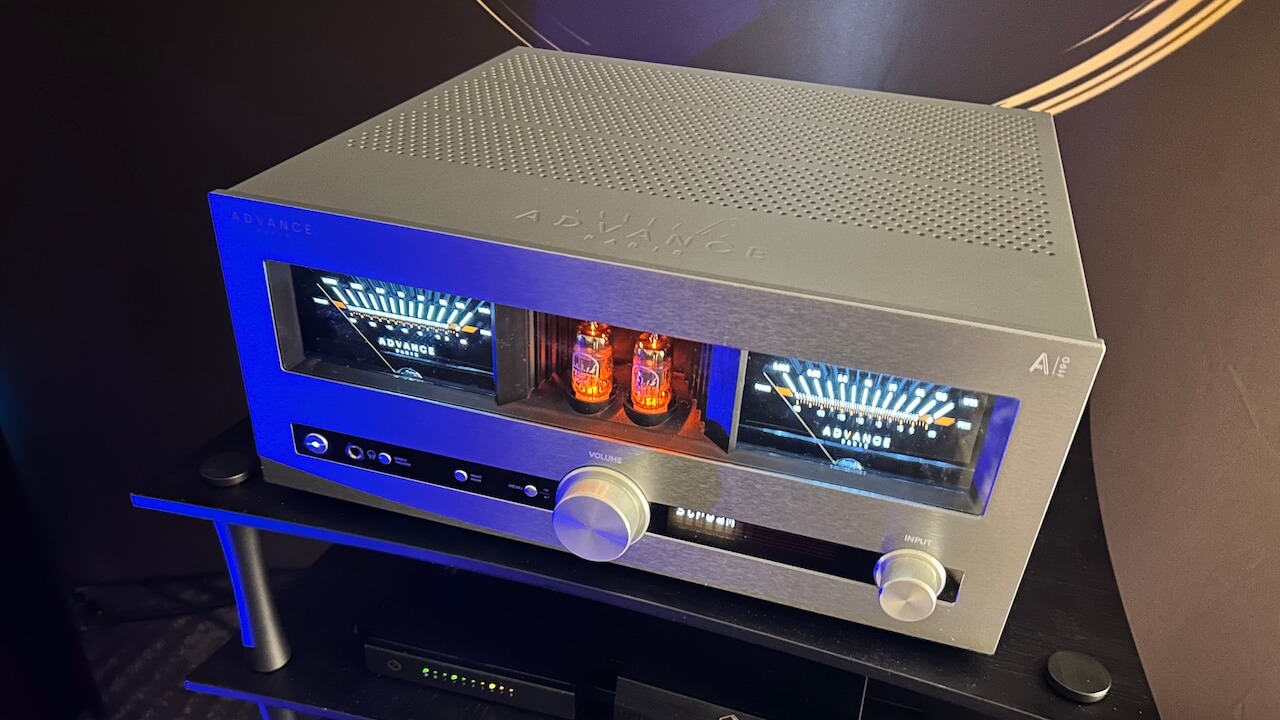
The Advance Paris NOVA A-i190 gets the balance right between design and function. Metal, glass, and VU meters that feel intentional and for the type of listener who favors a vintage look. The optional rotary remote is overbuilt in the best way. Heavy, solid, and clearly designed to last.
Inside, it’s a hybrid design with an ECC81 tube stage feeding a Class A/B output section. The ESS9017 DAC runs in Quad mode, backed by a 4-channel DSP handling EQ and up to dual subwoofer integration with proper crossover control. Connectivity is complete. HDMI eARC, USB with DSD, multiple digital inputs, five RCA inputs, MM phono, pre-outs, and dual sub outputs. Add the optional A-NTC streaming or A-BTC Bluetooth modules and you get full network audio or bi-directional wireless without adding boxes.
Advertisement. Scroll to continue reading.
Advertisement
In the room, it sounded composed. Slight warmth through the midrange, open top end, and controlled low end with real weight. More importantly, it never felt pushed. There’s enough headroom here to run a serious system without stress.
Ruark Audio Talisman R
The Ruark Audio Talisman R was one of the more surprising debuts at AXPONA 2026. It’s Ruark’s first floorstander in about 20 years, and if pricing holds under $2,000 when it lands in the U.S. through Fidelity Imports, it’s going to get a lot of attention. At roughly 85 cm tall (about 33.5 inches), it’s compact for a floorstander, and details were limited. No full driver breakdown yet, with more expected when it shows in Vienna. It didn’t feel like a prototype, though. Fit, finish, and overall presentation looked ready.
In the room, driven by the Ruark R610, it came across bold, crisp, and articulate. The soundstage was wider than expected, especially with electronic material, and it held together well. This isn’t a laid-back tuning. It has some energy, and it benefits from proper amplification. Pair it with something in the $1,000 to $2,500 range with decent current and you’ll be in the right zone.
I wanted a pair within a few minutes, which usually tells me enough. Some of the older crowd didn’t love the music choice. That’s their problem. Ruark isn’t playing it safe here, and that’s a good thing. If this is where they’re heading, they’re back in the conversation. Just don’t expect them to wait politely for permission.
The Metaxas & Sins Tourbillon T‑RX MK.II is not subtle. At $52,000, it doesn’t try to be. This is an evolution of the original Tourbillon, with a redesigned output stage derived from the flagship Papillon studio deck and upgraded silver capacitors in both the output and EQ sections. Distributed by Reel Sound Distribution, it sits firmly in the “no compromises” corner of analog sources. The build reflects that. Dense, over-engineered, and visually unlike anything else at the show or anywhere this side of Coruscant.
I’ve spent time with the earlier version at Jeff Garshon’s place, so this wasn’t my first exposure. Jeff may look like he just discovered tape last week, but he’s been deep into this for decades. That system, running through Metaxas amplification and MartinLogan electrostatics, made a strong case for what high-end reel-to-reel can do when everything is aligned. The MK.II builds on that. It’s still built like a tank, still unapologetically mechanical, and still one of the most convincing analog sources I’ve heard.
Advertisement
The room at AXPONA reflected that interest. Tape fans were stacked at the front like it was an open house at Willy Wonka’s factory, minus the chaos. And honestly, it makes sense. This isn’t just about playback. It’s about presence. Compared to something like the Innuos Nazaré, which is a very well-engineered digital box, the Tourbillon T‑RX MK.II is something you interact with. You don’t just listen to it. You end up staring at it.
At AXPONA, it was paired with the Metaxas Emperor Omni, a full-range electrostatic design that looks as unconventional as the deck itself and carries a $159,000 price tag. The pairing made the intent clear. This is a system built to push analog playback to its limits, both in presentation and execution.
REL S/550
REL’s subwoofer demo was one of the more interesting rooms at AXPONA, and not for the usual reasons. Most sub demos chase impact. More slam, more pressure, more low-end theatrics. REL went in a different direction. Their focus was height. Not treble. Not volume. The vertical scale of the presentation and how much space the music occupies in the room.
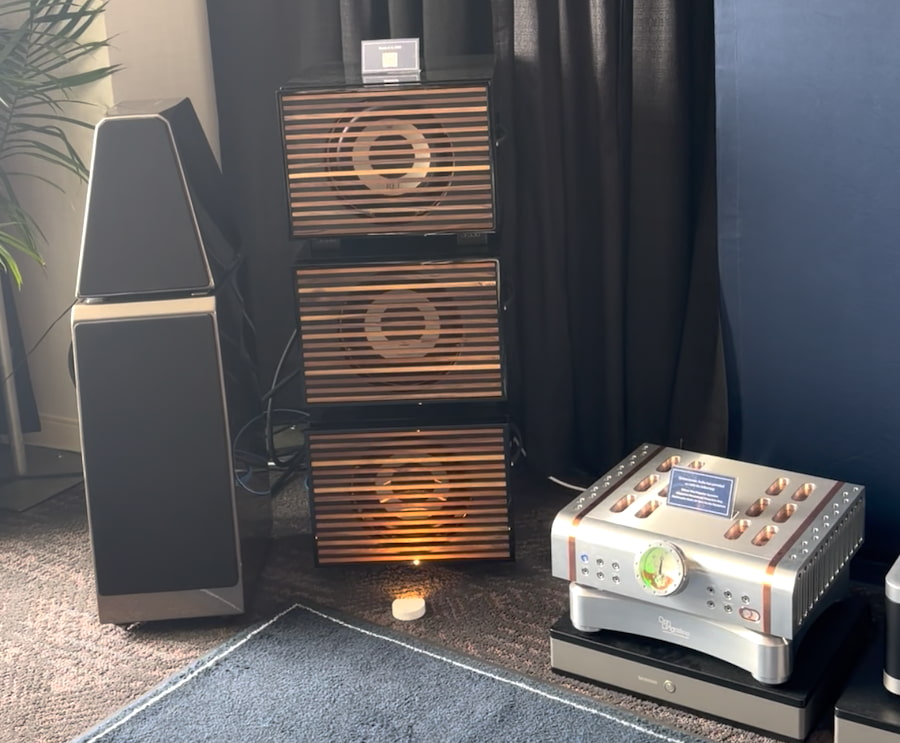
The system didn’t exactly ease you into it. Wilson Audio WATT/Puppy speakers, a Dan D’Agostino Momentum MxV Integrated Amplifier, and a WADAX Studio Player put the room well past $200K before adding subs. REL added six REL S/550 units, about $20K more, stacked three per side.
REL kept the demo simple. Subs on, subs off. With the subs off, the soundstage didn’t just lose bass. It shrank. The presentation flattened and lost height. Turn them back on and the room opened up again. Vocals stood taller. Instruments had more air above them. It sounded bigger, not louder.
Advertisement
The room wasn’t large, which made the setup more surprising. Six subs in that space should have been too much. It wasn’t. The S/550s blended cleanly with the speakers and never drew attention to themselves. No bloat, no excess, no sense they were taking over.
Advertisement. Scroll to continue reading.
Improving a system at this level is not easy. In this case, REL didn’t change the character. They extended it. And once you hear what happens when the subs go off, it’s hard to ignore.
VPE Elevon
The VPE Elevon is the first active speaker from VPE Electrodynamics, a brand I’ve mostly associated with subwoofers. At $15,000 per pair, the slim floorstander didn’t stand out visually in a crowded show, but the engineering behind it is worth noting. It’s a three-way collaboration between VPE, SpeakerPower, and Orchard Audio.
Each speaker has 1,000 watts of built-in amplification. The driver layout uses a 7.5-inch SB Acoustics Satori coaxial driver and a 9.5-inch Satori woofer that fires downward through a front slot. The cabinet can also be configured as a dipole with removable side panels, but I didn’t hear that version.
Advertisement
In the room, the presentation was consistent and controlled. Anette Askvik’s “Liberty” can expose issues with balance and detail. The Elevon kept the vocal centered, with good separation and stable imaging. Low-level detail was there without being pushed forward.
These also managed to disappear in the room, which isn’t easily done. The soundstage extended beyond the cabinets with reasonable depth and width, and nothing felt exaggerated or disconnected. It’s a straightforward execution. The Elevon doesn’t lean on a specific sonic signature. It focuses on control, balance, and integration, and that came through in this setup.
Legacy Audio Talos
The Legacy Audio Talos ($65K-$75K/pair ) doesn’t try to hide what it is. My first impression was simple. Big, yet the Valor are even bigger. At nearly 4.5 feet tall and close to 250 pounds each, Talos are not speakers you casually reposition. The cabinets are well finished and the design is clean, but the scale dominates the room.
The driver array reflects that approach. Dual 12-inch woofers, dual AMT tweeters, a coaxially mounted 3-inch midrange, and dual 12-inch passive radiators, which are all powered by 3,000 watts of Class D amplification.
On paper, it reads like brute force. In the room, it didn’t come across that way.
Advertisement
Listening, the presentation was controlled and balanced rather than aggressive. The internal DSP, built around a 56-bit processor with a two-stage room correction process, is clearly doing a lot of the work. Instead of pushing the room, the system seemed to adapt to it.
What stood out most to me was imaging. There was a clear sense of height, width, and depth, and it didn’t feel tied to the cabinets. At times, it was hard to pin the sound to the speakers themselves, which is not what I expected walking in. The Talos is physically imposing and technically complex, but the result isn’t overwhelming. It’s measured, controlled, tonally accurate, and focused on placing everything where it should be in the space.
Acora Acoustics MRC 5.2D
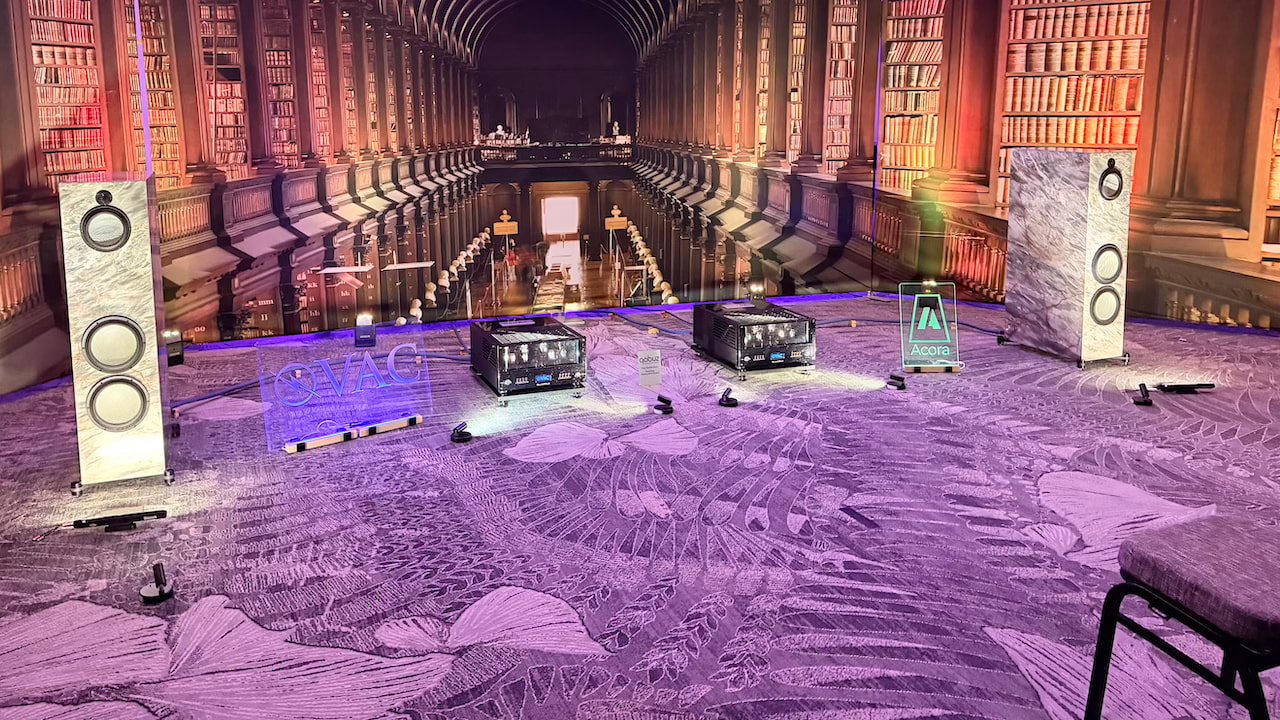
The Acora Acoustics MRC 5.2D caught my attention for a simple reason. It didn’t look like everything else. After walking through room after room at AXPONA, you start to notice how many speakers rely on the same formula. MDF cabinets, wood veneer, some variation of black or walnut. It works, but it all starts to blend together. A few brands tried to shake that up with painted finishes and custom artwork. That might land with a younger crowd, but it’s not for me.
Acora goes in the opposite direction. Stone. Granite and marble cabinets, machined and polished into something that looks more like sculpture than typical hi-fi gear. Every pair is cut from natural material, so no two are exactly the same. Even sitting idle, they draw attention. And they sound as gorgeous as they look!
Advertisement. Scroll to continue reading.
Advertisement
What stood out to me is that the design isn’t just visual. Working with stone at this level is not trivial, and it shows in the execution. The cabinets feel solid and inert, which translates into a clean and controlled presentation in the room. No obvious cabinet coloration, no added resonance.
Even at $58,000 per pair the MRC 5.2D sit near the less expensive end of the Acora line which stretches up to $318,000 per pair for their flagship VRC in granite. Having heard both at different shows over the years, the MRC 5.2D gets dangerously close to the VRC’s flagship level performance, which actually makes them seem more accessible than expected.
Prodigio Audio WR2
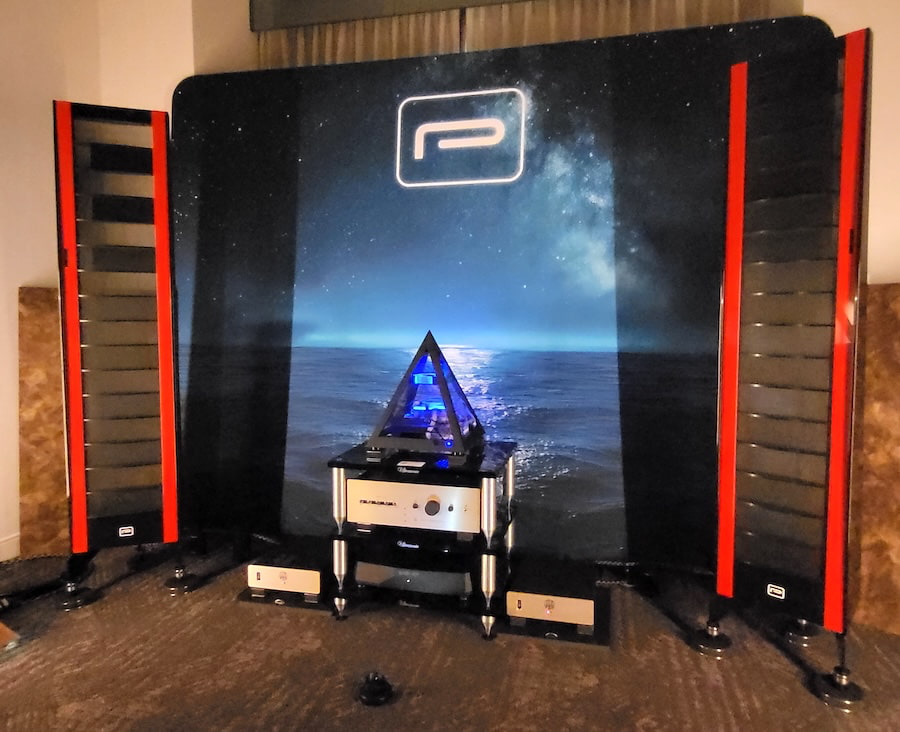
The Prodigio Audio (formerly Popori Acoustics) room stood out because the large Hungarian electrostatic/ribbon speakers (model WR2, $35K/pair) were paired with one of the more interesting technologies at the show. The pyramid placed between the roughly 5-foot-tall speakers housed the BACCH 3D system, and it fundamentally changed how the system presented sound.
This is very much a one-seat experience. Even sitting just off center, the effect drops off quickly. In the sweet spot, though, it’s unlike anything else I heard at the show. Sounds didn’t just extend beyond the speakers, they moved around the room in a way that felt deliberate and trackable. At one point, I heard a sound begin behind me to the left and travel forward across the room to the right. That’s not typical stereo imaging.
The BACCH 3D system is doing the heavy lifting here, creating a level of spatial control that goes well beyond traditional two-channel playback. Calling it a new dimension isn’t far off, but it’s also highly dependent on positioning and setup.
Advertisement
Without BACCH 3D engaged, the speakers stood on their own as a strong electrostatic design. I heard good bass extension for the type, along with clean mids and treble. There’s enough here for those who want a more conventional listening experience, but the real story is what happens when the BACCH system is in play.
In a home theater context, this kind of spatial manipulation could open up some interesting possibilities, assuming the setup and seating are dialed in correctly.
Noble Kronos IEM
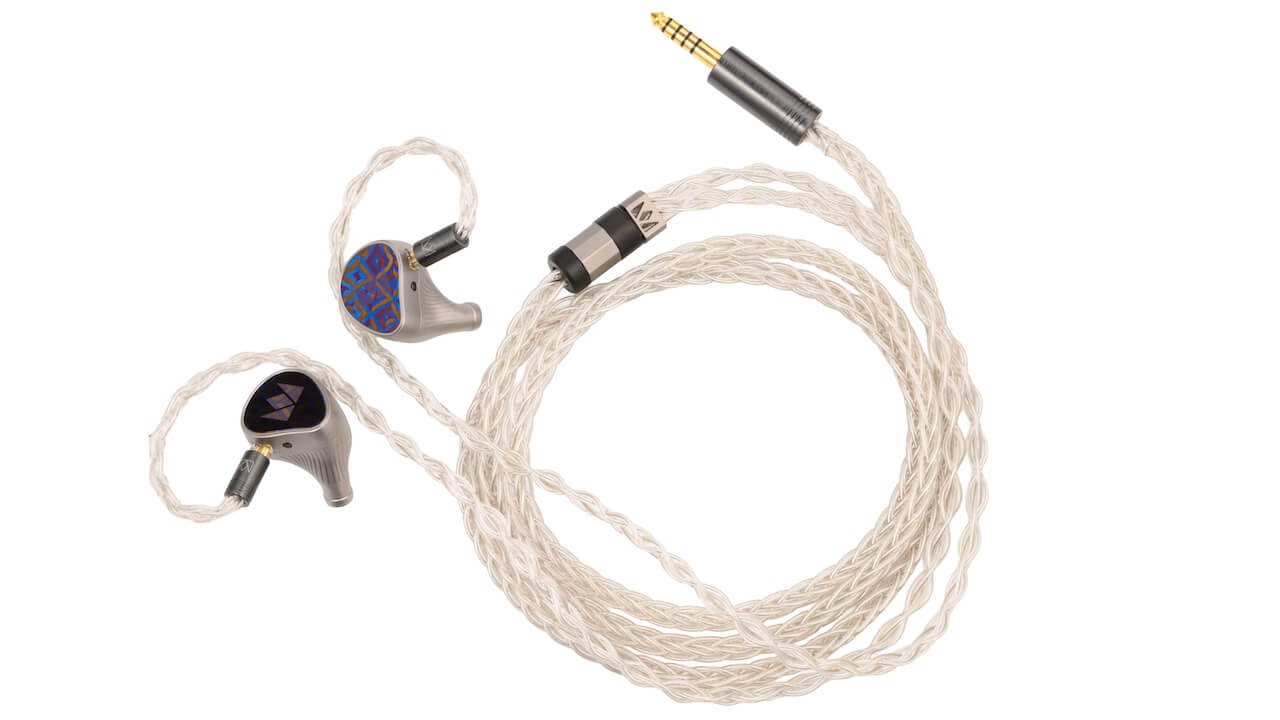
The Noble Audio Kronos took Best in Show for wired in-ears, and it wasn’t hard to see why. It combines design and engineering in a way that stands out even at a show like AXPONA.
The design starts with the titanium Damascus faceplates. They look striking, but they’re also difficult to execute. Working with titanium is already challenging, and applying a Damascus-style process adds another layer of complexity. It’s not just for show. It reflects a level of craftsmanship that most brands don’t attempt. The inner shells are also milled from titanium, which keeps the structure rigid without adding unnecessary weight.
Inside, the layout is just as ambitious. Each earpiece uses a multi-driver configuration that includes dynamic drivers for bass and sub-bass, balanced armatures for mids and highs, electrostatic drivers for the upper frequencies, and a bone conduction driver for added resonance. Getting that many driver types to work together in a small enclosure is not trivial, and the crossover design has to do a lot of work to keep things coherent.
Advertisement
What I heard was a detailed and controlled presentation that didn’t fall apart under that complexity. There’s a reason John Moulton has the “Wizard” nickname. The Kronos doesn’t rely on one aspect to stand out. It’s the combination of execution, materials, and tuning that makes it work.
T10 Bespoke
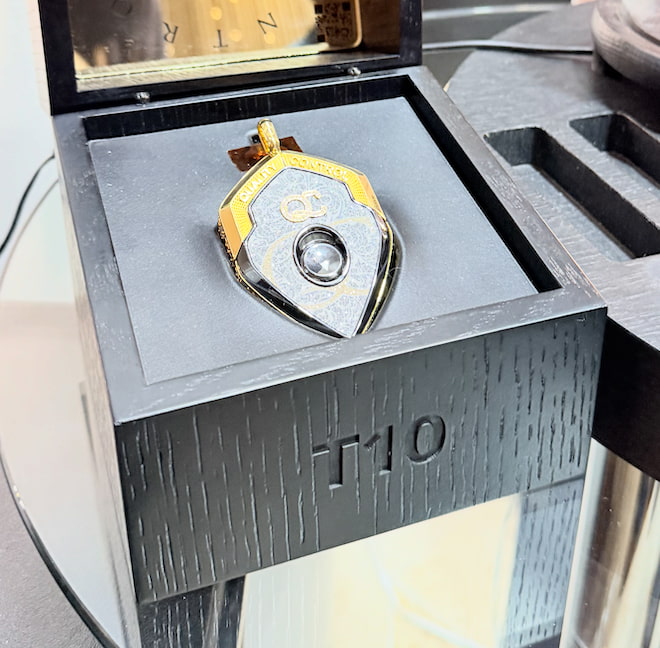
The Ear Micro Bespoke T10 will strike some people as expensive audio jewelry. I get that reaction, but it misses the point. What I heard and saw felt more like an early version of where wearable audio is going.
Advertisement. Scroll to continue reading.
Bear Clark calls them ear-computers, not earphones, and that framing makes more sense once you understand the intent. The T10 isn’t just about playback. It’s built around a sensor suite and input methods that go beyond taps on a shell. The idea is subtle, low-visibility control. Small physical cues, like jaw or head movement, can be used to interact with the system. Some of the functionality is still in development, but the direction is clear.
In practice, that opens up use cases that current in-ears don’t address well. Discreet notifications, the ability to check or respond without pulling out a phone, or triggering actions without obvious gestures. There are also broader safety and accessibility angles. Quiet ways to signal for help or control connected devices without drawing attention. None of this is fully realized yet, but the foundation is there.
Advertisement
That’s why it stood out to me for innovation. The ceiling is defined more by software and ecosystem than by the hardware itself. As wearable tech continues to move toward connected, body-area systems, devices like this start to make more sense as part of that network.
It also works as an in-ear. The sound quality was solid, and the ability to tailor tuning to the user adds practical value beyond the concept. The design leans premium, and the price will limit the audience, but this feels less like a finished product and more like a preview of what could be standard down the line.
Jones & Ceretta Troubadour
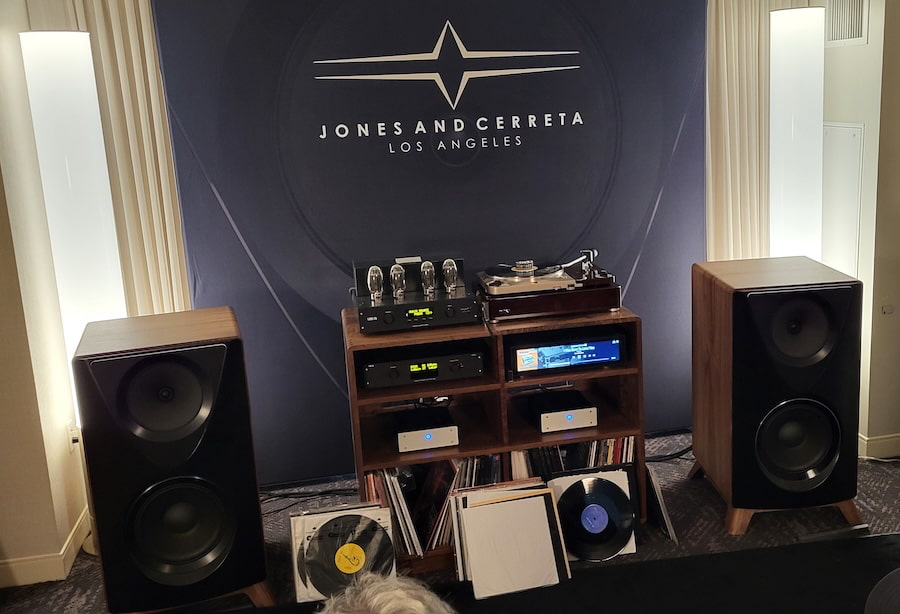
Andrew Jones has a long and storied history of loudspeaker design. From a pair of bookshelf speakers at Pioneer that sold for $129.99/pair to the flagship TAD tower speakers, the Reference One at $80,000/pair, Jones’ designs have run the gamut of price ranges and form factors, but all have offered exceptional sound quality. At Axpona, Jones announced his latest project – the Troubadour ($33,900/pair) – a floorstander with impressive dynamic range and extended frequency response. He also launched a new company, Jones and Cerutta, to make and sell the speakers.
The Troubadour uses an innovative concentric field coil driver architecture and a unique cabinet configuration which leads to precise imaging, extended bass and high sensitivity (95 dB @1W/1m)). As we have seen in Jones’ work at both KEF and ELAC, the designer favors concentric (coaxial) two-way drivers for midrange and treble for their time alignment, which allows the two speaker drivers to act as a single point source, thereby improving imaging. And by using an innovative powered field coil design, instead of a permanent magnet, the speaker is able to reach higher magnetic flux densities, reducing hysteresis of the driver which then leads to lower distortion as well as extremely high efficiency. You can power these bad boys with a single-ended tube amp, if that’s your cup of tea.
Jones explained the tech and demonstrated the new speakers to endless standing room only crowds at Axpona. The Troubadours offered precise imaging with a wide and deep soundstage, with exceptional dynamic range. And while they sell for nearly $34,000, they offer meticulous fit and finish and come with a free pair of floorstands to aim the drivers at the usual listening position. If there is a “rock star” among speaker designers, Andrew Jones is that guy, and the Troubadour will likely be a successful addition to his rich portfolio, built over 40+ years in the business.
Advertisement
Aretai Contra 200F
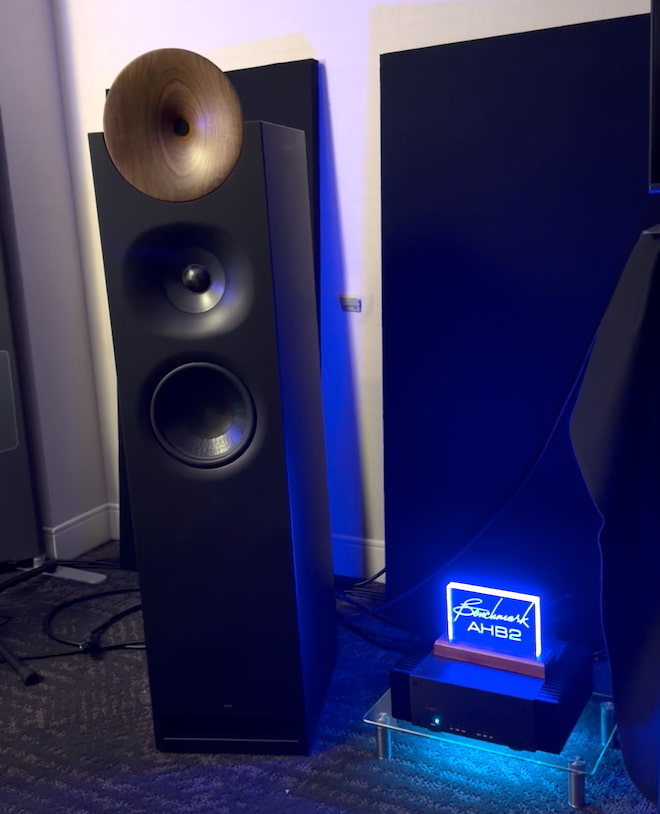
High-end speakers that look like plain black boxes sort of miss the point. If you’re going to charge upwards of $30,000/pair for speakers, you had better make sure they sound great, and look as good as they sound. Latvian speaker maker, Aretai, clearly understood the assignment as their Contra 200F tower speaker unites elegant cabinet design with impeccable sound.
Featuring a three-way design and a tweeter waveguide that looks like a horn instrument, the Aretei throws a realistic soundstage and can reach all the way down to about 25 Hz. It’s also highly efficient at 96 dB (@1W/1m) allowing it to be driven by virtually any high quality amplifier, tube or solid state. We got to see (and hear) the Aretai 200F with both its white gloss tweeter module and a wood-veneered tweeter, which was unveiled at Axpona.
Aretai’s new US distributor DreamScapes A/V paired the Aretai speakers with US-based amplifier maker Benchmark. At the show, the Aretai Contra 200F loudspeakers were driven by two Benchmark AHB2 power amplifiers, paired with a Benchmark HPA4 pre-amp/headphone amp. Benchmark is headquartered in Syracuse, NY, not far from DreamScapes A/V’s showroom.
It was clearly a successful pairing as the speakers presented a punchy and dynamic representation of everything from jazz to classical to EDM. And that 25 Hz bass extension made itself known, not just in your ears, but deep in your gut with visceral impact.
Arendal 1610 Tower 8
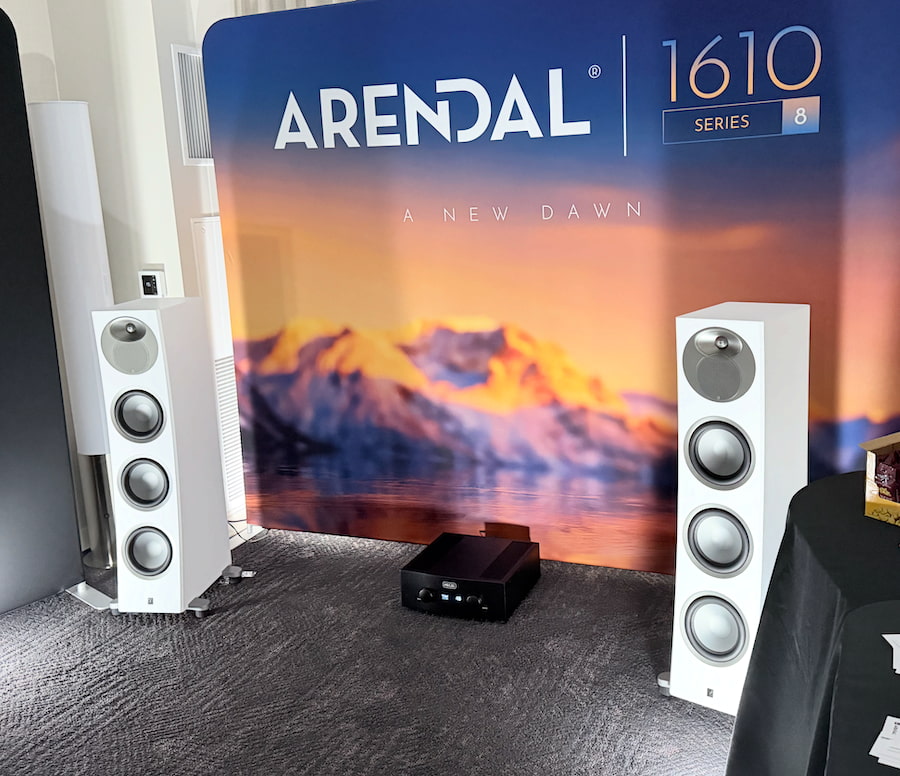
A small town in Norway houses a speaker company with big ambitions: to make some of the finest loudspeakers on the planet. And while our experience with the brand is admittedly fairly limited, they certainly made some of the best-sounding speakers we heard at Axpona 2026. Arendal is a direct to consumer company, now selling in the U.S. market to audiophiles who want something different from the traditional mainstream speaker brands.
Advertisement. Scroll to continue reading.
Advertisement
The Arendal 1610 Tower 8 ($7,600/pair) is the company’s latest flagship tower loudspeaker, but not their largest. It features 3-way design with 1″ aluminum-magnesium tweeter and triple 8″ aluminum cone bass drivers. In the demos we heard at Axpona, these substantial speakers managed to virtually disappear, providing a deep soundstage with instruments and voices floating disembodied in three dimensional space. Micro and macro dynamics were excellent with fine details in piano, guitar and violin presented naturally, while also being able to reproduce the deep thunderous kick of a bass drum or tympani in a symphony orchestra.
The company offers other more affordable models, including the Bookshelf 8 ($3,600/pair), Slim 8 ($2,800/pair), and Center 8 ($2,100 each). While there are no showrooms in which you can audition the Arendal speakers, the company does offer free shipping and a full 60-day audition period with free return shipping in the unlikely event that you decide not to keep them. The company also offers a generous 10-year warranty on their products so you can feel comfortable in your investment.
Paradigm Premier 820F V2
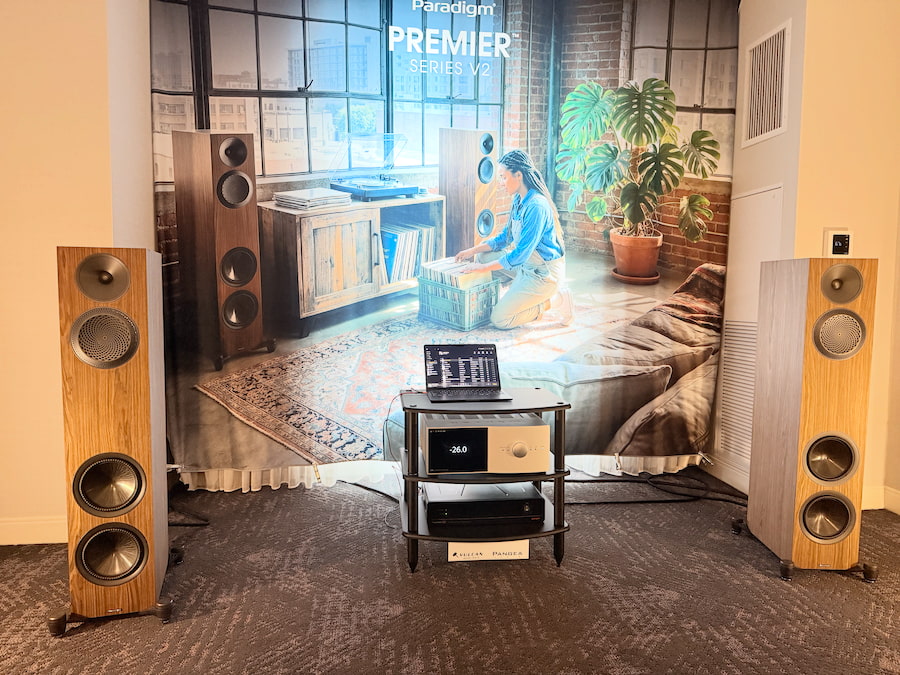
Walking from million dollar room to million dollar room, with some speaker systems alone selling for high six figures, it’s easy to get jaded at Axpona. That’s why walking into Paradigm’s room was such a revelation. The company’s new Premier Series 820F v2 tower loudspeaker offered up tight extended bass, precise imaging, and effortless reproduction of male and female vocals as well as excellent dynamic range on some pretty demanding music tracks. And their price was among the lowest we saw at the show. These elegant-looking tower loudspeakers sell for just $1,299/each ($2,598/pair). That leaves room in the budget for a nice integrated amp or A/V receiver to drive them.
The Premier Series feature trickle down technology from the company’s flagship Founder Series speakers which sell for up to $9,000/pair. This includes the company’s ALMAC (aluminum, ceramic, magnesium) concentric tweeter/midrange modules and ALMAG (aluminum magnesium) woofers. Company reps tell us the new towers can put out usable bass as low as 18 Hz, which is impressive for such an affordable speaker. If your needs are simpler (or your room is smaller), you can get into the Premier Series v2 starting at $798/pair for Premier 120B v2 bookshelf speaker. There are a total of six models in the new line-up including a new center channel speaker (Premier 620C v2) for $1,299, which features identical drivers to the 820F V2 tower but laid out differently for horizontal positioning. Home theater fans may want to check out the Premier 520LCR v2 (LCR Channel) which is priced at $899/each.
Paradigm’s Premier Series v2 speakers are expected to begin shipping in the United States in June, 2026.
Advertisement
Best Budget Subwoofer: SVS 3000 Micro R|Evolution
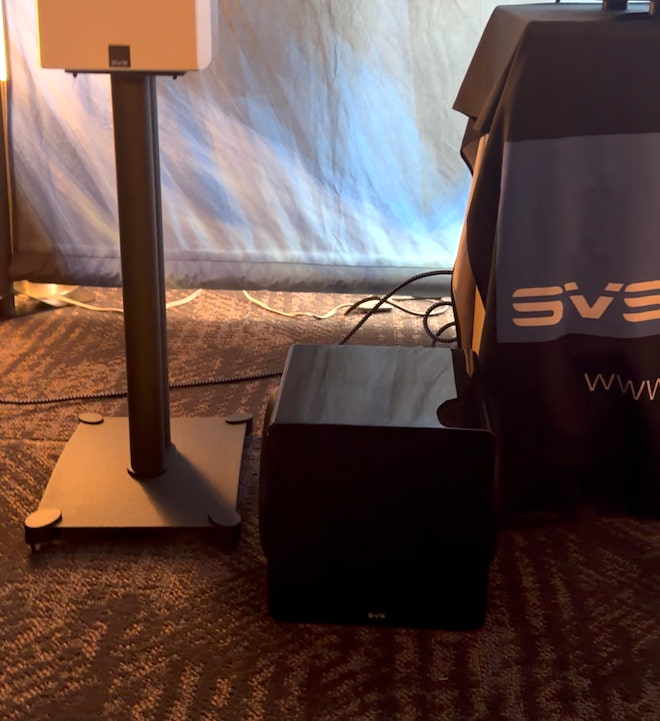
It wouldn’t be an audio show without something new from SVS, and for Axpona the latest entry was the company’s 3000 Micro R|Evolution powered subwoofer. We first saw this compact little dynamo at CES 2026, but now the company has officially launched the production version. Housed in a compact cube, measuring just 11 inches on each side, with dual opposing 9-inch drivers, SVS says the 3000 Micro can extend to 20 Hz. And the list price is just $999. This makes it the most affordable sub in the SVS line to feature trickle down power and processing tech from the company’s much larger (and much more expensive) flagship subwoofers.
SVS was showcasing the 3000 Micro with a pair of their smaller bookshelf speakers in the Ultra Evolution series, doing A/B comparisons with their flagship SVS Ultra Evolution Pinnacle tower speakers ($5,000/pair) to show just how close a bookshelf/subwoofer combo can come to a much larger, more expensive set of tower speakers for those with more limited space (and more limited budgets).
Loewe Stellar OLED TVs
I admit I have a bit of a soft spot for German TV maker Loewe as I owned one of their first HDTVs, a 38-inch 16:9 CRT TV which provided exceptional picture quality in its day (2002) and tipped the scales at over 200 pounds. With the demise of CRT and the rise of the flat panel, Loewe faded from the U.S. market, eventually filing for bankruptcy and insolvency. But in 2019, fresh investments brought the brand back from the brink with a revitalized operation, new factory in Germany and a whole new suite of products. Last year, the company announced their intention to return to the U.S market with both luxury TVs and headphones.
Built using the latest OLED panels from LG Display, and assembled by hand in Germany, Loewe has introduced a full line of OLED TVs sized from 42 to 97 inches. The sets support Dolby Vision HDR and Dolby Atmos sound with self-emissive OLED pixels providing outstanding contrast, color saturation and black levels. But Loewe’s TVs are more than just boring black rectangles that hang on your wall. They are built to be visible from all sides and feature luxury touches like motorized rotating stands that can give you the best picture performance from anywhere in your room, an elegant perfectly balanced aluminum remote with intuitive operation, and unique chassis design touches like lava-based concrete back plates on their models up to 65 inches. If you want your TV to look as good when it’s off as it does when it’s on, then Loewe’s new Stellar OLED TV line is worth a look.
Best Home Theater Sound: Theory Audio 9.2.4 Home Theater
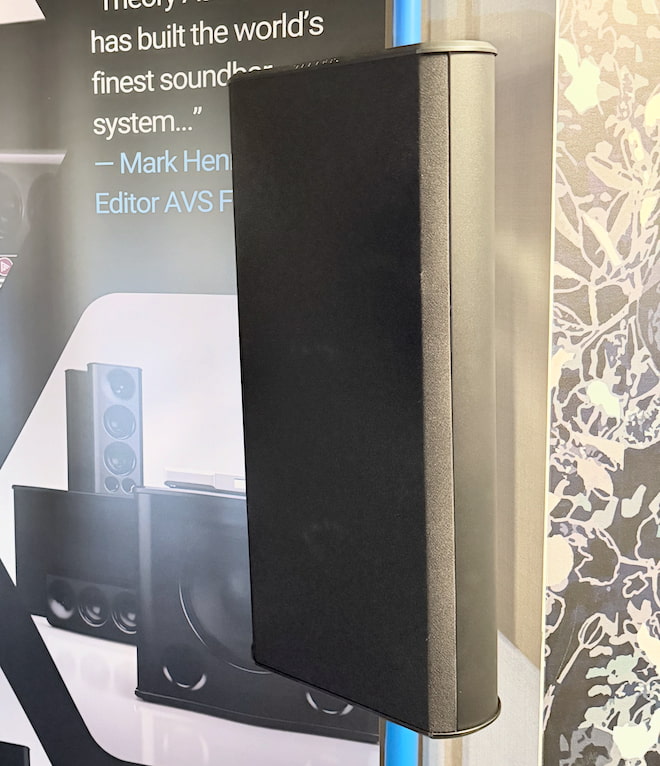
As a CI (custom installation) brand, Theory Audio isn’t as well known as the standard consumer speaker brands, but they may be one of the best kept secrets of home theater and whole home audio. The company’s high-efficiency compression drivers are the standout feature of the lineup, delivering punchy, dynamic sound for both music and movies. The speakers are available in on-wall, in-wall, in-ceiling, and pendant designs. All models require the company’s Distributed Loudspeaker Controllers (DLCs), which provide power, EQ, and DSP to optimize performance.
We’d previously only seen and heard Theory Audio speakers at CEDIA and have been impressed with what we’ve heard. And now we know that the magic captured at CEDIA carries over to other environments as well, even in a tiny little hotel suite. Custom installation firm DreamScapes A/V installed a full 9.2.4-channel Theory Audio system that rocked the walls of the little hotel room suite they were installed in. Because drilling big holes in the walls and ceilings at a hotel is generally frowned upon, the company built a cage structure out of 2x4s to support all 13 speakers and tossed in a couple of powered subwoofers for good measure.
Driven by a Kaleidescape Strato E 4K movie player and Mini Terra Prime SSD hard drive loaded up with a few dozen 4K movies in Dolby Vision and Dolby Atmos, the Theory Audio system sounded better than some premium movie theaters I’ve been in and superior to any other home theater speaker set-up we heard at the show.
Advertisement
Advertisement. Scroll to continue reading.
Credit also goes to Dreamscapes A/V’s installation and engineering team. They managed to get the system installed, calibrated, and optimized to a very high level with less than a day to work with. If that’s what they can do in a hotel room, it raises expectations for what’s possible in a properly set up home.
Weirdest Looking Speaker System That Also Sounded Great: Fourier Sound
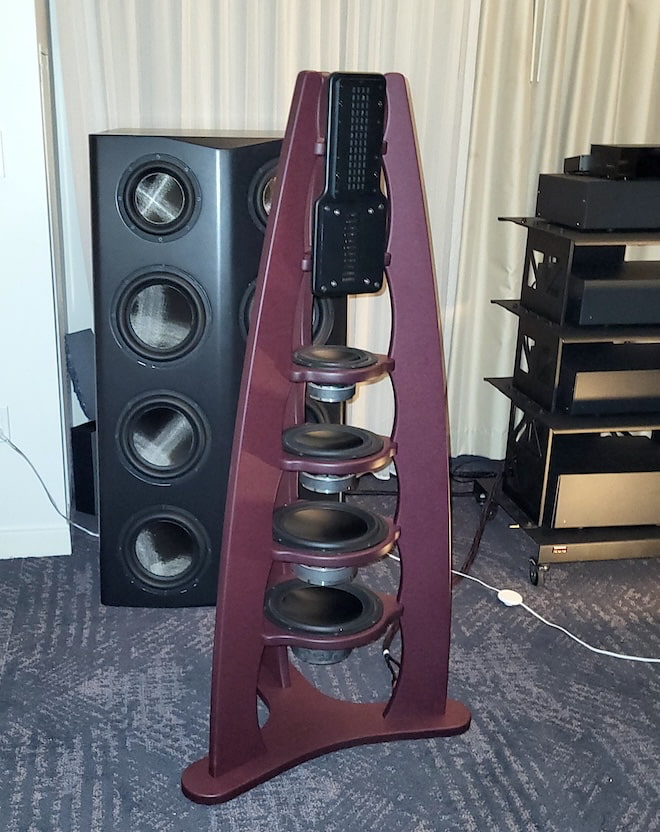
There were a whole lot of boring rectangular boxes at Axpona this year, but Fourier Sound’s Fourier Series 1 “Founders Edition” speaker system was anything but that. Featuring a tapering pyramid-like structure with horizontally mounted midrange drivers and front-firing tweeters, the Series 1 put out some of the most realistic sounding drum and percussion music I heard at the show, with outstanding dynamic punch and a wide expansive soundstage that filled the room. Vocals also came through cleanly and articulately in mellower singer/songwriter fare and the bass and synth notes of EDM tracks like “Alive” from Kx5/deadmau5 shook visitors to their core.
The system includes two multi-driver tower loudspeakers as well as the Fourier Foundation Bass Modules, which feature 8 separate bass drivers, delivering 4,000 total watts of power to the subwoofers.
The Fourier Founders System is priced at approximately $50,000 USD for the entire set. We don’t normally grant “best in show” awards to prototype systems (the Fourier Series 1 system is not yet in general production), but we felt that this system’s unique looks, innovative design and exceptional performance earned an exception. We hope the company managed to get some interest at Axpona to get these beauties into the hands of diehard music-lovers looking for something different from the usual black boxes.
Back when Netflix was proposing a takeover of Warner Brothers, you might recall that director James Cameron had no shortage of critical things to say.
Cameron went so far as to write a heavily publicized letter to Senator Mike Lee, lamenting the Netflix Warner Brothers merger (and only the Netflix merger) as “disastrous to the motion picture business.” In the letter, Cameron calls himself a “humble movie farmer,” and repeatedly insisted Netflix would shorten the 45-day theater-to-streaming window (Netflix repeatedly stated the opposite).
Here’s the weird thing: Cameron had absolutely no criticism to offer of the alternative (and now reality) $108 billion Ellison family merger of Paramount and Warner Brothers, despite the deal being exponentially worse across every possible metric.
“I know David quite well. And I know that he really cares about movies. And he’s a natural born storyteller and thinks like almost an old school entrepreneurial producer that was a storyteller that loves storytelling and loved putting on spectacular shows,” Cameron said. “He’s the right man for the job to run a major studio, and now it looks like he’s going to have two of them, you know, swept under his leadership, which doesn’t bother me at all.”
So basically Cameron likes the deal, and is willing to overlook the massive layoffs looming just over the horizon due to unprecedented consolidation, because he personally likes the Ellison family. And the Ellison family promised him that they won’t touch the 45 day delay between theatrical runs and home release.
The problem (for James and everyone else) is that pre-merger promises are utterly meaningless. Every single time Warner Brothers has merged (now four times over 20 years) it’s been an abject disaster, preceded by all sorts of empty promises about amazing new synergies. The AT&T merger alone resulted in 50,000 layoffs, and there are indications that AT&T executives could be viewed as immeasurably competent compared to what we’re seeing out of Ellison-owned Paramount and CBS News.
It’s “funny” because in Cameron’s letter to Lee, he offers this observation about Netflix:
Advertisement
“What administrative body will hold them to task if they slowly sunset their so-called commitment to theatrical releases?”
But the exact same applies to the Ellison family promises. It’s potentially worse given the Ellisons’ close ties to the administration, which will not only mean rubber-stamped federal merger approval, but less accountability later down the line (in a country where Trump has already guaranteed that corporate regulators lack the ability to do this or any other job).
It seems likely that the Ellisons promised other things to Cameron. Time will tell.
But Paramount’s debt from the CBS, MMA, and now Warner Brothers deals is so historically massive, it’s simply inevitable that this results in all manner of layoffs and corner cutting to service it. Denying that this is coming is like trying to debate physics, or have a fist fight with a river. This sort of consolidation is uniformly harmful to labor, consumers, and creatives. We literally just went through all of this.
David Ellison is telling anybody who’ll listen that this merger will be different and will magically result in a bigger, bolder Hollywood, but there’s simply no historical evidence to believe a single word he’s saying. Every Warner Brothers merger to date has been pointless and awful, but this one has the potential to be historically so.
I would love to tell you everything about my favorite game of the year so far. But that would be doing a great disservice to Titanium Court. I’m not even sure I could explain it all, anyway.
Titanium Court is a run-based game with elements of permanent progression, so it’s technically a roguelite. However, you cannot really break Titanium Court like you can with Balatro. There are multiple ways to win a run, but you have to play by the rules. Gradually learning what those are — and how the game suddenly changes them — is a big part of what makes this so effective.
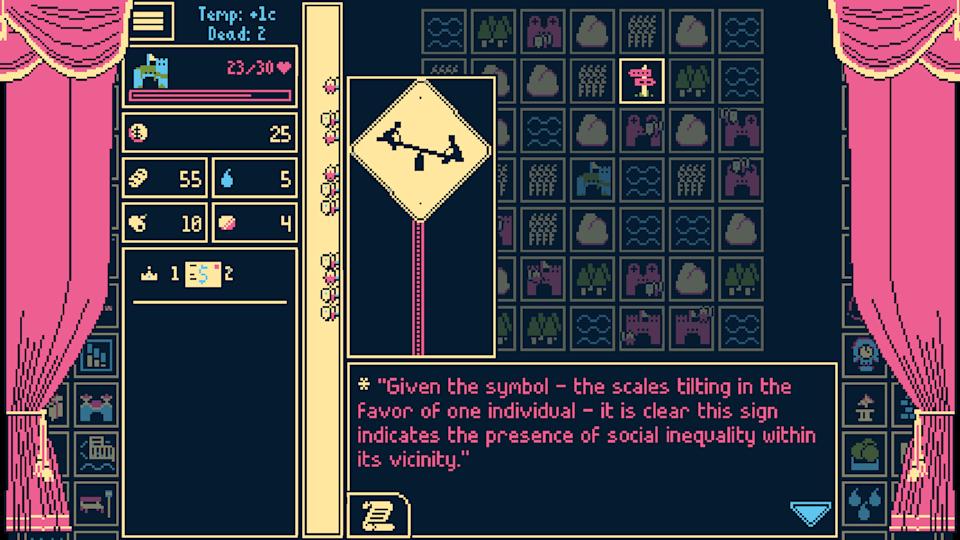
I can at least break down the core gameplay loop for you. There are two stages to each battle in every run aka a “war.” The first is a match-three segment (think Candy Crush Saga), in which you gather resources by lining up wheat fields, rivers, hills and forests. At the same time, you’re setting up the terrain and positioning your own tile (the titular court) for the second stage. For instance, water will stop foot soldiers entirely, so you can position yourself behind a barricade of rivers to block them. But you’ll need to be careful, since a chain reaction of matches can wipe out your carefully constructed defense.
At the same time, you’ll be moving around enemy strongholds. You can line up three or more matching enemy bases to eliminate them, but you don’t gain any resources from those. Plus, you can only make a limited number of moves in this phase. So that makes for an interesting risk-reward conundrum. A timeline shows you which enemies will attack and when so you can plan accordingly.
Advertisement
The second phase is where the tower defense element really takes hold. You’ll use what you’ve collected to recruit soldiers to attack enemies or defend your base, add workers that will gather more resources and maybe deliver magic attacks. You can trade at shops and markets as long as you haven’t wiped them from the grid, since they’re bonded to terrain tiles. When you’re ready to fight, you hit a play button and the battle takes place automatically.
Nothing’s as simple as it might seem at first, because this is a game that will mess with you. I was scolded for trying to buy my way to victory by trading too much, with the game calling that approach “boring” and closing the shop’s doors for the round. Perfectly fair. I chuckled the first time that happened. When I thought I was being clever by using the introspective power of self-reflection (you’ll see) to win a boss fight, I was swiftly shut down.
Between wars, you’ll explore the titular court as its newly anointed queen, trying to figure out what on Earth is going on and, ultimately, how to get home. Here, Titanium Court morphs into a blend of old-school adventure game and bizarre visual novel. This is where much of the magic lies, and where you gradually learn about the story and even how to play the game.
AP Thomson/Fellow Traveller
Developer AP Thomson’s writing is smart and funny. I lost count of the number of jokes I’ve laughed out loud at. His narrative takes you in startlingly unexpected directions. It feels like a grand performance and Thomson is the master of ceremonies. It’s a confidently authored experience that offers further evidence as to why absolutely no one needs a generative AI game platform that seeks to “kill the scripted RPG.”
Advertisement
Titanium Court won the prestigious Seumas McNally Grand Prize at the Independent Games Festival Awards earlier this year and it’s not hard to see why. Thomson and his collaborators have cooked up something really special here.
It’s a game with dragons and ballet, baseball and bike races, shower thoughts and wormholes. There are road signs in a world in which faeries believe cars are a figment of your imagination. It references Catan, the Civilization series, Jenga and A Midsummer Night’s Dream. It skewers capitalism and social inequality. I’ll let you discover the details of the job system, which completely upends how you play the game, yourself. I haven’t been this engrossed by a game since Ball x Pit. It surprises and delights at almost every turn.
Titanium Court is certainly not going to be for everyone (there’s so much reading!) and I’m going to stop here before I tell you too much about it. You can get a taste by checking out a Steam demo that’s available for PC and Mac. The full game arrived today. It usually costs $15, but it’s 20 percent off until May 7.
Meta is making another steep cut to its staff, this time to the tune of a 10 percent reduction in its workforce. About 8,000 people will be laid off and about 6,000 open jobs will also be eliminated, according to Bloomberg.
In an internal memo from Janelle Gale, Meta’s head of human resources, the latest cuts are “part of our continued effort to run the company more efficiently and to allow us to offset the other investments we’re making.” Those “other investments” are likely in artificial intelligence. Meta is building its own models and apparently training them on its own staff. Its smart glasses are also leveraging ever-more AI capabilities.
Today’s layoffs likely don’t mark the end of Meta’s current contraction. A report from March suggested that Meta was planning to downsize by up to 20 percent, although no timeline was given. The company cut hundreds of jobs, primarily in its Reality Labs division, shortly after those claims circulated. It also kicked off 2026 by slashing its metaverse operations with the closure of three VR studios.
Apple Savings is now available for Apple Card users. Here’s how it compares to other high-yield savings accounts in April.
Apple Savings requires Apple Card
The finance sector isn’t new to Apple, with Apple Wallet, Apple Pay, Apple Card, Apple Pay Later, and now Apple Savings. Customers have multiple avenues to entrust vital financial processes to Apple. Apple Savings is a high-yield savings account provided by Goldman Sachs. It requires users to have an Apple Card and be over 18 years old. Otherwise, there are no minimum balances or fees associated with the account. Continue Reading on AppleInsider | Discuss on our Forums
Meta is reportedly cutting about 10% of its workforce, or roughly 8,000 jobs, while closing thousands of open roles it had intended to fill. “We’re doing this as part of our continued effort to run the company more efficiently and to allow us to offset the other investments we’re making,” said Janelle Gale, Meta’s chief people officer. The company had almost 79,000 employees at the start of the year. Quartz reports: Meta CEO Mark Zuckerberg has poured resources into building out AI capabilities, directing spending toward model development, chatbot products, and the engineering talent to support them. Meta set its 2026 capital expenditure guidance at $115 billion to $135 billion, almost double the $72 billion it spent in 2025. Employees have been encouraged to use AI agents internally for tasks such as writing code.
The early disclosure, Gale explained, was prompted by the fact that information about the cuts had already made its way into press reports before the company was ready to announce. “I know this is unwelcome news and confirming this puts everyone in an uneasy state, but we feel this is the best path forward, given the circumstances,” she wrote.
According to the memo, severance for affected workers in the United States will cover 18 months of COBRA health insurance premiums, along with a base pay component of 16 weeks that increases by two weeks for each year of service. Departing employees will have access to job placement assistance and, where applicable, help navigating immigration status. Packages outside the U.S. will vary by country. Meta cut between 10% and 15% of its Reality Labs workforce in January, shut down several VR game studios, and shed about 700 positions across at least five divisions in March.
Microsoft’s gaming division is reverting to the Xbox name after operating as “Microsoft Gaming” since 2022. (Microsoft Photo)
Microsoft is changing the way it measures success in its Xbox business, focusing on daily active players rather than longer periods of time — a tighter measure that reflects the way the biggest social media platforms have evolved to gauge engagement and retention of users.
Xbox will also reevaluate its approach to game exclusivity, the timing of releases across platforms, and the use of AI, while looking for opportunities for strategic acquisitions.
And yes, it’s the Xbox business again, not “Microsoft Gaming,” the broader name the company adopted for the division internally around the time of its giant Activision Blizzard acquisition.
Those are some of the highlights from a memo that Xbox CEO Asha Sharma and Chief Content Officer Matt Booty sent to employees Thursday, laying out a strategic vision for the division about two months into their tenure in the roles.
The memo, titled “We Are Xbox,” opens with a blunt admission that players are frustrated, and frames Xbox as a challenger with work to do.
Advertisement
“From the beginning, Xbox was built by people willing to try things that others wouldn’t,” they write. “We placed a consumer bet inside an enterprise company because we believed gaming would define the living room, and we were at risk of missing it.”
Asha Sharma and Matt Booty, the new leadership team for Microsoft Gaming. (Microsoft Photo)
The memo comes amid financial pressure on the gaming business. Revenue fell 9% in the most recent holiday quarter to $5.96 billion, with Xbox content and services coming in below internal projections. Hardware sales dropped 32%.
Earlier this week, Sharma made her first major move, cutting the price of Game Pass Ultimate from $29.99 to $22.99 a month while removing new Call of Duty games from the day-one lineup — unwinding a bundle that had driven a 50% price hike last October.
Sony’s PlayStation remains comfortably ahead in the current console generation, and Nintendo’s Switch 2 has had a strong launch.
The memo references Microsoft’s own next-generation console, Project Helix, which it unveiled at GDC in March, saying the machine will “lead in performance and play your console and PC games.” Alpha hardware is expected to go to developers in 2027.
Advertisement
Sharma took over as CEO of Microsoft Gaming in February, replacing Phil Spencer, who retired after 38 years at the company. She had been running Microsoft’s CoreAI product organization and previously served as chief operating officer at Instacart and as a vice president at Meta.
That social media background may help explain the shift to daily active players as the internal “north star,” a metric that defined how Facebook and Instagram measured their own success.
Microsoft has said its gaming ecosystem has more than 500 million monthly active users across platforms and devices. It’s not clear if Microsoft will shift to daily users in its public reporting.
The memo closes with 10 operating principles for the division, including “earn every player,” “protect our art,” “stay rebellious,” and “clarity is kindness.” They conclude, “We’re here to do the most creative and courageous work of our lives, and that’s what we’ll do together.”
Advertisement
Microsoft reports earnings for the March quarter next week, including Xbox results.
































































You must be logged in to post a comment Login