Tech
Exclusive: Microsoft explains why RTX Spark’s Prism emulation is about more than higher FPS

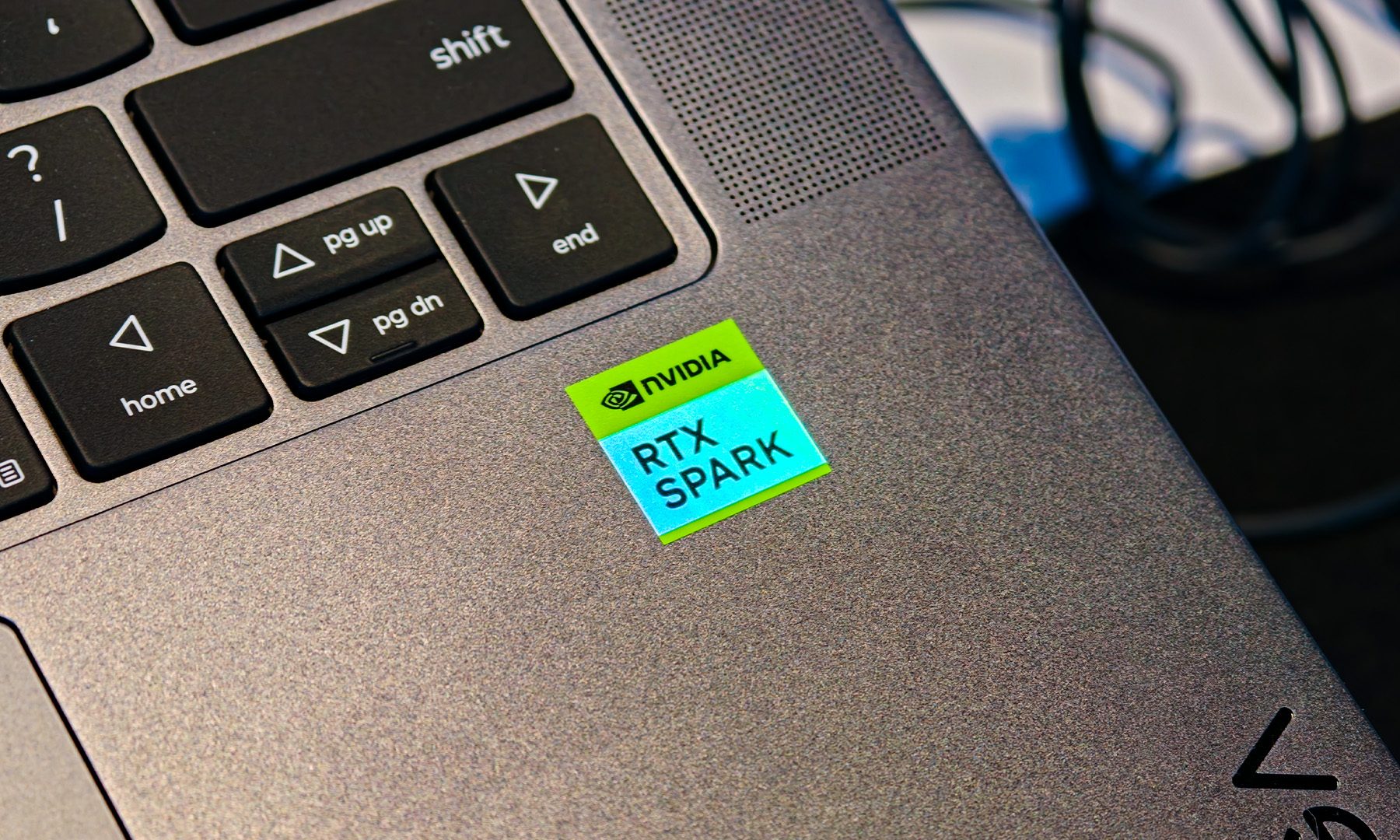
NVIDIA’s RTX Spark may pack a powerful Blackwell GPU, but its ability to run the massive library of existing PC games on Arm depends on a quieter piece of technology: Microsoft’s Prism emulator. Prism allows x64 Windows games and applications to run on RTX Spark’s Arm-based CPU without requiring developers to immediately rewrite them for ARM64.

During an exclusive conversation at NVIDIA’s private IFA 2026 demo, Microsoft’s Peter Dawoud explained that the latest Prism work isn’t just about pushing emulated workloads to higher FPS. Microsoft is also focused on performance consistency, particularly in GPU-heavy games where the CPU still has to coordinate frames, physics, and rendering. Because a higher average FPS doesn’t always mean a smoother experience, that could prove to be one of Prism’s most important improvements yet.
The Core Mechanism
At its simplest, Prism acts as a translator between an x64 application and RTX Spark’s Arm-based CPU. It dynamically converts the game’s x64 CPU instructions into Arm64 instructions, allowing existing Windows games to run without an immediate ARM64 rewrite. As Dawoud explained, Microsoft introduced Prism with Windows 11 on Arm in 2024 and has continued investing in it since then.


The crucial part is that Prism only handles the CPU side of the equation. The game’s DirectX or Vulkan graphics calls aren’t being emulated; they pass through Windows’ native graphics stack to NVIDIA’s Arm-native driver and ultimately the actual Blackwell GPU. So while an x64 game’s CPU code is being translated by Prism, its graphics workload is still being processed by real NVIDIA hardware — giving RTX Spark a very different proposition from a traditional fully emulated gaming environment.
The FPS vs. Frame Pacing Argument
This is where the RTX Spark story gets particularly interesting. A powerful GPU might be capable of rendering a game at 80 FPS, but that doesn’t mean every frame is arriving at precisely the right time. The CPU still has to handle game logic, physics, frame coordination, and the preparation of rendering commands before the GPU can do its part.
As Dawoud put it, “the GPU is actually doing the bulk of the work, but the CPU is orchestrating.”
That orchestration becomes particularly important when the game is running through Prism, because the CPU workload is being translated from x64 to Arm64 before it executes.
- Raw Performance: Pushing peak FPS numbers, for example, getting an emulated game to touch 80 FPS.
- Frame Consistency: Keeping frame delivery tightly timed so those 80 FPS don’t suddenly turn into noticeable hitches, stutters, or poor 1% lows.
Dawoud told me Microsoft has been working on both sides of that equation.
“We’ve been doing development and research and integrations into the emulator to optimize it so that you don’t just hit higher FPS, but you can hit more consistent FPS.”
For gamers, that may ultimately matter more than another number on an FPS counter. A game delivering a stable 60 FPS can feel considerably smoother than one bouncing between 60 and 80 FPS.
Why the CPU still matters
It’s easy to assume that once a game becomes GPU-bound, CPU emulation stops being a major concern. But even with the Blackwell GPU doing most of the rendering, the CPU still has to prepare and coordinate the work that gets each frame onto the screen.
As Dawoud explained, “The CPU plays such an important task in like coordinating the frames, making sure the physics stacks complete, and making sure rendering pipelines are completed.”
That means Prism still has a critical role to play. If the translated CPU workload stalls or becomes inconsistent, the GPU can end up waiting for the next batch of work, leading to uneven frame delivery. This is why Microsoft isn’t simply chasing higher benchmark numbers with Prism on RTX Spark; it is also working to make the CPU-side workload more predictable, helping the powerful Blackwell GPU stay fed and ensuring those frames arrive when they should.
Native and Emulated Workloads
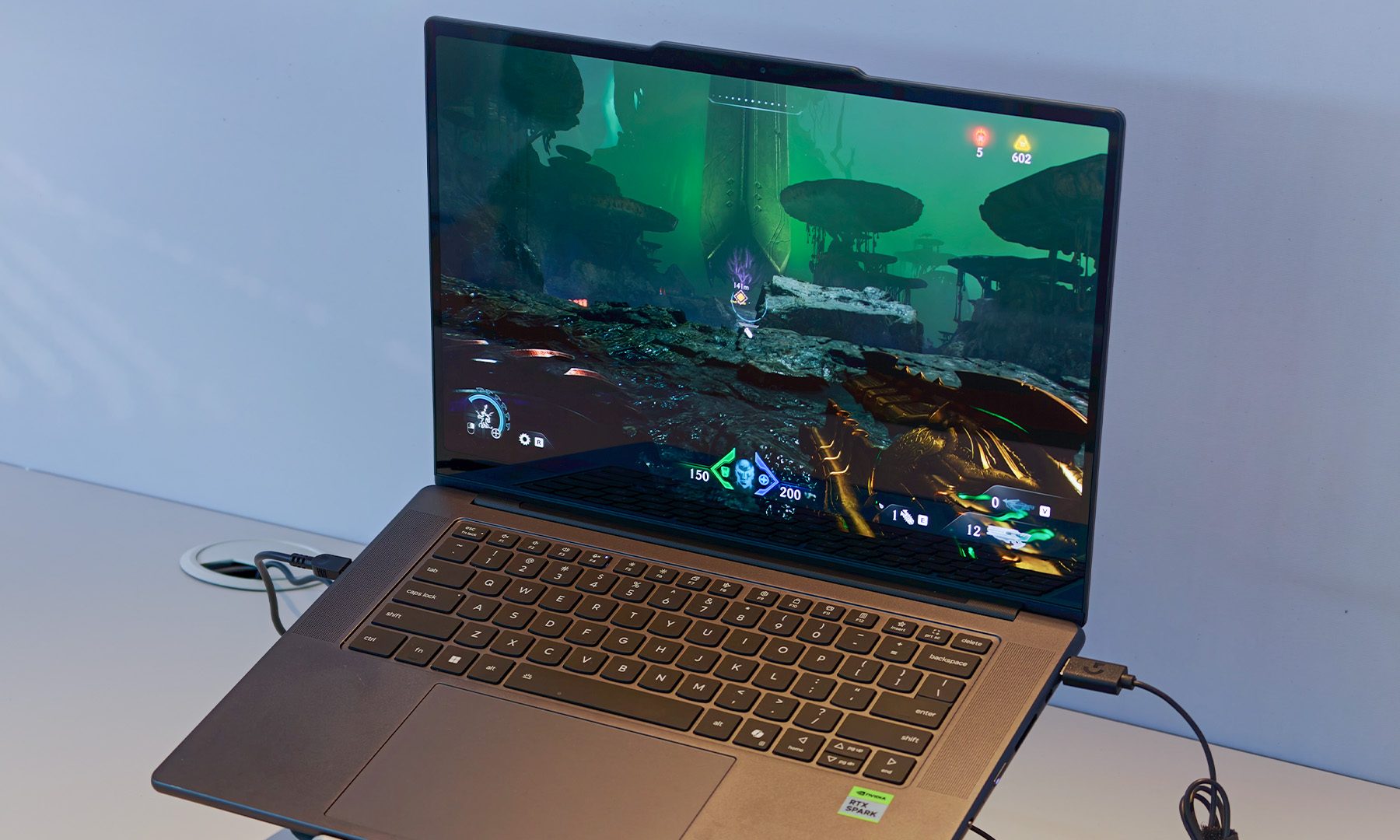
The RTX Spark demonstrations at NVIDIA’s private IFA booth also offered a useful glimpse into how Microsoft expects the platform to handle different kinds of software. The demo area featured a mix of games and applications, with some workloads designed natively for RTX Spark while others were running through Windows’ Prism emulation layer. That distinction is important because it shows Prism isn’t simply there to keep older x64 games alive—it is part of a broader compatibility strategy for the Arm-based PC.
Dawoud summed up the broader impact of the work simply: “The engine improvements and the emulator improvements will actually benefit the creator and the coder.”
The idea is straightforward: developers and creators don’t necessarily need to immediately rewrite an entire x64 application for ARM64 before it can be useful on RTX Spark. Prism can keep existing software running while developers work toward native ARM support, letting the hardware’s powerful GPU do work even when the application itself hasn’t yet made the transition.
Why memory isn’t the emulator’s bottleneck
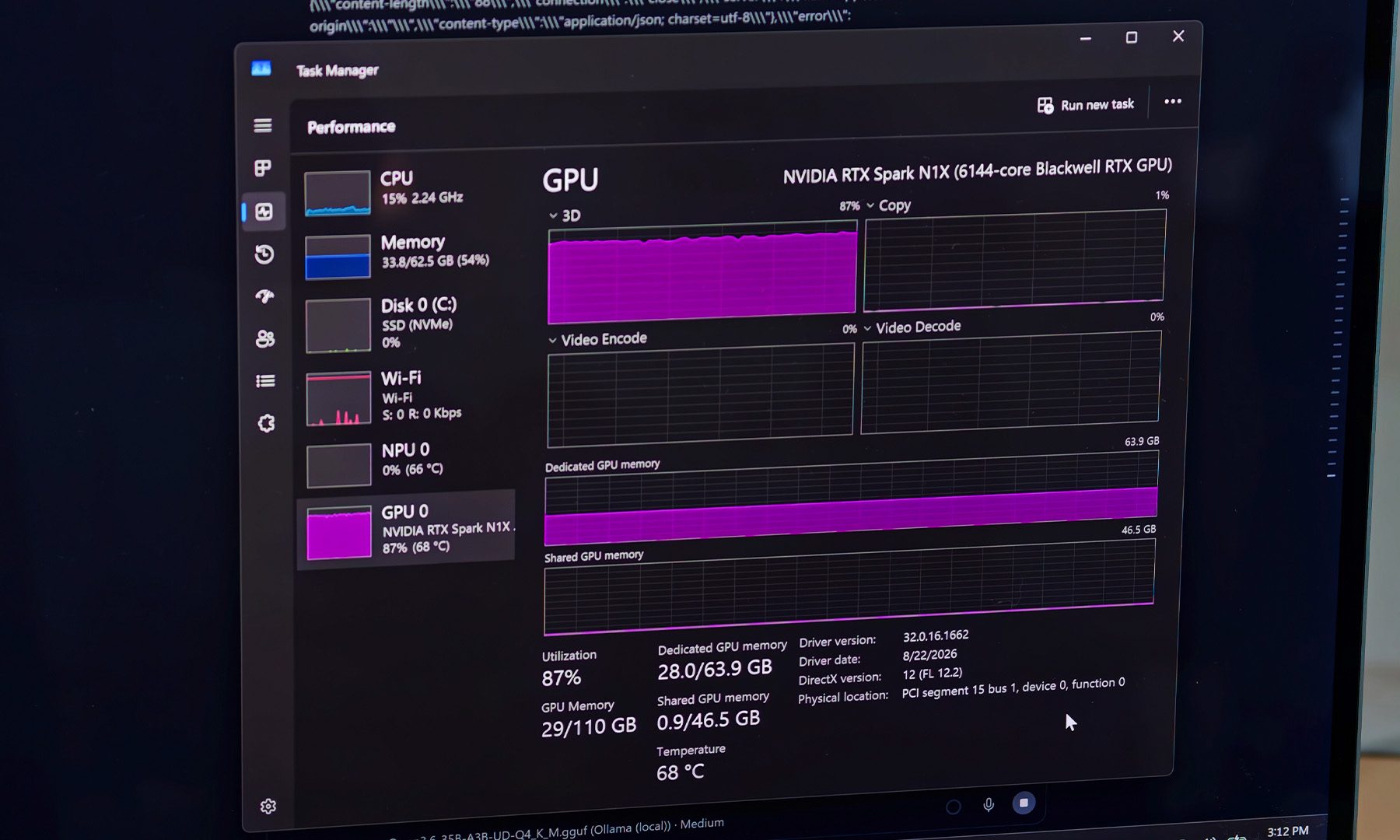
There is also an important distinction between Prism and RTX Spark’s enormous unified memory architecture. With RTX Spark expected to offer a huge shared memory pool between its CPU and Blackwell GPU, it would be easy to assume that Prism itself somehow relies on having enormous amounts of memory.
I put that question directly to Dawoud. His answer was rather straightforward.
“The emulator is mostly a CPU activity, so it’s a translation to the CPU.”
He described the amount of system memory as essentially independent of what Prism itself is doing. Instead, RTX Spark’s unified memory architecture provides a separate hardware advantage. The CPU and GPU can work with a shared pool of memory, potentially benefiting workloads that move large amounts of data between the two.
As Dawoud summarized it, “the performance of the UMA that we have on RTX Spark is what’ll give it that advantage.”
Prism handles the architectural translation; UMA changes what the underlying hardware can do with its memory.
The Bigger Picture
Perhaps the biggest takeaway from the conversation is that the Prism work surrounding RTX Spark isn’t simply an NVIDIA-specific compatibility solution. Dawoud stressed that the improvements are part of Microsoft’s broader Windows-on-Arm effort and can benefit other Arm-based Windows machines as well.
“Everything I talked about today is on Windows, so it’s any platform can benefit from it,” he explained. “The emulator investments that we’re making, it’ll improve the experience overall and the performance overall of those workloads on other ARM devices, too.”
Ultimately, Prism is more than a compatibility layer for RTX Spark. In fact, it is the bridge allowing today’s vast x64 Windows ecosystem to work on tomorrow’s Arm-based PCs. And with Microsoft focusing not just on higher performance but on smoother, more consistent frame delivery, the real win may be when you stop thinking about whether a game is being emulated at all.
You must be logged in to post a comment Login