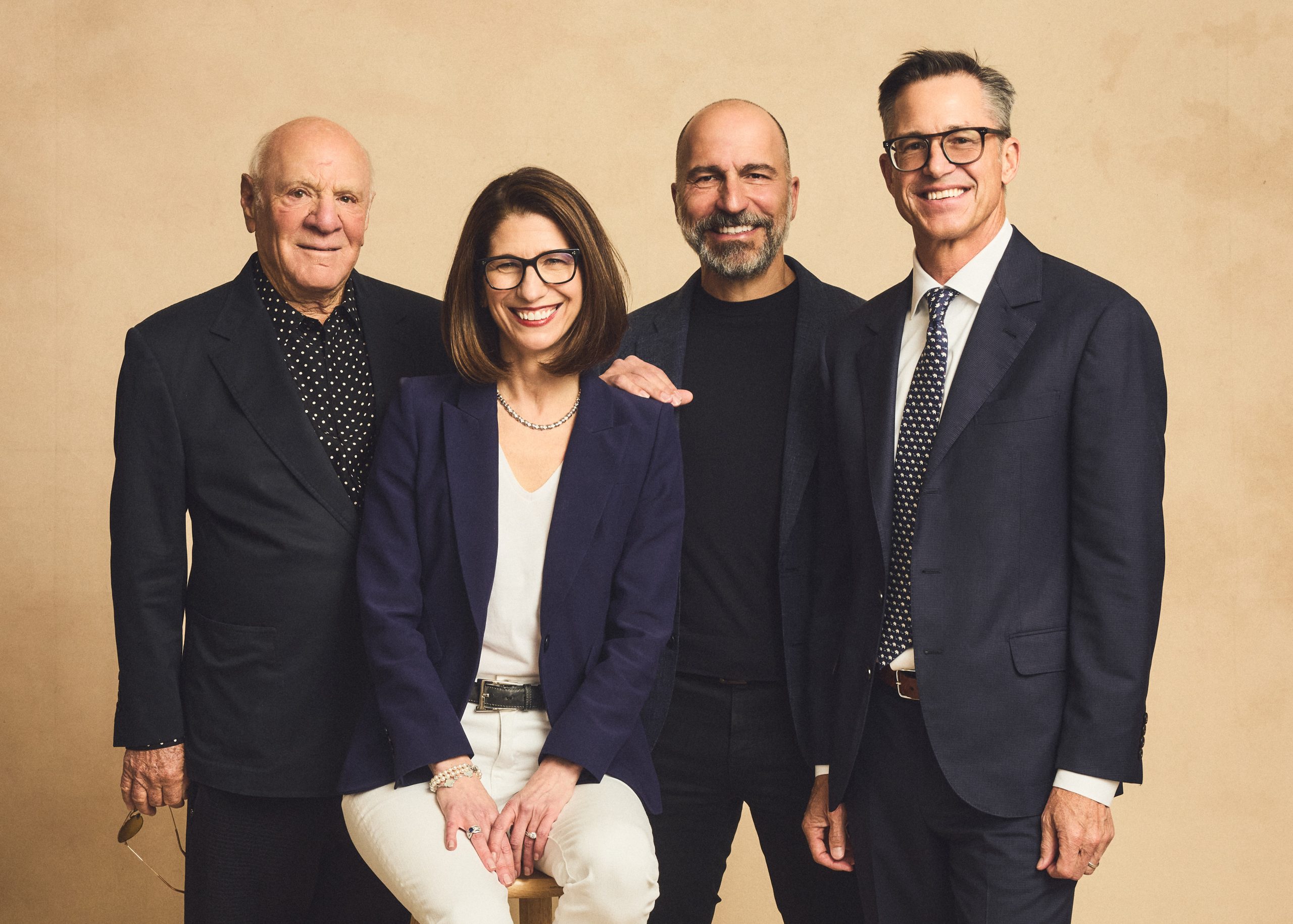
From left: Expedia Group chairman Barry Diller, CEO Ariane Gorin, former CEO and current Uber CEO Dara Khosrowshahi, and founder Rich Barton at Expedia’s Explore partner conference in Las Vegas this week. (Expedia Group Photo)
From her office overlooking the atrium at Expedia Group’s sunlit headquarters campus on the Seattle waterfront, CEO Ariane Gorin puts the online travel giant’s 30-year history into three chapters, each tied to a major inflection point in the evolution of technology.
Chapter 1 was the internet itself: the 1996 launch of Expedia inside Microsoft, when a small team bet that consumers could benefit from technology previously exclusive to travel agents.
Chapter 2 was mobile: as travelers migrated from desktop to smartphone, Expedia rebuilt itself for the small screen and assembled a collection of brands through a wave of acquisitions.
Chapter 3, Gorin says, is artificial intelligence, and it’s only starting to unfold. Expedia is now positioning itself for a new reality in which different types of agents — machines, not humans — will play a role in booking travel, in some cases making the decisions entirely on their own.
“It’s exciting to get to write the future of AI and travel,” Gorin said.
Advertisement
Expedia is marking its 30th year in business this week with the launch of the Expedia Trails Fund, a philanthropic initiative to restore outdoor trails across the U.S., backed by an initial $4.3 million in grants.
The company is also bringing top executives from throughout its history — founder Rich Barton, chairman Barry Diller, and former CEO Dara Khosrowshahi — together with Gorin for its partner conference in Las Vegas. Collectively, they grew Expedia from internal division to corporate spinout to online travel giant.
What happens next, under Gorin, will depend on Expedia’s ability to reinvent itself for a fundamentally new relationship between travelers and technology — attempting to continue a pattern that has repeated itself throughout the company’s history.
Chapter 1: ‘Power to the people’
Expedia started with a question: why shouldn’t everyone see what travel agents do?
Advertisement
In 1994, Rich Barton was a 27-year-old Microsoft employee, working on a CD-ROM travel guidebook — an Encarta for travel — when he learned about the airline reservation systems that travel agents used to book flights. The systems were accessible electronically, but only to industry insiders. He started to imagine regular people using them directly.
Rich Barton speaks at Seattle University’s Albers Executive Speaker Series in 2016. (GeekWire Photo / Kevin Lisota)
“The idea was simple and almost obvious once you said it out loud: give consumers the same information the professionals have, and get out of their way,” recalled Barton, now a well-known entrepreneur and investor, who shared new details of the Expedia story for this piece.
His term for this approach would ultimately define his career: “Power to the People.”
Barton pitched the idea directly to Microsoft CEO Bill Gates and President Steve Ballmer, who gave him the green light.
Secretly building for the web
The team initially started building the product for Microsoft’s proprietary online service, MSN 1.0, a would-be competitor to AOL, which had a proprietary multimedia development environment called Blackbird. Then the web gained steam, with its open protocols and universal reach.
Advertisement
That’s when Greg Slyngstad, the original general manager of what was then called Microsoft Travel, made a pivotal call: develop the product for the open web instead of Microsoft’s walled garden.
Slyngstad “knew the web would win,” Barton said. “Because of this, we secretly built for the web, which was brilliant. Expedia would not be what it is today if not for that decision.”
An early version of Expedia from the Internet Archive.
Before it was called Expedia, the project had a very different interface. In the early days of Microsoft Travel, the hot trend in software was the social user interface, personified most memorably by the widely mocked Microsoft Bob. Barton’s team had its own version: a parrot that served as a travel planning guide.
“I can’t remember the name of the parrot now,” he said, “but I faked a travel planning scenario talking to a robot parrot in front of the whole Consumer Division — which was a hit!”
‘We had massive ambition’
A plaque still on the Microsoft campus in Redmond marks what came next: “Microsoft Expedia, Version 1.0, Shipped October 22, 1996.”
Advertisement
A marker commemorating the Expedia launch in a courtyard at Microsoft. (GeekWire Photo / Todd Bishop)
Microsoft’s annual report for 1997 described Expedia as “a free travel service on the World Wide Web and MSN which enables users to find low fares, book flights, make hotel reservations, and rent cars.”
Barton and team had a much bigger vision. “We had massive ambition,” he said. Their BHAG — or “big, hairy, audacious goal,” the term popularized by author Jim Collins around the same time — was to become “the largest seller of travel in the world.”
Expedia’s revenue went from zero to $38.7 million by 1999. At the time, it was still about half the size of Travelocity, which had gotten to market first.
‘Go do this on your own!’
But Barton was already seeing a future for Expedia outside the software giant.
“One of my core arguments was that Expedia, in success, would become a travel company first and a tech company second,” he explained. “Therefore, we simply wouldn’t fit inside a giant tech company, and that by setting us free, it would dramatically improve our chances of fulfilling our giant global dreams.”
Advertisement
So Barton made the case to Ballmer, his boss at the time, to let him and his team of “internet adventurers” spin out through an initial public offering, with Microsoft retaining a stake.
He pasted a printout of Ballmer’s headshot onto an IATA card, the credential issued by the International Air Transport Association to licensed travel agents. “Steve, do you want to be a travel agent?” Barton remembers asking. “Do you want to run the largest travel agency in the world?”
Ballmer recoiled at the idea and yelled, “No, you guys should go do this on your own!” Then he asked if he could keep the card.
And with that, the spinout was set in motion.
Advertisement
The IPO prospectus in September 1999 described Expedia’s value proposition: “one-stop travel shopping and reservation services, providing reliable, real-time access to schedule, pricing and availability information.” Travel, it said, was uniquely suited to the internet: a global market with millions of buyers, and purchases “involving large amounts of information from multiple sources.”
‘Whoops and hollers’
Expedia went public on Nov. 10, 1999. The company had 138 employees. The stock, initially priced at $14 a share, soared more than 260% on its first day of trading.
“We’re feelin’ pretty good,” said Suzi Levine, who led Expedia’s IPO communications, in a Seattle Post-Intelligencer story about the Nasdaq debut, admitting “there may have been one or two whoops and hollers” around the office. Levine went on to become the U.S. Ambassador to Switzerland under President Obama, among other high-profile government positions.
Another newspaper clipping from that week shows Barton and his wife Sarah holding their newborn son William, born the same day as the IPO. The headline: “Initial public offspring.”
Advertisement
Rich and Sarah Barton with newborn son William in November 1999, the week of Expedia’s IPO. (AP / Daytona Beach News-Journal)
Within two years, Expedia had surpassed Travelocity to become the largest online travel company. Barton left in 2003, eventually going on to co-found ventures including Zillow and Glassdoor, applying the same “power to the people” philosophy — giving consumers access to data that industries had previously kept behind walls — to real estate and the job market.
Before Barton left, controlling interest in Expedia had passed to a new owner. But the deal that made it happen nearly didn’t survive the worst moment in the history of modern travel.
Chapter 2: ‘If there’s life, there’s travel’
Barry Diller was a Hollywood legend who had built Fox Broadcasting and launched the Home Shopping Network when he turned his attention to the internet in the late 1990s.
Through his company, USA Networks, he was assembling a portfolio of online brands, and he saw travel as the biggest opportunity. Travel, he wrote in his 2025 memoir, Who Knew, looked like “the perfect business to be colonized by the internet.” He had already acquired Hotels.com when he approached Microsoft about buying its controlling stake in Expedia.
Expedia Group’s then-Vice Chairman Peter Kern, Chairman Barry Diller, and future Expedia Group CEO Ariane Gorin, then president of Expedia Business Services, on stage at a company Town Hall meeting in December 2019. (Expedia Photo)
Expedia was still losing money, and Ballmer had concluded that Microsoft shouldn’t be in internet verticals anyway, as Diller recalled in the book. With relatively little negotiation, Microsoft agreed to a deal worth about $1 billion in USA Networks stock.
They were set to close the deal in October 2001. Then, on September 11, the travel industry shut down in an instant. The deal included a material adverse change clause — a legal escape hatch that would have let Diller walk away. For weeks, his team debated whether to use it.
Advertisement
How could they pay $1 billion for a travel company when no one was traveling?
“Some people said, you shouldn’t do it, it’s too dicey, there’s no travel, the world is ending,” Diller told GeekWire in 2016, on the company’s 20th anniversary.
But then, someone in the room said, “If there’s life, there’s travel.”
“Yeah, that’s what we’ll do,” Diller recalled saying. “We’ll bet on life.”
Advertisement
The next transition
The deal closed in February 2002. Diller folded Expedia into a division of his company called IAC Travel. When the head of that division resigned, a young executive named Dara Khosrowshahi raised his hand. Khosrowshahi had first crossed paths with Diller as a junior analyst at the investment bank Allen & Company, and had been in the room during the 9/11 deliberations.
In 2005, Diller spun IAC Travel back out as a standalone public company — Expedia, Inc. — with Khosrowshahi as CEO. He moved to what he later called “the Netherlands of Seattle.” He would hold the role for 12 years, longer than any leader in the company’s history.
It was under Khosrowshahi that Expedia navigated the shift from desktop to mobile. As travelers migrated to smartphones, the company rebuilt its products for the small screen.
Advertisement
Khosrowshahi also led an acquisition spree that transformed Expedia from a single brand into a travel conglomerate, adding Orbitz, Travelocity, Trivago, and others along the way.
Competition from all corners
Even as Expedia consolidated its position in online travel, a different kind of threat was emerging. Google was pushing into travel directly through Google Flights and Google Hotels, and its search algorithm had become the dominant gateway to travel shoppers — making the search giant Expedia’s biggest advertising channel and one of its largest competitors.
Google’s position is “a reality of e-commerce,” Khosrowshahi said in a 2016 interview with GeekWire, on the company’s 20th anniversary, in the conference room at its Bellevue, Wash., headquarters. “It’s reality of the Internet, and it’s certainly a reality of this category in general. That’s not going to stop.
Then-Expedia Group CEO Dara Khosrowshahi at the company’s Bellevue HQ in 2016. (GeekWire File Photo / Kevin Lisota)
The bigger direct threat, though, was emerging from across the Atlantic. The Priceline Group — later renamed Booking Holdings — had acquired Booking.com out of Amsterdam in 2005, building a business that would eventually surpass Expedia in gross bookings.
“Priceline is our toughest competitor,” Khosrowshahi said at the time, calling it a great company that had quickly expanded its international reach. “They’re more global than we are.”
Advertisement
And then there was a competitive threat that nobody at Expedia had anticipated: the rise of vacation rentals as a category, led by Airbnb. Expedia’s response was its biggest deal yet: the 2015 acquisition of HomeAway, which would later be rebranded as Vrbo — a $3.9 billion bet on the category.
“I think the growth of Airbnb has been pretty extraordinary, and I think anyone who would say today, ‘Oh, we expected it,’ would be lying,” Khosrowshahi said in the interview.
The one exception, he acknowledged, was Airbnb founder Brian Chesky, who was known for transforming the world of lodging just as Uber’s Travis Kalanick had upended transportation.
‘You’re f’ng crazy’
The next year, Uber came calling for Dara.
Advertisement
At the time, the ride-hailing company was in turmoil — embroiled in scandals, burning billions, and in need of a leader who could steady the ship. When Khosrowshahi told Diller he’d been offered the job as Uber’s CEO, the chairman’s first reaction was to hang up on him.
But Diller called back the next day. “Speaking as the chairman of Expedia, it will be a real mistake,” Khosrowshahi recalled him saying. “But speaking as a friend, I understand why you’re interested. How can I help?” Diller then helped him prepare his presentation for the Uber board.
In a farewell email to Expedia staff, obtained by GeekWire at the time, Khosrowshahi called Diller “the toughest, smartest, most demanding, and most human boss I’ve ever had.”
Advertisement
Ketchup and mustard
One of the company’s rising executives at the time was Ariane Gorin. A Berkeley, Calif., native who grew up in a French-American family, she had moved to France in 2001 and lived in Europe for more than two decades, eventually becoming a dual French-American citizen.
The future Expedia CEO had joined the company in 2013, and her first encounter with Expedia’s leadership set the tone: she met Khosrowshahi and CFO Mark Okerstrom on Halloween, when they were dressed as ketchup and mustard. “This is the best company,” she recalls thinking.
Expedia chairman Barry Diller, center, speaks with then Expedia CEO Dara Khosrowshahi, right, and CFO Mark Okerstrom at an event marking the company’s 20th anniversary in Bellevue in 2016. (GeekWire File Photo / Todd Bishop)
Okerstrom succeeded Khosrowshahi as CEO in August 2017. By comparison, his tenure was brief, most notable for Expedia’s move from downtown Bellevue to a picturesque former biotech campus on the Seattle waterfront, and an ambitious effort to unify its technology across its growing collection of brands.
After a strategy disagreement with the board over the pace and direction of the tech revamp, Okerstrom and CFO Alan Pickerill both resigned on the same day: Dec. 4, 2019. Diller, as chairman, asserted direct operational control alongside vice chairman Peter Kern, a longtime Expedia board member.
‘I’m on the edge of revolt’
Eight days later, on December 12, 2019, Diller put his frustration with Google in writing. In an email to Google’s chief business officer, Philipp Schindler — which later surfaced in the U.S. government’s antitrust case against Google — the chairman wrote that “much of Expedia’s trouble is due to an increasingly aggressive Google.”
Advertisement
Diller cited Vrbo’s payments to Google, which had risen from $21 million in 2015 to nearly $300 million in 2019, even as the traffic Google sent to VRBO stayed roughly flat.
“Google has systematically moved every lever in its hegemony over search to disembowel our businesses,” Diller wrote, describing himself as “on the edge of revolt.”
It wouldn’t be the last time Expedia found itself subject to forces beyond its control.
‘Buy the thing’
In the meantime, Diller had been shaping the company’s new home. In the mid-2010s, he had pushed Expedia to acquire a 40-acre site on Elliott Bay, formerly occupied by Immunex, maker of the arthritis drug Enbrel. The site was vacated after Amgen bought the Seattle biotech.
Advertisement
“Once I saw it, I just said, ‘buy the thing,’” Diller said at a 2023 company event. He wanted a campus that felt horizontal, not vertical, with what he called “a lot of ability to breathe.”
Expedia Group’s Seattle waterfront campus. Barry Diller personally shaped details of the design. (GeekWire Photo / Todd Bishop)
Over five years of planning, Diller personally shaped details down to the geometric paving stones that radiate outward from the main building like airport runways. The campus included 1,000 trees, an on-site soccer pitch, and a meeting pavilion called “the Prow,” designed to rise out of the landscape like the bow of a ship.
Beyond the property line, Expedia funded improvements to a portion of the Elliott Bay Trail running alongside the campus. That gave the company a sense for how it could invest in outdoor public spaces — an early version of the work it’s now expanding nationwide.
The first of Expedia’s began moving into the campus in October 2019. By February 2020, the move was complete, at a final cost of more than $1.1 billion.
‘Travel finds a way’
In April 2020, when Kern was formally named CEO, COVID-19 had brought the industry to a halt. He used the moment to complete the overhaul of Expedia’s technology platform, unifying the patchwork of systems that had accumulated through years of acquisitions.
Advertisement
“Travel finds a way,” Kern said in a virtual appearance at the 2020 GeekWire Summit, predicting that cities would come “roaring back,” and the industry would ultimately rebound.
Peter Kern, then Expedia Group’s CEO, speaking at the company’s 2023 partner conference. (GeekWire File Photo / Todd Bishop)
In the meantime, Gorin had been building what would become one of Expedia Group’s most important business lines. In 2014, Khosrowshahi had asked if she was interested in running the company’s affiliate network, which licensed the company’s travel technology and inventory to outside partners, letting them offer Expedia-powered bookings under their own brands.
It was less than 10% of the company’s business, and nobody else wanted the job.
“B2B was not seen as a sexy part of the company,” she recalled recently.
Gorin jumped in with passport in hand. She spent her initial months in the job talking to partners around the world, developing a strategy of going where Expedia’s own consumer brands couldn’t or didn’t go, including offline retail, corporate travel, emerging markets, and anywhere else there were untapped pools of travel demand.
Advertisement
Over the next decade, she grew the B2B division from a small afterthought into one of the company’s most important businesses. Today it accounts for roughly a third of Expedia’s overall business, powering travel programs for companies like Marriott, Hilton, United, Delta, and Capital One.
It was, in retrospect, perfect preparation for what would come next.
Chapter 3: ‘The agent that roams with you’
Long before ChatGPT became a household name, the head of OpenAI was already sitting on Expedia’s board. Sam Altman joined Expedia Group’s board of directors in 2019, recruited at a time when his AI research lab was still better known in Silicon Valley than in living rooms.
In November 2022, weeks before ChatGPT was unveiled to the world, Altman appeared on stage with Diller at a private executive event for IAC, the parent media company in Diller’s portfolio. Altman demonstrated what was coming by typing a prompt asking ChatGPT about Diller’s relationship with his wife, the fashion designer Diane von Furstenberg.
Advertisement
What the AI produced was “extremely creative” and “somewhat salacious,” Diller recalled at Expedia’s 2023 partner conference. “Because we do have a history.”
More than that, it was a glimpse of the future. Diller said the preview gave Expedia an early jump on generative AI. The company was one of the first travel firms to integrate ChatGPT — both as a plugin on OpenAI’s platform and as a travel-planning assistant in its own app.
It actually wasn’t a surprise to Diller. Speaking with GeekWire back in 2016, Mr. Diller (as we were advised to call him) had described AI as “another form of magic.” Asked whether it would influence travel, he said at the time: “Of course it will. It will influence everything.”
Altman left the board in June 2023, as OpenAI consumed his full attention.
Advertisement
From B2B to B2A
When Kern stepped down in May 2024, Ariane Gorin — the executive who had been steadily expanding the company’s business-to-business reach — became Expedia Group’s CEO.
She soon had a phrase for what the AI era would require: B2A, for business to agent. But there’s a risk in this new world: a human traveler might choose Expedia out of loyalty, or brand recognition, but an AI agent making the same decision might not care about any of that.
Expedia Group CEO Ariane Gorin at the company’s Explore partner conference last year. (Expedia Group Photo)
In a recent interview at Expedia headquarters, Gorin said the company now has teams looking at what it means to market to machines: how to make sure an AI agent understands that an Expedia Gold member gets a VIP perk at a particular hotel, or that a traveler has One Key points to apply toward a trip.
Expedia has been building AI into its own products for years now. But more recently, it has been looking outward: embedding its service inside ChatGPT, Claude, and Amazon’s Alexa+, buying ads inside AI chatbots, and signing a deal to power Uber’s hotel bookings. (Khosrowshahi, who remains on the Expedia Group board, recused himself from the negotiations over that partnership.)
“I think that’s the future,” Gorin said. “It’s the agent that really roams with you.”
Advertisement
A competitive moat
It’s still early. AI-native platforms like ChatGPT account for less than 1.5% of Expedia’s overall traffic, Gorin said. But the company said on its recent earnings call that getting its brands to show up in AI responses has become its fastest-growing marketing channel.
As demonstrated by Diller’s past frustrations with Google, these external dependencies can be a double-edged sword. But there are early signs that Expedia won’t be cut out of the picture. In March, OpenAI scaled back plans to let users book travel directly inside ChatGPT.
Gorin said she wasn’t surprised, given the complexities of travel. “Trust me, it’s pretty complicated to be able to go from shopping to booking to servicing,” she said. Expedia handles 250 million customer service interactions a year, across more than 30 languages.
“I see them as partners,” more than competitive threats, she said of the major AI platforms. “I see them as an opportunity for us to attract new travelers into our ecosystem.”
Advertisement
Illustrating the ongoing importance of industry partnerships, Expedia struck a deal this spring to power hotel bookings inside the Uber app, with Vrbo vacation rentals coming later this year. Khosrowshahi, who still sits on Expedia’s board, recused himself from the deal.
Growth and challenges
The company that began in 1996 as a small team inside Microsoft is now on a different scale entirely. When Expedia went public in November 1999, it had fewer than 150 employees, about $700 million in gross bookings, and a presence in four countries.
Fast forward nearly 30 years, to the end of 2025, and Expedia had roughly 16,000 employees across nearly 50 countries, $119.6 billion in gross bookings, and a marketplace of 3.6 million lodging properties, including 2.4 million vacation rentals.
The company’s evolution has also brought challenges, including executive turnover and job cuts — with the latest round impacting 162 tech positions at the company’s headquarters earlier this year.
Advertisement
‘More travel equals more memories’
Gorin, meanwhile, has been putting her own stamp on the company.
To mark its 30th year, Expedia is launching the Expedia Trails Fund, a philanthropic initiative to restore outdoor trails and protect natural landscapes across the United States.
The initial $4.3 million will go to 11 projects, spanning destinations from Yellowstone’s Paradise Valley to Hawaii’s Kealakekua Bay, covering areas that draw more than 1 million visits annually. Expedia is partnering with The Conservation Fund, The Nature Conservancy, and Trust for Public Land, and with AllTrails to match support for the hiking app’s stewards fund.
The effort reflects growing demand among travelers for outdoor experiences, particularly among younger generations. Gorin said the company’s earlier trail work alongside its Seattle campus helped to show what could be possible at a larger scale.
Advertisement
“If our trails fund really works the way we want it to, the impact we’re going to have on trails across the U.S. and elsewhere is going to be huge,” she said.
For Gorin, the initiative connects to something deeper. A few years after she joined Expedia, her sister was diagnosed with stage four lung cancer. Before she died, she offered Gorin a piece of advice: travel more, because more travel equals more memories.
“And then she said, ‘Oh, wait a minute. You work in travel. One day, you should use that story on stage,’” Gorin recalled. She told it at her first town hall as CEO.
“We are in the business of helping people make memories,” Gorin said. The common thread among all of Expedia’s CEOs over the years, she said, is a belief in the benefits of travel for people and the world, and in the potential of technology to achieve it.
Advertisement
‘Original vision … fully realized’
But if Expedia’s founding vision was to remove the barriers to travel, isn’t there a risk of people losing control when AI puts a new intermediary into the process? Barton, the person who started it all, doesn’t buy that. He draws a direct line from the original idea to the present moment.
“Round one was radical transparency,” he said. “We blew the doors open and gave everyone access to information that used to live only in a computer on the desk of a professional.”
AI agents, Barton asserts, are “the next unlock.” Rather than replacing the human in the loop, he said, they give every traveler “the equivalent of a brilliant, tireless expert in their corner.” That makes AI an accelerant for the concept of “Power to the People,” not a replacement.
“I don’t see it as a threat. I see it as the original vision, finally fully realized,” he said. “We started by turning the screen around. Now we’re handing people the whole toolkit.”
Earlier this week, Bloomberg reported that Microsoft was replacing some of OpenAI’s software with its own in-house models in an effort to cut costs. Those in-house models, known as MAI, were increasingly being used to power apps like Word and Excel, the outlet noted.
The story raised an increasingly common question about the two companies, which were once seemingly inseparable, and have recently sent mixed signals about the status of their situationship: Were the two companies drifting apart?
Now, OpenAI is attempting to put any insinuations of such a break to rest. During OpenAI’s launch of GPT 5.6 on Thursday, the company announced that it would become the “preferred model” powering Microsoft’s 365 Copilot.
OpenAI noted in a blog post published Thursday that GPT 5.6 would support Microsoft users across the company’s suite of productivity apps, including Word, Excel, PowerPoint, and Cowork.
Advertisement
“Our partnership with Microsoft has always been about bringing the benefits of advanced AI to more individuals and organizations, and we’re excited to continue building on that shared commitment,” OpenAI wrote in a blog post.
What being a “preferred model” actually means isn’t entirely clear, other than that OpenAI’s software will continue to power Microsoft’s apps.
That said, it was never reported that ChatGPT’s software would stop powering Microsoft’s apps — merely that Microsoft was relying increasingly on its own software in an effort to reduce costs. The new “preferred model” disclosure doesn’t appear to negate that previous reporting.
On Thursday, multiple news organizations accused OpenAI of withholding evidence about how the company trains its artificial intelligence models in a new motion that’s connected to a series of ongoing copyright lawsuits.
The motion was filed by 17 publishers, including The New York Times, the New York Daily News, the Chicago Tribune and Ziff Davis (CNET’s parent company). Ziff Davis sued OpenAI in 2025, alleging that OpenAI scraped its copyrighted works to train ChatGPT and other large language models.
The initial lawsuit dates back to 2023 when The New York Times first sued OpenAI and Microsoft, alleging the companies built their AI technologies using millions of news articles written by journalists. Microsoft and OpenAI have denied the claims.
The motion asks the court to impose legal sanctions against OpenAI, but not Microsoft, for allegedly withholding evidence, such as datasets and output logs, and claims that “OpenAI chose obstruction” by failing to produce it. If those sanctions are granted, OpenAI could be ordered to pay financial penalties.
“This motion asks the court to punish OpenAI for hiding and destroying evidence showing how ChatGPT was trained on stolen journalism,” New York Daily News attorney Steven Lieberman said, per the Associated Press.
At the center of the lawsuits is how generative AI, such as ChatGPT, is trained and how it sources its information. The Times’ original lawsuit claims that OpenAI’s generative AI tools “can generate output that recites Times content verbatim, closely summarizes it, and mimics its expressive style,” raising questions of copyright infringement.
The lawsuits come amid a broader conversation in the journalism industry: declining traffic across digital media outlets. AI overviews are often cited as a major reason for the decline in clicks to original reporting by writers and editors, which in turn impacts publishers’ advertising revenue.
Advertisement
A growing reliance on AI chatbots for finding news and other content is also a major concern for publishers, as it siphons off loyal readership and audience. Some data shows that small publishers have been hit the hardest, with a reported 60% traffic drop, while another analysis predicts traffic declines of more than 40% by 2029.
A statement by Ziff Davis notes that “OpenAI has copied and monetized Ziff Davis content without permission on a massive scale.” Lance Koonce, partner at Klaris Law and counsel for Ziff Davis, said that, since the lawsuit, “OpenAI repeatedly lied about its ability to search its own data sets for Ziff Davis content and engaged in other serious litigation misconduct.”
An ongoing debate over copyright and AI
OpenAI has long maintained that AI training is fair use. An OpenAI spokesperson denied the allegations in a statement to CNET, stating: “As the Times’ case weakens and they’ve been forced to drop claims against us, they’re persisting with their efforts to invade the privacy of people who have nothing to do with this case, including by making these blatantly false allegations.” The statement went on to say: “We’ll continue defending our users’ privacy and the long-established principles of fair use.”
In a 2024 rebuttal to the original lawsuit filed by The New York Times, OpenAI said the publisher falsely accused the company of destroying data and instead accused the newspaper of “secretly” deleting its own data that would have shown internal use of OpenAI products. Although the Times has dropped one claim against OpenAI, the larger lawsuit remains in litigation.
Advertisement
Other tech giants, including Meta, have also been accused by authors and news publishers of copyright infringement. Many of those cases are still in litigation as courts decide where to draw the line between fair use and infringement in the age of AI.
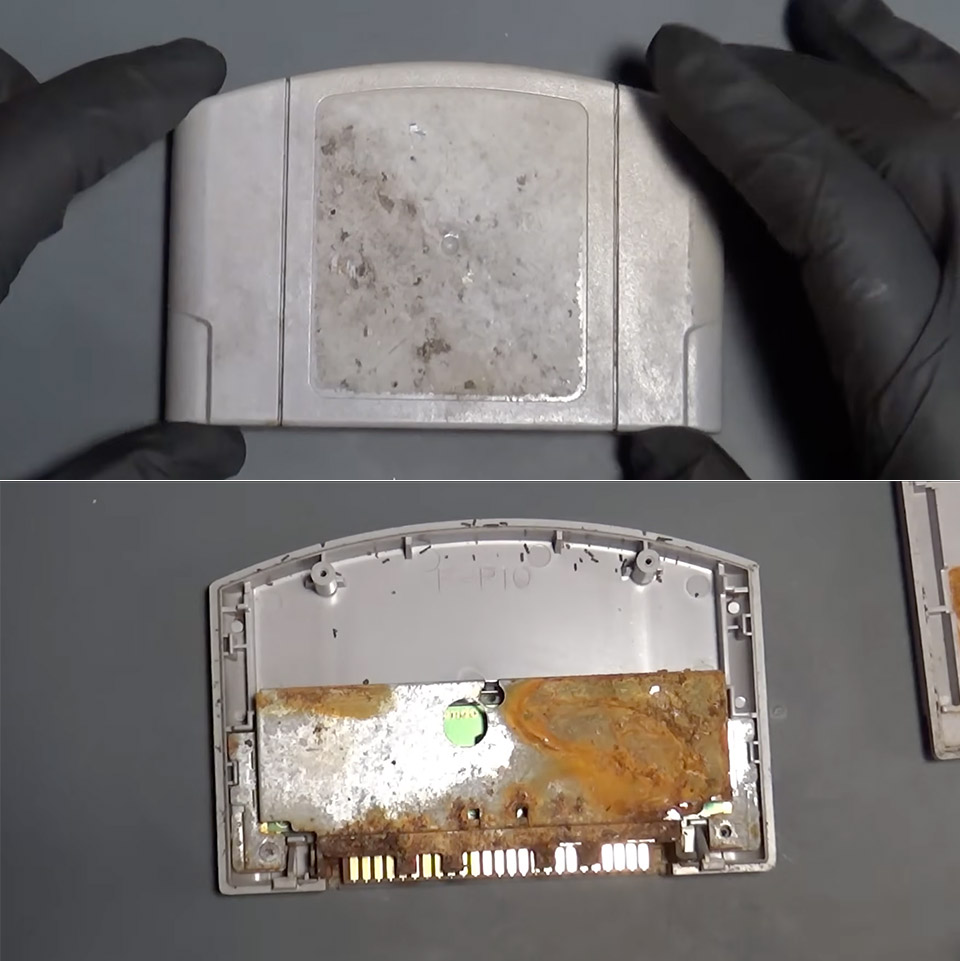
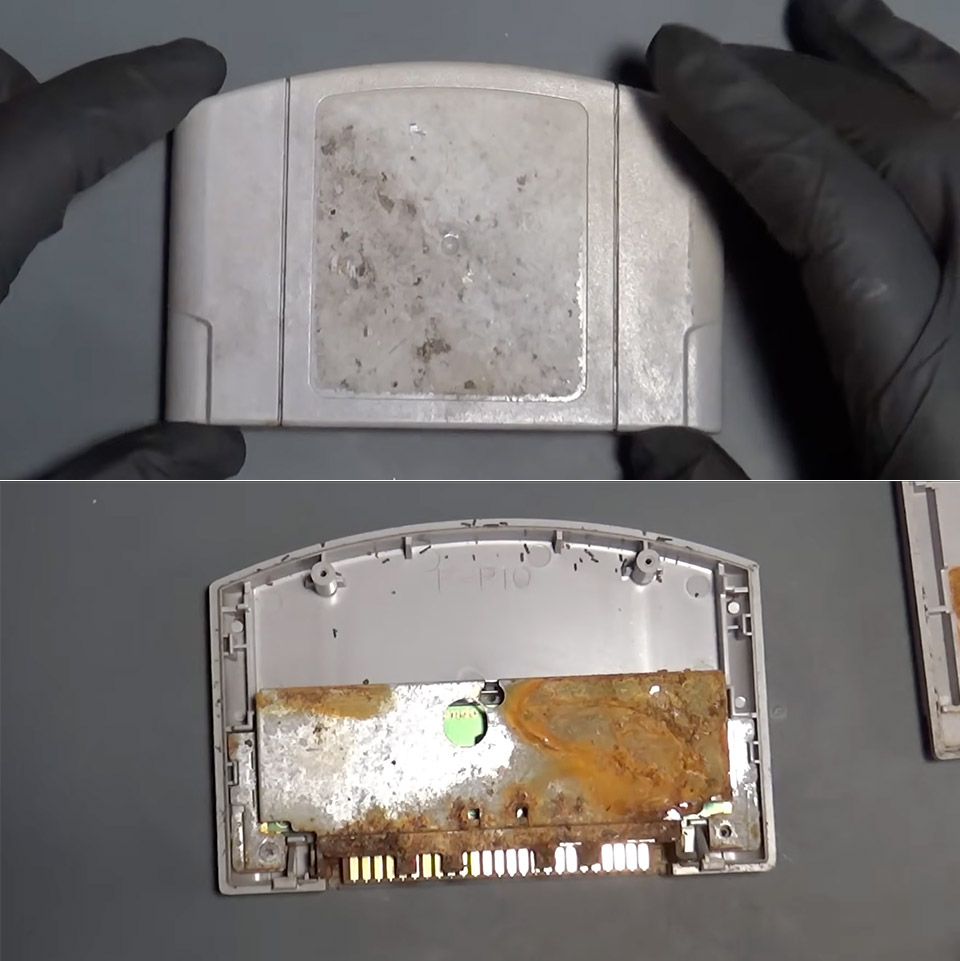
A walk through the trees turned up more than expected a few years ago. One person spotted a plastic Nintendo 64 cartridge half-hidden on the forest floor. Its paper labels had vanished completely, leaving no hint of what game sat inside. The finder brought it home, then passed it along to someone who fixes old consoles for a closer look.
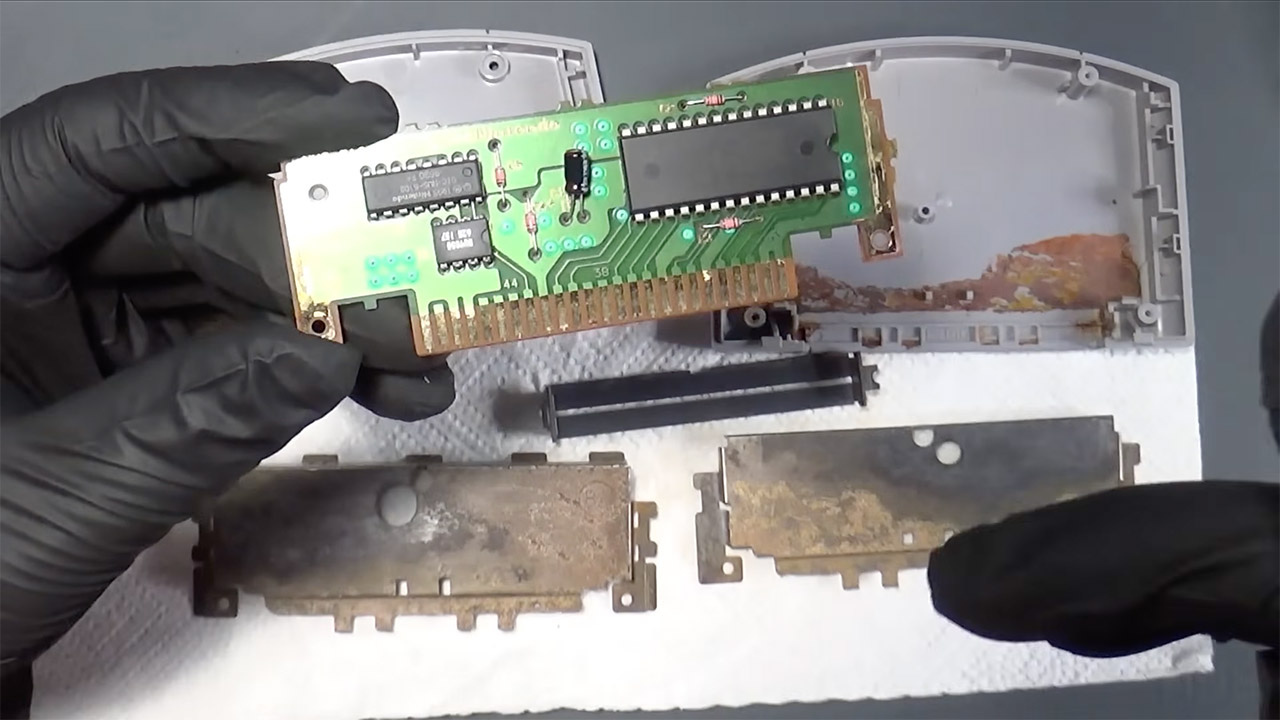
Rust had plainly gotten hold of the metal shield that covers the back, which is normally sealed up tight. The plastic shell that surrounded it had accumulated stains and scrapes from all of its time spent outside over the months or years, not to mention wear and tear. Inside, the circuit board, which is what actually matters, revealed some considerable corrosion around the vias on one side and a rougher surface on the other, and to top it all off, some of the screws had come free, adding to the overall ‘battered’ aspect. The real test would be when someone finally opened it up and attempted to get the parts to work again. First, you’ll need the right screwdriver, which should be a game-bit. When you take the shield off, you’re left with a wonderful mess of heavy crust and pitting across the metal underneath. Given the state of the outside, the board itself appears to be far superior to what you might assume. The pins on the edge connector are still in good condition, with no major damaged traces or fried components visible at first examination.
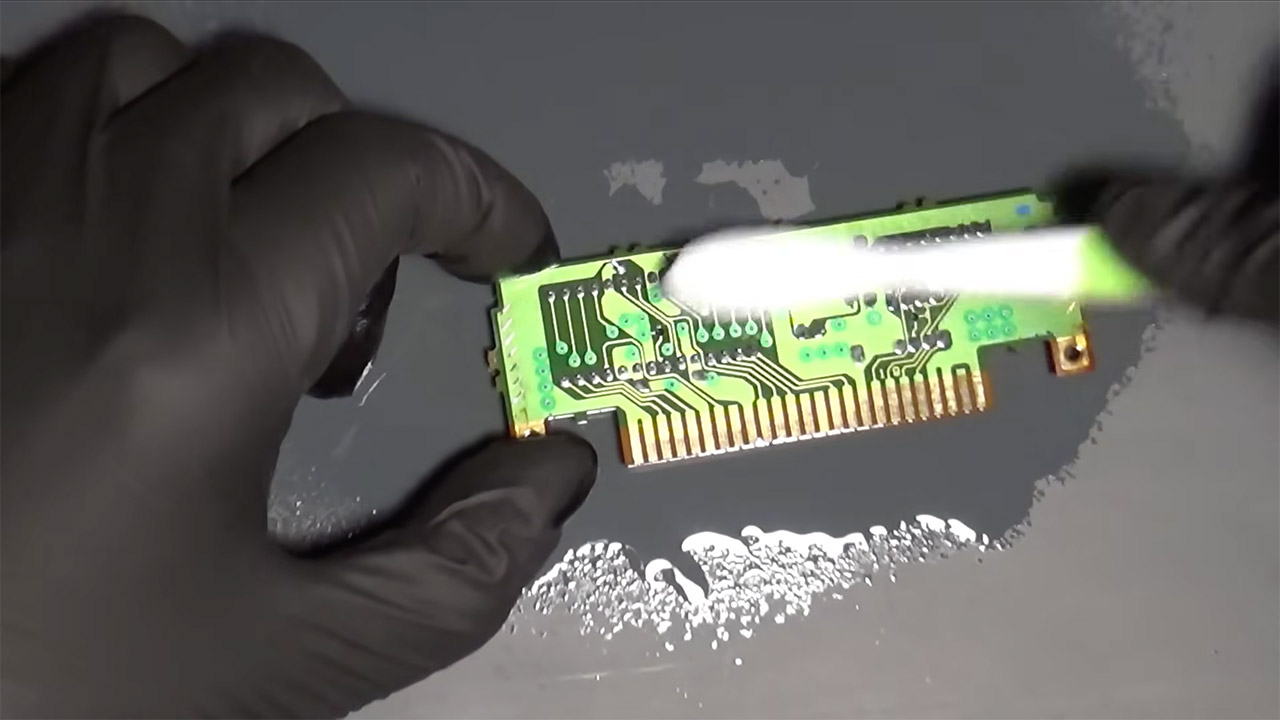
The next step was to clean it, starting with the board, then using high-strength isopropyl alcohol and a delicate brush. The residue is quickly removed without causing any damage, and the contacts can be polished with a Q-tip to look their finest. To be honest, the board appears very clean, nearly immaculate in sections. And the rusting hasn’t really taken hold, which is a comfort. In contrast, the shield and plastic shell told a different tale. Vinegar soaks appeared to dislodge some of the rust, and a combination of wire brushing and hot soapy water removed the most of the gunk. Some of the lighter stuff was removed with a magic eraser, but there is still some discoloration. If you were to restore it to its original condition, you’d probably have to replace the entire shell and shield, which would be a significant undertaking.
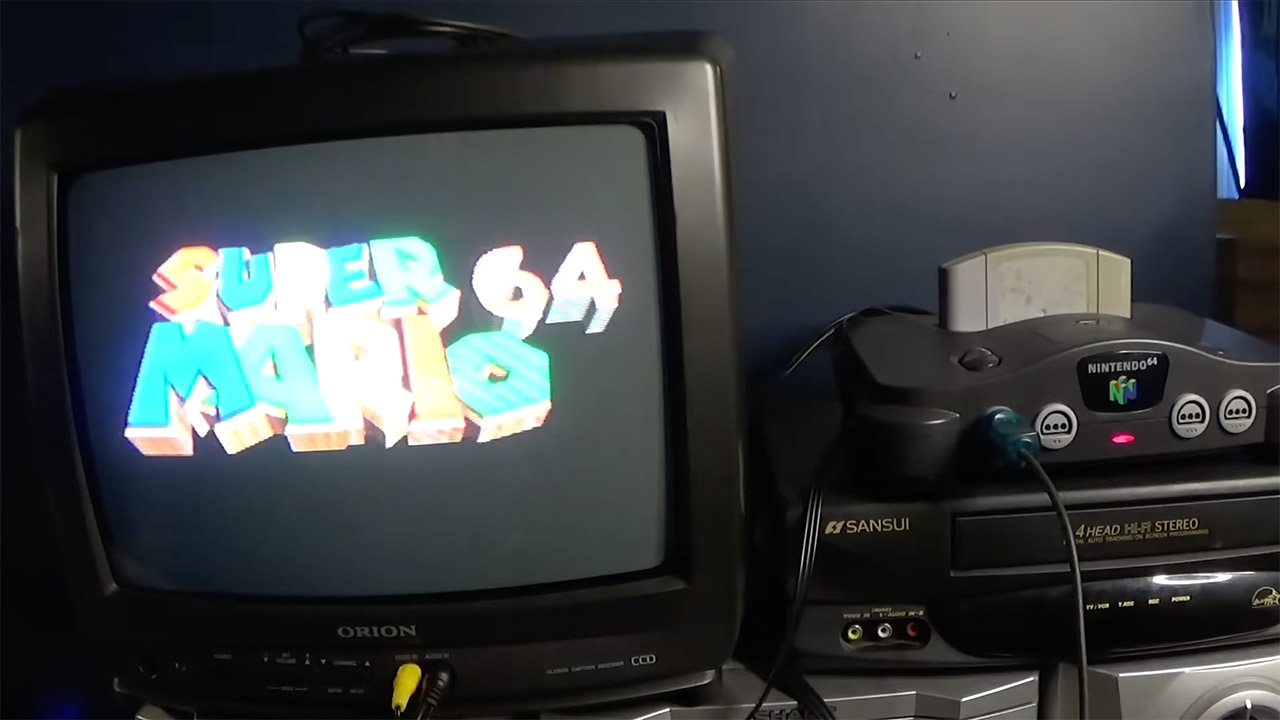
Before even attempting to boot the thing, he gave the N64 console a quick scrub just to be safe, and used an old cleaning kit to thoroughly clean the cartridge slot. One of the other known functional games proved that the device boots up normally. Then it was time to verify if our mystery cartridge was still functional. Slide it in, hit the power button, and the familiar title screen shows immediately.
The game was, of course, Super Mario 64, as the markings on the ROM chip showed that it was the regular version, with no special hardware or hidden modifications.The save data was particularly noteworthy, as someone’s previous progress was still present, intact, after years of exposure to moisture and temperature fluctuations. Unlike several other N64 games, Super Mario 64 keeps its saves in a non-battery-dependent manner. That was a pleasant surprise, even if the cartridge still appeared a little rough.
You have to give Nintendo credit because these cartridges were engineered to survive far more than a few scrapes and scuffs. They’re designed to endure dust and harsh handling by children, as well as repetitive insertion and removal, and it turns out the strong plastic shell and metal shield worked harder than we thought. They shielded the electronics within from the woodland environment considerably better than anyone could have anticipated. The shield, in particular, did an excellent job of soaking the majority of the corrosion that had developed in, leaving the board and pins in good shape. One final touch: a quick print of a new label to cover up the old one. [Source]
A new NYT Strands puzzle appears at midnight each day for your time zone – which means that some people are always playing ‘today’s game’ while others are playing ‘yesterday’s’. If you’re looking for Thursday’s puzzle instead then click here: NYT Strands hints and answers for Thursday, July 9 (game #858).
Strands is the NYT’s latest word game after the likes of Wordle, Spelling Bee and Connections – and it’s great fun. It can be difficult, though, so read on for my Strands hints.
Want more word-based fun? Then check out my NYT Connections today and Quordle today pages for hints and answers for those games, and Marc’s Wordle today page for the original viral word game.
Advertisement
SPOILER WARNING: Information about NYT Strands today is below, so don’t read on if you don’t want to know the answers.
Latest Videos From
NYT Strands today (game #859) – hint #1 – today’s theme
What is the theme of today’s NYT Strands?
• Today’s NYT Strands theme is… I think…
Advertisement
NYT Strands today (game #859) – hint #2 – clue words
Play any of these words to unlock the in-game hints system.
STAY
STORY
SNAKE
LEEK
ROBE
HATE
NYT Strands today (game #859) – hint #3 – spangram letters
How many letters are in today’s spangram?
• Spangram has 11 letters
NYT Strands today (game #859) – hint #4 – spangram position
What are two sides of the board that today’s spangram touches?
• First side: left, 1st row
Advertisement
• Last side: right, 6th row
Right, the answers are below, so DO NOT SCROLL ANY FURTHER IF YOU DON’T WANT TO SEE THEM.
Advertisement
NYT Strands today (game #859) – the answers
(Image credit: New York Times)
The answers to today’s Strands, game #859, are…
BELIEVE
HISTORY
HASTE
GOOD
MERRY
LOVE
SENSE
SPANGRAM: WECANMAKEIT
My rating: Hard
My score: Perfect
Is it possible to look at today’s theme and not say to yourself “… therefore I am”? Apparently it is, because the words that complete “I think…” here were instead the more seemingly everyday “we can make it”.
Sign up for breaking news, reviews, opinion, top tech deals, and more.
Advertisement
Thinking that I was missing out on some cultural reference point I googled all of today’s game words, along with the spangram, and the AI result claimed that all the words feature in the 17th-century Irish Jacobite love song, Mo Ghile Mear (My Gallant Hero). And there was me thinking it was from Ted Lasso or a Taylor Swift song I’d not heard of.
Despite my ignorance I was able to navigate the game without using any hints.
Advertisement
Yesterday’s NYT Strands answers (Thursday, July 9, game #858)
STICK
GLOSS
STAIN
LINER
TINT
BALM
PLUM
SPANGRAM: KISSANDMAKEUP
What is NYT Strands?
Strands is the NYT’s not-so-new-any-more word game, following Wordle and Connections. It’s now a fully fledged member of the NYT’s games stable that has been running for a year and which can be played on the NYT Games site on desktop or mobile.
I’ve got a full guide to how to play NYT Strands, complete with tips for solving it, so check that out if you’re struggling to beat it each day.
A new Quordle puzzle appears at midnight each day for your time zone – which means that some people are always playing ‘today’s game’ while others are playing ‘yesterday’s’. If you’re looking for Thursday’s puzzle instead then click here: Quordle hints and answers for Thursday, July 9 (game #1627).
Quordle was one of the original Wordle alternatives and is still going strong now more than 1,500 games later. It offers a genuine challenge, though, so read on if you need some Quordle hints today — or scroll down further for the answers.
Enjoy playing word games? You can also check out my NYT Connections today and NYT Strands today pages for hints and answers for those puzzles, while Marc’s Wordle today column covers the original viral word game.
Advertisement
SPOILER WARNING: Information about Quordle today is below, so don’t read on if you don’t want to know the answers.
Latest Videos From
Quordle today (game #1628) — hint #1 — Vowels
How many different vowels are in Quordle today?
• The number of different vowels in Quordle today is 3*.
* Note that by vowel we mean the five standard vowels (A, E, I, O, U), not Y (which is sometimes counted as a vowel too).
Advertisement
Quordle today (game #1628) — hint #2 — repeated letters
Do any of today’s Quordle answers contain repeated letters?
• The number of Quordle answers containing a repeated letter today is 1.
Quordle today (game #1628) — hint #3 — uncommon letters
Do the letters Q, Z, X or J appear in Quordle today?
• No. None of Q, Z, X or J appear among today’s Quordle answers.
A new NYT Connections puzzle appears at midnight each day for your time zone – which means that some people are always playing ‘today’s game’ while others are playing ‘yesterday’s’. If you’re looking for Thursday’s puzzle instead then click here: NYT Connections hints and answers for Thursday, July 9 (game #1124).
Good morning! Let’s play Connections, the NYT’s clever word game that challenges you to group answers in various categories. It can be tough, so read on if you need Connections hints.
What should you do once you’ve finished? Why, play some more word games of course. I’ve also got daily Strands hints and answers and Quordle hints and answers articles if you need help for those too, while Marc’s Wordle today page covers the original viral word game.
Advertisement
SPOILER WARNING: Information about NYT Connections today is below, so don’t read on if you don’t want to know the answers.
Latest Videos From
NYT Connections today (game #1125) – today’s words
(Image credit: New York Times)
Today’s NYT Connections words are…
OUTKAST
DEPECHE MODE
FRESH-BAKED
BALL GOWN
DO NOT DISTURB
À LA MODE
STRIKE A POSE
AIRPLANE MODE
ERASURE
SAFE MODE
DECADENT
NEW ORDER
HOTSPOT
PET SHOP BOYS
MOLTEN
LOCATION SERVICES
NYT Connections today (game #1125) – hint #1 – group hints
What are some clues for today’s NYT Connections groups?
Advertisement
YELLOW: iPhone options
GREEN: Pudding levels
BLUE: UK chart acts of yesteryear
PURPLE: Umpire beginnings
Need more clues?
We’re firmly in spoiler territory now, but read on if you want to know what the four theme answers are for today’s NYT Connections puzzles…
Sign up for breaking news, reviews, opinion, top tech deals, and more.
Advertisement
NYT Connections today (game #1125) – hint #2 – group answers
What are the answers for today’s NYT Connections groups?
YELLOW: SMARTPHONE SETTINGS
GREEN: DESSERT MENU DESCRIPTORS
BLUE: ‘8OS SYNTH-POP BANDS
PURPLE: STARTING WITH BASEBALL CALLS
Right, the answers are below, so DO NOT SCROLL ANY FURTHER IF YOU DON’T WANT TO SEE THEM.
Advertisement
NYT Connections today (game #1125) – the answers
(Image credit: New York Times)
The answers to today’s Connections, game #1125, are…
YELLOW: SMARTPHONE SETTINGS: AIRPLANE MODE, DO NOT DISTURB, HOTSPOT, LOCATION SERVICES
GREEN: DESSERT MENU DESCRIPTORS: DECADENT, FRESH-BAKED, MOLTEN, À LA MODE
BLUE: ‘8OS SYNTH-POP BANDS: DEPECHE MODE, ERASURE, NEW ORDER, PET SHOP BOYS
PURPLE: STARTING WITH BASEBALL CALLS: BALL GOWN, OUTKAST, SAFE MODE, STRIKE A POSE
My rating: Hard
My score: 1 mistake
There were a number of fashion links among today’s tiles: A LA MODE, of course, STRIKE A POSE — which features in Madonna’s Vogue — BALL GOWN, and DEPECHE MODE, which was the name of a French fashion magazine.
What caught me out, however, was the SMARTPHONE SETTINGS, as I originally included SAFE MODE instead of DO NOT DISTURB.
Today’s game also featured my two favorite bands — PET SHOP BOYS and NEW ORDER, both of whom joined forces in the 1990s with Electronic and who still tour together occasionally.
Advertisement
Yesterday’s NYT Connections answers (Thursday, July 9, 2026, game #1124)
GREEN: MUSIC PUBLICATIONS: BILLBOARD, PITCHFORK, ROLLING STONE, SPIN
BLUE: KINDS OF RUGS: PERSIAN, PRAYER, SHAG, THROW
PURPLE: PONTIAC MODELS: FIREBIRD, G6, GRAND PRIX, TRANS AM
What is NYT Connections?
NYT Connections is one of several increasingly popular word games made by the New York Times. It challenges you to find groups of four items that share something in common, and each group has a different difficulty level: green is easy, yellow a little harder, blue often quite tough and purple usually very difficult.
On the plus side, you don’t technically need to solve the final one, as you’ll be able to answer that one by a process of elimination. What’s more, you can make up to four mistakes, which gives you a little bit of breathing room.
It’s a little more involved than something like Wordle, however, and there are plenty of opportunities for the game to trip you up with tricks. For instance, watch out for homophones and other word games that could disguise the answers.
It’s playable for free via the NYT Games site on desktop or mobile.
Jeff Bezos is letting outside investors into Blue Origin for the first time since he founded it in 2000. The rocket company is seeking about $10bn in fresh capital at a $130bn pre-money valuation, according to CNBC.
For 26 years, Bezos bankrolled the company himself, selling billions in Amazon stock rather than sharing ownership. That solo-funding era is now over.
He is not stepping back entirely, with reporting suggesting he will put around $2bn into the round himself. Hedge fund Coatue Management is expected to add roughly $4bn, with strong institutional interest for the rest.
The obvious question is what changed. The blunt answer is that staying in the space race has outgrown even one of the world’s richest people.
Advertisement
A costly stretch of bad timing
The 💜 of EU tech
The latest rumblings from the EU tech scene, a story from our wise ol’ founder Boris, and some questionable AI art. It’s free, every week, in your inbox. Sign up now!
New Glenn is the vehicle Blue Origin is counting on for lunar and national-security missions. Chief executive Dave Limp has committed to returning it to flight before the end of 2026, with launches planned for NASA, Amazon’s Leo satellite network, and AST SpaceMobile.
Advertisement
That combination of recovery and scale-up, more than any single rival’s move, is the sharper reason for the timing. Founder wealth alone cannot comfortably absorb costs at this pace.
Chasing a rival worth far more
The backdrop is SpaceX, which just pulled off the largest IPO in history. It raised a record sum, reportedly near $86bn, at a valuation around $2tn, even as its filing confirmed Musk keeps dominant voting control.
SpaceX’s lead is built on reusable rockets, Starlink, and government work, including a $2.29bn Space Force contract. Catching up on lunar and defence launches now takes tens of billions, not a founder’s cheque.
Investor appetite for space has swelled since that listing, as money that once flowed into SpaceX proxies now has the real thing to chase. Rivals from Stoke Space to Firefly have raised or gone public on the same wave.
Advertisement
Blue Origin has taken only limited outside money before, including a 2021 grant and a 2022 acquisition, and it has not disclosed a closing timeline. Whether $10bn narrows the SpaceX gap or merely buys time depends far less on the capital than on one thing: getting New Glenn back to the launch pad, and off it.
Every time you use ChatGPT or generate an image with AI, there is a memory chip working at extreme speed behind the scenes. However, that chip has a memory bottleneck problem, and a Korean research team may have just solved it.
Researchers at POSTECH (Pohang University of Science and Technology) developed a new way to stack more than 10 ultrathin semiconductor chips on top of each other, achieving a memory density roughly four times higher than the best commercial chips available today (via TechXplore).
Why is stacking chips so hard, and what makes this one different?
High-bandwidth memory, or HBM, is the type of memory that powers AI accelerators. It works by stacking multiple chips vertically, much like building a high-rise instead of spreading out across land.
The problem is that as chips get thinner, they become incredibly fragile. At one-fifth the thickness of a human hair, they bend, warp, and crack under pressure. Current manufacturing methods make this worse, often damaging chips before they even make it into a stack.
Advertisement
Transfer printing and in-situ bonding conceptScience Direct
The POSTECH team solved this by combining two techniques into one process. Transfer printing precisely places each chip where it needs to go, while in-situ bonding forms the metallic connections at the same moment, all under low heat below 180 degrees Celsius and low pressure below 20 kilopascals. The result is a stack of more than 10 chips with almost no misalignment and very little warping.
Why this matters for the future of AI
More memory packed into the same space means AI tools can run faster and handle bigger tasks without needing larger or more expensive hardware. The researchers also see uses beyond AI, including next-generation micro-LED displays and advanced processor designs that need the same kind of ultra-precise stacking this method delivers.
Getting this into commercial production is the next step, but if it gets there, the memory ceiling that has been quietly holding AI back could finally start to lift.
Uninstalling apps on macOS is usually very easy. You drag an app to the Trash, empty it, and move on. The annoying part is that many apps still leave residue behind, including support files, caches, preferences, containers, and logs. I have always found that frustrating, especially when old app data keeps sitting around long after the app itself is gone.
AppCleaner by FreeMacSoft has been the popular go-to option for this for years, and it still does the job well. But I recently came across a new open-source alternative called Uninstally by Codenta, which solves the same basic problem. It removes Mac apps along with the support files, caches, preferences, containers, logs, and other leftovers they usually leave behind.
How does Uninstally work?
Uninstally can be used directly from Finder. Once its Finder extension is enabled, you can right-click any .app bundle and choose “Uninstall with Uninstally.” The app then opens a confirmation window instead of making you start from a separate app browser.
Uninstally in Finder menuCodenta on GitHub
The cleaner part is how it finds related files. Uninstally uses the app’s bundle identifier and helper namespaces to match leftover items across the Library hierarchy, rather than just looking for folders with the same name. Before anything is removed, it shows the app name, icon, reclaimable storage, item count, and lets you review or deselect matched files.
What else makes it useful?
There is also a standalone app browser for a more deliberate cleanup. You can search installed apps, switch between grid and list views, and filter by largest apps, recently installed apps, never opened apps, broken installs, duplicated apps, and apps with leftovers.
Advertisement
Codenta on GitHub
Uninstally also includes a leftover scanner for apps you have already removed. Instead of digging through Library folders manually, you can scan for orphaned support files, caches, containers, preferences, logs, and old installers in one place.
It also supports Homebrew casks and formulae, shows dependency relationships, and can remove Homebrew leftovers through optional zap cleanup. User-domain files are moved to the Trash, while privileged items require an administrator prompt. You can download Uninstally from Codenta’s website or its GitHub repo.
Google is rolling out a feature that flags when an advertisement was made using AI. The label will indicate if an ad was created or edited with generative tools, TechCrunch reports.
The disclosure appears in the “My Ad Center” panel, reachable via the three-dot menu or info icon on ads. It covers ads across Google Search, YouTube, and Google Discover, and is available globally.
That panel already lets users block or report ads and learn why one was shown. Now it adds an option labelled “how this ad was made”, which surfaces any AI involvement.
The rationale is straightforward. AI makes it cheap to generate slick product imagery, which can mislead shoppers who assume they are looking at a real photograph rather than a synthetic one.
Advertisement
The 💜 of EU tech
The latest rumblings from the EU tech scene, a story from our wise ol’ founder Boris, and some questionable AI art. It’s free, every week, in your inbox. Sign up now!
Until now, Google only required AI disclosure on election ads. Extending it to commercial ads is a meaningful widening of the policy.
The honour-system catch
The reach of the feature depends heavily on how an ad was built. When advertisers use Google’s own generative AI ad tools, the disclosure is switched on automatically.
Advertisement
When an ad is made elsewhere, though, the advertiser must actively flag that AI was involved. Google says it will not run its own check to verify the claim, so the label rests on advertisers being honest.
That gap matters because the incentive to stay quiet is real. An advertiser hoping a synthetic scene passes for a genuine photo has little reason to volunteer otherwise, and Google is not looking over its shoulder.
Regulators are forcing the issue
The timing is not accidental. Google’s move front-runs tougher rules, as the EU AI Act’s transparency obligations for AI-generated content start to bite in August.
The feature is still a step toward a market drowning in synthetic media, where even Google has branded some AI content spam. Giving users a place to ask how an ad was made is better than silence.
For now, Google has built the disclosure and handed advertisers the switch. The honest ones will flip it, and the rest are exactly the reason such a label was needed.





















































You must be logged in to post a comment Login