Tech
Experts May Have Drastically Underestimated The Lifespan Of EV Batteries


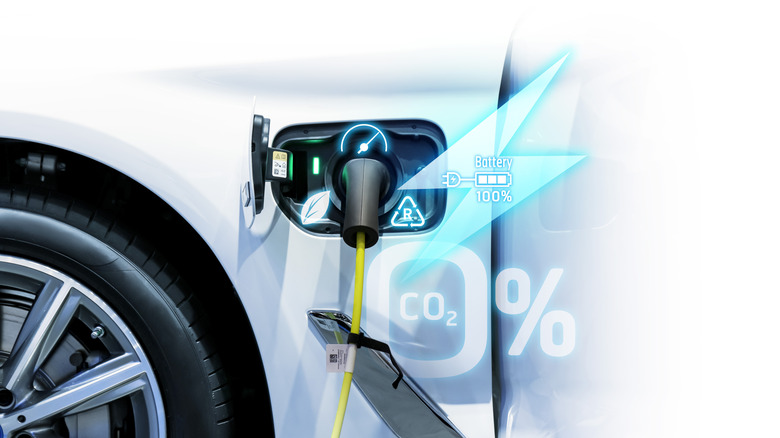
For all the technological advancements they promise, EVs haven’t entirely convinced people about their batteries. Many people may assume they wear down as fast as the units in phones do, which seems like a valid fear at first considering how pricey batteries are to replace. However, they have turned out to be well capable of lasting as long as the cars themselves. Recent research has proven that the industry has been setting its battery lifespan numbers way too low — by a huge margin, too.
A Wall Street Journal report from July has laid out how far off the early predictions were. It cited figures by Recurrent, which found that an electric car — even after five years of use — still retained 95% of its driving range. That’s impressive, and it gets even more so when the actual claims by EV makers are taken into account. One example is Tesla, which for most of its cars, promises the battery will stay above 70% of its original capacity for eight years. However, if the Recurrent report is anything to go by, the degradation is a lot slower, so the promise looks rather humble.
Take one particular 2016 Tesla Model S 90D that has spent nearly a decade serving as a UK airport taxi as an example. As reported by InsideEVs, the car had racked up around 430,000 miles on its original battery and motors. Yet through it all, it only lost about 65 miles of range. Some back of the napkin math later, you’d arrive at a battery capacity of roughly 78% at the time.
Why companies have been getting it all wrong
A big reason estimates have been so off is apparently because lab tests have been roughing up batteries a little too much. Research coming out of Stanford in 2024 put 92 lithium-ion batteries through their paces for over two years. They found that real-world driving is actually a lot easier on the batteries. All that stopping, starting, and staying parked for hours actually helps the cells recover.
Taking all this into account, they concluded that most batteries could last up to a whopping 40% longer than previously thought. The lead researcher went as far as saying that the industry had been testing those poor batteries wrong. One of the lead authors even noted that something like hard acceleration – a huge power drainer and therefore also long assumed to be rough on a pack — seemed to actually slow the wear a bit rather than speed it up.
Viet Nguyen-Tien, a research officer at the London School of Economics, told WSJ that the newest electric cars now hold up roughly as long as gas cars. In fact, newer estimates peg a pack’s useful life somewhere between 15 and 20 years.
Batteries are getting better, too
At the same time, batteries themselves have been getting better — and getting cheaper too while at it. Since 2010, prices have dropped more than 90%, per BloombergNEF. At the same time, newer cells are also more consistent and their software is able to squeeze more life out of them than ever before.
Another fear customers have had is about fast charging, that speeding things up leads to faster degradation. The thing is that while fast charging does take a toll, it’s far lower than what you might assume. According to a January 2026 study by Geotab, a vehicle data company, the average yearly battery degradation of studied cars was around 2.3%. For cars that were heavily reliant on high-power DC fast chargers (rated above 100kW), that number was found closer to just 3.0%. And for cars charging primarily at home, it was around 1.5%. Heat plays a role, too, according to the same report. Compared to cars in milder climate, cars operating in hot areas wear down about 0.4% faster each year. However, with batteries now estimated to last longer than previously thought, all these worries may be even smaller than they previously were.
You must be logged in to post a comment Login