Tech
Extremely Rare Computer Space 2-Player Arcade Cabinet is the Green Machine That Almost Nobody Owns, Goes Up for Auction

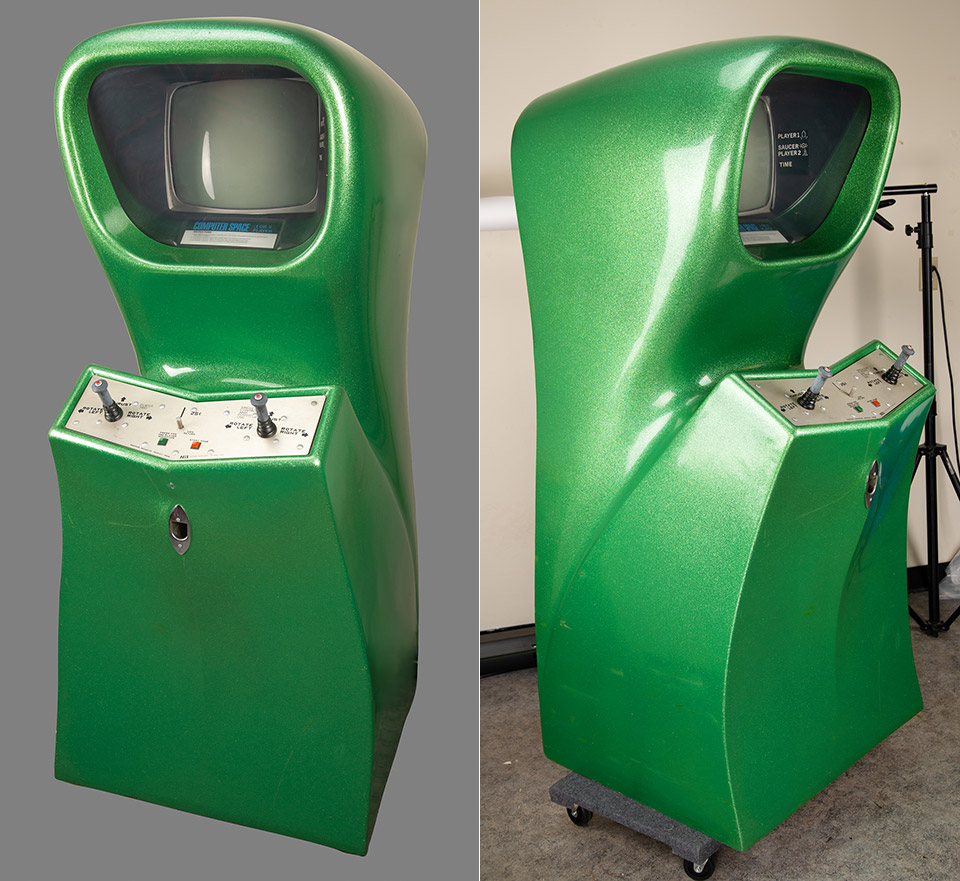
Nolan Bushnell and Ted Dabney spent months turning a mainframe curiosity into something that could sit in a bar and take quarters. Their 1971 creation, Computer Space, became the first coin-operated video game ever sold to the public. A rare two-player version of that same machine, finished in metallic green sparkle fiberglass and still working more than fifty years later, is now on the block at RR Auction with bids climbing toward an estimate north of $20,000.

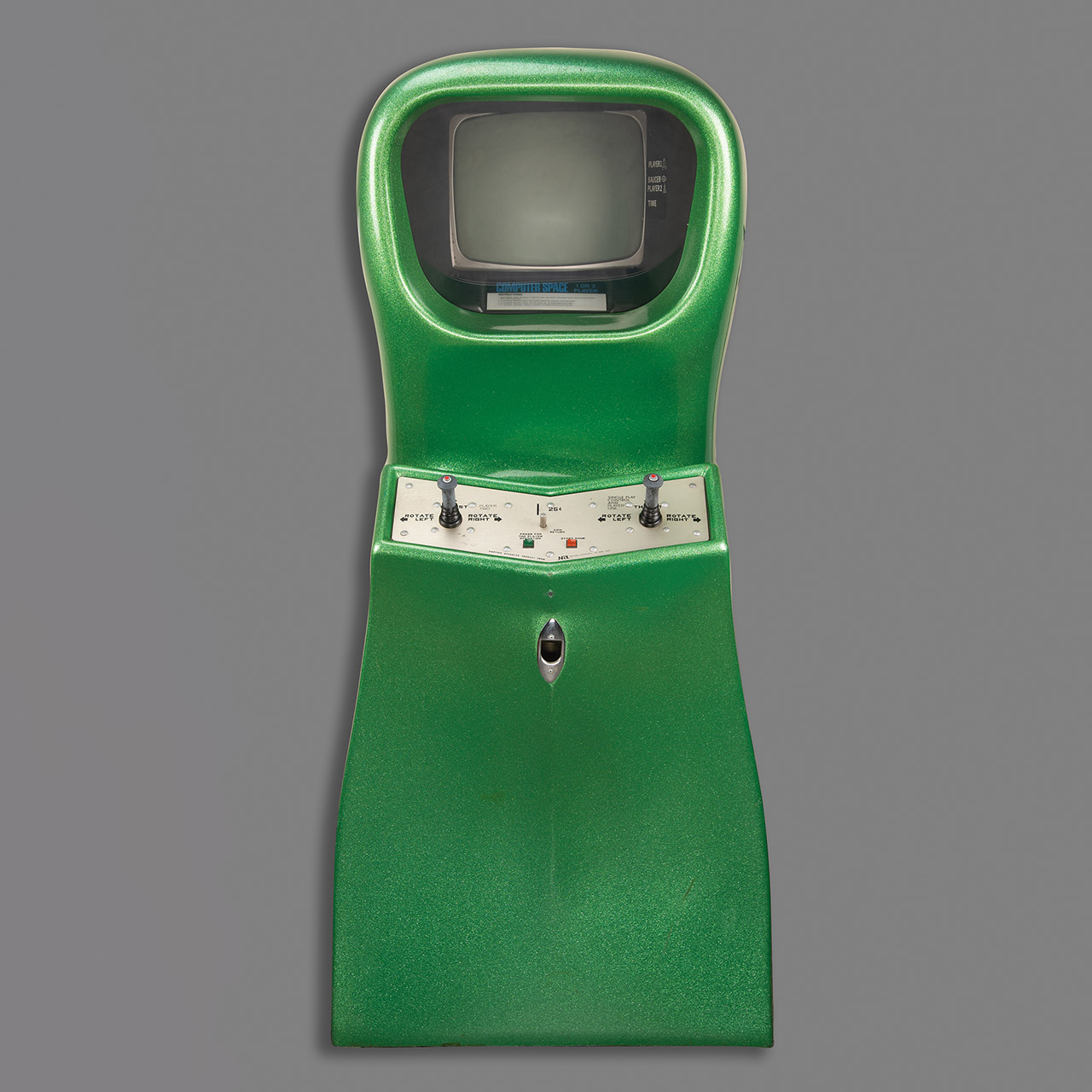
Spacewar! had been running on pricey university computers since 1962. Players were launching rocket ships around a large star, firing missiles at each other as gravity pulled them in. Bushnell and Dabney, working as Syzygy Engineering, reduced the game to its bare essentials, running it on a few logic boards and a black-and-white television. There’s no need for a minicomputer or gravity; only one player in a rocket, two hardware-driven saucers, and a starfield made up of static dots. They created an extremely futuristic cabinet out of fiberglass, the kind of flowing design you see on hot tubs rather than pinball machines, and brought four solid color prototypes to the Music Operators of America convention in Chicago in October 1971.


Arcade1Up Pac-Man Deluxe Arcade Gaming Cabinet, 14 Classic Games
- 14 Classic Games Included: Play PAC-MAN, Galaga, Dig Dug, Pac-Land, Mappy, and more—14 built-in titles deliver hours of iconic retro arcade fun at…
- Authentic Arcade Experience: Real-feel joystick and buttons let you dodge ghosts, eat pellets, and chase high scores just like you did in the arcade
- Crisp 17-Inch Display: BOE color monitor brings every glowing maze and character to life with sharp visuals that stay true to the original arcade look

Nutting Associates in Mountain View, California, took the game to the next level and put it into production. In 1972, approximately 1,300 to 1,500 single-player cabinets were produced, each painted in metallic flake red, blue, or the uncommon green. Sales were consistent around college campuses, but everyplace else, operators discovered that the controls were too complex for the usual bar population to handle. Still, it demonstrated that a video game can earn money. Bushnell and Dabney withdrew from Nutting, renamed their firm Atari, and published Pong the following year. Computer Space had finished its duty.
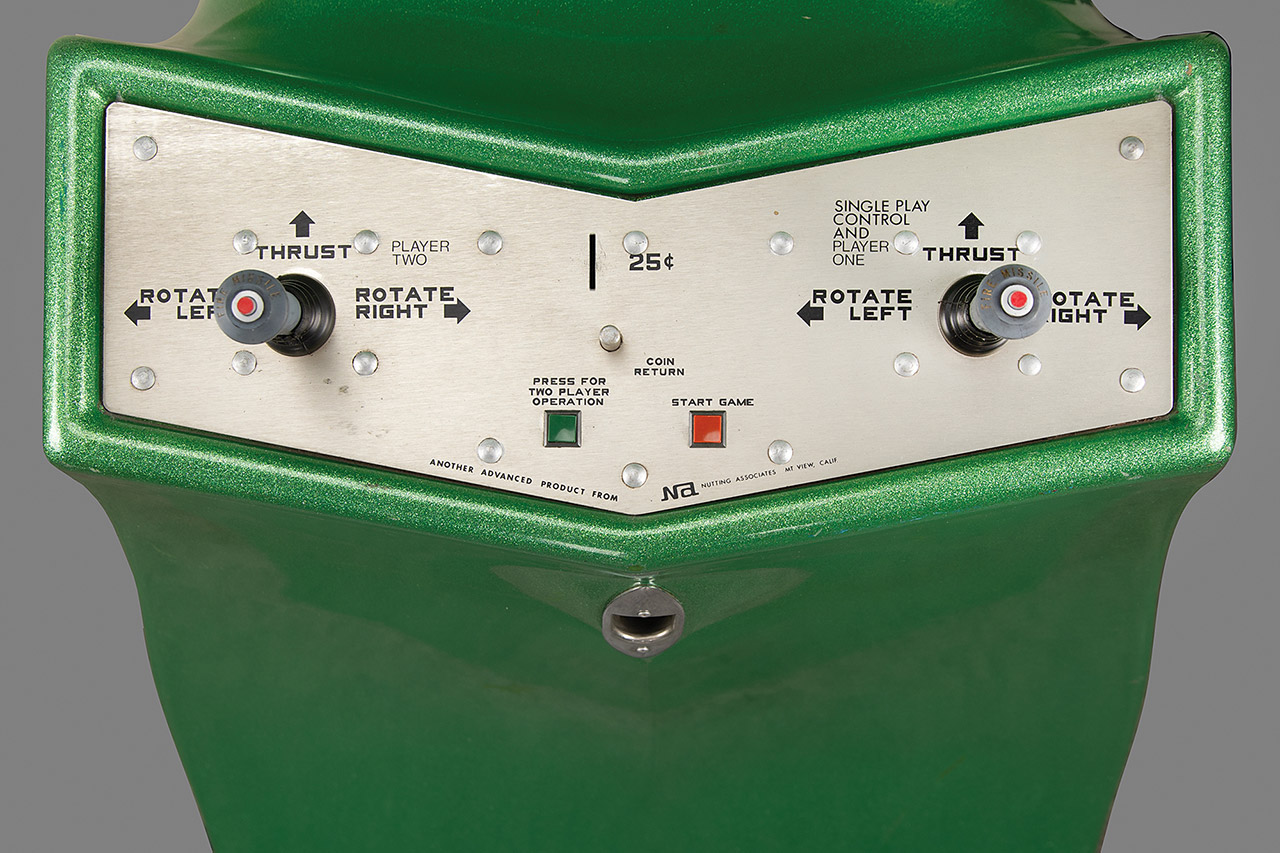
However, Nutting kept the game alive. In July 1973, the business began shipping a two-player successor. Steve Bristow handled the engineering, and the design was altered; the new cabinet was now solely green metallic flake. The original push-button configuration was replaced by two rotational joysticks and a set of red fire buttons. A green button labeled “Two Player Operation” sat between the coin slot and the red start button. Instructions printed under the screen were simple: drop a quarter, choose one or two players before you hit start, then fight. In single-player mode you still faced the computer-controlled saucer. In two-player mode the two human rockets dueled each other across the same starfield.

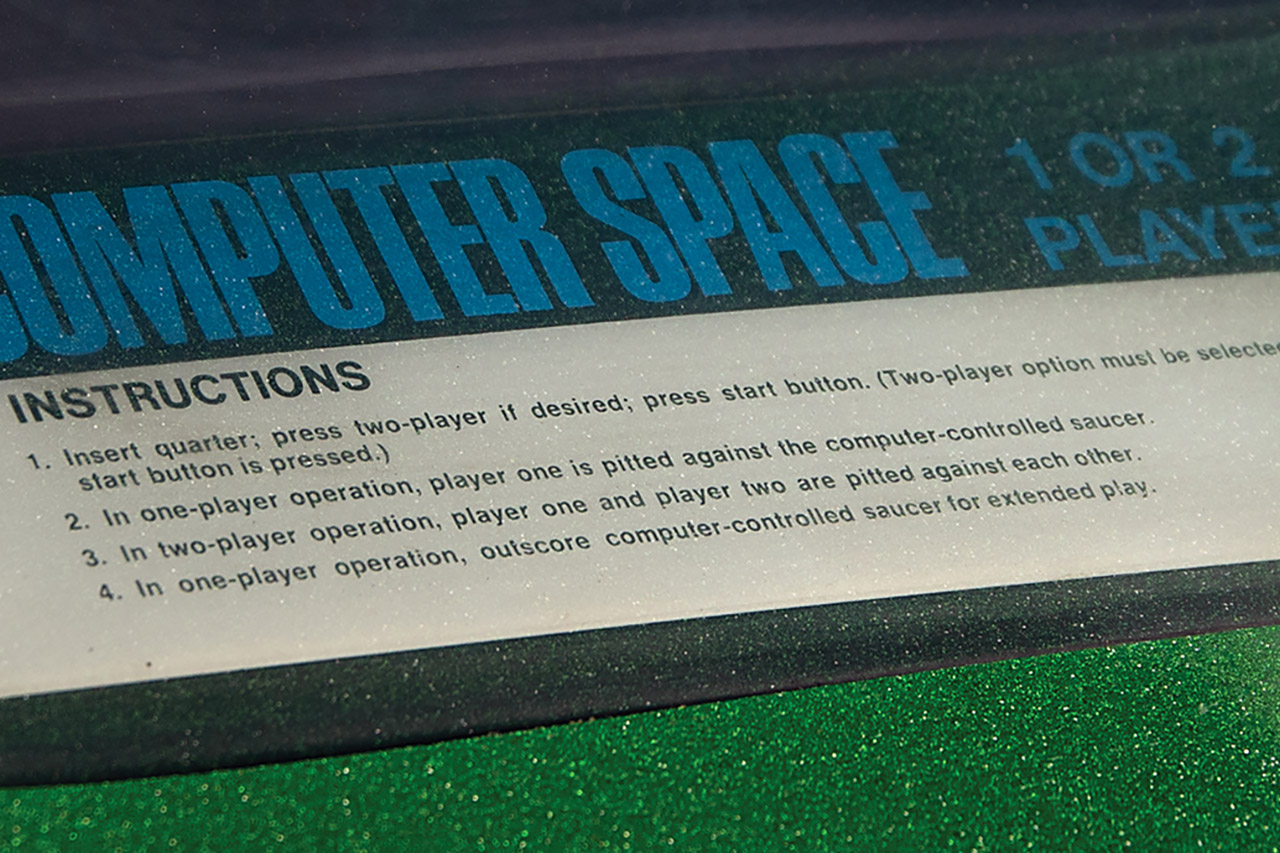
Unfortunately, we don’t know how many two-player versions were made. Some collectors believe there were just a few hundred, and the Video Game Preservation Society has confirmed that less than ten originals remain. Working versions are practically never for sale. One recent green example was apparently sold to a museum for almost $20,000. Paul Allen, one of Microsoft’s co-founders, once owned a blue single-player device that would have sold for a much higher price. Obtaining parts has become nearly impossible, as vacuum-tube monitors and discrete logic boards are just unavailable.
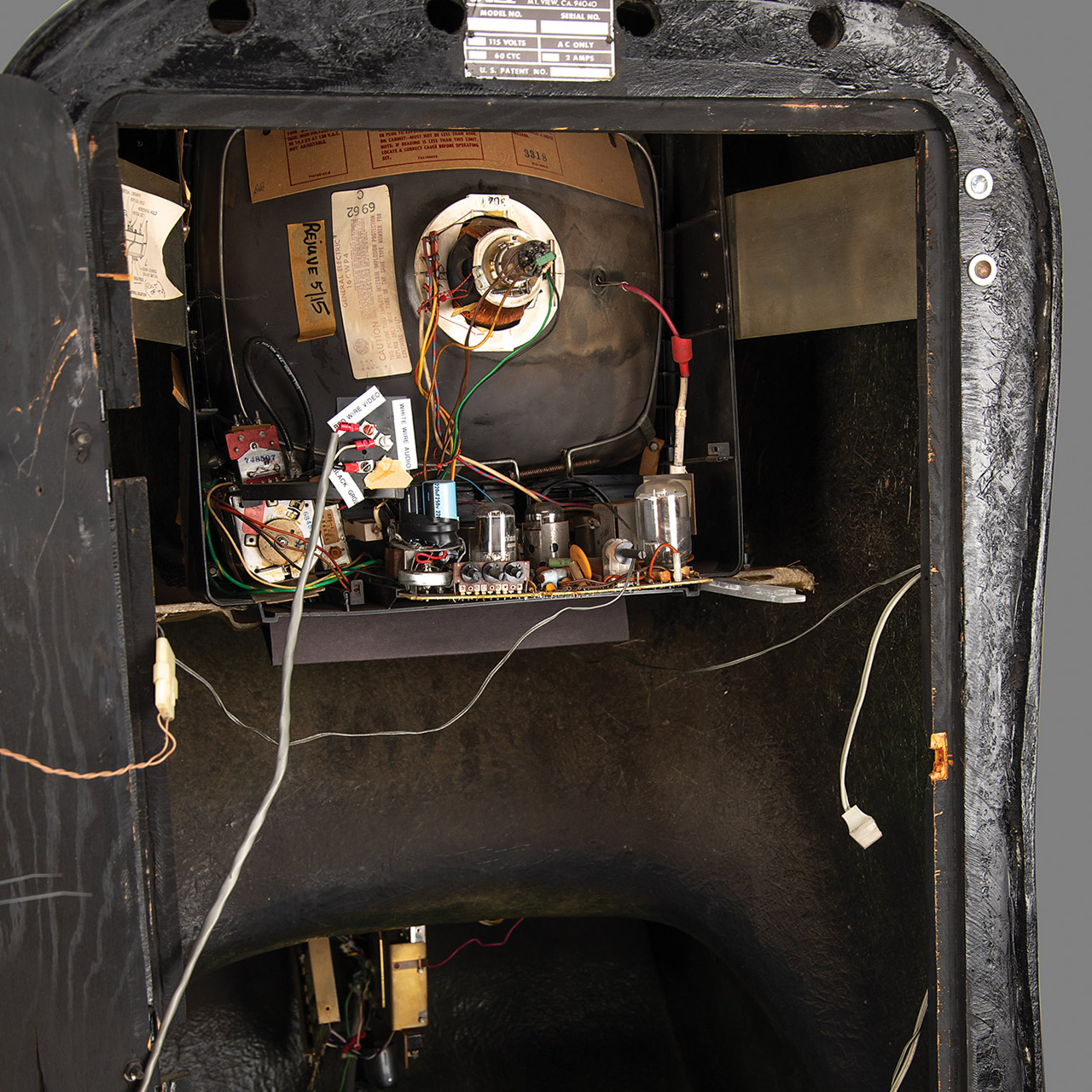
The one being auctioned has serial number 30644 and model number 724C. The cabinet has some scuffing, but the machine still works and displays the game on the screen. The original joysticks and buttons are still attached, indicating that it is in excellent shape. Dave Perry, the game designer of Shiny Entertainment, is the current owner who is selling since he has run out of space at home. The auction is part of RR Auction’s larger “Steve Jobs & the Computer Revolution” sale and is set to end on August 20.
You must be logged in to post a comment Login