

Tech
Fake Next.js job interview tests backdoor developer’s devices



A coordinated campaign targeting software developers with job-themed lures is using malicious repositories posing as legitimate Next.js projects and technical assessment materials, including recruiting coding tests.
The attacker’s goal is to achieve remote code execution (RCE) on developer machines, exfiltrate sensitive data, and introduce additional payloads on compromised systems.
Multiple execution triggers
Next.js is a popular JavaScript framework used for building web applications. It runs on top of React and uses Node.js for the backend.

The Microsoft Defender team says that the attacker created fake web app projects built with Next.js and disguised them as coding projects to share with developers during job interviews or technical assessments.
The researchers initially identified a repository hosted on the Bitbucket cloud-based Git-based code hosting and collaboration service. However, they discovered multiple repositories that shared code structure, loader logic, and naming patterns.
When the target clones the repository and opens it locally, following a standard workflow, they trigger malicious JavaScript that executes automatically when launching the app.
The script downloads additional malicious code (a JavaScript backdoor) from the attacker’s server and executes it directly in memory with the running Node.js process, allowing remote code execution on the machine.
.jpg)
Source: Microsoft
To increase the infection rate, the attackers embedded multiple execution triggers within the malicious repositories, Microsoft explained. These are summarized as follows:
- VS Code trigger – A .vscode/tasks.json file set with runOn: “folderOpen” executes a Node script as soon as the project folder is opened (and trusted).
- Dev server trigger – When the developer runs npm run dev, a trojanized asset (e.g., a modified JS library) decodes a hidden URL, fetches a loader from a remote server, and executes it in memory.
- Backend startup trigger – On server start, a backend module decodes a base64 endpoint from .env, sends process.env to the attacker, receives JavaScript in response, and executes it using new Function().
The infection process drops a JavaScript payload (Stage 1) that profiles the host and registers with a command-and-control (C2) endpoint, polling the server at fixed intervals.
The infection then upgrades to a tasking controller (Stage 2) that connects to a separate C2 server, checks for tasks, executes supplied JavaScript in memory, and tracks spawned processes. The payload also supports file enumeration, directory browsing, and staged file exfiltration.
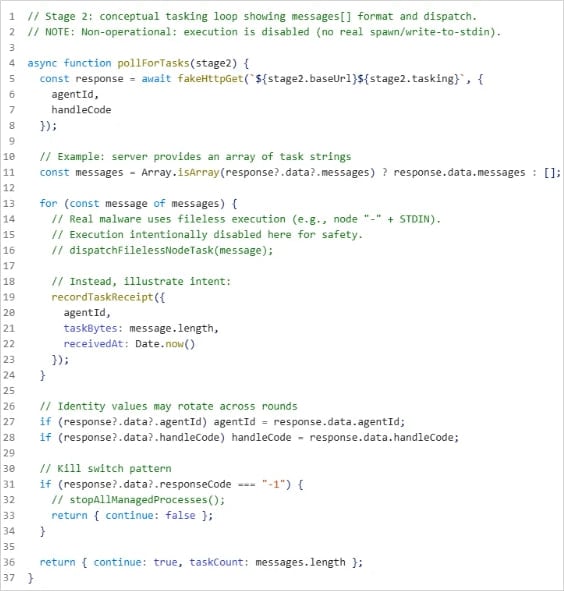
Source: Microsoft
Microsoft found that the campaign involved multiple repositories that shared naming conventions, loader structure, and staging infrastructure, indicating a coordinated effort rather than a one-off attack.
Aside from the technical analysis, the researchers did not provide any details about the attacker or the extent of the operation.
The tech giant advises that developers should treat standard workflows as the high-risk attack surfaces they really are and take appropriate precautions.
The recommended mitigations include enforcing VS Code Workspace Trust/Restricted Mode, using Attack Surface Reduction (ASR) rules, and monitoring risky sign-ins with Entra ID Protection.
Secrets stored on developer endpoints should be minimized, and short-lived tokens with the least required privileges should be used where possible.

Modern IT infrastructure moves faster than manual workflows can handle.
In this new Tines guide, learn how your team can reduce hidden manual delays, improve reliability through automated response, and build and scale intelligent workflows on top of tools you already use.



More Information
Micro-scale 3D printing demands a fundamentally different approach to CAD design compared to traditional macro-scale work. With feature sizes smaller than a strand of hair and tolerances measured in single-digit microns, the margin for error is virtually zero. Engineers working in medical devices, electronics, photonics, and microfluidics need to rethink how they handle tolerances, geometry, wall thickness, and support structures when designing at this scale. This whitepaper walks through practical, field-tested tips — from setting appropriate tolerances and reinforcing thin walls to designing functional microfluidic channels and choosing the right materials — so you can reduce failed prints, shorten iteration cycles, and move from concept to validated prototype with confidence.


Zillow Group announced three promotions to its senior leadership team.
- After nearly two decades with Zillow, Christopher Roberts is now chief product officer. Roberts helped build Zillow Rentals, which the company touts as the No. 1 platform among renters. His Seattle tech career started at Expedia as a senior vice president of engineering.
- Jon Lim is moving from VP of product management to SVP of Rentals Product & Business Operations. Prior to Zillow, Lim worked in technical product management roles at Amazon for more than five years.
- Marissa Brooks is now SVP of corporate affairs, having previously served as VP of communications. Brooks, who works from Scottsdale, Ariz., joined Zillow in 2017.
Earlier this month, Zillow reported its revenue grew 16% last year. Its quarterly revenue, which came in at $654 million, was at the upper end of Zillow’s guidance and slightly higher than investors’ projections.

— Jeffrey Kratz is retiring from Amazon Web Services after more than 13 years. He’s leaving the role of vice president of Worldwide Public Sector Industry international sales. Throughout his tenure at AWS, Kratz worked with public sector customers, whom he described on LinkedIn as “making the world a better place.”
Kratz previously was employed at crosstown rival Microsoft for two decades where he held a variety of leadership roles in enterprise and public sector sales.
“Now it’s time to recharge, take Luna-the-pup on leisurely walks, spend quality time with Beverly, Andrew, family, and friends,” Kratz wrote, adding that he would work on his golf swing, volunteering and “spending more time with Boards in areas I am passionate about.”
— In another Amazon departure, David Luan, who led the company’s San Francisco-based AGI Lab and oversaw one of its most important agentic AI initiatives, is leaving for an undisclosed new gig. Luan announced his exit on LinkedIn, saying he will leave at the end of the week. He joined Amazon through an acqui-hire deal targeting leaders at the startup Adept. More details are in this GeekWire story.

— Microsoft nabbed Manasa Hari from Apple to join its California-based AI Super Intelligence program as a partner.
“I’ll be supporting to build the infrastructure for human-centric AI systems that are safe, useful, and aligned with human needs. Inspired by Mustafa Suleyman’s mission to build AI that amplifies human potential, I’m excited about its broad impact on enterprise,” Hari said on LinkedIn.
Hari was previously head of product and program at Apple’s AIML Machine Learning Platform. She also serves on San Francisco State University’s Big Data Advisory Board, which provides input on course curriculum.
— Craig Cincotta has moved to chief of staff for Microsoft’s Xbox division. He previously was a general manager of communications for cloud and AI. Cincotta has been with the Redmond, Wash.-tech giant for more than 17 years over two stretches of employment.
The company last week announced that Asha Sharma is taking the helm of Xbox and Microsoft Gaming, succeeding 38-year Microsoft veteran Phil Spencer. Cincotta and Sharma previously worked together at Seattle-based Porch.

— Julie Keef is leaving her role of VP of product at Redfin, the Seattle real estate platform that was acquired nearly a year ago by Rocket Companies. Keef joined Redfin in 2016 as the first hire on what would become the company’s content marketing team. She was promoted seven times to reach her VP position in which she oversaw a team of 50.
“We grew Redfin to the 3rd most visited real estate site, and held on to that spot despite competitors outspending us 5 to 1 on tech and advertising. And we had fun doing it. Even as the housing market turned and investment was hard to come by, the rabid squirrel spirit of Redfin persisted,” Keef said on LinkedIn.
Keef did not disclose her next pursuit.

— Seattle’s DexCare named Ravi Doddivaripall as chief technology officer. Doddivaripall joins the company from XY Retail and has more than 25 years of senior platform and engineering experience. He is based in the San Francisco Bay Area.
DexCare’s software platform helps healthcare providers manage their system’s capacity and schedule appointments. The startup launched at Providence, spinning out from the healthcare network’s digital innovation group in 2021.
“Ravi brings the architectural depth and platform experience to accelerate what we’ve built to help more health systems treat more patients with the resources they already have,” said Matt Blosl, CEO of DexCare, in a statement.

— Kelly Brooks is now VP of sales for Read AI, a Seattle startup that sells enterprise productivity software tools using generative AI. Brooks joins from HubSpot where she worked for nearly nine years.
On LinkedIn, Brooks said she was attracted to the company after using its technology.
“I saw immediate value from trialing the product, and got excited by the ways Read improves the transfer and access of information through organizations — perennial challenges I tackled as Chief of Staff at HubSpot,” Brooks wrote. “Inspired, I reached out to [CEO] David Shim to make a connection. The rest is history… or at least a story for another day :)”
— Serial entrepreneur and ShiftAI podcast host Boaz Ashkenazy is now senior director of AI infrastructure for Redapt, a Woodinville, Wash.-based IT company.
Ashkenazy is also co-founder of the legal tech startup Clause and co-founder and CEO of Augmented AI Labs, which builds and tests AI products. Ashkenazy additionally serves on the board of trustees for the Seattle Metropolitan Chamber of Commerce.

— Jerome Johnson has a new leadership role at Amazon Web Services, serving as director of its professional services business for U.S. federal, defense and aerospace customers. Johnson, who is based in Arlington, Virginia, has been with AWS for more than 12 years. His previous role was director of solutions architecture for national security and defense customers.
“While my focus expands from architecture leadership to business and delivery leadership, the mission remains the same: Serving customers by helping them solve their hardest problems with AWS,” Johnson wrote on LinkedIn.
— Jill Angelo is the new board chair of Special Olympics Washington. Angelo is the founder and past CEO of Gennev, a company billed as the first virtual menopause care provider in the U.S. The business was acquired by Unified Women’s Healthcare, where she served as president until last year.
Angelo is also currently VP of women’s health and commercial partnerships at the wellness startup Oura.
— Frieda Chan has left her role as manager of innovation development at the University of Washington’s CoMotion, the institution’s collaborative entrepreneurial hub. Chan is now director business development at Yale Ventures.
— Yoodli shared that Tom Craven is now the enterprise sales leader for the Seattle-based AI roleplay startup.
—William Bal is now VP of growth for EdgeRunner AI, a Seattle-based defense technology company that raised $12 million last year.

Supercomputers can be measured in several ways, but the vital statistic is their ability to perform floating-point operations per second, or flops. Flopping as fast as possible is what makes you successful. At her peak, Sierra could hit 94.64 petaflops—94.64 quadrillion floating-point operations—per second. El Capitan, at 1.809 exaflops, is about 19 times faster. In late 2025, he was officially declared the world’s fastest supercomputer. Sierra’s juice, Neely says, was no longer worth the squeeze.
There was no big red button, no giant lever, that turned Sierra off. Someone could’ve just cut the cords, sure, but that’s not the recommended procedure. First, Sierra’s user scientists were warned, via email, to save their work. Then a DNR was formally instituted—no new parts.
The decommissioning proceeded in phases, starting with the compute nodes and the rack switches—management nodes are last, since they’re needed until the very end. The process involves running scripts that, digitally, shut the computer down, and then hard power switches are flipped off too. There’s also a dehydration. When she was alive, Sierra could get quite hot, so the lab recirculated thousands of gallons of water per minute, funneled through veiny pipes that came up from under her floorboards. As she approached death, that water had to be drained. It was tested by safety staff first, to ensure it was an environmentally healthy pH.


I should probably add the disclaimer that I like to cook, was a professional chef for many years, and my family of five rarely eats anything other than home cooked meals. But I get it. Many people are looking for a way to eat healthier in the midst of busy schedules, and maybe have never learned how to cook, or want to follow some specific diet like keto that requires a lot of research, planning, and effort.
In those situations I can see the appeal of a solution like Factor. Dial in what you want, it shows up, you microwave it, eat, and you’re on your way without caving and ordering pizza for the third time this week.
While Factor’s meals are generally enjoyable and reasonably tasty—for whatever reason, the dishes tending toward Mexican food seemed to be better than the rest—there’s just no denying that eating food out of segmented plastic tray is, um, uninspiring. At the very least, put your heated results on a real plate. It’ll taste better that way. Trust me, there’s a reason your plate is carefully arranged when it reaches your table at the fancy restaurant. Aesthetics matter.
Photograph: Scott Gilbertson

Factor’s proteins, especially the meats, were the highlight of most of the meals. Options I tried included a meatball and pasta dish with green beans, a bunless burger, shrimp pasta with some zucchini, a faux grits meal (cauliflower grits), and a chicken taco bowl. In every case, the protein was quite tasty, the sauces were a mixed bag, while the vegetables fared less well in the whole, cook it, pack it, ship it, reheat it process. Green beans were especially what I could call “grim”, rather than the “vibrant and fresh” that I suspect Factor was going for.
But you need to step back from the aesthetic experience and remember the context in which these meals exist. This is not fine dining or even a home cooked meal, but a healthy alternative to frozen microwavable meals high in artificial ingredients and often with unnecessary added sugars. When you remember that, Factor start to look not only better, but downright appealing.

from the the-failure-is-the-system dept
We’ve been saying this for years now, and we’re going to keep saying it until the message finally sinks in: mandatory age verification creates massive, centralized honeypots of sensitive biometric data that will inevitably be breached. Every single time. And every single time it happens, the politicians who mandated these systems and the companies that built them act shocked—shocked!—that collecting enormous databases of government IDs, facial scans, and biometric data from millions of people turns out to be a security nightmare.
Well, here we go again.
A couple weeks ago, Discord announced it would launch “teen-by-default” settings for its global audience, meaning all users would be shunted into a restricted experience unless they verified their age through biometric scanning. The internet, predictably, was not thrilled. But while many users were busy venting their frustration, a group of security researchers decided to do something more useful: they took a look under the hood at Persona, one of the companies Discord was using for verification (specifically for users in the UK).
What they found, according to The Rage, was exactly what we would predict:
Together with two other researchers, they set out to look into Persona, the San Francisco-based startup that’s used by Discord for biometric identity verification – and found a Persona frontend exposed to the open internet on a US government authorized server.
In 2,456 publicly accessible files, the code revealed the extensive surveillance Persona software performs on its users, bundled in an interface that pairs facial recognition with financial reporting – and a parallel implementation that appears designed to serve federal agencies.
Let me say that again: 2,456 publicly accessible files sitting on a government-authorized server, exposed to the open internet. Files that revealed a system performing not a simple age check, but a ton of potentially intrusive checks:
Once a user verifies their identity with Persona, the software performs 269 distinct verification checks and scours the internet and government sources for potential matches, such as by matching your face to politically exposed persons (PEPs), and generating risk and similarity scores for each individual. IP addresses, browser fingerprints, device fingerprints, government ID numbers, phone numbers, names, faces, and even selfie backgrounds are analyzed and retained for up to three years.
The information the software evaluates on the images themselves includes “Selfie Suspicious Entity Detection,” a “Selfie Age Inconsistency Comparison,” similar background detection, which appears to be matched to other users in the database, and a “Selfie Pose Repeated Detection,” which seems to be used to determine whether you are using the same pose as in previous pictures.
This was the same company checking whether a teenager should be allowed to use voice chat on a gaming platform.
Beyond offering simple services to estimate your age, Persona’s exposed code compares your selfie to watchlist photos using facial recognition, screens you against 14 categories of adverse media from mentions of terrorism to espionage, and tags reports with codenames from active intelligence programs consisting of public-private partnerships to combat online child exploitative material, cannabis trafficking, fentanyl trafficking, romance fraud, money laundering, and illegal wildlife trade.
So you wanted to verify you’re old enough to use voice chat, and now there’s a permanent risk score somewhere documenting whether you might be involved in illegal wildlife trafficking.
What could go wrong?
As the researchers put it to The Rage:
“The internet was supposed to be the great equalizer. Information wants to be free, the network interprets censorship as damage and routes around it, all that beautiful optimism. And for a minute it was true.”
[….]
“The state wants to see everything. The corporations want to see everything. And they’ve learned to work together.”
Discord, to its credit, has now said it will not be proceeding with Persona for identity verification. And to be fair, Discord and similar internet companies are in an impossible position here—facing mounting regulatory pressure in multiple jurisdictions to verify ages while being handed a market of vendors who keep turning out to be security nightmares. But this is part of a pattern that should be deeply familiar by now.
Just last year, Discord’s previous third-party age verification partner suffered a breach that exposed 70,000 government ID photos, which were then held for ransom. Discord said it stopped using that vendor. Then it moved to Persona, which was already raising concerns due to connections to Peter Thiel. Now Persona’s frontend is found wide open on a government-authorized server, and Discord is dropping them too.
See the pattern? Discord keeps swapping vendors like someone frantically rotating buckets under a leaking roof, apparently hoping the next bucket won’t have a hole in it. But the problem was never the bucket. The problem is the hole in the roof — the never-ending stream of age-verification government mandates.
And this brings us to the bigger, more important point that almost nobody in the “protect the children” policy crowd seems willing to engage with honestly. Every single time you mandate age verification, you are mandating the creation of a centralized database of extraordinarily sensitive personal information. Government IDs. Biometric facial data. The kind of data that, once breached, cannot be “changed” like a password. You get one face. You get one government ID number. When those leak—and they will leak—the damage is permanent.
Even the IEEE Spectrum Magazine is now publishing articles that detail how age verification undermines any effort to protect children by putting their privacy at risk.
These systems fail in predictable ways.
False positives are common. Platforms identify as minors adults with youthful faces, or adults who are sharing family devices, or have otherwise unusual usage. They lock accounts, sometimes for days. False negatives also persist. Teenagers learn quickly how to evade checks by borrowing IDs, cycling accounts, or using VPNs.
The appeal process itself creates new privacy risks. Platforms must store biometric data, ID images, and verification logs long enough to defend their decisions to regulators. So if an adult who is tired of submitting selfies to verify their age finally uploads an ID, the system must now secure that stored ID. Each retained record becomes a potential breach target.
Scale that experience across millions of users, and you bake the privacy risk into how platforms work.
We have been cataloging these breaches for years. In 2024, Australia greenlit an age verification pilot, and hours later a mandated verification database for bars was breached. That same year, another ID verification service was breached, exposing private info collected on behalf of Uber, TikTok, and more. Then came the Discord vendor breach last year. And now Persona.
This keeps happening because it has to keep happening. It’s the inevitable result of a system designed to aggregate the exact kind of data that attackers most want to steal. Computer scientists and privacy experts have been sounding this alarm for years.
And what makes this even more galling is that these age verification systems don’t even accomplish what they claim to accomplish.
Take Australia’s infamous ban on social media for under-16s, the poster child for this approach. It’s been a complete failure on its own terms: plenty of kids have already figured out ways around the ban, while those who can’t—particularly kids with disabilities who relied on social platforms for community—are being actively harmed by their exclusion. As the security researcher who helped discover the Persona leak, Celeste, told The Rage:
“Normies won’t be able to bypass these,” while less benevolent people “will always find ways to exploit your system.”
So we’ve built a system that fails to keep out the people it’s supposedly targeting, while successfully creating permanent biometric dossiers on millions of law-abiding users. Not great!
Meanwhile, what’s happening at the legislative level is perhaps even more cynical. Governments around the world are pushing harder and harder for mandatory age verification online. And as these mandates create a captive market worth billions of dollars, a whole ecosystem of venture-backed “identity-as-a-service” startups has sprung up to serve it. Persona, valued at $2 billion and backed by Peter Thiel’s investment network, is just one of many. These companies make grand promises about privacy-preserving verification, get contracts with major platforms, and then — whoops — leave 2,456 files exposed on a government server.
And, of course, these very firms are now lobbying for stricter age verification mandates. They’ve positioned themselves as protectors of children while actively working to expand the legal requirements that guarantee their revenue stream.
Lawmakers mandate an impossible task, VC-backed startups pop up to sell a “solution,” those startups then lobby for even stricter mandates to protect their market, and the cycle repeats.
“Child safety” has simply become the marketing department for a rent-seeking surveillance industry.
As long as the law demands that these biometric gates exist, the “security” of the data they collect will always be a secondary concern to “compliance” with the mandate. Companies will keep rotating through vendors, each one promising that their system is the one that won’t leak, right up until it does. And the age verification industry will keep lobbying for stricter laws, because every new mandate is another guaranteed revenue stream.
The researchers who exposed Persona’s frontend hope their findings will serve as a wake-up call. Given the track record, it probably won’t be. Discord dropping Persona changes nothing—the next vendor will collect the same data, make the same promises, and eventually suffer the same breach. Because the problem was never which company holds your biometric data. The problem is that anyone is being forced to hand it over in the first place.
Filed Under: age verification, data breaches, privacy, security
Companies: discord, persona

“The Muppet Show” rebirth has brought Jim Henson’s creations back into the spotlight, and fans are awaiting news of the virtual return of the fan-favorite “Muppet*Vision 3D” via Apple Vision Pro.

‘Muppet*Vision 3D’ may have closed, but it’s being kept alive in VR
Jim Henson was responsible for a lot of the world’s most popular entertainment, and even Apple has some in their studio. We’re not here to talk about Fraggle Rock, but instead, a green guy and his friends that are a little more popular.
It’s a great time to be a Muppets fan, as Seth Rogen’s new special seems to have successfully revived the brand. Long-time fans recently packed the theater for the first time in forever, and mourned the loss of the popular Muppet*Vision 3D attraction at Hollywood Studios in Orlando.
Continue Reading on AppleInsider | Discuss on our Forums
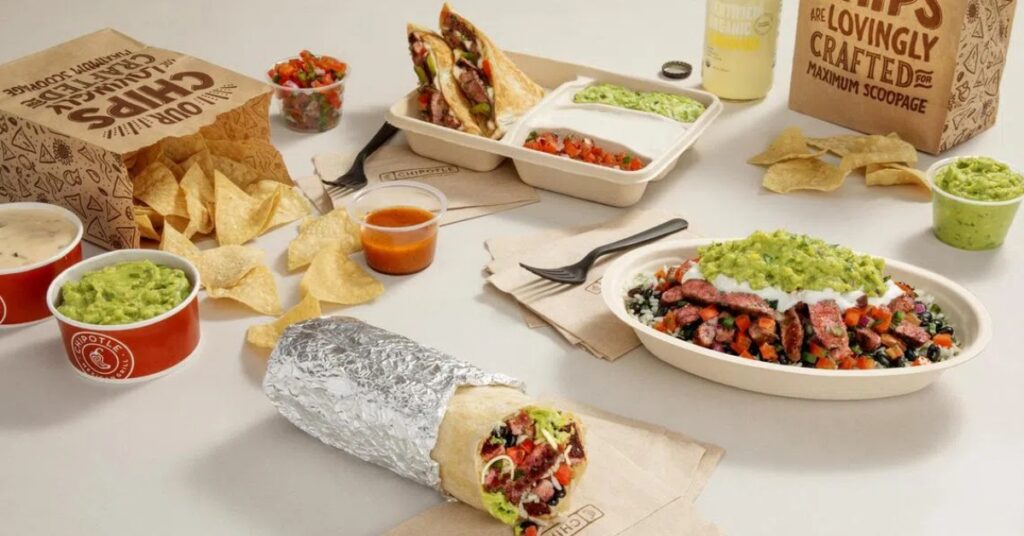
These F&B chains are winning over the taste buds of Singaporeans
“I support foreign F&B [brands] over local ones.”
It’s a statement that sparked debate on a Reddit thread—and it reflects a growing trend in Singapore’s dining scene. While Singaporeans still love their local fare, an increasing number are showing support for foreign F&B brands.
This shift is evident in the wave of international F&B chains expanding and growing their presence here.
Over the past few years, Singapore has seen a significant influx of international food and beverage operators. As of 2025, around 85 Chinese F&B brands alone were operating roughly 405 outlets in Singapore, a sharp increase from just 32 brands running 184 outlets in 2024.
Western brands are also entering the market, with names like Chick-fil-A and Yochi among those seeking to capture local diners.
Many of these international F&B brands cite Singapore’s strategic location, strong infrastructure, and vibrant business environment as ideal for testing and localising products for Asian markets, as well as coordinating regional operations and supply chains.
But potential alone isn’t enough—demand ultimately determines success. In Singapore, these brands have not only managed to establish a foothold but have also seen enough consumer support to thrive in a competitive market.
So why are Singaporeans turning towards these brands?
Over the last decade, consumer preferences have reshaped Singapore’s culinary landscape.
Today’s diners are increasingly health-conscious, environmentally aware, and eager to explore global flavours, often influenced by overseas travel. This openness has created opportunities for international brands offering novel concepts, regional specialities, and fusion menus.

But for some consumers, the shift isn’t about novelty. It’s about value.
In online discussions about the growing presence of foreign F&B chains in Singapore, one comment summed up a recurring sentiment:
“Some of these foreign F&B provide better value, like free napkins, free-flow rice and water. Most local establishments charge for these, and they add up.”
It sounds trivial until you realise how price-sensitive Singapore’s mass dining market actually is. In a high-cost city, diners are acutely aware of incremental add-ons, like:
- S$0.30–S$0.50 for takeaway containers
- S$0.50 for water
- Extra charges for rice top-ups
- Service charge and GST
Individually, they seem negligible.
Collectively, a casual meal that costs S$10 could easily edge closer to S$15 after factoring in these add-ons—S$0.50 for water, another S$0.50 for a takeaway container, extra rice portions, plus service charge and GST.
For frequent diners, these incremental costs quickly add up, making international chains that offer bundled extras feel significantly more attractive, even if the base price is similar.
The ability of international chains to offer these perks ultimately comes down to scale and resources.
Many are backed by established parent companies, venture funding, or large franchise groups. That backing provides access to capital during early expansion, standardised operations, and lower costs through bulk purchasing and centralised procurement across multiple markets.
A single-outlet local eatery sourcing from domestic distributors, on the other hand, does not enjoy the same leverage. It would likely pay market rates for ingredients and double-digit monthly rents, hence, absorbing the cost and providing free-flow rice or drinks is far more challenging.

Beyond cost advantages, many international F&B brands have leveraged their resources to streamline operations from the outset, creating a customer experience that feels efficient, fuss-free, and reliable.
Take Luckin Coffee, for example: from the moment it launched in Singapore, the brand used app-based ordering, cashless payments, and standardised store layouts to minimise wait times and optimise service flow. For busy urban diners, this translates into convenience as much as value.
Other brands have focused on consistency across outlets, a factor that independent operators often struggle to match. Portion sizes, ingredient quality, and menu offerings are carefully standardised, meaning diners know exactly what to expect regardless of location.
CHAGEE is a case in point: a tea from its Plaza Singapura outlet tastes the same as one from Pagoda Street, thanks to strict SOPs, centralised ingredient sourcing, and staff training.
In contrast, local eateries may vary slightly between outlets, or even from day to day, depending on ingredient availability and staffing.
Why this matters
All of this is to say that it appears Singaporean diners are increasingly gravitating towards brands that can consistently deliver value, convenience, and quality—traits that larger, well-resourced F&B chains are often better equipped to provide.
For the industry, this intensifies competition. F&B operators in Singapore already operate on thin profit margins of 5–7%, leaving little room for error.
The first 10 months of 2025 alone saw 2,431 food business closures, underscoring the sector’s volatility. Alarmingly, over 60% of these businesses shuttered within five years of opening, and 82% were unprofitable, highlighting how difficult it is to survive in the current climate.
In this environment, businesses that can maintain operational efficiency, predictable quality, and value for money have a structural advantage in meeting these evolving expectations.
International F&B brands have a clear advantage: they can leverage scale, operational systems, and financial backing to meet evolving tastes and lifestyles, and capture Singaporean diners’ loyalty.
- Read other articles we’ve written on Singaporean businesses here.
Featured Image Credit: @the_xw via Instagram/ SDQ International Productions

Samsung’s latest Galaxy smartphones—the Galaxy S26 series—are all about optimization and AI. Announced at its Galaxy Unpacked event in San Francisco, the phones are not hugely different from last year’s Galaxy S25 models, but the company is hyping up performance optimizations that purportedly boost AI processing. Naturally, there are a bunch of new AI features baked into the phones too.
The headline hardware change is reserved for the top-tier Galaxy S26 Ultra: the Privacy Display. It prevents stray eyes from peeping over your shoulder at sensitive information on your screen—no need to apply a third-party privacy screen protector. The Ultra otherwise doesn’t look as visually distinct next to the Galaxy S26+ and Galaxy S26; unlike the previous flagships, they now all share the same look.

The Galaxy S26 series is available for preorder now, with official sales kicking off on March 11. The Galaxy S26 and S26+ are getting a $100 price increase—likely due to a RAM bump, as RAM is expensive these days. They start at $900 and $1,100, respectively. The Galaxy S26 Ultra remains at the same price as its predecessor: $1,300. Samsung also unveiled a new pair of wireless earbuds, the Galaxy Buds4 ($179) and Buds4 Pro ($249), also arriving March 11. Here’s everything you need to know.
The Privacy Display
The Galaxy S26 Ultra has something you’ve never seen on a smartphone: a built-in privacy screen. This is a hardware-driven feature; there are two types of pixels on the OLED panel, one that shoots light directly to your eyes, and another next to it that is wider, allowing the light to reach the sides. That allows you to view the screen from all angles. When the Privacy Display is enabled, the latter pixels are turned off, severely limiting what people around you can see. It’s not just blocking the left and right sides of the smartphone like most two-way privacy screen protectors, but also the top and bottom.
What makes it more powerful than your usual privacy screen protector is that the Privacy Display can be customized via the software. You can toggle it on for the entire screen with a simple tap on the Quick Settings tile, or you can enable it for all incoming notifications, on a per-app basis, or for any app that requires a pin or passcode, like banking apps. Samsung says it’ll even work with its Routines, so you can automatically turn it on via geolocation, like when you leave the office.
Photograph: Julian Chokkattu

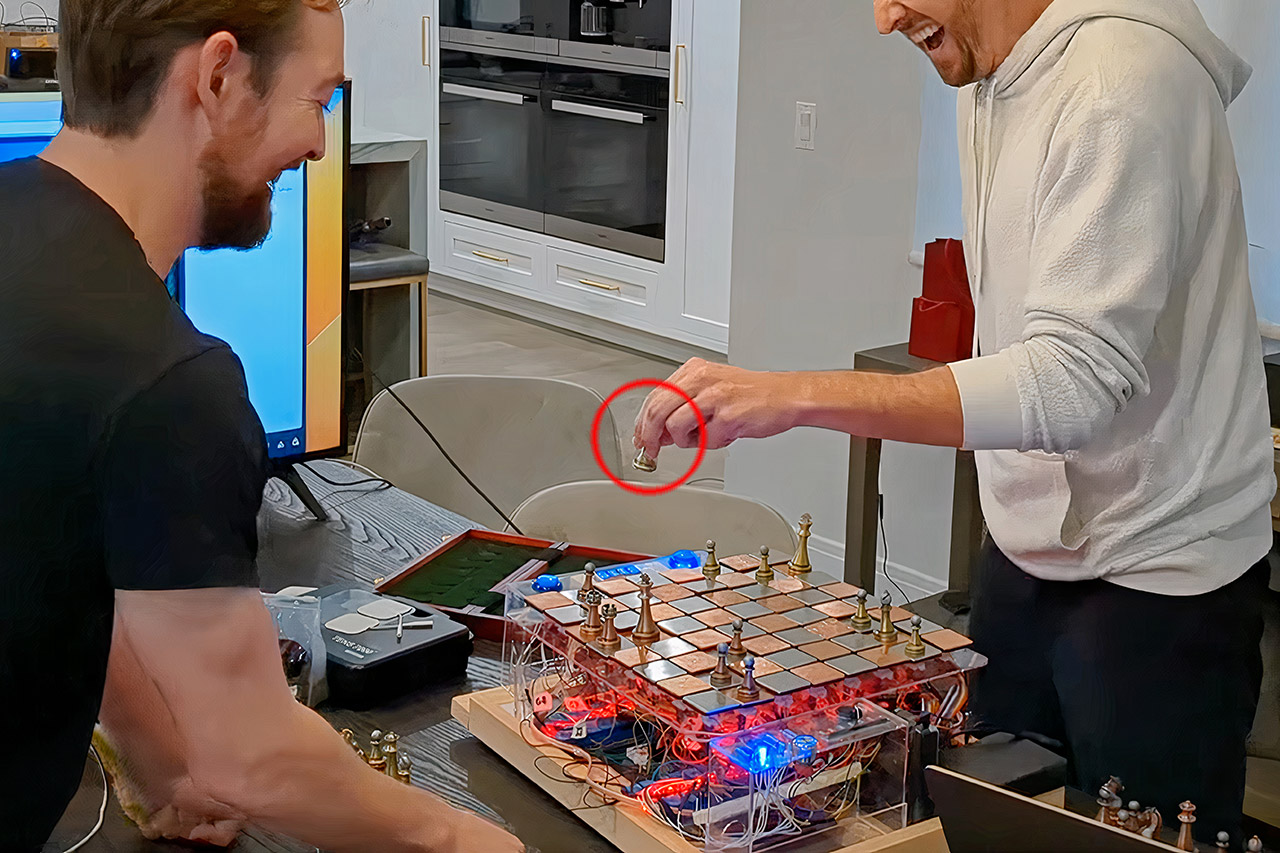
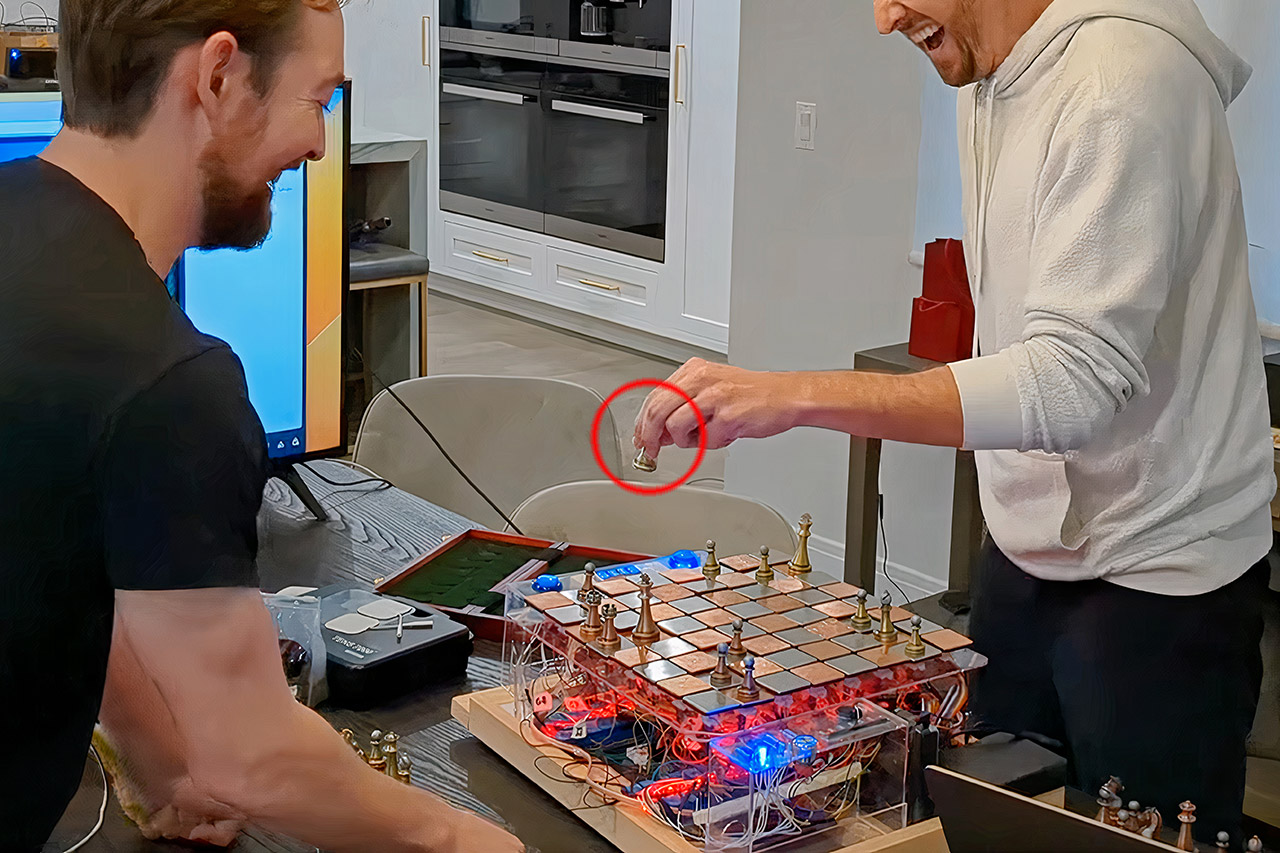
Fletcher Heisler was beaten by chess hustlers in the park, so he wanted revenge, but regular practice wasn’t cutting it. So he reasoned, “Maybe I need some negative reinforcement,” thus taser chess was born, or a chessboard that would literally penalize you for making blunders by delivering an electric shock.
Each square on this regular 8×8 grid has a secret. A mechanical keyboard switch sits underneath, activated by a magnet in the conductive chess pieces. When you lift a piece, the Raspberry Pi running Python chess library software detects it. When you put it back in the wrong spot, one of the relay switches turns on, and a TENS unit with the maximum setting shoots a shock straight through the metal square into your arm, which is strapped to the board. The discomfort brings the point home quickly.
Sale

2 in 1 Magnetic Chess Set & Checkers Board Game, 15″ Wooden Folding Chess Board with 2 Extra Queens…
- 2 In 1 Chess Set & Checkers – In addition to 34 standard chess (Including 2 extra queens), this set also includes 24 checkers game pieces, offering…
- Magnetic Chess And Chess Board – Our chess sets have strong magnets on the surface of the board and on the bottom of the pieces(Notice: The checkers…
- Quality Materials And Workmanship – This chess and checkers set is made of natural high-quality solid wood material, which is very sturdy and durable…
The chess pieces began as low-cost Amazon buys, and he used acetone to remove the lacquer as well as make them conductive. The felt bottoms melted away. He covered half of the squares with copper tape to show the colors without interrupting the circuit. There are four relay boards in there, each with 16 squares, to keep the electricity separated. To be honest, he didn’t bother with en passant; who does that anyway? The Pi just assumes a normal starting position and maintains track of when you lift or drop the pieces, thus it is simple, dependable, and quite effective at surprising you.

The system’s settings provide a wide range of punishment. The “illegal move” setting shocks you simply for picking the wrong piece up on your turn. The “capture” mode illuminates a little display to indicate you where you can go and, if you touch the wrong location, the board bites.The “Engine” option allows you to compete against stockfish and becomes extremely harsh if you make any mistakes. The “Timed” setting forces you to move quickly because you only have 5 seconds, and the pain increases if you stay too long. If you try to solve a puzzle and get it wrong, the board will punish you severely. When you fail, a current travels straight through your muscles, causing your arm to jerk, similar to a terrible handshake.

It took him a year to assemble the thing, starting with prototypes crammed in diaper boxes and breadboards, and spending the most of his time traveling with the wiring in disarray in Airbnb homes, with people becoming suspicious in the Cat Café lab, which he used as a makeshift workshop. The airline broke the checked luggage on its way to the Open Sauce Maker Fair, and one of the hotel rebuilds nearly set the room on fire by getting the wiring backwards and melting the power rails. In the end, duct tape held the final version together during demos.

The shocks begin mildly, with a tingling sensation at level 2, but by level 8, you are experiencing full-body flinches. The pads did not last long, and the voltage continued to diminish. Heisler ended up spending far more time rewiring than attempting to understand the openings. As a result, chess expertise stalled; the whole thing was too delicate to continue working with.The board was constantly breaking down and needing to be repaired, until he acquired some conductive epoxy and sealed up all the loose connections. He also found a purpose for a bunch of old Ethernet cables, which provided him enough extra wire to fix some of the other wiring, including several battery adapters to make it more portable.

Taser chess completely reverses the learning process, since it turns out that the pain it causes is far more effective at getting ideas stuck in your head than repetition alone. As it turns, behavioral research actually supports this strategy, dating back to those old Skinner boxes and the penalties in video games; basically, both humans and animals are extremely attentive to consequences. This board, however, takes things to a whole new level. One solid game against some of those hustlers, and the surprises might just start working in your favor. Until then, every jolt feels like progress, even if it’s the hard way.
[Source]

Once the most talked-about TV show in the country, South Park, is on Paramount+. Don’t you want to know what got Trump in such a tizzy?
Stream the much buzzed-about South Park, fan-favorite Yellowstone, original series MobLand, and rebooted crime drama Dexter & Dexter on Paramount+. The streaming network has a bingeable TV series for almost everyone. And whether you want to remember Lindsay Lohan’s old face in the classic Mean Girls flick, or wonder just how many more sequels Tom Cruise has left in him with Top Gun: Maverick, there’s a bevy of films to stream, too.
If you’re like me and have at least half a dozen streaming services, our Paramount+ coupon codes can help you save so you can watch the content you want without having to get rid of one of your other beloved content platforms. (I love pretending the world isn’t full of suffering around me and instead focus on Sylvester Stallone’s ever-changing Play-Doh face in Tulsa King.)
Try Paramount+ Free With a One-Week Trial
If you’re unsure if you’ll actually want to commit to Paramount+, or if there’s a sports event like March Madness games and you only need to access the content for a little while, Paramount+’s free trial is a great option. The trial lasts one week, is for new subscribers only, and can’t be paired with other offers.
There are tiered plans, including Essential, which allows for 3 devices, select Showtime series, NFL games, and can be streamed on up to 3 devices at once, but has ads; and Premium, which includes all that except there are no ads, downloadable content, CBS live, and all of Showtime content.
Find the Right Paramount+ Plan Pricing and Get the Latest Deals
It’s important that you choose the right Paramount+ streaming plan for you so that you can get the best bang for your buck. Lucky for you, all plans come with a 7-day free trial so you can make sure you’re choosing the right plan for you. The first is Paramount+ Essential, which is $8 per month. It has ads included, but you’ll have access to over 40,000 episodes and movies. And you’ll be able to stream on 3 devices at once, be able to watch NFL games on CBS and UEFA Champions League, and select Showtime series are also available. Paramount+ Premium is the next tier (and the most popular choice), which starts at $13 per month (after the free trial ends), and you’ll get everything mentioned in the previous tier, without ads. You’ll have all that as well as the ability to watch in 4K UHD, Dolby Vision or HDR10, downloadable movies and shows, streaming CBS live and all of Showtime’s content library.
Can You Cancel Paramount Plus at any Time?
If you find the service isn’t right for you, or just need to cut down on subscriptions, you can cancel Paramount+ any time. However, the cancellation process depends on where you signed up. If you signed up directly on the website, you’ll need to go to your account page.
Save on a Paramount+ Subscription With Student and Military Discounts
If you’re a student now (or have your student ID lying around somewhere), you can get a Paramount+ plan at only $4 a month. All you have to do is verify your student status and you’ll get 50% off any plan of your choosing for the first year. Or if you’re a military member, Paramount+ gives 50% off any subscription for life.
Watch Paramount+ Originals and Fan Favorites
There’s truly something for everyone in the family, with movies, kids’ shows, and Paramount+ originals included in every plan. If you’re feeling spooky, I’d recommend Dexter: Resurrection, or Yellowjackets, but if you’re looking for something more family-friendly, there’s super popular cartoons like Rango or Sonic the Hedgehog to choose from.
Looking for specific recommendations? I’ve got you. There are tons of great new releases coming to Paramount+ this month, including Landman season 2, new Paramount+ original comedy series Crutch starring Tracy Morgan, and new episodes of (my favorite) newly premiered Ink Master Season 17. There are also tons of new movies, including The Cut, a boxing drama starring Orlando Bloom, dark comedy Shell, and true-crime tale My Nightmare Stalker: The Eva LaRue Story. Plus, Paramount+ will be playing the important NFL holiday games.
Check out the wide breadth of TV and movie content to choose from on Paramount+ (and use the Paramount+ promo codes above to save on whatever plan you decide).
Stream Live Sports and Events on Paramount+
For better or worse, I’m a Chiefs fan (cue the booing). I usually get a Paramount+ plan during the football season to keep up with my favorite beefy, TBI-ridden men. You can stream all of the NFL coverage you want all season long, plus, 24/7 live channels are now streaming on Paramount+, so you’ll never need to give your brain the time to process the horrors.
Stream UFC Fights Live on Paramount+
Paramount+ has all the man-on-man action you want, from bloody brawls to KO’s. Paramount+ is your one-stop shop to stream UFC live so you can catch every fight. This includes UFC 326: Holloway vs. Oliveira 2, airing March 7 and UFC Fight Night: Emmett vs. Vallejos, airing March 14.
Watch March Madness With Paramount+
The annual tournament that determines which men’s and women’s Division I teams will win the NCAA Basketball championships, March Madness, will be streaming on Paramount+ this spring. You can watch any men’s March Madness games that are being broadcast on CBS with Paramount+. Let the games begin!
Don’t Miss the Champions League Soccer on Paramount+
If football (or soccer) is more your jam, Paramount+ also has you covered. You can watch Champions League Soccer at Paramount+, including fan favorites and heated rivalries from Real Madrid, AC Milan, Bayern Munich, Liverpool, Barcelona, and more.

The Happiest Years Of Life, According To Older People

Cava Fourth-Quarter Sales Rise on Higher Prices, New Restaurant Openings

Was Jane Street behind the bitcoin crash? A deep dive into why that theory may not not hold


-

 Video6 days ago
XRP News: XRP Just Entered a New Phase (Almost Nobody Noticed)
-

 Politics4 days ago
Baftas 2026: Awards Nominations, Presenters And Performers
-

 Fashion6 days ago
Weekend Open Thread: Boden – Corporette.com
-

 Sports3 days ago
Women’s college basketball rankings: Iowa reenters top 10, Auriemma makes history
-

 Politics3 days ago
Nick Reiner Enters Plea In Deaths Of Parents Rob And Michele
-

 Crypto World2 days ago
XRP price enters “dead zone” as Binance leverage hits lows
-

 Business4 days ago
Mattel’s American Girl brand turns 40, dolls enter a new era
-

 Business2 days ago
True Citrus debuts functional drink mix collection
-

 Business4 days ago
Law enforcement kills armed man seeking to enter Trump’s Mar-a-Lago resort, officials say
-

 Tech2 days ago
Unsurprisingly, Apple's board gets what it wants in 2026 shareholder meeting
-

 NewsBeat11 hours ago
Cuba says its forces have killed four on US-registered speedboat | World News
-
 NewsBeat13 hours ago
Manchester Central Mosque issues statement as it imposes new measures ‘with immediate effect’ after armed men enter
-
 NewsBeat3 days ago
‘Hourly’ method from gastroenterologist ‘helps reduce air travel bloating’
-

 Tech4 days ago
Anthropic-Backed Group Enters NY-12 AI PAC Fight
-

 NewsBeat4 days ago
Armed man killed after entering secure perimeter of Mar-a-Lago, Secret Service says
-

 Politics4 days ago
Maine has a long track record of electing moderates. Enter Graham Platner.
-
 NewsBeat2 days ago
Police latest as search for missing woman enters day nine
-

 Business7 hours ago
Discord Pushes Implementation of Global Age Checks to Second Half of 2026
-

 Crypto World2 days ago
Entering new markets without increasing payment costs
-
 Sports3 days ago
2026 NFL mock draft: WRs fly off the board in first round entering combine week