As an asylum-seeker living in the U.S., Jasmir Urbina worried as she watched violence break out amid the military-style immigration sweeps across the country. Then she read about legal residents being arrested at immigration court and wondered when federal agents would set their sights on her city.
Urbina had fled Nicaragua in 2022 and legally resided with her husband, a fellow asylum-seeker, in New Orleans while reporting to immigration agents for check-ins as she awaited her day in court. Finally, the date was approaching, in late November 2025. Days later, the Trump administration would flood the region with federal officers in “Operation Swamp Sweep.”
Advertisement
Urbina, 35, began searching for a Spanish speaker who could help her, and said she stumbled on a Facebook post advertising the services of Catholic Charities, a prominent aid organization whose services include assisting immigrants. After a few clicks, she connected via WhatsApp with “Susan Millan,” who claimed to have a law degree. The woman’s photo looked professional, showing a small library in the blurry background, according to a screenshot Urbina shared with ProPublica. The asylum-seeker said she discussed her predicament with the woman she thought was an attorney.
Millan told Urbina the ordeal could be settled over a virtual hearing with U.S. immigration authorities. Millan sprinkled in details about her own life — a sick husband, two kids, a supportive church — so Urbina felt comfortable. In an interview, Urbina said she completed paperwork to be sent to U.S. Citizenship and Immigration Services, for a fee. Millan’s organization asked her for documentation, including five character references; for another fee, it would submit these up the line. Through the payment app Zelle, Urbina and her husband paid nearly $10,000, according to her financial records, money they had set aside to buy their first home.
On Nov. 21, Urbina made the case that a “credible fear” was keeping her from going home. In the virtual hearing, which lasted five minutes, she said she spoke to a man dressed in a green uniform, stitched with what looked like government insignia, seated in front of an American flag. A day later, via WhatsApp, Millan told her she “won residency.” Her documents would be in the mail.
In an instant, Urbina’s fears had been assuaged. She asked if she should still attend her court date, Nov. 24. “No, don’t worry,” she remembers the woman replying. “There’s no need.”
Advertisement
But when Urbina asked to speak with someone in a message to Millan’s phone number the next day, according to screenshots she shared with ProPublica, the WhatsApp chat fell silent. After two days, she suspected she’d been duped and wrote in anger: “God is with us and He fights for His children; today you messed with the wrong person and you will get your payment from the Most High, you cowards.”
There was no attorney named Susan Millan associated with Catholic Charities, and the deceit was just one example of hundreds that the group has become aware of when desperate immigrants eventually reach the real organization.
“There’s a reason why we have a good reputation,” said Chris Ross, vice president of migration and refugee resettlement services at Catholic Charities. “And so for someone to be trading on that goodwill with nefarious intent is very frustrating.”
Urbina had fallen prey to “notario fraud,” in which scammers provide legal advice, often by saying they’re public notaries or other legal professionals. In many Latin American countries, a public notary is the equivalent of a lawyer, and notario fraudsters rely on this mistranslation to fake credentials.
Advertisement
Urbina shared documents that detail how she was lured into the scam, and ProPublica corroborated her story with her husband and Catholic Charities. After Urbina told local and federal authorities she had been tricked out of her day in court, Immigration and Customs Enforcement switched her scheduled December virtual check-in to an in-person meeting. When she showed up, agents arrested her. In January, she said, officers shackled her hands and feet and loaded her on a plane to Nicaragua.
She’d been scammed, then deported.
A spokesperson with the Department of Homeland Security, which oversees ICE, did not respond to questions about Urbina’s case but said, “Anyone caught impersonating a federal immigration agent will be prosecuted to the fullest extent of the law.” New Orleans police did not answer ProPublica’s questions about a complaint she filed.
Scams like those that destroyed Urbina’s dreams are on the rise, federal data analyzed by ProPublica shows, as profiteers seize on the fear and confusion wrought by President Donald Trump’s immigration crackdown.
Advertisement
Complaints of immigration scams have doubled since Trump was elected, ProPublica found in analyzing more than 6,200 complaints filed with the Federal Trade Commission by victims and advocates over the last five years.
From the start of 2021 through the election in fall of 2024, the FTC — the nation’s top consumer protection agency — fielded about 960 immigration complaints per year, such as reports of fake attorneys offering services or people impersonating federal officers. In 2025, the commission received nearly 2,000 complaints.
In all, at least $94.4 million was reported stolen in complaints to the FTC over five years. That number is certainly an undercount, as not all immigrants report wrongdoing for fear of deportation, and not every report included dollar amounts.
The spike in complaints is so severe that many states and legal organizations have alerted the public about them. California’s and North Carolina’s attorneys general released statements in late 2025, as did the American Bar Association and AARP. In June 2025, the New York City Council passed legislation increasing notario fraud penalties, and a similar law passed in Florida.
Advertisement
“Immigration scammers contribute to a lawless environment, undermining our immigration system,” said Zach Kahler, a spokesperson for Citizenship and Immigration Services, the agency Urbina falsely thought had awarded her residency. Online, the agency provides guides on how to spot immigration fraud and warns consumers that it does not use WhatsApp. The agency tells people who think they’ve been scammed to complain to the FTC.
Old Problem, New Sophistication
Scams targeting those mired in the U.S. immigration system are not new, but advocates say predators have become more sophisticated, using technologies like artificial intelligence and targeted ads. At the same time, immigrants have become increasingly anxious about speedy mass deportations, creating a bonanza for those looking to cash in.
“I believe AI is being utilized in these scams pretty effectively. People think they’re talking to a real person, or the logos and stuff look pretty professional to the untrained eye,” said Ross, of Catholic Charities.
Many victims say they were duped by scammers who had professional-looking photos, wore immigration uniforms and staged realistic virtual hearings.
Advertisement
A review of the image of the person named Millan who was supposedly helping Urbina suggests that it was AI-generated.
Ross added: “The biggest thing is the desperation — that’s really what’s driving this.”
In San Diego, attorneys working for the city have been impersonated by scammers. City Attorney Heather Ferbert told ProPublica her office has forwarded these cases to the FBI and warned residents to be on the lookout for advertisements that promise a government official or lawyer can help with immigration proceedings. The FBI declined to comment.
“When you add the title and you add the government weight behind it — the city attorney’s office, the district attorney’s office, for example — the targets are sort of lulled,” Ferbert said. “We’ve heard stories where they promise that they can solve their immigration problems for them. No real lawyer is ever going to promise an outcome to you.”
Advertisement
Other scams extend beyond impersonating lawyers. The FTC complaints include a case in which people posing as Department of Homeland Security immigration officers received more than $600,000 from a family by claiming one of the relatives’ identities had been stolen and they needed to pay to protect it. In West Virginia, a “federal agent” threatened to deport a college student who was close to graduating unless they paid nearly $4,000 in gift cards.
“They claimed that if I did not comply immediately, I would be arrested, detained or deported,” wrote the student, who was legally residing in the U.S. on a student visa. The student, whose name was not disclosed in federal data, used prepaid Dollar General gift cards and then went broke and turned to family for help.
Immigrants from India and Bangladesh were told they had failed to update a necessary form and would be arrested and deported immediately unless they shared their Social Security numbers. Other scammers claimed the government had intercepted packages full of money and drugs addressed to immigrants, who were told to make a payment or face arrest.
“Well-Oiled Machine”
Most victims find the fake attorneys advertising on Facebook or TikTok. Facebook’s parent company, Meta, has pledged to delete scam accounts and announced new tools to track them.
Advertisement
Charity Anastasio, practice and ethics counsel for the American Immigration Lawyers Association, said the ads are often pay-per-click and targeted at Spanish-speaking users.
“They’ve designed such a well-oiled machine,” Anastasio said.
The ads appealed to those in deportation proceedings, clinging to any means to stay in the U.S., but also those who may have wanted to get their paperwork in order ahead of Trump’s crackdown, said Adonia Simpson, an attorney with the American Bar Association.
“A lot of people are trying to preemptively get representation to see what their options are,” Simpson told ProPublica. “The enforcement has been a big driver. It’s caused a lot of people to be very fearful.”
Advertisement
The White House declined to comment.
In October 2024, 56-year-old José Aguilar, who had been granted temporary protected status under George W. Bush’s administration, was in just that position when he came upon a Facebook ad. The advertiser claimed to work for Jorge Rivera, a well-known Miami immigration attorney, and promised Aguilar they could get him permanent residency. It would take $15,000. ProPublica sought comment from the real Rivera, who is not accused of wrongdoing; he did not respond.
A leather factory worker in Minnesota who had fled El Salvador, Aguilar cobbled together the money in installments through loans from friends and that year’s tax refund. Over several months, he had four video calls with the fake attorney and two calls with immigration agent impersonators. He was initially skeptical but became convinced when they sent him videos of residency cards with the Citizenship and Immigration Services logo.
“Don’t try to deceive me, because I’m borrowing money, I’m a man of faith, and I’m a person who has had a heart transplant, so I can’t get angry because it hurts me,” Aguilar remembered saying.
Advertisement
“No, don’t worry, sir,” Aguilar said the scammer responded. “This is real. It’s super real.”
During one of their last conversations, Aguilar says the scammer appealed to their shared Christian faith, thanking God for approving the paperwork and earning him residency.
By February 2025, the scammers had stopped responding. A month later, Aguilar realized he was probably never going to get the residency cards and contacted an attorney who confirmed he had been duped. Aguilar, who has two young daughters, says his family is subsisting on food banks and relies on donations for rent.
“It’s unforgivable,” Aguilar said. “Even bringing God into it.”
Advertisement
Mother and Daughter Torn Apart
For Mariela, an undocumented Honduran mother of three, financial stress began long ago. In 2021, the father of her children headed for the U.S. along with one of their daughters, seeking construction work. Two years later, when she traveled 2,000 miles in blistering heat to join them, she broke her arm in three places after falling into the Rio Grande while crossing the border. ProPublica is withholding her last name because she fears being deported.
And then, in October 2025, immigration agents detained her 20-year-old daughter. Desperate, the mother reached out to what she thought was a Catholic Charities Facebook page.
She was pulled into a scheme involving a man who posed as a priest, another posing as an immigration judge, and another posing as Oscar Carrillo, an attorney licensed in Texas who practices tax law.
The real Carrillo told ProPublica he began getting calls from frustrated immigrants last spring, all of them Spanish speakers who claimed they had been referred by Catholic Charities. When he realized his name and photo were being misused, he alerted the FBI and FTC. The State Bar of Texas has posted a public warning on its webpage about Carrillo impersonators.
Advertisement
“Most of these clients, because of their immigration status, are afraid to report this to the police,” Carrillo said. “I feel sorry for these clients. We’re not talking about wealthy individuals.”
In January, after her daughter was deported, Mariela realized the fraudsters had cheated her out of more than $18,000 over three months.
She said she had borrowed $3,000 from an uncle in Honduras, another $1,500 from a cousin, a few thousand from her boss, and another $2,000 from a friend from her Honduran hometown who had also emigrated to the U.S. In addition, she burned through her savings and her daughter’s.
Public Alerts, Little Recourse
Since the beginning of Trump’s second term, local law enforcement, advocacy groups, state attorneys general and law firms have published notices warning immigrants about an uptick in scams.
Advertisement
“Our best advice is to make direct contact, outside of social media channels, with the organization you’re seeking help from,” said Kevin Brennan, vice president for media relations at Catholic Charities. “Call the organization on the phone or visit an office in person.”
Scammers show no signs of retreat.
In April, three months after her deportation to Nicaragua, Urbina received a call from someone claiming to be a lawyer. He said that he’d been referred to her by a bishop with Catholic Charities and that he’d help her obtain immigration papers.
The stress of being scammed and separated from her husband, who remains in the U.S., had taken a toll. “I’ve been through a lot of things, one right after the other,” Urbina said. She’s living with her mother in a remote village, afraid to step outside in a country where the government has ramped up surveillance of those who previously moved to the U.S.
Advertisement
Desperate, she gave the “lawyer” her personal information.
After earlier saying his help would be free, he then asked for money, she said.
“Where did you get my number?” she asked.
Intrigued but skeptical, Urbina followed up with WhatsApp messages, hoping he might really be an immigration attorney.
ByteDance’s drug discovery unit Anew Labs presented its first AI-designed therapy at a major immunology conference in Boston, showing a generative-AI-designed small molecule targeting IL-17, a protein-protein interaction long considered undruggable.
The unit also published AnewOmni, a generative framework trained on 5 million biomolecular complexes that claims to be the first to design functional molecules across all scales. ByteDance has entered the AI drug discovery race alongside Isomorphic Labs, Anthropic, and Insilico Medicine.
Advertisement
The company that built TikTok’s recommendation algorithm, the system that predicts with unsettling accuracy what a person wants to watch next, is now using a related class of AI to predict how molecules will behave inside a human body. ByteDance’s drug discovery unit, Anew Labs, presented its first AI-designed therapy at the American Association of Immunologists’ annual meeting in Boston in mid-April, showing data on a small molecule designed by generative AI to inhibit IL-17, a cytokine involved in autoimmune diseases including psoriasis, rheumatoid arthritis, and ankylosing spondylitis.
The molecule targets a protein-protein interaction, a category of drug target that the pharmaceutical industry has spent decades calling undruggable because the binding surfaces are too large and too flat for conventional small molecules to disrupt. Anew Labs says its AI found a way in.
The presentation in Boston was the first time ByteDance showed the world what its drug unit has built. It will not be the last. The company is registered to exhibit at the BIO International Convention in San Diego in June, and its head of computational chemistry will present at the Free Energy Workshop in Barcelona next week.
The unit
The 💜 of EU tech
Advertisement
The latest rumblings from the EU tech scene, a story from our wise ol’ founder Boris, and some questionable AI art. It’s free, every week, in your inbox. Sign up now!
Anew Labs operates from Shanghai, Singapore, and San Jose, California, with 36 core team members listed on its website and a scientific advisory board that includes Liu Yongjun, former president of Innovent Biologics, Ji Ma, a former principal scientist at Amgen, and Hua Zou, scientific director of protein chemistry at Takeda California.
The advisory board reads like a recruitment list from the companies that dominate biologics and immunology, disciplines where the targets Anew Labs is pursuing have historically required injectable antibody therapies costing tens of thousands of dollars per year. The unit’s ambition is to replace those injections with oral pills, using generative AI to design small molecules that can do what antibodies do but in a form that patients can swallow.
Chris Li, head of biology, presented one of Anew Labs’ four pipeline drug candidates in Boston. The molecule is a pan-spectrum IL-17 inhibitor, meaning it is designed to block multiple forms of the IL-17 cytokine rather than a single variant. Existing IL-17 therapies, including Novartis’s secukinumab and Eli Lilly’s ixekizumab, are injectable antibodies that generated billions in annual revenue by treating psoriasis and other inflammatory conditions. An oral small molecule that achieves comparable efficacy would be commercially transformative, both cheaper to manufacture and easier for patients to take.
Advertisement
The challenge is that IL-17’s binding surface with its receptor is a protein-protein interaction, a broad, shallow interface that gives small molecules very little to grip. The gap between what AI can do in a laboratory and what it delivers to patients remains the defining tension of health technology, and IL-17 is precisely the kind of target where that gap is widest.
The model
In March, Anew Labs published a preprint on bioRxiv describing AnewOmni, a generative AI framework trained on more than five million biomolecular complexes. The model is designed to work across molecular scales, from small chemical compounds to peptides to nanobodies, assembling chemically meaningful building blocks at atomic resolution.
In the preprint, the researchers demonstrated that AnewOmni could design functional molecules targeting KRAS G12D, one of the most studied oncology targets in the world, and PCSK9, a cholesterol-related protein, achieving success rates between 23 and 75 per cent with only low-throughput laboratory validation. The model uses programmable graph prompts that allow researchers to steer the generation process by specifying chemical, geometric, and topological constraints.
The technical approach is significant because it attempts to solve a problem that has limited AI drug discovery across the industry: most generative models work well at one molecular scale but fail when asked to design across scales. A model that designs small molecules cannot typically also design peptides or protein-based therapeutics.
Advertisement
AnewOmni claims to be the first framework to succeed at functional molecular design across all scales, which, if validated in clinical settings, would give Anew Labs a platform capability rather than a single-programme capability. Isomorphic Labs, the DeepMind spinoff backed by Eli Lilly and Novartis, released its own drug design tool in February that doubles the accuracy of AlphaFold 3, and has partnership agreements with combined milestone values of up to $3 billion. The race to build the definitive AI drug design platform is global, and ByteDance has entered it with a model that, on paper, addresses a limitation that its competitors have not yet publicly solved.
The context
ByteDance is not the first technology company to move into drug discovery. Anthropic acquired Coefficient Bio for $400 million in an acqui-hire that brought fewer than ten people into the AI company’s biological research efforts. Google’s DeepMind has been working on protein structure prediction since AlphaFold’s breakthrough, which won the 2024 Nobel Prize in Chemistry. Microsoft has invested in biology-focused AI through its partnership with Paige, a computational pathology company.
Nvidia has built BioNeMo, a platform for training and deploying biomolecular AI models. The pattern is consistent: the companies with the most advanced AI infrastructure are redirecting a portion of that capability toward biology, because drug discovery is a problem shaped like the problems AI is good at, searching vast combinatorial spaces for rare solutions that satisfy multiple constraints simultaneously.
What distinguishes ByteDance’s entry is the source of its AI expertise. TikTok’s recommendation engine is, at its core, a system that models human behaviour by processing enormous quantities of data and predicting which combinations of content will produce the desired response.
Advertisement
Anew Labs’ generative models do something structurally similar: they process enormous quantities of molecular data and predict which combinations of atoms will produce the desired biological response. The mathematical architectures are not identical, but the organisational capability, the ability to train large models on massive datasets, iterate rapidly, and deploy at scale, is transferable. ByteDance’s AI infrastructure, built to serve 1.5 billion TikTok users, is now being applied to a problem where the users are molecules and the engagement metric is binding affinity.
The test
More than 173 AI-discovered drug programmes are now in clinical development globally, with 15 to 20 entering large-scale trials this year. Whether AI will revolutionise drug development depends on how it is used, and the industry’s 90 per cent clinical failure rate has not yet demonstrably improved.
Insilico Medicine’s rentosertib, a first-in-class drug for idiopathic pulmonary fibrosis where both the target and the molecule were discovered using AI, showed positive Phase IIa results published in Nature Medicine. The Recursion-Exscientia merger created the most comprehensive AI drug discovery platform in the industry, but then discontinued its lead AI-discovered candidate after long-term data did not confirm earlier efficacy trends. The pattern across the field is promising early data followed by the same biological reality that has always made drug development difficult: molecules that work in a dish do not always work in a body.
Anew Labs has four pipeline candidates and a generative platform that, if its preprint results hold, can design functional molecules across scales. It has the backing of a parent company valued at roughly $300 billion with AI infrastructure that dwarfs most pharmaceutical companies’ computational resources. It has advisors from Innovent, Amgen, and Takeda.
Advertisement
What it does not yet have is clinical data. The IL-17 molecule presented in Boston was preclinical. The distance from a poster at an immunology conference to an approved oral therapy that replaces injectable antibodies is measured in years and billions of dollars, and most molecules that start that journey do not finish it. The most ambitious AI-biology startups are the ones whose founders understand that the algorithm is the beginning, not the end.ByteDance built an algorithm that changed how a billion people consume content. Whether the same company can build an algorithm that changes how a disease is treated is a question that no conference presentation can answer. Only a clinical trial can.
Joby Aviation completed the first point-to-point eVTOL demonstration flights in New York City history, flying from JFK to Midtown Manhattan heliports in seven minutes as part of a week-long campaign. With FAA Stage 4 cleared and a type certificate expected by late 2026, Joby is the most advanced Western eVTOL company, backed by Toyota, Delta, and Uber, though the economics of $200 per-seat air taxi trips at scale remain unproven.
The flight from John F. Kennedy International Airport to the East 34th Street Heliport in Midtown Manhattan took seven minutes. By car, depending on the time of day, the same journey takes between 60 and 120 minutes. On Friday, Joby Aviation landed its all-electric air taxi at the heliport as part of a demonstration hosted by VertiPorts by Atlantic, the infrastructure company that operates the site. The aircraft, registration N545JX, had been flying across New York’s existing heliport network all week, touching down at the Downtown Skyport and the West 30th Street and East 34th Street heliports in Midtown after departing JFK. The flights were demonstrations, not commercial service. No passengers paid for a ticket. But the distinction between demonstration and operation is narrower than it has ever been. Joby cleared Stage 4 of the FAA’s five-stage type certification process in late March. Stage 5 is the final conformity inspection and operational demonstration. If it passes, and the company says it expects to by late 2026, the type certificate it receives will be the first ever issued for an electric vertical takeoff and landing aircraft in the United States.
Advertisement
The aircraft
The Joby S4 is a tiltrotor with six electric motors, four on the wings and two on the V-tail, that give it the vertical lift of a helicopter and the forward flight efficiency of a fixed-wing aircraft. It carries one pilot and up to four passengers, cruises at approximately 200 miles per hour, and has a range of roughly 150 miles on a single charge. The propellers tilt from vertical to horizontal after takeoff, allowing the aircraft to transition from hovering to cruising flight. A full recharge takes under 20 minutes. The aircraft weighs 4,800 pounds at maximum takeoff weight, roughly the same as a large SUV, and its wingspan of 39 feet means it fits on a standard helipad. The noise profile, according to Joby, is 100 times quieter than a conventional helicopter at the same distance, a claim that New York’s noise-sensitive residential neighbourhoods will have the opportunity to test if commercial operations begin.
Backed by $500 million from Toyota, which is also providing manufacturing expertise, Joby has built the aircraft through a vertically integrated model that includes in-house development of the electric motors, flight control software, and battery management systems. Joby has partnered with Air Space Intelligence to build the air traffic management systems that will coordinate eVTOL flights across urban airspace, a problem that becomes critical the moment more than a handful of aircraft are operating simultaneously above a city of eight million people.
The route
The New York demonstrations are the second stop on Joby’s 2026 Electric Skies Tour, a national campaign timed to the United States’ 250th anniversary. The tour launched in March with a flight over the Golden Gate Bridge in San Francisco, piloted by Andrea Pingitore, and moved to New York in late April. Joby has not disclosed which cities are next. The routes demonstrated in New York, JFK to Downtown Skyport, JFK to West 30th Street, JFK to East 34th Street, trace the commercial network the company plans to operate. Through partnerships with Delta Air Lines and Uber, Joby intends to offer an integrated travel experience: a passenger books a trip on the Uber app, takes a ground vehicle to the nearest vertiport, flies to the airport in minutes, and boards a Delta flight. The reverse works on arrival.
New York was selected in March as one of eight projects under the federal eVTOL Integration Pilot Programme, established by executive order under President Trump’s Unleashing American Drone Dominance directive. The programme, which spans 26 states, allows selected projects to begin supervised operations during a three-year pilot period, bypassing the traditional certification timeline for operational approvals. The Port Authority of New York and New Jersey and the New York City Economic Development Corporation are both partners. The infrastructure already exists: New York’s heliport network, built for helicopter traffic, can accommodate eVTOL aircraft with minimal modification. Dedicated vertiport infrastructure is being developed in other cities, but Joby’s New York strategy relies on the heliports that are already there, which means it does not need to wait for new construction to begin commercial service.
The economics
Joby has not announced official pricing. The company has said its target is pricing comparable to Uber Black, approximately $3 to $6 per mile. A trip from JFK to Midtown, roughly 15 miles by air, would cost approximately $200 per seat at the Uber Black rate, which is comparable to what Blade charges for its existing helicopter service on the same route and competitive with ride-share services that can charge $150 to $250 depending on traffic and surge pricing. The difference is time. Seven minutes versus 90 minutes changes the value proposition even if the price is similar. As fleet size increases and operations scale, Joby expects pricing to move toward Uber X rates of $2 to $3 per passenger mile, though that projection depends on manufacturing volume, battery costs, and utilisation rates that have not been achieved at commercial scale.
Advertisement
The financial picture for the broader eVTOL industry is mixed. European eVTOL startups have faced repeated delays amid certification hurdles, and at least six manufacturers have entered insolvency since 2023, including Lilium and Volocopter. Volocopter’s planned air taxi flights at the Paris Olympics were scrapped over certification failures. Joby’s principal American competitor, Archer Aviation, is also progressing through FAA certification and has said it expects to see first commercial revenue in 2026. But Joby is the most advanced Western eVTOL company by certification stage, and its partnerships with Toyota, Delta, and Uber provide manufacturing capacity, distribution channels, and a booking platform that no competitor currently matches.
The question
For a decade, the eVTOL industry operated primarily in PowerPoint. Concept renders of sleek aircraft gliding between rooftop vertiports, projected market sizes in the hundreds of billions, and timelines that slipped by years with each quarterly update. Joby’s own certification target has moved from 2023 to 2024 to 2025 to late 2026. The difference now is that the aircraft is flying, in public, over one of the most complex airspace environments in the world, on the routes it intends to serve commercially, using the infrastructure it intends to use. The FAA has confirmed that the propulsion system reliability and fly-by-wire redundancy meet Stage 4 requirements. What remains is Stage 5: the final conformity inspection that leads to the type certificate.
The question that the New York demonstrations answer is not whether the technology works. It does. An electric aircraft took off vertically from JFK, flew across the East River at 200 miles per hour, and landed at a helipad next to the FDR Drive without incident. The industry has been promising this for years. Joby has now shown it. The question the demonstrations do not answer is whether the economics work at scale, whether noise levels are acceptable to communities beneath the flight paths, whether the air traffic management systems can handle hundreds of daily flights over Manhattan, whether battery degradation will affect range and recharge times in commercial service, and whether passengers will pay $200 for a seven-minute flight when the same journey by car costs less and only takes longer. The car takes longer, but it does not require a booking on an app, a ride to a heliport, a security process, and a ride from a helipad to the final destination. The total door-to-door time advantage narrows when you count the ground segments on both ends. Joby’s bet is that the time advantage is large enough, and the experience is compelling enough, that a meaningful number of New Yorkers and travellers will choose the air. Late 2026 will determine whether they are right.
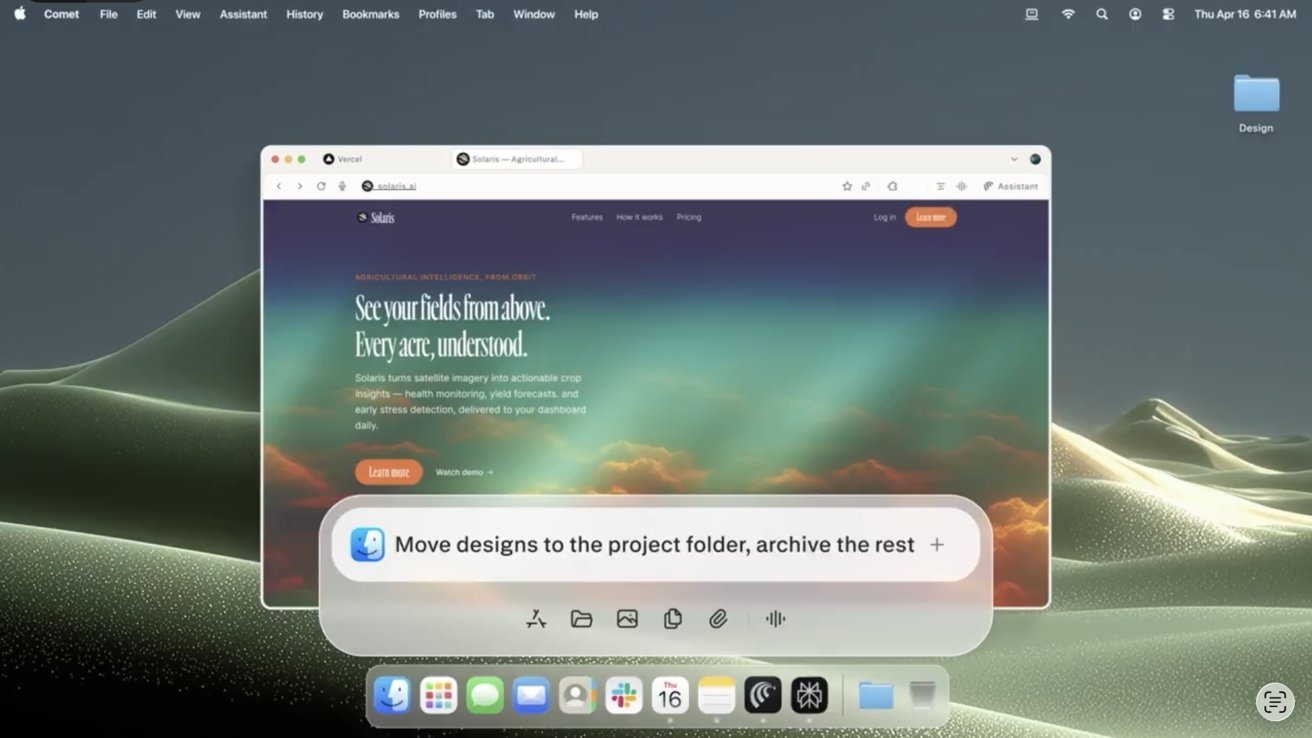
Perplexity’s Personal Computer arrived on Mac first because it was the best for locally deploying the agentic AI platform, the company has declared.
During Apple’s quarterly financial results. CEO Kevan Parekh referenced to the growing use of the Mac as a base of operations for AI platforms. Parekh namechecked Perplexity as one such company, taking advantage of Apple Silicon and its unified memory structure.
Ahead of Apple’s results release and analyst call, Perplexity CEO Aravind Srinivas talked about the Mac during its Ask NYC enterprise and finance event. Specifically, how Personal Computer, its agentic AI platform that works with local files, was made for use on Mac.
Personal Computer is a version of Perplexity’s Computer that uses multiple agents to perform tasks for the user. A key difference is that it handles tasks from a local computer, such as a Mac mini, instead of the cloud.
Advertisement
The local nature of the tool also means it has access to the user’s files on the Mac mini, with it able to create and edit them depending on the task at hand.
Deployment capacity and interconnectedness
Deemed one of the best and most accessible ways to deploy Personal Computer, the Mac mini has been seized upon by users for the purpose of bringing Perplexity’s AI system into their homes and offices. It’s a combination of the cloud-based service and the local files owned by the user working in a single hybrid setup.
To Perplexity, the Mac mini is one of the “best ways to deploy” Personal Computer “at full capacity.” With the nature of work spanning the iPhone and the Mac, Personal Computer “builds on the continuity Apple users already expect” to get their tasks done.
This continuity between the iPhone and Mac is important, especially since users can command Personal Computer to do things on their Mac from their iPhone.
Advertisement
Since its launch in March, Computer has managed to complete more than $2.8 billion in labor-equivalent work. In the case of Perplexity itself, the team dogfoods with Personal Computer, claiming to increase revenue by five times while increasing headcount by 34%.
The event also included a number of other announcements affecting Personal Computer. The experience is being brought to Microsoft Teams, with Personal Computer able to be messaged directly or pulled into a channel without leaving a conversation.
App connections and workflows
There’s also a beta of Computer in Excel with a native side-panel, so the model and data can be viewed side-by-side in the spreadsheet tool. Perplexity is also working with 1Password to allow Computer to perform actions in password-protected tools, while preventing the model from seeing the user’s credentials.
Workflows in Computer will help bundle prompts, context, and the output format for specific enterprise tasks into a single starting point. The idea is to reduce the amount of technical work a user has to get done before the AI platform gets going.
Advertisement
A library of workflows is being built up for commonly-run tasks, with there being more than 70 at this time. They can also be shared between team members, scheduled separately, customized, and also run asynchronously.
Personal Computer functionality is available to all Perplexity Pro, Max, and Enterprise subscribers using a Mac. Pricing starts from $17 per month for Pro, $167 per month for Max.
As for anyone wanting to pick up a Mac mini or a Mac Studio to enjoy this for themselves, they may have a little trouble doing so. During the call, it was revealed that Apple is seeing huge demand and supply constraints that will stick around for several months.
Y Combinator’s Summer 2026 Request for Startups lists 15 categories, eight of which require hardware or capital, including agriculture robots, counter-drone defence, space inference chips, lunar manufacturing, and semiconductor supply chain software. The document represents the most dramatic pivot in YC’s public investment thesis, signalling that the accelerator which built its reputation on software now believes the next decade of billion-dollar outcomes will come from AI applied to physical, regulated, and capital-intensive industries.
Y Combinator published its Summer 2026 Request for Startups in late April, just days before the application deadline. The document lists 15 categories of companies that YC’s partners want to fund. Eight of them require capital, hardware, or both. The list includes AI for low-pesticide agriculture, counter-swarm drone defence, inference chips for space, lunar manufacturing from molten regolith, and semiconductor supply chain software for a process that crosses a dozen countries and takes five months to complete.
Advertisement
Each category is written by a named partner, and each reads less like a startup prompt than a thesis on why the economics of a particular industry have just shifted. The most influential startup accelerator in the world, the institution that funded Airbnb, Stripe, and Dropbox, is telling founders that the next decade of billion-dollar outcomes will come not from building software but from using AI to enter the physical, regulated, and capital-intensive industries that software alone never touched.
The thesis
The RFS opens with Garry Tan, YC’s chief executive, writing about agriculture. AI can now identify individual weeds and pests in real time, he argues, and when combined with robotic precision treatments, the result is farming that uses dramatically less pesticide while improving yield. The category is not agtech in the way Silicon Valley has historically understood it, which meant software dashboards for farm management. It is agtech that involves building physical robots, training vision models on biological data, and deploying hardware in fields.
Tyler Bosmeny’s entry on counter-swarm defence compares the companies he wants to fund to Cloudflare rather than Raytheon, software-defined defence systems that neutralise drone swarms at a fraction of the cost of traditional missile systems. The United States Department of Defense proposed more than $70 billion for drone and counter-drone systems in its latest spending plan, and defence tech is experiencing its strongest investment cycle in decades. Adi Oltean asks for founders who will 3D-print structures from molten lunar regolith and extract raw materials including silicon, aluminium, iron, and titanium through electrolysis on the moon.
The hard-tech categories are not aspirational filler. They reflect a structural change in what venture capital is willing to fund. Defence tech startups raised a record $49.1 billion in 2025, nearly double the prior year. Anduril, the autonomous weapons company, raised $4 billion at a $60 billion valuation in March. SpaceX has demonstrated that hardware-intensive businesses can produce venture-scale returns. The old assumption that hardware could not generate the margins or the speed that venture capital requires has collapsed, and YC’s RFS is the clearest institutional acknowledgement that the collapse is permanent.
The software that remains
Seven of the 15 categories are software, but none of them resemble the SaaS playbook that defined the previous decade. The category YC calls Software for Agents asks founders to rebuild every major software category for a world where the next trillion users are not people but AI agents. That means APIs, machine-readable documentation, command-line interfaces, identity systems, permissions layers, and payment infrastructure designed for autonomous programmes rather than human beings. Google rebranded its entire AI platform around agents at Cloud Next 2026, consolidating Vertex AI into the Gemini Enterprise Agent Platform and launching a $750 million fund to finance agentic deployments. Gartner predicts that 40 per cent of enterprise applications will include task-specific AI agents by the end of this year, up from less than 5 per cent in 2025.
Advertisement
The Company Brain category asks for a system that pulls knowledge out of every fragmented source inside a company, structures it, keeps it current, and turns it into what YC calls an executable skills file for AI. This is not enterprise search. It is a living map of how a company works: how refunds are processed, how pricing exceptions are decided, how engineers respond to incidents. The Dynamic Software Interfaces category is its mirror image, asking founders to rebuild software so that agents can operate it natively rather than scraping interfaces built for humans.
The SaaS Challengers category names the targets explicitly: ERP, chip design software, industrial control systems, and supply chain management. These are the categories where incumbent vendors charge the most and innovate the least, and where AI-native replacements could capture enormous markets if they can clear the switching costs.
The physical turn
The RFS entry on semiconductor supply chains may be the most revealing. A single advanced AI chip goes through approximately 1,400 process steps, crosses a dozen countries, and takes five months to manufacture. That supply chain is managed, as the RFS puts it, with spreadsheets, SAP, and phone calls. Diana Hu, the YC partner who wrote the entry, is asking for founders who will replace that infrastructure with software that can track, optimise, and predict across the most complex manufacturing process on earth.
The category sits at the intersection of every force currently reshaping the technology industry: the US-China chip export controls, the reshoring of semiconductor fabrication, the explosion in AI chip demand, and the geopolitical fragility of supply lines that route critical components through Taiwan, South Korea, the Netherlands, and Japan.
Advertisement
The space categories are similarly grounded in economics rather than aspiration. Reusable rockets from SpaceX and Stoke Space are about to produce a massive increase in the capacity to put objects in orbit, which means an equally massive increase in demand for the electronics that operate there.
YC wants inference chips optimised for mass, thermal performance, and radiation hardness. SpaceX and Blue Origin are already racing to put data centres in orbit, and the AI hardware that runs inference workloads in terrestrial data centres does not survive the thermal and radiation environment of space. The market for space-rated inference silicon does not exist yet. YC is betting that it will.
What changed
Y Combinator’s Spring 2026 RFS, published just three months earlier, listed eight categories. The Summer edition nearly doubled that to 15. The Spring list included AI for product management, government AI, AI-native hedge funds, and stablecoins. Those are recognisably software businesses with AI bolted on. The Summer list includes lunar regolith manufacturing and counter-drone defence systems. The shift between the two documents is the most dramatic reorientation in YC’s public investment thesis since the accelerator began publishing requests for startups.
The change reflects what has happened to venture capital more broadly. In the first quarter of 2026, $297 billion flowed into startups globally, 2.5 times the prior quarter and the most venture funding ever recorded in a three-month period. Accel raised a $5 billion fund on the back of returns from Anthropic and Cursor.
Advertisement
Andreessen Horowitz raised $15 billion. Thrive Capital closed more than $10 billion. The money is not looking for the next enterprise SaaS dashboard. It is looking for the companies that will apply AI to the industries where the margins are highest, the incumbents are slowest, and the barriers to entry have historically been physical rather than digital. YC’s RFS is the most explicit version of that thesis because it names the industries by name: agriculture, defence, space, semiconductors, medicine, manufacturing.
The stablecoin category, one of the few holdovers from the Spring list, reveals a different kind of ambition. YC describes stablecoins as sitting between the regulated and unregulated worlds, creating room for services that combine the strengths of both: yield-bearing accounts, tokenised real-world assets, and infrastructure that moves money faster and cheaper across borders. The AI Personalised Medicine category asks for agents that analyse genomic data, electronic health records, and wearable output to generate patient-specific treatment protocols rather than population-level guidelines. Neither category requires building physical hardware. Both require operating in industries where regulation, liability, and institutional trust are the barriers, not code.
The signal
YC’s Request for Startups is not a prediction. It is a commitment. The partners who write the entries are the partners who will evaluate the applications, and the categories they describe are the companies they will fund. When Garry Tan writes about agriculture robots and Tyler Bosmeny writes about counter-drone systems and Adi Oltean writes about 3D-printing on the moon, they are telling founders what the next YC batch will look like. The document is the closest thing the startup ecosystem produces to a forward-looking investment mandate from its most influential institution.
The mandate says that software is now the substrate, not the moat. The models are commoditising. The infrastructure is scaling. The interfaces are being rebuilt for agents. What remains scarce is the ability to apply that substrate to the physical world: to build the robot that replaces the pesticide, the chip that survives the radiation, the defence system that costs less than the drone it destroys, the supply chain software that tracks 1,400 process steps across 12 countries, the molecular model that designs a drug for a target the industry called undruggable.
Advertisement
Y Combinator built its reputation by funding two founders in a garage writing code. Its Summer 2026 RFS is a document that says the garage is no longer enough. The founders it wants now are the ones who can write the code and then build the thing.
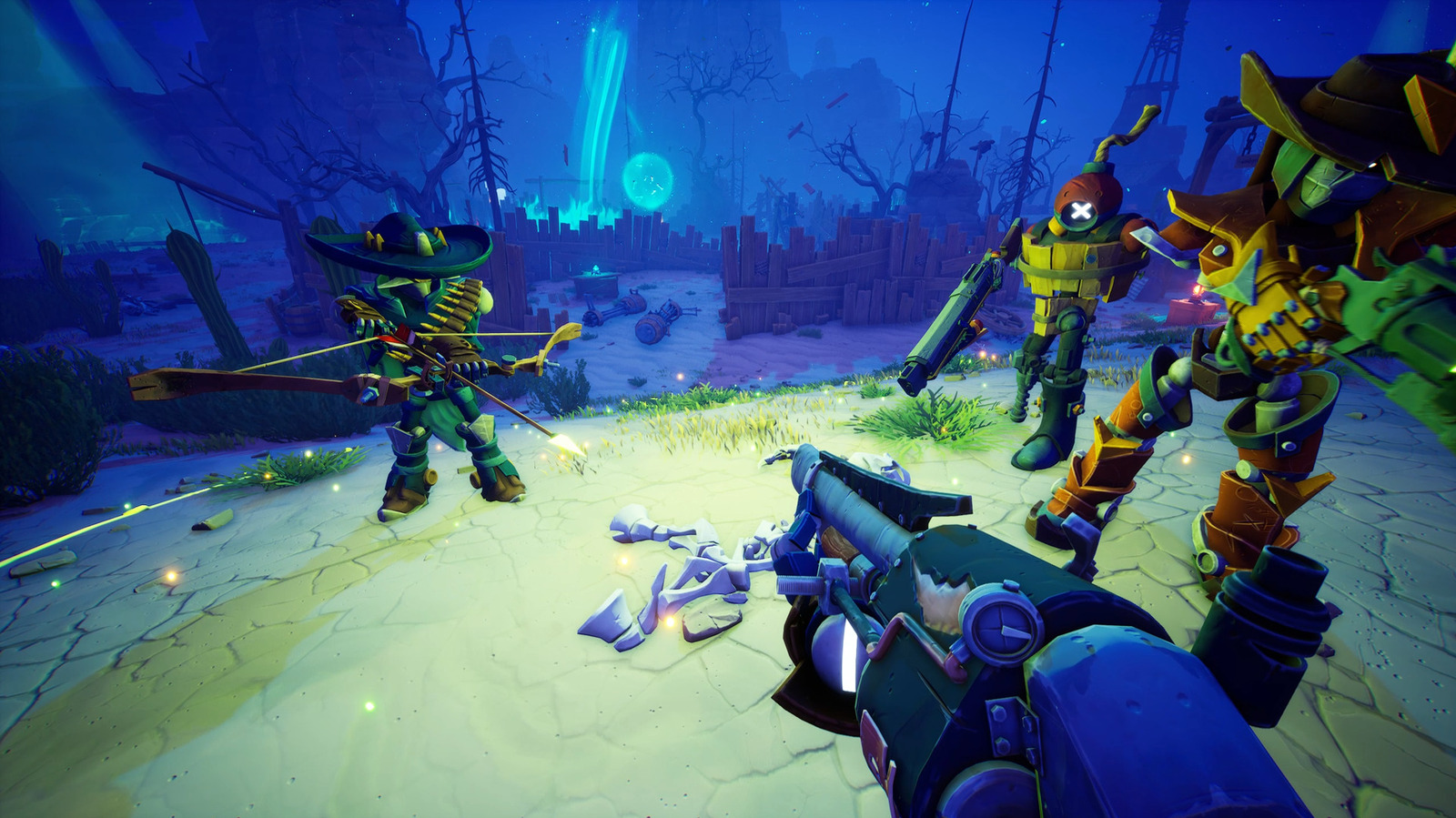
Far Far West is off to a strong start after it hit Steam in early access this week. The co-op shooter from Evil Raptor and publisher Fireshine Games sold more than 250,000 copies in its first 48 hours. It typically costs $20, but there’s a 10 percent launch discount until May 5.
As a robot cowboy, you can play solo or form a squad with up to three friends and go bounty hunting. You’ll hunt down elusive, dangerous targets in order to take them out and scoop up the rewards.
You’ll encounter undead enemies such as skeletons and vultures, as well as haunted mines and ghost trains. There’s an extraction element to this (you can try to complete extra objectives for better rewards), though it seems more along the lines of Helldivers 2 than a more survival-oriented experience like Arc Raiders. You can use your loot to upgrade your loadout with new guns, abilities and spells. You can customize your cowboy and steed too.
Advertisement
I really dig the pixel-art look of 2D hack-and-slash adventure SoulQuest. The animations (which are said to be frame-perfect) in the trailer are super slick, which makes sense given that combat is built around combos of light and heavy attacks. You’ll have magic powers and ultimates at your disposal too.
You play as Alys, a recently widowed warrior who refuses to accept her husband’s fate and sets out to reclaim his soul. A soul quest, if you will. It took the small team at SoulBlade Studio seven years to bring the game to fruition and seven seconds for me to add it to my wishlist.
SoulQuest is available on Steam (usually $20, though there’s a 20 percent discount until May 15). You can get a taste of what it has to offer by checking out the demo.
Advertisement
Gambonanza is a chess-based, Balatro-esque roguelite. It has some solid momentum, given that more than 170,000 people downloaded it during a recent Steam Next Fest event.
The aim in each round is to capture all of the opponent’s pieces on a small-scale chessboard. You’ll probably need to break the traditional rules of chess to do that. Helpfully, Gambonanza has more than 150 powerful “gambits” that modify your runs. These might make your pieces more powerful or force the enemy to skip a turn. Tiles on the board can also be modified (to, for instance, lock an enemy piece in place) and you can deploy extra pieces to turn rounds in your favor.
Along the way, you’ll face bosses. It seems like one of those is a machine named M2ch4gnus C4rls3n, obviously after real-life grandmaster and five-time world champion Magnus Carlsen. That alone has sold me on checking out this game.
Advertisement
Gambonanza — from solo developer Blukulélé and publishers Sidekick Publishing and Stray Fawn Studio — is out now. The Steam version runs on PC, macOS and Linux. It usually costs $15, but there’s a whopping 35 percent discount until May 15. You can also snap up the game on iOS and Android for $7.
As I started watching this trailer, I thought Bobo Bay looked like a cute, cozy creature collector. But then these Bobos started battling each other in a beat-’em-up mode, and one pulled out a gun to shoot an opponent. That didn’t feel quite as intense as seeing Palworld for the first time but it made the game more interesting than it seemed at first glance. “Think creature collecting meets cozy island life, with a surprising amount of depth under all that cuteness,” a press release stated. No kidding.
You can raise and evolve Bobos and combine their traits. You can customize them and get them to participate in races and other events. And shoot guns at each other, apparently.
Advertisement
Bobo Bay, from NewFutureKids, is out on Steam. It will usually cost $25, but there’s a 16 percent discount until May 6.
As a Ball x Pit sicko, I would be remiss not to mention the latest free update, which arrived this week. It added two new characters, 11 more superpowered balls, some passive abilities and a way for you to re-roll character upgrades that you previously opted for.
Alas, I’ve been too busy with another game to check out the new characters and balls just yet. I know that, as soon as I do, Ball x Pit is likely to have a hold on me for at least another dozen hours.
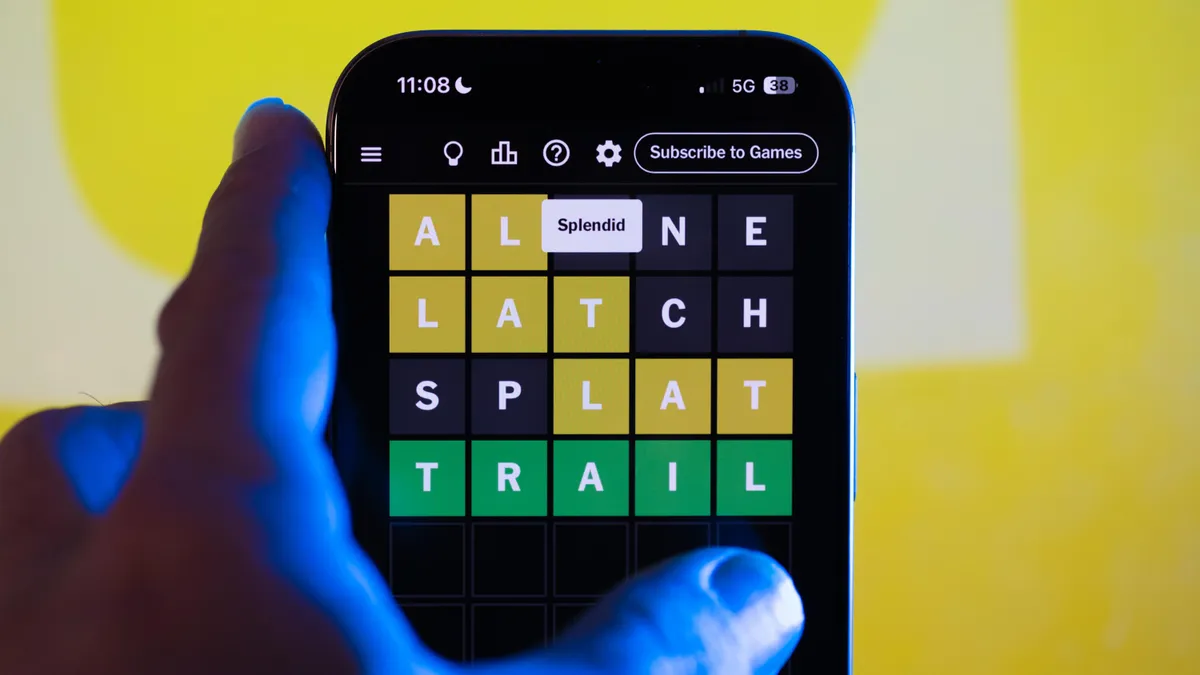
In 2021, Josh Wardle launched the wildly popular word game Wordle. Then in 2022 the New York Times bought the game. The rules to Wordle are pretty straightforward. You have to figure out a five-letter word in six or fewer guesses (we have a two-step strategy to help you solve the puzzle every time). After each guess, the game shows gray blocks for the wrong letters, yellow blocks for the right letters in the wrong spot and green blocks for the right letters in the correct spot.
CNET’s Gael Cooper has loads of tips and tricks to tackle each NY Times Wordle puzzle. If you’ve finished your daily Wordle and are still craving a good puzzle game, there are plenty to choose from.
Here are 10 other puzzle games you can play now.
Advertisement
Connections
I know it’s old but I’m not even going to try to figure this out.
New York Times/CNET
Another New York Times-owned puzzle, Connections is a tricky word game. “Players must select four groups of four words without making more than four mistakes,” the New York Times wrote on X. There are also four color-coded difficulty levels for each game; yellow is the easiest, then green, then blue and finally purple. The game is also similar to the BBC quiz show Only Connect, and the show’s host took to X to point out the connection. See what I did there?
Strands is another New York Times-owned puzzle but this game resembles a word search more so than Wordle and Connections. This game presents a theme every day to help you find words in a grid. In Strands words can appear forward, backward, top-to-bottom or any number of ways in a traditional word search, and words can also form in the shape of an “L” or have a zigzag in them. When you find a word, tap the first letter and drag your finger to the other letters. Every letter in the puzzle is used, so if you still have letters that aren’t connected to words, you aren’t finished yet.
You can play Strands on any web browser but you need a New York Times subscription (again, $1 a week) to play.
Quartiles
Advertisement
Apple/CNET
Quartiles is a new word game Apple News Plus subscribers can access on their iPhone or iPad that’s running iOS 17.5 or later. In this word game, you’re given 20 tiles with letters on them and you’re trying to put them together to form different words. The longest words are four tiles long, and these are called Quartiles. The game can be tough but finding just one of the Quartiles is as satisfying as remembering something that was just on the tip of your tongue.
You can play Quartiles on an iPhone or iPad but you need an Apple News subscription (which starts at $13 a month) to play.
Multiple Wordle spinoffs: Dordle, Quordle, Octordle and Sedecordle
Quordle has you solve four word puzzles at once, which sounds daunting.
Jakub Porzycki/NurPhoto/Getty Images
Are you up for a challenge? If you love Wordle and want puzzle games that take more brain power, you’ll want to check out either Dordle, Quordle, Octordle or Sedecordle. Each of these word games resembles Wordle, but they add more rows, columns and words to solve. Each game requires you to simultaneously solve a different number of words at once: Dordle has you solving two words, Quordle four at once, Octordle eight at once and Sedecordle a whopping 16. Good luck.
“Lewdle is a game about rude words,” this game’s content advisory reads. “If you’re likely to be offended by the use of profanity, vulgarity or obscenity, it likely isn’t for you.” Translation: It’s Wordle but with bad words. The words range from mild — like poopy — to words that would make a sailor blush. Thankfully, despite this game’s content warning, slurs are not included. Like Wordle, gray, yellow and green blocks are used in the same way and there’s only one puzzle per day. So go forth and let the bad words flow!
You can play Lewdle on any web browser. You can also download this game from Apple’s App Store or the Google Play store.
Antiwordle
Advertisement
Not off to a great start with this Antiwordle puzzle.
Antiwordle/CNET
Tired of seeing those gray, yellow and green blocks plastered all over your social media feed? Give Antiwordle a try. While Wordle wants you to guess a word in as few tries as possible, Antiwordle wants you to avoid the word by guessing as many times as possible. When you guess, letters will turn gray, yellow or red. Gray means the letter isn’t in the word and can’t be used again, yellow means the letter is in the word and must be included in each subsequent guess and red means the letter is in the exact position within the word and is locked in place. If you can use every letter on the keyboard without getting the word correct, you win. Honestly, I’ve found this version of Wordle to be much harder than the original.
Absurdle bills itself as the “adversarial version” of Wordle. While Wordle nudges you in the right direction with each guess, Absurdle is trying to avoid giving you the correct answer. According to the game’s website, “With each guess, Absurdle reveals as little information as possible, changing the secret word if need be.” Absurdle doesn’t pick a word at the beginning of the game for the player to guess. Instead, it uses the player’s guesses to narrow its list of words down in an effort to make the game go as long as possible. The final word might not even include a yellow letter from one of your earlier guesses either. You can guess as many times as you want, which is helpful, and the best score you can get is four. Have fun!
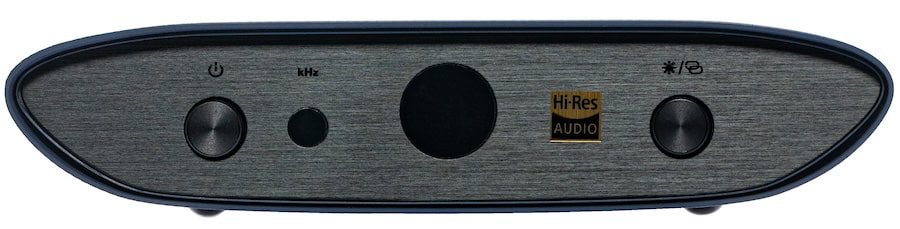
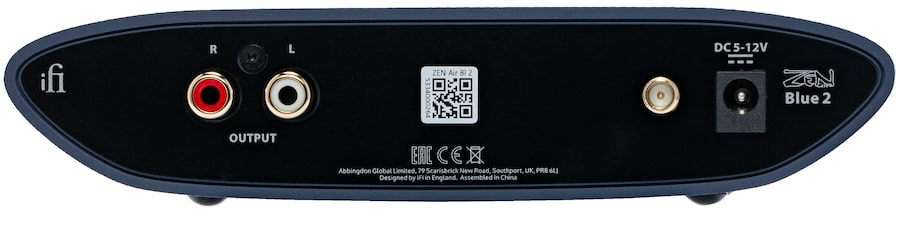
iFi Audio is updating its entry-level wireless DAC lineup with the ZEN Air Blue 2, a $129 Bluetooth receiver designed to replace the original ZEN Air Blue while adding meaningful upgrades where it counts. The new model introduces Bluetooth 5.4 with aptX Lossless alongside LDAC, LHDC/HWA, AAC, and SBC support, giving it broader high-resolution codec compatibility than most options at this price.
Rated for a 10-meter (approximately 30 feet) range, the ZEN Air Blue 2 also benefits from an improved antenna design for more stable connections at the edge of that distance, making it a practical way to add modern wireless streaming to amplifiers, AV receivers, or powered speakers via RCA outputs without changing the rest of the system.
IFi Zen Air Blue 2
The ZEN Air Blue 2 uses a dedicated three stage internal design built around a Qualcomm QCC3095 Bluetooth chipset, an ESS Sabre DAC reportedly the ES9023 for digital to analog conversion, and iFi AMR custom “OV” Operationsverstärker op amps to maintain signal integrity through the output stage.
It also supports a wide 5 to 12V DC input range, making it suitable for home systems as well as automotive, marine, or other battery powered setups. An automatic power on function is included for vehicle use, allowing the unit to start with the engine.
1x Zen Air Blue 2 1x USB to DC Cable 1x Quick Start Guide 1x Warranty Card 1x Short Antenna 1x Long Antenna
1x Zen Air Blue 1x USB to DC Cable 1x Quick Start Guide 1x Warranty Card
The Bottom Line
The iFi Audio ZEN Air Blue 2 succeeds by keeping things simple and focused. At $129, it delivers a rare combination at this price point: Bluetooth 5.4 with aptX Lossless, broad codec support, and a stable wireless connection that makes it easy to bring modern streaming into older systems without replacing core components. That’s the angle—it’s not trying to be everything, just a clean bridge between your phone and your existing hi-fi.
What it doesn’t offer is just as clear. There’s no headphone output, no balanced connections, and no advanced control over DAC settings or outputs. If you want a more flexible desktop DAC or preamp, options like the Topping E50 II or Fosi Audio S3 give you more to work with for not a lot more money.
Advertisement
The ZEN Air Blue 2 is for listeners who already have an amplifier, receiver, or powered speakers they like and just need a reliable, high quality Bluetooth front end. It also makes sense in secondary systems or even in a car or boat where its wide voltage support and auto power on are actually useful. If your goal is straightforward wireless playback with minimal fuss, it fits. If you want control and expandability, look elsewhere.
Motorola is practically a veteran when it comes to foldables, which makes the Razr Fold all the more surprising. When I got my hands on it at a Hollywood villa overlooking the Los Angeles skyline, it felt less like an iteration and more like a fresh take.
The phone-maker’s first book-style foldable incorporates all the know-how it gained from making clamshell foldables dating back to the first modern Razr in 2019 — a launch I also attended at a similar event in Los Angeles. As advanced as it felt back then to hold a smartphone that folded in half, the foldable niche has come a long way since. The Motorola Razr Fold shows the company has moved beyond the rookie missteps typical of first-generation book-style foldables. The Google Pixel Fold, for example, notoriously didn’t unfold completely flat — an issue the Razr Fold avoids and a clear advantage in this space.
My first impression of the Motorola Razr Fold, as I held it in my hand, was that it had the polish and heft of a book-style foldable refined over many iterations, such as the Samsung Galaxy Z Fold 7. It’s not quite the thinnest folding phone around — measuring just over 5mm thick when unfolded and about 10mm when folded — but it’s reasonably trim and didn’t feel clunky at 8.6 ounces (243 grams).
Advertisement
The Razr Fold is also unmistakably a Motorola phone, thanks to the design of its back, which is covered in a textured material that curves up to meet the camera bump, similar to the Moto G (2026). For the record, I find the textures classy, with a matte feel for the lily white color and cross-hatched nylon weave for the blackened blue hue.
The inner and outer screens have twice the maximum brightness of rival foldables.
David Lumb/CNET
Speaking of feel, the hinge and opening and closing of the Razr Fold feel satisfyingly sturdy — an odd but perhaps necessary reassurance that Motorola successfully translated its clamshell expertise to book-style foldables. Moreover, the Razr Fold is both well-specced and priced competitively against rival foldables: At $1,900, it lands right between the $2,000 Galaxy Z Fold 7 and the $1,800 Google Pixel 10 Pro Fold. The Motorola Razr Fold is available for preorder on Motorola.com and retailers on May 14 and will go on sale May 21.
Advertisement
Advertisement
How the Razr Fold stacks up to other foldables
Watch this: Motorola’s Razr 2026 Phones Are Still Powerful in Your Pocket, Just Pricier
The specs under the hood
The Razr Fold is powered by a Snapdragon 8 Gen 5 chip, which is less powerful than the highest-end Snapdragon 8 Elite Gen 5 processor, according to NanoReview’s benchmarks. With 16GB of RAM and 512GB of storage, the foldable is powerful on paper; we’re looking forward to seeing how its performance compares to Samsung’s and Google’s devices.
The Razr Fold’s 6.6-inch pOLED cover display is sharp and vivid, as is its 8.1-inch LTPO OLED inner display, both roughly the same size as screens on other foldables. What sets them apart is how bright they can get, with peak brightness rated at 6,200 nits for the main (unfolded) display and 6,000 nits for the external (folded) display — easily double that of many other phones, something I’m eager to test in harsh lighting conditions. That brightness could make the Razr Fold one of the best foldables for the beach or a park picnic, though it may also drain the battery faster.
Advertisement
If that’s the case, it’s a good thing the Razr Fold packs a 6,000-mAh battery, offering more capacity than its rivals — and even the Galaxy Z TriFold. Better still, you can recharge the foldable with 80-watt wired charging and 50-watt wireless charging, far faster than the Galaxy Z Fold 7 (25-watt wired) and Pixel 10 Pro Fold (30-watt wired). Based on our extensive battery testing, I’d expect those speeds to recharge most of the Razr Fold in about half an hour (though we’ll have to confirm that in our review). The foldable also supports 5-watt reverse wireless charging to share power with other devices.
The Razr Fold has some of the best cameras on any Motorola phone, featuring a triple 50-megapixel rear camera array (main, ultrawide and telephoto). The telephoto uses a periscope lens with 3x optical zoom and up to 100x digital zoom. The front display has a sharp 32-megapixel selfie camera, which makes sense, as book-style foldable owners use the cover screen more often. When they pop the Razr Fold open, they’ll find a 20-megapixel camera for video calls and similar tasks.
The Moto Pen ($100) stylus will work with the Motorola Razr Fold. This might be how my experience would’ve been if I’d gotten the pen to connect to the Razr Fold.
Advertisement
Motorola
No book-style foldable would feel complete without a stylus — or so we thought until Samsung dropped S Pen support from the Galaxy Z Fold 7. I had a chance to handle Motorola’s Moto Pen, though I didn’t have time to pair it with the Razr Fold. Tucked neatly into its holster (which looks a bit like a vape), the Moto Pen pops out easily, and the brief writing I tested on the Fold’s screen felt smooth enough. I’m not surprised that the phone-maker behind the Moto G Stylus pulled off a sleek standalone digital pen, though I’m curious about how its physical buttons function.
I have a laundry list of questions left to answer when we get our hands on the Motorola Razr Fold, from performance to camera capability to recharging rates. It’s tough to get a full picture of a phone from just an hour meet-and-greet in a fancy Los Angeles event space. But I’m confident that Motorola’s first book-style foldable will be a great alternative for folks who haven’t yet been convinced to pick up one from Samsung or Google. We’ll just have to see if Motorola has enough time to make a splash with the Razr Fold when it goes on sale May 21 before Apple potentially steals the spotlight with its long-rumored foldable iPhone expected to make its debuted in September.
Motorola Razr Fold vs. Samsung Galaxy Z Fold 7 vs. Google Pixel 10 Pro Fold
IP48/IP49 rating, 80-watt wired charging, 50-watt wireless charging, 5-watt reverse charging, dual stereo speakers (with Dolby Atmos, tuned by Bose), Corning Gorilla Glass Ceramic cover display, 6,000 nits peak brightness on cover display, 6,200 nits peak brightness on main display, 5G (sub-6). hall sensor, proximity sensor, multi-spectral camera assistant sensor,
One UI 8, 25W wired charging speed, Qi wireless charging, 2,600-nit peak brightness, Galaxy AI, NFC, Wi-Fi 7, Bluetooth 5.4, IP48 water resistance
IP68 rating, gearless hinge, cover and internal screen 3,000 nits peak brightnes, Corning Gorilla Glass Victus 2 cover and back glass, Satellite SOS, ultra-wideband chip, Qi2-certified, free Google VPN. 7 years of OS, security and Pixel Drop updates
The solar system is kind of hard to observe in motion all at once. Sometimes, it’s nice to have a little model to look at, so you can see the relative motions of celestial bodies play out in front of you. Such a device is called an orrery, and [illusionmanager] has built rather a nice example of their own.
The build represents all the planets in the solar system, plus the sun and our very own Moon. An ESP32 lives at the heart of the build, running an astronomical simulation to calculate the proper positions of all the celestial objects. It then drives a small stepper motor via a TMC2209 driver, turning the mechanism back and forth until all the pieces are positioned correctly, using a reed switch and magnet to detect the initial zero position. The orrery is able to be driven by a single motor in this manner thanks to an ingenious mechanism, wherein the rings interlock with each other when turned in one direction, and not in the other. The Moon is controlled by a separate geared mechanism connected to the main rotation.
It’ s a nice decoration that also serves as a great conversation piece, particularly if you like talking about the heavens. We’ve featured some fine works from [illusionmanager] before, too, like this exquisite reverse sundial. Video after the break.
Every week we like to showcase the biggest stories on the TechRadar website over the previous seven days in our ‘In Case You Missed It’ (ICYMI) round-up — both to help you catch up with the news, and also because we’re proud of our work.
Once again, it’s been a really busy week in technology: we’ve got stories here covering new phones from Motorola, electric helicopters, Taylor Swift taking on AI, robots playing table tennis, the new Steam Controller, and more besides.
In short, there’s something for everyone here. Settle down and buckle up: these are the major stories that mattered on TechRadar this week.
Advertisement
Article continues below
8. We were terrified by the first Resident Evil trailer
Resident Evil is returning to the big screen (Image credit: Sony Pictures Releasing)
Weapons director Zach Cregger is turning his attention to the Resident Evil movie franchise, describing his upcoming flick (premiering on September 18) as a “reinvention” of the series — one that isn’t tied to any of the video games or video game characters (a tactic that has worked well enough for the Prime Video TV show based on Fallout).
Advertisement
The first trailer for the film has now arrived — and it’s a pretty terrifying affair. We won’t spoil any of the beats for you, but you can watch the teaser yourself via the link below, and we’re more hopeful for the future of Resident Evil on the big screen than we have been in a while (the least said about Resident Evil: Welcome to Raccoon City, the better really).
7. New York City’s first electric air taxi took off
An air taxi taking to the skies (Image credit: Lance Ulanoff / Future)
Is it a bird? Is it a plane? No, it’s the new all-electric Joby Air Taxi, which is currently being tested in the skies of New York city — and TechRadar was there to watch the first demo. With its eVTOL (electric vertical take-off and landing) technology, the flying machine has the potential to transform the way that New Yorkers get around their urban environment.
Able to climb and land like helicopters, and switch to a more airplane-like mode in between, these air taxis have been a long time coming (an early prototype was tested three years ago). With regulatory clearance now on the way and pilots in place, we’ve got a transportation system that’s much quieter and eco-friendly than existing options.
Advertisement
Sign up for breaking news, reviews, opinion, top tech deals, and more.
6. A handy YouTube Premium feature came to free users
Non-paying YouTube users outside the US have a new feature to enjoy (Image credit: Getty Images / NurPhoto)
YouTube has rolled out a treat for free users who aren’t yet on a premium subscription: anyone can now activate picture-in-picture mode for YouTube on their phone, anywhere in the world (this was previously available for US users, but it’s now available globally). Just start a video, then head back to your phone’s home screen to choose another app.
It means you can keep your DIY tutorial videos, lo-fi chill-out mixes or celebrity interviews rolling while you get other stuff done on your phone. It’s a welcome boost for YouTubers on the free tier, as Google has been pushing YouTube Premium and Premium Lite quite a bit lately — not least through an excessive number of ads playing around videos.
Advertisement
5. Sony’s table tennis robot blew our minds
The robots are getting better at table tennis (Image credit: Sony AI)
Robotics technology continues to improve and impress, and the mind boggles when it comes to what these machines will be able to do in 10 or 20 years. For now, the AI-powered robots that are part of the Sony Project Ace scheme have been beating some of the best players in the world at table tennis — a game that requires a lot of speed and dexterity.
These bots were shown mastering ball speeds of up to 70mph (plus plenty of spin), in a new video, and there are implications way beyond competing at sports. The systems put in place to track ball and bat movements here will be useful in many other areas too — helping robots to adjust on the fly whenever they’re met with unpredictable scenarios.
Advertisement
4. Taylor Swift took on the AI deepfakes
Taylor Swift is taking a stand against AI (Image credit: Disney)
AI-made music is on the rise, and Taylor Swift is one of the flesh-and-blood artists taking a stand: she’s filed three trademark applications to protect her identity, and to make sure AI models can’t produce deepfakes based on her likeness or her tunes. If the applications are approved, it gives Swift some useful legal protection against any AI-based mimicry.
Given Taylor Swift’s profile, it’s difficult to imagine any AI prompter would get away with trying to rip off her creative output, but smaller artists aren’t as well protected. We know that AI music is flooding the music streaming platforms at the moment, and those platforms are still playing catch-up when it comes to working out how to deal with it.
Advertisement
3. Android fans started a Google protest
The Galaxy S26 Ultra (Image credit: Lance Ulanoff / Future)
Changes are coming to Android, and many users aren’t happy: Google is pushing ahead with plans to get developers to verify their identities, which doesn’t sit right for those who choose Android because of its claims to be an open platform. It means Google will be able to more effectively block apps on the Play Store from developers who aren’t verified.
Disgruntled users have now set up a ‘Keep Android Open’ campaign online, arguing that the changes give Google the power to block apps it simply doesn’t like (or that governments tell them not to include). One privacy advocate has gone as far as labeling Google’s mobile OS ‘Darth Android’ because of the restrictions being applied in the coming months.
2. We tested the Valve Steam Controller
The new Steam Controller (Image credit: Future)
We’ve given the shiny new 2026 refresh of the Steam Controller a thorough testing, and the good news is that the improvements are real and noticeable: this is a significantly more polished and user-friendly device than its rather lackluster predecessor was. If you’re in the market for a gamepad upgrade, this could be the controller you’re looking for.
Advertisement
Available for $99 / £85 / AU$149 from May 4, the Steam Controller (2026) is available direct from Steam, and is designed to work with games for PC, Mac, and mobile — either from the Steam Store or otherwise. With great battery life and a solid feel, it’s almost great enough to make us forget about the long time we’ve been waiting for the Steam Deck 2.
1. Motorola gave us some impressive new foldables
Shiny new Motorola phones (Image credit: Future)
We got news on no fewer than five new products from Motorola this week: three clamshell foldables, plus US availability updates on the Razr Fold and Moto Buds 2 Plus. The highlight is perhaps the Motorola Razr Ultra 2026, offering a 7-inch foldable screen, three 50MP cameras, and a Snapdragon 8 Elite chipset running everything very capably.
Follow the link below for all the details on all of these gadgets, including the new silicon-carbon battery technology being used in the Razr Fold and the Razr Ultra 2026. The tech allows higher capacity batteries to fit into the same physical space, and as it rolls out to more manufacturers it has the potential to make a substantial difference to battery life.





























































You must be logged in to post a comment Login