Tech
FiiO JM21 Review: The $179 DAP That Makes You Question Why You’d Spend More

Digital Audio Players, often abbreviated to DAPs, remain one of the most versatile ways to listen to music, offering a self contained alternative to dongle DACs, portable DAC amps, and desktop systems that keep you tethered to a desk. Modern DAPs are no longer just glorified iPods. Today’s models deliver real output power, capable processing, and designs that increasingly resemble mainstream smartphones rather than niche audio gear.
There are solid budget DAPs on the market, but meaningful value tends to thin out quickly as prices drop. That is where the FiiO JM21 becomes interesting. At $179, it lands in a price bracket where most players play it safe, trimming features and performance to hit a number rather than pushing the envelope.
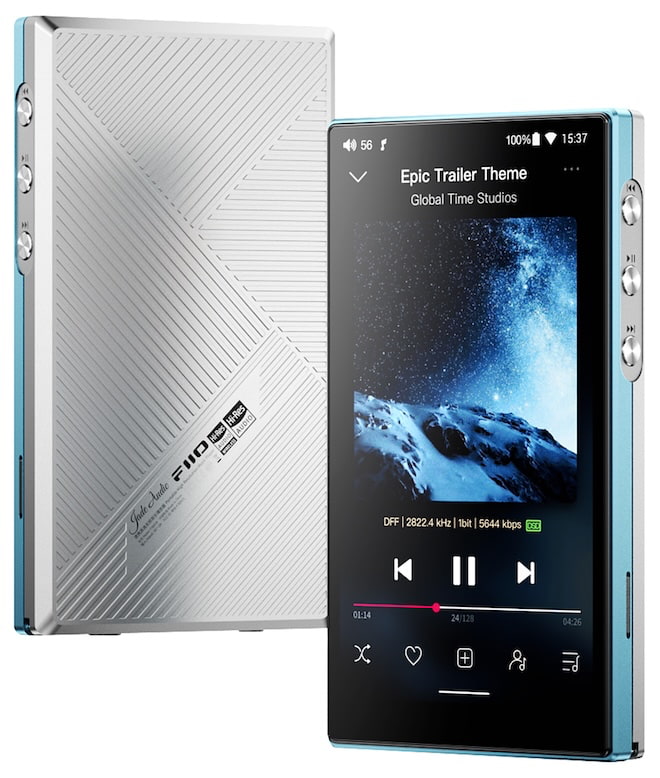
Developed in collaboration with Jade Audio, FiiO’s value focused sub brand, the JM21 does not try to look expensive or pretend it belongs in a higher tier. It is compact, understated, and almost anonymous. Internally, however, FiiO appears to have packed in far more than this category normally allows, from power delivery to functionality and overall flexibility.
That leaves a more uncomfortable question for the competition. Is the JM21 simply good for the money, or did FiiO overdeliver just enough to make nearby alternatives feel needlessly compromised?

Specifications & Technology
At the heart of the JM21 is a dual DAC configuration built around Cirrus Logic CS43198 chips, paired with SGM8262 op amps handling the output stage. That is serious silicon for a budget friendly DAP, and the supporting numbers back it up. FiiO claims a signal to noise ratio of roughly 130dB, total harmonic distortion plus noise below 0.0006%, and support for sampling rates up to 768 kHz at 32-bit, along with DSD512 over USB.
Those figures are not just the result of good parts selection. Internally, the JM21 is laid out with the control section, DAC stage, and amplifier stage physically separated into distinct zones. Each section is further isolated with shielding, a design choice intended to reduce crosstalk and keep noise from creeping into the signal path.
Power delivery is treated with similar care. The JM21 uses a three section power supply, with dedicated regulation for the digital control circuitry, the DAC stage, and the current and voltage amplification stages. The goal is straightforward. Provide stable, uninterrupted power where it matters most, rather than letting everything fight over a single rail. In a player at this price, that level of internal discipline is notable and not something competitors can all claim with a straight face.
Add in extremely low jitter femtosecond crystal oscillators, SRC bypassing, and FiiO’s proprietary DAPS Digital Audio Purification System, and the JM21 starts to look like a player that has been engineered with real intent rather than assembled from leftovers. On paper, the focus is clearly on preserving signal integrity and extracting as much performance as possible from the hardware.
The obvious concern is whether all of this comes at the expense of usability. It does not appear to. The JM21 is powered by a Qualcomm Snapdragon 680 processor, backed by 4 GB of RAM and a customized Android 13 operating system. Performance is responsive, app support is broad, and the interface avoids the lag and stutter that still plague some entry level players.
Internal storage sits at 64 GB, with expansion supported up to 2 TB via a microSD card slot. Battery life is another quiet strength. Thanks to the JM21’s relatively low power consumption, FiiO rates it at up to 12.5 hours of playback, a figure that held up in real world use rather than collapsing the moment Wi-Fi and streaming entered the picture.

Design & Build Quality
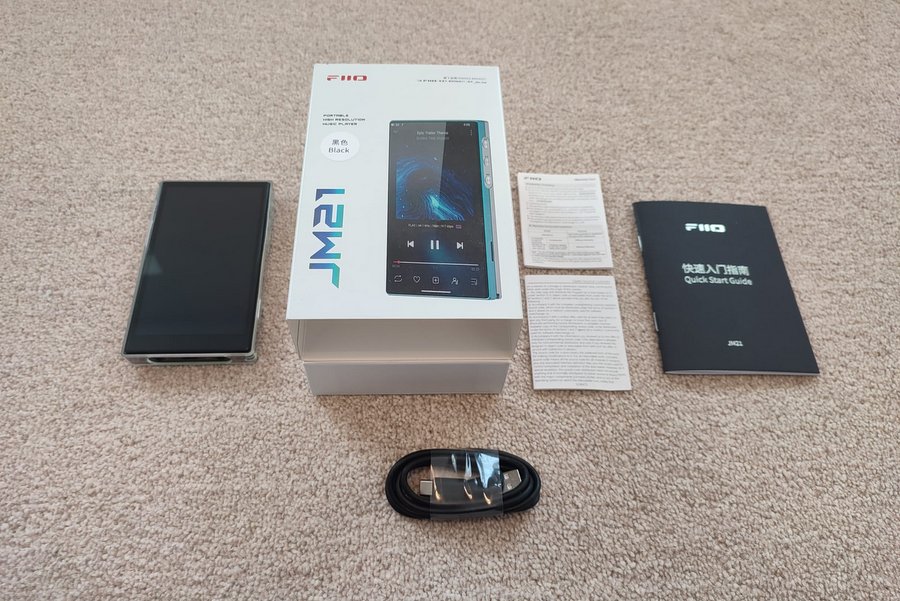
Included with the JM21 is everything you need and nothing you do not. In the box you get a transparent plastic case, a basic black USB Type-C to A cable for charging and data transfer, and the usual documentation. No extras, no padding, no pretending this is a luxury experience.
The first thing that stands out when you pick up the JM21 is just how thin and light it is. At 13 mm thick, roughly 0.5 inches, and weighing 156g, about 5.5 ounces, it feels closer to a compact smartphone than a traditional DAP. Its overall dimensions are equally manageable at 120 mm tall and 68 mm wide, or approximately 4.7 by 2.7 inches, making it easy to operate comfortably with one hand.
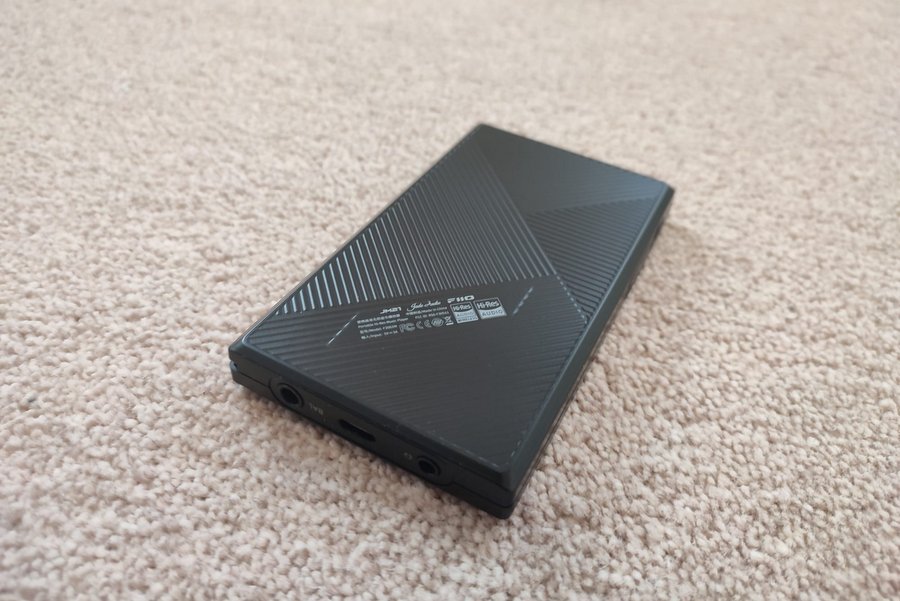
The chassis is a mix of aluminium alloy and plastic. It does not scream premium, but it feels solid enough to handle everyday use without complaint. The textured underside is a nice touch, adding grip where it actually matters. My review unit was finished in black, though a more eye catching sky blue option is also available. No one is going to confuse this with a flagship build, but at this price point it is sturdy, practical, and frankly hard to fault.


The control layout is straightforward and sensibly arranged. On the left side you will find the power button, which incorporates a small indicator light, along with a volume up and down rocker. Everything falls easily under your thumb, even when using the player one handed.
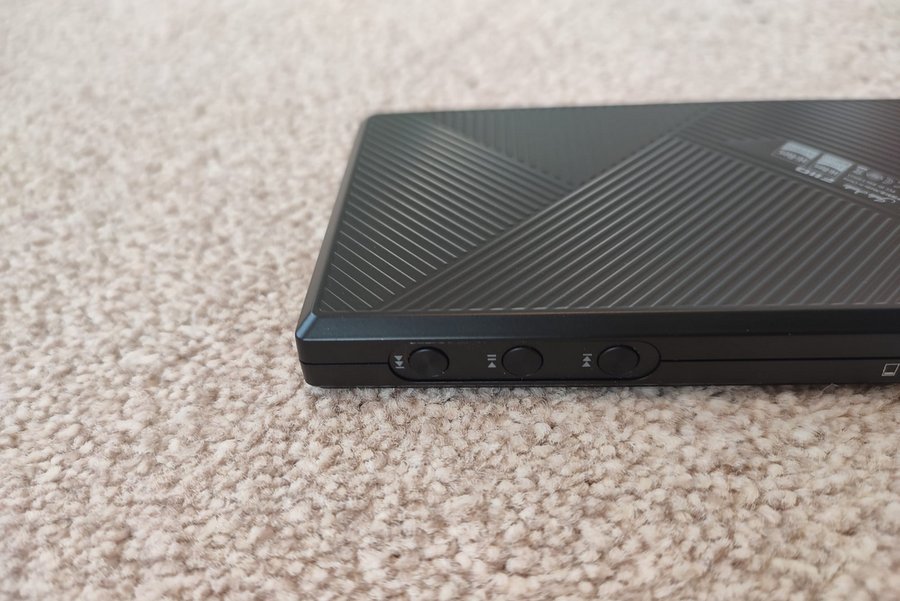
The right side houses the physical media controls, including play and pause, track forward, and track back buttons. The microSD card slot is also located here, keeping all removable and frequently used controls in one place.
Along the bottom edge are the audio and data connections. The JM21 offers both 4.4mm balanced and 3.5mm unbalanced headphone outputs. The 4.4mm jack can also function as a line out, while the 3.5mm output supports both line out and coaxial digital out. A USB Type-C port rounds things out, handling charging and data transfer duties.
User Experience
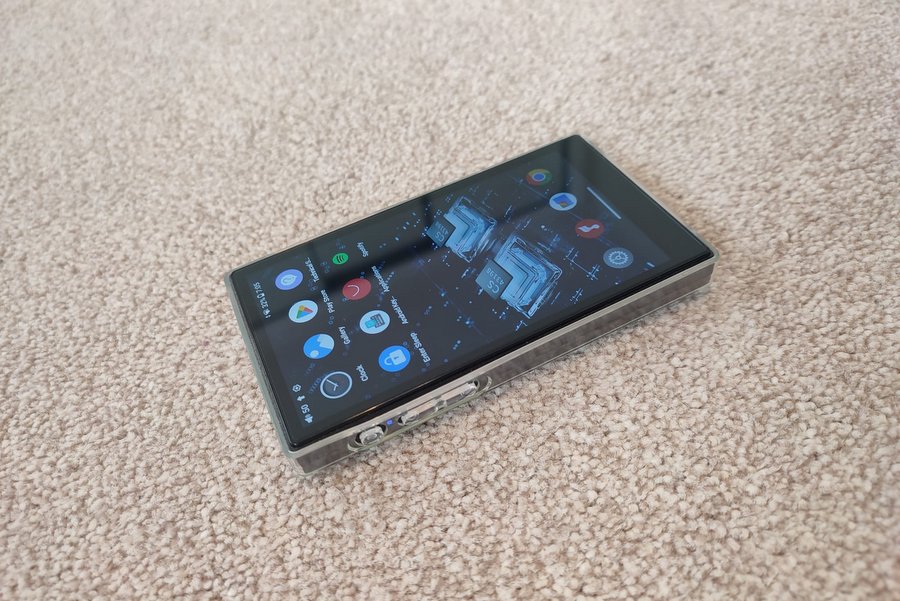
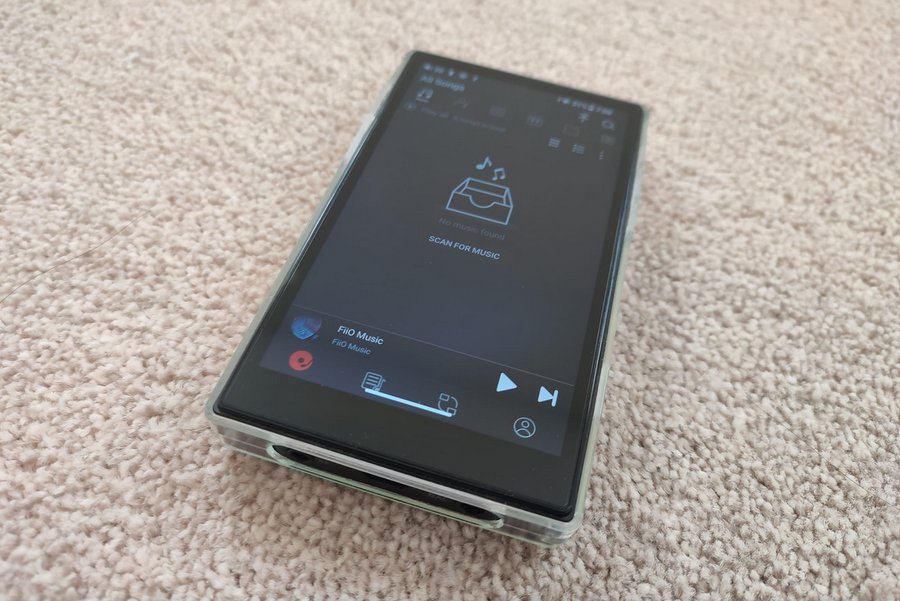
Power up the JM21 and you are greeted by a bright, vibrant 4.7-inch TFT touchscreen. While the resolution is a modest 1334×750, it is well matched to the screen size. In practice, text and artwork look clean, and I never found myself distracted by visible pixels.
Beyond its wired outputs, the JM21 also supports wireless listening via Bluetooth 5.0. It can both transmit to and receive from compatible devices, with LDAC support enabling high quality wireless playback at up to 96 kHz. Pairing was quick and stable, and performance was consistent during testing.
Versatility is clearly a priority here. The JM21 can operate in line out mode for use with active speakers or external power amplifiers, and it can also function as a USB DAC. In that configuration, connecting it to a laptop, desktop PC, or even a mobile device is straightforward, allowing the JM21 to bypass inferior onboard audio and handle digital conversion duties itself.
Most of my listening was done in standard Android mode, though FiiO also offers a Pure Music mode for those who want a more focused experience. This mode strips the interface back to the essentials, minimizing background processes and visual clutter so the player behaves more like a traditional, music only DAP. If you prefer fewer distractions and quicker access to your library, it is a sensible option.
Overall performance was stable, but not entirely flawless. I experienced occasional Spotify app crashes, particularly during the first few hours of use. The cause was not immediately clear, though the issue appeared to resolve itself over time and did not persist as testing continued. Outside of that early hiccup, day to day operation was smooth and predictable.
The Android 13 implementation feels familiar and largely hassle free, with no noticeable stuttering or performance limitations during typical day to day use. Navigation is smooth, app switching is responsive, and the overall experience feels appropriately tuned for a dedicated audio device.
I did spend some time with the Pure Music mode, which limits operation to the FiiO Music app. In this configuration, the JM21 behaves like a more traditional DAP, prioritizing local playback and simplicity. The app itself is well executed, offering straightforward access to local files, wireless file transfer to and from a connected phone or computer, and built-in EQ adjustment.
If you maintain a large locally stored music library, Pure Music mode makes a lot of sense. It is faster, cleaner, and avoids the overhead of Android apps you are not using, allowing the JM21 to focus on what it does best.
Listening Impressions and Headphone Synergy
Most of my listening impressions were formed using a mix of Spotify streams and hi res FLAC files stored on a microSD card. I paired the JM21 with a wide range of over ear headphones via the 4.4mm balanced output, including the HiFiMAN HE1000 Unveiled, Sendy Audio Egret, Beyerdynamic DT880 Edition 600 Ohm, and DALI IO-12. The DALI was also used wirelessly to evaluate Bluetooth performance.
In short, the JM21 presents a clean, neutral, and largely uncolored sound signature. It does not impose a strong personality of its own, instead allowing the character of the connected headphones to come through intact. Bass, midrange, and treble are evenly balanced and well integrated, provided the headphones themselves are similarly well tuned. This is not a player that sweetens, exaggerates, or smooths things over. What you hear is largely what your headphones are capable of delivering.
Despite its largely flat, neutral tuning, the JM21 never comes across as sterile or robotic. There is enough body and tonal weight to keep music sounding human rather than processed. On “Feeling Good” by Nina Simone, her vocal carries real heft and authority, sitting front and center with a natural sense of scale. The brass section has proper bite and presence, with trumpets cutting through cleanly and trombones sounding full and weighty rather than thin or splashy. The JM21 keeps these elements in balance, letting the track breathe without smoothing away its character.
That said, the JM21 is not a technical showpiece. Transient snap and large scale dynamics are a bit restrained compared to some similarly priced dongle DACs, which can sound more immediate and energetic in direct comparison. There is a trade off here, however. Those dongles do not give you a full Android experience, onboard storage, or a proper touchscreen interface. Viewed in that context, the JM21’s performance makes more sense. You are trading a bit of outright technical bite for versatility, convenience, and an all in one listening experience that dongles simply cannot offer.
Soundstage and imaging are fairly average, with limited spatial placement. Detail retrieval is solid, however. On “Chocolate Chip Trip” by TOOL, the JM21 still revealed subtle percussive hits and low level effects that many devices gloss over. The issue is scale. The track’s complex spatial placement and sense of movement felt flattened compared to higher quality sources. Everything was audible, but the presentation lacked the depth and dimensionality that make this track truly jaw dropping.
I did not have any similarly priced DAPs on hand, but I did compare the JM21 to the $500 Shanling M3 Plus. In terms of overall detail retrieval and tonal balance, the JM21 more than held its own. The differences came down to refinement. The Shanling sounded slightly more natural in timbre and more convincing dynamically, pulling ahead by a small but noticeable margin rather than a night and day difference.
700 mW is a heck of a lot of power for a sub-$200 device, and that kind of headroom proves useful when driving harder-to-run over-ear headphones like the HE1000 Unveiled. Just do not expect it to unlock the full potential of notoriously demanding models such as the HiFiMAN HE6se V2 or Modhouse Tungsten.
Furthermore, the JM21 doesn’t use tube amplification nor does it contain an R2R DAC, so it won’t do much to tame treble peaks on troublesome headphones. For that reason, the DT880 Edition 600 Ohm was quickly put to one side for the rest of the review process, as it can sound quite harsh on many solid-state devices.
The Bottom Line
The FiiO JM21 is not a giant killer, but it is a smartly engineered reality check. It has ample output power for the money, a clean and neutral sound, excellent versatility with full Android, strong connectivity, and hardware choices that feel deliberate rather than cheap. And it will comfortably drive the vast majority of headphones people actually own.
The trade offs are just as clear. Technical performance is competent rather than exciting, with average dynamics, soundstage, and spatial placement. It will not soften treble heavy headphones, nor will it extract the last ounce of performance from notoriously power hungry or temperamental designs. If you are chasing holographic imaging or tube like warmth, this is not the DAP for you.
Where the JM21 wins is value and usability. At $179, it offers a level of power, functionality, and polish that makes many alternatives feel compromised or redundant. If your priorities are flexibility, sensible tuning, and maximum bang for the buck, the JM21 makes a very strong case that you may not need anything more.
Pros:
- High quality DAC implementation with class leading measurements for the price
- Lightweight, slim design that is easy to operate one handed
- Smooth and familiar Android 13 experience with good overall responsiveness
- Excellent versatility with multiple operating modes, including USB DAC, line out, Bluetooth, and Pure Music mode
- Clean, neutral, and well balanced sound that avoids obvious coloration
- Strong output power for its class, capable of driving most real world headphones
Cons:
- Occasional app instability, particularly with streaming services early on
- Average dynamics, soundstage, and spatial placement compared to more technical sources
- Sonic presentation prioritizes balance and control over excitement
- Limited ability to tame treble heavy or difficult headphone pairings
You must be logged in to post a comment Login