Tech
FiiO M25 VERITA and R2R DAPs Launch With 1.7W Per Channel and Two Very Different DACs

FiiO showed us the M25 and M25 R2R at CanJam London in July, but both digital audio players were still pre-production models with provisional specifications, no confirmed pricing, and enough unanswered questions to keep the Head-Fi forums occupied for months.
Two months later, FiiO has officially launched both models in China for ¥7,499, and the final production specification looks considerably more interesting than another expensive Android music player stuffed with flagship DAC chips.
The standard model is now officially called the M25 VERITA and uses AKM’s flagship separated-DAC architecture with one AK4191EQ digital processing chip and two AK4499EX DACs. The M25 R2R takes the opposite route with FiiO’s proprietary 24+5-bit segmented R2R PRO resistor-ladder DAC. Same player platform. Same Chinese price. Very different approaches to converting bits into music.
FiiO could have changed the finish, added another anniversary logo, and charged more money. Nobody would have been particularly shocked. Instead, it is giving buyers two genuinely different conversion architectures without forcing them into two different product tiers.
Related Reading:
One Platform, Two Very Different DACs
The M25 VERITA uses the AK4191EQ + dual AK4499EX architecture that has become familiar in some of the better premium DACs and headphone amplifiers. The AK4191EQ handles digital processing separately from the AK4499EX conversion stage, allowing FiiO to build its own analog and amplification stages around AKM’s flagship platform.
FiiO is also introducing four selectable AKM-based sound profiles with the VERITA. We have not heard the final production version, so we are not going to tell you that one setting suddenly makes poorly mastered music sound like Rudy Van Gelder was behind the console. We will reserve judgment until we actually listen to it.


The M25 R2R is substantially different. Its proprietary 24+5-bit segmented R2R PRO architecture uses a segmented resistor-ladder topology rather than conventional delta-sigma conversion, following the direction FiiO has already taken with products including the K17 R2R.
The upper five bits use thermometer coding, an approach designed to reduce the cumulative errors that can occur in conventional R2R ladder implementations. FiiO also provides selectable voicing options for the R2R version.
R2R does not automatically mean warmer, more analog, or better. The DAC architecture is only one part of the signal chain, regardless of what somebody with 47,000 forum posts might insist.
What makes the M25 family interesting is the ability to choose between these two architectures while keeping almost everything else constant.
More Power Than the Prototypes


FiiO has also revised the output specification since the prototypes appeared earlier this summer.
Both production models can deliver up to 1,700mW + 1,700mW into 32 ohms from the balanced output in Super High Gain mode, with THD+N specified below 1%. High Gain reduces that to 1,000mW per channel into 32 ohms, while the 4.4mm balanced output delivers 220mW per channel into 300 ohms in Super High Gain mode.
The single-ended output is rated at up to 500mW per channel into 32 ohms in the same maximum-power operating mode. Four gain settings are provided, ranging from Low to Super High.
That is serious output for something intended to leave the house. Sensitive IEMs obviously do not require anywhere near that level of power, but the M25 should have considerably more flexibility with demanding full-size dynamic and planar magnetic headphones.

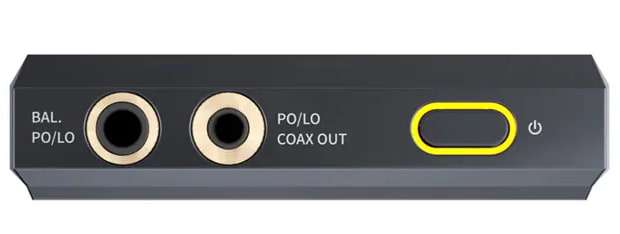
FiiO M25 and M25 R2R Key Specifications
- Models: M25 VERITA and M25 R2R
- Processor: Qualcomm QCS6490
- RAM: 8GB
- Internal Storage: 128GB
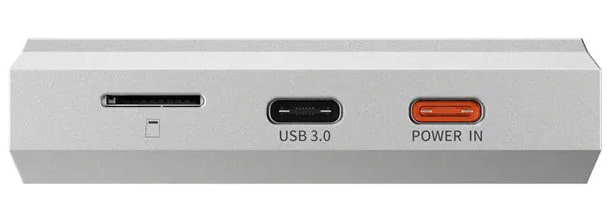
- Expandable Storage: microSD up to 2TB
- Display: 5.5-inch, 1080 x 2160
- M25 VERITA DAC: AK4191EQ + dual AK4499EX
- M25 R2R DAC: FiiO proprietary 24+5-bit segmented R2R PRO
- USB Controller: XMOS XU316
- FPGA: High-capacity FPGA with customized femtosecond clock
- Headphone Outputs: 3.5mm single-ended and 4.4mm balanced
- Maximum Balanced Output: 1,700mW + 1,700mW into 32 ohms in Super High Gain mode
- Balanced Output Into 300 Ohms: 220mW + 220mW in Super High Gain mode
- Maximum Single-Ended Output: 500mW + 500mW into 32 ohms
- Gain: Low, Medium, High, Super High
- Equalization: 31-band PEQ and Auto EQ
- Bluetooth: Bluetooth 5.2
- Bluetooth Transmission: SBC, AAC, aptX, aptX HD, aptX Adaptive, LHDC, LDAC
- Bluetooth Reception: SBC, LDAC
- Local/USB DAC Resolution: Up to 32-bit/768kHz PCM and native DSD512
- Battery: 6,500mAh
- Charging: Up to 30W fast charging
- Desktop Mode: Supported with battery isolation
- Chinese MSRP: ¥7,499 for either version
- European MSRP: €1,249 for either version

FiiO rates battery life at approximately 9.5 hours single-ended and 8.5 hours balanced for the M25 VERITA, while the M25 R2R stretches those figures to approximately 14.5 and 12.5 hours, respectively. Actual endurance will obviously depend on gain, output level, screen usage, wireless connectivity, and the headphones attached.
Why Are These Different?
The most interesting aspect of the M25 is not the processor, power figure, or increasingly inevitable wall of PEQ options.
It is choice.
Most manufacturers decide which DAC architecture belongs at a given price and sell you that implementation. FiiO is effectively offering two versions of the same automobile with completely different engines and charging the same amount for either one.
That is particularly interesting because the DAC market has become far more diverse again in 2026.
We recently covered the $289 SMSL R100, which uses a pair of Analog Devices AD1861-J multibit DAC chips, alongside the $649 SMSL D400 MK2, which goes in the opposite direction with AKM’s AK4191 and AK4499EX platform. Schiit has just introduced the $699 Bifrost 3, abandoning the previous True Multibit architecture for its proprietary Mesh digital processing feeding ESS modulators.
FiiO itself has been particularly aggressive with R2R. The $989.99 K17 R2R combines its 24+5-bit segmented resistor architecture with 31-band PEQ, network playback, and up to 4 watts per channel from a desktop chassis. Its K13 R2R, BR15 R2R, WARMER R2R, and even DM15 R2R portable CD player demonstrate that FiiO is no longer treating resistor ladders as some exotic technology reserved for people who own cable elevators.
The M25 brings that argument into the premium portable category and makes the comparison unusually clean. Buyers can choose AKM delta-sigma conversion or FiiO R2R without changing the processor, memory, storage, display, EQ platform, or basic amplification capability.
Whether they actually sound dramatically different is another question, and one we would prefer to answer with headphones on our heads rather than a block diagram in front of us.


The Bottom Line
When we saw the M25 and M25 R2R at CanJam London, the most compelling part of the concept was FiiO’s decision to offer two fundamentally different DAC architectures inside essentially the same player.
The production models make that idea even stronger. Both receive a fast QCS6490 platform, 8GB of RAM, 128GB of storage, powerful headphone amplification, 31-band PEQ, Auto EQ, desktop operation, and enough connectivity to function as portable players or serious USB DAC/headphone amplifiers.
The decision comes down to the conversion stage: AKM’s flagship delta-sigma architecture in the M25 VERITA or FiiO’s latest segmented resistor ladder in the M25 R2R.
And because FiiO is charging exactly the same price for both in China, choosing between them may finally come down to something refreshingly old-fashioned in high-end digital audio.
Which one actually sounds better?
Pricing & Availability
Both the FiiO M25 VERITA and M25 R2R are listed for €1,249 pre-order on FiiO’s European website, with availability expected in mid-to-late November 2026.
FiiO has not announced official U.S. pricing or a North American release date.
You must be logged in to post a comment Login