Tech
First Look at GameTank, the 8-Bit Console Nobody Saw Coming

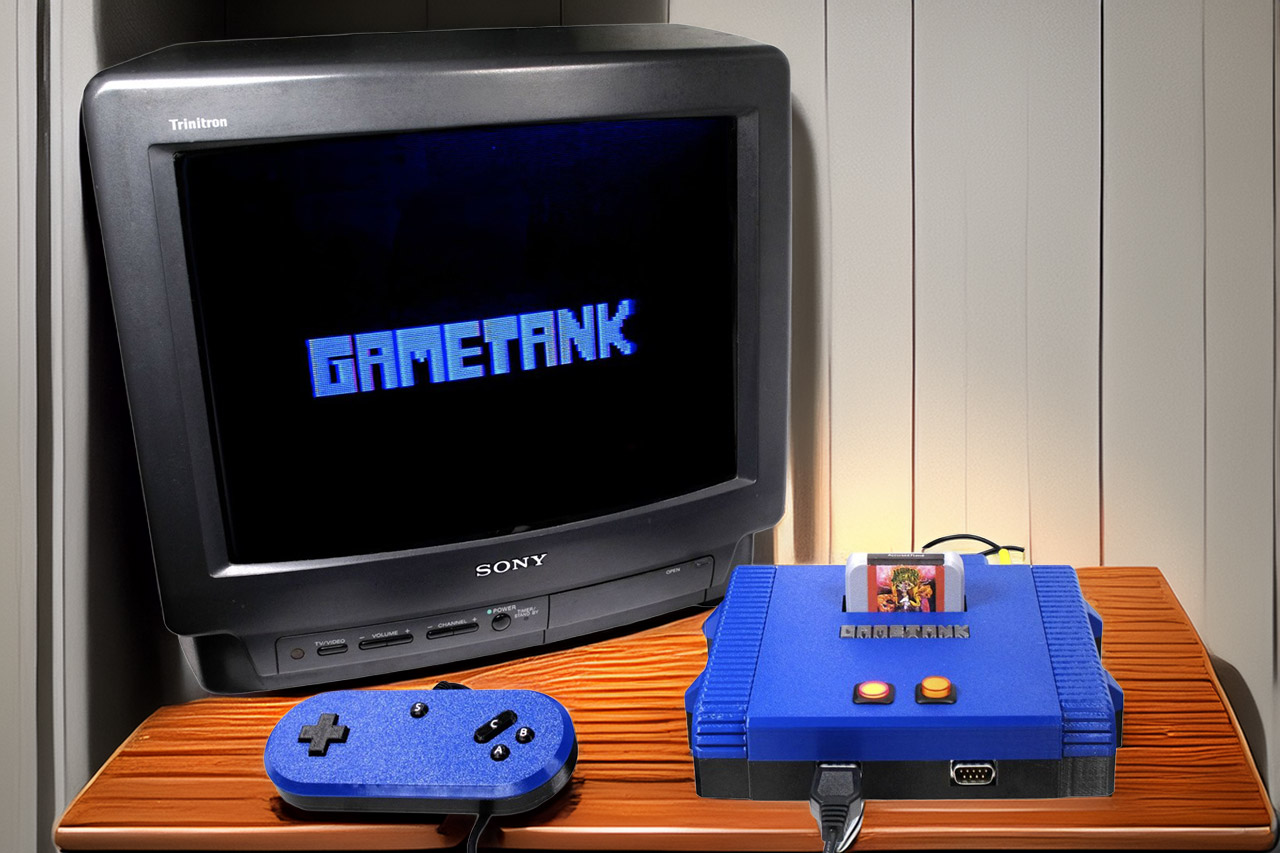
A chunky blue slab sits on a desk, with RCA jacks protruding like forgotten relics from a garage cleanup. This 8-bit console, known as the GameTank, recently reached its crowdfunding goal on Crowd Supply, and backers are now looking forward to a July 12 2026 ship date, a target that has been locked in after more than $45,345 was raised (as of today) against a $30,000 goal.


Clyde Shaffer is the mind behind the GameTank, having created it from the ground up at Clydeware, and this project is the culmination of his efforts. Shaffer wanted technology that allowed him to play really cool 8-bit games, not a ported-over replica of a classic hit (he’d had enough of those). The entire thing was made to seem like vintage circuit boards, right down to the individual chips and board arrangement.


Hyperkin RetroN 2 HD Gaming Console for NES/Super NES/Super Famicom (Gray)
- HD audio and video (720p) with 16: 9/4: 3 Switch (HD cable only); 3 ft. HD cable; includes AV ports with AV cable
- High compatibility with (NTSC/PAL) NES, Super NES, and Super Famicom cartridges
- Hyperkin-engineered perfect pin (patent pending) Technology sets a new standard for state-of-the-art, high-quality pins
The main powerhouse of the device is a W65C02S CPU that runs at 3.5 MHz. Then there’s a second W65C02S humming around at 14 MHz only for sound, as there are no fancy field-programmable gate arrays or modern controllers here, and no hidden logic chips or RAM.

Graphics are drawn into a 128×128 framebuffer, similar to how most old TVs cropped out a few rows at the top and bottom, leaving approximately 128×100 useable pixels. You have a whopping 200 colours to play with, all of which are completely usable on the screen at the same time, and a blitter copies bytes to the screen in real-time every single clock cycle, resulting in super-smooth movement without the unpleasant flicker you used to get on the NES or Atari.
Memory is generous by 8-bit standards (remember the old days?), with 32 kilobytes of general RAM divided into 8 KB chunks, 512 kilobytes for graphics data, and 4 KB for audio. Cartridges contain 2 megabytes of flash memory on a unique 36-pin board. You can control the device via two ports, each with a D-pad, A, B, C, and a Start button. The video output is NTSC composite via an RCA jack (think old TVs and VCRs), and there’s a 26-pin extension port on the back for tinkerers and GPIO lines to play with. Power comes from a wall wart, and for those inquisitive, Shaffer provided every single schematic, board file, and 3D print template on GitHub.

You can either build the thing yourself or get a soldered version from Soldered Electronics in Croatia (they handle manufacturing). If you want to get your hands dirty, there’s a C SDK based on CC65 for compiling code for the 6502 family, and if you don’t want to create it from the ground up, there’s even an emulator you can use to test your games on PC. If you decide to build it, you can load ROMs using a USB flasher. The developer kit costs $299 and includes the console, controller, analog cable, documentation, blank cartridge, and flasher. Blank carts are sold separately in two-packs for $40
Shaffer describes the GameTank as a playground for hackers and hardware aficionados. The 6502 core allows for easy porting of games from the NES or Apple II, but it’s the unique tools that actually set it apart. With the correct tools, you can make animations that flow like water and rich music that isn’t too tinny.

Crowd Supply is still open for pledges until the 26th. The prototypes have been running solid for the past two years, and the next step is to complete the numerous certifications. The first units will begin to arrive in the summer, and backers will be able to turn them on their CRTs or upscalers and load their new games from flashers or carts.
[Source]