Tech
First Production Tesla Cybercab Without Pedals or Steering Wheel Begins Engineering Test Runs in Austin

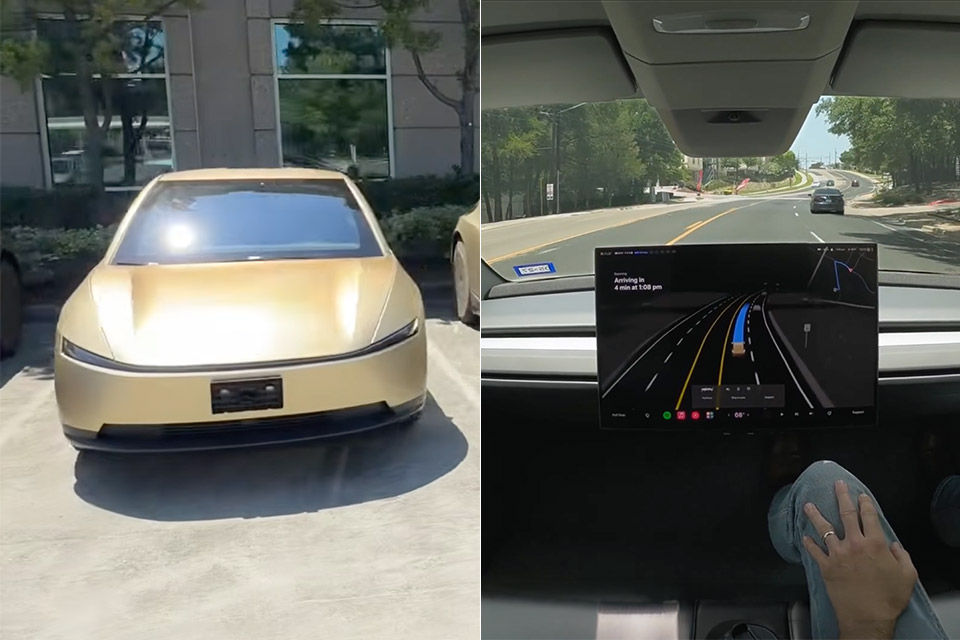
Austin streets now host something that looks ordinary at first glance but represents a sharp break from everything that came before. Production Cybercab units have started engineering tests on public roads, and these vehicles carry no steering wheel and no pedals. Tesla just posted video of the tests on June 30. The footage and supporting details show the first examples built for actual use rather than pure development. Earlier cars sometimes carried temporary controls. These do not.

The Texas Department of Transportation confirmed that the production design has no driver-operated controls of any type. Inside one test model, cabin footage shows the safety monitor seated in the front position, leaving an empty space where a steering wheel and pedals would normally be. The monitor’s hands rest against their legs. No controls are within reach. The huge central screen displays the current Tesla navigation interface, which includes the route, speed, and autonomous status in a familiar simple arrangement. The automobile navigates through typical traffic, curves, and downtown streets without the driver’s input.


TZYFOQN Metal Model Cars 1 32 for Teslas Cybercab Alloy Car Model Boy Birthday Vehicle Gift…
- Miniature models are not only vehicle replicas, but also spread the car model story and history and culture. Such as: track racing cars, sports cars…
- The zinc alloy construction provides the body with precise contours and substantial weight; Plastic components offer flexibility and resilience…
- The appearance of the classic car is highly restored, with special tread tires with strong grip, and the combination of retro and modern styling…
The cabin layout focuses on passengers, with two forward-facing seats in an open area created by the removal of any driving hardware. Large glass portions and a clean headliner contribute to a bright, airy atmosphere. Everything revolves around the ride rather than the act of driving. A single visible display provides both occupants with trip information and vehicle status.

Production Cybercabs are around 4.2 meters long and 1.8 meters wide, although they have usable inside space because designers were not required to package steering columns, pedal boxes, or instrument clusters. According to latest EPA data, the car has a battery capacity of roughly 48 kilowatt hours, a single front-mounted motor rated at around 219 horsepower, and a curb weight of approximately 3,113 pounds. Efficiency appears to be high, with estimates indicating 290 miles or more of real-world range in typical conditions.

Some models have a glossy metallic gold finish, which highlights the sleek body lines and futuristic lighting. The two-door form has distinct proportions that appear purposeful rather than dazzling. Doors are designed for quick access in a vehicle of this size. Tesla began producing these vehicles at Gigafactory Texas earlier this year. In February, the first production unit left the line. Volume manufacturing targets were set in April. The latest tests are the next step toward establishing that the entire hardware and software combination works on real roads with normal traffic.
There are presently 34 vehicles participating in the downtown Austin runs. During the validation process, everyone carries a safety monitor as usual procedure. The monitors observe and prepare for rare events that may necessitate human intervention, but they do not steer, brake, or accelerate whatsoever. What happens next depends on how these vehicles perform in the coming weeks and months, as well as the regulatory steps required for widespread unsupervised use. For the time being, seeing these control-free vehicles cruising through Austin traffic provides the clearest picture yet of what Tesla has built specifically for a driverless future.
You must be logged in to post a comment Login