Tech
Flock shock rocks cop cam vendor as protests mount


LEGAL
Database from legal advocacy group details growing unease with warrantless panopticon
A mischief-maker in a Darth Vader suit recently endorsed Flock at a city council meeting, and it has not helped the company’s fortunes. Around the US, citizens have been protesting and sometimes vandalizing the company’s network of surveillance cameras. And the advocacy has caused some governments to change course.
Government officials, commonly hesitant to second-guess law enforcement practices, have become concerned enough to question these mass surveillance practices. US Senator Josh Hawley (R-MO) on Wednesday wrote to Flock CEO Garrett Langley to announce an investigation of “Flock Safety’s collection, retention, and dissemination of data gathered by its artificial intelligence cameras.”
Despite “Darth Vader’s” comments last week at a San Diego City Council meeting about the need to “continue utilizing Flock technologies so that we can follow and surveil the rebel scum,” a growing number of local governments in the US have been cancelling or choosing not to renew their contracts with Flock and other makers of automated license plate readers (ALPRs).
The Institute for Justice (IJ), a Virginia-based legal advocacy non-profit, on Wednesday published a new database that tracks the termination of local government ALPR contracts. As of Wednesday, the database documents 93 local governments that canceled ALPR contracts.
The IJ, which is challenging ALPR use on Fourth Amendment grounds in Norfolk, Virginia and San Jose, California, previously published a database that documents police abuse of ALPRs, a topic addressed in Hawley’s letter. Incidents include romantic stalking, wrongful traffic stops and detentions, and other forms of misconduct.
“I think what’s happened is that the American public has woken up to the mass surveillance that quietly arose around them,” said Robert Frommer, senior attorney at IJ, in an interview with The Register. “And they don’t like it.
“It does seem to me that the rate of cancellations, the rate of public protest has increased over the past few months. I think that’s both due to more news attention being paid to the real life abuses of this technology, as well as the Supreme Court’s recent decision in the geofence case,” Frommer said. In that case, SCOTUS ruled that cops need a warrant to grab location data.
Frommer said that he believes the IJ’s efforts to document ALPRs and associated abuses have helped focus the public’s concern and have illustrated the problems with warrantless mass surveillance.
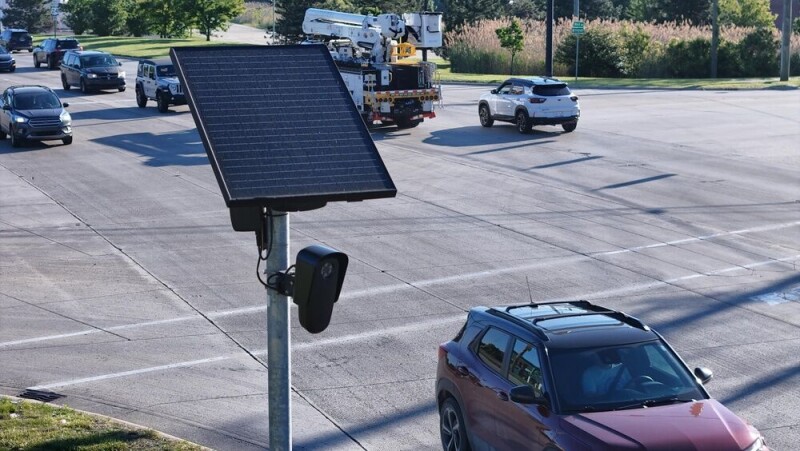
ALPRs, from vendors like Flock, Motorola Solutions, and PlateSmart, among others, capture license plates whenever cars drive by, along with geodata and potentially images of people. This data can be combined with other information, effectively putting all passersby under constant surveillance without any warrant.
“I think what we’re seeing now is the reaction to that,” said Frommer, who explained that the problem with Flock cameras is that they’re accessible to anyone with login credentials, without any authorization from a supervising authority.
“You don’t need to go to a judge and get a warrant,” Frommer explained. “You don’t need anything. And when you basically give that search power to the bored officer in his cop car in the middle of a shift, it inevitably happens that they start using it and start misusing it, whether to look people up personally or whether to investigate people at political protests.”
These sorts of issues, Frommer said, have made people question whether we should live in a panopticon.
The IJ’s litigation and its Plate Privacy Project, said Frommer, follow from the belief that there are solutions, whether they come from the courts or lawmakers. Pointing to Hawley’s letter, he said that this is not just a state or local issue, but has become a federal concern.
“I think what the din that you’ve heard over the past couple of months shows that there absolutely needs to be a change, a reckoning,” he said. “And that’s what we’re pushing for in our litigation. We’re pushing for a warrant requirement. You want to go look up somebody’s past travels and see where they have been? Go to a judge, explain it, and get a warrant.”
Flock did not respond to a request for comment. ®
You must be logged in to post a comment Login