Tech
Focal Scala Utopia Evo M Loudspeakers Unveiled With New Drivers, Crossover and Utopia Refinements

Focal is not easing into Q3 2026. The French manufacturer has already made serious noise with the Mu-so Hekla, its ambitious all-in-one Dolby Atmos system that is currently under review, unveiled the $210,000 Diva Alta Utopia wireless flagship, and mounted one of the busiest and most talked-about demonstrations at AXPONA 2026. That is a rather muscular start to the year, even for a company that has never been particularly interested in playing small.
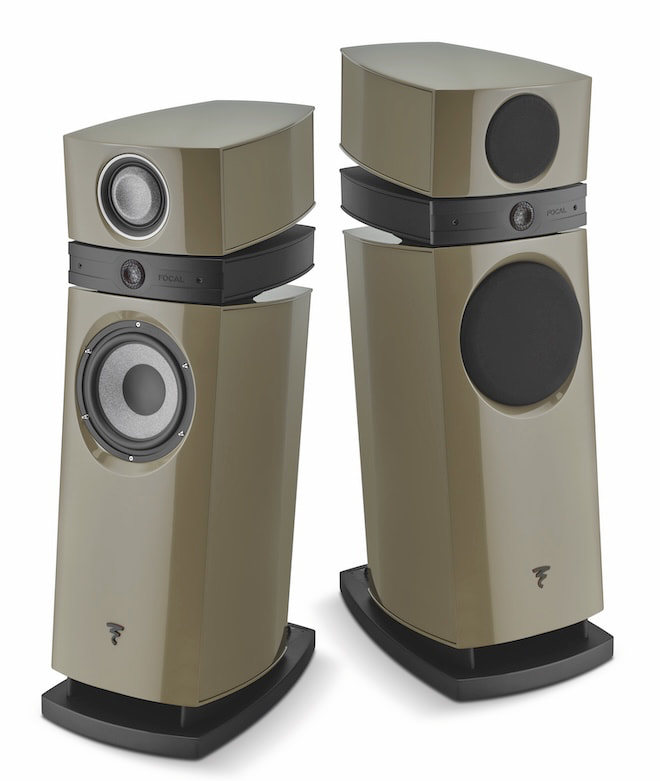
Now comes the Scala Utopia Evo M, a substantial evolution of one of Focal’s defining passive loudspeakers. This is not a cosmetic refresh with a fresh lacquer option and a revised brochure. Built in France and retaining the Scala’s distinctive three-way architecture, the new model introduces Focal’s PRISM tweeter and M-profile W midrange driver, technologies drawn from the company’s newest wireless and professional monitor developments.
The goal is straightforward enough: greater midrange transparency, lower distortion, more controlled treble, and an even more convincing sense of musical scale from a loudspeaker that has long been one of the more recognizable statements in high-end audio.
New Drivers, New Crossover, Same Scala DNA
The Scala Utopia Evo M retains the familiar three-way, bass-reflex architecture of the outgoing Scala, but Focal has reworked almost every part that matters: the drivers, crossover, cabinet tuning, and mechanical structure. The result is still unmistakably a Scala, with its compact-for-Utopia proportions and multi-cabinet silhouette. If you expected anything less from Focal, whose idea of restraint is usually limited to the grille cloth, you have not been paying attention.

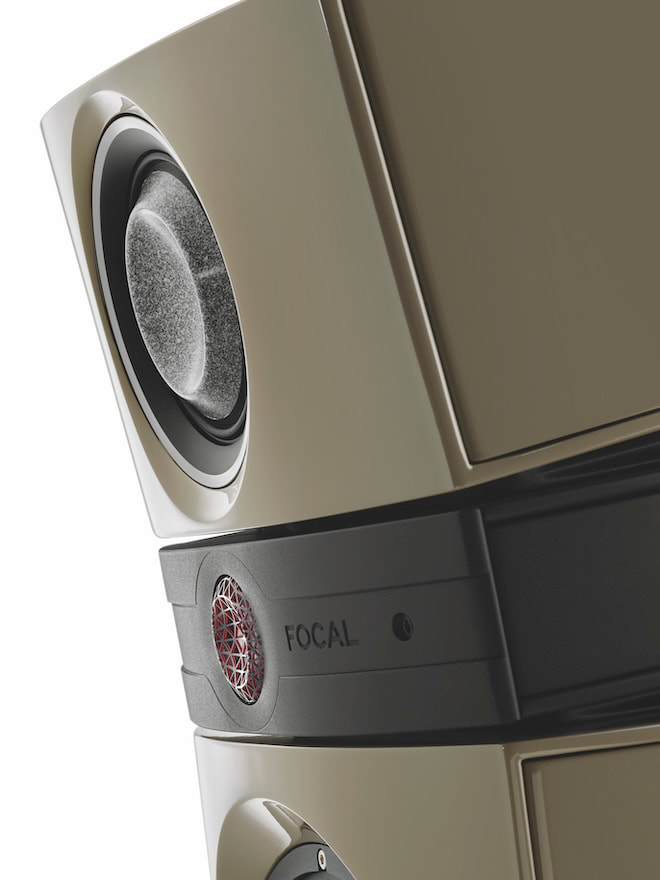
At the heart of the update is a new 5-inch reinforced W-cone midrange driver with an M-profile diaphragm, borrowed from Focal’s Utopia Main professional monitor range. The driver combines the company’s composite W sandwich construction with the one-piece M-profile geometry, TMD suspension, a neodymium motor, and an 80mm voice coil.
Focal’s objective is a cleaner, more linear midrange with lower distortion and greater control at higher listening levels. Considering how much of the music lives in the midband, that is exactly where an update to a loudspeaker at this level should begin.
The Scala Utopia Evo M also receives Focal’s new 27mm PRISM M-profile inverted-dome tweeter, first introduced in the Diva Alta Utopia wireless flagship. PRISM, short for Photon-Refined Intelligent Structured Membrane, uses a multi-material diaphragm and micro-structured construction that Focal says provides greater rigidity than beryllium while preserving the low mass and damping needed for refined high-frequency reproduction.
It is paired with Focal’s IAL2 Infinite Acoustic Loading system, which lowers the tweeter’s resonance frequency to 528Hz and allows for a claimed extension to 40kHz.

Bass That Has Not Been Left Behind
The 11-inch W-cone woofer has also been redesigned, using a 16cm dual-ferrite motor and more precise laser cutting of its composite sandwich diaphragm. It works with a large laminar port intended to move air without the chuffing, compression, and general bad behavior that can undermine bass performance when a speaker is pushed hard.
Focal rates the Scala Utopia Evo M down to 27Hz within ±3dB, with a 24Hz low-frequency point at -6dB. That does not turn a Scala into a Grande Utopia, nor should it. But it suggests real low-frequency authority from a loudspeaker that remains more manageable in a domestic room than the larger models above it in the range. Anyone who has spent time with Focal’s biggest Utopia models already knows that the company does not do bass-light. Croissants may be delicate, flaky, and full of air; Focal’s bass is more cassoulet: dense, substantial, and absolutely not leaving the table quietly.

More Control for Real Rooms
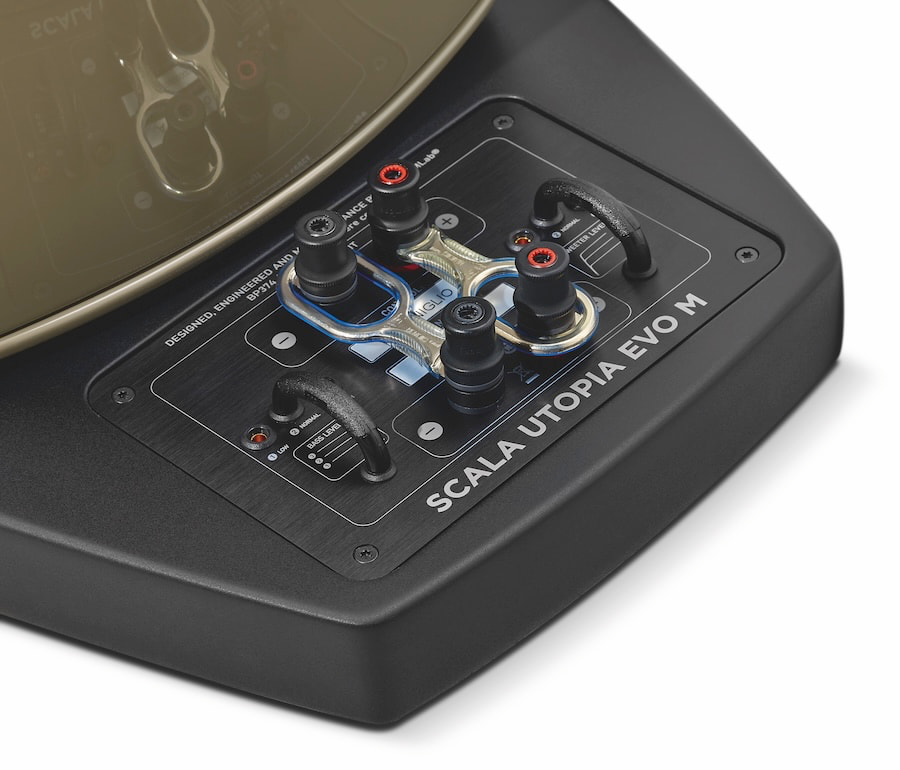
The revised OPC+ crossover uses high-grade components, large-section internal cabling, and four insulated WBT binding posts that support bi-wiring or bi-amping. More importantly, it provides user adjustment for bass, midrange, and treble, with the bass and treble controls offering ±1dB adjustment. That is not room correction, and Focal is not pretending otherwise, but it gives owners a useful way to fine-tune the Scala’s balance without turning the listening room into a laboratory.
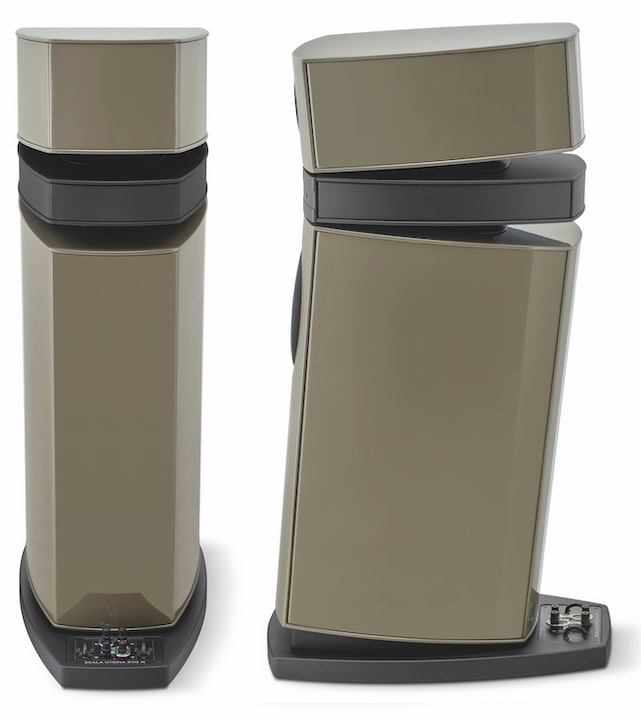
Focal has also retained the structural thinking that has long defined the Utopia range. The Gamma structure employs high-density MDF panels up to 60mm thick, with a heavy, vibration-controlled framework shaped through vibration mapping. Focus Time mechanically aligns the drivers toward the listening position to improve time alignment, while the separate cabinet sections help preserve phase coherence between the bass, midrange, and treble drivers.

Built in France, Without the Costume Jewelry
The Scala Utopia Evo M remains a very French loudspeaker in both execution and attitude. Its cabinets are made by Focal’s cabinetmakers in Burgundy, while the drivers are manufactured in Saint-Étienne. That level of vertical control matters at this price, particularly when a product is relying on very specific driver geometry, cabinet tolerances, crossover settings, and cosmetic execution to justify itself.
Focal will offer five finishes. Black High Gloss, Off White High Gloss, and Warm Taupe High Gloss are priced at $50,000 USD per pair, or $58,000 CAD. Light Walnut with an Off White front panel and Dark Walnut with a Sepia Brown front panel rise to $56,000 USD per pair, or $64,000 CAD. Availability begins in August 2026.
Focal is also positioning the Scala Utopia Evo M as a natural partner for Naim electronics. That makes sense. A speaker with 92dB sensitivity and a 3-ohm minimum impedance is not especially difficult to drive on paper, but it deserves amplification with substantial current delivery and control. Focal recommends amplifiers rated between 50 and 500 watts per channel, which leaves plenty of room for a serious Naim system, or alternatives from the usual high-end suspects with enough grip to keep the redesigned woofer in check.

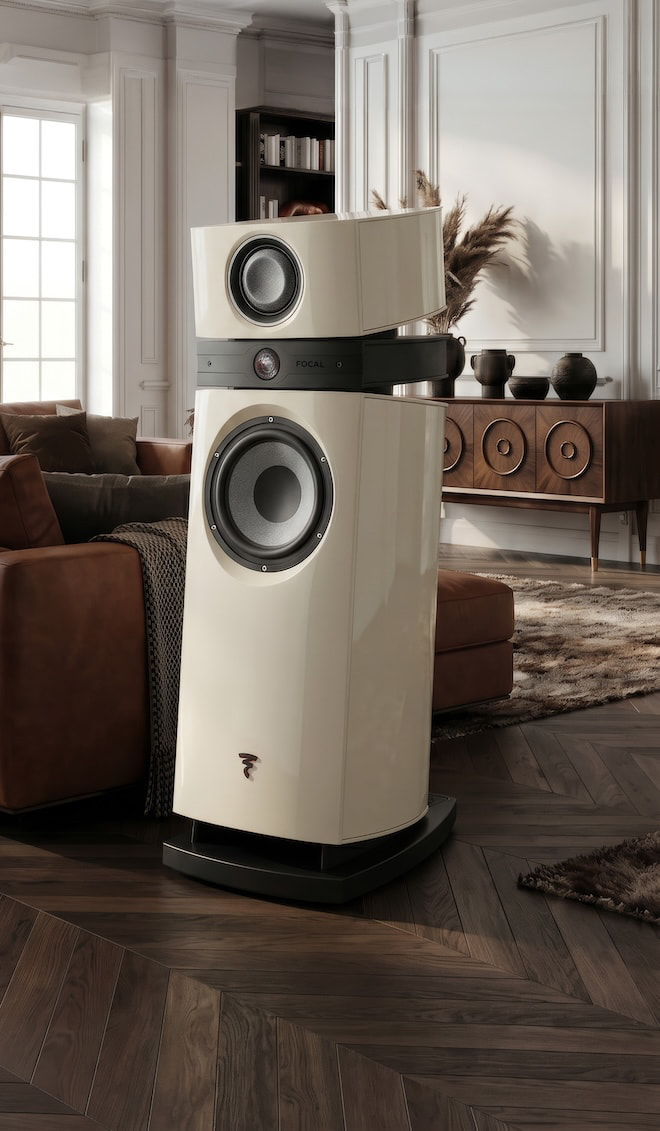
Focal Scala Utopia Evo M Specifications
- Type: 3-way bass-reflex floorstanding loudspeaker
- Woofer: 11-inch (27cm) W-cone woofer with 16cm dual-ferrite motor
- Midrange: 5-inch (13cm) reinforced W-cone driver with M-profile diaphragm, TMD suspension, neodymium motor, and 80mm voice coil
- Tweeter: 27mm PRISM M-profile inverted-dome tweeter with IAL2
- Frequency response: 27Hz to 40kHz, ±3dB
- Low-frequency extension: 24Hz, -6dB
- Sensitivity: 92dB, 2.83V/1m
- Nominal impedance: 6 ohms
- Minimum impedance: 3 ohms
- Crossover frequencies: 230Hz and 2.8kHz
- Recommended amplifier power: 50 to 500 watts per channel
- User adjustments: Bass, midrange, and treble; bass and treble adjustable by ±1dB
- Connections: Four insulated WBT binding posts; bi-wiring and bi-amping capable
- Dimensions, H × W × D: 49.1 × 15.5 × 26.4 inches, 124.7 × 39.3 × 67cm
- Weight: 187.4 pounds, 85kg
- Finishes: Black High Gloss, Off White High Gloss, Warm Taupe High Gloss, Light Walnut with Off White front panel, Dark Walnut with Sepia Brown front panel
The Bottom Line
The Scala Utopia Evo M is not a revolution in the sense of abandoning everything that made the Scala successful. It is a carefully targeted evolution that brings Focal’s newest professional-monitor and wireless-speaker developments into one of its most recognizable passive loudspeakers. At $50,000 per pair, it had better be more than a fresh coat of lacquer; the new PRISM tweeter, M-profile midrange, adjustable crossover voicing, and redesigned dual-ferrite woofer suggest that Focal has taken the assignment rather seriously.
What makes the Scala Utopia Evo M especially interesting is that it offers much of Focal’s latest Utopia thinking in a loudspeaker that is still more realistic for a proper listening room than the enormous Grande Utopia. It is for buyers who want genuine full-range scale, visual presence, and the ability to fine-tune the speaker to the room, but who do not have a ballroom, a dedicated equipment room, and a casual relationship with six-figure system costs.
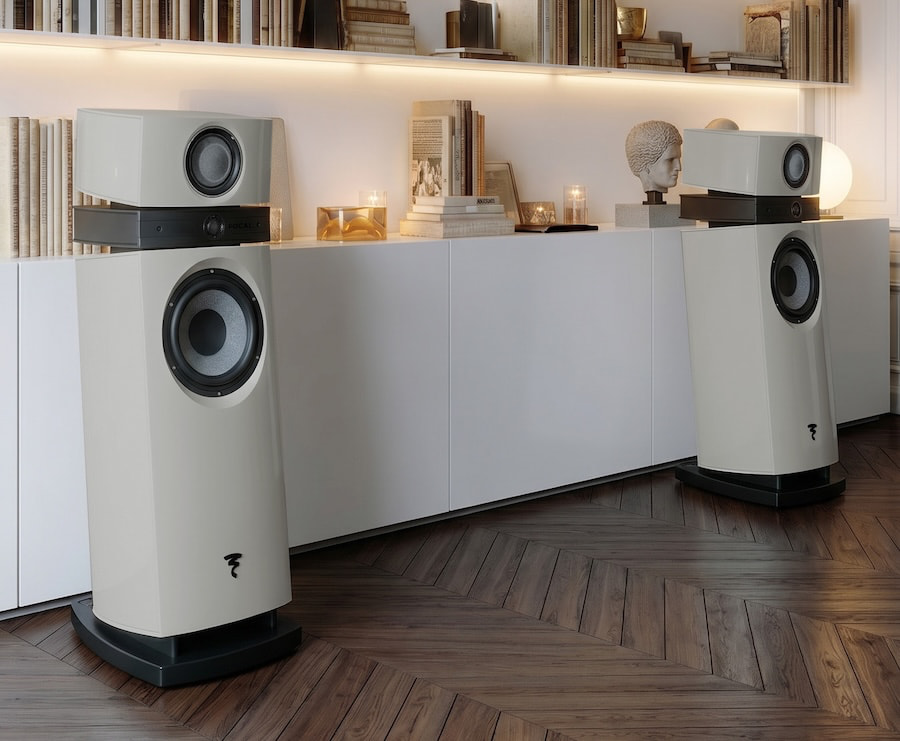

Do not mistake the 92dB sensitivity for an invitation to connect a Uniti Atom and call it a day. The Scala’s 3-ohm minimum impedance and $50,000 price tag demand an amplifier with real current delivery, grip, and refinement. Naim’s New Classic 300 Series, particularly an NSS 333 and NSC 222 with NAP 250 or NAP 350 amplification, is far closer to the intended neighborhood than Naim’s 40-watt Uniti Atom. Focal and Naim may share the same corporate address, but this is not a speaker designed for a compact all-in-one system.
The Scala Utopia Evo M is for established high-end listeners building a serious two-channel system around equally serious electronics. It will appeal to existing Scala owners looking for a meaningful step forward, but also to buyers who want modern Focal technology, hand-built French execution, and bass that behaves less like a feather-light croissant than a cast-iron cassoulet: deep, dense, and not remotely interested in being delicate.
You must be logged in to post a comment Login