Connect with us

Tech

For modern professionals AI is about smarter habits, not shortcuts

Published

on

Experts from Accenture, BearingPoint and Workhuman discuss how AI and automation can positively impact working life.

Click here to access the entire catalogue of Automation Focus.

For many professionals artificial intelligence (AI) and automation have the power to transform day-to-day work. David Burke, a senior director of global talent acquisition and the employer brand at Workhuman explained that this transformation is effective not because it is ‘futuristic’ but because it meets the needs of an evolving workforce. 

“It’s much more practical than that,” he told SiliconRepublic.com. “We’re using AI across our internal systems to reduce manual work, improve decision-making and help teams move faster. The goal isn’t to replace roles, it’s to remove friction.

“In areas like hiring, performance enablement and cross-functional collaboration, automation is taking care of the repeatable tasks and surfacing better data. That means our teams spend less time chasing information or managing processes and more time solving problems and focusing on work that actually moves the business forward.”

Advertisement

This is a viewpoint shared by Wendy Walsh, a talent and organisation lead at Accenture, who noted that AI and automation have not only altered the tools she uses in the workplace, but have actually changed how she personally “shows up at work”.  

She said: “On a very practical level, I use AI every single day to think better. I use it to explore ideas, challenge my own assumptions, shape early thinking and get to a stronger point of view before anything ever becomes a document. For me, it’s less about productivity shortcuts and much more about cognitive support.”

Walsh added: “It helps me move faster to insight and clarity, not simply faster to output. The biggest difference is that my time has shifted away from preparing information and towards interpreting it.”

For BearingPoint’s Barry Haycock, who is a senior manager of data analytics and AI, when it comes to the topic of AI and automation, one subject that has dominated the conversation is agentic AI. He explained, he has noticed in the last 12 months or so, more and more people are choosing to use AI as an augmentation tool as opposed to automation.

Advertisement

He said: “In my personal day to day, I use AI to draft code I plan to write, or as a sounding board to discuss and tease out ideas before I start developing a slide deck or a document. 

“In many areas, people can use AI to perform a detailed search, for example of in-house documents, or to summarise their upcoming week and help them plan their goals. I find it useful too for flagging upcoming deadlines and prioritising them every Monday.”

For Walsh, Burke and Haycock, amid the evolution brought about by the proliferation of advanced technologies and processes in the working ecosystem, comes the need for a modern upskilling strategy. 

New day, new challenges

For Walsh, soft skills have grown in importance, with AI acting as a core reason why. She said: “As AI becomes part of everyday work, the qualities that really differentiate people are human ones. Skills in AI and data are important and technological literacy will increasingly be expected of everyone. But they’re not enough on their own. 

Advertisement

“Looking ahead to 2030, many of the fastest-growing core skills are deeply human. AI can analyse, generate and optimise at incredible speed. But it can’t build trust. It can’t create belonging. 

“It can’t decide what matters most in a moment of uncertainty. Technology is a powerful enabler, but it still needs people to shape it, question it and use it with purpose. The organisations that thrive will be those that invest just as seriously in human capability as they do in AI.”

Haycock said that in software development, MLOps and AIOps roles, business analytics is becoming the most important skill. He explained that, while the latest frontier AI models are excellent at coding or creating a script that a developer might need, the developer really needs to explain what’s required clearly. 

He said: “This is traditionally considered a soft skill and in times gone by a developer might write the code to explain their thoughts. I’ve noticed that ‘explain-in-plain-language’ skills are developing across many technical roles lately.”

Advertisement

“Technical skills will always matter,” said Burke, “but they’re increasingly learnable at speed. AI can help people acquire knowledge and capabilities faster than ever. What’s harder to automate and therefore more valuable, are human skills.” 

Skills such as judgement, communication, the ability to trust, context-setting, ethical decision-making and leading through ambiguity are among those that should be prioritised, especially as professionals are further expected to adopt and understand tech advancements. 

“As technology accelerates, the differentiator won’t be who knows the most,” said Burke. “It will be who can interpret, connect and lead. The irony is that the more advanced AI becomes, the more deeply human capability becomes alongside it. That’s what ultimately drives sustained performance.”

Don’t miss out on the knowledge you need to succeed. Sign up for the Daily Brief, Silicon Republic’s digest of need-to-know sci-tech news.


Advertisement

Source link

Continue Reading
Click to comment

Leave a Reply

Your email address will not be published. Required fields are marked *

Tech

Predator: Badlands Slays on 4K UHD Disc: Review

Published

on

As the only director to have helmed more than a single Predator film (previously the direct-to-streaming Prey and animated anthology Killer of Killers), Dan Trachtenberg has become the de facto shepherd of the franchise, and that’s a good thing. With Badlands, he takes audiences in a new direction, revealing some deep backstory to the “Yautja” culture and even creating sympathy for the story’s underdog protagonist.

We open on their homeworld where Dek, the runt of his clan, struggles to prove his worth, particularly in the eyes of his cold, fanatical father. Barely escaping execution, Dek blasts off to the “death planet” of Genna, desperate to kill the ultimate prey and earn his prized camouflage cloak once and for all. Immediately we discover how this place earned its nickname, and he only survives his first few moments with the help of a sassy robot, a “synthetic” named Thia (Elle Fanning). They form an unconventional bond and begin a shared quest, fraught with danger and more than a few twists big and small.

predator-badlands-4k-ultra-hd-blu-ray

Predator: Badlands was shot digitally and yielded a native 4K master filled with extensive computer-generated visual effects that are photo-realistic and imperceptibly blended, such that the adventure plays out like we’re viewing it all through a 2.39:1 window. The use of color is occasionally quite clever, such as when a bleak, oppressive sky is streaked with vermilion. Emissive highlights stand out as well, particularly when the headlights of high-tech vehicles slice through the darkness.

Enemies approach and attack from all directions, and the hand-to-hand fights are some of the fiercest I’ve seen in a minute, bringing us some wonderfully hyperactive panning across the surrounds. Bass impact is outstanding, from rocket blasts to explosions to individual weapon hits, with the testosterone meter seldom dipping below 10. Among the more subtle flourishes, a distinctive inorganic effect is applied to the synthetics’ voices, at different levels as the mood commands. Worth noting, the Dolby Atmos track is exclusive to the 4K disc, as the included HD Blu-ray disc tops out at DTS-HD Master Audio 7.1.

predator-badlands-4k-steelbook-2-disc-set
Predator: Badlands – Limited Edition Steelbook

Trachtenberg anchors the commentary, joined by his producer, director of photography and stunt coordinator. The track also appears on the HD Blu-ray, where the assorted featurettes do a fantastic job of breaking down the unique challenges of such an original production. In addition, there are half a dozen deleted, alternate and extended scenes, some rendered as detailed pre-visualizations, totaling almost half an hour, with their own optional commentary. The two-disc (plus digital copy) set is also being offered as a SteelBook ($76.99 at Amazon)

Fans will be quick to note that this is not the first Predator movie that tips its cap to the long-running Alien franchise, although when the script isn’t giving us a nifty wink it can be a bit derivative of a variety of sources. Overall, Badlands is a fierce and revitalized entry in the franchise that absolutely dominates in a home theater setting.

Advertisement

Movie Details

  • STUDIO: Fox/Disney
  • FORMAT: Ultra HD 4K Blu-ray (February 17, 2026)
  • THEATRICAL RELEASE YEAR: 2025
  • ASPECT RATIO: 2.39:1
  • HDR FORMATS: Dolby Vision, HDR10
  • AUDIO FORMAT: Dolby Atmos with TrueHD 7.1 core
  • LENGTH: 107 mins.
  • MPAA RATING: PG-13
  • DIRECTOR: Dan Trachtenberg
  • STARRING: Elle Fanning, Dimitrius Schuster-Koloamatangi, Rohinal Nayaran, Chris Terhune, Mike Homik, Stefan Grube

Our Ratings

★★★★★★★★★★ Picture

★★★★★★★★★★ Sound

★★★★★★★★★★ Extras

Where to buy

Advertisement. Scroll to continue reading.
Advertisement

Source link

Continue Reading

Tech

The few new things in Apple’s midrange tablet

Published

on

The iPad Air, the middle child in Apple’s tablet lineup, has been upgraded to the M4 chip with increased RAM and… Well, there’s not a whole lot else if I’m being honest. At the very least, the new iPad Air M4 models remain at the same price as the iPad Air M3, with the 11-inch version starting at $599 and the 13-inch at $799. I would give Apple more credit if it had increased the starting storage or added literally anything else.

If you put them side by side, you might not be able to tell the difference, but this upgrade would benefit creatives and professionals more than anything. There’s a significant performance bump from the M3 to the M4, and the increased RAM is doing a lot of work, especially if you’re taking advantage of Apple Intelligence.

If you’re using an M1-powered iPad Air or something even older, though, the new iPad Air M4 should be a compelling upgrade. Pre-orders start at 9:15AM ET on March 4, with the units arriving a week later. We expect full reviews will be published by then. But in the meantime, let’s dive into what the performance gains might look like and what we’re missing out on in this year’s iteration of the iPad Air.

iPad Air M4 vs. iPad Air M3: Performance and battery life

The most significant difference between the two iPad Air generations is their chipsets. The latest iPad Air launches with the M4 chip versus its predecessor’s M3 chip, and it gets a bump in RAM from 8GB to 12GB.

Advertisement

I don’t give much fanfare to incremental chip increases because the performance gain is usually minimal. However, the M4 is up to 30 percent faster than the M3, according to Apple. That might be noticeable to even casual users, especially as the years go on and iPadOS becomes more demanding. For power users, it’ll mean more demanding work like video editing will be noticeably quicker.

For those in need of the fastest internet speeds, the new iPad Air is also equipped with Apple’s N1 chip, which enables Wi-Fi 7 and Bluetooth 6, the latest connectivity technology. However, I really don’t imagine the average user needing up to 46 gigabits per second of internet speed compared to the iPad M3’s 9.6 Gbps on Wi-Fi 6. If you do, you’re in the tax bracket for an iPad Pro.

Now, despite the increase in speeds, the battery life between the M4 and M3 models remains the same. Apple claims all four models get up to 10 hours of battery life surfing the web on Wi-Fi or watching video (up to 9 hours on cellular). No complaints here.

iPad Air M4 vs. iPad Air M3: Design, display, audio and cameras

For better or worse, we’re not getting any changes in any of these departments, which is why I’m lumping them together.

Advertisement

The iPad Air comes in blue, purple, beige and gray. The 11-inch option measures 9.74 x 7.02 x 0.24 inches and the 13 comes in at 11.04 x 8.46 x 0.24 inches. As their names suggest, they’re both rather light, at 1.01 pounds (1.02 pounds for M4) and 1.36 pounds, respectively. My only wish was that we got new colors that popped a bit more.

Then there’s the displays. All four versions of the iPad Airs sport a Liquid Retina LED display at 264 ppi. The 11-inch supports a 2,360 x 1,640 resolution with a peak brightness of 500 nits, while the 13-inch offers a 2,732 x 2,048 resolution at 600 nits. It would’ve been nice to see an OLED or even Mini-LED panel make its way to the iPad Air, which could’ve made the screen more vivid and vibrant. But it’s more disappointing that we’re stuck at 60Hz unlike the Pro models that offer 120Hz, making their visual experience smoother.

Both products feature landscape stereo speakers. The iPad Air M3’s audio quality couldn’t live up to the iPad Pro, so I doubt the M4 model will.

You won’t catch me taking photos with an iPad, but for those of you who do, the iPad Air M4 features the same 12MP cameras on the front and back as its predecessor.

Advertisement

iPadOS 26, Apple Intelligence and Apple accessories

Nothing huge is happening to iPadOS or the Apple accessories in the iPad Air refresh. The revamped Magic Keyboard from last year still works with these new models, as does the Apple Pencil Pro. iPadOS 26, released last fall, was a major update but will still be familiar enough to anyone who has used an iPad before. The new iPad Air M4 is getting a significant boost in AI processing speeds, though, thanks to its new chip and 50 percent increase in RAM. However, unless you’re an AI power user, you probably won’t notice a difference there.

All that said, if your love language is spreadsheets, the full specs are helpfully laid out below:

iPad Air M4 vs. iPad Air M3: Specs at a glance

Spec

iPad Air M4

Advertisement

iPad Air M3

Price

$599 (11-inch), $799 (13-inch)

$599 (11-inch), $799 (13-inch)

Advertisement

Processor

M4

M3

Display

Advertisement

11-inch: Liquid Retina, 2,360 x 1,640, LED display at 264 ppi

13-inch: Liquid Retina, 2,732 x 2,048, LED display at 264 ppi

11-inch: Liquid Retina, 2,360 x 1,640, LED display at 264 ppi

13-inch: Liquid Retina, 2,732 x 2,048, LED display at 264 ppi

Advertisement

RAM

12GB

8GB

Storage

Advertisement

128GB, 256GB, 512GB, 1TB

128GB, 256GB, 512GB, 1TB

Battery

Up to 10 hours (Wi-Fi), 9 hours (Cellular model)

Advertisement

Up to 10 hours (Wi-Fi), 9 hours (Cellular model)

Cameras

12MP Wide (rear), 12MP Center Stage (front)

12MP Wide (rear), 12MP Center Stage (front)

Advertisement

Apple accessories

Apple Pencil Pro, Apple Pencil, Magic Keyboard Folio

Apple Pencil Pro, Apple Pencil, Magic Keyboard Folio

Dimensions

Advertisement

11-inch: 9.74 x 7.02 x 0.24 inches

13-inch: 11.04 x 8.46 x 0.24 inches

11-inch: 9.74 x 7.02 x 0.24 inches

13-inch: 11.04 x 8.46 x 0.24 inches

Advertisement

Weight

11-inch: 1.02 pounds

13-inch: 1.36 pounds

11-inch: 1.01 pounds

Advertisement

13-inch: 1.36 pounds

Source link

Continue Reading

Tech

Superagers’ ‘Secret Ingredient’ May Be the Growth of New Brain Cells

Published

on

alternative_right shares a report from ScienceAlert: According to a study of 38 adult human brains donated to science, superagers — people who retain exceptional memory as they age — have roughly twice as many immature neurons as their peers who age more typically. Moreover, people with Alzheimer’s disease show a marked reduction in neurogenesis compared to a normal baseline. […]

Led by researchers at the University of Illinois Chicago, the team set out to examine a variety of postmortem hippocampal tissue samples to see if they could identify markers of neurogenesis — and if different groups had any notable differences. The brain samples were donated from five groups: eight healthy young adults, aged between 20 and 40; eight healthy agers, aged between 60 and 93; six superagers, aged between 86 and 100; six individuals with preclinical Alzheimer’s pathology, aged between 80 and 94; and 10 individuals with an Alzheimer’s diagnosis, aged between 70 and 93. The young healthy adult brain tissue was first analyzed to establish the neurogenesis pathways in the adult brain. Then, they analyzed 355,997 individual cell nuclei isolated from the hippocampus, searching for three different stages of cell development: Stem cells, which can develop into neurons; neuroblasts, which are stem cells in the process of that development; and immature neurons, on the verge of functionality. The results were striking.

“Superagers had twice the neurogenesis of the other healthy older adults,” [says neuroscientist Orly Lazarov of the University of Illinois Chicago]. “Something in their brains enables them to maintain a superior memory. I believe hippocampal neurogenesis is the secret ingredient, and the data support that.” That’s an interesting result on its own, but the data from the individuals with preclinical Alzheimer’s pathology and Alzheimer’s diagnoses is where the real meat of the study sits. In the preclinical group, subtle molecular changes hinted that the system supporting new neuron growth was beginning to falter. In the Alzheimer’s group, a clear drop in immature neurons was evident. A genetic analysis of the nuclei also showed that superager neural cells have increased gene activity linked to stronger synaptic connections, greater plasticity, and brain-derived neurotrophic factor, a critical protein for neural survival, growth, and maintenance. Taken together, these three things can be interpreted as resilience. The research has been published in the journal Nature.

Source link

Advertisement
Continue Reading

Tech

What Is That Mysterious Metallic Device US Chief Design Officer Joe Gebbia Is Using?

Published

on

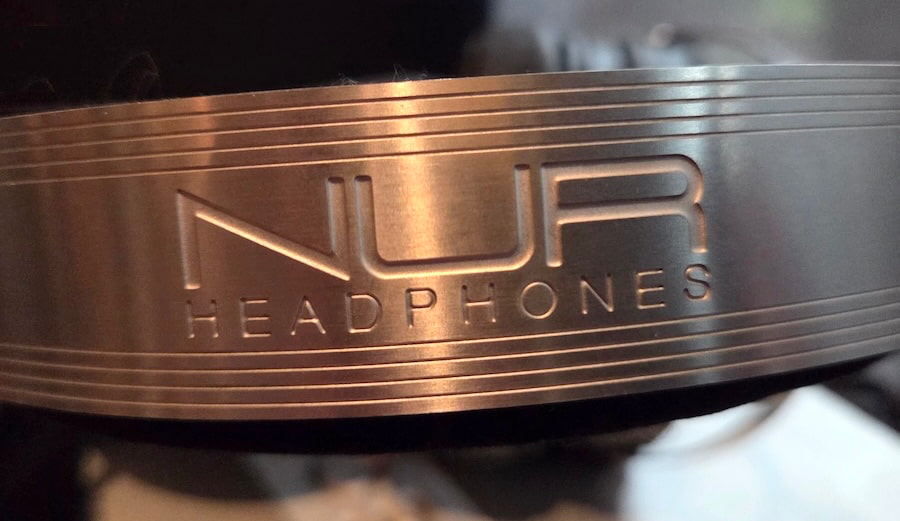
Joe Gebbia, cofounder of Airbnb and the US chief design officer appointed by President Trump, was spotted in San Francisco today using a mysterious metallic device. In a social media post on X viewed more than 500,000 times, a man who looks like Gebbia sits with an espresso at a coffee shop. He’s wearing metallic buds that bisect his ears, with a matching clamshell-shaped disc in front of him on the counter.

After the video was posted Monday morning, social media users were quick to suggest that this could be some kind of prototype from OpenAI’s upcoming line of hardware devices designed in partnership with famed Apple designer Jony Ive. An OpenAI spokesperson declined to comment on the potential Gebbia video after WIRED reached out. Gebbia also did not respond to a request for comment.

The device Gebbia appears to be wearing looks quite similar to the hardware seen in a fake OpenAI ad that was widely circulated on Reddit and social media in February. That video seemingly showed Pillion actor Alexander Skarsgård interacting with an AI device that had a similar-looking pair of earbuds and a circular disc. At the time, OpenAI denounced the widely seen video as not real. “Fake news,” wrote OpenAI President Greg Brockman at the time, responding to a social media post.

The earbuds seen in the video of Gebbia on Monday also look quite similar in shape to the Huawei FreeClip 2, a pair of open earbuds released earlier this year. However, the clamshell seen on the coffee counter next to Gebbia is different from Huawei’s most recent headphone case. It would also be quite surprising if a government official were seen using Huawei tech, considering the Chinese company is effectively banned from selling its phones in the US due to security concerns.

Advertisement

WIRED’s audio experts say he’s most likely wearing open earbuds, as Gebbia’s pair share some similarities with Soundcore’s AeroClips or Sony’s LinkBuds Clip, though the cases for those buds don’t match what’s on the table in front of Gebbia. WIRED also ran the photo and video through software that attempts to identify AI-generated outputs and other deepfakes. The detection software, from a company called Hive, says the odds are low that this imagery of Gebbia was generated by AI. Still, AI detectors are not always reliable and can include false outputs. It’s possible that the entire post could be a synthetic hoax.

Could this be some kind of soft launch teaser for OpenAI’s hardware? The timing of this trickle-out would make sense, since the company may ship devices to consumers sometime early in 2027. Still, OpenAI denied any involvement with the previous pseudo-ad for the metallic AI hardware, with its shiny earbuds and matching disc.

Source link

Advertisement
Continue Reading

Tech

Alibaba’s small, open source Qwen3.5-9B beats OpenAI’s gpt-oss-120B and can run on standard laptops

Published

on

Despite political turmoil in the U.S. AI sector, in China, the AI advances are continuing apace without a hitch.

Earlier today, e-commerce giant Alibaba’s Qwen Team of AI researchers, focused primarily on developing and releasing to the world a growing family of powerful and capable Qwen open source language and multimodal AI models, unveiled its newest batch, the Qwen3.5 Small Model Series, which consists of:

  • Qwen3.5-0.8B & 2B: Two models, both ptimized for “tiny” and “fast” performance, intended for prototyping and deployment on edge devices where battery life is paramount.

  • Qwen3.5-4B: A strong multimodal base for lightweight agents, natively supporting a 262,144 token context window.

  • Qwen3.5-9B a compact reasoning model that outperforms the 13.5x larger U.S. rival OpenAI’s open soruce gpt-oss-120B on key third-party benchmarks including multilingual knowledge and graduate-level reasoning

To put this into perspective, these models are on the order of the smallest general purpose models lately shipped by any lab around the world, comparable more to MIT offshoot LiquidAI’s LFM2 series, which also have several hundred million or billion parameters, than the estimated trillion parameters (model settings) reportedly used for the flagship models from OpenAI, Anthropic, and Google’s Gemini series.

The weights for the models are available right now globally under Apache 2.0 licenses — perfect for enterprise and commercial use, including customization as needed — on Hugging Face and ModelScope.

Advertisement

The technology: hybrid efficiency and native multimodality

The technical foundation of the Qwen3.5 small series is a departure from standard Transformer architectures. Alibaba has moved toward an Efficient Hybrid Architecture that combines Gated Delta Networks (a form of linear attention) with sparse Mixture-of-Experts (MoE).

This hybrid approach addresses the “memory wall” that typically limits small models; by using Gated Delta Networks, the models achieve higher throughput and significantly lower latency during inference.

Furthermore, these models are natively multimodal. Unlike previous generations that “bolted on” a vision encoder to a text model, Qwen3.5 was trained using early fusion on multimodal tokens. This allows the 4B and 9B models to exhibit a level of visual understanding—such as reading UI elements or counting objects in a video—that previously required models ten times their size.

Benchmarking the “small” series: performance that defies scale

Newly released benchmark data illustrates just how aggressively these compact models are competing with—and often exceeding—much larger industry standards. The Qwen3.5-9B and Qwen3.5-4B variants demonstrate a cross-generational leap in efficiency, particularly in multimodal and reasoning tasks.

Advertisement
Qwen3.5 Small Models Series benchmarks

Qwen3.5 Small Models Series benchmarks against other similarly-sized/classed models. Credit: Alibaba Qwen

Multimodal dominance: In the MMMU-Pro visual reasoning benchmark, Qwen3.5-9B achieved a score of 70.1, outperforming Gemini 2.5 Flash-Lite (59.7) and even the specialized Qwen3-VL-30B-A3B (63.0).

Graduate-level reasoning: On the GPQA Diamond benchmark, the 9B model reached a score of 81.7, surpassing gpt-oss-120b (80.1), a model with over ten times its parameter count.

Video understanding: The series shows elite performance in video reasoning. On the Video-MME (with subtitles) benchmark, Qwen3.5-9B scored 84.5 and the 4B scored 83.5, significantly leading over Gemini 2.5 Flash-Lite (74.6).

Advertisement

Mathematical prowess: In the HMMT Feb 2025 (Harvard-MIT mathematics tournament) evaluation, the 9B model scored 83.2, while the 4B variant scored 74.0, proving that high-level STEM reasoning no longer requires massive compute clusters.

Document and multilingual knowledge: The 9B variant leads the pack in document recognition on OmniDocBench v1.5 with a score of 87.7. Meanwhile, it maintains a top-tier multilingual presence on MMMLU with a score of 81.2, outperforming gpt-oss-120b (78.2).

Community reactions: “more intelligence, less compute”

Coming on the heels of last week’s release of an already pretty small, powerful open source Qwen3.5-Medium capable of running on a single GPU, the announcement of the Qwen3.5-Small Models Series and their even smaller footprint and processing requirements sparked immediate interest among developers focused on “local-first” AI.

“More intelligence, less compute” resonated with users seeking alternatives to cloud-based models.

Advertisement

AI and tech educator Paul Couvert of Blueshell AI captured the industry’s shock regarding this efficiency leap.

“How is this even possible?!” Couvert wrote on X. “Qwen has released 4 new models and the 4B version is almost as capable as the previous 80B A3B one. And the 9B is as good as GPT OSS 120b while being 13x smaller!”

Couvert’s analysis highlights the practical implications of these architectural gains:

  • “They can run on any laptop”

  • “0.8B and 2B for your phone”

  • “Offline and open source”

As developer Karan Kendre of Kargul Studio put it: “these models [can run] locally on my M1 MacBook Air for free.”

Advertisement

This sentiment of “amazing” accessibility is echoed across the developer ecosystem. One user noted that a 4B model serving as a “strong multimodal base” is a “game changer for mobile devs” who need screen-reading capabilities without high CPU overhead.

Indeed, Hugging Face developer Xenova noted that the new Qwen3.5 Small Model series can even run directly in a user’s web browser and perform such sophisticated and previously higher-compute demanding operations like video analysis.

Researchers also praised the release of Base models alongside the Instruct versions, noting that it provides essential support for “real-world industrial innovation.”

The release of Base models is particularly valued by enterprise and research teams because it provides a “blank slate” that hasn’t been biased by a specific set of RLHF (Reinforcement Learning from Human Feedback) or SFT (Supervised Fine-Tuning) data, which can often lead to “refusals” or specific conversational styles that are difficult to undo.

Advertisement

Now, with the Base models, those interested in customizing the model to fit specific tasks and purposes an easier starting point, as they can now apply their own instruction tuning and post-training without having to strip away Alibaba’s.

Licensing: a win for the open ecosystem

Alibaba has released the weights and configuration files for the Qwen3.5 series under the Apache 2.0 license. This permissive license allows for commercial use, modification, and distribution without royalty payments, removing the “vendor lock-in” associated with proprietary APIs.

  • Commercial use: Developers can integrate models into commercial products royalty-free.

  • Modification: Teams can fine-tune (SFT) or apply RLHF to create specialized versions.

  • Distribution: Models can be redistributed in local-first AI applications like Ollama.

Contextualizing the news: why small matters so much right now

The release of the Qwen3.5 Small Series arrives at a moment of “Agentic Realignment.” We have moved past simple chatbots; the goal now is autonomy. An autonomous agent must “think” (reason), “see” (multimodality), and “act” (tool use). While doing this with trillion-parameter models is prohibitively expensive, a local Qwen3.5-9B can perform these loops for a fraction of the cost.

By scaling Reinforcement Learning (RL) across million-agent environments, Alibaba has endowed these small models with “human-aligned judgment,” allowing them to handle multi-step objectives like organizing a desktop or reverse-engineering gameplay footage into code. Whether it is a 0.8B model running on a smartphone or a 9B model powering a coding terminal, the Qwen3.5 series is effectively democratizing the “agentic era.”

Advertisement

The Qwen3.5 series shift from “chatbits” to “native multimodal agents” transforms how enterprises can distribute intelligence. By moving sophisticated reasoning to the “edge”—individual devices and local servers—organizations can automate tasks that previously required expensive cloud APIs or high-latency processing.

Strategic enterprise applications and considerations

The 0.8B to 9B models are re-engineered for efficiency, utilizing a hybrid architecture that activations only the necessary parts of the network for each task.

  • Visual Workflow Automation: Using “pixel-level grounding,” these models can navigate desktop or mobile UIs, fill out forms, and organize files based on natural language instructions.

  • Complex Document Parsing: With scores exceeding 90% on document understanding benchmarks, they can replace separate OCR and layout parsing pipelines to extract structured data from diverse forms and charts.

  • Autonomous Coding & Refactoring: Enterprises can feed entire repositories (up to 400,000 lines of code) into the 1M context window for production-ready refactors or automated debugging.

  • Real-Time Edge Analysis: The 0.8B and 2B models are designed for mobile devices, enabling offline video summarization (up to 60 seconds at 8 FPS) and spatial reasoning without taxing battery life.

The table below outlines which enterprise functions stand to gain the most from local, small-model deployment.

Function

Advertisement

Primary Benefit

Key Use Case

Software Engineering

Local Code Intelligence

Advertisement

Repository-wide refactoring and terminal-based agentic coding.

Operations & IT

Secure Automation

Automating multi-step system settings and file management tasks locally.

Advertisement

Product & UX

Edge Interaction

Integrating native multimodal reasoning directly into mobile/desktop apps.

Data & Analytics

Advertisement

Efficient Extraction

High-fidelity OCR and structured data extraction from complex visual reports.

While these models are highly capable, their small scale and “agentic” nature introduce specific operational “flags” that teams must monitor.

  • The Hallucination Cascade: In multi-step “agentic” workflows, a small error in an early step can lead to a “cascade” of failures where the agent pursues an incorrect or nonsensical plan.

  • Debugging vs. Greenfield Coding: While these models excel at writing new “greenfield” code, they can struggle with debugging or modifying existing, complex legacy systems.

  • Memory and VRAM Demands: Even “small” models (like the 9B) require significant VRAM for high-throughput inference; the “memory footprint” remains high because the total parameter count still occupies GPU space.

  • Regulatory & Data Residency: Using models from a China-based provider may raise data residency questions in certain jurisdictions, though the Apache 2.0 open-weight version allows for hosting on “sovereign” local clouds.

Enterprises should prioritize “verifiable” tasks—such as coding, math, or instruction following—where the output can be automatically checked against predefined rules to prevent “reward hacking” or silent failures.

Advertisement

Source link

Continue Reading

Tech

OpenAI will amend Defense Department deal to prevent mass surveillance in the US

Published

on

OpenAI’s Sam Altman said the company will amend its deal with the Defense Department (or the Department of War) to explicitly prohibit the use of its AI system on mass surveillance against Americans. Altman has published an internal memo previously sent to employees on X, telling them that the company will tweak the agreement to add language to make that point especially clear. Specifically, it says:

“Consistent with applicable laws, including the Fourth Amendment to the United States Constitution, National Security Act of 1947, FISA Act of 1978, the AI system shall not be intentionally used for domestic surveillance of U.S. persons and nationals.

For the avoidance of doubt, the Department understands this limitation to prohibit deliberate tracking, surveillance, or monitoring of U.S. persons or nationals, including through the procurement or use of commercially acquired personal or identifiable information.”

Altman has also claimed in the memo that the agency affirmed that its services will not be used by its intelligence agencies, including the NSA, without a modification to their contract. He added that if he received what he believed was an unconstitutional order, he would rather go to jail than follow it.

Advertisement

In addition, the OpenAI CEO has admitted in the memo that the company shouldn’t have rushed to get the deal out on Friday, February 27, since the issues were “super complex and demand clear communication.” Altman explained that the company was “trying to de-escalate things and avoid a much worse outcome” but it “looked opportunistic” in the end. If you’ll recall, OpenAI announced the partnership shortly after President Trump ordered all US government agencies to stop using Claude and any other Anthropic services. To note, Anthropic started working with the US government in 2024.

The Defense Department and Secretary Pete Hegseth had been pressuring Anthropic with to remove its AI’s guardrails so that it can be used for all “lawful” purposes. Those include mass surveillance and the development of fully autonomous weapons. Anthropic refused to bow down to Hegseth’s demands and in a statement said that “no amount of intimidation or punishment” will change its “position on mass domestic surveillance or fully autonomous weapons.” Trump issued the order as a result. The Defense Department had also taken the first steps to designate Anthropic as a “supply chain risk,” which is typically reserved for Chinese companies believed to be working with their country’s government.

Altman said that in his conversations with US officials, he reiterated that Anthropic shouldn’t be designated as a supply chain risk and that he hoped the Defense Department would offer it the same deal OpenAI agreed to. In an AMA session on X over the weekend, Altman clarified that he didn’t know the details of Anthropic’s agreement and how it differed from the one OpenAI signed. But if it had been the same, he thought Anthropic should have agreed to it.

After the news broke out about OpenAI’s deal, Anthropic climbed its way to the number one spot of the App Store’s Top Free Apps leaderboard, beating out both ChatGPT and Google Gemini. Anthropic, capitalizing on Claude’s sudden popularity, launched a memory import tool to make switching to its chatbot from another company’s easier. Meanwhile, uninstalls for ChatGPT’s jumped by 295 percent day-over-day, according to Sensor Tower.

Advertisement

Source link

Continue Reading

Tech

L.L.Bean Promo Codes and Deals: Up to 75% Off Outdoor Gear

Published

on

L.L. Bean is infamous for its outdoorsy appeal, ranging from outerwear and supplies to withstand the elements to laid-back lifestyle products. The company was established in 1912 by Leon Leonwood Bean in Maine. It remains headquartered there today, continually rolling out revered classics and updated essentials for today’s nature lovers. Take the Bean Boots: what started as L.L. Bean’s premier product ultimately helped shape the brand into what it is today. This definitive shoe, which can be worn on hiking trails and rain-slicked city streets alike, has remained true to the original version. If you’ve ever wanted to capture the essence of being a rugged Mainer or recreate a cozy cabin at home, here are plenty of L.L. Bean promo code options at your fingertips.

Get 10% Off Your First Order With an L.L.Bean Promo Code

You may bemoan email updates, but in terms of sales, this L.L. Bean coupon is a pretty low lift. Sign up for email updates from the company, and you get 10% off your first order. This offer is valid only once per email address, so choose your purchase wisely.

Take Up to 75% Off Outdoor Gear in the L.L.Bean Sale Section

Sales mean stocking up, especially on outdoor equipment and camping supplies ahead of your next adventure. Whether you’re about to take up fishing and need supplies, or have Noah Kahan concert tickets in sight and want extras from his L.L. Bean collaboration collection for the event, all of that is available to you. You can save 75% off these L.L. Bean sale items, no promo code needed.

This is a different sort of two-for-one special: twice a day, L.L. Bean posts new sales at 6 AM and 2 PM sharp, Eastern time. While the two-a-day daily markdown is not super expansive in terms of inventory up for grabs, what is posted for sale usually comes at a heavily discounted price akin to deals you’d see on Black Friday.

Advertisement

This L.L. Bean sale is like an online treasure hunt. The daily markdown sale involves a new deal posted daily from 6 AM to midnight Eastern time. Inventory leans toward gear, such as backpacks, blankets, and shoes.

Score Free Shipping on Orders Over $75

We’ve all abandoned our online shopping carts at one point or another once we saw how much shipping was going to cost. Shipping usually costs $8 for a standard L.L. Bean order—that is, if you are under $75. If you hit that threshold or more, you immediately score free shipping on your order.

Military, First Responders, Medical Workers, and Students Can Save an Additional 10%

Being in the medical field or a first responder can often be a tough, thankless job. But, there’s a special L.L. Bean sale for medical workers and first responders so that you can stock up on supplies for when you rest and recharge in your down time. Use the L.L. Bean first responder discount for 10% off—be sure to verify your license status through SheerID.

L.L. Bean military discount offers 10% for military personnel, current or former. This discount also applies to family members—if you or a family member would like to partake, verify your status via SheerID.

Advertisement

Teachers deserve their (wild)flowers. To make sure you have what you need for your next outdoor adventure and say thanks, you can get 10% off with the special L.L. Bean teacher discount. College students, there’s also the L.L. Bean student discount where you 10% off, too. To redeem either of these discounts, make sure to verify your teaching or student (or both!) status via SheerID.

Earn 20% Off With the L.L.Bean Mastercard

If you’re hunting for a potential credit card candidate, and already are an avid L.L. Bean fan, this is the opportunity for you. You can earn 20% off once approved for an L.L. Bean Mastercard, along with free shipping on all orders when you use it—no minimum purchase necessary.

Source link

Advertisement
Continue Reading

Tech

Intuit is betting its 40 years of small business data can outlast the SaaSpocalypse

Published

on

Intuit has lost around a third of its market cap since the beginning of the year. It’s not alone. Many established SaaS players have seen their stock prices fall in recent months, including Adobe and IBM — the latter experiencing its most significant one-day drop (roughly $40 billion) with Anthropic’s announcement that Claude could now read, analyze and translate legacy COBOL into modern languages like Java and Python. The market has a name for it: the SaaSpocalypse.

The argument from investors and market watchers: AI agents can now do bookkeeping, file taxes and reconcile accounts — without a human ever touching software. For instance, instead of a human using QuickBooks to categorize transactions, Claude Cowork can access financial data, apply tax logic and autonomously prepare documents. Rather than using TurboTax, agentic AI tools can handle complex tax logic and even file taxes. In lieu of QuickBooks, automated agents can handle multi-step bookkeeping tasks (like lining up receipts).

Why investors are repricing SaaS

Intuit has been among the hardest-hit, with its market capitalization now sitting at around $114 billion.

The catalyst has been the emergence of fully agentic, no-code AI assistants like Claude Cowork and open-source tools like OpenClaw, whose founder was recently acqui-hired by OpenAI. Fears are that these cheaper service-as-a-service offerings (or service-as-software, or results-as-a-service, depending on who you ask) will upend pay-per-seat subscriptions; whereas traditional SaaS delivers a tool (software) for users to complete a task, service-as-a-service delivers a fully-automated outcome.

Advertisement

For instance, Anthropic’s Cowork platform includes finance capabilities that allow the agent to read financial files and turn them into structured models, tables and reports. 

“The advantage is that I am abstracting away the complexity of my business operations,” said Brian Jackson, principal research director at Info-Tech Research Group (who prefers to call it “service-as-software”). “To hear about a model where you only pay when you get the outcome that you want, that’s very appealing.”

This emerging capability is in line with past technological advancements, he pointed out: IT departments used to be in charge of running infrastructure, but cloud computing came along to abstract away that management. Then, SaaS tools emerged to orchestrate the application layer. Now users manage their work — inputting data, filling out forms, creating analytics dashboards — within SaaS apps. 

“So the next step is automated intelligence,” Jackson said. “Instead of having people do those things, we’ll just have AI do them.” Essentially, it could become a headless system without a UI; users simply let it run and don’t think about it. 

Advertisement

This new concept comes at a time when enterprises are becoming fed up with the SaaS business model, he noted. Lock-in is frustrating, fees continue to go up, seats expand, and “it becomes this unwieldy operating cost,” Jackson said. “And it’s not always guaranteed to drive value, it doesn’t guarantee ROI at all.”

Why Intuit got hit the hardest

Intuit, which was founded in 1983, now serves around 100 million customers with a suite of products that, in addition to QuickBooks and TurboTax, include Mailchimp and Credit Karma. But these core offerings are now considered low-hanging fruit for AI, potentially endangering the company whose revenue model relies heavily on per-seat/per-user subscriptions.

Intuit’s CEO Sasan Goodarzi has recently shrugged off SaaSpocalypse claims, calling data the “most important moat” in a Semafor interview. 

Marianna Tessel, EVP and GM for Intuit’s small business group, takes the same stance. Yes, Claude Cowork and similar agentic tools are “robust” tools, she noted, but Intuit has “persistent” and “durable” advantages. 

Advertisement

Notably: First-party data. Customers generate various types of data on Intuit’s systems, whether it’s by creating an invoice, importing ledgers or performing various finance projects. Then there’s third-party data, which is generated through Intuit’s connections with 24,000-plus banks, e-commerce sites and other entities, Tessel pointed out. 

AI agents simply do not have access to this “vastness” of data, she contended. Further, Intuit knows how to organize and use data, such as stitching together information across customer segments to provide market snapshots. “We understand this data, we know how to turn it into action,” Tessel argued. 

She also doubled down on Intuit’s deep understanding of its customers. Rather than a chatbot that can process and act on numbers and figures, “we know what small businesses face,” she said, whether it’s their concerns around bookkeeping and payroll, or their struggles with hiring. 

“We’ve been in business for over 40 years,” Tessel noted. “We have a lot of know-how that is very specific.”

Advertisement

Other SaaS companies stand staunchly behind this argument. Jon Aniano, Zendesk’s SVP of product and CRM applications, pointed out that his company serves 80,000 customers and deeply understands their needs. “We actually see [general purpose agentic tools] at a disadvantage because they’ve gotta go customer by customer and learn things that we’ve learned over the course of 20 years,” he said at a recent VentureBeat event

The data moat argument does hold up, noted Info-Tech’s Jackson. He also pointed out that, realistically, the SaaS market is projected to grow at a “pretty good clip” in the years ahead. “Could that change very quickly? It’s possible, but it’s unlikely,” he said. 

Also, SaaS is so entrenched in modern business, and pivoting to something entirely new can be a challenge. Even disruptive and compelling technologies like AI can take time to deploy at scale because enterprises have to recraft their workflows, Jackson noted.

“You have workers in place. You have departments in place. It just takes effort and time to change the processes and the expectations around these things,” he said, although “the appetite will definitely be there.”

Advertisement

How Intuit is betting on what agents can’t replicate 

To get ahead of this, Intuit recently signed a multi-year partnership with Anthropic to bring AI agents to mid-market businesses. Using Anthropic’s Claude Agent SDK on the Intuit platform, enterprises will be able to build and customize agents. On the other end, Intuit’s tools can be surfaced directly inside Anthropic products such as Cowork, Claude for Enterprise, and Claude.ai through Model Context Protocol (MCP) integrations with TurboTax, Credit Karma, QuickBooks and Mailchimp.

This builds on Intuit’s previous rollout of Intuit Intelligence, which features specialized AI agents for sales, tax, payroll, accounting and project management. Users can query and interact with their financial data in natural language, automate tasks and generate dynamic reports or KPI scorecards. 

“They have the data, they have the interface, and now they’re introducing themselves as an orchestration layer,” Jackson said of moves like this by large SaaS players. “We can be the place where you build your agents and manage them.”

To this point, Tessel calls Intuit “a well-run company” that can react with speed. Her team keeps up with orchestration advancements, reads academic papers and is “constantly learning” about new technologies. “We’re on it,” she said.”

Advertisement

Ultimately, companies must be “awake and aware right now,” she emphasized. As she put it: “What’s the pivot of the day? How many times did you pivot? Are you experimenting?”

Zendesk’s Aniano agreed that there are “cool new ways of developing software,” and acknowledged that he “lives” 90 to 120 minutes of his day inside Claude Code. Companies that can make the “mental shift” to building software in new ways can create a level playing field between incumbents and startups. 

One thing that’ll be interesting to see is how quickly SaaS providers offer MCP plugins or build their own within their software suites, Jackson noted. “How good will these SaaS providers be at supporting AI interoperability?” he said. “And what ways will they try to create friction or make it harder for enterprises to abandon their interface?”

Editor’s note: This article has been updated to reflect Intuit’s current market cap decline of approximately 33% year-to-date.

Advertisement

Source link

Continue Reading

Tech

Amazon Sells Surprisingly Cheap Socket Sets, But Are They Any Good?

Published

on


We may receive a commission on purchases made from links.

As the largest online retailer, it’s no surprise that Amazon’s listings are filled with great deals on useful items. However, there are some things to avoid buying from Amazon, so it’s a good idea to do some research before making a purchase. While Amazon Basics socket sets are cheap, whether they’re any good is a different question.

Advertisement

Shopping at Amazon is fast, convenient, and typically budget-friendly, but buying tools from relatively unknown brands, like Amazon Basics, online can be a gamble. Amazon lists itself as the manufacturer of Amazon Basics socket sets. Amazon Basics, formerly the Denali brand, is Amazon’s store-branded tool line made for Amazon by suppliers in Asia. This is a similar approach to other retailer-owned brands like many of those sold by Harbor Freight, Lowe’s Kobalt, or Home Depot’s Husky brands. So while the brand name is recognizable to customers, it doesn’t necessarily tell us a lot about the quality of the tools.

Advertisement

What you should know about the quality of Amazon Basics socket sets

Trying to determine the quality of the Amazon Basics tools we’re looking at online starts with viewing the glossy images and reading any specifications provided on the product page. While the tools are often backed by the self-promoting “Amazon’s Choice” label, it’s often better to look for user reviews and independent product tests before clicking the “Buy Now” button.

As with most things in life, there are some Amazon Basics tools worth buying and others we should avoid. Amazon Basics socket sets are generally highly rated on Amazon, with reviews for various mechanic’s tool sets containing sockets apparently lumped together as each have 12.6K reviews and 4.7-star ratings.

Project Farm tested an Amazon Basics tool kit (alongside other kits) that included a ⅜-inch-drive socket set among other tools designed for household use. The video host notes that the tool kit is “Made in China” before putting the sockets and ratchet to the test. Using an impact wrench to test the failure point of sockets up to 200 ft-lbs, the Amazon Basics socket was failure-free up to 203.7 foot-pounds. The included ratchet handle only withstood 100 ft-lbs before starting to bend and the internal ratcheting mechanism failed at 160 ft-lbs. While the Amazon Basics ratchet failed under less load than Kobalt or Pittsburgh ratchets, it surpassed the Craftsman ratchet.

Advertisement

What types of Amazon Basics socket sets does Amazon sell?

Most of Amazon’s Amazon Basics socket sets are offered as part of a mechanic tool set that often include wrenches, hex-keys, and other tools. One such item, marked as “Amazon’s Choice: Overall Pick,” is the 201-piece mechanics socket tool set with case, priced at $53.98 with free two-day Prime shipping available.

While you shouldn’t rely exclusively on the Amazon “Overall Pick” label when shopping online, especially for socket sets, it’s not a bad sign for tools. Amazon’s criteria for a product earning the label indicates it must hold at least a 4-star rating, be purchased often, and have a low rate of returns. Just don’t be fooled into thinking an Amazon employee is rating these products based on how they perform.

Advertisement

Another “Amazon Choice” option is the Amazon Basics 19-piece ½-inch-drive 6-point shallow impact socket set for $55.99. The set only includes SAE-sized impact-rated sockets, no metric sizes, ratchets, or extensions. Socket sizes range from ⅜-inch up to 1-½-inches in 1/16-inch intervals without skips. They feature chrome molybdenum alloy steel (Cr-Mo) construction and come in a fitted carrying case measuring 10.2 by 8.5 by 2.4 inches.

Amazon Basics socket set options also include specialty sockets, like the 14-piece external Torx socket set ranging from E4 to E24 sizes in ¼-, ⅜-, and ½-inch drives. While the set comes in a storage case for $11.60 and earns a 4.6-star rating on Amazon, it’s not labeled as an “Amazon Choice” since it is frequently returned.

Advertisement


Source link

Continue Reading

Tech

Fake Google Security site uses PWA app to steal credentials, MFA codes

Published

on

Fake Google Security site uses PWA app to steal credentials, MFA codes

A phishing campaign is using a fake Google Account security page to deliver a web-based app capable of stealing one-time passcodes, harvesting cryptocurrency wallet addresses, and proxying attacker traffic through victims’ browsers.

​The attack leverages Progressive Web App (PWA) features and social engineering to deceive users into believing they are interacting with a legitimate Google Security web page and inadvertently installing the malware.

PWAs run in the browser and can be installed from a website, just like a standalone regular application, which is displayed in its own window without any visible browser controls.

Victim browser becomes attacker’s proxy

The campaign relies on social engineering to obtain the necessary permissions from the user under the guise of a security check and increased protection for devices.

Advertisement

The cybercriminals use the domain google-prism[.]com, which poses as a legitimate security-related service from Google, showing a four-step setup process that includes giving risky permissions and installing a malicious PWA app. In some instances, the site will also promote a companion Android app to “protect” contacts.

According to researchers at cybersecurity company Malwarebytes, the PWA app can exfiltrate contacts, real-time GPS data, and clipboard contents.

Additional functionality observed includes acting as a network proxy and internal port scanner, which allows the attacker to route requests through the victim’s browser and identify live hosts on the network.

The website also requests permissions to access text and images copied to the clipboard, which can occur only when the app is open.

Advertisement
Fake Google security site asking for clipboard access
source: BleepingComputer

However, the fake website also asks for permission to show notifications, which allows the attacker to push alerts, new tasks, or trigger data exfiltration.

Additionally, the malware uses the WebOTP API on supported browsers in an attempt to intercept SMS verification codes, and checks the /api/heartbeat every 30 seconds for new commands.

As the PWA app can only steal the contents of the clipboard and OTP codes when it is open, notifications can be used to send fake security alerts that prompt the user to open the PWA again.

Fake Google security site asks for notifications permissions
source: BleepingComputer

Malwarebytes says that the focus is on stealing one-time passwords (OTP) and cryptocurrency wallet addresses, and that the malware also “builds a detailed device fingerprint.”

Another component in the malicious PWA is a service worker that is responsible for push notifications, running tasks from received payloads, and preparing stolen data locally for exfiltration.

The researchers say that the most concerning component is the WebSocket relay that allows the attacker to pass web requests through the browser as if they were on the victim’s network.

Advertisement

“The malware acts as an HTTP proxy, executing fetch requests with whatever method, headers, credentials, and body the attacker specifies, then returns the full response including headers” – Malwarebytes

Because the worker includes a handler for Periodic Background Sync, which allows web apps in Chromium-based browsers to periodically synchronize data in the background, the attacker can connect to a compromised device for as long as the malicious PWA app is installed.

Malware Android companion

Users who choose to activate all the security features for their account also receive an APK file for their Android devices that promises to extend protection to the list of contacts.

Fake security checks
source: BleepingComputer

The payload is described as a “critical security update, ”claims to be verified by Google, and requires 33 permissions that include access to SMS texts, call logs, the microphone, contacts, and the accessibility service.

These alone are high-risk permissions that enable data theft, full device compromise, and financial fraud.

Advertisement

The malicious APK file includes multiple components, such as a custom keyboard to capture keystrokes, a notification listener for access to incoming notifications, and a service to intercept credentials filled automatically.

“To enhance persistence, the APK registers as a device administrator (which can complicate uninstallation), sets a boot receiver to execute on startup, and schedules alarms intended to restart components if terminated,” the researchers say.

Malwarebytes observed components that could be used for overlay-based attacks, which indicate plans for potential credential phishing in certain apps.

By combining legitimate browser features with social engineering, the attacker does not need to exploit any vulnerability. Instead, they trick the victim into providing all the needed permissions for malicious activity to occur.

Advertisement

The researchers warn that even if the Android APK is not installed, the web app can collect contacts, intercept one-time passwords, track location, scan internal networks, and proxy traffic through the victim’s device.

Users should be aware that Google does not run security checks through pop-ups on web pages or request any software installation for enhanced protection features. All security tools are available through the Google Account at myaccount.google.com.

To remove the malicious APK file, Malwarebytes recommends users look for a “Security Check” entry in the list of installed apps and prioritize uninstalling it.

If an app called “System Service” with a package name com.device.sync is present and has device administrator access, users should revoke it under Settings > Security > Device admin apps and then uninstall it.

Advertisement

Malwarebytes researchers also provide detailed steps for removing the malicious web app from both Chromium-based Windows, such as Google Chrome and Microsoft Edge, as well as from Safari.

They note that on Firefox and Safari browsers, many of the malicious app’s capabilities are severely restricted, but push notifications still work.

Malware is getting smarter. The Red Report 2026 reveals how new threats use math to detect sandboxes and hide in plain sight.

Download our analysis of 1.1 million malicious samples to uncover the top 10 techniques and see if your security stack is blinded.

Source link

Advertisement
Continue Reading

Trending

Copyright © 2025